REVIEW · ATHENS
Athens: Guided Street Art Walking Tour
Book on GetYourGuide →Operated by Alternative Athens · Bookable on GetYourGuide
Street art in Athens tells the real story. This 3-hour guided walk uses graffiti as your guidebook, taking you through three neighborhoods while you learn how to read what’s painted on the walls. You’ll get local context for the art and the city behind it, not just pretty pictures.
What I like most is the way the tour is led by a working street artist guide. Names you may meet include Nikos Rude, Pavlina, Elisabeth, and Achilles, and they explain the pieces and styles with firsthand street-art credibility. I also love how the route is built around neighborhood culture, with stops in Psyri, Gazi, and Monastiraki, then back to Psyri, so you see Athens beyond the major sights.
The main drawback is simple: it’s a 3-hour walking tour and it’s not suitable for mobility impairments or wheelchair users. Wear comfortable shoes, and plan on navigating on foot since transportation isn’t included.
In This Review
- Key highlights worth centering
- Why Athens street art beats the usual postcard route
- Starting near Thissio: meeting point and getting there fast
- Psyri first: where contemporary Athens feels close up
- Gazi murals and graffiti: modern Athens with teeth
- Monastiraki walls: older streets, newer arguments
- Meet the artists: WD, iNO, Moralez, and more
- How the tour reads Greece’s economic and social crisis
- Pace, group vibe, and what 3 hours really feels like
- Price of $57 for a street artist guide: value check
- Who should book this Athens street art walking tour
- Should you book it? My take
- FAQ
- What neighborhoods does the tour cover?
- How long is the Athens street art walking tour?
- Where do I meet the guide?
- What language is the live guide available in?
- What should I bring?
- Is transportation included?
Key highlights worth centering
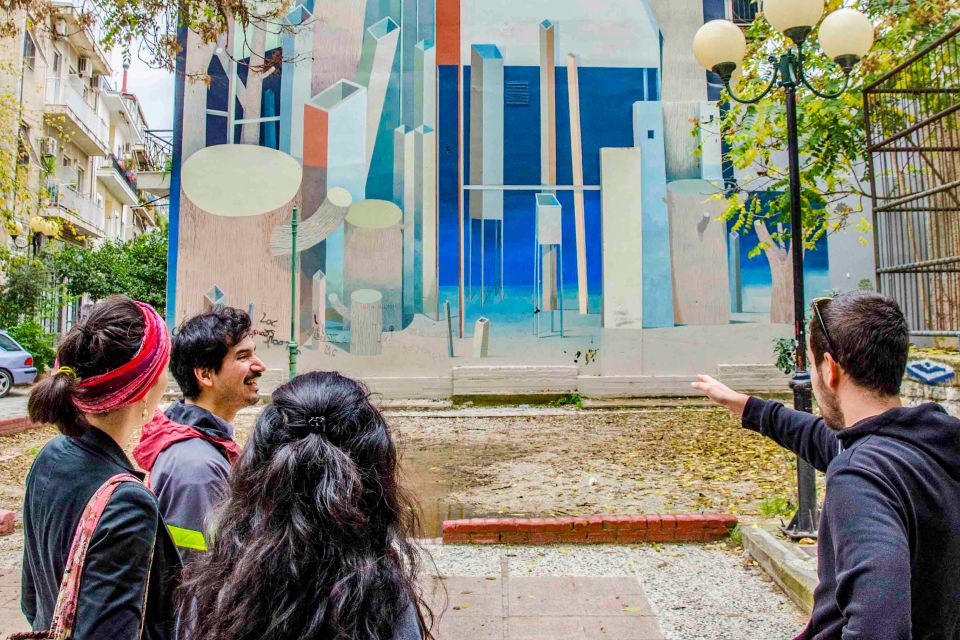
- Three neighborhoods, one theme: Psyri, Gazi, and Monastiraki, all tied together by street art as a lens
- Artist-guided interpretation: expect real talk about meaning, style, and context from a street artist guide
- Big names on real walls: you’ll learn about artists such as WD, iNO, Moralez, and others
- Politics and crisis in plain sight: graffiti messages often point to Greece’s economic and social pressure
- A tour that teaches you how to look: you learn a practical way to decode the visual language of street art
Why Athens street art beats the usual postcard route
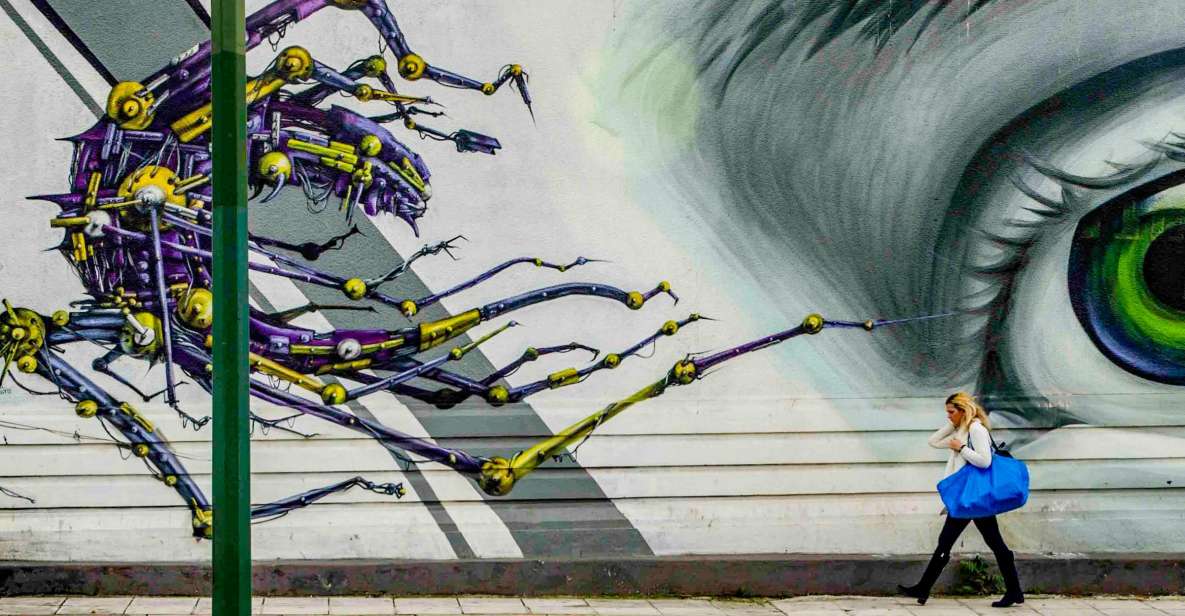
If your Athens plans are all about marble and museum labels, this tour gives you a different Athens shape. Graffiti and street murals are a living city diary—one written in symbols, tags, slogans, and bold characters that change with the times.
On this walk, you don’t just stop to admire walls. You learn how to read them. You’ll get a short framework for what counts as street art, then you’ll use that framework street by street. One review notes the guide starts with a definition that helps you spot what’s going on fast. That matters, because street art can look chaotic until someone gives you the decoding tools.
The best part is how the tour connects art to real life. Greece’s economic and social crisis shows up in the messages and themes you’ll see, so the art feels current and human instead of like a disconnected urban hobby.
You can also read our reviews of more walking tours in Athens

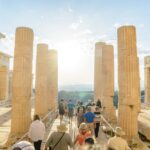
Starting near Thissio: meeting point and getting there fast

The meeting point is in front of the Association of Greek Archaeologists. That’s a practical anchor—easy to find, and it puts you close to central transit options.
From the metro, you have two straightforward approaches:
- Take the green line to Thissio, then walk over
- Take the blue line to Monastiraki Metro Station, then walk along Adrianou Street
Because this is a walking tour, having the meeting point locked in is half the job. Show up a bit early, scan the street level around the landmark, and you’ll be ready when your guide gathers the group and starts walking.
One more thing: transportation isn’t included, so treat this as a “you’ll get yourself here, we’ll handle the walking” experience.
Psyri first: where contemporary Athens feels close up

The tour is designed to move through three trendy central neighborhoods. You start in the Psyri area early in the flow, and that sets the tone: you’re not waiting for the art later—you’re meeting it right away.
Psyri is a good starting point because it’s the kind of neighborhood where street art and street life mix. That’s useful for your understanding. You’ll see how graffiti isn’t only about the wall. It’s also about who passes by, who pauses, and what message the neighborhood is ready to carry.
What you can expect here is interpretation. The guide points out symbols and styles and explains what the artist may be signaling. One review highlights how the guide encourages questions and shares opinions, which makes the tour feel interactive rather than a lecture.
Also, Psyri is a smart place to end. The tour finishes back in Psyri, and that gives you an easy transition into lunch or a post-walk wander, based on whatever your energy level is.
Gazi murals and graffiti: modern Athens with teeth

After Psyri, the route moves to Gazi. This is where the tour really leans into street art as social commentary.
Gazi is a neighborhood where contemporary Athens energy is hard to miss, and that fits the tour’s main goal: understanding how Greece’s recent economic and social crises show up in street art. You’ll see themes that feel urgent—messages that feel like they were made to be noticed now, not someday.
Even if you don’t consider yourself an art person, you’ll probably enjoy Gazi because the guide translates street art into something readable. You don’t have to “get it” alone. Your guide helps you connect:
- the artist’s style
- the content of the message
- and the context of the neighborhood where it appears
One review mentions being blown away by iNO in particular. That’s a great example of why the guide matters. A talented artist’s work can be striking on its own, but it gets sharper when someone explains the visual choices and the intent behind them.
Monastiraki walls: older streets, newer arguments

Next comes Monastiraki, a place you may already know from your Athens sightseeing. Here’s the twist: you’re not visiting Monastiraki for the big attractions. You’re using it as a contrast point—how street art can talk in the same space as history.
Monastiraki is valuable for a street art tour because it’s so central. You can see how newer street voices share the city with older layers. That makes the political and cultural messages feel even more grounded. The walls aren’t in a separate art district—they’re woven into everyday streets.
Another plus: at least some guides also explain the buildings or street context you see along the way. One review calls out details about the history of the buildings seen during the tour. That kind of street-level context helps you understand why the art is where it is, and why the neighborhood vibe matters.
If you love architecture or the geography of cities, this section is often the most satisfying. It turns a familiar area into a new map.
You can also read our reviews of more guided tours in Athens



Meet the artists: WD, iNO, Moralez, and more

A street art tour lives and dies on the art selection. This one is built around recognizable local names and styles, including WD, iNO (often written as iNO), and Moralez, plus other artists your guide will point out.
Why this matters for you: knowing artist names isn’t trivia. It’s a way to track recurring themes and styles. Street artists often develop a visual language—characters, lettering habits, symbol choices, and mood. When you learn who made what, the graffiti stops being random and starts feeling like a conversation.
In reviews, guides are praised for being able to interpret pieces in detail and also for having personal street-art experience at some point in their lives. One reviewer specifically notes the guide had done street art in his youth, which is a big difference from a guide who only studies art from a distance.
If you want a tour that teaches you how graffiti communicates—through exaggeration, repetition, humor, anger, or coded phrases—this artist-centered approach is the right model.
How the tour reads Greece’s economic and social crisis
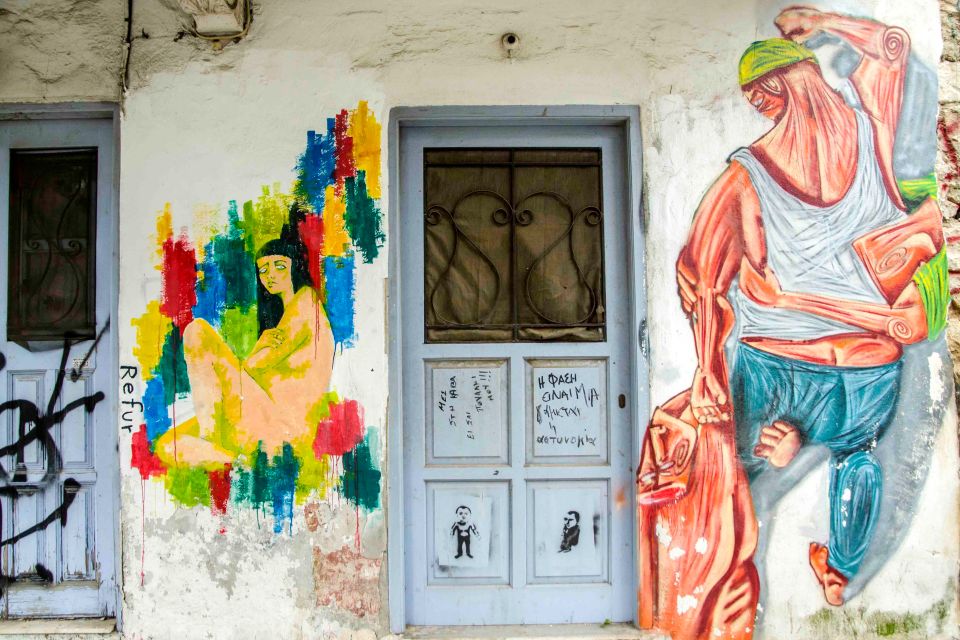
Street art in Athens can be playful, but it often isn’t polite. The tour’s core promise is that you’ll uncover hidden messages behind spectacular examples of urban art, especially in relation to Greece’s economic and social crisis in recent decades.
In real terms, that means you’ll spend part of the walk learning the “why” behind what you see:
- slogans and messages that reflect pressure and frustration
- characters and symbols that carry social meaning
- and references that connect to broader cultural conversations
The guide’s job is to make those messages feel legible. One review describes the tour as going from struggle to revolution, with street art wall-to-wall knowledge. Another review highlights that the guide delivered social and political issues through the artwork in spades. While nobody can guarantee you’ll interpret every symbol the same way, the tour gives you a path to understanding.
This is also where the tour can surprise you. Even if you’re not a political person, you’ll see how art is a coping tool, a protest tool, and sometimes just a way to say I’m here.
Pace, group vibe, and what 3 hours really feels like

A 3-hour walking tour is a sweet spot. Long enough to see multiple neighborhoods and multiple art styles, short enough that you don’t feel trapped in one area.
You should still plan to walk steadily. It’s not a sit-and-stare experience. You’ll move between walls, pause for explanation, and keep moving. If your feet are not used to city walking, this is where you’ll feel it—hence the straightforward advice: comfortable shoes.
Group vibe seems to vary by date, but reviews commonly mention friendly interaction. One reviewer describes the guide encouraging questions and discussion, and another notes how good it is for a teenager because it feels like exploring with a local friend who can answer anything.
Languages are French and English, so you can choose what fits your comfort level.
Also, there’s a nice practical payoff: your guide may share recommendations for lunch, bars, or places nearby when you finish. That’s not “extra fluff”—it helps you turn the last hour into a real part of your Athens day, not just the end of a lesson.
Price of $57 for a street artist guide: value check
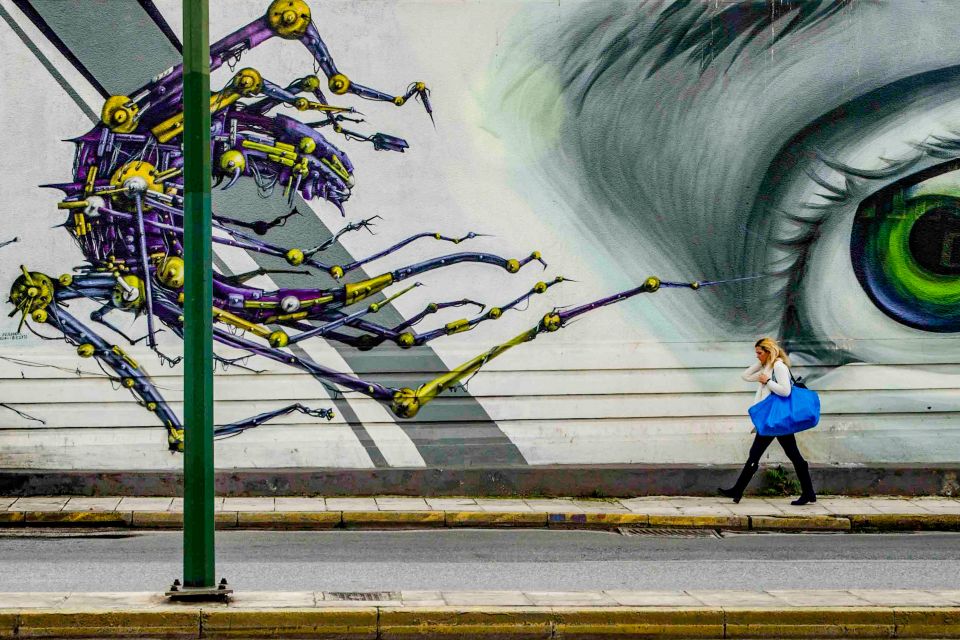
At $57 per person for a 3-hour guided walking tour, the value comes from the type of guide time you’re buying, not the scenery alone.
You’re paying for three things:
- Specialized interpretation of street art styles and messages
- A route through three neighborhoods that you likely wouldn’t explore for graffiti on your own
- A local street artist guide who can connect artwork to context and city life
That last point is key. Reviews repeatedly praise guides for explaining meaning behind works and for being artists themselves or speaking from real-world street-art experience. If you’ve ever tried to “read” street art solo, you know how easy it is to miss the story.
So is $57 a deal? If you genuinely care about understanding what you see, it’s a fair price for that guided time. If you only want general sightseeing and have zero interest in graffiti meaning, you might feel it’s more specialized than you need. But if street art grabs your curiosity at all, this tour is one of the more practical ways to turn curiosity into real understanding.
Who should book this Athens street art walking tour
This tour is a great match if you:
- love street art and want to learn how to interpret it
- want Athens beyond the top sights and photos
- enjoy art that connects to real-world politics and social issues
- travel with teens who like contemporary culture (several reviews mention young people having a good time)
It’s also a strong option for first-time Athens visitors who already know they want at least one “alternative Athens” experience.
You might skip it if you:
- hate walking for 3 hours
- only want ancient sites and museums
- want a totally neutral, purely aesthetic art experience without messages
And one plain note for planning: it’s not suitable for wheelchair users or people with mobility impairments.
Should you book it? My take
If your Athens trip includes even a small chunk of time for modern culture, I’d book this. The strongest reason is the guide: street artists can explain what you’d otherwise guess, and they point you to meaning you’d never find on your own.
You also get a structured route—Psyri to Gazi to Monastiraki and back to Psyri—so you leave with a sense of how the neighborhoods feel now, not just what they looked like long ago. And at $57 for a 3-hour guided walk, it’s not a budget-busting splurge. It’s priced like an experience you’ll actually use.
My only hesitation is physical. If walking that length is hard for you, it will be a frustrating match. If you can handle a city walk in comfortable shoes, this is one of the more memorable ways to see Athens up close.
FAQ
What neighborhoods does the tour cover?
The tour includes Psyri, Gazi, and Monastiraki, and it finishes back in Psyri.
How long is the Athens street art walking tour?
The duration is 3 hours.
Where do I meet the guide?
Meet in front of the Association of Greek Archaeologists. You can reach it via the metro to Thissio (green line) or to Monastiraki Metro Station (blue line), then walk along Adrianou Street.
What language is the live guide available in?
The live tour guide is available in French and English.
What should I bring?
Bring comfortable shoes since it’s a walking tour.
Is transportation included?
No. Transportation is not included.



More Walking Tours in Athens


More Tours in Athens


More Tour Reviews in Athens
- All Day Cruise -3 Islands to Agistri,Moni, Aegina with lunch and drinks included
★ 5.0 · 4,958 reviews