REVIEW · ATHENS
Athens: Acropolis & Plaka Neighborhood Private Walking Tour
Book on GetYourGuide →Operated by WARMPENGUIN · Bookable on GetYourGuide
A few hours here can change how you see Athens. This private walk pairs a state-accredited archaeologist guide with the Acropolis monuments and then continues into the Plaka for neighborhood stories and small-street wandering. I especially like how the guide ties myth and history to what you’re actually standing in front of, and how the route keeps moving so you don’t waste time. One thing to plan for: the Acropolis has steps and uneven ground, and it isn’t a good fit for mobility impairments.
The Parthenon and its neighbors are famous, but you’ll get clearer meanings fast. The same guide also helps you slow down in the right places and speed up in others, which is a big deal at a site this crowded. Guides like Eva (praised for excellent German and careful pacing in shade), Christina, Lisa, Valia, and Delfina have been noted for making the stories feel understandable, not like a lecture.
If you’re short on time or want the main highlights without bouncing around, this is a strong choice. If you prefer totally self-paced wandering with zero structure, you may want to save energy for a solo visit to the Acropolis after. Either way, the Plaka add-on is a smart way to end the day with context, not just photos.
In This Review
- Key moments that make this tour worth it
- Private, Licensed Archaeologist: What You Gain on the Acropolis
- Starting at Makrigianni 7: A Simple Plan That Saves Time
- Theater of Dionysus and the Defensive Walls: Athens Before the Parthenon
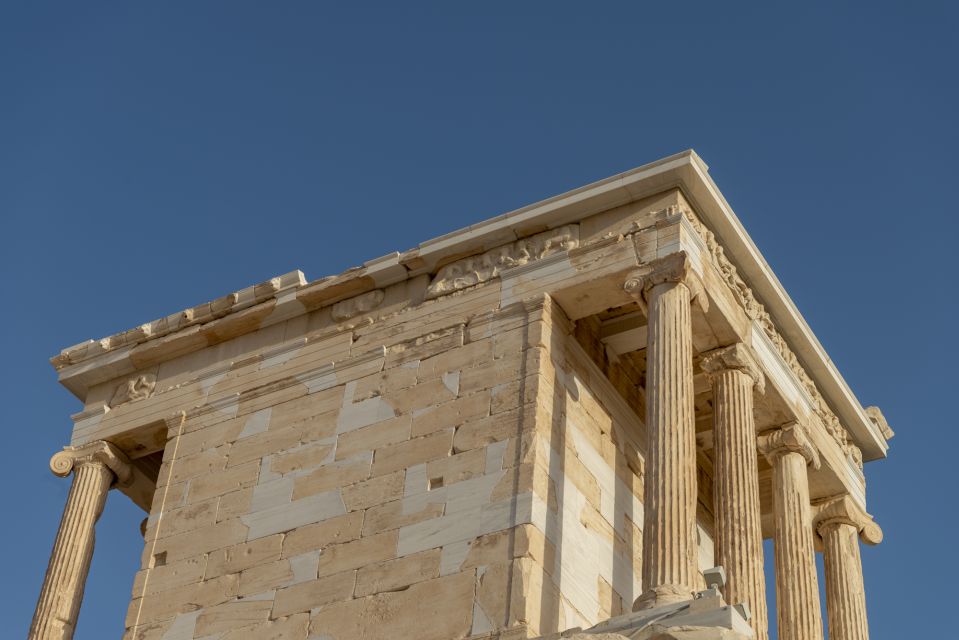
- Propylaea, Athena, and Temple of Nike: The Sun, the Story, and the Angles
- Quick reality check
- Parthenon and Erechtheion: Myth Battles You Can Point To
- Odeon of Herodes Atticus: Why This Ruin Still Matters
- Descending Through Olive Trees Into Plaka: From Big Power to Everyday Life
- Plaka Side Streets, Artisan Shops, and 3 Eras of Athens in One Block
- Food Option for Families: Classic Plaka Choices, Not Random Snacks
- Price and Tickets: Is $163 Good Value Here?
- Practical Comfort and Who Should Choose This
- Finishing in Plaka (or Back at the Acropolis)
- Should You Book This Acropolis and Plaka Private Walking Tour?
- FAQ
- Is the Acropolis admission ticket included?
- Are skip-the-line tickets included?
- How long is the tour?
- Is there an option that focuses only on the Acropolis?
- Does the tour include the Plaka neighborhood?
- What food is included if I choose the food option?
- Where is the meeting point?
- What languages are available?
- Is the tour suitable for people with mobility impairments?
Key moments that make this tour worth it
- State-accredited licensed archaeologist expert leading the whole experience
- Acropolis + Plaka in one flow, so the big monuments connect to everyday Athens
- Myth and architecture explained at the places where they actually happened
- Plaka side streets and artisan shops, not just the postcard lanes
- Optional food tastings with classic Plaka choices, including Greek coffee or mountain tea
Private, Licensed Archaeologist: What You Gain on the Acropolis
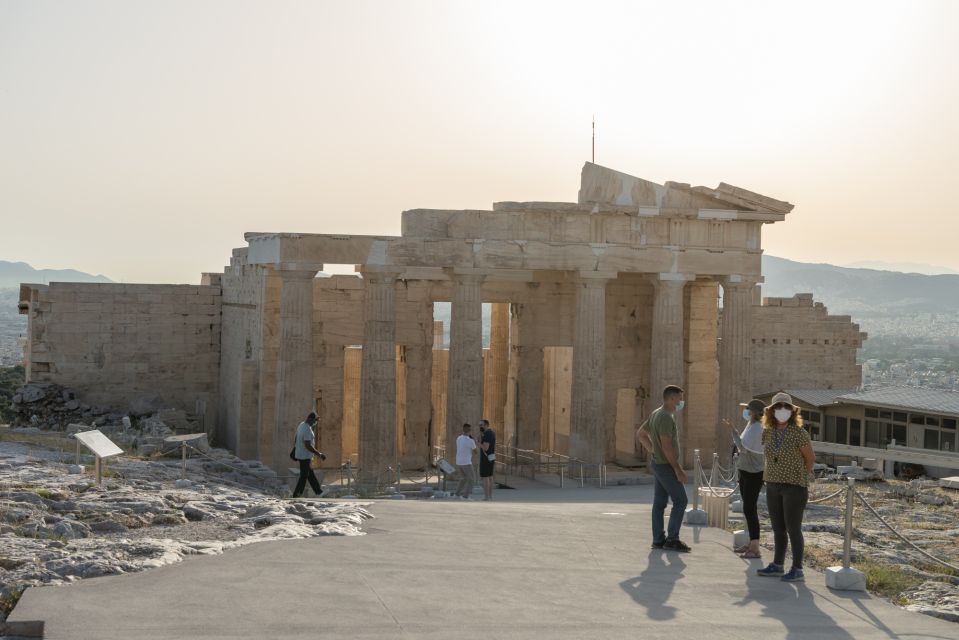
The Acropolis can feel like a lot of stone if you don’t know where to look first. What I like about a tour led by a licensed archaeological guide is that the explanations stay anchored to the site itself—what you’re seeing, why it was built, and how people used it.
This is also a private group, so you’re not stuck waiting for a slow-moving cluster or rushed along by someone else’s attention span. In the past, guides such as Eva have been praised for translating Greek history into modern terms and being thoughtful about pacing and shade, which matters when you’re walking and standing on open stone.
You can also read our reviews of more walking tours in Athens

Starting at Makrigianni 7: A Simple Plan That Saves Time
The meeting point is Makrigianni 7, close to the Acropolis Museum. That location is practical because it helps you get your bearings fast and reduces the stress of figuring out where to start once you’re already in the area.
From there, you’ll move into the Acropolis zone first, with a guided segment that lasts about 1.5 hours for the main option. If you choose the Acropolis-only version, you end in the Acropolis so you can linger for photos and views.
Theater of Dionysus and the Defensive Walls: Athens Before the Parthenon
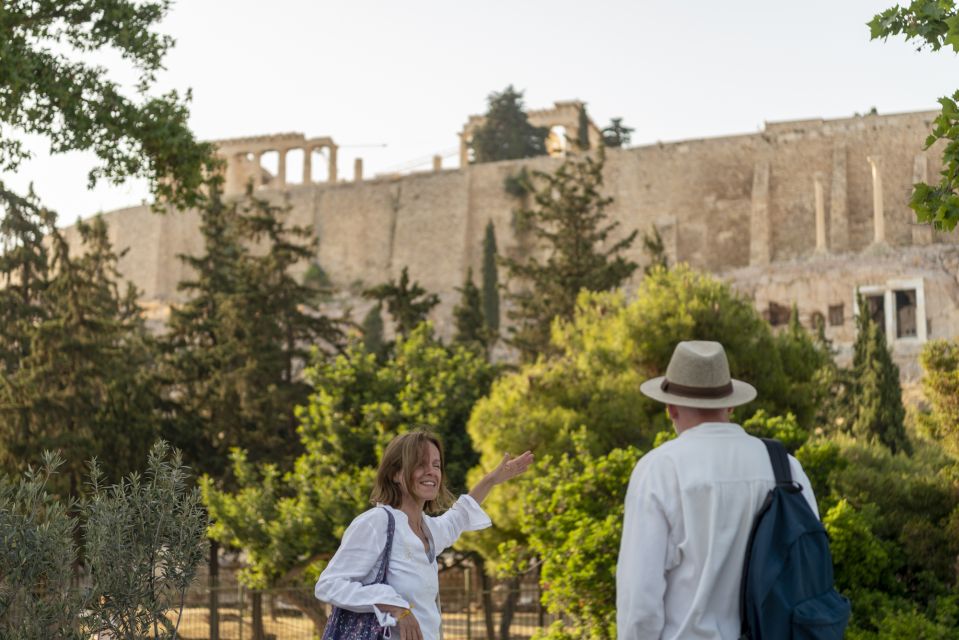
Your first big stop is the Theater of Dionysus, often called the world’s oldest theater. You’ll hear how some of the most famous Greek plays were first performed there roughly 3,000 years ago, which instantly turns the ruins from background scenery into real cultural life.
Next you’ll walk past the defensive walls—not built by the classical Greeks, but by their ancestors about 1,000 years earlier. It’s the kind of detail that changes the tone of the whole visit. Instead of thinking, This is just a museum of art, you start thinking, This is a fortress and a stage and a power center all at once.
Propylaea, Athena, and Temple of Nike: The Sun, the Story, and the Angles
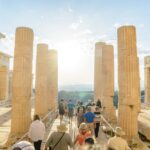
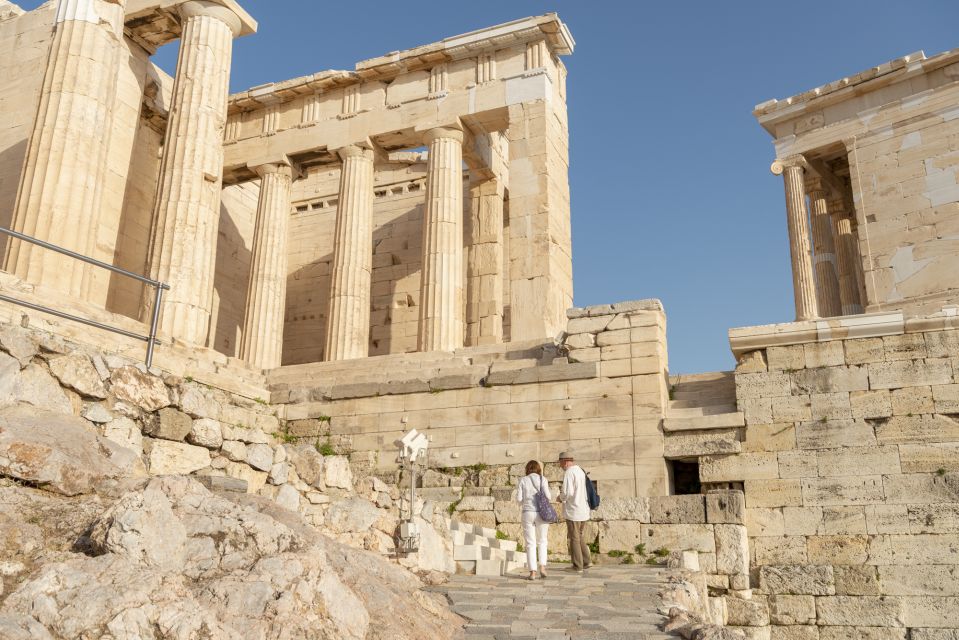
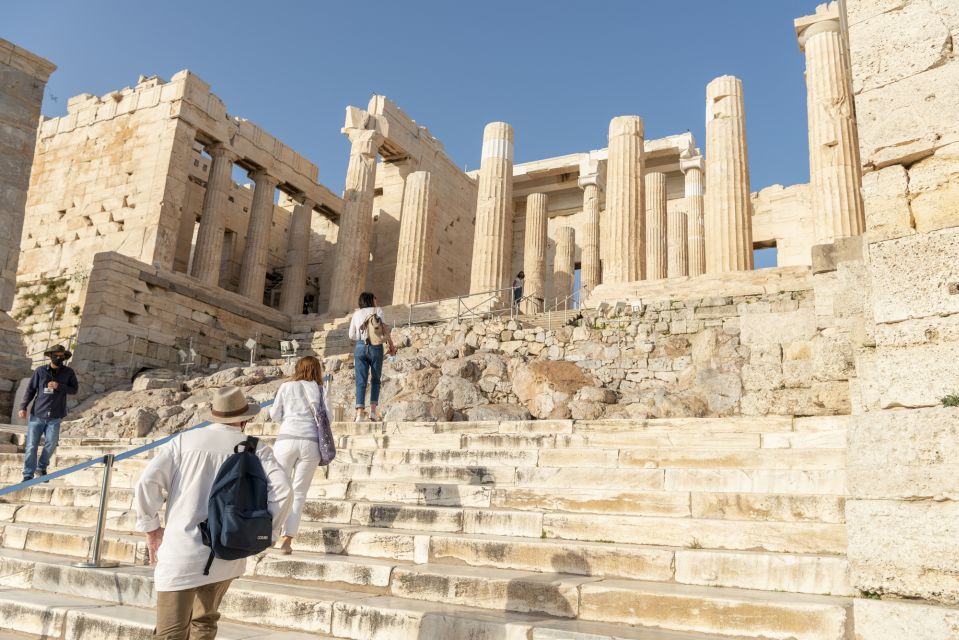
The Propylaea is the monumental entrance, and your guide helps you see how it would have looked in action, not just as a static gate. One vivid detail is the idea that the sun would have glinted from the bronze spear tip of the gigantic Athena statue that once stood there—something sailors might have seen when leaving Cape Sounion, about 70 km away, for war and trade across the ancient Mediterranean.
Then comes the Temple of Athena Nike. Even if you’ve heard the name before, the value here is in getting the symbolism and mythology connected to what the site is telling you with its layout and design choices. You’re not just collecting facts; you’re learning how Athenians framed identity around gods, victory, and civic pride.
Quick reality check
The Acropolis has steps and uneven surfaces. Wear shoes that can handle that without drama, and expect some standing time. If you’re prone to fatigue, the private pacing helps, but the terrain is still the terrain.
You can also read our reviews of more private tours in Athens





Parthenon and Erechtheion: Myth Battles You Can Point To
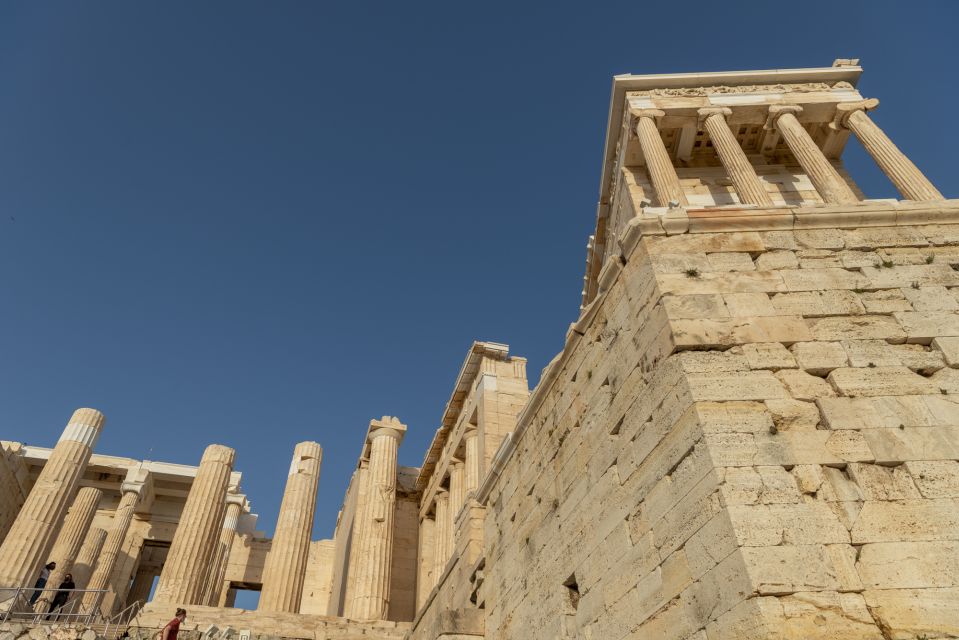
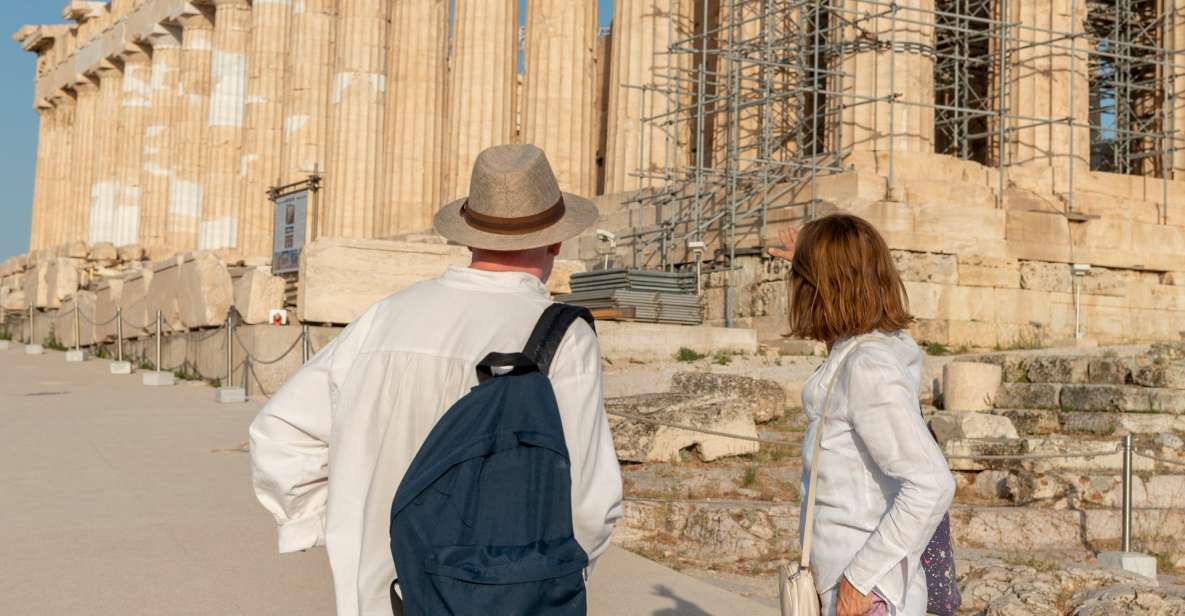
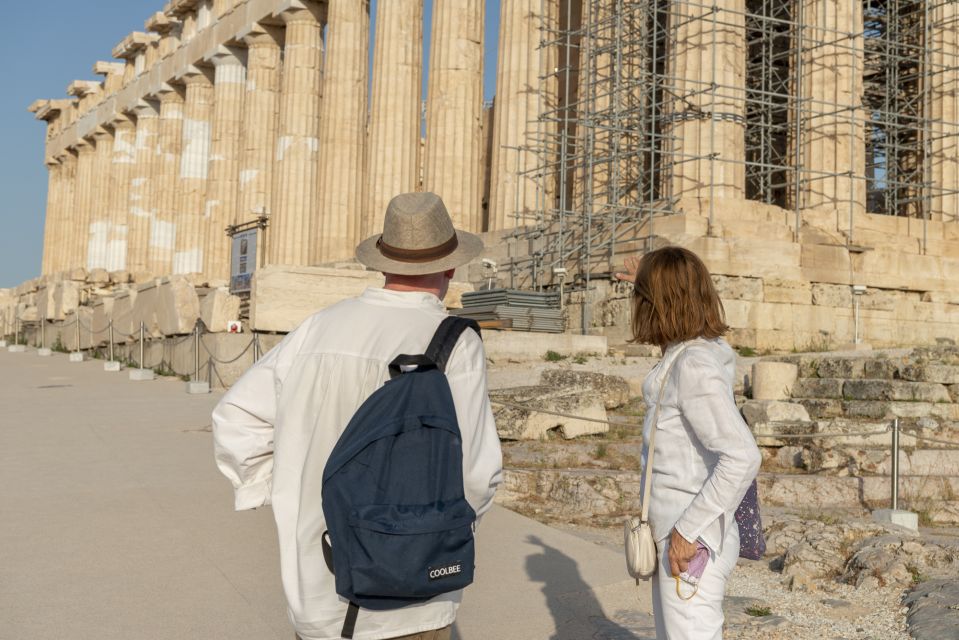
When you reach the Parthenon, you’re seeing the headline monument—but the guide’s job is to help you read it. A good guide won’t only say what it is. They’ll show how the building fits its purpose and how the Athenians thought about beauty, power, and meaning.
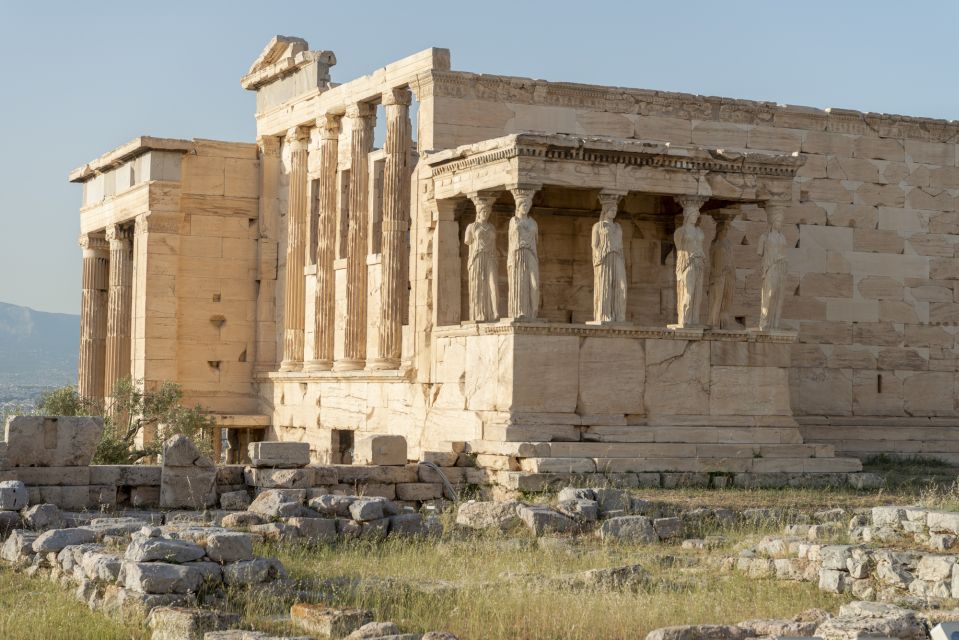
Right after, you’ll move to the Erechtheion, where mythology isn’t a side story. This stop includes the struggle between Poseidon and Athena, which gives the site an emotional narrative, not just architectural notes. It also helps you understand why different parts of the Acropolis feel like they belong to different stories even though everything is packed into the same hill.
Odeon of Herodes Atticus: Why This Ruin Still Matters
Before the tour ends, you’ll visit the Odeon of Herodes Atticus Theater. The big practical detail is that it’s still in use each summer, so you’re looking at a place that kept its function rather than turning fully into relic.
From a value standpoint, this is a smart transition moment. You’ve spent time on temples and civic power, and then the tour shifts to a cultural space that still hosts performances. It makes the whole day feel less like sightseeing and more like time travel with receipts.
Descending Through Olive Trees Into Plaka: From Big Power to Everyday Life
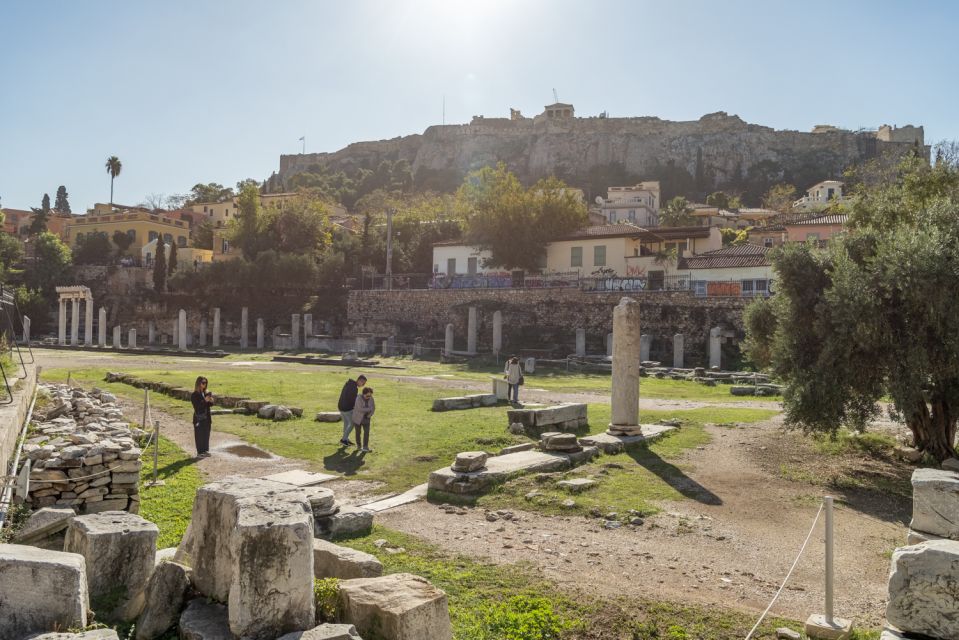
After the main Acropolis monuments, you’ll descend through olive trees to the Plaka area. That’s more than a scenic interlude. The change in environment—stone hill to neighborhood streets—helps your brain reset so the Plaka portion lands with meaning.
The Plaka is described as continuously inhabited since ancient times, and you’ll see why. Your guide will point out how the area preserves layers from ancient Greek to Roman and Byzantine eras, spanning roughly 3,000 years in one compact walk.
Plaka Side Streets, Artisan Shops, and 3 Eras of Athens in One Block
The Plaka part of the tour is about turning your attention outward. You’ll pass small streets and pretty houses, plus monuments you might not notice on your own. This is where the guide’s storytelling stays practical: you’ll get local history and culture tied to what’s around you right now.
You’ll also get help spotting the different types of stops. The area has artisan jewelry and local eateries, but it also includes basic souvenir stalls and standard tourist shops. A good guide helps you notice what’s authentic and what’s just convenient, so you can spend your time (and money) with less guesswork.
Guides in past experiences—like Valia, Lisa, and Delfina—were praised for competence and patience, which shows up especially on this kind of neighborhood walk. You want someone to steer you toward interesting corners, not just keep you moving in a straight line.
Food Option for Families: Classic Plaka Choices, Not Random Snacks
If you add the food option, you’ll stop in the Plaka for classic tastes like Greek coffee or mountain tea, plus a savory choice such as souvlaki or traditional savory pies. You’ll also include sweet/cake delicacies.
This kind of add-on tends to work well for families because it gives structure to meal breaks without requiring everyone to search for a place. It also breaks the day into manageable segments: monument time, neighborhood time, and then food time that feels like part of the experience rather than an interruption.
Price and Tickets: Is $163 Good Value Here?
At $163 per person for a private tour in the 1.5–3 hour range, you’re paying for two things: a licensed archaeological guide and private attention through both the Acropolis and the Plaka (in the main option).
Here’s the key value equation: the Acropolis is where a trained guide really changes outcomes. Without guidance, it can be hard to tell what you’re looking at and why each structure matters. With guidance, you get a structured route, myth and history explained at the right moments, and less time lost figuring out priorities.
Two cost-related points matter for budgeting. Acropolis ticket costs are not included, and skip-the-line tickets are not automatically included either. You can request skip-the-line tickets after booking, but you’ll still want to plan around the possibility of extra steps and costs depending on how you handle tickets.
If you’re traveling with people who want real explanations (not just photos) or you want a low-stress start to Athens, the private format usually feels worth it. If you’re traveling solo with no interest in guided interpretation, you may prefer a self-guided Acropolis visit plus a lighter Plaka stroll.
Practical Comfort and Who Should Choose This
This tour is described as suitable for all ages in terms of pacing and structure, but comfort depends on your body. The Acropolis has steps and uneven surfaces, and the tour is not suitable for people with mobility impairments.
If you’re okay with walking and some standing, this is a very friendly way to experience Athens. The private setup helps the guide adjust pace, and feedback from past tours highlights attention to movement and shade, which is exactly what you want on a hot or sunny day.
Finishing in Plaka (or Back at the Acropolis)
At the end, you can either stay and enjoy the Plaka area, or the guide can return you to the meeting point and help with onward directions. For the Acropolis-only option, you end inside the Acropolis area so you can spend extra time on views and photos.
That flexibility is practical. It means you’re not forced into a hard stop right when the best light or best photo spot hits. You can decide how much time you still want in the neighborhood after the guided portion ends.
Should You Book This Acropolis and Plaka Private Walking Tour?
Book it if you want the Acropolis explained by a licensed archaeologist and you don’t want the day to feel like disconnected sightseeing. The Plaka add-on is a strong payoff because it gives context to what you see—ancient to Roman to Byzantine, plus local craft and everyday life.
Skip or rethink it if mobility is an issue, or if you hate walking on uneven terrain. Also consider whether you’re comfortable handling Acropolis tickets separately and possibly adding skip-the-line tickets by request.
If you’re aiming for a first visit to Athens with good structure, great storytelling, and a neighborhood finish that feels like you actually got your bearings, this is a smart use of a half day.
FAQ
Is the Acropolis admission ticket included?
No. Acropolis ticket costs are not included, so you’ll need to have admission tickets with you before the tour.
Are skip-the-line tickets included?
Skip-the-line tickets are not included by default. You can request them after booking if you want the guide to help with that.
How long is the tour?
The full experience runs about 1.5 to 3 hours, depending on the option you choose.
Is there an option that focuses only on the Acropolis?
Yes. There is an Acropolis-only option that is about 90 minutes, and it ends in the Acropolis so you can stay for photos and views.
Does the tour include the Plaka neighborhood?
For the main option, yes. You’ll get a guided walk through the Plaka for about 1.5 hours, with time for streets, monuments, and shops.
What food is included if I choose the food option?
If you select the food option, the tour includes tastings in the Plaka such as Greek coffee or mountain tea, souvlaki or traditional savory pies, and sweet or cake delicacies.
Where is the meeting point?
The meeting point is Makrigianni 7, Athina 117 42, close to the Acropolis Museum. Your guide will have a sign with your name.
What languages are available?
The live guide is available in German, English, Italian, and Greek.
Is the tour suitable for people with mobility impairments?
No. It is not suitable for people with mobility impairments due to steps and uneven surfaces at the Acropolis.


More Walking Tours in Athens


More Tours in Athens



More Tour Reviews in Athens
- All Day Cruise -3 Islands to Agistri,Moni, Aegina with lunch and drinks included
★ 5.0 · 4,958 reviews