REVIEW · ATHENS
Athens: Acropolis, Parthenon & Acropolis Museum Guided Tour
Book on GetYourGuide →Operated by Athens Walks Tour Company · Bookable on GetYourGuide
Athens feels different when you’re standing on the real stage. This guided walk takes you up to the Acropolis monuments with a licensed guide who turns stone, statues, and myths into a clear story you can follow. I especially like that you get two kinds of payoff: big views over Athens and up-close explanations you can’t easily guess on your own. The second thing I like is the option to pair the walk with the Acropolis Museum, where the sculptures stop being just pretty and start making real sense. One drawback to plan for: it’s not wheelchair friendly, and the climb can be steep, so you’ll want solid shoes and a sensible pace.
If you go, you’ll understand why this hill mattered to ancient Athenians—and why it still matters today. The group walks with assigned hearing devices, so even busy spots feel manageable. And with guides like Elizabeth, Alina, Hermes, and Maria repeatedly praised for story-driven explanations and good pacing, this tour is built for people who want meaning, not just checkpoints.
In This Review
- Quick hits before you go
- Where the Acropolis tour adds real value
- From the Theater of Dionysus to the Parthenon: what you’ll actually see
- Temple of Athena Nike
- The Propylaea gateway
- Theater of Dionysus
- Erechtheion and the Caryatids
- Walking the Parthenon area
- The Parthenon isn’t just one building—it’s a long conversation
- Acropolis Museum: where the sculptures stop being background
- Pacing, steep steps, and how to make the tour pleasant
- Price and ticket math: is $70 actually good value?
- Meeting point and on-the-ground logistics that reduce stress
- Who should book this Acropolis and museum guided tour
- Should you book this tour or go it alone?
- FAQ
- What is included in the Athens Walks guided tour?
- Are entrance tickets to the Acropolis and Acropolis Museum included?
- How long does the tour last?
- Where do I meet the guide?
- What if the Acropolis Museum is closed?
- Do I need to book my tickets online?
- Is this tour suitable for wheelchair users?
Quick hits before you go
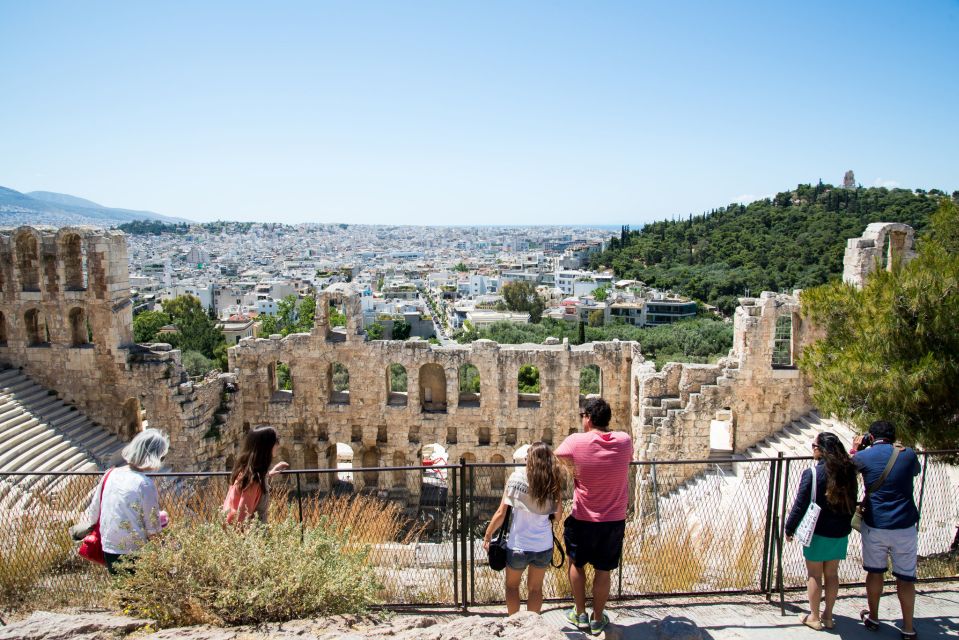
- Skip-the-line help at the Acropolis with a licensed guide and pre-arranged entry approach
- Photo-ready stops with short breaks and viewpoints over the city below
- Caryatids at the Erechtheion explained as more than famous sculptures
- Temple of Athena Nike and the Propylaea gateway put into context, not treated like trivia
- Acropolis Museum galleries that make the sculpture story click
- Monday museum shortcut: if the museum closes at 16:00, the tour shifts to Acropolis monuments and the Ancient Agora
Where the Acropolis tour adds real value
The Acropolis is dramatic on its own. But it’s also confusing if you’re trying to read it cold. You’re looking at temples, gateways, theaters, and fragments that weren’t all built for the same purpose or time period. A guide helps you get your bearings fast—where to stand, what to notice first, and what each structure was doing in the bigger civic and religious picture.
I like that this tour is set up as a walking experience rather than a rushed bus stop. You’re given hearing devices, assigned to a group, and encouraged to ask questions. That matters because the Acropolis isn’t one “moment.” It’s layers: myths, politics, rebuilding after damage, and art that was meant to communicate power.
Also, the tour time is short enough (2 to 4 hours) that you’re not stuck outdoors all day. Still, it’s Athens. Go prepared for sun and heat.
You can also read our reviews of more guided tours in Athens


From the Theater of Dionysus to the Parthenon: what you’ll actually see
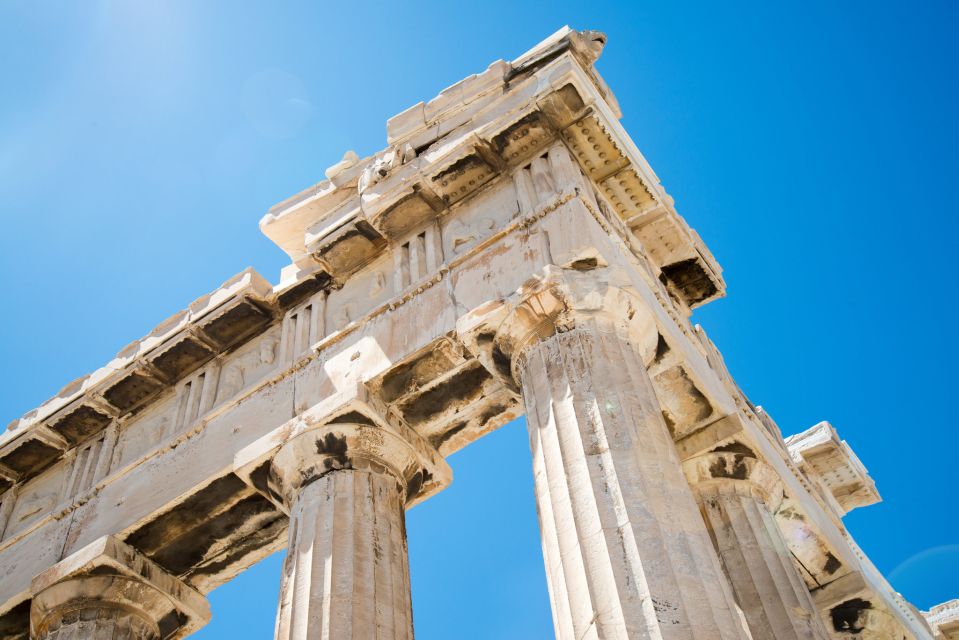
Expect a route that connects key monuments around the Acropolis hill. The highlights you’re told to look for include the Temple of Athena Nike, the gateway of the Propylaea, the Porch of the Caryatids at the Erechtheion, and, of course, the crown jewel: the Parthenon. You’ll also pass by or learn about major nearby sites tied to Athens’ cultural life.
Here’s what those stops mean in plain terms, and why the guide’s job isn’t just naming things:
Temple of Athena Nike
This is the “Wingless Victory” temple. You’ll see the structure and hear why Athena was tied to civic strength and victory narratives. Even if you’ve seen photos, it helps to know what kind of message people were trying to send with this building and its position.
The Propylaea gateway
The Propylaea is more than an entrance. It’s a statement of order and control—an architectural funnel that helps you transition from the everyday city up to a sacred precinct. A good guide points out how the layout shapes your experience as you move through it.
Theater of Dionysus
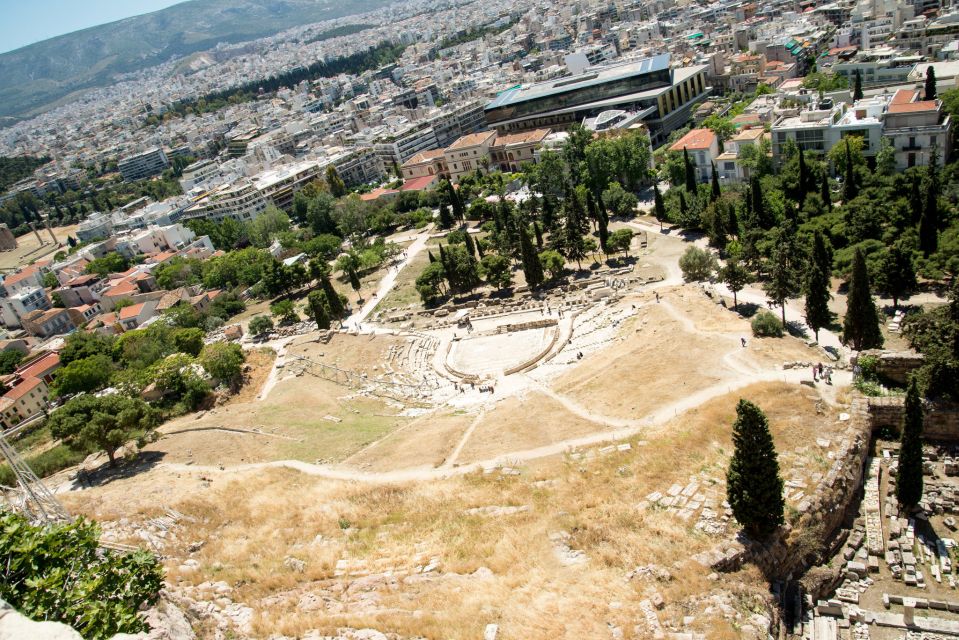
The Theatre of Dionysus often surprises first-timers. This wasn’t just entertainment. It’s tied to the idea of theater as a public ritual that helped shape community identity. If you’re the type who likes “why this place mattered,” this is one of the stops that can make the Acropolis feel alive.
You can also read our reviews of more museum experiences in Athens




Erechtheion and the Caryatids
The Caryatids are famous, but they can look like decorative statues if you don’t know their role. The guide helps you see them as part of a porch area (the Porch of the Caryatids) that connects myth, worship, and architectural style. They’re also a great place to slow down and take photos because the angle and detail reward you for standing still.
Walking the Parthenon area
When you get to the Parthenon, you’ll likely feel the urge to just look up. Resist that for a minute. The most useful guides pause you at key spots and explain what you’re seeing: the building’s religious purpose, the political message woven into art and stone, and how the sculptural program tells a story that stretches across centuries.
And along the way, you’ll hear references to major Athens landmarks beyond the “one building” mindset, like the Odeon of Herodes Atticus and the healing Temple of Asclepius. Even when you’re not standing in every single footprint, the guide stitches the sites together so the Acropolis reads like a connected system.
The Parthenon isn’t just one building—it’s a long conversation

The Parthenon often shows up in your life as an image first. A guide changes the experience because you stop treating it like a postcard and start reading it like a communication.
Here’s the practical magic: when the guide explains how different monuments fit into classical civilization, you get a framework. You begin to notice how the Acropolis balanced religion, civic pride, and artistic ambition. And because sculpture and architecture were built to be seen in specific ways, the guide helps you understand what angles matter and what details are worth your attention.
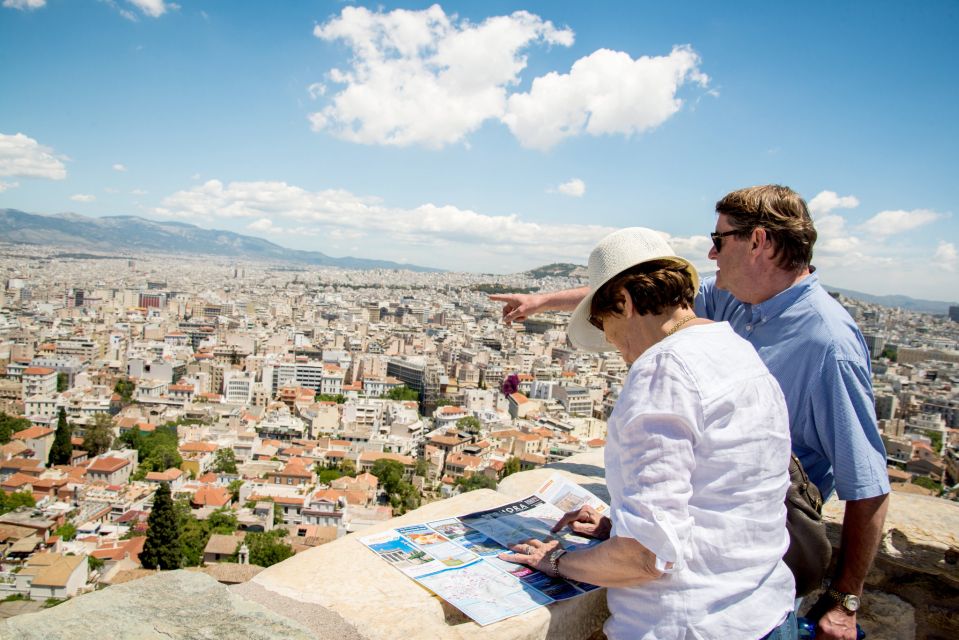
This is also where the “2,500 years of history” idea becomes real. The Parthenon still looks coherent, but the story behind it is not simple. You’re learning about how Athenians used art and sacred spaces to tell identity stories—then you’re looking at modern Athens right below you.
If you like myths, you’ll probably appreciate how the tour connects gods and civic life. In reviews, guides like Elizabeth, Alina, Sophia, Hermes, and Dimitri get praised for exactly that: linking mythology to what you see in front of you, not leaving it as vague legend.
Acropolis Museum: where the sculptures stop being background
If you choose the museum option, the pacing usually works well. The outside visit sets up the questions, and the museum answers them. The Acropolis Museum is described as state-of-the-art, with galleries built for viewing sculptures and relics in context.
This is the part that many first-timers miss when they do the Acropolis “solo.” Outdoors, weather and distance can hide the meaning. Inside, the museum collections let you slow down and see details you didn’t even know to look for.
The museum’s big value is that it turns fragments into a coherent narrative. That’s why guides often explain how the sculpture program relates to the monuments you already visited. If you’ve ever wondered why certain figures or carvings show up repeatedly, this is where you’ll likely feel your understanding click into place.
One practical note for timing: on Mondays, the museum closes at 16:00. If your tour falls on a Monday, your route is adjusted so you visit the Acropolis monuments and the Ancient Agora instead. It’s not the same as a full museum experience, but it keeps you in the story of Athens rather than leaving you stranded waiting.
Pacing, steep steps, and how to make the tour pleasant
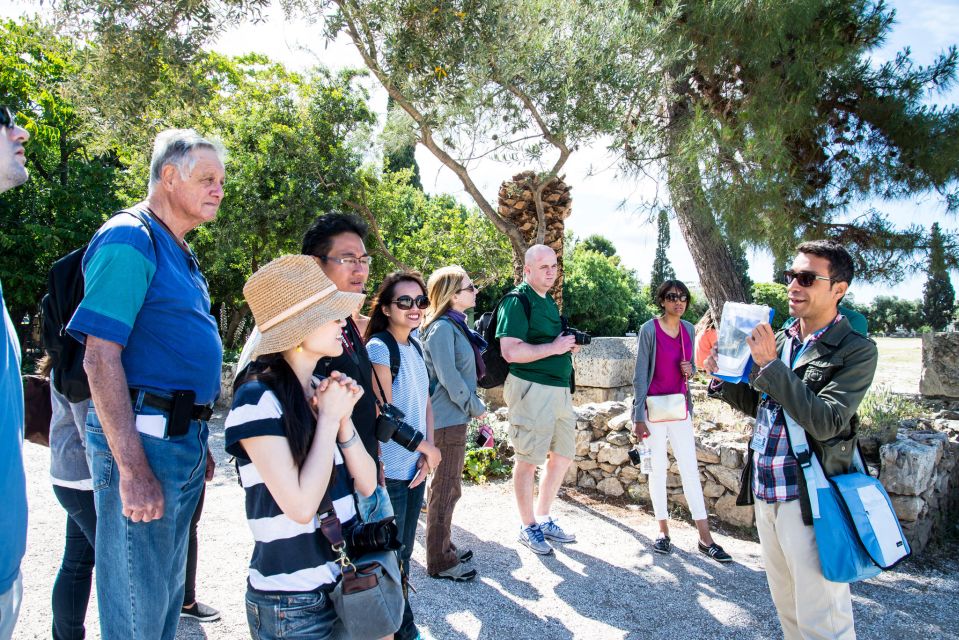
This tour is designed for walking, with a duration listed as 2 to 4 hours. That range gives you a clue: the experience depends on the day, your group, and how long you linger at viewpoints and sculptures.
What you should take seriously is the terrain. The Acropolis is steep. In reviews, guides frequently pause for the climb and break the walking up with stops and facts. That’s a big quality marker. If you’re going with kids, it also helps to have someone who can keep the group moving without steamrolling attention spans.
A few details that can matter more than you’d expect:
- You’ll be provided with hearing devices and assigned to your group.
- The meeting instructions ask you to arrive at least 15 minutes early.
- You should wear comfortable shoes, and bring sunscreen, water, and a hat.
There are also clear limitations. This tour isn’t listed as suitable for wheelchair users, and luggage or large bags aren’t allowed. If you travel with a lot of stuff, plan to keep it minimal.
Price and ticket math: is $70 actually good value?
The tour price is listed as $70 per person, and it includes only the licensed tour guide. Entrance tickets are not included:
- Acropolis entrance: 30€ per person
- Acropolis Museum entrance: 10–20€ per person
So your true day cost is usually guide fee plus museum and Acropolis access. The good news is that the tour is built to help you use that time well. It’s not just entry—it’s interpretation.
Where you get value:
- You save time that you’d otherwise spend trying to figure out what you’re looking at.
- You get guided context for the Parthenon, Erechtheion (Caryatids), and the Propylaea gateway.
- You get skip-the-ticket-line help as described for this experience.
- You’re not stuck translating signs that can be dense and repetitive.
Where you might feel annoyed:
- If you hate “pay extra for entrances” days, the sticker shock can hit. One older review complained about the added cost once entrance tickets were stacked on top of the guide fee. That’s not wrong to notice.
My take: if you’re willing to pay for access anyway, the guide fee is what converts a monument visit into an understanding visit. If you’re on a super tight budget and you want to wander slowly with no structure, you could decide to skip the guide. But if this is your first serious stop in Athens, a guide is often the difference between seeing and getting it.
Meeting point and on-the-ground logistics that reduce stress
The meeting point is at Athens Walks office, Porinou 5, 11742. They say you’ll be waiting at 5 Porinou Street, in the ground floor office. Arrive early so check-in doesn’t eat tour time.
A small but helpful detail: only one person from your group needs to check in indoors. After that, the tour provides hearing devices and assigns you with your group.
Pickup and drop-off are not included, so you’ll want to build time to get there on your own.
One more thing that’s worth doing: the Acropolis ticket instruction says you should book entrance tickets online at the official etickets.tap.gr site before the tour. Even if the guide handles the skip-the-line approach, you still need the tickets sorted.
Who should book this Acropolis and museum guided tour
This is a strong fit if:
- You want your first Acropolis visit to make sense without studying for months first.
- You like mythology plus architecture plus art history stories tied to what you see.
- You appreciate pacing and photo breaks rather than a sprint.
It’s also a good choice for families. In reviews, guides like Anna and Maria get praised for being patient with kids and adjusting to heat and energy levels. If you’re traveling with teens, this matters because the Acropolis is impressive but not automatically engaging on its own.
Language coverage is solid: English, Italian, German, French, and Spanish.
And if you’re the type who wants a private group option, that’s available too. Many people like having fewer distractions and fewer people to work around when you’re trying to hear details.
Should you book this tour or go it alone?
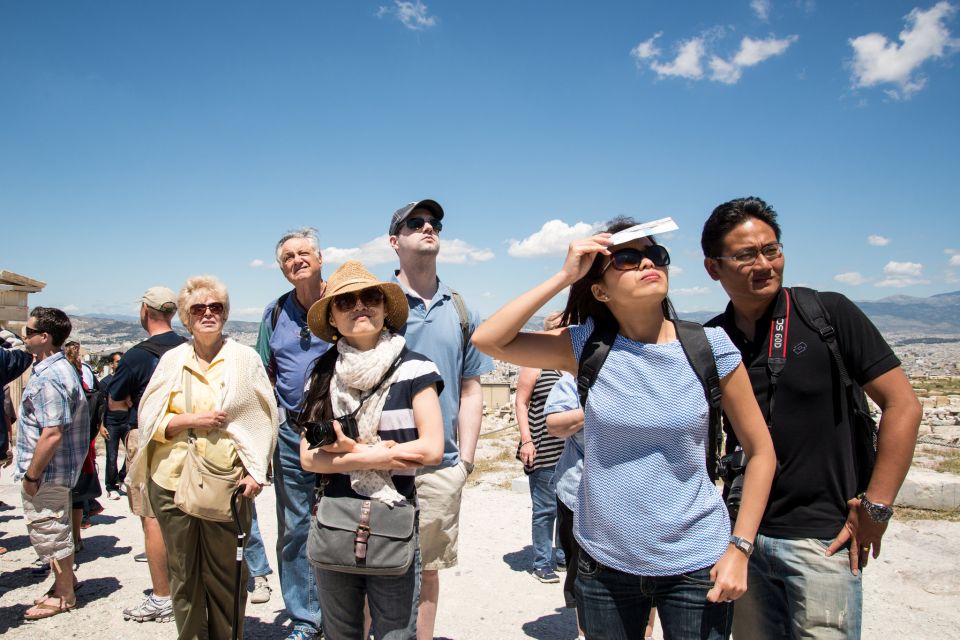
Book it if your priority is meaning. This tour is built to explain how the monuments work together—temple, gateway, theater, sculpture—so the Acropolis doesn’t feel like a collection of random ruins. It also helps if you’re short on time and don’t want your day consumed by figuring out what to look for next.
Skip the guide if you already have a plan and a strong interest in going at your own pace without structure. The Acropolis is beautiful enough that a self-guided visit can still be satisfying.
If you do book it, my advice is simple:
- Wear shoes you trust on steep stone.
- Bring sun protection and water.
- Pre-plan your entrances online.
- Go in willing to stop and look up—then listen for why the guide wants you to notice what you’re seeing.
FAQ
What is included in the Athens Walks guided tour?
The tour includes a licensed tour guide. You’ll also be provided with hearing devices and assigned to your group.
Are entrance tickets to the Acropolis and Acropolis Museum included?
No. Acropolis tickets are 30€ per person, and Acropolis Museum tickets are 10–20€ per person (depending on the ticket type).
How long does the tour last?
The duration is listed as 2 to 4 hours.
Where do I meet the guide?
Meet at the Athens Walks office at Porinou 5, 11742. They ask you to arrive at least 15 minutes early and meet at the ground floor office on Porinou Street.
What if the Acropolis Museum is closed?
On Mondays, the Acropolis Museum closes at 16:00. In that case, the tour visits the Acropolis monuments and the Ancient Agora instead.
Do I need to book my tickets online?
Yes. The instructions say to book your Acropolis entrance tickets online at the official site (etickets.tap.gr) before the tour.
Is this tour suitable for wheelchair users?
No, it is not listed as suitable for wheelchair users.



More Guided Tours in Athens

More Tours in Athens



More Tour Reviews in Athens
- All Day Cruise -3 Islands to Agistri,Moni, Aegina with lunch and drinks included
★ 5.0 · 4,958 reviews