REVIEW · ATHENS
Acropolis and Acropolis Museum (Small Group Afternoon Walking Tour)
Book on Viator →Operated by Mister Plato · Bookable on Viator
The Acropolis hits different after museum context. This small-group afternoon tour pairs the Acropolis Museum with a south-slope climb, so the Parthenon sculptures and myths click fast, while you still get time for serious views.
I love starting inside first, so you understand what you’re looking at before the climb (models, key finds, and sculpture details). I also love the photo-friendly route with focused stops like Temple of Athena Nike, Mars Hill, and the Odeon of Herodes, guided by pros such as Nikos/Nico/Nicholas.
One thing to plan for: entrance tickets aren’t included in the tour price, and they’re bought in cash from the guide (50 EUR total for Acropolis + Museum), so budget a bit more and bring the right cash.
In This Review
- Key highlights if you only have 30 seconds
- Why this afternoon timing works so well
- Meeting at Makrigianni 4 and getting settled fast
- Acropolis Museum: the best warm-up for first-timers
- Parthenon sculptures and the color you can still spot
- Erectheion maidens and the myth layer on top
- The south-slope walk up: more than just the big view
- Temple of Athena Nike, Philopappus, and the Odeon still in use
- Mars Hill: a quick stop with big meaning
- Top-of-the-hill stops: Parthenon and Erectheion in real scale
- Price and value: what you’re really paying for
- Pacing, shoes, and comfort on real terrain
- Small group size: when it feels close to private
- Who should book this tour
- Should you book the Acropolis and Acropolis Museum afternoon tour?
- FAQ
- How long is the Acropolis and Acropolis Museum small group afternoon walking tour?
- What time does the tour start?
- Where do I meet the guide?
- Is the tour in English?
- Are entrance fees included in the price?
- Does the tour include skip the line service?
- How many people are in the group?
- What about children and youth admission?
- Is the tour difficult to walk?
Key highlights if you only have 30 seconds
- Museum first, big payoff: you see models and major sculptures before you climb.
- Skip-the-line service: the guide handles entry timing so you lose less time.
- Real sculpture details: traces of Parthenon color plus named statues like the calfbearer.
- A south-slope route with meaning: Dionysos Theater, Asclepios, Mars Hill, and more.
- Small group size (max 10): easier pacing, hearing the guide, and photo stops.
Why this afternoon timing works so well

Athens is best when you don’t treat the Acropolis like a race. Starting in the late afternoon is a smart move because the light softens, heat usually eases up, and the city feels easier to enjoy than a mid-day slog. The schedule also means you’ll spend your “most intense” time when your energy is still decent.
You’ll get that classic Acropolis feeling without being stuck in a long waiting-and-sweating loop. And since the tour is designed around two linked visits, you’re not bouncing between random stops with no context.
You can also read our reviews of more walking tours in Athens
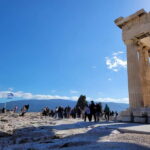

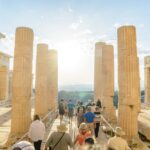
Meeting at Makrigianni 4 and getting settled fast
You’ll start at Makrigianni 4 (near public transportation), with a 4:00 pm departure. The tour provides a mobile ticket, so you should be able to show your confirmation on your phone rather than hunting down paper.
This matters more than it sounds. A smooth start keeps the day relaxed, and the walking portion tends to go better when you’re not trying to locate your group in the first few minutes.
Acropolis Museum: the best warm-up for first-timers
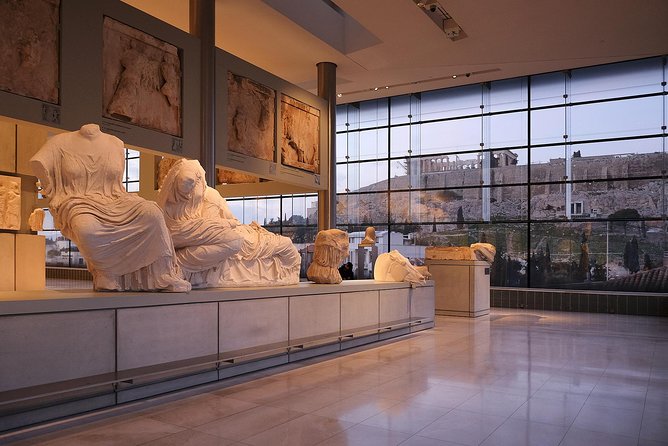
If you’re the type who wants the big sites to make sense, the museum-first setup is a win. Before you even enter, you’ll look at remains of an ancient neighborhood lying underneath, which gives you that rare sense of how the area functioned over time—not just what stands on top today.
Inside, the experience is built around connections. You’ll see models of the Acropolis and ancient Athens, then move through important finds from the slopes of the Acropolis. That ordering helps you stop thinking in fragments and start recognizing themes: religion, power, art, and civic identity.
Parthenon sculptures and the color you can still spot
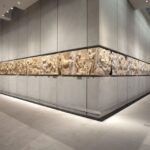
One of the most memorable parts is the chance to see Parthenon sculptures in context, including the first Parthenon elements dating to the 6th century B.C. You’ll also get a guide’s explanation of the traces of color that still can be discerned. Even if you’ve seen photos before, this is the kind of detail that changes how you read the monuments.
You’ll also meet famous archaic statues, including the calfbearer and the child of Kritias. Hearing what they are and why they matter makes them feel less like museum objects and more like a visual language—one that was meant to be seen from real public space.
Erectheion maidens and the myth layer on top
The tour also highlights golden-age sculpture through figures that once decorated the Erectheion, including the Caryatids. Then you’ll head to the third floor for the Parthenon Gallery, where the guide explains the main concept and the arrangement of what you see.
This is where stories do real work. Myth ties the sculptures together, and the layout helps you understand how artists and patrons wanted the experience to feel. For me, this is the difference between seeing a building and actually understanding why it was built.
A practical note: the museum time is about 1 hour 30 minutes, and entrance is not included. That’s a good length for a small-group experience without turning the visit into a marathon.
You can also read our reviews of more museum experiences in Athens


The south-slope walk up: more than just the big view
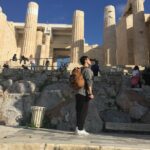
After the museum, you’ll walk with your guide along the south slope of the Acropolis. This part isn’t only about reaching the top. It’s designed to layer the site—so you understand the Acropolis as a whole complex, not just a final photo moment.
You’ll start by heading toward the Dionysos Theater, one of Greece’s oldest theaters. Next comes the Sanctuary of Asclepios, associated with medicine. That pairing alone helps you see how the Acropolis wasn’t just a temple area—it also served social, cultural, and spiritual needs.
Temple of Athena Nike, Philopappus, and the Odeon still in use
You’ll stop at the delicate Temple of Athena Nike, which is easy to overlook if you’re only scanning for the Parthenon. Then you’ll learn about the funeral monument of Philopappus, which adds a different kind of history—one tied to people and their legacy, not just mythology.
You’ll also take in views of the Odeon of Herodes, where concerts are still held. Even if you never catch a performance, seeing the theater standing in a living city gives you perspective. This is the Acropolis as a long-used stage.
Mars Hill: a quick stop with big meaning
One of the most interesting moments is Mars Hill, where St Paul spoke of the unknown God. It’s a short connection on the route, but it helps you understand why people have kept coming back to this hill for centuries. The Acropolis has never been only ancient; it has always been part of newer stories.
The route continues to the monumental gate called the Propylaea. That last “approach moment” matters, because it prepares you for the final views in a more satisfying way than stumbling into them.
Top-of-the-hill stops: Parthenon and Erectheion in real scale
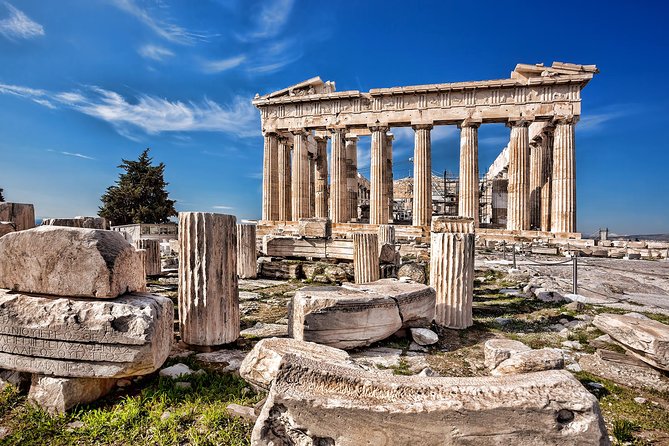
When you reach the top, you’ll spend time around the Parthenon and the Erectheion. This is where the whole day pays off. After the museum, you’re not just looking up at a structure—you’re looking up with a mental map of sculpture, purpose, and design choices.
The Erectheion’s forms are especially easier to appreciate when you’ve already seen the Caryatids up close. And with the Parthenon, your eyes will likely track different details, because you’ve already been told what to look for and why certain pieces were shaped the way they were.
You’ll also be given time for pictures and walking around. That flexibility is a real quality-of-life feature. At the Acropolis, “seeing everything” is less important than seeing the right things well, without feeling rushed.
Price and value: what you’re really paying for
The tour price is $61.47 per person, and the advertised duration is about 3 hours 15 minutes. That timing usually works out as a structured museum visit plus a guided climb and viewpoint stops, without turning the afternoon into a full day commitment.
But the big thing for budgeting: entrance fees are separate. You’ll pay 30 EUR for the Acropolis and 20 EUR for the Acropolis Museum, for 50 EUR total per person. Those tickets are purchased in cash from the guide.
So the value question becomes: does the experience justify both the tour fee and the on-site entrance cost? For me, the answer is yes if you care about context. The guide’s explanations connect museum sculptures to what you can see on the hill, and that makes the site feel less like a checklist and more like a story you can follow.
Also, the tour includes skip-the-line service. That doesn’t magically erase crowds, but it does reduce wasted time. On a crowded day, saving even 20 to 40 minutes can be the difference between enjoying the views and just enduring the visit.
Pacing, shoes, and comfort on real terrain
This is listed as requiring moderate physical fitness. The good news is the tour is paced for a smooth flow rather than a sprint. It’s also designed as a small group experience with a maximum of 10 travelers, which helps with hearing the guide and adjusting at the right moments.
One practical tip I’d take seriously: wear shoes with traction. The marble and stone surfaces can be slippery, and a careful guide will often steer the group based on footing and safety. If you’re traveling in warmer weather, plan for uneven shade and direct sun on the hill.
Rain can also happen in Athens. Guides here are used to adapting so you don’t lose the value of the tour if weather turns.
Small group size: when it feels close to private
The maximum group size is 10, which is ideal at the Acropolis Museum. You get enough conversation to ask questions, without feeling like you’re shouting over a crowd. In some cases, the group can be very small, which can make the experience feel much more personal and flexible.
A small group also supports photo time. You’re not forced to rush through stops while everyone else shoulder-checks for the next angle. It’s a relief to get time to frame shots and actually enjoy where you’re standing.
Who should book this tour
This one fits best if you want:
- A first-time Athens visit with context, not just landmarks
- Sculpture and myth explained in plain language
- A guided route that includes both the museum and the Acropolis itself
- A manageable afternoon length with a small group
It’s also a strong pick for visitors who don’t want long stretches of standing. Several experiences like this tend to be easier on people who prefer an organized pace, including families with kids who qualify for the discounted entry setup.
Should you book the Acropolis and Acropolis Museum afternoon tour?
If you’re choosing between doing these sites on your own and having structure, I’d lean toward booking this. The museum-first design is the key. It turns the Acropolis into something you can interpret, instead of just a pile of famous stones.
Book it if you value a guide who can point out the details—like the Parthenon’s color traces, the specific named statues in the museum, and the meaning behind stops such as Mars Hill. And because the tour includes skip-the-line help and keeps groups small, it also tends to feel efficient.
Skip it only if you already know the art and myths inside out and you prefer total freedom with zero guided explanation. In that case, you might prefer a self-paced plan.
One final nudge: the tour includes free cancellation up to 24 hours before the start time, so you can book with confidence and adjust if your schedule shifts.
FAQ
How long is the Acropolis and Acropolis Museum small group afternoon walking tour?
The tour is approximately 3 hours 15 minutes.
What time does the tour start?
It starts at 4:00 pm.
Where do I meet the guide?
The meeting point is Makrigianni 4, Athina 117 42, Greece.
Is the tour in English?
Yes, it’s offered in English.
Are entrance fees included in the price?
No. Entrance fees are not included. You’ll pay 30 EUR for the Acropolis and 20 EUR for the Acropolis Museum in cash to the guide.
Does the tour include skip the line service?
Yes. Skip the line service is included.
How many people are in the group?
The tour has a maximum of 10 travelers.
What about children and youth admission?
Persons under 18 years old are entitled to a free entrance ticket with ID presented at the entrance.
Is the tour difficult to walk?
It’s designed for travelers with moderate physical fitness. You should be prepared for walking and uneven stone terrain.




More Walking Tours in Athens


More Tours in Athens


More Tour Reviews in Athens
- All Day Cruise -3 Islands to Agistri,Moni, Aegina with lunch and drinks included
★ 5.0 · 4,958 reviews