REVIEW · ATHENS
4-Day Classical Tour Greece: Epidaurus, Mycenae, Olympia, Delphi, Meteora
Book on Viator →Operated by Filippis Tours · Bookable on Viator
Five classical hits in four days sounds intense. It is, but what makes this tour work is the licensed guide who puts each place in context and the fact that site tickets are handled for you. I like that your days feel structured: you’re not hunting buses, not doing ticket math, and not losing hours to logistics when the goal is to see the best of mainland Greece.
One possible drawback: the pace is fast, so time at the ancient sites can feel tight. You’ll often have short, guided-and-go visits (around 90 minutes), and after some archaeological stops you may also be brought to craft-style shop breaks like pottery or silversmiths, which is great for some people and less ideal for others.
In This Review
- Key Points to Know Before You Go
- A Fast Route Through Classical Greece (Starting in Athens)
- Epidaurus Theatre: Where Acoustics Do the Talking
- Nafplion’s Colorful Break Before Mycenae
- Mycenae: Tomb of Agamemnon and the Archaeological Site
- Olympia: Sanctuary of Zeus, Stadium, and Museum Time
- Delphi on the Slopes: Museum, Sanctuary, and Wear-Your-Shoes Terrain
- Meteora: Two Byzantine Monasteries on Monster Rocks
- Price and Value: What $781 Buys You (and What It Doesn’t)
- Who This 4-Day Classical Tour Fits Best
- Should You Book This Tour?
- FAQ
- How long is the tour?
- Where does the tour start and end?
- Is pickup available from all parts of Athens?
- What language is the tour offered in?
- What’s included in the price?
- What are not-included expenses to plan for?
- Is there a city tax?
- Is Delphi difficult to visit on foot?
- How many monasteries do you visit at Meteora?
- What’s the cancellation policy?
Key Points to Know Before You Go
- Hotel pickup is only from central Athens (not the whole city), which makes the start simpler for the group.
- Entrances, museums, and taxes are included, so you can focus on walking and learning instead of budgeting each site.
- Epidaurus, Mycenae, Olympia, Delphi, and Meteora are all covered in one tight mainland route.
- Meteora includes two Byzantine monasteries plus a look at rare Byzantine artifacts.
- Delphi has uphill terrain and stairways, so bring shoes you can trust.
- Group size tops out at 50, which helps keep things organized on crowded days.
A Fast Route Through Classical Greece (Starting in Athens)
This is the kind of tour that makes sense when you want big-name sites without the headache of arranging everything yourself. You start in Athens with a meeting point at Leof. Vasilisis Amalias 22-24, and pickup is offered only from hotels in the center of Athens city. The tour runs in English, with a professional/licensed guide, and there’s a 50-person maximum—big enough to feel lively, small enough that you’re not getting lost in the crowd every two minutes.
What I like most for practical travelers is that the logistics are handled. You’ll be driven between regions—coastal Attica roads, central Peloponnese towns, and up to central Greece—so you can spend your energy on photos, questions, and actually seeing the places. And since entrance fees and museum tickets are included, you avoid that common pain point where a day of sightseeing turns into a last-minute line-and-payment marathon.
The tradeoff is that “see everything” requires “see it quickly.” You’ll be on the move daily, and you should expect short visits at several highlights. If you’re the kind of person who likes to linger and read every sign twice, build in the mental expectation that this is a guided overview tour with very full days.
You can also read our reviews of more tours and experiences in Athens
Epidaurus Theatre: Where Acoustics Do the Talking
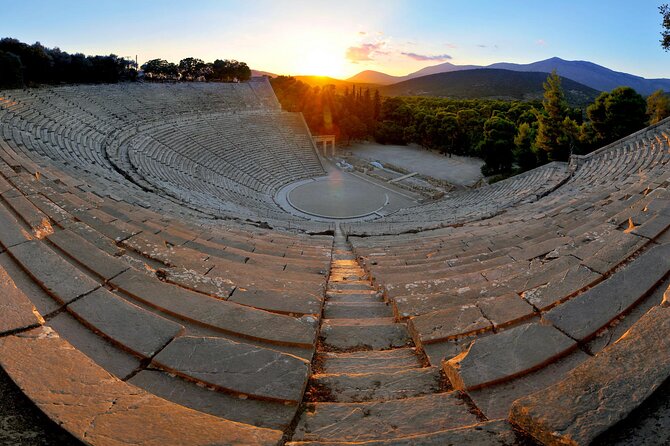
Your first major stop is the Ancient Theatre of Epidaurus, reached after a coastal drive from Attica. On the way, you get a quick break for coffee and photos at the Corinth Canal viewpoint—quick, scenic, and useful if you’re arriving cranky and need caffeine to power up.
Then comes Epidaurus. This theatre is famous for its near-perfect acoustics, and it’s one of those spots where the design is the story. Even if you don’t plan to test the sound with dramatic whispering (please don’t stand on the seats), you can feel why ancient people cared so much about performance. The semicircular arrangement and the way sightlines work make the whole place feel intentionally built, not just ancient leftovers.
You’ll have about an hour there, plus admission is included. Practical tip: plan to move at a steady pace. This is a walking site, and you’ll want time to scan the view from different angles before your group shifts.
Nafplion’s Colorful Break Before Mycenae
Next is Nafplion, a short pit stop that’s more about resetting your senses than ticking off a major museum. It’s described as a picturesque, colorful small city, built at the foot of a rocky hill, with old fortifications and elegant houses. In other words: this is a breathing space between big-ticket archaeology.
The stop is brief—around 20 minutes—and admission isn’t required. Use it for what a short stop is best for: a quick photo, a stroll to get your bearings, and maybe a snack if you’ve been moving since morning. Then you’re off toward Mycenae.
This “micro-break” matters more than it sounds. After Epidaurus’ stone-and-slope walking, you’ll appreciate a few minutes that aren’t about climbing into ruins.
Mycenae: Tomb of Agamemnon and the Archaeological Site
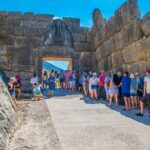
Mycenae is where the tour shifts from theatre to empire—myth meets hard stone. You visit the Archaeological Site of Mycenae and the Tomb of Agamemnon. That pairing is powerful because it gives you two ways to experience the past: first through the broad archaeological complex (walls, structures, layout), and then through the specific tomb association.
The highlight here is the context your guide provides. Sites like Mycenae can feel like “another set of ruins” if you’re not given the story of why people built, lived, and buried here. With a licensed guide and included time on-site, you’ll usually get the kind of framing that makes the walls and gates feel purposeful.
Your Mycenae visit runs roughly an hour, after which you drive onward through central Peloponnese toward Olympia. The route passes through Tripolis and Megalopolis, and dinner and overnight are in Olympia. Expect a full day’s rhythm: look, learn, drive, eat, sleep, repeat.
Olympia: Sanctuary of Zeus, Stadium, and Museum Time
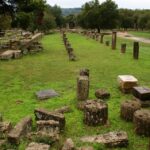
Olympia is where the tour hits the sports myth. You start with breakfast at the hotel, then head out to the Archaeological Site of Olympia. The landmarks you’ll meet include the Sanctuary of Olympian Zeus, the Ancient Stadium, and the Archaeological Museum.
Olympia works especially well on a guided itinerary because the site spans multiple functions: sacred sanctuary, athletic competition ground, and later-era museum storytelling. The Ancient Stadium is the moment people usually picture from ancient photos, but the sanctuary area gives the deeper sense that games weren’t just entertainment—they were tied to religious life.
After your archaeological visit, you travel through the plains of Ilia and Achaia and cross the bridge that links Rion to Antirion over the Corinthian Bay. You’ll also pass towns like Nafpactos (Lepanto) and Itea. This isn’t just scenery. It’s the practical side of the route that makes a 4-day mainland trip possible without you constantly changing plans.
You’ll finish the day with dinner and sleep in Delphi. Admission to Olympia is included, and the guided time keeps you from wandering aimlessly.
- All Day Cruise -3 Islands to Agistri,Moni, Aegina with lunch and drinks included
★ 5.0 · 4,958 reviews




Delphi on the Slopes: Museum, Sanctuary, and Wear-Your-Shoes Terrain
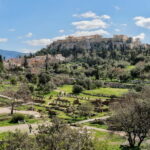
Delphi is one of the most famous places in Greece, and this tour makes it efficient: Museum and Archaeological Site of Delphi in the morning, then a drive to Kalambaka. The only true warning in the details is terrain. Delphi sits on the slopes of Mount Parnassus, with uphill sections and stairways. It might be moderate if you’re not in great shape, so treat good shoes as non-negotiable.
Delphi’s appeal is its mix of museum interpretation and outdoor atmosphere. The Museum helps you understand what you’re seeing, while the Archaeological Site lets you connect artifacts to place—sanctuary areas, stone remnants, and the sense of elevation that made Delphi feel so otherworldly.
You’ll have about two hours total, and admission is included. That’s enough time to get the big points, but not enough if you want to read every sign slowly with a pen in hand. If you tend to take photos constantly, plan breaks for your legs before the stairs start stacking up.
After Delphi, you head to Kalambaka, a small town at the foot of Meteora’s rocky complex, where you dine and rest for the next day’s monasteries.
Meteora: Two Byzantine Monasteries on Monster Rocks
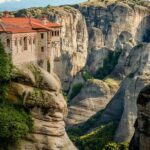
Day 4 is Meteora, and it’s the kind of place you feel in your body. Huge rock formations rise above you like someone stacked the world’s giant building blocks. Meteora monasteries are Byzantine, perched high, and built to last. Your visit includes two Byzantine monasteries and time to observe rare Byzantine artifacts.
What makes Meteora worth a whole day on a tour like this is the contrast. You go from archaeological stone stages (Epidaurus, Mycenae, Olympia, Delphi) to something that still functions as religious architecture—alive in its setting even if you only observe from the outside or in designated areas.
You’ll start with an early breakfast, then head into the monastery route. Expect stairs and uneven paths around the viewpoints. Bring layers; mornings can feel cooler up there even on hot days below.
By the end, you drive back via Trikala and Lamia. Thermopylae is on the way, and you’ll make a brief stop at Leonida’s Monument before returning to Athens in the early evening and ending back at the meeting point.
Price and Value: What $781 Buys You (and What It Doesn’t)
At around $781 per person for 4 days, the value is best understood by what’s included. You get:
- A professional/licensed guide
- Entrance fees for archaeological sites and museums
- Taxes and fees
- Dinner (3) and breakfast (3)
- Organized transport between regions
- Pickup from central Athens hotels (with limits)
That’s a lot of “hidden costs” handled up front. When you travel independently, the time you spend booking tickets, figuring routes, and lining up transportation adds up quickly. Here, the itinerary trades flexibility for momentum. If your goal is to see Epidaurus, Mycenae, Olympia, Delphi, and Meteora without losing half your trip to logistics, that’s where the money goes.
What’s not included:
- Water and drinks during meals
- Personal expenses and tips
- City tax at the hotel (3-star: 5€ per room per night; 4-star: 10€ per room per night), paid directly at the hotel
My practical advice: budget for small day-time expenses and plan to carry water during long driving days. And since the pace is busy, tips often feel more optional than you think—but that’s up to you.
Who This 4-Day Classical Tour Fits Best
This itinerary fits best if you want a structured overview of mainland Greece’s most famous classical sites, and you like having a guide connect the dots. It’s also a strong fit if you’re short on time, traveling solo or in a small group, or you don’t want to coordinate multiple train transfers and ticket queues on your own.
It might feel too fast if:
- You like long, quiet museum time
- You want to “read the site” slowly rather than hear the guided summary
- You strongly dislike shop-style breaks between major sights
On a bright side, the included breaks (like the coffee/photo stop and the Nafplion reset) help the day breathe. You just shouldn’t expect full-on slow travel.
Should You Book This Tour?
I’d book it if you want a guided, efficient route that covers Epidaurus, Mycenae, Olympia, Delphi, and Meteora in one go, with entrances and meals partially taken care of. It’s especially worth it when you value the driver-and-guide combo and you’d rather spend your time absorbing history than solving transportation puzzles.
Skip or reconsider if you know you need more time at each site. This is a “big hits” itinerary. The upside is seeing everything without stress. The downside is not having hours to linger at every ruin.
If you’re unsure, choose based on your walking tolerance for Delphi’s stairs and your comfort with a busy day schedule. If that sounds doable, you’ll probably leave with a strong sense of how the ancient world moved across regions—and how the gods, games, and myths connect from place to place.
FAQ
How long is the tour?
It’s a 4-day tour, with timing described as approximate.
Where does the tour start and end?
The meeting point is Leof. Vasilisis Amalias 22-24, Athina 105 57, Greece, and the tour ends back at the same meeting point.
Is pickup available from all parts of Athens?
Pickup is only available from hotels located in central Athens city. If you want pickup from another location, you can request it and the operator will advise the closest available option.
What language is the tour offered in?
The tour is offered in English.
What’s included in the price?
The tour includes a professional/licensed guide, entrance fees for archaeological sites and museums, taxes/fees, and 3 dinners plus 3 breakfasts.
What are not-included expenses to plan for?
Water and beverages during meals, personal expenses, and tips are not included.
Is there a city tax?
Yes. City tax is paid directly at the hotel (3-star: 5€ per room per night; 4-star: 10€ per room per night).
Is Delphi difficult to visit on foot?
Delphi is located on slopes and includes uphill sections and stairways, so it may be moderate for people not in good fit.
How many monasteries do you visit at Meteora?
You visit 2 Byzantine monasteries, with time to observe rare Byzantine artifacts.
What’s the cancellation policy?
Cancellation is free up to 24 hours in advance for a full refund. The experience may also be canceled if weather conditions are poor, with a different date offered or a full refund.



More 4-Day Experiences in Athens

More Tours in Athens


More Tour Reviews in Athens
- All Day Cruise -3 Islands to Agistri,Moni, Aegina with lunch and drinks included
★ 5.0 · 4,958 reviews