REVIEW · ATHENS
Sparta, Mystras & Limeni Traditional Village Private Day Tour
Book on Viator →Operated by CRISPY LOCAL MONOPROSOΡΙ Ι.Κ.Ε. · Bookable on Viator
A Byzantine ghost city and sea-blue village in one day. I love how Mystras makes the Byzantine world feel real, and I also like the relaxed shift to Limeni’s coastal lanes and stone towers. One drawback: this is a long day, and if rain rolls in, outdoor viewpoints can get cut short.
You’ll leave Athens by private pickup and spend your time with a driver who can explain the stories as you travel. The tour is built around big-name sites, but it also keeps room for quieter places like Areopoli and the Mani coast.
In This Review
- Key points to know before you go
- A long Peloponnese day that doesn’t feel random
- Corinth Canal walk: short stop, fast payoff
- Mystras: the UNESCO ghost city with Byzantine churches still in use
- Timing and what you’ll likely focus on
- Real-world drawback: weather and footing
- Sparta in a day: Leonidas markers and ancient theater vibes
- Leonidas Monument and Spartathlon
- Olive Oil Museum: what you learn (and what you pay for)
- Areopoli and Limeni: Mani’s coast without the crowds feeling
- A practical tip
- Price and logistics: where the $290.89 per person makes sense
- Who this tour fits best
- Should you book this private day tour from Athens?
- FAQ
- How long is the Sparta, Mystras & Limeni tour?
- Where does the tour start and end?
- Is the Corinth Canal stop included, and do I need to pay admission there?
- Are entrance fees included for Mystras and the olive oil museum?
- Will there be a licensed guide inside archaeological sites?
- What stops are free on the itinerary?
- Is lunch included?
- How do you get tickets?
- What happens if weather is poor?
Key points to know before you go
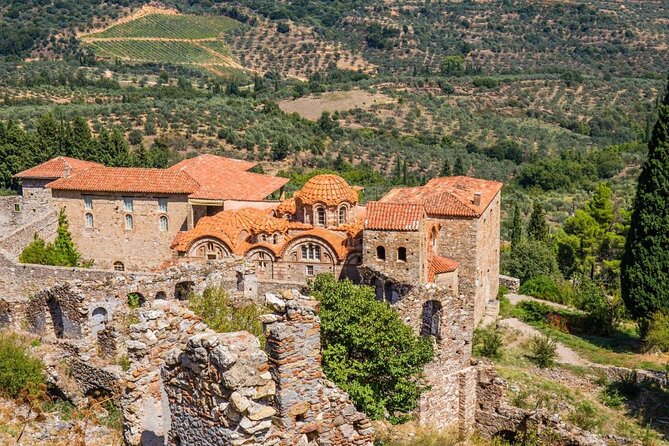
- Mystras is a layered UNESCO site, where Byzantine churches, ordinary houses, palaces, and Frankish elements sit inside a fortified citadel.
- You’ll see Sparta’s key markers fast: the ancient theater/acropolis area plus the Leonidas Monument tied to the Spartathlon race.
- Olive oil isn’t just a stop: the museum is where you learn how Greek olive oil is made (tickets not included).
- Limeni is the mood shift: turquoise water views, stone towers along the coast, and small alley streets that feel still lived-in.
- Your driver can teach history, but you should plan on entry tickets and the possibility of needing licensed guides inside certain sites.
- Weather matters for comfort and timing, especially on open-air viewpoints like Mystras.
A long Peloponnese day that doesn’t feel random
This is a private day tour from Athens, built for maximum variety: canal views, a UNESCO Byzantine city, Sparta’s ancient identity, then Mani’s coastal villages. The route has a clear shape. You start near Corinth, push south into the Peloponnese interior for Mystras and Sparta, and then end down in the Mani region for Limeni.
The practical part is that you’re on the move for most of the day. The upside is you get a lot of “big scenes” without the stress of renting a car or navigating between sites. The included private transport also means you can keep your bag simple and focus on getting your bearings and enjoying each stop.
One more detail I appreciate: you’re not relying on a scripted monologue the whole way. The tour’s professional driver has deep knowledge of history, but they’re not licensed to lead inside archaeological sites. That means you’ll get context during the drive and at the stops, while the actual on-site guiding may depend on what’s included at each location.
You can also read our reviews of more private tours in Athens

Corinth Canal walk: short stop, fast payoff
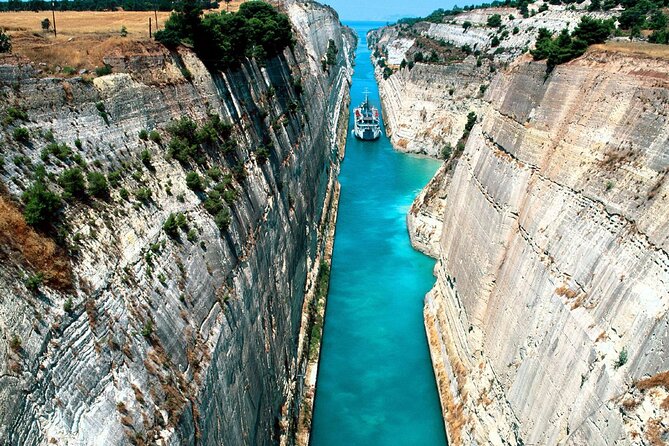
First comes the Corinth Canal. You’ll drive through seaside scenery along the coast, with a view of Greek fishing/village life and even Salamis in the distance—linked to the historical naval battle between the Athenians and Persians.
Then you get a quick break at the canal itself. The canal opened in 1892, and it separates the Peloponnese peninsula from the rest of Greece while connecting the Saronic Gulf to the Corinthian Sea. The best part here is the simple one: you can walk across the pedestrian bridge for closer canal views and photos.
This stop is brief on purpose. At this point in the day, you mainly want two things: a quick visual win and a stretch break before the long drive toward Mystras.
Mystras: the UNESCO ghost city with Byzantine churches still in use
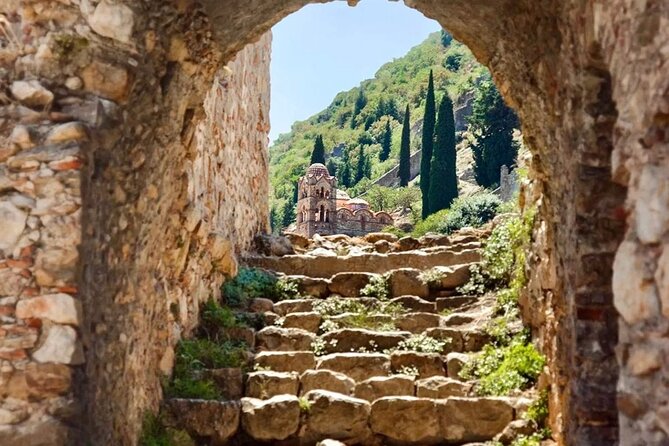
If you only have time for one “must-do” portion of the day, it’s Mystras. The site is often described as a ghost city, and that nickname makes sense once you see the scale of the citadel and how the buildings sit on the hillside. But it’s not dead. Some monasteries are still in use, and you may be able to see the living rhythm of the place—monks who can show you around their small society.
What makes Mystras special is that it isn’t one single era packed into one courtyard. It’s a complex of palaces and buildings from the Byzantine world, and it also preserves Frankish elements. You’re not just looking at ruins; you’re moving through a preserved layout that includes medieval churches plus the ordinary houses, mansions, and palace spaces of Byzantine life.
Timing and what you’ll likely focus on
Your time is split into two Mystras-related blocks:
- one stop tied to the archaeological site area (entrance fee not included)
- another stop that covers walking and highlights around the Mystras area (described as free entry)
In both, expect a lot of walking on uneven terrain. The route typically helps you climb up to the citadel for the panoramic look, then work back down toward the palaces and courtyards.
A standout detail mentioned for the chapel of St. Demetrios: on its floor is a plaque with a two-headed eagle, the symbol of Byzantium. The info you’ll hear connects that symbol to Konstantine Palaiologos, who kneeled there before being crowned the last emperor of Byzantium. Even if you don’t memorize every name, that kind of specific story makes the stones feel like they belong to real people.
Real-world drawback: weather and footing
Mystras is both dramatic and practical-demanding. Rain can make the hillside pathways slippery, and poor weather can limit how long you want to stay out in open viewpoints. One good move: if rain hits, ask your driver early if anything needs to be shortened so you still get the key parts.
- All Day Cruise -3 Islands to Agistri,Moni, Aegina with lunch and drinks included
★ 5.0 · 4,958 reviews





Sparta in a day: Leonidas markers and ancient theater vibes
After Mystras, you pivot to Sparta, and the contrast is big. Mystras shows a Byzantine mountain citadel life. Sparta shows an identity built around military discipline and Spartan myth-making.
You’ll pass through the area described around the acropolis and ancient theater, where you can place Sparta in context: it was tied to Greek legends (including the world of Helen and Menelaus) and later known for a society built around military structure and rule by a small aristocratic elite with two kings. The tour also sets up why Leonidas matters to everyone visiting Greece—because Leonidas and his 300 Spartans are linked to the march that faced the Persian army at Thermopylae in 480 BCE.
Leonidas Monument and Spartathlon
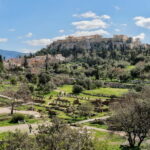
Then comes a very specific stop: the Leonidas Monument. You’ll pass it near the stadium area where the statue stands and where the Leonidas marker relates to the end point of the Spartathlon race (Athens to Sparta, 245.3 km). That little sports-history tie-in is a nice detail if you like seeing how ancient stories keep influencing modern culture.
This portion of the day is designed to be efficient. You’re not trying to “study” Sparta like a full museum trip. Instead, you’re getting the landmarks and the story anchors so you understand what you’re looking at.
Olive Oil Museum: what you learn (and what you pay for)
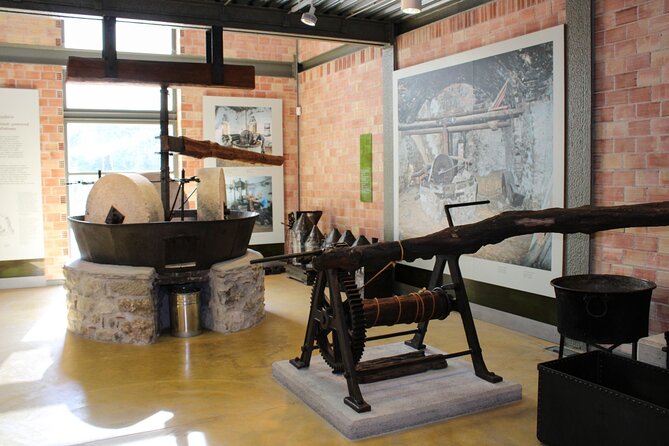
Next is the Museum of Olive and Greek Olive Oil. This stop is short—about 20 minutes—but it’s a meaningful one if you want a slice of Greek life beyond statues.
The museum focuses on the olive as a central product of Greece and explains olive oil making. Since the entrance fee is not included, treat this as an optional-charge stop in your planning. If you’re the kind of visitor who enjoys food and production methods (especially anything tied to agriculture), this is one of the more practical “knowledge” breaks in the itinerary.
If you’re not that person, it’s still worth a quick visit because it gives you a frame for why olive oil is so woven into Greek daily life and history.
Areopoli and Limeni: Mani’s coast without the crowds feeling
Then the day turns toward Mani, and this is where the tour becomes more than history. Areopoli is a good mid-stop: it’s described as a city of Ares, with that name officially adopted in 1912. It also connects to the Greek War of Independence, with the start tied to March 17, 1821 by Petros Pierrakos (also known as Petros Mavromichalis), described as the last bey of Mani.
You’ll get a sense of what makes Areopoli visually different too. The tower houses made with field stones are highlighted as distinct from the more familiar blue-and-white village look.
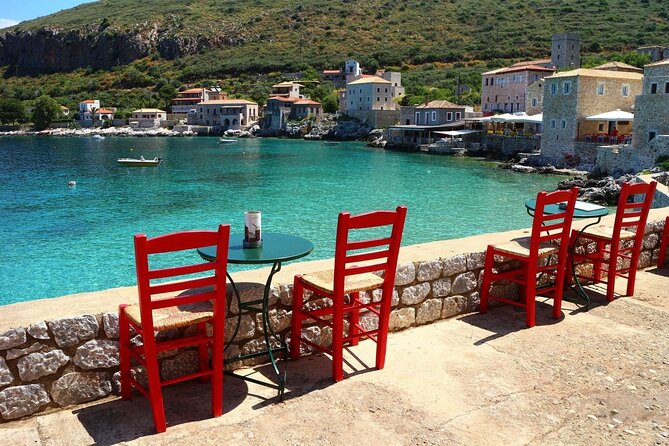
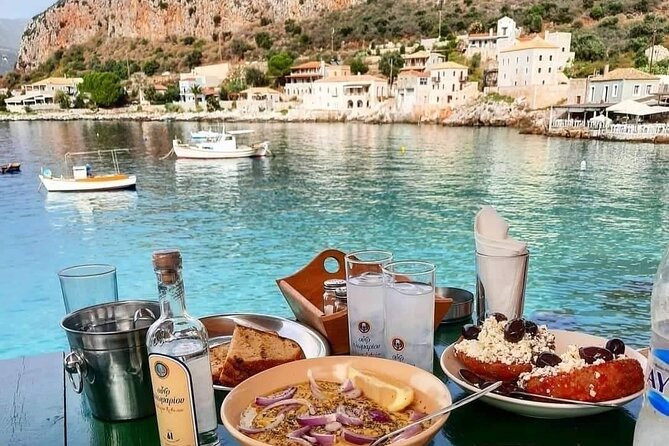
After that, you reach Limeni, which is the other big tone shift. Limeni is in Mani, in the southern part of Peloponnese, and the description emphasizes that the village still keeps its original character. When you arrive, you’re meant to notice:
- turquoise water views
- imposing stone towers along the coast
- the small alley streets where the simplicity of the village feels close and real
Your time here is about one hour, which is just enough to wander slowly, take photos, and enjoy the sea-air without feeling rushed into a strict schedule.
A practical tip
Dress for walking and uneven stone paths. Limeni’s beauty is the kind that rewards slow movement. If you rush, you miss what makes it feel timeless.
Price and logistics: where the $290.89 per person makes sense
At $290.89 per person, this tour sits in the mid-to-upper range for a day trip from Athens. The value comes from two main things.
First: private transportation with hotel/AirBnb/port pickup and drop-off. You’re not sharing a bus with strangers. You also get bottled water and a welcome culinary gift. Those extras sound small, but over a 12-hour day, they add up to comfort.
Second: the itinerary is packed with major regions—Corinth Canal, UNESCO Mystras, Sparta, olive oil education, and a coastal Mani village. If you tried to DIY this with taxis and separate tickets, the admin work and transit time would grow fast.
Here’s the trade-off you should plan for: the driver is knowledgeable, but they are not licensed to lead inside sites. The tour also states that a licensed tour guide inside the archaeological sites is not included. So depending on what you want at Mystras (for example, deep interpretive guidance in addition to your own exploring), you may prefer to add or arrange a licensed guide separately for the most complex sections.
Also note that two key entrances are explicitly not included:
- the Archaeological Site of Mystra
- the Museum of Olive and Greek Olive Oil
Everything else listed on the schedule is described as free entry.
Who this tour fits best
This is a great match if you:
- want a one-day overview of southern Peloponnese without car rental stress
- like combining big historical sites with at least one lighter, local-feeling stop (Limeni is that relief)
- prefer private logistics and a driver who can explain the story while you ride
It’s less ideal if you:
- need lots of guided narration inside every archaeological building (a licensed guide is not included for those interiors)
- hate long days in transit
- are sensitive to weather disruptions, since this experience requires good weather and outdoors matters a lot at Mystras
Should you book this private day tour from Athens?
I’d book it if you’re excited by Mystras + Sparta + Mani as a single storyline: Byzantine power on a mountain, Spartan legend in the valley, then the quieter coastal life of Limeni. The private pickup and the combination of sightseeing with real village time make it feel practical, not just sightseeing-busy.
Before you commit, do two simple checks:
- Budget for the Mystra and olive museum entrance fees since they are not included.
- Pack for weather. If it rains, focus on what you can still enjoy, and be ready to ask for schedule adjustments early so you don’t lose the best parts of the day.
If that sounds like your kind of day—go for it.
FAQ
How long is the Sparta, Mystras & Limeni tour?
The tour is approximately 12 hours.
Where does the tour start and end?
The tour starts with pickup from your hotel/AirBnb/port in Athens and ends with drop-off at your hotel or other accommodation.
Is the Corinth Canal stop included, and do I need to pay admission there?
Yes, the Corinth Canal is part of the itinerary, and the canal stop is listed as free.
Are entrance fees included for Mystras and the olive oil museum?
No. The Archaeological Site of Mystra entrance fee and the Museum of Olive and Greek Olive Oil entrance fee are listed as not included.
Will there be a licensed guide inside archaeological sites?
The tour includes a professional driver with deep knowledge of history, but it states they are not licensed to accompany you in any site. A licensed tour guide inside archaeological sites is not included.
What stops are free on the itinerary?
The schedule lists free admission for Mystras, Acropolis and Ancient Theater, Leonidas Monument, Areopoli, Limeni, and the Athens start/end portions.
Is lunch included?
No. Lunch is not included.
How do you get tickets?
The tour includes a mobile ticket.
What happens if weather is poor?
The experience requires good weather. If it’s canceled due to poor weather, you’ll be offered a different date or a full refund.

More Private Tours in Athens


More Tours in Athens


More Tour Reviews in Athens
- All Day Cruise -3 Islands to Agistri,Moni, Aegina with lunch and drinks included
★ 5.0 · 4,958 reviews