REVIEW · ATHENS
Jewish tour and Athens sightseeing in 6 hours
Book on Viator →Operated by Athens Tours Greece · Bookable on Viator
Two synagogues, one big day in Athens. This private Jewish Athens sightseeing tour pairs Jewish heritage in Thission with the Acropolis classics, all in about 6 hours. I like that you start with a convenient pickup and then head straight toward the Acropolis to cut down on traffic and crowds. I also like the built-in time for the Jewish Museum of Greece and the two synagogue buildings that anchor the story of Jewish life in Athens.
There is one catch: access can depend on opening hours, so you may not be able to step inside every site you see. Still, the driver’s explanations are designed to help you connect the places to the people and the city’s changing history.
In This Review
- Key things to know before you go
- What makes this tour special: Jewish Athens meets the Acropolis
- Getting picked up and moving fast: the tour’s time advantage
- Thission’s synagogues: Beit Shalom and Etz Hayyim in context
- A practical caution about entry
- The Jewish Museum of Greece: where the story becomes tangible
- Acropolis essentials in a tight timeline: Propylaea, Parthenon, Erechtheion
- Propylaea: the gateway feeling
- Temple of Athena Nike: the small stop with a strong purpose
- Parthenon: the main event
- Erechtheion and the Caryatid vibe
- Syntagma Square to National Garden: Athens’ modern heart
- Hellenic Parliament and the Unknown Soldier
- Change of Guards
- Plaka’s village feel (time allowing)
- National Garden: the green pause behind Parliament
- Kallimarmaro, then Lycabettus: finish with marble and views
- Kallimarmaro (Panathenaic Stadium)
- Lycabettus Hill viewpoint
- Price and value: does $421.44 per group make sense?
- The driver factor: when the narration really matters
- Should you book this Jewish Athens tour?
- FAQ
- How long is the tour?
- Is pickup included?
- Is the tour private and what’s the group size?
- Are entrance fees included?
- Can the driver escort you inside museums and archaeological sites?
- What should I wear for religious sites?
Key things to know before you go
- Private group of up to 3 means the pace can actually fit your day, not a cattle-car schedule.
- Hotel or Piraeus port pickup makes it easy to start without hunting for buses or meeting points.
- Driver-led narration inside your bus time is the heart of the experience, since the driver can’t always escort you inside museums or archaeological sites.
- The Jewish Museum of Greece gets a substantial visit, including its collections tied to modern Greek Jewish life.
- Acropolis highlights are stacked efficiently, from the Propylaea approach to the Parthenon and the Erechtheion.
- A full-circle Athens finish adds Parliament Square, Kallimarmaro, and viewpoints from Lycabettus.
What makes this tour special: Jewish Athens meets the Acropolis
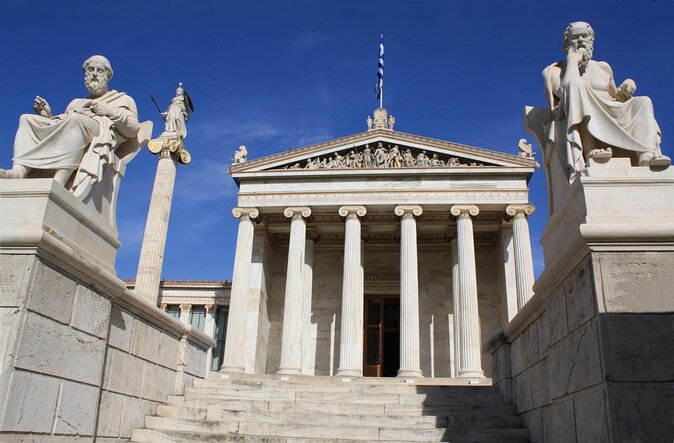
This is not a pure synagogue-and-museum crawl. It’s a day that treats Jewish Athens as part of the same city story as Pericles, philosophers, war memorials, and today’s Greek capital.
That blend is exactly why I think it works. You’re not just collecting landmarks—you’re learning how Athens can hold multiple layers at once. And you get a driver who explains things while you’re moving, which is a smart way to use a short 6-hour window.
You can also read our reviews of more tours and experiences in Athens.


Getting picked up and moving fast: the tour’s time advantage
You’ll start with pickup from your hotel (or from Piraeus Port if you’re using that option). Then the plan is to push toward the Acropolis early, which is where many Athens sightseeing days get bogged down.
The vehicle is air-conditioned and sized for your group. If you’re traveling as a party of three, you’ll likely feel good about the space. One note from real-world experience: at least one group of four felt tight in a small sedan, so if you’re right at the group limit, ask for a roomier vehicle option.
Thission’s synagogues: Beit Shalom and Etz Hayyim in context
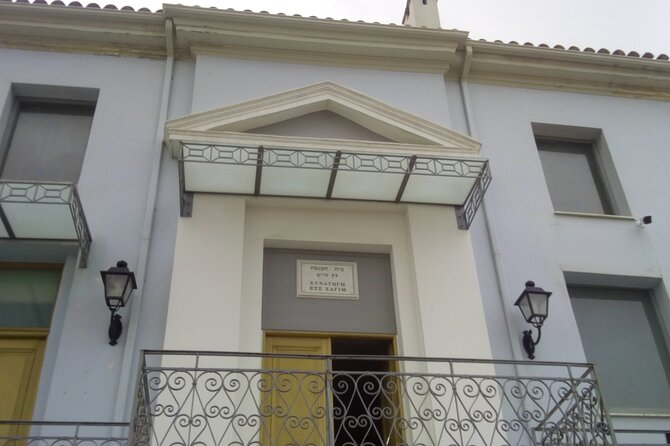
The tour’s Jewish stop is centered on Thission, where Athens’ two functioning synagogues sit on the same street facing each other. One is older and connected with the Romaniote community: the Etz Hayyim (also called the Ioannina Synagogue), built in 1904. It’s the smaller one and is used mainly during High Holidays.
Across the street is the newer, larger Beth Shalom Sephardic synagogue, built in 1935 from white Pentelic marble, with an austere Greek Revival exterior. It was renovated in 1975 and is the one fully used today.
Even if you can only see parts from outside, you still get something valuable: the driver links architecture and community history. It’s a clear reminder that Jewish life in Athens wasn’t a single moment in time—it shifted with communities, eras, and needs.
A practical caution about entry
Because opening hours aren’t something a driver can override, there’s a real possibility you may not be able to go inside every synagogue you see. If you’re booking specifically for interior access, plan to be flexible. Your best bet is to show up ready to learn even if the door is closed.
The Jewish Museum of Greece: where the story becomes tangible
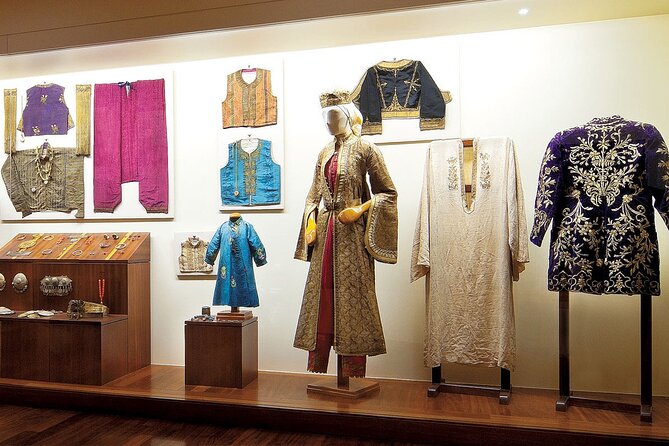
This is the stop most likely to make the day feel more than just scenic. The Jewish Museum of Greece visit includes a close look at artifacts, documents, and manuscripts tied to Greek Jewish communities across time.
The museum’s origin matters: it began in the 1970s with support from the Jewish Community of Athens, and it opened in 1977 in a small space near the synagogue. Over time, the collection grew—especially with material related to World War II and later efforts to gather and restore community heritage.
One detail you can look for during your visit is how the collection covers more than one chapter. You’ll see items connected to Jewish life in Greece, and you’ll also see evidence of disruption and survival. It’s the kind of stop that turns names and dates from the narration into objects you can actually hold in your mind.
- All Day Cruise -3 Islands to Agistri,Moni, Aegina with lunch and drinks included
★ 5.0 · 4,958 reviews



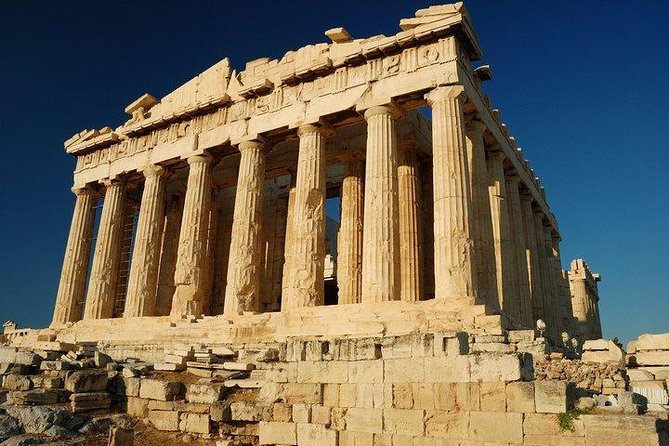
Acropolis essentials in a tight timeline: Propylaea, Parthenon, Erechtheion
After the Jewish segment, the tour turns toward the big one: the Acropolis. The approach to the hill is part of the experience—think of it as walking into the city’s most famous “stage.”
Propylaea: the gateway feeling
You start with the Propylaea, the monumental entrance area. The plan here is tied to multiple time periods: there were earlier gate structures after the sanctuary dedicated to Athena took shape, then rebuilding after destruction, and finally the major Periclean-era form that modern visitors recognize.
Even with limited time, this stop helps you understand why the Acropolis feels ceremonial: you’re not just seeing temples. You’re seeing the logic of movement and arrival.
Temple of Athena Nike: the small stop with a strong purpose
Next is the Temple of Athena Nike. It’s shorter on time, but it’s often where people get a clean sense of the Acropolis edges and the rhythm of the structures. It’s also a helpful “breather stop” between the bigger buildings.
Parthenon: the main event
The Parthenon is given real time—about one hour—which makes a difference. You can actually read the space. You can look outward and then back at the details.
This is where the driver’s storytelling pays off. The Parthenon isn’t just an ancient building; it’s connected to Athens’ identity during its height of power, including the idea of democracy and the city’s patron goddess, Athena. You also get the basic architectural framing: the Parthenon was designed by Iktinos and Kallikrates, with sculptural supervision by Pheidias.
Erechtheion and the Caryatid vibe
Finally, the tour reaches the Erechtheion, including time to understand its layout and why its name matters. The place is tied to myth and worship—Erechtheus and the story of Athena and Poseidon appear in the background.
The famous feature here is the Caryatids—female figures used as roof supports. Even if you only get a short look, the building’s “human” architecture angle is hard to forget.
Syntagma Square to National Garden: Athens’ modern heart
After the Acropolis, the tour shifts from ancient stone to modern Athens power points.
Hellenic Parliament and the Unknown Soldier
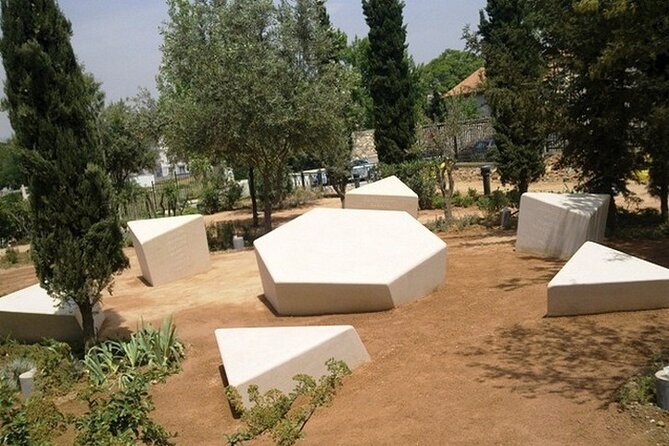
You’ll visit the Hellenic Parliament, which began as a royal palace and later became the home for Greece’s legislative institutions. The contrast is striking: a building that moved from monarchy to modern state power sits right beside one of the city’s most formal war memorial moments.
Then there’s the Monument to the Unknown Soldier in Syntagma Square, guarded by the Presidential Guard. This stop is quick but visually strong, and it anchors the day in 20th-century remembrance rather than classical myth.
Change of Guards
If timing allows, you’ll see the Changing of Guards, with time for the scene. It’s one of those Athens moments that feels theatrical, but it’s also a clean snapshot of how the city performs its identity in public.
Plaka’s village feel (time allowing)
The route also passes through the moodier, more relaxed side of central Athens—Plaka. You’ll get a chance to walk and sense the hillside “village” feel, with narrow lanes and shops, plus the quieter charm of nearby Anafiotika.
This portion isn’t about stuffing your brain. It’s about giving you an easy place to reset your senses after the Acropolis.
National Garden: the green pause behind Parliament
Then comes the National Garden of Athens, a real oasis behind Parliament and Syntagma Square. It was originally the royal garden ordered in 1839, and it opened to the public in 1923 under its current name.
Even a short visit matters because it breaks the density of monuments. You get a calmer Athens beat before the final sightseeing push.
Kallimarmaro, then Lycabettus: finish with marble and views
No Athens “greatest hits” day feels complete without one of those scenic payoffs—and this tour includes two.
Kallimarmaro (Panathenaic Stadium)
You’ll see Kallimarmaro, the Panathenaic Stadium, built with Pentelic marble. It’s tied to the first modern Olympic Games in 1896.
The standout idea here is how the stadium connects ancient material to modern ceremony. Even if you’re not a sports person, it’s a memorable bridge between eras.
Lycabettus Hill viewpoint
The last major stop is Lycabettus Hill, also called Lykavittos. It sits about 277 m above sea level and gives views across central Athens and the coastline area (weather permitting).
This is where you get your “pause and look” moment. You can access the hill on foot, by funicular, or by car. The tour notes it as a way to step away from traffic and crowds—then return you to your pickup drop-off point afterward.
Price and value: does $421.44 per group make sense?
The cost is $421.44 per group, up to 3 people, for about 6 hours. In practical terms, that means your per-person value depends heavily on whether you’re filling the group.
- If you have 3 people, you’re effectively splitting the vehicle and driver time.
- If you’re only 1 or 2, the same tour can feel pricier, especially once you add entrance fees (not included).
Here’s the value logic I’d use. You’re paying for private time, pickup, and a driver who offers history and culture context during the ride and at the stopping points. That’s especially useful when you have a short stay and want to reduce planning stress.
What can reduce value is when a site you care about can’t be entered due to hours. One past experience included disappointment because synagogues weren’t accessible at that time, even though the tour covered Jewish context. If synagogue interior access is your top priority, build in flexibility.
The driver factor: when the narration really matters
The tour’s “secret ingredient” is the driver-led storytelling. The operator emphasizes that the driver can guide you until you enter sites, but drivers aren’t licensed to escort inside archaeological sites and museums.
Still, the driving-and-explaining role can make or break the day. In one standout case, the driver Peter was described as helpful and un-rushed, but also noted a tight vehicle fit for a small group. Another driver, George, was praised for being prompt, patient, and willing to answer everything. And one more, John, was credited with working to make the best of timing around Jewish sites.
So if you want the experience to feel personal, consider sharing your interests in advance—Acropolis architecture, Jewish community history, or modern Athens landmarks.
Should you book this Jewish Athens tour?
I’d book it if:
- You want Jewish Athens context plus the Acropolis in a single day.
- You like private pacing and hate rushing between far-apart spots.
- You’re okay with the idea that entry into every synagogue may depend on opening hours.
I’d skip it or re-think timing if:
- You need guaranteed interior access to every Jewish site.
- You dislike a schedule that packs multiple major Athens zones into one day, including Lycabettus.
If you’re traveling as a small group and you’re excited by how Athens layers Jewish history beside classical ruins, this tour is a strong fit. Just go in with flexible expectations about what doors are open that day.
FAQ
How long is the tour?
The Jewish tour and Athens sightseeing is about 6 hours.
Is pickup included?
Pickup is included from your Athens hotel. Pickup from Piraeus Port can be arranged on request for an extra cost.
Is the tour private and what’s the group size?
It’s a private tour with your group only, up to 3 people.
Are entrance fees included?
No. Entrance fees to archaeological sites and museums are not included.
Can the driver escort you inside museums and archaeological sites?
The tour includes a driver who can guide you until you enter sites. The driver is not licensed to accompany you inside. A licensed, state tour guide can be arranged for an extra cost subject to availability.
What should I wear for religious sites?
For religious and marble sites, you should have your shoulders and knees covered.

More Tours in Athens

More Tour Reviews in Athens
- All Day Cruise -3 Islands to Agistri,Moni, Aegina with lunch and drinks included
★ 5.0 · 4,958 reviews