REVIEW · ATHENS
Private Walking Tour: National Archaeological Museum
Book on Viator →Operated by Athens Walking Tours · Bookable on Viator
Athens has a lot of museums, but this one reads like a story. A private walk through the National Archaeological Museum turns that huge building into something you can actually follow, from prehistoric finds to Roman-era art. I really like the way your guide connects objects into a timeline, so you are not just staring at statues and guessing what they mean.
Two things I especially like: you get private, adjustable attention, and you get to focus on what interests you most, whether that is sculpture, pottery, or everyday items. One possible drawback is that the museum entrance fee is not included (listed at €12 per person), so your final cost will be a bit higher than the tour price you see first.
In This Review
- Key things to know before you go
- Why the National Archaeological Museum feels different with a guide
- Where you start (and why the meeting point matters)
- Inside the museum: turning five collections into a clear timeline
- What you will see in about two hours (without wasting time)
- Entrance fee and pricing: when the total cost makes sense
- Private attention that you can steer (and why that matters in Athens)
- When plans get disrupted: learning from a real strike day
- Timing in winter: the latest start gets earlier
- Who this private museum tour fits best
- The bottom line: should you book this private tour?
- FAQ
- Is the National Archaeological Museum entrance fee included?
- How long is the private walking tour?
- Where do we meet the guide?
- Is this a group tour or private?
- What language is the tour in?
- How early can the tour start in winter?
- How does cancellation work?
Key things to know before you go
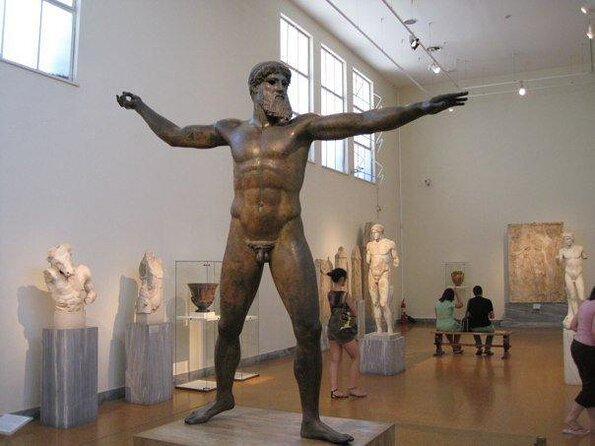
- Private guide, not a group shuffle: only your party goes, so questions actually land.
- Customized focus: tell the guide what to emphasize or skip before you start.
- A huge museum made manageable: the guide helps you pick the most meaningful objects.
- Greek art across major periods: you will move through prehistoric, Greek, Roman, and more.
- About an hour inside: the plan targets time in the galleries, with added orientation and time for questions.
- English speaking: the tour is offered in English.
Why the National Archaeological Museum feels different with a guide
The National Archaeological Museum in Athens is the big one. It is a neoclassical building packed with finds from across Greece, arranged so you can travel through time. The tricky part is the volume: the museum holds around 200,000 finds, and the collections cover multiple periods of Greek art and life. Without help, it is easy to bounce from one impressive object to the next without building a mental map.
That is where this private walking tour earns its keep. I like that it is designed to make the museum readable. Your guide helps you understand what you are looking at and why it matters, then steers you toward the most interesting objects rather than making you race through everything. Instead of “see the highlights,” it feels more like “learn how to see.”
And because it is private, your pace is your pace. If you want more time on pottery shapes and decoration, or you want to understand how sculptures were meant to be viewed, you can steer the conversation. That custom angle is a real value in a museum as large as this one.
You can also read our reviews of more walking tours in Athens

Where you start (and why the meeting point matters)
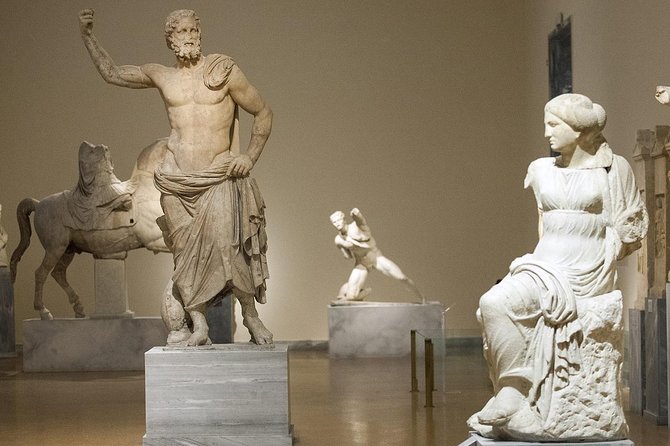
You meet at the National Archaeological Museum, address 28is Oktovriou 44, Athina 106 82, Greece. It is the obvious place to meet because the tour is built around one main location, not a hop-by-hop Athens route.
Why this matters: you do not need a hotel pickup, and you avoid spending your limited museum time getting from one stop to another. You also get straight into orientation. Your guide can start explaining the collections and how the building is organized before you feel overwhelmed.
One more detail that affects planning: the tour is offered in English, and the guide is local. That usually means you get smoother explanations without the awkward pauses that can happen when a guide is trying to cover everything for a wide audience.
Inside the museum: turning five collections into a clear timeline
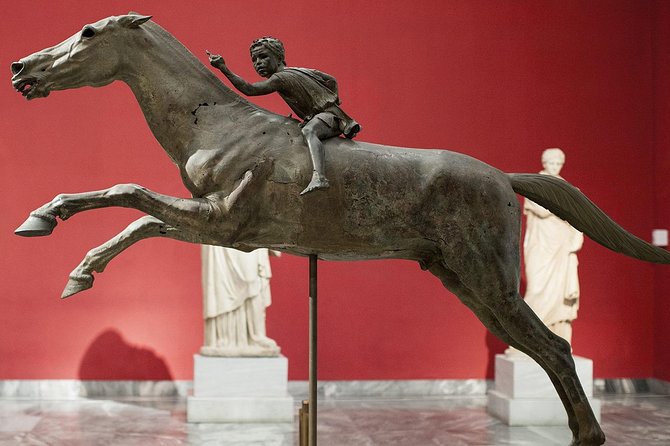
The museum is arranged in five collections, which cover prehistoric times, ancient Greece, the Roman era, and other periods. On paper, that sounds abstract. In practice, that structure is exactly what your guide uses to build a timeline for you.
You can expect your guide to point you toward objects across those periods and explain what they represent. This is not just about facts. It is about seeing patterns: what styles look like in different eras, what materials and craftsmanship tell you, and how religious or everyday life shows up in what survives.
During your visit, you will move through major categories, including:
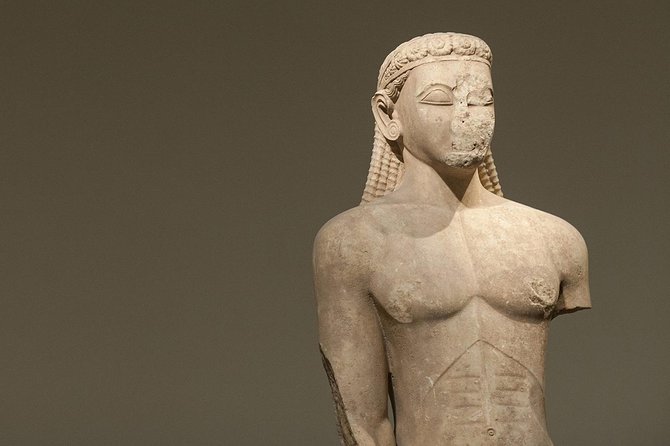
- Sculptures (where style, technique, and purpose help unlock the visual)
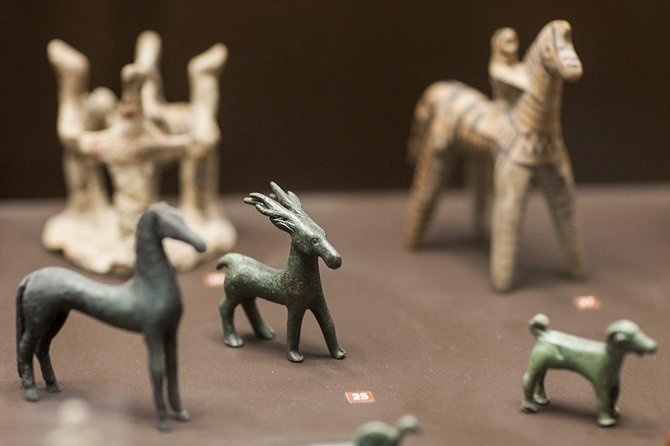
- Pottery (useful for understanding daily life and artistic conventions)
- Household and everyday items (these help you feel how ordinary people lived, not only elites and temples)
The tour plan lists about 1 hour at the museum, but it also reflects a “walking tour” format, so expect time for a proper start, the main viewing time, and enough room to ask questions. If you tend to linger in front of objects, tell your guide early. A private tour is at its best when you set expectations at the start.
What you will see in about two hours (without wasting time)
This experience is priced and timed for focused seeing. That means you will not try to do the entire museum. Instead, you and your guide pick a smart slice of it—then you learn enough context to make that slice feel satisfying.
Here is how that usually plays out in your favor:
- You spend less time trying to “decide what to look at.”
- You spend more time understanding what you are seeing.
- You leave with a sense of how Greek art evolved across eras, rather than a list of objects.
The museum’s scale means that skipping the right things is as important as seeing the highlights. If you try to view everything on your own, you end up with tired eyes and blurry impressions. With a guide, you get a sequence you can remember.
If you are the type who wants variety, you are in luck. The tour is built to cover multiple types of artifacts—sculpture, pottery, and everyday items—so you do not get stuck in one category the whole time. And because the guide can customize, you can put extra weight on what you care about most.
Entrance fee and pricing: when the total cost makes sense
The tour costs $321.68 per person and runs about 2 hours. The museum entrance fee is €12.00 per person and is listed as not included.
At first glance, it is a pricey private experience. The way I think about value here is simple: you are paying for time with a guide who helps you get meaning out of a large museum quickly. You are not paying just for someone to walk beside you. You are paying for an interpretation layer and a guided selection.
In other words, if you plan to spend hours trying to figure out the museum on your own, the guide can actually save you energy and time. And since it is private, the per-person cost can feel more reasonable when your group is aligned in interests—like everyone wants to learn about Greek art across periods, rather than one person racing ahead while someone else studies in silence.
One more cost note: there are group discounts, and you will also need a minimum of 2 people per booking. If you are traveling as a duo or a small cluster with similar interests, the math often works better than booking solo.
You can also read our reviews of more private tours in Athens






Private attention that you can steer (and why that matters in Athens)
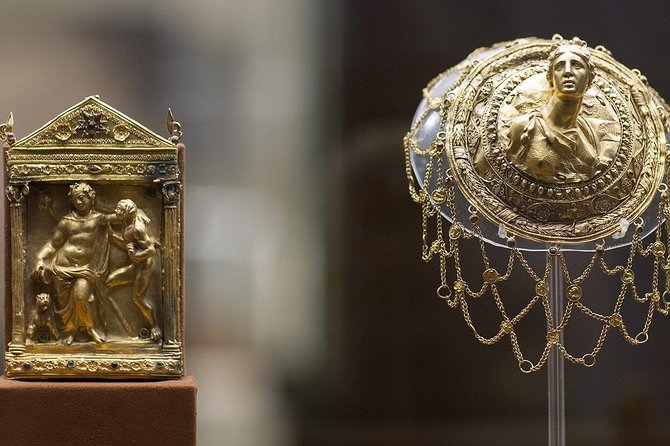
A private tour is only truly worth it when the guide can respond to your interests. Here, that is built in: you can tell the guide if there is anything you want to concentrate on or leave out. That is a small detail on the booking page, but in a museum it changes everything.
Imagine walking into a gallery with no plan. You are tempted to focus on whatever is most visually dramatic at that moment. With a tailored guide, you can instead build your own theme:
- If you care about how art changes over time, you can ask for emphasis across the major collections.
- If you love craft and decoration, you can spend extra time on pottery and the visual language on it.
- If you prefer objects that feel human, you can ask the guide to focus more on household items.
This kind of steering is especially useful in Athens because you are surrounded by archaeology and art everywhere. A good museum guide helps you connect the dots to what you will see outside the museum too—so it does not feel like one-off sightseeing.
When plans get disrupted: learning from a real strike day
One of the most telling reviews shared a tough moment: the National Archaeological Museum was impacted by a strike, and the visit could not proceed as planned. In that case, the supplier arranged for the guide to take the group to the New Acropolis Museum instead, which still delivered an excellent experience. The guide mentioned in the review was Vicki, and her expertise in archaeology was highlighted, along with a serious effort to make it work even with transportation disruption.
I cannot promise alternate arrangements for every situation, but the lesson is valuable for you: if you want resilience, choose a provider that can think on its feet. Since this tour is private, a good operator has more flexibility to adjust the plan than a large fixed group would.
Timing in winter: the latest start gets earlier
If you travel in winter, watch your start time. During November 1 to March 31, the latest starting time for tours is 11:30am because museums close earlier. That is not just trivia; it affects whether you can comfortably fit a museum visit into the day without rushing.
If you are planning a packed winter itinerary, I would treat this as a firm scheduling constraint. Lock your museum tour earlier in the morning so you do not end up trading calm viewing for a scramble.
Who this private museum tour fits best
This tour is a strong fit if you want:
- A focused visit to Greece’s largest archaeology museum without trying to conquer the entire building.
- An English-speaking guide who can explain what you are seeing and connect objects to Greek art periods.
- A customized route based on your interests, not a rigid “everyone sees the same thing” agenda.
- A comfortable pace with privileged attention for questions.
It may be less ideal if you prefer total freedom. If you want to wander at random and pick objects entirely by yourself, you will still enjoy the National Archaeological Museum, but you will not get the same structured timeline and object-by-object explanation.
The bottom line: should you book this private tour?
Yes, I think it is worth booking if you value understanding over browsing.
Book it if you want your museum time to feel purposeful: you tell the guide what you care about, then you get a clear tour through the museum’s main periods and object types. The entrance fee is extra, but you are paying for meaning-making in a museum with enormous scale.
Skip it only if you want a self-guided day where you can roam freely with no scheduled guide talk. In that case, you might spend your money better on extra time inside the galleries after you find your own rhythm.
If you are traveling with a friend or a small group (minimum 2 people is required) and you want Greek archaeology and art explained in plain, practical terms, this is one of the easiest ways to get the most from the National Archaeological Museum without wasting time trying to sort it all out yourself.
FAQ
Is the National Archaeological Museum entrance fee included?
No. The entrance fee is listed as €12.00 per person and is not included.
How long is the private walking tour?
The duration is listed as about 2 hours, with about 1 hour planned inside the museum.
Where do we meet the guide?
Meet at the National Archaeological Museum, 28is Oktovriou 44, Athina 106 82, Greece.
Is this a group tour or private?
It is private. Only your group participates.
What language is the tour in?
The tour is offered in English.
How early can the tour start in winter?
From November 1 to March 31, the latest starting time is 11:30am due to earlier closing times.
How does cancellation work?
You can cancel for a full refund up to 24 hours before the experience start time. Cancellation within 24 hours of the start is not refunded.




More Walking Tours in Athens



More Tours in Athens



More Tour Reviews in Athens
- All Day Cruise -3 Islands to Agistri,Moni, Aegina with lunch and drinks included
★ 5.0 · 4,958 reviews