REVIEW · ATHENS
Blue Lake, Sanctuary of Hera, Mycenae, Ancient Corinth, Canal
Book on Viator →Operated by Ancient Greece Tours & Transfers · Bookable on Viator
A swim in myth country, on a single day.
This outing is a smart break from Athens chaos, thanks to private door-to-door transport and a real payoff at the end: the Sanctuary of Hera in Perachora with time for a Blue Lake swim. I also like how the route strings together the big names—Corinth Canal, Mycenae, and Ancient Corinth—without wasting your whole day in transit. The main consideration is simple: it is a long, packed 9-hour day, and several sites are designed for quick viewing rather than slow wandering.
The value is in comfort and pacing. You get a private vehicle, WiFi, bottled water, refreshing wipes, and even fresh handmade Greek biscuits, plus pickup right from your hotel lobby. Entrance fees and on-site guiding are on you (unless you request an extra licensed guide), so you’ll want to budget for that ahead of time.
In This Review
- Key highlights worth planning around
- Price and what you actually get for $337.15
- The easy win: door-to-door private comfort from Athens
- Corinth Canal and the Ancient Diolkos: engineering meets ancient trade
- Mycenae: Cyclopean walls, royal power, and a museum full of gold
- Grave Circles A and B
- The Cyclopean Walls
- The Royal Palace
- Lion Gate and the tombs that look like beehives
- Mycenae Archaeological Museum: where the gold goes
- Akrokorinthos (Acrocorinth): fortress walls and views you can’t fake
- Corinth’s smaller stops: Upper Peirene Fountain and Geraneia views
- Upper Peirene Fountain (Peirene Spring)
- Geraneia Mountain viewpoints
- Ancient Corinth (Archaia Korinthos): Apollo’s temple, Paul’s Bema, and a terrace lunch
- Temple of Apollo
- Agora and the Bema tied to Apostle Paul
- Roman buildings and the theatre/odeon zone
- Lunch on a terrace
- Heraion (Sanctuary of Hera) in Perachora and the Blue Lake swim
- Time, pace, and the self-guided trade-off
- Who this tour fits best (and who should think twice)
- Should you book it?
Key highlights worth planning around
- Blue Lake swim at the Heraion in Perachora: a memorable finish that feels like a reward, not a last-minute stop.
- Corinth Canal plus the Ancient Diolkos trackway: modern engineering right next to the ancient overland boat route.
- Mycenae in layers (walls, palace, tombs, museum): you get the fortifications and the burial artistry in one sweep.
- Acrocorinth’s fortress views: a 1-hour climb/amble over the monolithic rock with gates and the Frankish Tower.
- Ancient Corinth with Temple of Apollo and Paul’s Bema: Roman remains plus the spot tied to Apostle Paul.
- Driver-led context, self-guided site time: you learn from the car, then you explore at your own pace inside.
Price and what you actually get for $337.15
At $337.15 per person for about 9 hours, this is not a budget day trip. But you are paying for the things that usually make day tours feel painless: hotel/door pickup and drop-off, private transport in comfort, and an itinerary built around major sites outside Athens.
You also get real extras that add up when you’re out of town: WiFi, bottled water, refreshing wipes, and Greek biscuits. On a hot day, that matters more than it sounds. If you’re traveling with kids, you’ll especially appreciate how the day is structured so you’re not stuck hunting for snacks, maps, or bus timing.
The trade-off is where your money does not go: site entrance fees are not included. Most museum and archaeological sites in this part of Greece charge admission, and that bill can change depending on what you enter. Also, this is not a full-time licensed guide walking with you inside each site by default—you explore many stops on your own after getting context from your driver.
You can also read our reviews of more tours and experiences in Athens.


The easy win: door-to-door private comfort from Athens
This tour is built like a “save your energy” plan. Your driver picks you up from your hotel lobby in Athens and returns you there at the end. If you’re in an AirBnB, they contact you so you meet at the building entrance. You don’t need to coordinate trains, taxis, or meeting points with strangers.
Inside the car, the vibe is practical. There’s WiFi, water, and wipes. The route is full, but the logistics are not stressful. That is a big deal when you’re doing Mycenae and Corinth in the same day—two places that would be time-consuming if you tried to DIY them.
One more point I appreciate: the service is offered in English, and the drivers are fluent with in-depth knowledge. In other words, you’re not just being transported—you’re getting context as you go, which helps the ruins make sense faster once you’re standing in front of them.
Corinth Canal and the Ancient Diolkos: engineering meets ancient trade
Your day starts at the Corinth Canal. This is one of those places that feels almost too modern to belong next to ancient Greece. The canal itself is a 19th-century engineering project, tied directly to Mediterranean shipping routes.
What makes the stop more interesting is the nearby Ancient Diolkos, a paved trackway built to move boats overland across the Isthmus of Corinth. The Diolkos is basically the ancient version of a shortcut. You get to see how the geography forced creative solutions long before steel and cranes.
The time you’ll have here is short—about 45 minutes—but it’s a great warm-up. If you like bridges, waterways, and how people solve practical problems, you’ll get a lot out of this early contrast.
Mycenae: Cyclopean walls, royal power, and a museum full of gold
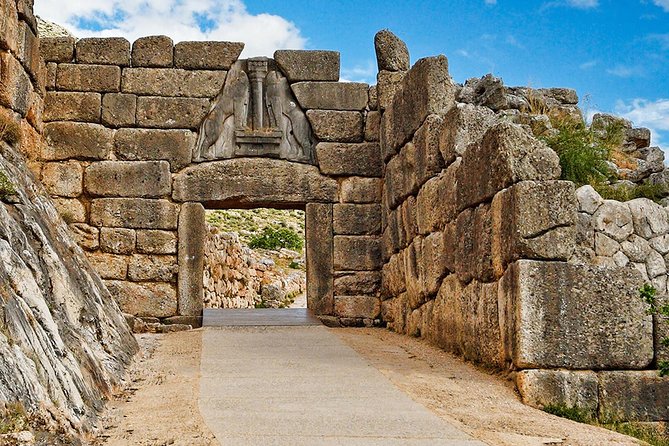
Mycenae is the anchor stop of the day for a reason. It’s where the late Bronze Age comes alive in stone, layout, and burial objects. You’ll spend time with the Grave Circles A and B, then move through the main citadel area.
Grave Circles A and B
These are the royal cemeteries just south of the Lion Gate. Even without going deep into interpretation, you can feel how important this place was: these are not modest graves. They sit outside the Bronze Age citadel, reinforcing that burial and power were closely connected.
- All Day Cruise -3 Islands to Agistri,Moni, Aegina with lunch and drinks included
★ 5.0 · 4,958 reviews



The Cyclopean Walls
Next come the Cyclopean Walls, built with huge limestone boulders. The walls are famous for a reason: you’re looking at a construction style that feels almost impossible by hand. It also gives you a reality check on scale—Mycenae wasn’t a small fort. It was a major center with serious resources.
The Royal Palace
You’ll also see the Royal Palace complex, including the Throne Room Suite, the Grand Staircase, and multiple sections tied to daily life and administration. Think of this as the hub—where decisions were made and status was displayed.
Here’s the practical note: some of these areas are exposed and can be sun-heavy. Wear sunscreen and plan for walking. If you’re the kind of traveler who needs time to absorb details, you might feel a little rushed at the Mycenae palace portion because the stop blocks are designed to keep the day moving.
Lion Gate and the tombs that look like beehives
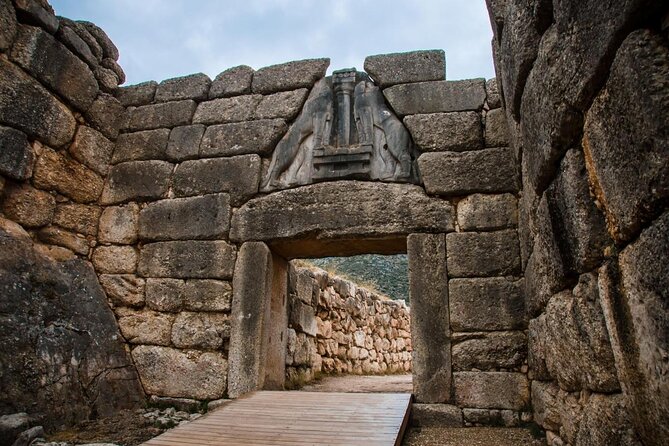
After Mycenae’s palace and walls, you’ll pass the Lion Gate, the main entrance of the Bronze Age citadel. It’s short and visually striking—a clean way to mark the transition from interior structures to monumental gates.
Then you get the wow factor: the Treasury of Atreus and the Tomb of Clytemnestra, both tholos tombs (beehive-shaped). The Treasury of Atreus is a large tholos constructed around 1250 BC. The Tomb of Clytemnestra is another tholos tomb from roughly the same period, named after Clytemnestra, associated with King Agamemnon.
These tombs are where Mycenae goes from “cool ruins” to “how did they do this?” The domed shape is dramatic. Even if you don’t memorize every date, you’ll remember standing in the presence of a burial monument that’s survived for thousands of years.
Mycenae Archaeological Museum: where the gold goes
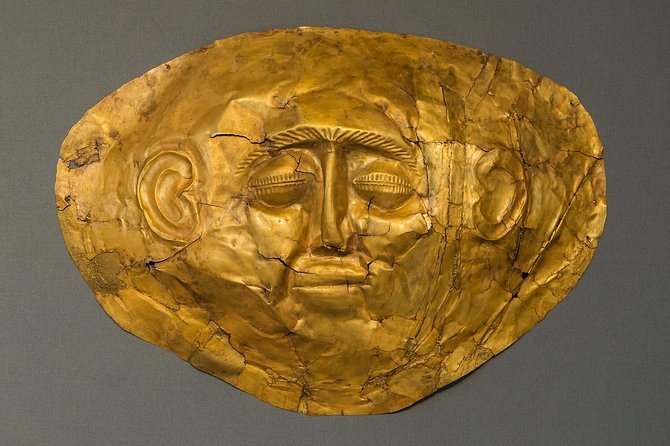
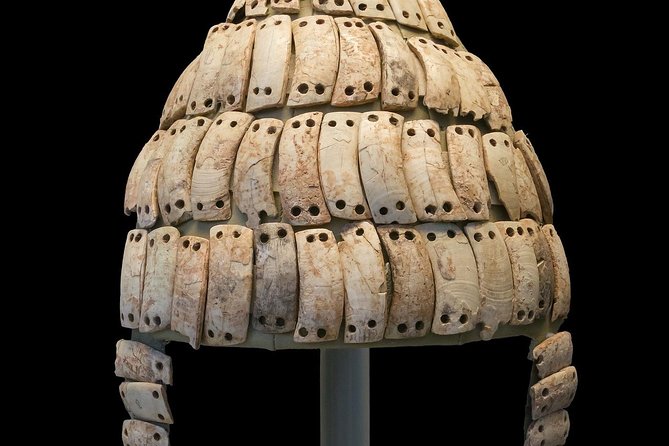
The Archaeological Museum of Ancient Mycenae is the reality check to the myths. Outside, you see stone structures. Inside, you see the burial goods that made those structures matter.
Plan on about 30 minutes here. That’s not enough to study everything, but it’s enough to get the main message: you’ll see gold grave items, burial masks, jewelry, weapons, worship idols, and fresco-related pieces.
If you’ve ever stood in a ruin and thought, okay, but what did people actually wear and use, this museum solves that. It helps you connect the city’s wealth to the objects that survived.
If you want more depth, you might want to consider arranging a licensed guide for site interiors and museum context—because left fully self-guided, the artifacts can feel like highlights rather than a guided story.
Akrokorinthos (Acrocorinth): fortress walls and views you can’t fake
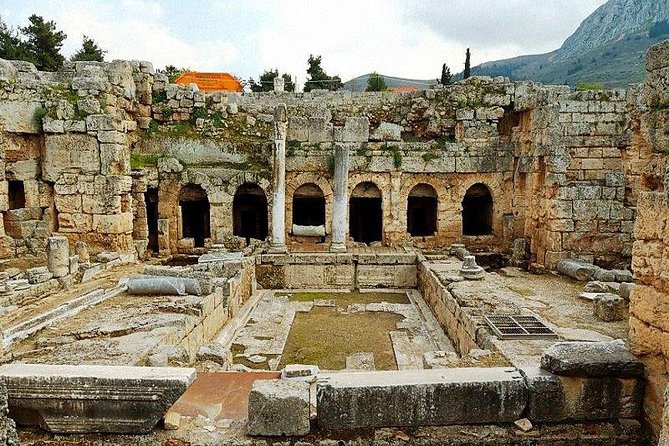
Next you’ll climb into Acrocorinth, also known as Akrokorinthos, the acropolis of Corinth. This is a monolithic rock overlooking the ancient city of Corinth, and it’s one of the most dominant sites in the Peloponnese.
You’ll see the system of circuit walls reinforced by towers. Then there are specific points worth your attention:
- Traces of the Temple of Aphrodite on one of the mountain peaks.
- The Frankish Tower at the southwest edge, tied to Frankish-era fortification. You’ll also find preserved remains connected to later periods like churches, mosques, houses, fountains, and cisterns.
The big payoff is the view. Even with short time blocks, the height makes the whole region feel readable—the gulf, the coast, and the sense of how Corinth controlled movement.
Also, take note: this stop is about an hour. If you’re sensitive to walking on uneven ground or steep paths, wear solid shoes and go at your pace.
Corinth’s smaller stops: Upper Peirene Fountain and Geraneia views
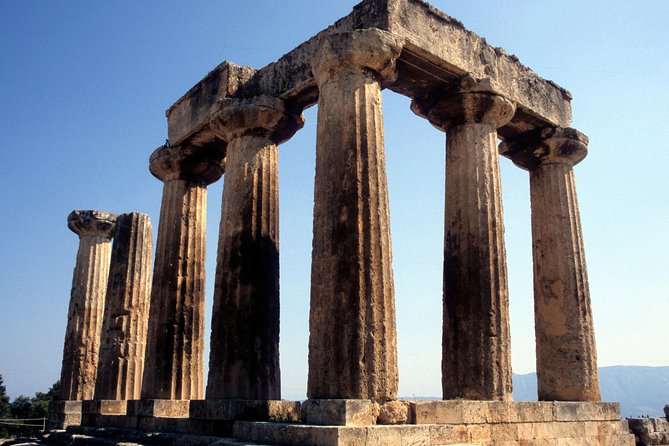
Between the major sites, you get a couple of quick “pause and look” moments.
Upper Peirene Fountain (Peirene Spring)
You’ll stop at the Upper Peirene Fountain area, connected to Peirene Spring described as a gift of Asopus to Sisyphus. It’s brief, but it’s part of what makes Corinth feel real: water sources mattered in every era, and fountains are often the heartbeat of settlement life.
Geraneia Mountain viewpoints
Then it’s out to Geraneia for views over the Corinthian gulf and the southwest coast of the Peloponnese. This kind of viewpoint stop works well in a long day. It helps reset your brain before you move into another dense archaeological zone.
Ancient Corinth (Archaia Korinthos): Apollo’s temple, Paul’s Bema, and a terrace lunch
This is a long block—about 3 hours—which is your best chance to pace yourself.
You’ll encounter Ottoman-era Hadgimoustafa spring structures, plus the Ancient Corinth Archaeological Museum. If you like connecting the dots from ruin to artifact, this museum helps. It houses a large collection of items from the local site and nearby areas.
Temple of Apollo
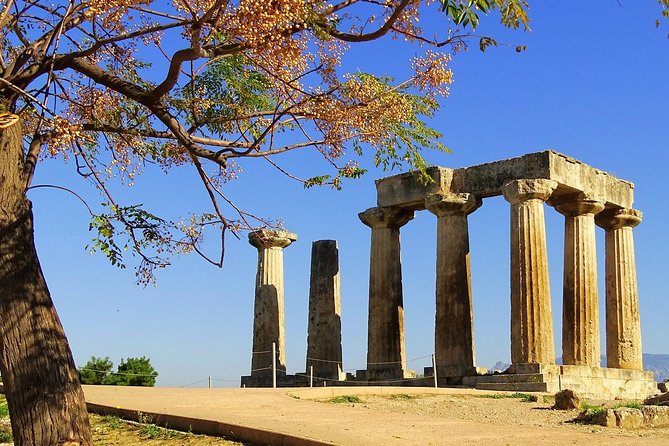
Next is the Temple of Apollo, one of the earliest Doric temples in the Peloponnese and on the Greek mainland. It features monolithic columns, which are rare for the ancient world. Even if you only see part of it, the scale signals how important this religious center was.
Agora and the Bema tied to Apostle Paul
The Agora is spread out with shops, small temples, altars, and—most importantly for visitors who like biblical connections—the Bema. The Bema is the podium where Apostle Paul addressed the Corinthians in 52 AD.
This stop is worth it even if you’re not tracking dates closely. It gives you a sense of the city as a living place: commerce, worship, and public speech happening in one area.
Roman buildings and the theatre/odeon zone
You’ll also see Roman buildings, plus the theatre and Odeon/Asklepieion area. It’s another reminder that Corinth didn’t freeze in the Bronze Age. It kept changing hands and styles.
Lunch on a terrace
A standout practical detail: you’ll have time for an authentic village-style lunch on a terrace overlooking Ancient Corinth’s archaeological site and the Temple of Apollo. This is one of the best ways to make the day feel like more than just checkpoints. You eat with the ruins in front of you, instead of staring at them after a rushed meal.
Then there’s time to stroll through village shops for handmade souvenirs. It’s a nice way to pick up small, local things without turning it into an all-day shopping mission.
Heraion (Sanctuary of Hera) in Perachora and the Blue Lake swim
If the day feels heavy on ruins, this is where it lightens.
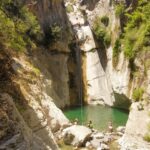
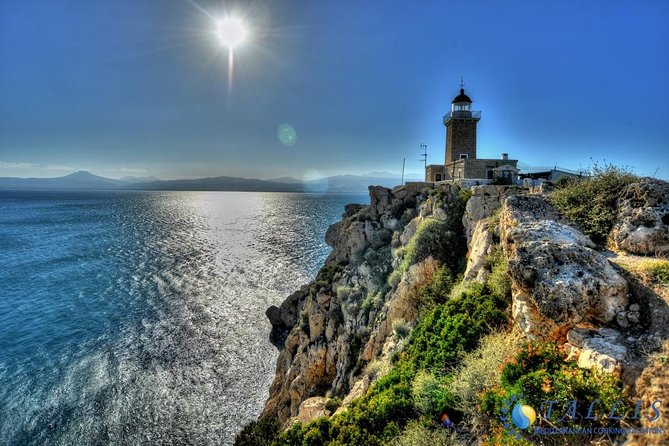
You’ll head to the Heraion (Sanctuary of Hera) in Perachora, with the Malagavi Lighthouse nearby as part of the setting. Then comes the real crowd-pleaser: the Heraion / Blue Lake.
You’ll have about an hour here, including time for a refreshing swim. There’s also a practical reason this works late in the itinerary: after hours of stone, your body wants something different. The water break resets the whole trip.
One important thing to note: the tour description frames this as a swim stop, but conditions matter. In colder seasons, you might find the operator suggests an alternative instead of swimming. That kind of flexibility can be a hidden value, because it keeps the day enjoyable even when weather isn’t cooperating.
Time, pace, and the self-guided trade-off
This tour is fully private, meaning your group goes as a group—no random joiners, no waiting for strangers at each stop. That’s a big quality-of-life upgrade on day trips.
But it’s not a fully escorted “walk and talk” tour. Your driver shares context and history in the car, but at site locations you usually explore on your own for the admission-based time blocks.
That structure has two sides:
- It gives you freedom to linger if you’re drawn to one corner or museum room.
- It can feel short if you want someone to explain every detail face-to-face inside the ruins.
If you want deeper interpretation for the museums and key ruins, the option for a licensed tour guide to accompany guests into the site and museum is available for an extra cost on request. If you’re traveling with teens, first-time archaeologically curious folks, or anyone who loves stories tied to objects, that extra guidance can be worth considering.
Who this tour fits best (and who should think twice)
This experience is a strong match if you want:
- Major sites outside Athens without driving yourself.
- A mix of architecture, tombs, and religious sites, plus a real break at the end.
- Comfort and smooth logistics, especially with hotel pickup.
It’s less ideal if you:
- Hate long days or prefer unhurried exploration for every stop.
- Expect a full licensed guide inside every museum room by default.
If you want one day that hits the big emotional notes—powerful ruins, gold-and-artifacts museum moments, and a Blue Lake swim—this is built for that.
Should you book it?
I’d book it if your ideal day looks like this: start with big-picture engineering at Corinth Canal, spend real time with Mycenae’s walls and tombs, trade the heat of ruins for cooler water at the Blue Lake, and enjoy a terrace lunch with the Temple of Apollo in view.
I’d think twice if you’re the type who wants slow, detailed explanations at every stop with no self-guided gaps. In that case, you may want to arrange the extra on-site guiding option so you get fuller context where it matters most to you.
Overall, for a private day trip from Athens, it’s a high-value blend of comfort, variety, and an ending that feels earned.


More Tour Reviews in Athens
- All Day Cruise -3 Islands to Agistri,Moni, Aegina with lunch and drinks included
★ 5.0 · 4,958 reviews