REVIEW · ATHENS
Private tour from Athens to Marathon with a pickup
Book on Viator →Operated by Visit Greece with a private tour · Bookable on Viator
Marathon is close to Athens, but it feels like a different world. This private tour with pickup strings together 2,500 years of Marathon heritage with modern Olympic storytelling, and you get efficient driving so you’re not wasting time between stops. I love how the day is paced for real sightseeing, not rushing. I also like that you get Ilias handling the driving and history talk, so the route makes sense as you go. One drawback to plan for: museum and temple areas have separate entrance fees, and not all site interpreting is included inside unless you add an extra guide.
If you want a straightforward day that connects the Battle of Marathon to today’s runners, this works. The itinerary hits the dam, the battlefield burial mound, the Temple of Artemis at Brauron, and two small-but-meaningful museums. Just remember it’s a long day (about 8 hours), so comfy shoes and a little patience for countryside driving are smart.
In This Review
- Key things I found most compelling
- Why a private Athens-to-Marathon pickup saves your day
- Marathon Lake (Reservoir) and the 1920s dam that echoes the Parthenon
- Marathon Tomb (Tymvos): stepping onto the battlefield memory
- Temple of Artemis at Brauron (Vravrona): why rituals matter
- Archaeological Museum of Marathon: artifacts that explain daily life
- Marathon Run Museum: the messenger story you can touch
- Price and what you’re really paying for (plus what’s extra)
- Getting the most out of Ilias and keeping the day relaxed
- Who should book this Athens to Marathon private tour
- Should you book it?
- FAQ
- How long is the Athens to Marathon private tour?
- Is pickup included, and where does the driver meet me?
- What’s the group size for this private tour?
- What’s included in the tour price?
- Are museum and site tickets included?
- What entrance fees should I expect?
- Is there lunch included?
- Is the tour offered in English?
- Do I get a mobile ticket?
- What is the cancellation policy?
Key things I found most compelling
- Private pickup that you can tailor: hotel lobby, apartment entrance, or a meeting point of your choice
- Ilias as your guide: warm, funny, and focused on making the day click
- Marathon Dam with Parthenon symbolism: Pentelic marble on a 1920s engineering landmark
- The Tomb of the fallen at Marathon: a solemn stop tied to the 490 BCE victory
- Brauron’s Temple of Artemis and women’s rites: the Arkteia tradition adds a human layer
- Two museums with different vibes: archaeology first, then the Marathon race story
Why a private Athens-to-Marathon pickup saves your day

The best part of a private Athens to Marathon tour is that the logistics disappear. Instead of figuring out buses or timing trains, you get picked up and brought back to where you want to start—hotel lobby, apartment entrance, or another agreed point. That means more time looking at history and less time scanning street signs.
This is also a value play for small groups. The tour is priced per group (up to 4), not per person, so when you split the cost with friends or family, it becomes competitive with multiple tickets plus transport. And you’re not stuck in a rigid group schedule. With a guide like Ilias, the day can stay relaxed, with the flexibility to spend less or more time at each stop.
A quick note on how guided interpretation works here: your driver-guide can share history and explanations, but they’re limited to exterior insights at the sights. If you want a licensed professional archeologist to accompany you inside, that’s an extra add-on. The good news is that many of the sites still make sense from the outside, especially when your guide explains what you’re looking at.
You can also read our reviews of more private tours in Athens

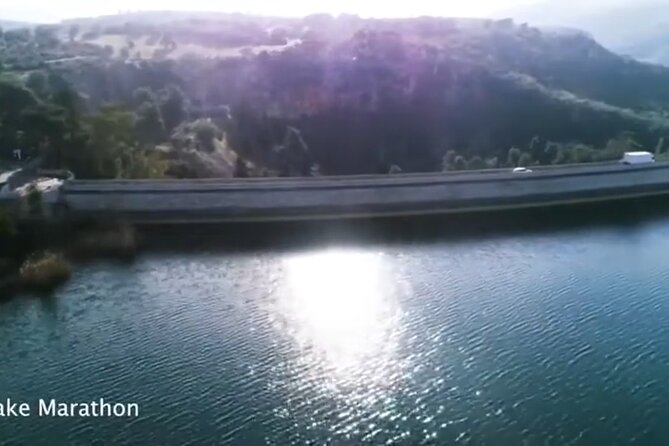
Marathon Lake (Reservoir) and the 1920s dam that echoes the Parthenon
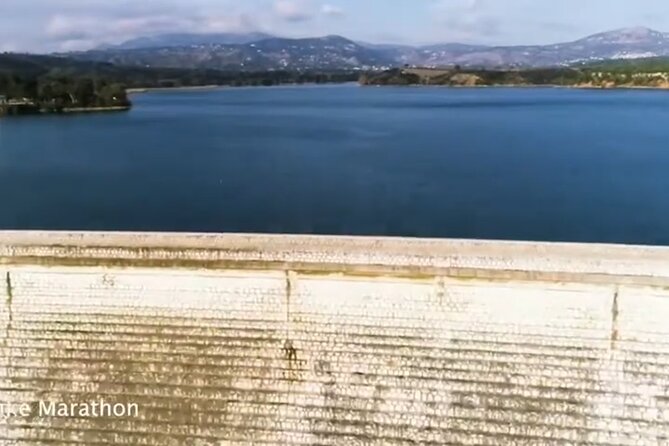
Your first stop is Marathon Lake, centered on the Marathon Dam (also known as the Marathon Reservoir). It was built between 1926 and 1929 to solve Athens’ growing water needs, and it was a major modern engineering project for Greece at the time. The dam is 54 meters high and 285 meters long, and it created an artificial lake by blocking the Charadros River.
What I love about this stop is the unlikely connection it creates. The dam was faced with Pentelic marble, the same material known for the Parthenon. It’s a clever bridge between ancient pride and modern infrastructure—Greece using the language of its famous stone to build something practical and new.
It also works well as an opener because it’s not only history-on-a-plaque. You get a sense of place in the Marathon area right away: water, the reservoir setting, and the idea of how the region grew in importance beyond the battlefield. The admission ticket here is free, so you can treat this as a low-stress warm-up before the more intense sites.
Time tip: expect about 30 minutes. It’s enough time to take photos and absorb the context without feeling like you’re waiting around.
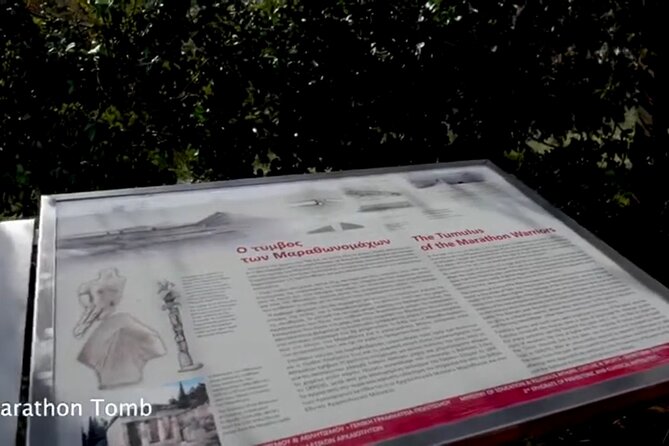
Marathon Tomb (Tymvos): stepping onto the battlefield memory
Next comes the Marathon Tomb, called Tymvos, the burial mound for the 192 Athenian soldiers who died in the Battle of Marathon in 490 BCE. This is one of those places where the ground itself feels like a historical argument: a victory that mattered, because the outnumbered Athenians held firm against invading Persian forces.
The traditional story is powerful. Instead of burying the fallen in the usual cemetery, the Athenians chose to bury them near where they fought—an honor typically reserved for heroes. The mound rises about 9 meters high and sits near the Marathon plain. Archaeological excavations uncovered cremated remains and grave offerings inside, which adds weight beyond legend.
This is also a smart stop to include because it connects the story you hear in Athens classrooms to real geography. A good driver-guide doesn’t just recount the battle; they help you understand where the fight happened and what the terrain would have meant for movement and survival.
Consideration: admission isn’t included for this stop. The listing doesn’t provide the price for the Tomb fee, so it’s best to budget something extra for it when you’re planning your total day cost.
How long: about 1 hour. That’s enough to be respectful, read what you can, and still keep energy for the bigger-site museum time later.
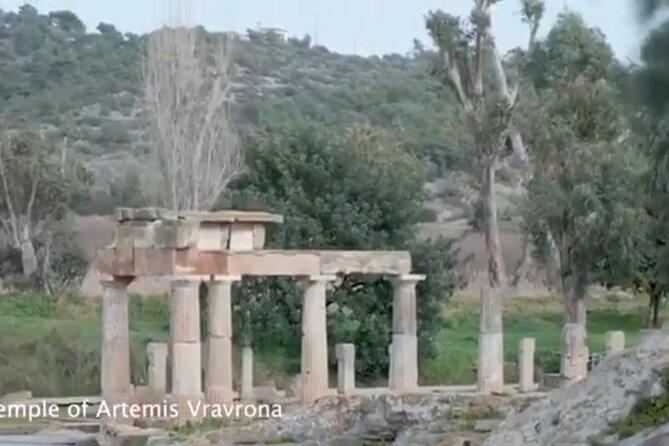
Temple of Artemis at Brauron (Vravrona): why rituals matter

The day turns from battlefield memory to ancient religion at the Temple of Artemis in Brauron (Vravrona). This sanctuary was one of the most important for Artemis in Attica, built in the 6th century BCE near the Erasinos River. The temple complex honored Artemis Brauronia—connected to nature, hunting, and childbirth.
Here’s what makes this stop different from a typical “see a temple ruins” outing: the site is tied to women’s rites of passage. Pilgrims came from across Attica, and young girls participated in rituals known as the Arkteia, where they would “play the bear” to honor the goddess and prepare for adulthood. It’s also connected to dedications, especially garments offered by women after childbirth.
The sanctuary had more than one structure: a Doric temple, a sacred spring, a stoa, and an unusual L-shaped building used for festivals and ceremonies. And when the sanctuary declined—likely due to floods and then Roman influence—you can still feel the long arc of use and meaning here.
Admission isn’t included, and the fee listed is €5 per person for the Archaeological Museum of Vravrona. Even with the ticket, I think the value is solid because this stop explains a side of ancient Greek life that many visitors miss. You’re not only learning about kings and wars; you’re learning how people marked transitions and trusted their gods for the big moments.
Time: about 3 hours. That’s a long chunk, but it gives room to slow down and absorb context. If you’re short on energy, talk to Ilias about keeping the pace steady without skipping the key story points.
Archaeological Museum of Marathon: artifacts that explain daily life
After Artemis, you move into the Archaeological Museum of Marathon near the historic battlefield. This is where the day becomes more concrete. The museum covers the Marathon region from prehistory to late antiquity, with a focus on the 490 BCE Battle of Marathon, the Marathon Tomb, and the Sanctuary of the Egyptian Gods.
It’s a practical, visitor-friendly museum with five rooms. Expect pottery, sculptures, inscriptions, and grave offerings. I like that it doesn’t reduce Marathon to one famous morning of fighting. You get to see how the area mattered long before and long after the headline battle.
A couple highlights worth knowing:
- The Marathon Boy, a bronze statue found in the sea
- Funerary stelae from the Classical period
- Finds connected to the Neolithic site at Tsepi and early cemeteries, showing importance well before 490 BCE
Admission isn’t included, and the ticket listed is €5 per person for the Archaeological Museum of Marathon. If you like museums, this is one of the best value stops of the day because it turns “battle story” into a broader view of what people did, believed, and buried.
Time: about 2 hours. That’s enough time to see the main rooms without rushing. If you’re not museum-heavy, you can still keep it tight by focusing on the objects linked to the Tomb and the battle era.
- All Day Cruise -3 Islands to Agistri,Moni, Aegina with lunch and drinks included
★ 5.0 · 4,958 reviews





Marathon Run Museum: the messenger story you can touch
To wrap the day, you’ll visit the Marathon Run Museum in the town of Marathon. This one is all about the modern idea of Marathon—built from a mix of ancient legend and today’s Olympic sport.
The story goes back to the messenger Pheidippides, who ran from the battlefield to Athens in 490 BCE to announce victory over the Persians. The museum traces how that legend evolved into the race concept people recognize now.
The museum opened in 2004 and has over 4,000 exhibits, including rare documents, medals, uniforms, and memorabilia from Olympic Marathons and international races. There’s also special attention on Greek Marathon legends like Spyros Louis, winner of the first modern Olympic Marathon in 1896.
What I appreciate here is that it gives you a lens for the connection between the ancient and the modern. You’re not just hearing about an old victory; you’re seeing how the idea of endurance became a global event. It’s a great final stop if your group includes runners (or if someone in your group has a curiosity about sports history beyond the track).
Admission isn’t included, and the ticket listed is €5 per person. Time: about 30 minutes. It’s short enough to avoid museum fatigue, but long enough to leave with a few concrete takeaways instead of just walking through quickly.
Price and what you’re really paying for (plus what’s extra)
Let’s talk value, because this kind of private day can either feel like a steal or like a splurge.
You pay $428.91 per group (up to 4) for about 8 hours. What you get for that:
- Private transportation in an air-conditioned vehicle
- WiFi on board and water
- A professional driver-guide with history sharing (exterior insights)
- Convenience: pickup and return to your chosen starting point
- A day structured to reduce unnecessary walking between sites
Then you have the extras:
- Lunch is not included
- Marathon Run Museum: €5 per person
- Archaeological Museum of Marathon: €5 per person
- Archaeological Museum of Vravrona: €5 per person
- Marathon Tomb and some site time may also require separate entry, but the Tomb price isn’t specified in the details you have
- A licensed archeologist inside-guide is available for an extra fee if you want deeper commentary at sites
Here’s how I’d do the quick math in your head. If you’re paying museum fees for the three listed €5 tickets, that’s €15 per person on top of the group price, plus anything required for the Tomb. If you’re splitting the group cost among 3 or 4 people, your per-person total often lands in a sweet spot for what you’d otherwise spend on taxis, entry chaos, and time.
The main consideration: this is not a “everything included” private tour. You’re paying for comfort and guidance, and then paying for specific museum entries as you go.
Getting the most out of Ilias and keeping the day relaxed
A private tour lives or dies on the guide’s rhythm. Ilias is described as warm, welcoming, funny, and knowledgeable, and that matters because you’ll be hearing the story while watching the terrain change. He’s also described as a capable driver, and punctual pickup makes a difference with an 8-hour day.
The other underrated perk is flexibility. One group noted they were allowed to spend as little or as much time as they wanted at each stop. That’s exactly what you want for a day that mixes quiet, solemn sites (like the Tomb) with longer context stops (like Brauron).
Also, if your group includes food lovers, this style of guide can help. One review mentions that Ilias recommended a nearby seaside lunch spot with kebabs and gyros. It’s not listed as included, but it’s a good reminder: with a private guide, asking for a lunch recommendation is part of the value.
My practical advice: bring a small snack plan and keep cash or card ready for museum tickets. You’ll spend most of the day outdoors at one point or another, and having simple timing awareness helps.
Who should book this Athens to Marathon private tour
This tour is a strong fit if:
- You want a one-day Athens to Marathon route that makes sense without transit headaches
- You like history that connects battle events, religion, archaeology, and modern sports
- Your group values a private pace and the option to slow down
- You want pickup convenience more than you want a pile of included tickets
It might be less ideal if:
- You’re trying to keep your day very short (this is still about 8 hours)
- You hate paying extra for museum entries
- Your group wants deep inside-only guidance at every site without any add-ons (your guide is limited to exterior insights unless you add a licensed archeologist)
Season matters too. In quieter periods, you may find you have more room for conversation and slower viewing, which can turn Marathon from a checklist into a story you can talk about.
Should you book it?
Yes—if your goal is a smooth, meaningful day that ties Marathon’s 490 BCE story to the culture of running, this private tour is a solid choice. The biggest reasons to book are the convenience of pickup and return, the efficient driving that cuts wasted time, and the way Ilias connects the stops so they don’t feel like separate random visits.
Book it especially if you’re traveling with a small group (up to 4) and you’d rather pay for privacy than spend time figuring out public transport. Just budget for the entrance fees you already know about (and likely the Tomb fee), and plan for a full day.
If you want a Marathon day that’s both practical and genuinely informative, this is the kind of itinerary you’ll still remember when you get home.
FAQ
How long is the Athens to Marathon private tour?
It runs about 8 hours (approx.), with site stops that total roughly 7 hours plus travel time.
Is pickup included, and where does the driver meet me?
Yes. For hotel stays, the guide waits at the hotel lobby. For apartments, they wait at the entrance of the building. For airport pickup, they wait in the arrivals hall holding your name sign. For port pickup, they wait at the gate holding your name sign.
What’s the group size for this private tour?
It’s a private tour for your group, up to 4 people per group.
What’s included in the tour price?
Included: private transportation with a professional driver-guide (exterior insights), air-conditioned vehicle, WiFi on board, and water.
Are museum and site tickets included?
No. Tickets are not included for places such as the Marathon Tomb, Temple of Artemis in Vravrona, the Archaeological Museum of Marathon, and the Marathon Run Museum.
What entrance fees should I expect?
The details list €5 per person for the Marathon Run Museum, the Archaeological Museum of Marathon, and the Archaeological Museum of Vravrona. The Marathon Tomb ticket is listed as not included, but no fee amount is provided.
Is there lunch included?
No, lunch is not included.
Is the tour offered in English?
Yes, it’s offered in English.
Do I get a mobile ticket?
Yes, a mobile ticket is included.
What is the cancellation policy?
You can cancel for a full refund up to 24 hours before the experience starts. If you cancel less than 24 hours before, the amount paid isn’t refunded.


More Private Tours in Athens


More Tours in Athens


More Tour Reviews in Athens
- All Day Cruise -3 Islands to Agistri,Moni, Aegina with lunch and drinks included
★ 5.0 · 4,958 reviews