REVIEW · ATHENS
Ancient Agora and Acropolis Private Tour with Licensed Expert
Book on Viator →Operated by WARMPENGUIN · Bookable on Viator
Athens gets crowded fast, but this private setup keeps it under control. You’ll cover two UNESCO-classic stops in one smooth route, with a licensed guide who can point out the details that make the Acropolis feel personal and the Ancient Agora make sense in context.
I especially like two things: the meeting point at Acropoli Metro Station (street level, 7 Makrygianni Street) gets you oriented right away, and the guide-led pacing means you can actually ask questions (guides like Mandio, Manto, Shorty, and Vicky are specifically praised for staying engaging and keeping things on your timeline).
One thing to consider: admission tickets aren’t included, and there’s also some walking between the Acropolis and Agora, so this isn’t ideal for reduced mobility.
In This Review
- Key things to look forward to
- Meeting at Acropoli Metro Station and getting your bearings fast
- The Acropolis section: Parthenon views plus the sites people miss
- Theatre of Dionysus: why drama started on a giant hillside
- Gateway and ceremonial route: Propylaia and the approach to the temples
- Athena Nike Temple and the classic Ionic details
- The Parthenon: not just a building, but the centerpiece of a system
- Erechtheion: myth, statues, and two deities in one complex
- Odeon of Herodes Atticus: a theater still in use
- New Acropolis Museum: why the real stuff beats guesswork
- Ancient Agora of Athens: daily life at the base of the Acropolis
- The commerce recreation and onsite artifacts
- The Temple of Hephaestus (the big “wow” anchor)
- Private pacing with a licensed guide: better than audiobooks
- Price and value: what you’re really paying for
- Timing, crowds, and how to plan around the day
- Who should book this Acropolis and Ancient Agora private tour?
- Should you book it?
- FAQ
- How long is the private tour?
- Where do we meet the licensed guide?
- Is this tour private?
- Is the tour offered in English?
- Are admission tickets included?
- Can the tour help with skip-the-line tickets?
- What major parts of the Acropolis are included?
- Is this suitable for reduced mobility?
Key things to look forward to
- Licensed expert guide who can explain what you’re seeing and answer questions
- 80 minutes around the Acropolis landmarks, including Parthenon-area monuments and the Theatre of Dionysus
- New Acropolis Museum stop to connect sculptures and myths to real originals
- Ancient Agora time (about 80 minutes) to understand daily life at the feet of the Acropolis
- Whisper communication system included for groups of 6+
- Private format: only your group participates, so you won’t get lost in a big herd
Meeting at Acropoli Metro Station and getting your bearings fast
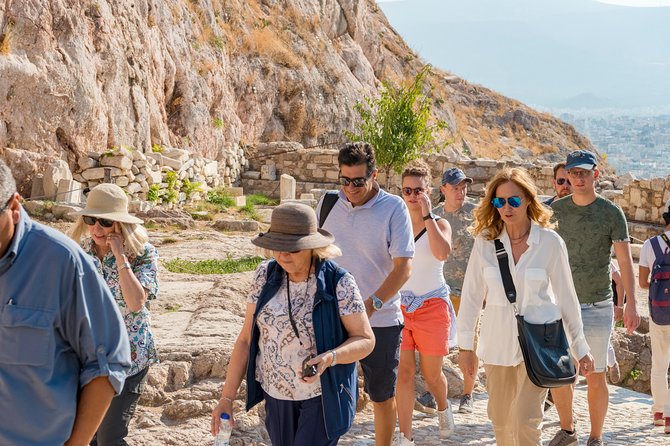
The tour starts at a smart, practical place: the guide meets you at the Acropoli Metro Station street level, at 7 Makrygianni Street, close to the Acropolis Museum. That matters because you’re not trying to triangulate meeting points while everyone else is rushing toward the same slopes.
Right from the start, you get a view that helps you understand the Acropolis as a place, not just a photo spot. Your guide uses the surrounding wall built by earlier Mycenean civilization to set the scene—why this hill mattered, how it fit into ancient Greek life, and what role it played in the world the Athenians built.
If you’re arriving by foot or metro, this start point keeps things easy. The end point is back at the meeting spot, which is helpful when you’re deciding what to do next in Athens.
You can also read our reviews of more private tours in Athens

The Acropolis section: Parthenon views plus the sites people miss

The Acropolis portion is designed to be efficient without feeling like a speed-run. Expect about 80 minutes focused on the major monuments and associated structures—plus the kind of “wait, look at that” explanations that make you slow down naturally.
Here’s what you’ll encounter on the walk, in plain language:
Theatre of Dionysus: why drama started on a giant hillside
One of the early highlights is the Ancient Theatre of Dionysus, built in the 4th and 5th century BC in a natural amphitheater on the Acropolis slopes. It’s often described as the world’s oldest theater, with an estimated capacity of around 25,000. Standing in that kind of space makes it easier to picture how big the arts were in Athens—this wasn’t background entertainment. It was a civic event.
If you like literature, theater history, or you just enjoy understanding how people lived, this stop does real work. You’ll connect the building to the plays that would have premiered there.
Gateway and ceremonial route: Propylaia and the approach to the temples
As you move upward, you’ll pass through the approach to the Acropolis with the monumental Propylaea (gateway) and the feel of a ceremonial entrance. This is where your guide’s storytelling makes the architecture easier to read: where people would pause, what they would notice, and why the placement of structures mattered.
Your guide also sets up key imagery—like the legend of an enormous decorated bronze statue of Athena, whose spear tip was said to catch sunlight and be visible to incoming ships.
Athena Nike Temple and the classic Ionic details
You’ll see the Temple of Athena Nike, described as built around 420 BC and one of the earlier temples on the Acropolis. It’s a Classical Ionic temple, largely restored, and positioned for strong views over the city. Even if you don’t know Greek art styles yet, a guide can help you “read” what you’re looking at—proportions, placement, and what worship was centered on.
- All Day Cruise -3 Islands to Agistri,Moni, Aegina with lunch and drinks included
★ 5.0 · 4,958 reviews






The Parthenon: not just a building, but the centerpiece of a system
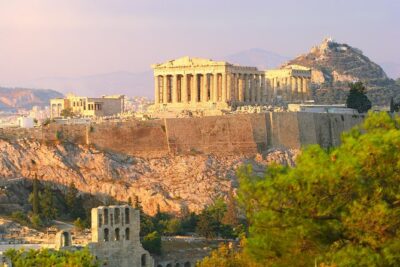
Next comes the Parthenon area, the climax of the visit. It’s framed as the pinnacle of Classical Greece’s Golden Age—an engineering, art, and ceremonial hub. Your guide takes time here to explain construction, mythology, and historical importance in a way that keeps you from getting lost in dates.
This is also a good moment to slow your walking pace and take photos—because the Parthenon is surrounded by viewpoints that can be blocked by crowds if you move too fast.
Erechtheion: myth, statues, and two deities in one complex
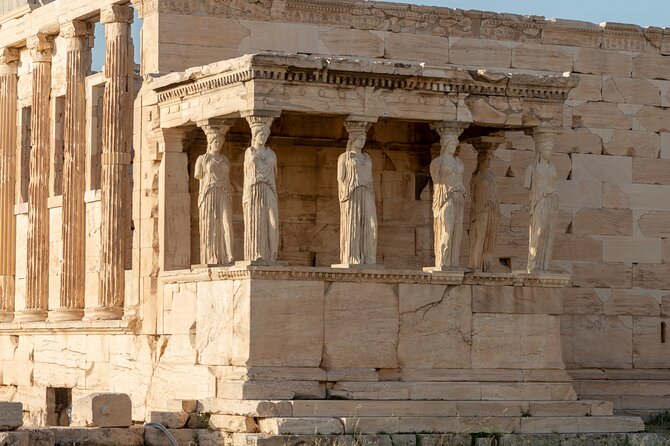
You’ll also visit the Erechtheion, dedicated to both Zeus and Athena (as presented here) and known for its myth connections and notable statues. The guide highlights the main features, and you’ll later see related pieces explained again in the museum context, which helps everything click.
Odeon of Herodes Atticus: a theater still in use
During the Acropolis walk, you’ll also spot the Odeon of Herodes Atticus, built in AD 161 in memory of his wife. The cool fact here is practical: it’s still used as a working theater today. When a site keeps functioning across centuries, it turns history into something closer to the present.
New Acropolis Museum: why the real stuff beats guesswork
One of the most valuable parts of this tour is the stop at the New Acropolis Museum, listed at about 80 minutes. This isn’t just a break. It’s where your Acropolis visit stops being a list of monuments and starts becoming an understanding of what those monuments represented.
The museum houses original masterpieces along with models, videos, and interactive installations. Your guide focuses on the most significant pieces and explains the myth and legend tied to what you saw outside. In particular, it helps the transition from outdoor ruins to indoor interpretation—especially for sculpture-heavy spots like the Erechtheion.
If you’ve ever walked around ancient ruins and thought, I’m sure I’m missing half of what matters, this museum stop is the fix. The guide’s emphasis makes it easier to remember details later, and it can also help you recognize the difference between what’s restored, reconstructed, and genuinely ancient.
Ancient Agora of Athens: daily life at the base of the Acropolis
After the Acropolis, the tour shifts down to the Ancient Agora of Athens, the marketplace and center of civic and commercial life at the foot of the hill. You’ll get about 80 minutes here, and the pacing is meant to keep the story clear.
The commerce recreation and onsite artifacts
You’ll start with a recreation of an ancient center of commerce where traders worked, which gives you a simple framework before you move into the physical monuments and artifacts. Then you’ll visit the onsite museum component that houses many of the artifacts uncovered from the site.
This is where your guide helps you connect the architecture to daily routines—things like trade, workshops, and how public life moved through the space.
The Temple of Hephaestus (the big “wow” anchor)
One of the standout elements in the Agora is the most complete remaining temple of Greek antiquity (often associated with Hephaestus in common Agora context). Even if you’re not chasing architecture nerd points, it’s a memorable marker because so much of it has survived.
The temple’s condition makes the explanations easier to trust. When you can see the forms clearly, a guide can talk about function and meaning without relying only on imagination.
Private pacing with a licensed guide: better than audiobooks
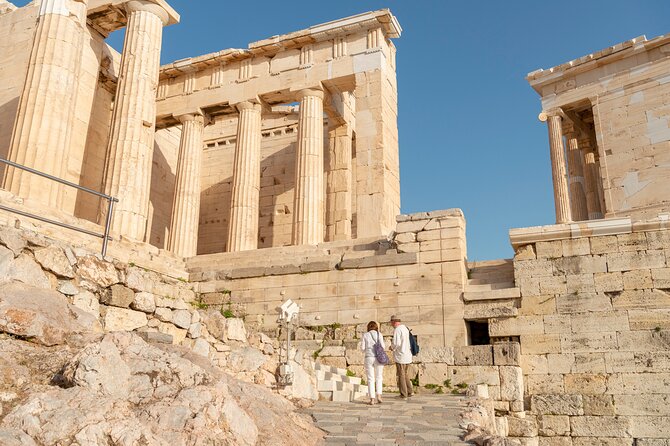
A major reason this tour feels worth it is the format. It’s private, meaning only your group participates, not a mixed crowd. That makes a difference on the Acropolis, where crowds can turn even a great plan into endless “move along” pressure.
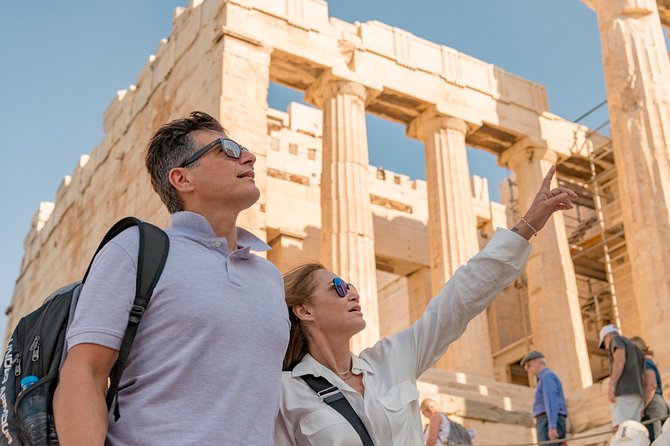
The guide also carries the conversation weight. You’ll get an actual dialogue, not just narration. Guides are noted for being engaging and witty, and for answering lots of questions—helpful if you have a teen who wants explanations, or if you’re the type who keeps looking at details and needs context.
On top of that, there’s a whisper communication system included for groups of 6 or more. It’s a small thing, but it can make the difference between hearing your guide clearly and just nodding politely.
And yes, being able to keep a pace that feels comfortable matters. This itinerary is structured, but it’s not a rigid march. You can pause for photos and slow down when something catches your eye.
Price and value: what you’re really paying for
At $185.86 per person for about 3 hours, this isn’t an impulse buy. But the value calculation is pretty straightforward if you think about what’s included.
You’re paying for:
- a licensed expert guide who handles the storytelling and navigation
- a route that links Acropolis → museum → Ancient Agora instead of treating them as separate tasks
- a private format that’s easier to manage than group tours
Then factor in the one major catch: tickets are not included. That means you’ll pay additional admission costs anyway, but you’re not stuck doing the timing puzzle alone. The operator notes that tickets can be organized on request (extra cost), and they’ll ask you after booking whether you need help buying timed entry / skip-the-line tickets so your guide has them ready.
My practical advice: treat this as a “pay for clarity” tour. If you want to walk the Acropolis and Agora with someone who points out what matters—and if you don’t want to spend your limited Athens time decoding sites on your own—this price starts to make sense.
Also, it’s booked on average 85 days in advance, which is a signal that popular time slots can disappear. If your schedule is fixed, don’t wait until the last minute.
Timing, crowds, and how to plan around the day
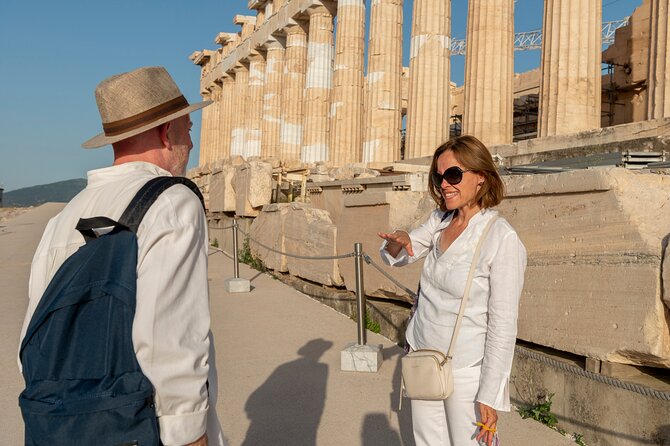
The itinerary is built around efficiency, but you can still control how stressful or pleasant it feels by choosing your time well. In general, earlier hours tend to be kinder for comfort and crowd flow, especially at the Acropolis.
Since the tour includes both the Acropolis and the Ancient Agora, you’ll want to think about:
- sun and heat on the slopes
- the total walking involved
- your energy for museum time indoors after outdoor viewing
If you’re trying to match this with other stops in Athens, keep your next plan flexible right after the tour ends back at the meeting point. That helps you avoid a domino effect if the day is running behind.
Who should book this Acropolis and Ancient Agora private tour?
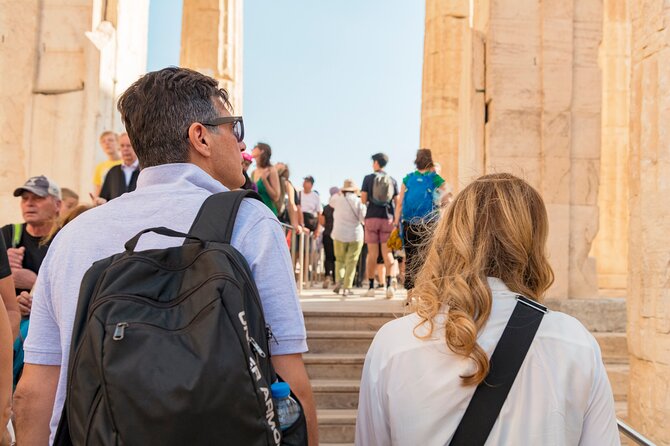
This tour is a great fit if you want:
- two major UNESCO landmarks covered in one go
- a guided explanation that helps you understand what you’re looking at, not just where it is
- a pace that’s easier to manage than group tours
- extra context in the museum so outdoor ruins make more sense
It can also work well for families and teens, especially if your kid likes questions and doesn’t want the “museum voice” to take over.
One caution: the tour notes there is some walking distance between the Acropolis and Agora, so it’s not suitable for people with reduced mobility. If that’s you or someone in your group, you’ll need a different plan that reduces walking.
Should you book it?
If your goal is to see the Acropolis and Ancient Agora without feeling lost, this is a strong choice. The private structure plus the New Acropolis Museum stop is the kind of combo that turns ruins into a story you can actually follow.
Book it if you care about interpretation, photo-friendly pacing, and asking questions. Pass on it if you’re hoping to do everything fully ticket-on-your-own and you don’t want the extra planning required for timed entry.
FAQ
How long is the private tour?
The tour lasts about 3 hours.
Where do we meet the licensed guide?
Meet at the Acropoli Metro Station street level at 7 Makrygianni Street, near the Acropolis Museum.
Is this tour private?
Yes. It’s a private experience, and only your group participates.
Is the tour offered in English?
Yes, it’s offered in English.
Are admission tickets included?
No. Admission tickets and their cost are not included.
Can the tour help with skip-the-line tickets?
Yes. After booking, they can help organize hassle-free tickets on request for an extra cost, and they’ll ask you in messages. Make sure you reply if you want help.
What major parts of the Acropolis are included?
You’ll see the Parthenon-area monuments and associated structures, including highlights such as the Theatre of Dionysus, the Propylaea gateway approach, the Temple of Athena Nike, the Erechtheion, and also the Odeon of Herodes Atticus.
Is this suitable for reduced mobility?
It isn’t suitable for persons of reduced mobility because there is some walking distance between the Acropolis and the Agora.


More Private Tours in Athens


More Tours in Athens


More Tour Reviews in Athens
- All Day Cruise -3 Islands to Agistri,Moni, Aegina with lunch and drinks included
★ 5.0 · 4,958 reviews