REVIEW · ATHENS
Private Athens: Historical Walking Tour Including the Changing of the Guard
Book on Viator →Operated by Intrepid Urban Adventures - Greece · Bookable on Viator
The Evzones are worth timing your morning around. I love that the tour pairs the Changing of the Guard with real neighborhood life in Plaka and Kolonaki, not just sightseeing. I also like the included Greek coffee and the guide’s local tips for where to eat and wander next. The one catch: you’ll see the Acropolis area from the outside, so you need separate plans if you want to go inside.
This is a private, English-speaking walking tour (about 3 hours) that starts in Syntagma Square at 9:30 am and ends at the Academy of Athens. You’ll move mostly on foot, with one short metro hop to get you to the Acropolis zone efficiently, and you’ll finish right where modern Athens feels comfortably close to the ancient sites.
In This Review
- Key highlights at a glance
- Syntagma Square start: the city’s stage for power and people-watching
- Evzones at the Tomb of the Unknown Soldier: the changing of the guard, up close
- Metro to the Acropolis zone: walking the classic sights without the entry line
- Adrianou Street: souvenirs with a real local rhythm
- Hadrian’s Arch and the Zeus temple ruins: Roman power meets Greek scale
- Panathenaic Stadium to Kolonaki: the jump from Olympics past to Athens today
- Ending at the Academy of Athens: a tidy finish that still feels central
- Guides and the small details that change everything
- Price and value: what $149.14 buys you (and what it doesn’t)
- Practical expectations: walking pace, timing, and what to bring
- Who should book this private Athens walk?
- Should you book this private Athens tour for the Guard and more?
- FAQ
- What’s the duration of the Private Athens tour?
- What time does the tour start, and where do I meet?
- Is the tour private?
- What’s included in the tour price?
- Are entrance fees included?
- Do I need a metro ticket?
- Can I visit inside the Acropolis on this tour?
Key highlights at a glance

- Evzones ceremony timing: The guard change happens every hour, and your guide helps you watch it without guessing where to stand.
- Acropolis perimeter, not just a postcard: You walk near the Acropolis walls and pass major landmarks along the way.
- Plaka-style shopping and food cues: Stop for local products on Adrianou Street, from ouzo to olive oil and sponges.
- Roman-era contrast: You’ll see Hadrian’s Arch and the temple ruins around Zeus (Jupiter).
- Modern Athens after the classics: Panathenaic Stadium and Kolonaki keep the day from feeling like one long museum loop.
Syntagma Square start: the city’s stage for power and people-watching

Your tour begins at Syntagma Square, Athens’ big, crowded hub, surrounded by impressive neoclassical buildings. One of the most famous is the Grande Bretagne, a landmark that has hosted everyone from Churchill to Madonna—a fun reminder that Athens isn’t only ancient marble. It’s a working capital where history and daily life share the same sidewalks.
This first stop matters because it sets the rhythm of the day. Your guide gives context while you watch the square do its thing: street motion, tight corners, and tourists streaming toward the ceremony. It’s also where you get oriented for what comes next, so the rest of the route feels like a planned walk instead of a scramble.
You can also read our reviews of more walking tours in Athens

Evzones at the Tomb of the Unknown Soldier: the changing of the guard, up close
Head to the upper end of Syntagma Square and you’ll find the Evzones, Greece’s guards of the Constitution, at the Tomb of the Unknown Soldier. The outfits are traditional, with the dramatic look—white skirt, red hat, and that old-style rifle—plus the choreography that makes this ceremony so hypnotic to watch.
Your guide times this stop around the hourly changing of the guard. That means you’re not just passing by hoping you catch it; you’re there for the moment and you get the background on what the tradition represents. If you want the most satisfying experience, arrive with a little patience in your shoulders. Ceremonies live on routine, and your best view comes from standing calmly and letting the scene come to you.
One practical tip: wear shoes you can stand in comfortably for a short spell, because this is the kind of moment where you’ll want to watch from the same spot and enjoy the full cycle. Quick photo bursts are fine, but the real payoff is watching how the guard movement turns the area into a living stage.
Metro to the Acropolis zone: walking the classic sights without the entry line
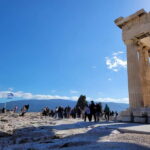
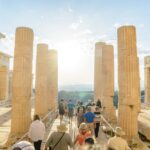
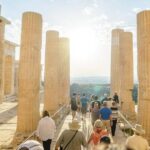
After the ceremony, you take the metro to Acropolis station, then you walk around the Acropolis walls, with the Ancient Agora along the way. This is a smart route choice for a half-day plan. You get the atmosphere of the Acropolis area without spending your whole morning queued up for entry.
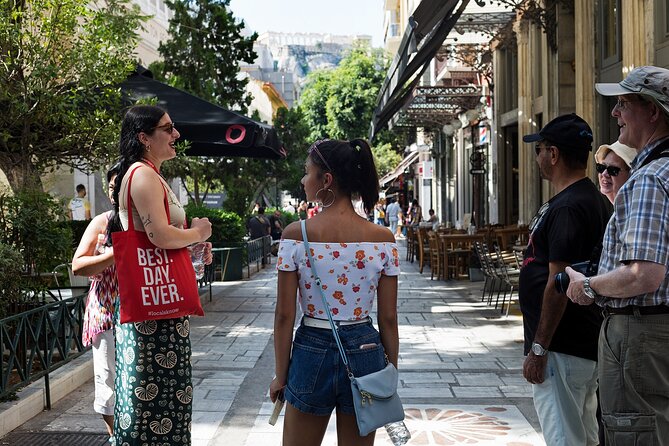
What you’re doing here is staying outside the “ticketed” version of the Acropolis experience while still getting the bones of the story. You’ll hear how classic Athens functions as the central hub of the monuments people talk about most, and you’ll notice how old and newer architecture sit side by side. It’s also a good moment to ask questions, because the guide can point out how certain customs and traditions still show up in daily life.
A key limitation (so you aren’t surprised): if you want to go inside the Acropolis, that has to be done separately on your own time. This tour is built for understanding the area and walking the connections, not for bundling in interior ticket time.
Adrianou Street: souvenirs with a real local rhythm

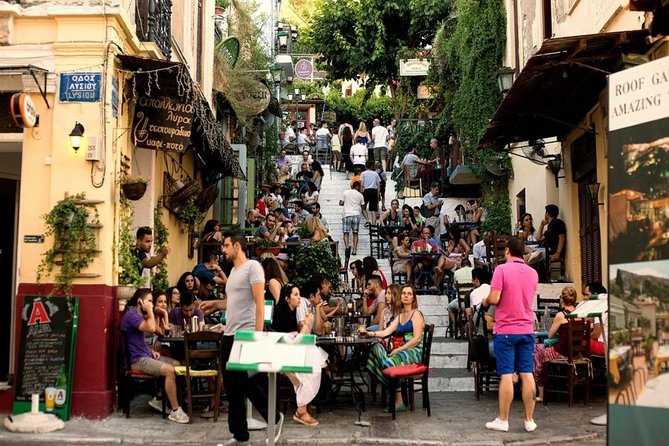
Next you head toward Adrianou Street, one of those lanes where shopping feels like it belongs to the neighborhood, not a theme park. Here you’ll find practical local products—ouzo, olive oil, sponges, leather sandals, and bags—items tied to Greek daily life and hospitality.
This stop is valuable because it gives you a sense of how locals shop and talk, even if you’re just window browsing. It’s also where I find it easiest to pick up souvenirs that won’t look generic back home. And if you’ve been waiting for a reason to buy olive oil, Greek soap, or a bottle of ouzo, this is the stretch where it all makes sense.
Keep your expectations realistic: this is a walking tour, so the shopping time is limited. Plan to choose, not to browse forever. If you want to turn this into a mini-stroll, your guide’s tips at the end can help you pick where to return.
Hadrian’s Arch and the Zeus temple ruins: Roman power meets Greek scale

Then you move beneath the Acropolis wall area toward Diogenis Square, and you’ll see Hadrian’s Arch. It’s a Roman-era marker honoring one of Rome’s big historical names, and it’s a useful way to shift perspective. Athens didn’t stop being important after Greece’s classical peak—it kept changing hands, styles, and meanings over centuries.
As the day keeps moving, you’ll also get a look at the ruins of the Jupiter (Zeus) temple. Even without going inside, ruins like this help you understand how these massive religious spaces once worked in the city layout. They’re not just “old rocks.” They’re clues to how people gathered, worshiped, and organized their public lives.
This segment is a good place to slow down for a minute and let the scale hit you. When you see one landmark right after another, the city starts to feel like a connected map instead of separate attractions.
You can also read our reviews of more private tours in Athens




Panathenaic Stadium to Kolonaki: the jump from Olympics past to Athens today
After the ruins, you head to the Panathenaic Stadium, a white-marble arena tied to the first Modern Olympic Games. It’s also where the 2004 Olympic marathon ended, which gives the site a modern pulse even as you’re standing in a historic space.
From there, you transition to the present-day feel of Athens by walking into Kolonaki, centered around Kolonaki Square. This area is where locals do their everyday browsing and social time, and it has that chic, polished atmosphere—boutiques, people out for errands, and the sense that the city’s energy keeps moving.
Your guide helps you connect the dots between classic Athens and modern Athens. That matters because it prevents the day from feeling like you only “did history.” You’ll finish with a sense of where to go next, depending on your mood—coffee, shopping, or simply sitting and watching foot traffic.
One extra note from real-world experience: it can be easier to enjoy this kind of walk in the winter, when you’re dealing with fewer people than peak summer. If your travel dates are flexible, that’s an easy win.
Ending at the Academy of Athens: a tidy finish that still feels central
The tour wraps at the Academy of Athens on 28 Panepistimiou Street. This is a nice way to finish because it’s still in a “live” part of the city. You’re not dropped into a far corner where you have to scramble for your next step.
It also gives you an exit point that works for planning dinner. You’re close to where modern Athens continues, so you can shift from guided walking into independent exploring without losing time.
Guides and the small details that change everything

This kind of tour lives or dies on the guide’s storytelling style. In past groups, guides such as Babis, Theodore, and Maeva have been singled out for mixing history with humor and for pointing out sights you might miss on your own. One group even mentioned a detour to a lesser-seen spot: a hidden underground passage under one of the oldest churches. That’s the kind of detail that makes a “good tour” feel like a memorable walk.
So, if you can, arrive with questions in mind. Ask about what you’re seeing at the moment—why a place matters, how it connects to the next stop, and what you should do afterward. The best guides use the route itself as a classroom.
Price and value: what $149.14 buys you (and what it doesn’t)
At $149.14 per person for about 3 hours, the value comes from two things. First, it’s private, meaning only your group joins the walk (no mixing with random strangers). Second, you get an English-speaking local guide plus a route that ties together ceremony watching, major landmark areas, and modern neighborhood life without you needing to plan every connection.
What you should note up front: entrance fees aren’t included, and metro tickets aren’t included either. Also, there’s no promise of Acropolis interior access. You’re paying for guided walking and context, not for a full-ticket attraction bundle.
If you’re a couple or a small group, private tours often feel more reasonable because you’re effectively buying time and expertise rather than just access. If you’re traveling solo, it can still be worth it—just make sure you’re comfortable with a concentrated walking plan.
Practical expectations: walking pace, timing, and what to bring
This is a walking-heavy day, with short transitions and a metro hop that keeps you moving rather than waiting. The total duration is about 3 hours, so it’s long enough to feel like you covered real ground, but short enough to still enjoy the rest of your day.
Here’s what will help:
- Comfortable shoes for standing and walking on uneven sidewalks.
- Water and sun protection, especially if you’re in warmer months.
- A flexible plan for the Acropolis interior, since this tour focuses on the area from the outside.
Also, it’s a mobile ticket experience, and it runs in English. Service animals are allowed, and children must be with an adult.
Who should book this private Athens walk?
This tour is a great fit if you want your Athens day to have both drama and daily texture. It works well for first-time visitors who need the big moments (Evzones, Acropolis area, Panathenaic Stadium) but also want a sense of where locals shop and hang out in Kolonaki.
It’s also a good choice if you like guided context. Seeing landmarks is one thing. Understanding why they matter while you’re walking through the city streets is where the tour earns its cost.
Should you book this private Athens tour for the Guard and more?
If watching the Changing of the Guard is on your Athens must-do list, this tour makes it easy to hit the ceremony properly and then keep going with a thoughtfully connected route. The outside-the-walls Acropolis approach is a good compromise for a morning plan, especially if you’re planning a separate Acropolis visit later.
I’d book it if you want an Athens mix—ceremony, classics, and modern neighborhoods—served with local guidance and that included coffee. Skip it only if you already know you’ll spend most of your time inside major sites and prefer a tour built around timed entrance tickets instead of a walk-first itinerary.
FAQ
What’s the duration of the Private Athens tour?
It runs for about 3 hours.
What time does the tour start, and where do I meet?
The tour starts at 9:30 am at Syntagma Square (Pl. Sintagmatos, Athina 105 63, Greece).
Is the tour private?
Yes. It’s a private tour/activity, so only your group participates.
What’s included in the tour price?
You get a local English-speaking guide, the changing of the guard ceremony experience, Greek coffee, learning about Athens from a local perspective, and tips on what else to see, do, and eat.
Are entrance fees included?
No. Entrance fees aren’t included.
Do I need a metro ticket?
Yes. Metro tickets aren’t included.
Can I visit inside the Acropolis on this tour?
Not as part of this experience. If you want to tour inside the Acropolis, you’ll need to do that separately on your own time.



More Walking Tours in Athens


More Tours in Athens



More Tour Reviews in Athens
- All Day Cruise -3 Islands to Agistri,Moni, Aegina with lunch and drinks included
★ 5.0 · 4,958 reviews