REVIEW · ATHENS
Private 4-hour Walking Tour of Acropolis and Acropolis Museum in Athens
Book on Viator →Operated by Tour Travel & More · Bookable on Viator
Four hours, two sacred sites, one clear story. This private Athens walk is built for people who want the Acropolis story without the guesswork, starting at the top with a guided visit and then moving into the museum so nothing feels random. I love that admission is included, so you skip the annoying ticket-line friction, and I love the stop-by-stop guidance so you don’t feel like you’re wandering a giant ancient theme park. The only real drawback: you’ll be walking uphill and taking stairs, so comfortable shoes and water matter.
The pacing is also a big deal. You’re not stuck being herded. You can usually slow down for views, details, and questions—especially valuable on a site as big as the Acropolis and as information-dense as the museum.
And yes, the guide quality can make or break it. Names that come up in this experience include Anna, Kathy, Ioanna, Maria, and Nikos—all described as friendly, focused, and good at explaining the mythology and what you’re looking at. One small practical note: the meeting point can feel a bit unclear if you expect hyper-precise directions, so I’d plan to arrive a few minutes early outside the Acropolis Museum entrance.
In This Review
- Key highlights you’ll feel on the ground
- Entering the Acropolis Museum first, so it all clicks
- Climbing to the Acropolis without playing ancient GPS
- The gateway stop: learning how the hill was defended
- Parthenon time: the big icon, explained without the fluff
- Propylaea and Athena Nike: moving from grand gates to carved friezes
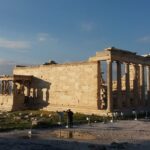
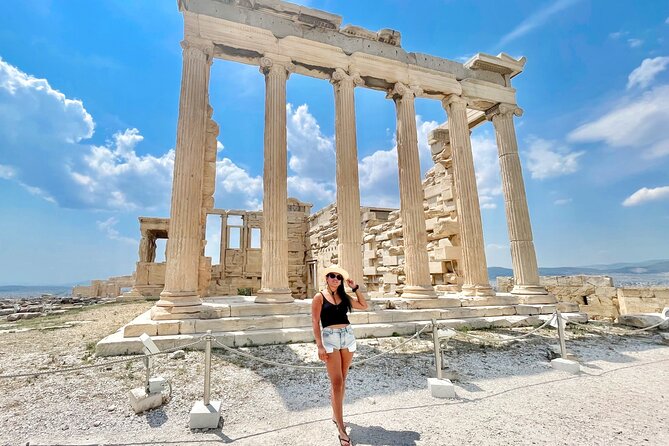
- Erectheion and the Caryatids: the temple built for uneven ground
- Other stops that add depth: Artemis Brauronion, Rome & Augustus, Agrippa
- Sanctuary of Artemis Brauronia
- Temple of Rome & Augustus
- Monument of Agrippa
- Price and pace: is $383.55 per person actually good value?
- Should you book this Acropolis Museum + Acropolis tour?
- FAQ
- How long is the Acropolis Museum and Acropolis walking tour?
- Are entrance tickets included for both the Acropolis and the Acropolis Museum?
- Where is the meeting point, and is pickup available?
- What language is the tour offered in?
- Is food or transportation included in the price?
- Is this tour private, and what group size is required?
Key highlights you’ll feel on the ground
- Skip ticket lines with admission included for both the Acropolis and the museum
- Museum-first clarity: you’ll understand sculptures, friezes, and temple functions before you climb
- A guide you can ask questions to, which helps you avoid getting lost on the Acropolis slopes
- Relaxed timing: the tour is long enough to see key monuments without feeling rushed
- A mix of eras: you’ll see Greek Archaic to Classical, plus Roman-era monuments on the hill
Entering the Acropolis Museum first, so it all clicks
Most Acropolis visits fall into two camps: people rush the ruins first and then stare at museum objects later with no context, or they do it the other way around and the art makes sense as they go. This plan starts at the Acropolis Museum for a reason: it’s the fastest path to understanding what you’re about to see outdoors.
You get about 1 hour inside, with the ticket included. The permanent exhibition is organized into five sectors based on where pieces came from and what period they belong to. That matters because the Acropolis isn’t one “thing.” It’s a sacred rock that kept getting rebuilt, damaged, repaired, and reinterpreted across centuries.
Here’s what you can look for inside:
- Acropolis Slopes: everyday objects, reliefs, votive offerings, pottery, decorative pieces
- Archaic: works before the Medical Wars era—things like the Moskophorus and collections of kores and votive figures
- Parthenon: the frieze, metopes, and pediments, plus some ancient inscriptions tied to the temple
- Propylaea, Athena Nike, Erechtheion: material connected to those structures
- 5th century BC to 5th century AD: inscriptions, reliefs, statues of gods/heroes, and remains from Classical through Roman periods
One detail I really like: the museum’s design mirrors the Parthenon’s orientation and dimension. In plain terms, you’re not just reading about the temple; you’re visually connecting it to the way the museum space works.
If you only do one thing at the museum, do this: pay attention to which sector explains which monument. It’s the difference between seeing objects and understanding why those objects were important.
You can also read our reviews of more walking tours in Athens

Climbing to the Acropolis without playing ancient GPS
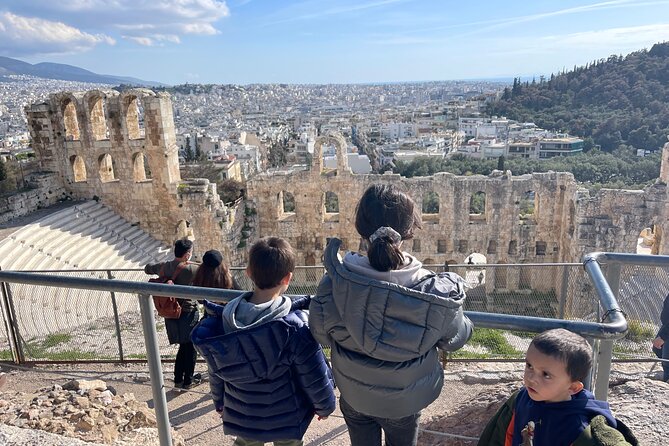
After the museum, the tour moves to the Acropolis itself for about 1 hour, with admission included again. This is where the guide does real work. The site is huge, and without someone steering you, it’s easy to wander past important sections while thinking you’re covering everything.
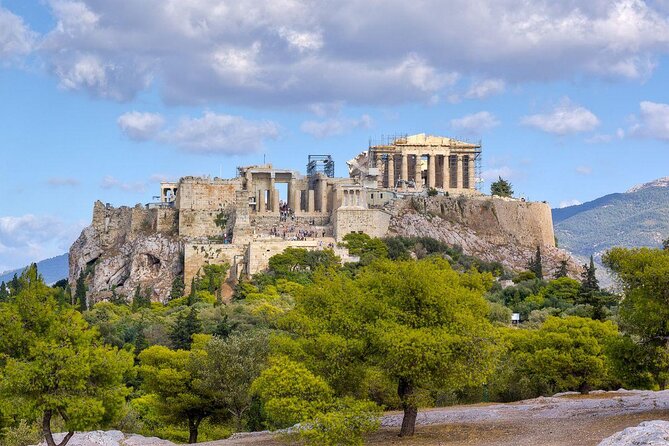
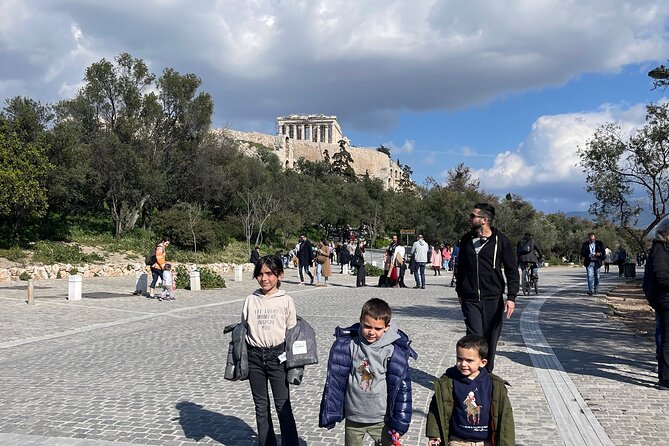
You’ll learn how the Acropolis functioned as a fortified, sacred enclosure on a strategic hill (156 meters above sea level). The guide helps connect the physical spaces to the myths, major religious festivals, and major city-changing events tied to ancient Athens.
Also, you’ll benefit from the “now-you-see-it” restoration context. The ruins have been under restoration since Greece gained independence, so you’ll notice how conservation and visibility efforts shape what you can actually observe today.
And yes, expect that walking and climbing are part of the experience. One of the best pieces of practical advice is simple: bring water. You can buy it once you’re there, but it’s smarter to start the climb prepared—especially if it’s warm.
The gateway stop: learning how the hill was defended
The tour doesn’t just jump from the top viewpoints to the big poster buildings. You also get a stop at a specific gate area. This gate is described as the current access point, west of the Propylaea, built in the 3rd century AD to help protect the sacred precinct—possibly after the Herulians’ destructive invasion.
What makes this worth your time is the “why” behind the stone. You’re not just looking at a doorway; you’re seeing how later builders reused older materials. The gate and nearby rectangular towers use building material from earlier structures, including references to the choregic monument of Nikias (late 4th century BC). Even when only foundations remain elsewhere on the slopes, the story shows up again here through reused stone and embedded inscriptions.
There’s also a named historical angle: the gate is named after a French archaeologist who investigated the area in 1852. This is one of those moments when you stop thinking of the Acropolis as a single monument and start seeing it as a long, layered construction site.
Time-wise, this kind of stop is short, but it gives you mental grounding. You understand the fortification logic before you hit the iconic temples.
Parthenon time: the big icon, explained without the fluff
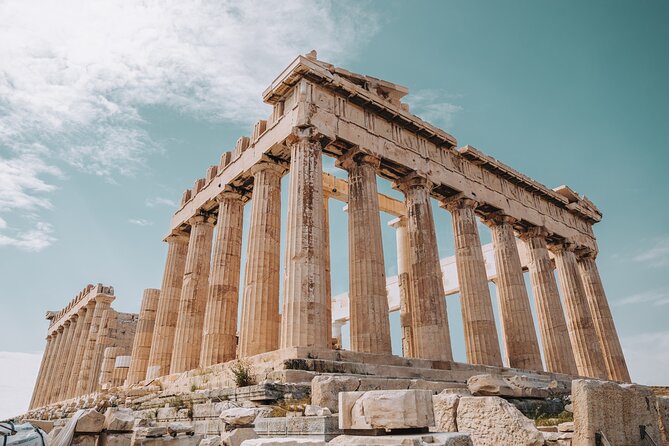
Then you hit the Parthenon. You’ll get about 20 minutes here, with admission included. In that time, the goal isn’t to stare until your neck hurts. It’s to understand what you’re looking at and why it was built.
The Parthenon (built between 447 and 432 BC) was designed to house a colossal cult statue of Athena Parthenos—described as wood, ivory, and gold, about twelve meters tall. The statue detail is useful because it reminds you the Parthenon wasn’t only an art object. It was a religious container.
If you’ve ever visited a huge ruin and felt like you’re supposed to “just know” what to notice, this guide-first approach is a fix. You’ll typically focus on the Doric architecture and the overall layout the guide ties back to the worship of Athena and the Parthenon’s role in Athenian identity.
Tip for your own viewing: use the minutes you have. Don’t spend all your time chasing photo angles. Pick one spot for the building’s proportions, then use your guide’s explanation to spot the parts you would otherwise miss.
Propylaea and Athena Nike: moving from grand gates to carved friezes
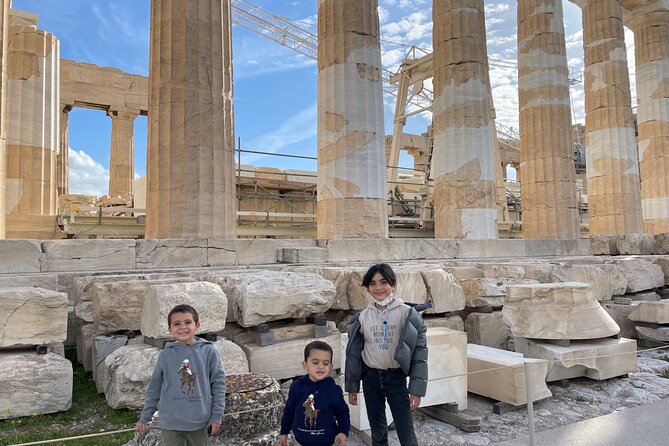
Right after the Parthenon moment, the tour continues through the zone where the monumental gates and temples cluster.
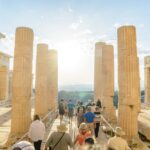
The Propylaea portion of the experience is described as a monumental entrance area built on the west side of the hill by Pericles (between 437 and 431 BC), replacing older propylaea from Pisistratus’ time. The design includes a giant double portico of Pentelic marble, and the porticoes are described as temple-facade-style structures, with Doric and Ionic elements mixing in a very deliberate way.
Even if that sounds architectural, the practical payoff is simple: you’ll know what you’re looking at when you face the gate structures. Instead of “columns and a roof,” you’ll know which design choices matter and how they frame access to sacred space.
Then come the Temple of Athena Nike stops. One version is a small Ionic temple built between 426 and 421 BC to replace older temples whose remains exist inside the bastion. You’ll learn about the relief frieze and how each side features different themes—gods around Zeus enthroned, warfare scenes, and the Greeks vs. Persians theme connected to Marathon.
There’s also mention of preserved pediment sculptural remains. Even in the short time here (about 15 minutes), this stop works well because it gives you a mental map of iconography: you’re not just looking at a tiny temple—you’re understanding how the story of Athens appears in stone.
One more Athena Nike angle appears later in the tour too, tied to the older Athena Polias temple remains and altar location in the bedrock. That pairing is useful because it shows you the continuity (and change) in worship across eras.
You can also read our reviews of more private tours in Athens




Erectheion and the Caryatids: the temple built for uneven ground
The Erectheion is one of those buildings where the architecture makes more sense when you understand it was shaped by the terrain and by sacred needs already on the site.
You’ll get about 15 minutes, with admission included. Here, the guide’s job is to translate two things:
1) the temple’s unusual planning, including its porticoes and how it fits into an uneven landscape
2) the religious ritual continuity that the later temple was meant to preserve
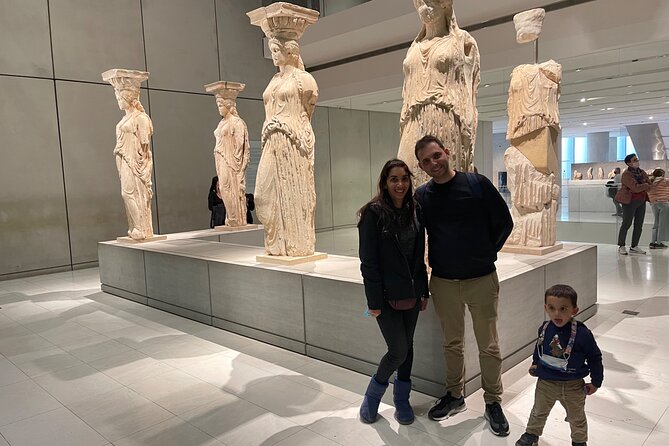
The highlight is the famous Caryatids. The Erectheion incorporates porticoes, and one of them is supported by six large female statues—described as Caryatids—meant to casually support the weight of the portico roof on their heads.
This is one stop where I think it’s especially worth slowing down. The Caryatids aren’t just decorative. They’re a teaching moment about how ancient Athenian design solved real-world constraints while keeping sacred functions in place.
If you’ve got limited mobility, this is still usually manageable because the tour is paced and guided, but it helps to be realistic about the Acropolis walking environment. Bring the best shoes you own.
Other stops that add depth: Artemis Brauronion, Rome & Augustus, Agrippa
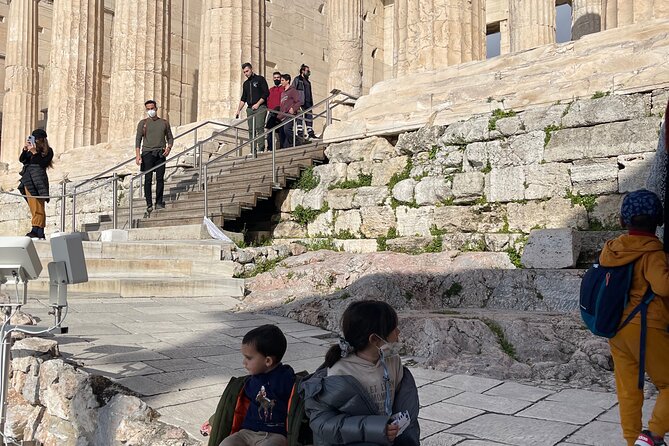
A lot of walking tours treat the Acropolis like a highlight reel. This one gives you a few supporting-cast monuments that make the story feel more complete.
Sanctuary of Artemis Brauronia
About 15 minutes here, south of the Propylaea within the sacred precinct. This sanctuary is tied to Artemis Brauronion, described as the protector of women about to give birth and women who have just given birth. The sanctuary probably worked alongside a larger goddess sanctuary in Attica.
Even though only foundation traces are visible today, the site description helps you “reconstruct” what stood there: a pi-shaped Doric stoa, ten columns along the façade, offerings in the courtyard, and a statue with a head now exhibited at the museum.
Temple of Rome & Augustus
Around 10 minutes, late 1st century BC, built by Athens to honor the goddess Rome and Octavian Augustus. It’s described as a small circular temple with nine Ionic columns in a single row and an all-white marble entablature and conical roof.
This stop is short, but it’s valuable because it shows the Acropolis didn’t stop being used after Greece’s Classical peak. Roman-era devotion layered onto older sacred ground.
Monument of Agrippa
About 15 minutes for the pedestal monument. It’s described as having the same height as the Temple of Athena Nike. Originally built in 178 BC in honor of Eumenes II of Pergamon to commemorate a victory in the chariot race of the Panathenaic games, it later connects to Marcus Agrippa.
You’ll see the preserved pedestal made of Hymettus marble. It’s not a full “wow” monument from every angle, but it adds a key theme: athletic games, political honors, and sacred festivals all lived on this hill.
Price and pace: is $383.55 per person actually good value?
Let’s talk money in a way that helps you decide. This tour costs $383.55 per person and runs about 4 hours. That’s a premium price, but there are two reasons it can feel fair:
1) You’re not paying extra for entry. Entrance tickets to both the Acropolis and the Acropolis Museum are included. On busy days, avoiding long line hassle is a real quality-of-life upgrade, not just a “nice to have.”
2) You get a private official guide for the full 4 hours. That’s the main cost driver. The guide turns stone into meaning, and it keeps you from wasting time walking the wrong way.
Also, this is a private experience, so only your group participates. A minimum of 2 people per booking is required, which means the pricing structure is designed for pairs or small groups rather than solo “one person, one guide” scenarios.
Pacing feels right too. Most of the key stops have enough time to orient you: museum first with a solid hour, then the Acropolis for big visual targets like the Parthenon, with shorter “meaningful stops” for additional temples and monuments.
One consideration: you’re outdoors on the Acropolis. If your day is already full of long stairs and heat exposure, the walking effort can be the limiting factor, not the information level. Bring water and plan for a slow, steady rhythm.
Finally, the tour includes a mobile ticket, pickup is offered, and it runs in English. If you like a relaxed pace—especially after you arrive with questions—that combination tends to pay off.
Should you book this Acropolis Museum + Acropolis tour?
I’d book it if you want a guided, interpretation-led visit and you care about getting the chronology right. This is especially a smart choice if you don’t want to spend your time Googling from the top of the hill or guessing which temple is which while crowds swirl around you.
It’s also a good fit if you like a pace that can flex. People on this experience describe it as moving at the pace of the group. That matters on the Acropolis, where “fast” often means “you missed the point.”
I’d think twice if your priority is wandering freely with zero structure. This tour is built around stops, explanations, and time windows. You can still enjoy the views, but the experience is designed to be purposeful.
One more practical note: free cancellation is available up to 24 hours in advance, so you can book confidently and adjust if your plans change.
If you want your Acropolis visit to feel like a coherent story—from museum sculptures to temple design and religious shifts across centuries—this private 4-hour plan is a strong match.
FAQ
How long is the Acropolis Museum and Acropolis walking tour?
The tour is listed as approximately 4 hours.
Are entrance tickets included for both the Acropolis and the Acropolis Museum?
Yes. Entrance tickets to Acropolis and Acropolis museum are included, and admission is included at the stops.
Where is the meeting point, and is pickup available?
The start meeting point is Acropolis Museum, Dionysiou Areopagitou 15, Athina 117 42, Greece. Pickup is offered, and the guide meets you in front of the Acropolis Museum or nearby.
What language is the tour offered in?
The tour is offered in English.
Is food or transportation included in the price?
No. Food and drinks and transportation are not included.
Is this tour private, and what group size is required?
This is a private tour/activity where only your group participates. A minimum of 2 people per booking is required.


More Walking Tours in Athens


More Tours in Athens



More Tour Reviews in Athens
- All Day Cruise -3 Islands to Agistri,Moni, Aegina with lunch and drinks included
★ 5.0 · 4,958 reviews