REVIEW · ATHENS
National Archeological Museum Private Tour with Admission
Book on GetYourGuide →Operated by WARMPENGUIN · Bookable on GetYourGuide
Gold masks and ancient tech in two hours. This private Athens tour through the National Archaeological Museum is built for people who want meaning, not just names, with standout stops like the Death Mask of Agamemnon and the Antikythera mechanism.
What I like most is the caliber of the guide: a state-accredited, licensed archaeological expert who can connect the objects to the stories and history behind them. The second big win for me is flexibility. Your group’s interests can shape the emphasis, so a first-time museum visitor and a myth fan can both leave feeling satisfied.
One practical consideration: 2 hours is tight. You’ll get the museum highlights with strong context, but if you want to wander slowly through more rooms on your own, you may want extra time afterward.
In This Review
- Key things to know before you go
- Why a private National Archaeological Museum tour feels worth it
- Meeting your guide at the main entrance (and getting straight inside)
- How the tour makes Ancient Greece click in 2 hours
- The headliners: Agamemnon’s mask and the Antikythera mechanism
- The Death Mask of Agamemnon
- The Antikythera mechanism
- Myth-meets-history stops: Cup of Nestor and the Ring of Theseus
- Sculpture time: Aphrodite and Poseidon, plus the museum’s visual rhythm
- The building, the garden, and the calm break you’ll appreciate
- Price and value: is $199 per person reasonable?
- Who should book this tour, and how to get the best 2 hours
- Should you book this Athens private museum tour?
Key things to know before you go
- State-Accredited Licensed Archaeological Expert leads the tour, so you get solid context instead of vague explanations
- Death Mask of Agamemnon and the Antikythera mechanism are front and center, not afterthoughts
- Tailored commentary for your group’s interests, so the tour doesn’t feel one-size-fits-all
- Whisper communication system for groups of 6 or more, making it easier to hear in busy halls
- Neoclassical museum with a leafy inner garden, plus a café, gives you a nice reset during your visit
Why a private National Archaeological Museum tour feels worth it
The National Archaeological Museum can feel like a lot. There are rooms of sculpture, myth, and artifacts that range from everyday life to royal power. A private guide is the difference between seeing items and understanding why they matter.
I especially like how this tour is designed for real people with different levels of museum curiosity. You can go in thinking you mostly came for a few famous pieces, and still end up learning how they connect to Ancient Greece’s worldview. Or you can come for myth and legends and get the historical threads that explain why those stories lasted so long.
Also, the private format helps you move at a pace that works for your group. You’re not stuck waiting for the slowest person or being rushed past the parts you care about. That matters in Athens, where heat, crowds, and timing can turn a plan into chaos fast.
You can also read our reviews of more private tours in Athens



Meeting your guide at the main entrance (and getting straight inside)

Your experience starts at the museum entrance. Your guide will hold a sign with your name, and you’ll meet right there at the main entry.
A few details here are practical wins:
- You’ll skip the ticket line, which saves time when you’re already on a schedule.
- The tour runs for 2 hours, so you’ll want to arrive a few minutes early to avoid cutting into your guided time.
- The tour is offered in English, German, and Italian, which is useful if your group includes mixed-language travelers.
This is also a good setup for small groups because your guide can shape the flow as they go. If someone in your group wants to focus on mythology or one particular object, you’re not stuck with a fixed script.
One more thing: the museum is wheelchair accessible, so your group won’t need to improvise logistics once inside.
How the tour makes Ancient Greece click in 2 hours

The guide walks you through the museum after meeting at the entrance, with commentary geared toward your group. That’s key. Greek archaeology can sound technical on paper, but in a museum, it’s really about interpretation: what was made, who it belonged to, and what it symbolized.
You should expect a tour that doesn’t just describe artifacts. Instead, it gives you the story frame to understand them. That is especially helpful if you’re not the type who automatically loves museums. With a guide, you’re not translating labels in your head. You’re getting a narrative you can follow.
The guide also adapts to ages and interests. The description emphasizes that your commentary can work for all ages, which is a good sign for families. It also means the tour doesn’t have to be overly academic to be satisfying.
And if your group is six people or more, you’ll use a whisper communication system. That’s a small thing that makes a big difference in real life: in a museum, you shouldn’t have to strain to hear, especially in louder group traffic.
The headliners: Agamemnon’s mask and the Antikythera mechanism
Every museum has “famous objects.” This one has objects that feel like they belong in a science museum and a mythology story at the same time. Two of the biggest are:
The Death Mask of Agamemnon
The gold death mask associated with Agamemnon is exactly the kind of artifact that benefits from a guided explanation. Without context, it’s easy to admire the artistry and move on. With a guide, you’re more likely to understand what the mask represented in the broader world of power, burial, and legend.
This is one of the reasons I think this tour works well for mixed interests. Even if someone in your group isn’t deeply into archaeology, a dramatic, gold masterpiece is visually compelling. Then the guide connects that visual impact to meaning.
You can also read our reviews of more museum experiences in Athens



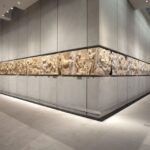
The Antikythera mechanism
The Antikythera mechanism is described as about 2000 years old, and it’s one of those objects that changes how you see the ancient world. It’s not just art. It’s technology tied to the way people observed time and the skies.
A good guide helps you see it as more than a quirky relic. You learn how an object like this fits into Ancient Greek knowledge systems and why it continues to grab attention today. You come away thinking less like you visited a display case and more like you met a mind.
If you like museum tours that give you the why behind the wow, these two artifacts are your anchor points.
Myth-meets-history stops: Cup of Nestor and the Ring of Theseus

Not all the highlights are strictly royal treasures or famous scientific objects. This tour also points you toward legendary items tied to Greek stories, including:
- the Cup of Nestor
- the Ring of Theseus
These are the kinds of artifacts that help you understand Ancient Greece as a culture of narrative. People didn’t just live in reality; they carried meaning through tales of heroes and authority. A guide’s job is to keep you from treating myth as either pure fairy tale or pure fact. Instead, you get a balanced view that explains why these stories became durable.
This is also where a tailored tour can really pay off. If your group is myth-focused, you’ll get more attention on these legend-connected objects. If your group is history-first, the guide can connect those same objects back to cultural context.
Either way, you leave with more than a memory of icons. You leave understanding how stories and objects reinforced each other.
Sculpture time: Aphrodite and Poseidon, plus the museum’s visual rhythm
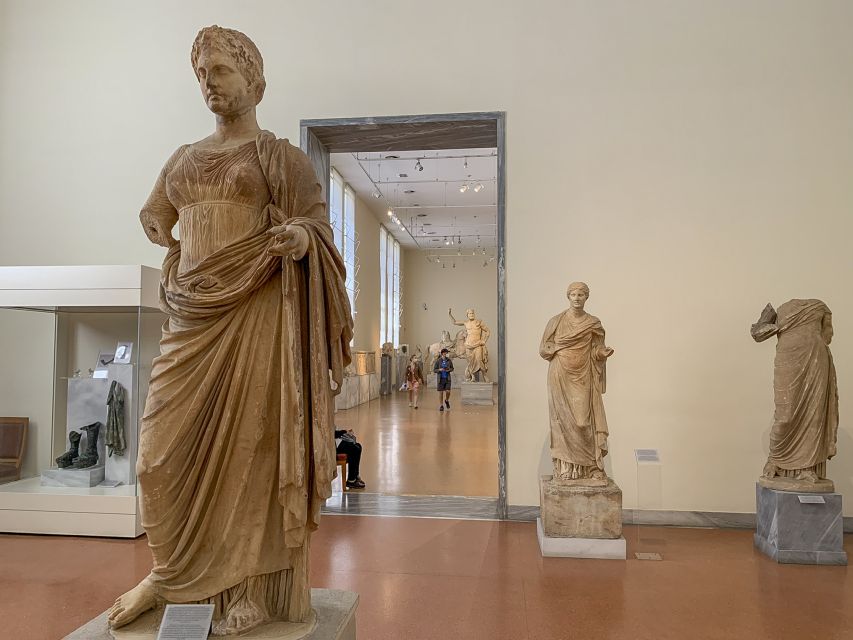
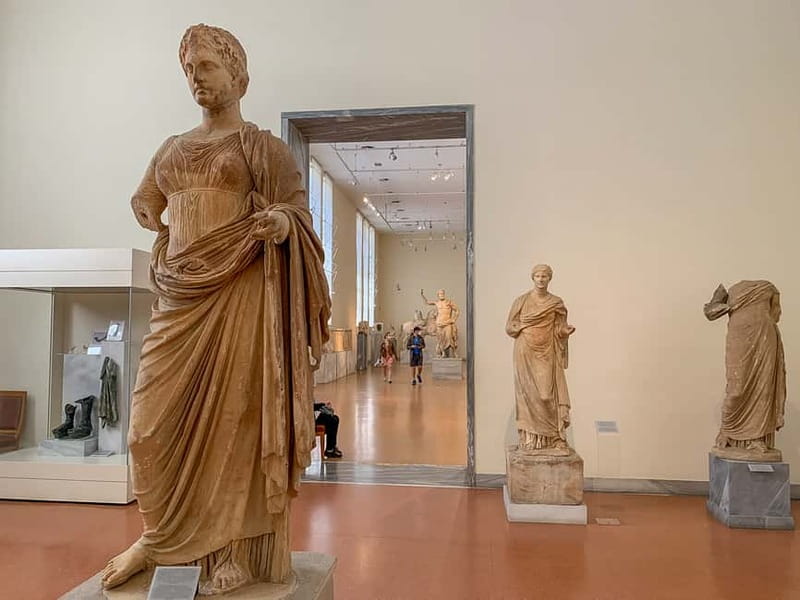
The National Archaeological Museum isn’t only small finds. It’s known for major sculpture, and this tour includes major names like:
- statues of Aphrodite
- statues of Poseidon
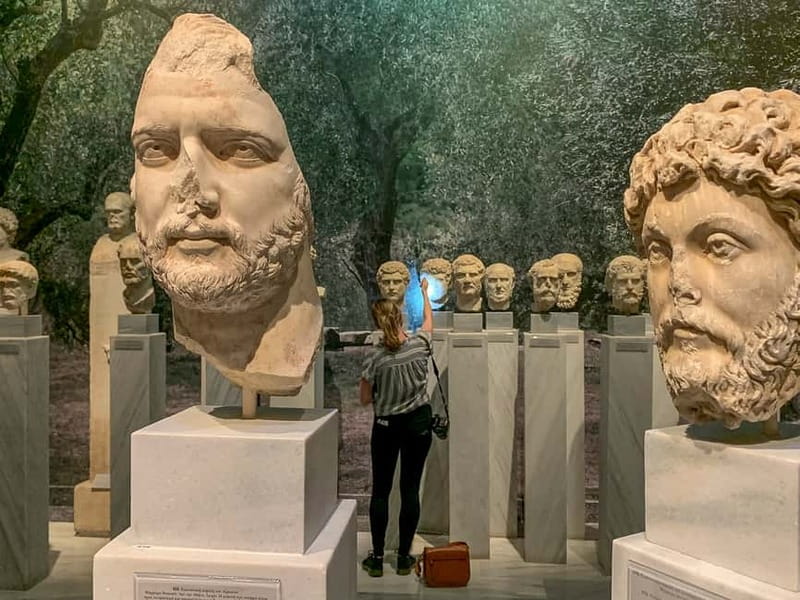
A guided visit makes sculpture easier to read. Instead of you guessing what you’re looking at, you get the interpretive frame. You’re better able to notice how the work communicates ideas about beauty, power, gods, and human perception.
It also helps with pacing. Museums can feel like a march. With a guide, you get natural stop points where you can absorb what you’re seeing without feeling like you missed half the room.
This matters because sculpture halls can be visually intense. If you’re trying to hit the highlights on your own, you can end up skating past the details that make sculpture meaningful. A guide helps you slow down in the right places.
The building, the garden, and the calm break you’ll appreciate
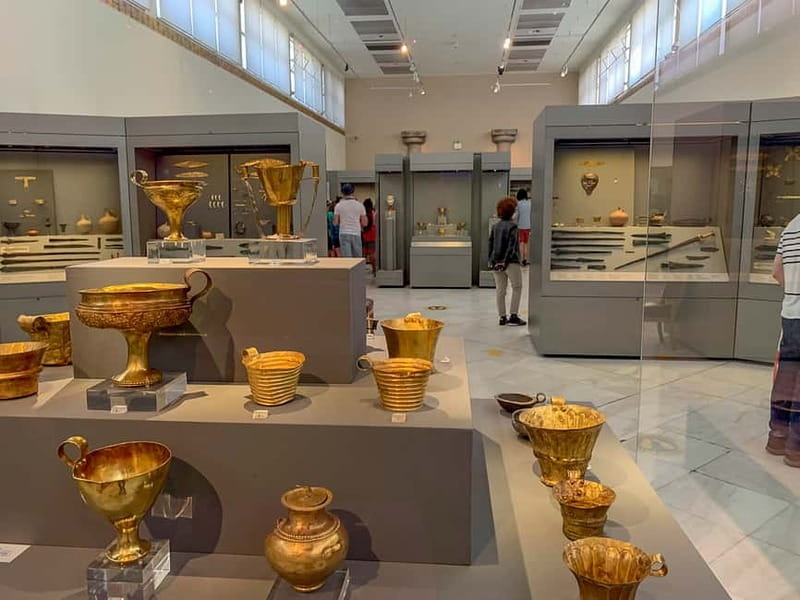
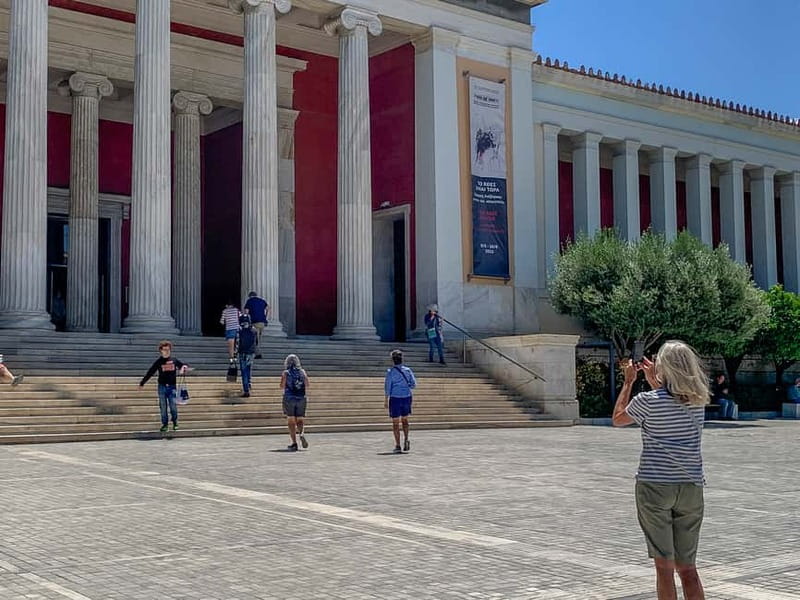
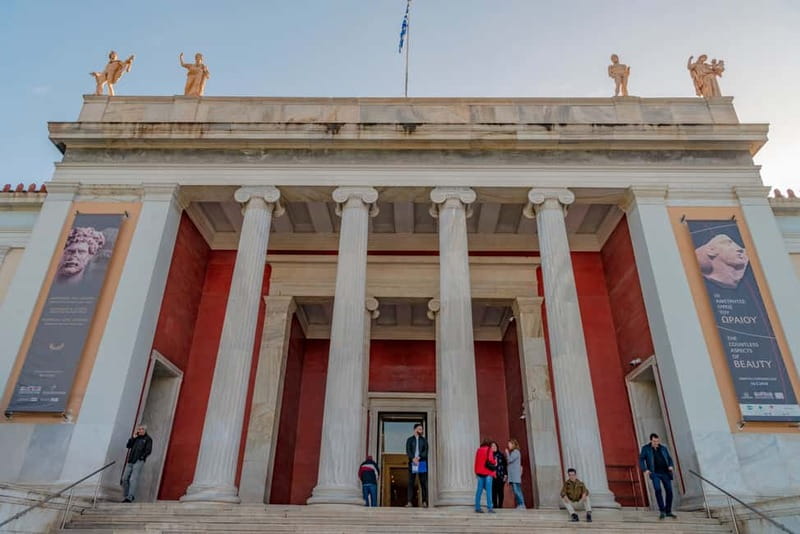
The museum setting is part of the experience. This tour takes place in a neoclassical building that’s noted as recently renovated. As you move through exhibit chambers, you also have access to a leafy inner garden area with mosaics and other artifacts around it.
There’s also a café on site. That matters more than you might expect, especially if your group includes kids or older adults. After a couple of focused gallery hours, a break spot keeps energy from collapsing.
If you’re visiting Athens on a busy day, this layout helps you transition. You can go from concentrated looking to a calmer moment without having to leave the museum grounds.
Price and value: is $199 per person reasonable?
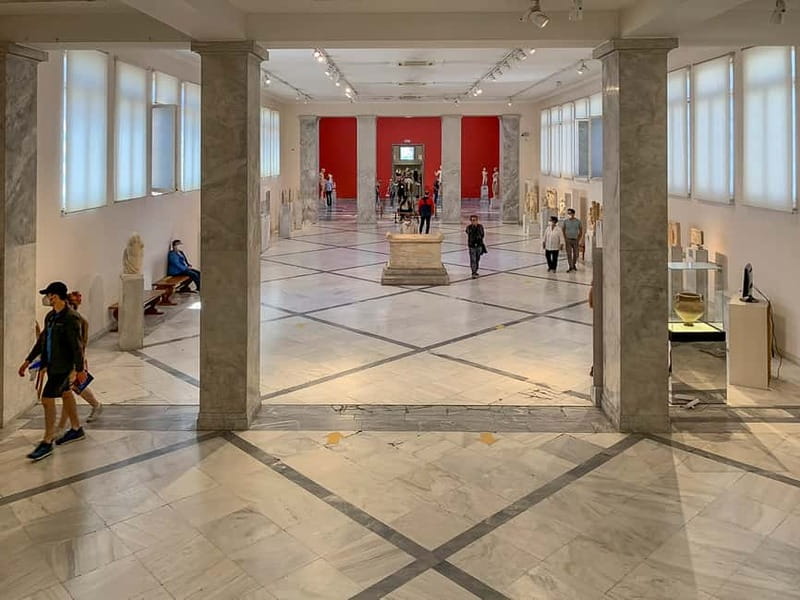
At $199 per person, this isn’t a budget tour. The key question isn’t only cost. It’s what you’re buying.
You’re paying for:
- a licensed archaeological expert (not a generic guide)
- admission tickets included
- skip-the-ticket-line convenience
- a private group format with commentary adapted to your interests
- and a whisper system for groups of 6+ to keep the experience comfortable
For a museum like this, the guide is often where the value is. Admission gets you in. Context gets you understanding. If you’re the kind of visitor who likes to connect objects to myths, politics, and daily meaning, this tour can save you from spending the rest of your trip trying to interpret on your own.
If you’re traveling as a group, the private format can also feel more cost-justified. With fewer people, you’re less likely to tune out when explanations get general.
My take: it’s a smart purchase for first-timers, mixed-interest families, and anyone who wants the major “I can’t believe this is real” artifacts explained clearly without spending hours getting lost in labels.
Who should book this tour, and how to get the best 2 hours
This is a great fit if you:
- want to see the museum’s biggest highlights without researching beforehand
- enjoy mythology and want it tied to real artifacts
- are bringing kids or family members who need a guided story arc
- prefer private pacing instead of large group corralling
To make the most of your 2-hour window:
- Go in with one or two things you care about. Examples from the tour include the Death Mask of Agamemnon or the Antikythera mechanism. Mention that to your guide at the start.
- Wear comfortable shoes. Even with a short tour, museums are still museum-sized walking.
- If you’re traveling with mixed interests, ask for balance early. The tour is built to adapt, so you can nudge it toward what your group wants most.
One more note: pets aren’t allowed. If you’re planning a family trip with a pet included, you’ll need to arrange that separately.
Should you book this Athens private museum tour?
Yes, I’d book it if you want your time in Athens to be meaningful and efficient. This tour focuses on the museum’s big-name artifacts—especially the Death Mask of Agamemnon and the Antikythera mechanism—while using a licensed, state-accredited guide to connect them to mythology and history in a way that’s understandable.
Skip it only if your goal is to roam slowly through many rooms without structure. With only 2 hours, you’ll likely feel you’re doing highlights, not a complete museum sweep.
If your priority is getting the story right the first time, this private format is the kind of upgrade that turns a crowded museum into something you actually remember.


More Private Tours in Athens



More Tours in Athens


More Tour Reviews in Athens
- All Day Cruise -3 Islands to Agistri,Moni, Aegina with lunch and drinks included
★ 5.0 · 4,958 reviews