REVIEW · ATHENS
From Athens: City & Corinth Guided Day Tour
Book on GetYourGuide →Operated by Greece Athens Tours · Bookable on GetYourGuide
Ancient Athens and Corinth in one day? That’s the point. I like how this tour ties Acropolis big ideas to real places, then follows the same thread into Corinth with stops linked to St. Paul. The downside to plan for is time: it’s a long 9.5 hours with several busy sites, so entrance lines and walking comfort matter.
What I really like is the pace: you get the headliner ruins plus practical photo and viewpoint stops (like Lycabettus and Panathinaiko). I also like that it’s a private group with an English-speaking driver/guide, and guides like Nikos, Nokios, Takis, and Odysseus are singled out for deep explanations and keeping things moving. The main trade-off is that entrance fees are not included, so you’ll need a little extra budgeting for museums and key archaeological sites.
In This Review
- Quick Hits: Why This Athens + Corinth Day Works
- Athens to Corinth in One Day: How the 9.5 Hours Feel
- Pickup, Private-Group Comfort, and Getting Around Smoothly
- Acropolis and Acropolis Museum: Democracy Up Close, Then in a Room
- Temple of Olympian Zeus Pass-By, Panathenaic Stadium, and Modern Athens Sights
- Lycabettus Panoramic Views and the Changing of the Guards Moment
- Neoclassic Athens Stops: University, Academy, and the Sleiman Troy Connection
- Corinth Canal and Diolkos: Engineering Meets Ancient Travel
- Ancient Corinth Ruins and the St. Paul Altar Stop
- Corinth Museum: Roman Emperor Statues and a Smarter Wait-For-Weather Plan
- Entrance Fees, Time Windows, and What You Need to Plan in Advance
- Price and Value: Is $471 per Group Worth It?
- Who This Tour Best Suits (and Who Might Want a Different Plan)
- Should You Book This Athens and Corinth Day Tour?
- FAQ
- What’s included in the tour price?
- Are entrance fees included?
- How long is the day tour?
- Where can I be picked up and dropped off?
- What are the Acropolis Museum hours and ticket cost?
- What time is the Acropolis open?
- Are sites closed on any holidays?
Quick Hits: Why This Athens + Corinth Day Works
- Acropolis Museum plus the Acropolis: history on display, then history on the hill.
- Roman Corinth details: Roman emperor statues in the museum and Roman-period temples in ruins.
- St. Paul stops: standing near the altar where he spoke, tied to the new religion message.
- Canal + Diolkos: a rare mix of engineering history and dramatic views.
- Neoclassic Athens circuit: University, Academy of Art and Sciences, National Library, plus Parliament guard ceremony.
- Strong guide reputation: names like Takis, Odysseus, Spiros, and others come up for expert storytelling.
Athens to Corinth in One Day: How the 9.5 Hours Feel
This is a full-day route built for people who want two major ancient-city experiences without committing to an overnight. A 9.5-hour day sounds tidy on paper, but you’ll feel the movement time between Athens and Corinth. The good news is that the drive is part of the story, with your guide explaining what you’re seeing as you go.
You should expect short stops mixed with a couple longer site blocks. You’ll also need comfy shoes because the Athens sites can involve uneven ground and climbing, especially on and around the Acropolis. The itinerary also notes that the visit order can change for practical reasons, so don’t plan your own tight schedule on the same day.
You can also read our reviews of more guided tours in Athens


Pickup, Private-Group Comfort, and Getting Around Smoothly
You can be picked up from Athens or Piraeus, depending on where you’re staying or what port you’re using. You’ll wait in the lobby about 10 minutes before the scheduled pickup time, which is helpful when pickup areas get chaotic. You’ll travel with an English-speaking driver/guide plus cold drinking water, and you’ll also have mobile phone and Wi‑Fi during the tour.
Transport quality matters on this kind of route because you’re doing multiple photo windows and quick entrances. The tour is praised for transport quality, with a very high share of reviewers giving it a perfect score. In plain terms: you’re less likely to lose time to discomfort or confusion.
One more practical point: the driver can’t escort you inside the sites. That’s normal for many tours, but it means you should be ready to manage your own ticket moments and meeting points at each stop.
Acropolis and Acropolis Museum: Democracy Up Close, Then in a Room
The Acropolis area is where your day turns from driving to walking with a purpose. You’ll spend about an hour visiting the Acropolis itself, including major highlights like the Parthenon and the Erechtheion area. The Temple of Athena Nike and the Propylaea are also part of what you’re meant to see in this section, so you get both the famous silhouettes and the smaller architectural surprises.
I love that you’re not only seeing ruins from the outside. The Acropolis Museum is the second half of the lesson, and it’s a strong pairing because objects make the architecture make more sense. The museum is open from 8 AM to 8 PM, and tickets cost €10, so if you want to plan ahead, check your day’s time window.
Your guidance here is the key: the tour is built around understanding why these monuments mattered. The tour frames the Acropolis as a symbol of democracy, and that’s the lens that helps you read what you’re seeing instead of just taking photos.
A real consideration: the Acropolis can be slippery. Wear shoes with grip, and don’t assume summer weather alone will keep surfaces safe. If you’re traveling in warmer months, light clothing helps too, since you’ll be exposed to sun.
Temple of Olympian Zeus Pass-By, Panathenaic Stadium, and Modern Athens Sights
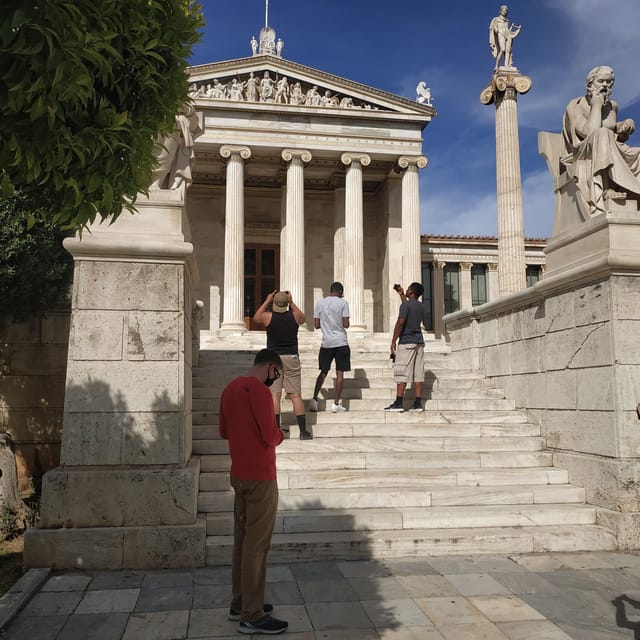
This is where the tour connects ancient greatness to Athens’ modern identity. You’ll see the Temple of Olympian Zeus from the outside as a pass-by stop, and the guide also points out that it was the largest temple of ancient Greece. It’s not the kind of stop that replaces the Acropolis, but it’s a useful “scale check” for how grand Greco-Roman building ambition was.
Next comes Panathenaic Stadium for a photo stop. It hosted the first modern Olympics in 1896, so it’s one of those places where ancient sport mythology becomes a modern event you can actually recognize. You’ll also do a short photo moment at University of Athens, designed to frame Athens as a living city of learning rather than just an open-air museum.
Then you’ll get Plaka free time for shopping. Plaka is a practical end-of-day buffer because you can grab a snack, browse, or reset your feet before the return. Expect only a limited window, though, because the day still needs time for Corinth.
Lycabettus Panoramic Views and the Changing of the Guards Moment
You’ll also pause at Mount Lycabettus for panoramic views over Athens. This kind of stop is worth it because it gives you spatial context: you can see how the city spreads and why the Acropolis sits where it does. If you’re serious about photos, this is the kind of place you’ll want your camera ready before you’re surrounded by crowds.
Another modern Athens highlight is the changing of the guards at Parliament. It’s a short, structured spectacle, but it’s also a good way to break the pattern of archaeological stops and see how contemporary Athens performs its traditions. It can also help you transition mentally from ancient stone to modern ceremony.
You can also read our reviews of more city tours in Athens






Neoclassic Athens Stops: University, Academy, and the Sleiman Troy Connection
If you’re the type who likes Athens beyond the Acropolis view, this tour includes several purposeful photo stops. You’ll see neoclassic landmarks including the University of Athens, the Academy of Art and Sciences, and the National Library. These buildings won’t replace temple ruins, but they do something useful: they show that Greece’s modern identity leans hard into classical forms.
There’s also an interesting named connection in the tour’s route: the residence of Sleiman, described as the German archaeologist who found Troy. That’s a fun detour if you want your day to connect the dots between famous Greek myths and the people who helped uncover their material traces.
In short: if you want Athens as both ancient and modern, this part of the day helps. If you only care about ruins, you may treat these as quick photo-and-go moments.
Corinth Canal and Diolkos: Engineering Meets Ancient Travel
Then the day shifts southwest to Corinth with a scenic drive. You’ll stop at the Corinth Canal for photos, and you’ll learn about the Diolkos, a system that helped Corinthians pull ships along. That’s a great contrast to temple-and-theater sites because it’s about infrastructure—how movement and trade shaped the ancient world.
This segment is ideal if you like history that feels practical. You’re not just looking at what survived; you’re learning how people solved big logistical problems centuries ago. And the canal views add drama without requiring a long hike.
Ancient Corinth Ruins and the St. Paul Altar Stop
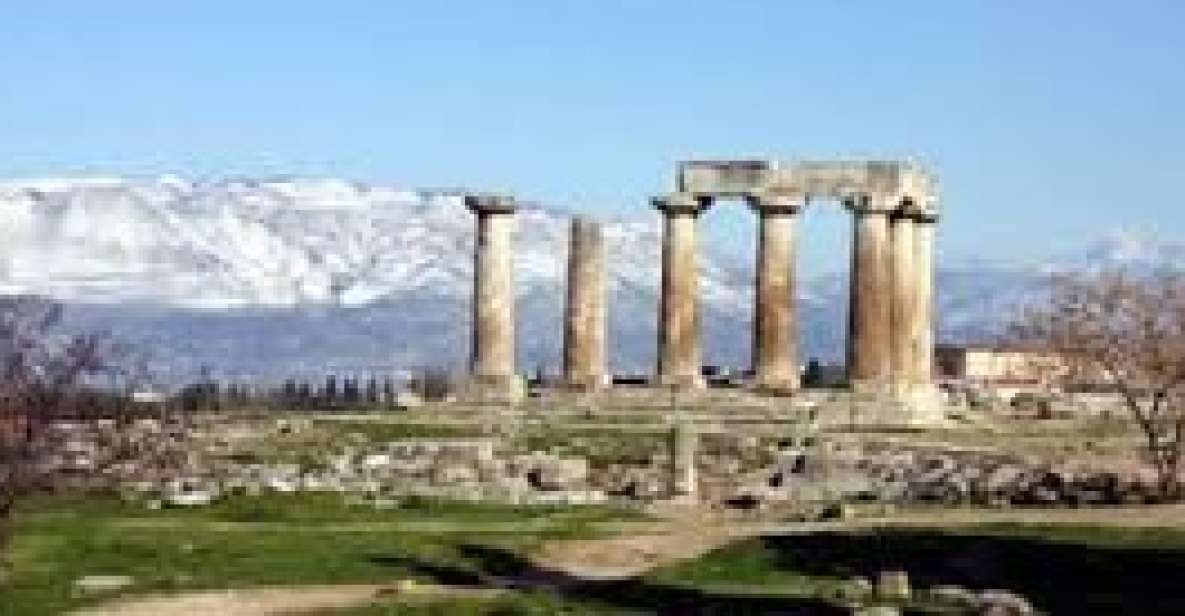
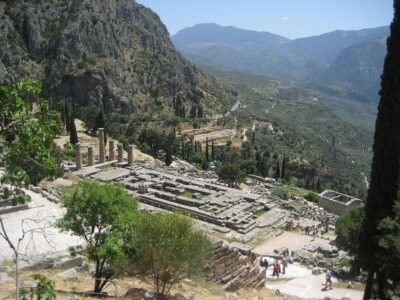
Ancient Corinth is where the tour’s theme becomes more personal. You’ll see ruins that include two theaters, the Temple of Apollo, and multiple temples from the Roman period. It’s a lot of scattered stone, but that’s normal here, and it makes your guide’s explanations more important.
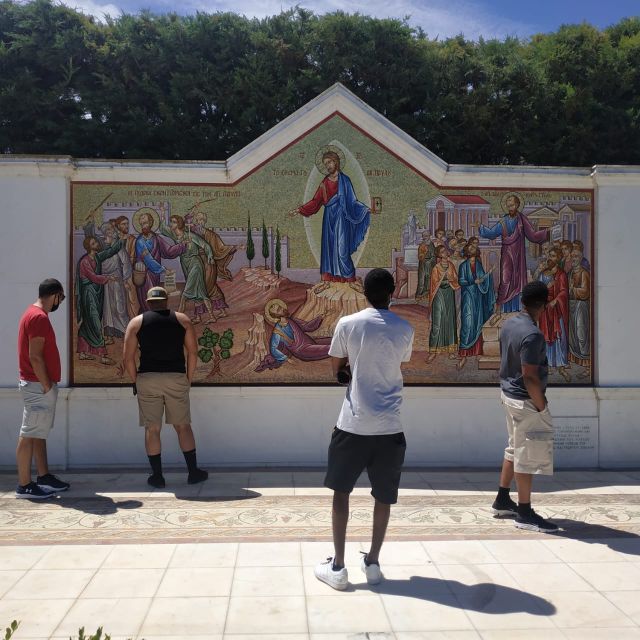
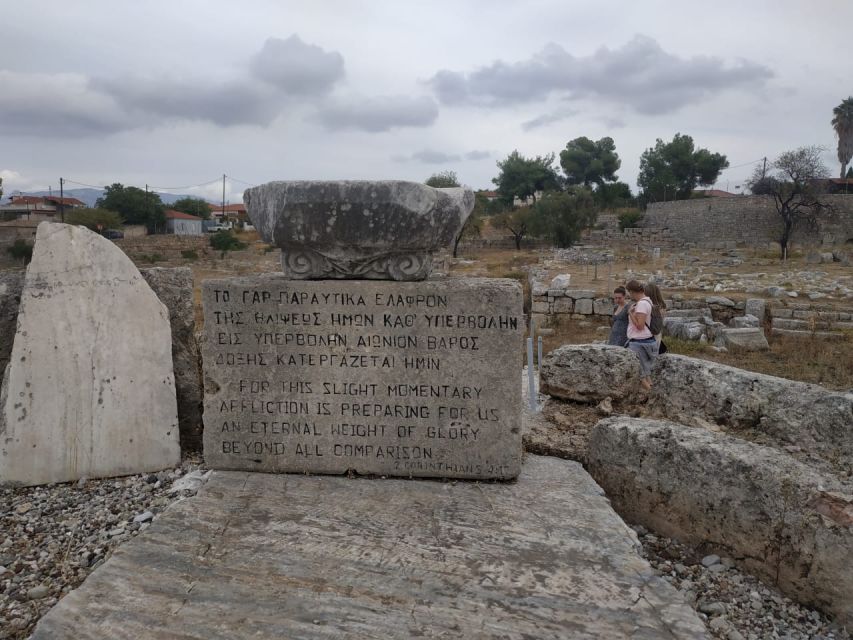
The most distinctive stop in Corinth is standing near the altar where St. Paul spoke about Christianity. The tour doesn’t treat this as generic religious tourism; it frames your time in Corinth as part of a specific story thread. If you care about early Christian history, this is the moment that gives your day meaning beyond sightseeing checklists.
One operational detail: if the Corinth site is closed on the day you go, your experience may shift. Some people have reported that Corinth was closed during their visit. That’s not something you can control, but it’s good to know the tour’s flexibility matters.
Corinth Museum: Roman Emperor Statues and a Smarter Wait-For-Weather Plan
After the ruins, you’ll visit the Corinth Museum, which is described as holding hundreds of artifacts from different periods. The standout detail is the statues of Roman emperors. That’s a direct payoff after you’ve been looking at Roman-period temples in the ruins, because you can connect the empire story to objects in a controlled setting.
Museums are also a practical solution when heat or light changes your ability to enjoy outdoor ruins. If you’re traveling in summer, having at least one indoor stop can keep the day from becoming one long sun-soaked grind.
Entrance Fees, Time Windows, and What You Need to Plan in Advance
Entrance fees aren’t included in the tour price, so budget for them if you want to see everything. The Acropolis Museum costs €10, and the Acropolis itself has seasonal hours (open 8 AM to 7 PM in summer, and 8:30 AM to 3 PM in winter). Corinth costs €8 in summer and €4 in winter.
The tour also mentions an Acropolis multi-ticket option for €30 that includes admission to several additional sites (Temple of Zeus, Ancient Agora, Roman Forum, Kerameikos, and the Theater of Dionysos). That’s useful if you’re planning to keep exploring Athens on your own day(s) before or after this tour.
Don’t forget seasonal closures. The tour notes multiple holiday closures and special hours for Good Friday and Holy Saturday, plus full closure on certain dates. If your trip overlaps with a major holiday, check opening hours early so you’re not surprised.
Price and Value: Is $471 per Group Worth It?
The price is listed at $471 per group up to 3 people for about 9.5 hours. That can look steep if you compare it to a basic bus tour, but this day includes private-group transport, pickup, a live English-speaking driver/guide, and added perks like Wi‑Fi and a mobile phone for the group.
For up to three people, the math often works better because you’re not paying per person like on a typical group shuttle. You’re also paying for guidance at places where a good explanation changes how you experience the ruins—especially in Athens’ architecture and in Corinth’s St. Paul connections.
If you’re traveling solo, value can depend on whether you can book a smaller private group package. But if you’re a couple or small family, this setup is often the sweet spot: you get convenience without losing the focused attention that private tours tend to provide.
Who This Tour Best Suits (and Who Might Want a Different Plan)
This tour fits best if you want a single-day arc: Acropolis → museum → modern Athens landmarks → canal and Corinth ruins → museum, all with guidance. It’s also a good choice if you care about the St. Paul connection and want that thread woven into the physical places of Corinth.
If your travel style is slow and you hate rushing between sites, you may find the schedule tight. This day is packed with short stops and a big amount of walking, even though site visits aren’t long enough to feel leisurely.
Also, if you’re traveling in peak heat, plan for sun and surfaces that can be slippery. Bring water habits you’re comfortable with, and wear shoes you trust.
Should You Book This Athens and Corinth Day Tour?
I’d book it if you want two heavy-hitter ancient-city experiences in one day and you like learning as you go, not just photographing. The guide quality stands out in the feedback, with names like Odysseus, Spiros, Nikos, and Takis highlighted for making the day smoother and more meaningful.
I’d think twice if you’re sensitive to long driving days, want long museum hours, or prefer to explore Athens at your own rhythm. This tour can still work for you, but you’ll get the most satisfaction if you’re comfortable with a structured day and you’re ready to pay entrance fees for the big stops.
If your priority is maximum depth at a single site, a slower plan might suit you better. But for a well-packaged Athens + Corinth day with strong guiding, this is the kind of tour that earns its price.
FAQ
What’s included in the tour price?
Round-trip transfers from your hotel (or cruise ship/other preferred Athens location) are included, along with an English-speaking driver/guide, cold drinking water, and mobile phone and Wi‑Fi. Entrance fees are not included.
Are entrance fees included?
No. You’ll pay entrance fees for sites and museums on your own, including the Acropolis Museum and the Corinth admission costs listed by season.
How long is the day tour?
It runs about 9.5 hours total.
Where can I be picked up and dropped off?
Pickup is available from Athens or Piraeus. Drop-off is also listed for Piraeus or Athens.
What are the Acropolis Museum hours and ticket cost?
The Acropolis Museum is open from 8 AM to 8 PM, and tickets cost €10.
What time is the Acropolis open?
The Acropolis opening hours change by season: 8 AM to 7 PM in summer, and 8:30 AM to 3 PM during winter (1 November–31 March).
Are sites closed on any holidays?
Yes. The tour notes closures on 1 January, 25 March, 1 May, 28 October, Christmas Day, and Boxing Day, plus special opening/closure rules around Easter (including Good Friday, Holy Saturday, and Easter Sunday).



More Guided Tours in Athens


More Tours in Athens


More Tour Reviews in Athens
- All Day Cruise -3 Islands to Agistri,Moni, Aegina with lunch and drinks included
★ 5.0 · 4,958 reviews