REVIEW · ATHENS
Corinnt Canal, Epidaurus, Nafplio and Mycenae, Private Day Tour
Book on Viator →Operated by Private Greece Tours · Bookable on Viator
A canal and two UNESCO sites in one day. I like the private pacing and the easy pickup from Athens or Piraeus. You get a smooth, well-managed route where the focus stays on the places: Corinth Canal, Epidaurus and Asklepios, romantic Nafplio, and Mycenae’s cyclopean walls. One thing to plan for: your driver’s English commentary won’t enter the archaeological sites unless you add an extra licensed guide for the stops.
This is the kind of day trip that works best when you treat it like a guided sprint with real pauses. You’ll spend around 8–9 hours out of Athens, starting at 8:00am, with a comfortable non-smoking A/C vehicle and pre-arranged help for getting tickets in advance. If you want more in-depth explanations inside Epidaurus and Mycenae, you’ll need to budget for that option—but otherwise, the route already hits the major highlights efficiently.
In This Review
- Quick take on Corinth Canal, Epidaurus, Nafplio, and Mycenae
- The smart way to tackle the Peloponnese from Athens
- Corinth Canal: the short stop with big shipping math
- Epidaurus Theatre: where acoustics do the talking
- Sanctuary of Asklepios: ancient medicine, not just ruins
- Epidaurus Archaeological Museum: details you miss outdoors
- Nafplio: the lunch-and-stroll payoff you’ll remember
- Mycenae: cyclopean walls and the royal scale of things
- Treasury of Atreus and the Mycenae Museum: the hour that can feel long
- Private logistics that save your sanity: pickup, A/C comfort, and ticket help
- Price and value: what you’re really paying for
- Who this tour suits best (and who might want a different plan)
- Should you book this Corinth Canal, Epidaurus, Nafplio and Mycenae private day tour?
- FAQ
- What time does the tour start?
- How long is the day trip?
- Where can you be picked up?
- Are entrance fees included?
- Can the driver enter the archaeological sites?
- Is there a way to skip ticket lines?
- Is food included?
- Is the transportation comfortable?
- Is it family friendly?
- FAQ
- Can you cancel for a full refund?
- What if the weather is bad?
Quick take on Corinth Canal, Epidaurus, Nafplio, and Mycenae
- Private tour, only your group, so you can set the pace instead of being herded.
- Hotel or cruise-port pickup in Athens/Piraeus, with a flexible pickup time you request.
- Two UNESCO World Heritage stops: Epidaurus (theatre + Asklepios) and Mycenae (acropolis + royal tombs).
- Driver commentary in fluent English en-route, with extra licensed guides available inside sites for an added fee.
- Skip-the-line ticket purchase help plus parking handled, so you lose less time to logistics.
- Nafplio break for an actual wander and a lunch choice in a place that’s easy to enjoy.
The smart way to tackle the Peloponnese from Athens
Most people try to do the Peloponnese on their own and then lose time to timing, parking, and ticket lines. This private setup cuts the hassle. You start with pickup from Athens centre hotels or the Piraeus side, then you roll straight into the day without the awkward pre-transport guessing game.
The “private” part matters. You’re not stuck waiting for a group to find the right shoe or argue about whether to go left. If you want photos at Corinth Canal, time in Nafplio, or a slower walk through Mycenae, you have more control. It’s also family friendly, and the tour can be modified for kids. Just note that even with a private plan, you’re still visiting major sites—so comfortable shoes and a realistic pace help.
You can also read our reviews of more private tours in Athens

Corinth Canal: the short stop with big shipping math
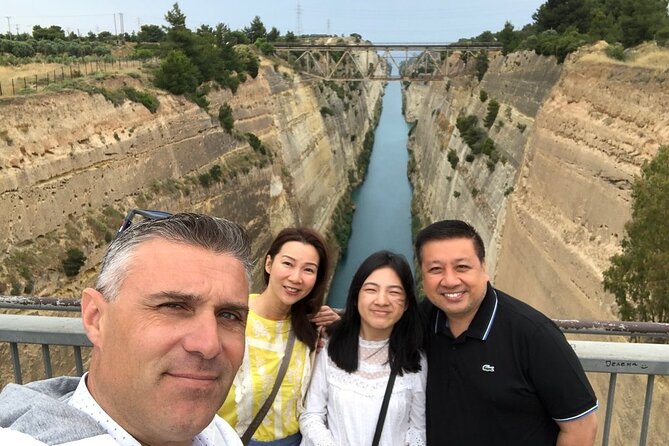
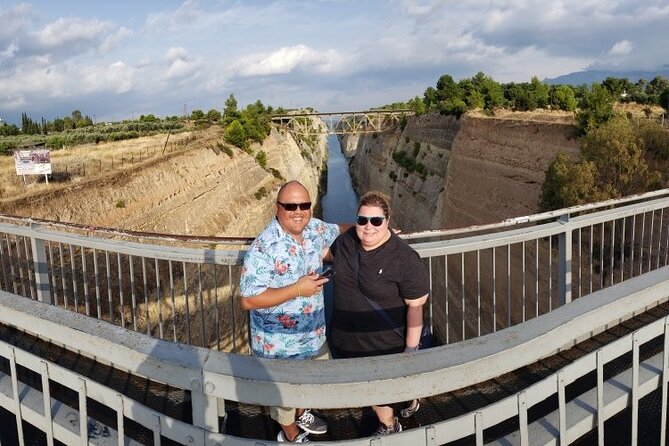
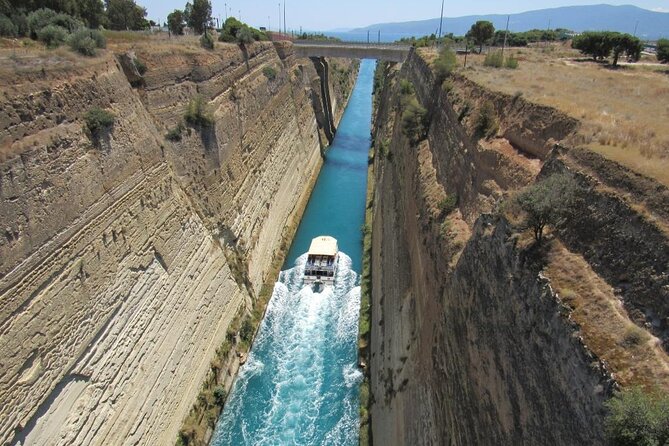
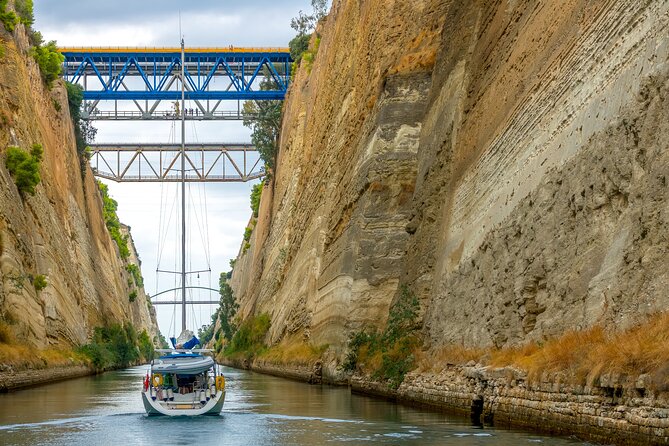
Corinth Canal is not long. That’s the point. You get about 30 minutes, plus the chance to see how this narrow cut became a crucial navigation shortcut.
Here’s the practical context that makes the view more interesting: the canal connects the Gulf of Corinth with the Saronic Gulf. It also effectively separates the Peloponnese peninsula from the Greek mainland—turning it into a convenient island. And because the canal is narrow with steep sides, it’s more than a scenic moment; it’s a technical achievement.
If you like water, engineering, or ships-as-characters, you’ll enjoy this stop. If you’re expecting a long “walk the whole canal” experience, you might feel slightly teased because it’s mainly a viewpoint and quick photo time. The good news: Corinth Canal admission is free in this itinerary, so your time goes toward seeing and photographing, not paying.
Epidaurus Theatre: where acoustics do the talking
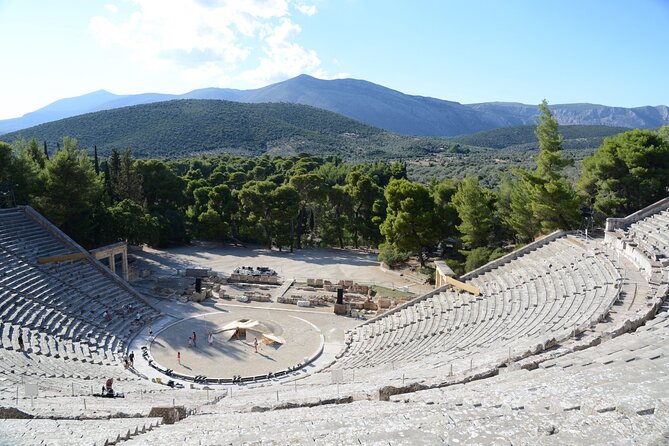
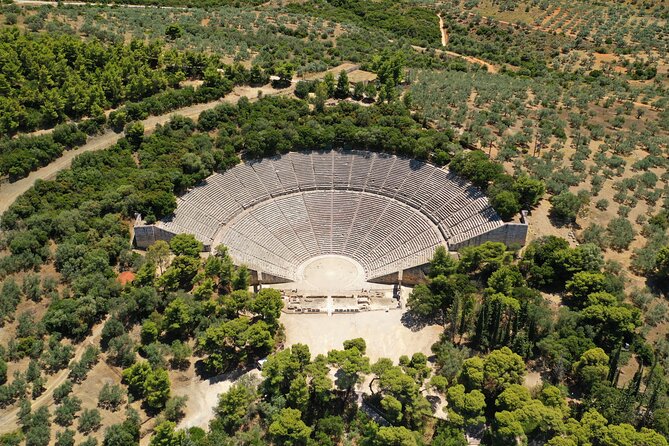
Epidaurus Theatre is one of those places that feels almost unfair. It’s a huge open-air theatre, built in the late classical period and later expanded. What grabs you isn’t just the stone steps—it’s the legendary acoustics.
The layout is simple and striking: seating in many rows, set on a natural slope, facing the stage area with a backdrop of green hills. The theatre’s claim-to-fame is that sound carries extraordinarily well. You can understand why people get goosebumps here: even soft voices and small sounds can be heard far back, near the top rows.
In practical terms, this is how you should approach it. Spend a few minutes finding a seat that gives you the full view of stage-to-slope. Then use the time to watch the “geometry” of the space—how the rows, slope, and stage line up. If you have time pressure (and this is a long day), prioritize that. Don’t rush straight to photos and forget to actually experience what makes it special.
Admission isn’t included for this stop, so plan for the Epidaurus entrance fee (about €20 per person).
Sanctuary of Asklepios: ancient medicine, not just ruins
After the theatre, you head into the quieter spiritual world of the Sanctuary of Asklepios—a healing centre linked to the god-physician. This is not about battles or kings. It’s about bodies, care, and the idea that health had a system behind it.
The sanctuary sits in the hinterland of Epidaurus, known in antiquity for mineral springs and a mild climate. The bigger story is how this site fits into the history of medicine in the Greek and Roman world. It started in a religious framework, then gradually accumulated descriptions of cases and knowledge over time, turning healing practice into something more systematic.
This is where a guide (or at least strong driver commentary) can make a difference. If your focus is archaeology-only, you’ll still get plenty from the monuments and layout. If you like context—what people believed, why the complex existed, and how it worked—you’ll likely enjoy slowing down for a few minutes and reading the signs as you go.
Epidaurus Archaeological Museum: details you miss outdoors
Your itinerary also includes the Epidaurus Archaeological Museum on-site. Even with limited time (about 30 minutes), a museum visit helps you connect the dots. Outdoors you see structures and spaces; inside you get objects and materials that explain what went where and why.
You might see architectural fragments, inscribed columns and pedestals, altars, bronze medical equipment, and votive offerings connected to healing. There are also representations connected to the Asclepius temple and sections of the Tholos. If the theatre was the “sound” stop, the museum is the “what people actually used” stop.
With a tight day, I recommend moving efficiently: scan the rooms for the most relevant pieces, then come back to anything that pulls you in. The museum is also a good place to reset if the site feels like too much walking in sun.
- All Day Cruise -3 Islands to Agistri,Moni, Aegina with lunch and drinks included
★ 5.0 · 4,958 reviews




Nafplio: the lunch-and-stroll payoff you’ll remember
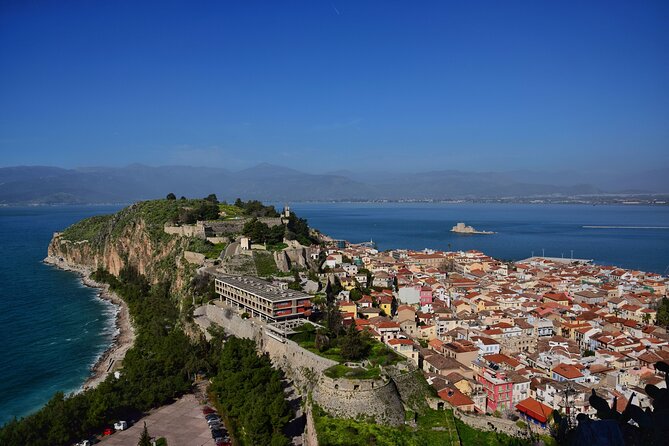
Then comes one of the best parts of the day: Nafplio. This town often gets called romantic—and it earns it with real architecture variety: medieval fortifications, Ottoman-era fountains, Venetian touches, and neoclassical buildings in the mix.
You get about 1 hour. That’s enough for a real walk, photos, and a calm lunch decision. Nafplio was the first capital of the newly born Greek state between 1823 and 1834, and there’s also mythology layered into the name: founded by Nafplios, son of Poseidon and Danaus’ daughter (Danaida).
How to use your hour: don’t try to “cover” the whole city. Choose a pocket you like, wander slowly, and pick lunch based on where you end up—not on a pre-planned menu from home. In the best versions of this day, your driver gives practical tips on where to eat and how to avoid dead time. Even if you’re not a “food tour” person, this stop makes the day feel human.
Mycenae: cyclopean walls and the royal scale of things
If Epidaurus is about healing and sound, Mycenae is about power—legendary kingdoms, massive construction, and the sense that this place was built to impress.
You’ll visit the archaeological site with about 1 hour for the main area. Mycenae was inhabited since Neolithic times, then peaked in the Late Bronze Age (around 1350–1200 BC), which is exactly when the legendary Atreides era shows up in the stories tied to the site.
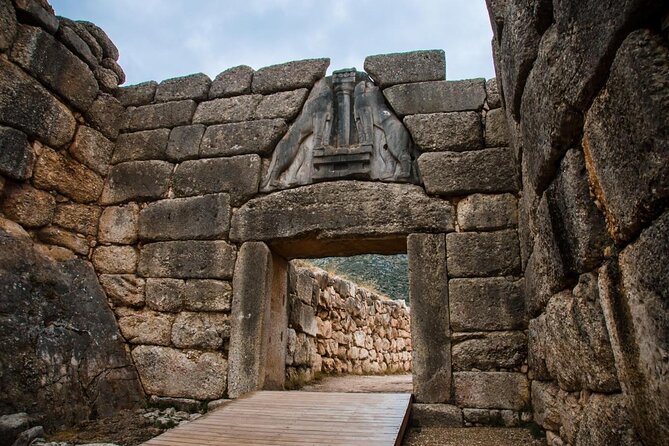
What makes Mycenae feel different from many ruins is the defensive engineering. Massive cyclopean walls were built in stages. A steep ravine provided natural defense on one side, while other areas show the human effort to control access. You can also see the layout logic: a palace on the hilltop, and toward the plain a cult center and main gate—often referred to as the Lion Gate—plus a burial ground (Grave Circle A) for Mycenaean royalty.
If you want to make this stop more than a “walk around and take a few photos” moment, use your time to study the walls and gates like you’re reading a map. Find where you enter, imagine the movement, and notice how the site’s shape explains its purpose.
Admission for the Mycenae site is not included. Plan for the Mycenae entrance fee (about €20 per person).
Treasury of Atreus and the Mycenae Museum: the hour that can feel long
After the acropolis area, you’ll spend time at the Citadel and Treasury of Atreus—the famous beehive tomb on Panagitsa Hill, built around 1250 BC. You’ll get about 30 minutes here.
The Treasury of Atreus is a “wow” stop for a specific reason: the scale of the entrance lintel is staggering. It’s one of those details that makes you understand how seriously they took architecture. It’s not just a tomb; it’s a statement made out of stone and engineering.
Then there’s the Archaeological Museum of Ancient Mycenae inside the site area, about 30 minutes. A museum here helps you connect the objects and construction details to the story of the site. When you pair the outdoor acropolis experience with the museum, your brain stops treating the place as disconnected fragments.
If you’re short on energy, prioritize this order: (1) the key outdoor features that match the story you’re trying to remember, then (2) the museum items that explain what you just saw. That keeps the day coherent.
Private logistics that save your sanity: pickup, A/C comfort, and ticket help
This is where the tour really helps your day run smoothly.
You start at 8:00am. You can be picked up from many Athens city-center hotels and from Piraeus hotels, and the tour can also work from the Piraeus cruise port. A driver will meet you, and pickup can be scheduled based on your preferences.
Transport is handled in a private, A/C, non-smoking vehicle appropriate for your group size—taxi, sedan, SUV, van, or minibus depending on headcount. It’s insured and certified for tourist use, and child seats are available on request. Service animals are allowed. That’s all practical, not flashy, and it matters when you’re spending the whole day out.
One more time-saver: there’s skip-the-line service to purchase the right entrance tickets in advance, plus parking fees are included. So your “waiting time” shrinks.
Important nuance: your driver provides commentary en-route in fluent English, but the driver cannot enter the archaeological sites. If you want a licensed guide to escort you inside Epidaurus and Mycenae, you can arrange it for an extra €350 depending on availability.
Price and value: what you’re really paying for
At $312.38 per person, this isn’t a budget tour. But it also isn’t just a van ride. You’re paying for a private day structure with pickup, comfort, ticket support, parking, and a driver who handles the route and commentary.
Here’s how to think about the “extra” costs so the math doesn’t surprise you later:
- Entrance fees are not included for Epidaurus and Mycenae (listed around €20 each per person).
- The driver can’t act as the licensed site guide inside those archaeological sites. If you want that deeper walkthrough, budget the €350 extra (availability dependent).
- Food and drinks are not included.
So the value depends on how you travel:
- If you want the day organized and you’re happy with the driver’s en-route talk, this can feel like a strong use of your limited time in Athens.
- If you want full expert narration at the most important sites, you’ll pay more—but you’ll also get more out of the monuments.
What pushes this tour toward “worth it” in real terms is the pacing and organization. People remember how the day didn’t feel rushed. A clean, comfortable car and a driver who can keep you engaged—history, humor, practical tips—turn the long ride into part of the experience. Guides and drivers named across past bookings include Apostle, Dominik, Vasilis, Sakis, Spyros, Nicos, and George, plus Mario in a family group setup. That variety is a clue: this company seems to focus on the human side of the trip, not just the itinerary box.
Who this tour suits best (and who might want a different plan)
This private day trip makes sense for you if:
- You want UNESCO highlights without the stress of driving and ticket lines.
- You’re traveling as a couple, family, or small group that benefits from flexible timing.
- You like a day that mixes big sites with a real town break in Nafplio.
You might want a different plan if:
- You’re trying to see everything slowly and deeply. This day is long and packed. Even with private pacing, you still have to manage your time across multiple stops.
- You care a lot about having a licensed expert walking you through each archaeological space. In that case, plan for the added guide option for Epidaurus and Mycenae.
- You prefer independent travel. If you love steering your own schedule, you might prefer a self-drive approach—just know you’ll spend time figuring out the logistics this tour handles for you.
Should you book this Corinth Canal, Epidaurus, Nafplio and Mycenae private day tour?
I’d book it if you want a well-run, private way to hit the Peloponnese’s biggest “greatest hits” from Athens—with hotel or port pickup and enough time to actually enjoy Nafplio, not just stop for a token photo.
I’d hesitate if you’re set on deep, site-by-site expert explanations but you don’t want to pay extra for a licensed guide inside Epidaurus and Mycenae. In that case, you can still book, but go in ready to add the guide option—or plan to read signage and do your own studying during the limited museum and site times.
If you’re the kind of traveler who likes a clear plan, minimal waiting, and a driver who keeps the day moving with good English and practical tips, this is a strong match.
FAQ
What time does the tour start?
The tour start time is 8:00am.
How long is the day trip?
It runs for about 8 to 9 hours (approx.).
Where can you be picked up?
Pickup is offered from Athens centre hotels, Piraeus hotels, and the Piraeus cruise port. You’ll need to provide your exact address if you’re picked up from an Airbnb or another location.
Are entrance fees included?
No. Entrance fees for Epidaurus and Mycenae are not included. The Corinth Canal admission is listed as free.
Can the driver enter the archaeological sites?
No. The driver provides commentary en-route, but the driver cannot enter the archaeological sites. A licensed guide inside the sites can be arranged for an additional cost.
Is there a way to skip ticket lines?
Yes. There’s skip-the-line service to help purchase the appropriate entrance tickets in advance.
Is food included?
No. Food and drinks are not included unless specified.
Is the transportation comfortable?
Yes. You’ll be in an A/C, non-smoking vehicle that’s suitable for your group size. It’s also insured and certified for tourist use.
Is it family friendly?
Yes. The tour is marked as family friendly, and it can be modified for children. Child seats are available on request.
FAQ
Can you cancel for a full refund?
Cancellation is listed as free, with a requirement to cancel up to 24 hours in advance for a full refund.
What if the weather is bad?
The experience notes it requires good weather. If it’s canceled due to poor weather, you’ll be offered another date or a full refund.


More Private Tours in Athens


More Tours in Athens


More Tour Reviews in Athens
- All Day Cruise -3 Islands to Agistri,Moni, Aegina with lunch and drinks included
★ 5.0 · 4,958 reviews