REVIEW · ATHENS
Essential Athens Full Day Private Tour – Best Shore Excursion
Book on Viator →Operated by Private Greece Tours · Bookable on Viator
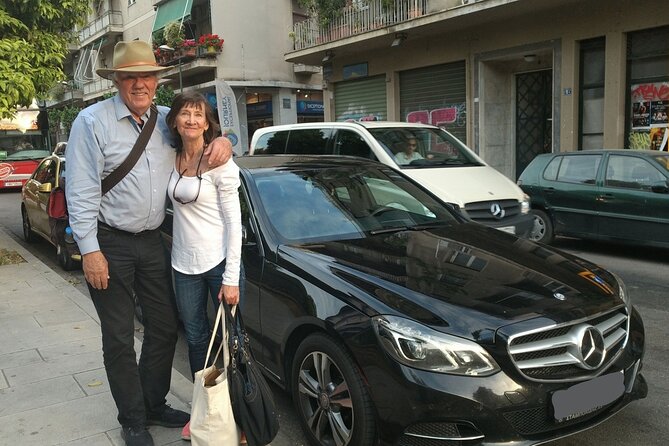
A private Athens day is the quickest way to feel smart. You get a real schedule that fits your pace, plus A/C car service from your hotel or Piraeus port. The biggest win is the mix of must-see ruins and practical stops, done in an order that helps you beat the worst crowds and heat.
I also like that it’s built for comfort: bottled water, insured vehicles, and door-to-door pickup and drop-off. One possible drawback: the price covers the private car and ticket help, but entrance fees and site guide access are extra, depending on what you choose (especially for Acropolis and museums).
In This Review
- Key Highlights at a Glance
- Why This Private Athens Shore Excursion Works Better Than a Bus
- What You’re Really Paying: $229.87 Value Breakdown
- Getting From Port to Ancient Stones: Pickup, Timing, and Comfort
- The Acropolis: Parthenon Views, Propylaea, Erechtheion, and a Full 90 Minutes
- Olympian Zeus and Hadrian’s Arch: Two Quick Stops With Big Names
- Panathenaic Stadium and Lycabettus Hill: Stadium Nostalgia Plus Best Views
- Syntagma Square: The Unknown Soldier and the Guards Moment
- University Row and Neo-Classical Athens: Quick Exterior Stops
- Ancient Agora and the Stoa of Attalos Museum: Where Athens Felt Like a City
- Monastiraki: Flea Market Sights, Cafes, and a Smart Souvenir Strategy
- Acropolis Museum: The Best Way to Make Sense of What You Saw
- Should You Book This Tour?
- FAQ
- What’s the start time?
- Is this a private tour?
- Are entrance fees included?
- Can the driver enter the archaeological sites with me?
- Is food included?
- Is there free cancellation?
Key Highlights at a Glance
- Skip-the-line ticket purchase help so you spend less time stuck at counters
- 8:00 am start aimed at cooler morning hours for the Acropolis
- Acropolis plus museum time so you connect the stones to what you’re seeing
- Cruise-port friendly pacing with pickup from Piraeus and scheduled return
- Flexible city additions like Lycabettus Hill viewpoints and Syntagma Square
Why This Private Athens Shore Excursion Works Better Than a Bus
Athens can be a lot when you’re trying to do it in one day. The city’s sites are spread out, you’ll fight heat, and the Acropolis lines can eat your morning. This private format solves the main problem: you’re not waiting on other people’s pace.
You also avoid the common headache of getting from place to place with limited time. Pickup and drop-off are handled for Athens hotels and the Piraeus cruise port, and you ride in a vehicle that’s A/C and non-smoking. That’s not a small detail. In summer, comfort turns a “see everything” plan into a “still enjoy everything” plan.
You can also read our reviews of more private tours in Athens

What You’re Really Paying: $229.87 Value Breakdown

At $229.87 per person for a full day (about 8–9 hours), you’re paying for convenience and time. The tour includes a private vehicle sized for your group, parking fees, VAT/taxes, and skip-the-line ticket purchasing help in advance.
What’s not included is the part that hits your wallet day-of: site entrance fees and optional museum tickets. For example, the Acropolis ticket is listed at €30 per person, the Acropolis Museum at €20, and the Ancient Agora plus its museum at €20. The Temple of Olympian Zeus has an additional €20 option.
So is it worth it? If you’re on a cruise day, or you want a day that doesn’t feel like a survival test, this private format often pays off. You’re also more likely to keep a steady rhythm—especially if your driver and guide manage ticket timing smoothly.
Getting From Port to Ancient Stones: Pickup, Timing, and Comfort
The day starts at 8:00 am. Pickup time can be flexible to match your plans, and you’re asked to be at the meeting point 5–10 minutes early in case parking or waiting is limited.
The vehicle is insured and certified for tourist use, fully air-conditioned, and it’s a non-smoking ride. Bottled water is included, and child seats are available on request. One practical perk: the driver can give commentary while you’re driving between stops, but they cannot enter the archaeological sites.
That last point matters. If you want someone inside the sites for the guided narrative, you can request a licensed tour guide (listed as an extra €350, depending on availability). If you’re okay with in-car context and on-site navigation, you may not need the add-on.
The Acropolis: Parthenon Views, Propylaea, Erechtheion, and a Full 90 Minutes
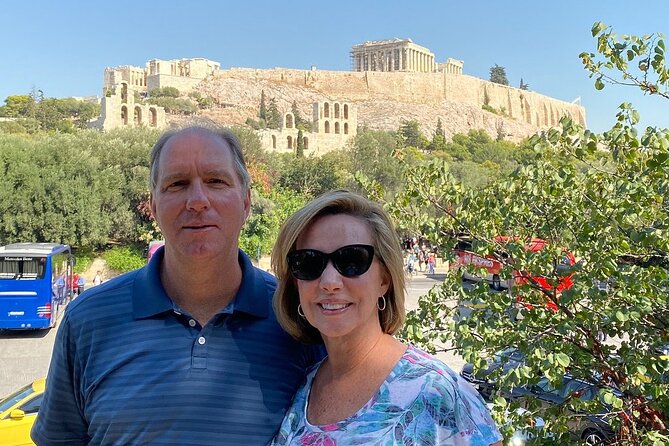
Most Athens days start with the Acropolis for one simple reason: it’s the main event. Here, you get 1 hour 30 minutes on the sacred rock, with the Parthenon and the surrounding masterpieces all in one sweep.
You’ll see the Parthenon dedicated to Athena Parthenos, the monumental entrance called Propylaea, and the Temple of Athena Nike. The Erechtheion is a stop you’ll remember, especially for the Caryatides (the famous female figures-statues). You’ll also pass by highlights like the Odeum of Herodes Atticus and the Theatre of Dionysus—often noted as the first theatre in the world.
Practical tip: wear shoes you can stand in for a while. Even with a private car, you’re still doing the walking inside the site. Heat is real, and you’ll feel it more on the open parts of the ruins.
If you like photography, this is where the guide’s pacing helps. Some guides in this service have been praised for timing the Acropolis segment early enough to avoid the worst of the crush, and for coordinating entrance tickets so you don’t lose time at the gate.
Olympian Zeus and Hadrian’s Arch: Two Quick Stops With Big Names
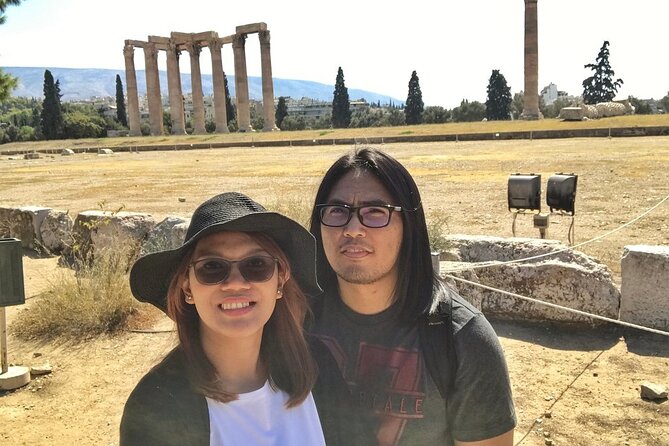
After the Acropolis, you move toward the Temple of Olympian Zeus. The stop here is about 30 minutes, and you’ll get a close look at the surviving columns—sixteen remain, with thirteen intact on the east side.
The temple’s original design is part of what makes it fascinating: it once used a tripteral octastyle arrangement on narrow sides and a dipteral eikosastyle on long sides. The old gold-and-ivory Zeus statue is a detail that gives the ruins context even when the building isn’t fully standing today.
Then you’ll stop at the Arch of Hadrian, built in A.D. 131. It’s a great “read the stone” moment. Two inscriptions face in opposite directions—one toward the old city of Theseus, the other toward the new city of Hadrian.
This section is short, but it works well if you’re trying to keep the day moving. If you’re especially architecture-focused, you might want to slow down near the Zeus columns and take a few minutes to visualize the full scale.
You can also read our reviews of more tours and experiences in Athens
- All Day Cruise -3 Islands to Agistri,Moni, Aegina with lunch and drinks included
★ 5.0 · 4,958 reviews


Panathenaic Stadium and Lycabettus Hill: Stadium Nostalgia Plus Best Views
The tour includes the Panathenaic Stadium for about 30 minutes. This place began as a natural hollow and was transformed into a stadium for the Great Panathinaea festivities. Later, Herodes Atticus restored it, creating the horseshoe shape you’ll recognize today.
A couple of details that make this stop feel real: the track is listed at 204.07 meters long, and the width is 33.35 meters. You’re also told the seating capacity was believed to be around 50,000. In other words, this isn’t a tiny ruin. It’s a stage Athens used for big moments.
After that, you head to Lycabettus (Mount Lycabettus), stopping for about 30 minutes. This is one of those Athens moves that feels touristy until you reach the top and look out. Lycabettus is 277 meters above sea level, and the views are set up to let you spot major landmarks across the city—Acropolis, Temple of Olympian Zeus, Panathenaic Stadium, the Ancient Agora, and the broader metropolis.
At the top you’ll find the Greek Orthodox church of Agios Georgios (St. George). It’s a nice contrast to the ancient sites below: old stones and living faith in the same frame.
If the day is hot, this is also where your “have water and plan” pays off. It’s worth taking a moment before heading back down to watch the light shift.
Syntagma Square: The Unknown Soldier and the Guards Moment
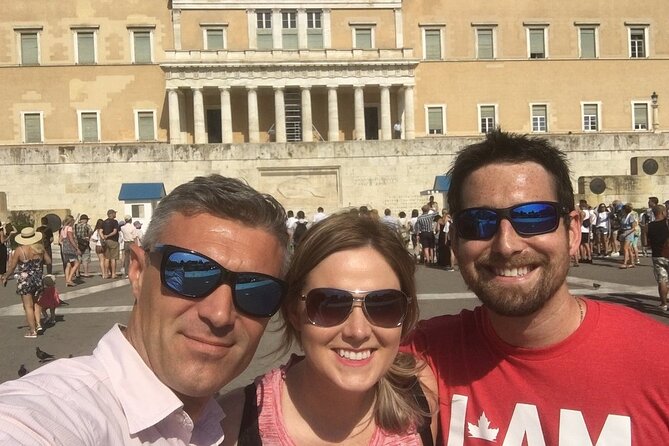
Constitution Square—Plateia Syntagmatos—is a marble-bright plaza in front of the Greek Parliament. The tour keeps this stop short at about 15 minutes, with a focus on the area’s importance and people-watching opportunities.
Right nearby is the Monument to the Unknown Soldier, guarded 24/7 by the Evzones (Presidential Guards). The tomb is a cenotaph for Greek soldiers killed in war, sculpted between 1930 and 1932.
This is one of the best “change of tempo” stops in an ancient-focused day. After hours of temples and ruins, standing in Syntagma Square feels like you’re back in modern Athens again—still historical, just lived-in.
University Row and Neo-Classical Athens: Quick Exterior Stops

Between Syntagma Square and the Ancient Agora, the route includes major institutional landmarks: the National and Kapodistrian University of Athens, the Academy of Athens, and the National Library of Greece as part of the neo-classical trio in the city center.
This section is brief and works best if you’re using it as a visual reset. You’re moving away from hilltop ruins and back into the city’s architectural rhythm. If you’re the type who enjoys noticing styles and facades, these stops help you understand that Athens history isn’t only ancient—it also has a strong modern identity shaped by early-20th-century building.
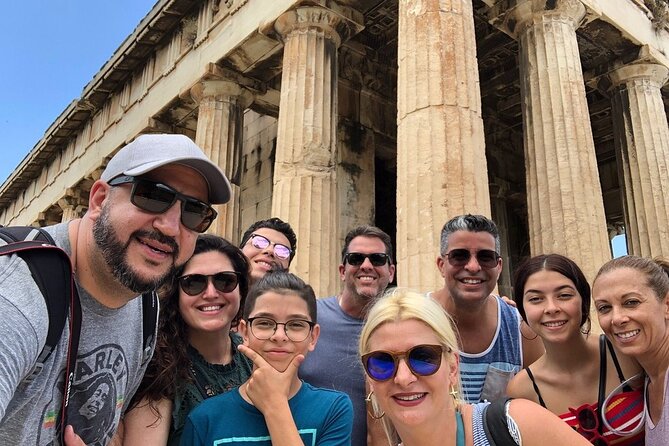
Ancient Agora and the Stoa of Attalos Museum: Where Athens Felt Like a City
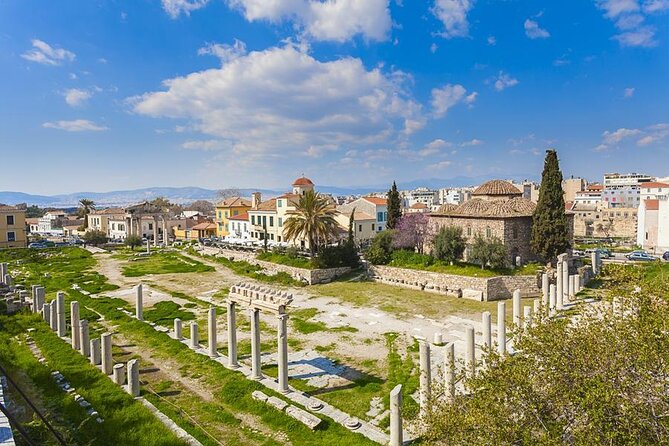
Now you get the heart of ancient Athens: the Ancient Agora, where people gathered for politics, commerce, administration, religion, and justice. The stop here runs about 1 hour 30 minutes, though your pace will depend on how much you stop to read and photograph.
What I like about this site is the archaeology story that’s baked into the layout. Excavations started by the Greek Archaeological Society (1859–1912), then the German Archaeological Institute (1896–97). A deep trench cut for the Athens–Peiraeus Railway in 1890–91 exposed extensive remains, and later, the American School of Classical Studies ran systematic excavations supported by J. Rockefeller, continuing until 1941, with work resumed in 1945 and still continuing.
After walking outside, you can add the Museum of the Ancient Agora for about 1 hour. The museum is housed in the reconstructed Stoa of Attalos, originally erected in the 2nd century B.C. as a gift from Attalos II. If you’re trying to connect the stones to artifacts, this indoor time often makes the whole Agora area click.
Entrance fees for these museum stops are listed as additional. If you’re budget-conscious, you can prioritize the Agora walk first and decide on the museum later based on energy level.
Monastiraki: Flea Market Sights, Cafes, and a Smart Souvenir Strategy
Monastiraki is about 1 hour, with a focus on the flea market area, souvenir shopping, and traditional tavernas nearby. It’s a good place to shop for small gifts without feeling like you need a whole separate shopping tour.
The surrounding streets are packed with cafes and restaurants, and some offer Acropolis views. For me, this stop works best when you treat it like a gentle stroll with a plan: look for one or two categories you want (small crafts, magnets, edible treats), then stop before you lose the rest of your day.
If your group wants a late afternoon bite, your guide can often steer you toward a light lunch option earlier in the day. One small detail that comes up in guides’ approach is pointing people toward simple Greek food like souvlaki when the schedule is tight.
Acropolis Museum: The Best Way to Make Sense of What You Saw
The Acropolis Museum is a 1 hour stop that many people consider worth the ticket. It’s built to house artifacts found on the Acropolis and its surrounding slopes, covering a span from Greek Bronze Age to Roman and Byzantine Greece.
If you’re worried about doing the Acropolis and forgetting half of what you saw, this museum is the antidote. It’s easier to understand sculpture, context, and scale when you’re looking at items close up and in museum setting rather than trying to read details up on a windy hill.
Entrance fees are listed separately, with the Acropolis Museum priced at €20 per person. If you’re choosing only one add-on museum, this is usually the one that makes the day feel coherent.
Should You Book This Tour?
Book it if you want a time-sane Athens day: one pickup, one vehicle, and a route that hits the biggest sites without you stress-planning every hop from the port. It’s especially smart for a cruise day because the pacing helps you get back on schedule.
Skip it (or consider a lighter version) if you only care about one or two stops and you’re comfortable managing entrance lines and transit on your own. Also keep budget in mind: entrance fees for Acropolis, the Acropolis Museum, and the Ancient Agora museum are not included, and a licensed guide inside the sites is an extra cost.
FAQ
What’s the start time?
The tour starts at 8:00 am, with pickup time scheduled to your preferences.
Is this a private tour?
Yes. It’s described as a private tour, and only your group participates.
Are entrance fees included?
No. Entrance fees for the Acropolis and other sites are listed as not included, and optional museum/site tickets have separate prices.
Can the driver enter the archaeological sites with me?
The driver provides commentary en route but cannot enter the archaeological sites. A licensed tour guide can be arranged for site entry at an additional cost, depending on availability.
Is food included?
Food and drinks are not included unless specified.
Is there free cancellation?
Yes. You can cancel up to 24 hours in advance for a full refund. If you cancel less than 24 hours before the start time, the amount paid isn’t refunded.

More Private Tours in Athens

More Tours in Athens



More Tour Reviews in Athens
- All Day Cruise -3 Islands to Agistri,Moni, Aegina with lunch and drinks included
★ 5.0 · 4,958 reviews