REVIEW · ATHENS
Delphi & Thermopylae Full Day Private Tour from Athens
Book on Viator →Operated by Ancient Greece Tours & Transfers · Bookable on Viator
Spartans and oracles, all in one long day. This private Athens-to-central-Greece trip links Thermopylae and Delphi so you can see the myths and the real places in the same day.
I love the hotel pickup and drop-off that keeps the day simple, and I love the pace-control you get on a private format, so you can walk more (or take breaks) without feeling dragged along.
One heads-up: the day is long, and Delphi involves stairs and uphill ramps, so comfortable shoes matter.
In This Review
- Key highlights worth planning around
- Why Thermopylae and Delphi feel better together
- From Athens to Thermopylae: visitor center first, then the Hot Gates
- The battlefield monuments at Thermopylae: Leonidas, the Thespians, and Kolonos
- Delphi Museum: sculptures, oracle clues, and the Omphalos moment
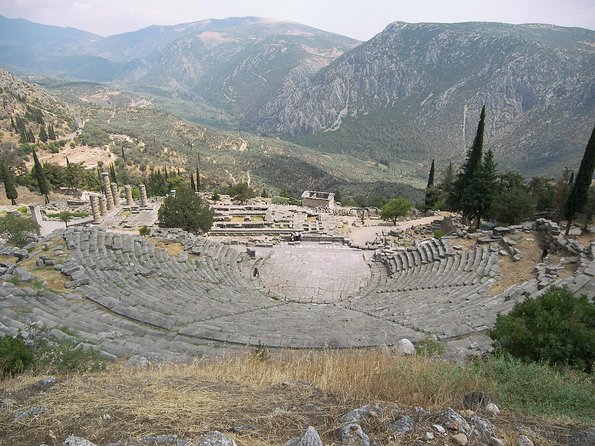
- Delphi archaeological site: Temple of Apollo, the theater, and walking the slopes
- Delphi village lunch with Gulf views, plus Arachova’s mountain charm
- Price and timing from Athens: what you’re really paying for
- Should you book this Delphi and Thermopylae private tour?
- FAQ
- Is pickup and drop-off in Athens included?
- How long is the tour?
- Is the tour offered in English?
- Are museum or site tickets included?
- Does the tour include lunch and drinks?
- What’s included in the vehicle?
- Are service animals allowed?
- What’s the cancellation policy?
Key highlights worth planning around
- Private pickup from your Athens hotel or Airbnb so you skip logistics and start sightseeing fast
- Thermopylae Information Center with a 3D documentary that explains the 480 BC battle before you visit the site
- Hot Gates (sulfur springs) stop where you can do a short sulfuric bath (20 minutes) if you want
- Delphi Archaeological Museum showcases major sculptures like the Omphalos and the Charioteer Iniohos
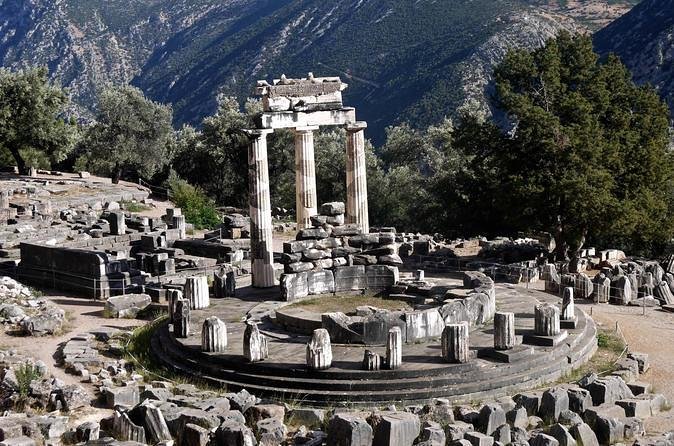
- Delphi archaeological site + Athena Pronaia temple area for big-scale ruins and sweeping views from the slopes
- Guides like Peter, Tas, Yannis, and Taz are repeatedly praised for story-telling and practical touring advice (even with long drives)
Why Thermopylae and Delphi feel better together
Booking a single, private day makes sense here. Thermopylae is about the battle line, the geography, and the monuments tied to the Spartans and King Leonidas. Delphi is about the oracle, the temples, and how a single sanctuary influenced politics and culture across the ancient Greek world. Put them together, and the day becomes a two-part story: how small forces can hold a pass, then how a sacred site could steer decisions for centuries.
I also like that the experience is structured, but not rigid. You’re not stuck on a rushed route or waiting on strangers to agree on walking speed. In this format, your guide can steer you toward what matters most and help you pace the hills at Delphi.
The practical benefit is time. Athens is far enough that you’ll lose energy if you self-drive and juggle tickets. With a private vehicle that includes Wi-Fi, A/C, and bottled water, you can spend your energy on the sites, not the drive. And with a professional driver who’s strong on Greek history (but typically not entering the sites), you get explanations without the “guide sprinting ahead” feeling.
Just remember the trade-off: this is a long day from morning pickup to an early-evening return. If you’re sensitive to fatigue or hate stairs, plan for a slower approach at Delphi.
You can also read our reviews of more private tours in Athens

From Athens to Thermopylae: visitor center first, then the Hot Gates
You start with pickup in Athens from your hotel, Airbnb, or apartment. Then it’s a drive out to Thermopylae, usually around a couple of hours depending on traffic and the exact starting point.
At Thermopylae, you begin with the Thermopylae Information Center, where the focus is context. The stop includes a 15-minute documentary in 3D explaining the 480 BC battle. That matters because once you arrive at the battlefield area, you’ll understand why the terrain mattered so much. Without that background, Thermopylae can feel like a set of viewpoints and monuments. With it, the same stops start telling a coherent story.
After the center, you visit the battlefield itself. This is not a huge “museum-like” site with endless restored structures. It’s more about being in the right place—seeing the pass and absorbing what the terrain allowed (and prevented).
If you want a sensory break from the walking, the Hot Gates / sulfur springs portion is the highlight for many people. You can spend about 20 minutes in a sulfuric bath. I like that it’s built into the schedule as a real pause, not just a photo stop. Just bring swimwear or whatever you’d use for a quick dip, and wear something easy to change out of.
The battlefield monuments at Thermopylae: Leonidas, the Thespians, and Kolonos
Thermopylae’s emotional center is the set of monuments that keep the names and the quotes in your head as you walk.
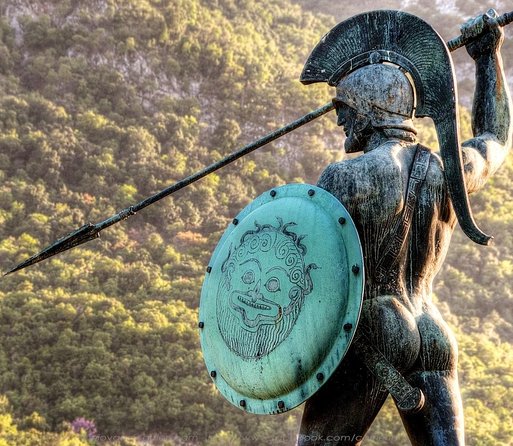
You’ll see a statue dedicated to King Leonidas tied to the famous Spartan response, Molon Labe. You’ll also visit the statue dedicated to the 700 Thespians, which helps keep the story from turning into a one-man legend.
Then comes Mt Kolonos, where you can see the epitaph connected to the final stance. The wording on the marker (as presented on site) is essentially a challenge to the visitor: stranger, go and tell the Lacedemonians that we lie here according to our orders. Even if you don’t read it word-for-word, the message is clear. The monument reframes the battlefield as an act of duty, not just a military event.
This is also where myths and geography shake hands. The “Gates of Fire” concept is linked in Greek mythology with one of the gateways to Hades, and it connects to the idea of healing springs. In practice, you’re standing in a spot where ancient people believed the area had special meaning, not just strategic value. That’s why this stop can feel more powerful than you’d expect.
One small consideration: some people feel Thermopylae doesn’t take long enough to justify the driving time, especially if they’re expecting major ruins. If that’s you, the way to keep the day feeling “worth it” is to lean hard into the explanations at the visitor center and give the battlefield viewpoints your full attention.
Delphi Museum: sculptures, oracle clues, and the Omphalos moment
Delphi is where the day becomes “how did so much matter happen in one place.” You’ll spend time at the Delphi Archaeological Museum first, which is a smart move because the museum objects help you recognize what you’ll later see on the site.
You may have to pay museum entry separately depending on what you selected, since entry tickets for Delphi are listed as included only if that option is chosen. Either way, plan for about 45 minutes at the museum.
Here are some museum highlights you’ll want to make time for:
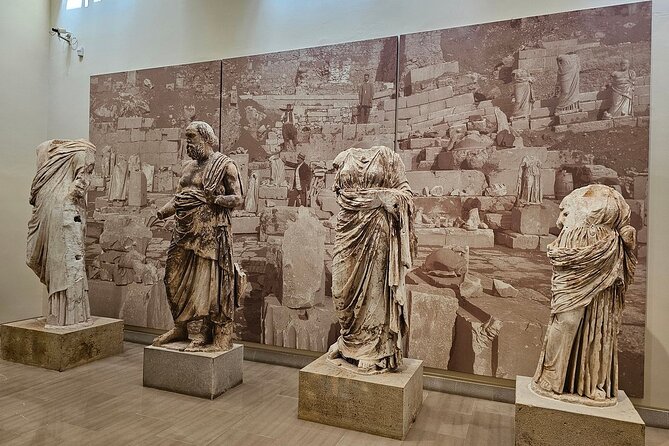
- The Frieze from the Treasury of the Sifnians (Naxian Sphinx), dated to 560 BC. It’s one of the earliest art representations of the creature with a lion’s body, bird’s wings, and a woman’s head.
- The Metopes of the Athenian Treasury (5th century BC), including scenes with Theseus and the Minotaur, Theseus and the Marathonian bull, and multiple Heracles episodes such as the Nemean lion and battles with other creatures.
- The Omphalos, the stone tied to the idea of Delphi being the center of the earth, kept in Apollo’s temple. Seeing it makes the whole “navel of the world” idea feel physical.
- Kleobis and Biton, two brothers from Argos (7th century BC kouroi), which gives you a sense of how early Greek sculpture tried to capture ideals of youth and symmetry.
- The Statue of Antinoos, associated with Hadrian and often noted for its neoclassical style revival elements in the later period.
- The Charioteer Iniohos, connected to a chariot run by four horses, with a second male figure as part of the larger sculptural group.
I like museum time here because you can slow down. On the outdoor ruins, you’re pushed by stairs, sun, and the pull to keep moving. In the museum, you can actually study details: how stone captures motion, how the same myth gets repeated in different formats, and how political power shows up through art and dedications.
If you’re short on energy, tell your guide and focus on the Omphalos and the major myth scenes first. You’ll still get a lot.
Delphi archaeological site: Temple of Apollo, the theater, and walking the slopes
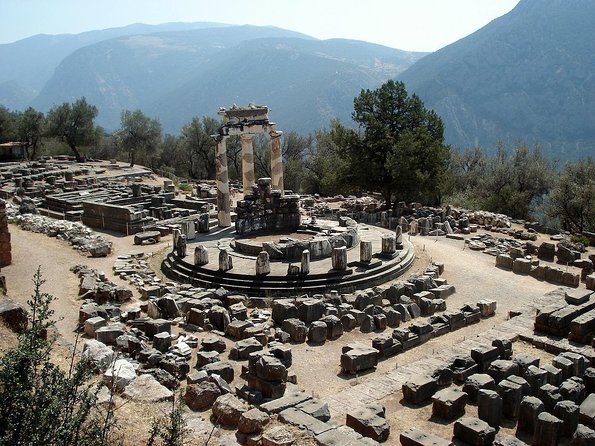
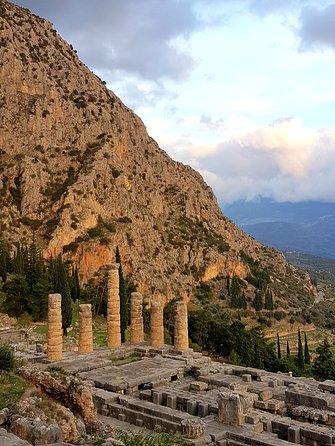
After the museum, you head into the Delphi archaeological site, where the day shifts from objects to space. The sanctuary is UNESCO World Heritage, and Delphi’s power came from the oracle—people consulted Pythia for major decisions across the ancient classical world.
You’ll see a sequence of major areas, including:
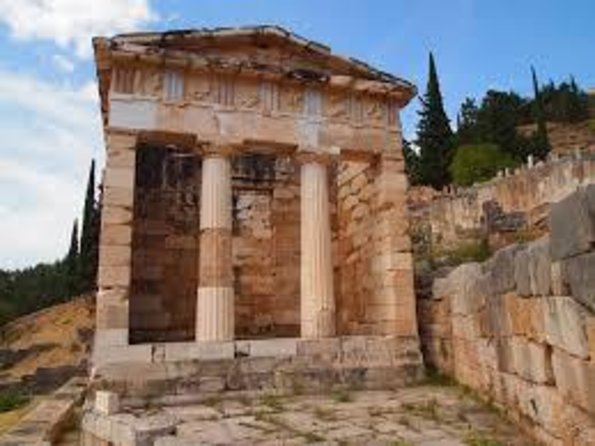
- The Temple of Apollo
- The Ancient Theater
- The Stadium
- The Athenian Treasury and other treasuries/dedications
- The Gymnasium
- The Sanctuary of Athena Pronaia
One more practical point: Delphi sits on slopes. You’re walking uneven ground, and at times you’re climbing stairs and ramps. If you’re traveling with teens, grandparents, or anyone with limited mobility, this is the moment to be realistic. Many people find they can do the essentials without exhausting themselves, but you should come prepared with comfortable shoes and water.
A smart strategy is to pace your walk: stop frequently at viewpoints, take photos, then continue. With a private format, you can choose how long to linger near the highlights rather than being forced into a group tempo.
Also, don’t skip the Temple of Athena Pronaia area. It’s often where the views feel wide and the ruin shapes feel clearer because you can look outward from the hillside. Your guide can explain how Athena Pronaia fits into the wider sanctuary system, and it helps you connect the dots between myths, worship, and political symbolism.
You can also read our reviews of more tours and experiences in Athens
- All Day Cruise -3 Islands to Agistri,Moni, Aegina with lunch and drinks included
★ 5.0 · 4,958 reviews


Delphi village lunch with Gulf views, plus Arachova’s mountain charm
Lunch is not an afterthought here. You’ll have time for a relaxed meal in the Delphi village, and the plan is built around scenery. The timing allows you to eat, then step out for photos and a slow stroll through shops and cafés.
The description of the meal emphasizes Greek flavors with views over Itea and Amfissa. In real life, the dining picks often focus on the same thing: food plus a seat facing the water and the valley. One restaurant that comes up repeatedly is TO PATRIKO MAS, known for a view over the Gulf of Corinth and for being a solid, family-friendly stop.
If you want a “vacation break” from ruins, this lunch is where that happens. You’re back at human scale: narrow streets, coffee stops, souvenirs, and the kind of quiet that’s hard to find in big cities.
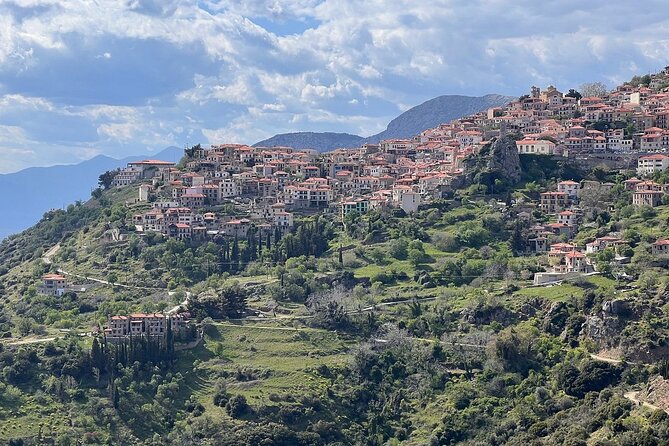
After lunch, you head to Arachova, a village famous for small shops, traditional tavernas and cafés, and panoramic viewpoints. It’s also a ski destination in winter, but in warmer months it’s more about the streets, crafts, and mountain air. The stop is shorter, but it works well as a final reset before the ride back to Athens.
This pairing is one of the best parts of the day. Thermopylae gives you the edge of history. Delphi gives you the center of myth and worship. Arachova gives you the “I’m in Greece” feeling again.
Price and timing from Athens: what you’re really paying for
At $338.76 per person, this is not a budget day trip. The value comes from the combination of things you’d otherwise have to manage yourself:
- Private pickup and drop-off in Athens
- A modern vehicle with Wi-Fi and A/C
- Bottled water included
- Multiple major stops in one day (Thermopylae + Delphi + Arachova)
- A guide who can handle the story and practical pacing while you’re on the road
The main “hidden cost” is time and energy. The day is long, and even with a private format, you’ll be spending hours in the car plus multiple walking segments. Some trips run close to 10 hours; others can stretch closer to 12 depending on pace, breaks, and traffic.
Also check tickets carefully. Delphi museum and site entry is listed as not included for some standard stop times, but there’s an option for Delphi Site & Museum Entry Ticket to be included depending on what you select. If you want everything smooth, choose the ticket option ahead of time.
One more logistics note: the driver is described as experienced in Greek history but not licensed to enter sites and museums. If you want a licensed guide to accompany you inside the museum or sites, that’s listed as an additional request with extra cost. If you’re the type who loves deep explanations while walking, consider adding it—otherwise, the on-the-road guidance can still be strong, and you can enjoy the sites without paying for another layer.
Finally, road conditions can affect timing. One experience included a detour due to road blocks tied to farmers protests, and the day shifted time so Delphi and Arachova got more attention. In a place like this, it’s smart to stay flexible.
Should you book this Delphi and Thermopylae private tour?
Book it if you want a single, guided day that tackles two of central Greece’s biggest story locations without hassle. I think it’s especially good if you:
- Want private pickup from Athens
- Hate car rental headaches and parking in busy areas
- Like guided story-telling that connects monuments to myths, not just dates
- Want a mix of museum time, outdoor ruins, and a real lunch break
Skip or adjust expectations if you:
- Expect Thermopylae to be a long, excavation-style site. It’s more about viewpoints, monuments, and context.
- Need minimal walking. Delphi includes stairs and slopes, and you may prefer to spend more time in the museum and less time at the upper areas.
If you’re on the fence, I’d use this rule: if Delphi is your priority, this tour is a strong way to make it happen efficiently from Athens. If Thermopylae is your only target and you hate long drives, you might want to rethink the day and pick something closer.
FAQ
Is pickup and drop-off in Athens included?
Yes. You get pickup and drop-off in Athens from your hotel or Airbnb/apartment, and it also lists Port pickup as an option.
How long is the tour?
It runs about 10 hours (approx.).
Is the tour offered in English?
Yes, it’s offered in English.
Are museum or site tickets included?
Delphi Site & Museum Entry Ticket is included only if you select that option. For example, the Thermopylae Information Center admission is listed as not included, and Delphi museum/site admission is also listed as not included in the stop details.
Does the tour include lunch and drinks?
Food and drinks are not included, even though you’ll have time for a relaxed lunch in the Delphi village.
What’s included in the vehicle?
The private vehicle includes Wi-Fi, A/C, and bottled water.
Are service animals allowed?
Yes, service animals are allowed.
What’s the cancellation policy?
You can cancel for a full refund up to 24 hours in advance of the experience start time.

More Private Tours in Athens

More Tours in Athens



More Tour Reviews in Athens
- All Day Cruise -3 Islands to Agistri,Moni, Aegina with lunch and drinks included
★ 5.0 · 4,958 reviews