REVIEW · ATHENS
BEST 7-Day CLASSICAL GREECE: Corinth Olympia Delphi Meteora more!
Book on Viator →Operated by WARMPENGUIN · Bookable on Viator
Seven days of ancient Greece, with less stress.
This tour strings together the big classical hits in smart order, from the Acropolis to Meteora, with hotel breakfasts included and time to choose how you see each site. I like the private driver setup because it keeps logistics calm while you still get to explore on your own. I also like the hotel standard, since you’re not trading comfort for sightseeing mileage. One thing to plan for: most major sites charge entrance fees, and the driver can’t go inside the archaeological spots with you.
If you want the stories inside the temples and theaters, you’ll likely want to add an on-site licensed archaeological guide for at least a few stops. The route is busy, and some days mix long sightseeing with shorter port-town breaks, so it helps to be okay with early starts and lots of walking.
In This Review
- Key highlights worth centering your trip on
- Athens in a single day: Acropolis, Museum, and a sunset at Poseidon
- Corinth, Mycenae, and Nafplio: the Peloponnese’s classic starter pack
- Epidaurus, Mystras, Sparta, then onward to Olympia
- Olympia: where the Olympic flame story starts feeling real
- West-coast breaks: Rion-Antirion, Nafpaktos, and Galaxidi
- Delphi and Hosios Loukas: Oracle myths plus real stone context
- Meteora: the monasteries you understand only after you see the rock
- Thermopylae and the return south: closing the loop on ancient Greece
- How the luxury private setup changes your experience
- Tickets, guides, and avoiding the common time traps
- Who this tour suits best
- Should you book this 7-day classical Greece tour?
- FAQ
- What does the tour price include?
- Are entrance fees included?
- Can I choose between exploring on my own and using a guide?
- Is the tour private?
- Does the tour include lunch?
- What is the cancellation window for a full refund?
Key highlights worth centering your trip on
- Private, small-group driving across multiple regions so you can focus on seeing, not routing
- UNESCO sites on purpose, not as filler (Epidaurus, Mystras, Delphi, Meteora)
- Luxury vehicle options (from Mercedes sedan to minivan/Sprinter depending on your group size)
- Real choice in how you experience the ruins, from independent exploration to optional guides
- Sights matched with scenic timing, including a classic sunset moment at Cape Sounion
- Hotels with breakfast so mornings start without extra planning
Athens in a single day: Acropolis, Museum, and a sunset at Poseidon

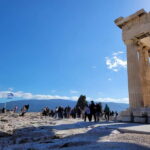
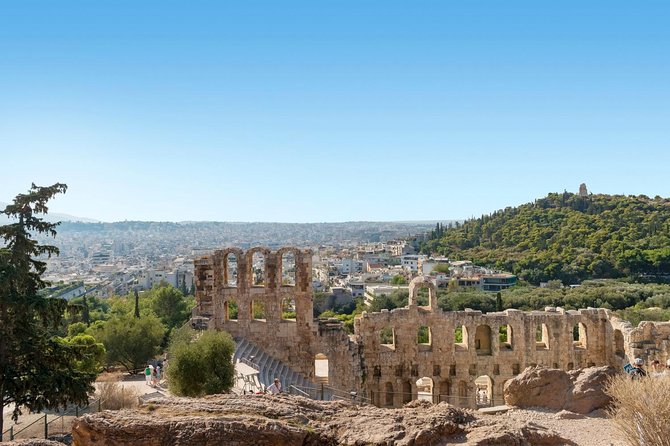
You start strong with Athens’ most famous “must-sees” without losing the day to public transport. The Acropolis visit covers the core temples tied to the Parthenon complex, plus the Temple of Nike and Erechtheion. Even if you’ve seen photos before, being up there in person tends to reset your sense of scale. Plan for uneven stone and stairs, so bring shoes you can trust.
Right beside the hill is the New Acropolis Museum, which is a big win on this schedule. It lets you reconnect the dots with artifacts from the site while you’re still in Acropolis mode, instead of filing it all away as memories-without-context.
After the big-ticket ancient stuff, the itinerary adds government and city-life Athens: you’ll stop at Syntagma Square for the Parliament area and the changing of the guard ceremony at the Tomb of the Unknown Soldier. You also get quick looks at the Athenian Trilogy (University, Academy, Library) and the Panathenaic Stadium (the marble stadium linked to the classic Marathon finish).
Then comes the ancient-Athens power switch: the stop at the Temple of Zeus Olympius plus the Arch of Hadrian, both near each other. These are shorter windows, but they matter because they show how Athens layered eras—Greek sanctuaries, then Roman overlays.
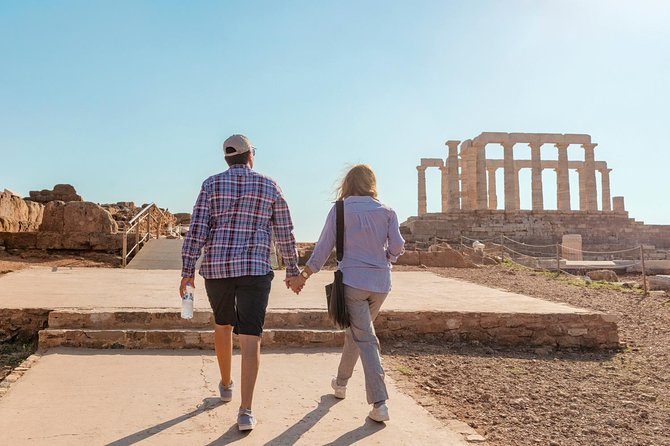
Finally, your day ends with the Temple of Poseidon at Cape Sounion. This is scheduled as a longer visit and it’s especially timed for sunset vibes. If you’ve only got one “dramatic” viewpoint in Athens, this is the one. Even if the photos are familiar, the cliff setting is what makes it feel like a story.
You can also read our reviews of more tours and experiences in Athens

Corinth, Mycenae, and Nafplio: the Peloponnese’s classic starter pack
Day 2 is where the tour stops being just Athens sightseeing and starts feeling like a journey through the ancient heartland.
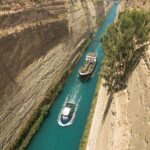
You begin with a brief stop at the Corinth Canal. It’s short by design, but it sets the stage: this canal is engineering on a grand scale, cutting through the geography that has shaped travel and conflict for centuries.
Next is Ancient Corinth, with time to walk the preserved remains and see how the city worked—temples, markets, and fountains. The itinerary also connects this place to St. Paul before you move onward, which can make the site feel less like disconnected stones and more like a lived-in crossroads.
From Corinth you go to Mycenae, one of the most important anchors for early Greek civilization. The route highlights the citadel walls and the Lion’s Gate leading into the area around Agamemnon’s palace complex. You also get time for the nearby on-site museum, which helps because the ruins alone can be hard to picture. This is the day where you’ll really feel that the tour is designed for you to bounce between outdoors and structured context.
Lunch goes to Nafplio, a port city with a medieval feel and sea views, plus the Venetian castle of Bourtzi in the bay. It’s a real change of pace after ruins: craft shops, a stroll through the old town, and a dinner option along the waterfront. If you want your trip to feel human-sized—not just a checklist—Nafplio is a smart inclusion.
Epidaurus, Mystras, Sparta, then onward to Olympia
Day 3 leans into healing, theater, and layered civilizations.
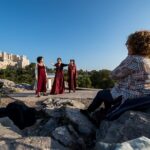
You start at the Sanctuary of Asklepios at Epidaurus, including the Ancient Theatre of Epidaurus. The theater is famous for acoustics, and the itinerary even notes people testing the sound using poems or songs. You don’t have to do it, but it’s a fun mental cue: imagine the same space with crowds calling out lines, and you’ll understand why people still talk about it.
Then it’s up to Mystras, a UNESCO site tied to Byzantine power. This is one of those stops where the ruins feel like a whole town rather than a single monument. The itinerary emphasizes palaces, residences, churches, monasteries, fortifications, and even the water/drainage works—so you’ll be seeing how people lived, not just worshipped.
After Mystras, you stop in Sparta for lunch and exploring. You’ll have time for ancient ruins and a museum area, plus an olive oil museum stop. Sparta’s a heavy word in Greek history, so this is where you’ll likely feel the difference between what Sparta is in textbooks and what it looks like on the ground.
Then the day ends with travel onward to Olympia for the evening. That matters because the next day is built around a full Olympia experience. It keeps you from feeling like you’re always driving and never arriving.
Olympia: where the Olympic flame story starts feeling real
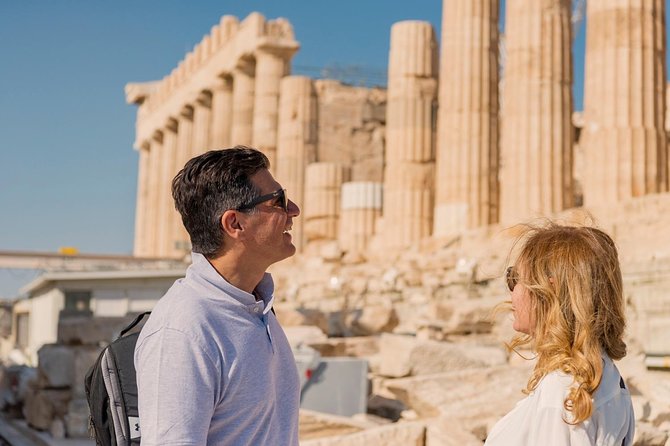
Olympia is the kind of place where you can understand why people keep returning.
The itinerary sets you up for the major highlights: the training areas and the route athletes took, including the tunnel leading to where they emerged in the stadium. It also points you to the Temple of Zeus and Hera, plus the workshop of Phidias and the museum with significant finds. If you like to connect art, religion, and sport, Olympia is a strong match because all three show up.
This is also where the tour structure helps. Since you have time on-site, you can linger where you care most—stadium focus, temple focus, or museum focus—without needing to rush to keep up with an audio-only group pace. And if you want more narrative inside, this is one of the best places to consider adding a licensed guide, because the physical layout rewards interpretation.
West-coast breaks: Rion-Antirion, Nafpaktos, and Galaxidi
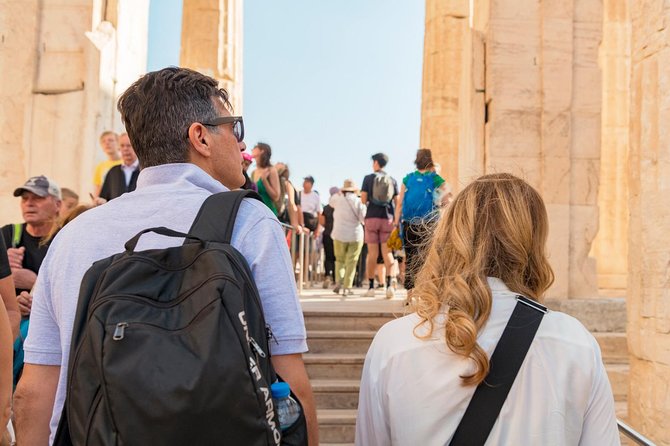
Day 4 mixes big sites with calmer seaside towns. After Olympia, you cross the Rion–Antirion Bridge, described as one of the longest suspension bridges in the world. It’s a travel moment that also gives you a scenic connection across the water—useful because it breaks up the long-day drive energy.
You then stop at Nafpaktos Old Port for lunch. The itinerary frames it as a postcard-like Venetian port. Even with a shorter time window, this kind of stop helps you reset your legs and mind before Delphi.
Next is Galaxidi, positioned by the sea near an ancient port area tied to Delphi travel. The itinerary stresses that it’s less mass-touristic and more about wandering streets, getting sea views, and eating well. If Delphi can feel like a concentrated cultural workout, Galaxidi helps you end the day like a person who’s on vacation, not a person running an itinerary.
- All Day Cruise -3 Islands to Agistri,Moni, Aegina with lunch and drinks included
★ 5.0 · 4,958 reviews




Delphi and Hosios Loukas: Oracle myths plus real stone context
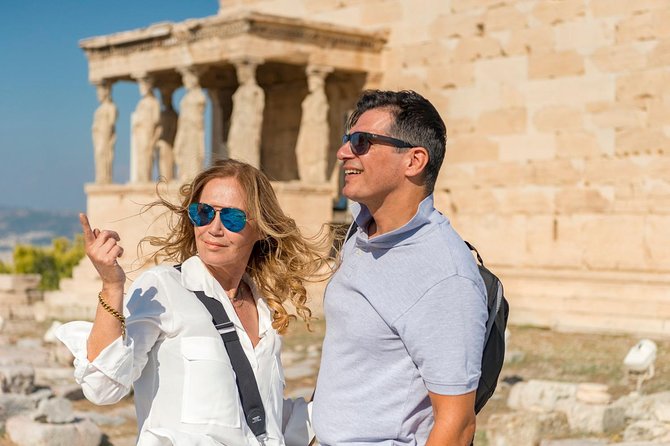
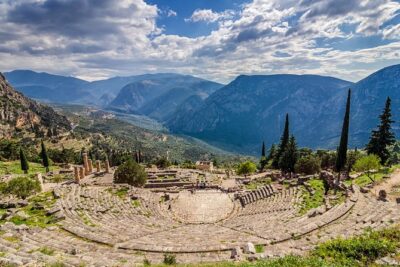
Delphi is scheduled as a full, layered visit, and it’s one of the tour’s best “teaching sites,” even if you explore independently.
The itinerary highlights the terraces along the hillside and notes that landslides helped preserve much of what you see. You’ll visit the 4th-century BC temple of Apollo, tied to where the Oracle spoke prophecies. You’ll also see the Castalian spring of mythology and the theater, treasury buildings, temples of Athena and the gymnasium where athletes gathered and bathed before the Pythian games.
The practical advantage here: when the site is this complex, independent wandering can feel overwhelming unless you know what to look for. This tour’s stop list does that work for you. You’ll have anchors, so you’re not just looking at ruins—you’re looking for how the place functioned.
After Delphi, you have an option: Hosios Loukas, a well-preserved Byzantine monastery and UNESCO-listed. The itinerary says it’s optional and can be omitted. That’s a thoughtful choice if you’d rather allocate more time to Delphi itself or if you’re running low on energy.
You also get a stop at the Delphi Archaeological Museum. The museum matters because it gives names and objects to what you’ve seen outside. The itinerary specifically points to items like the Naxos Sphinx, twin Kouroi, and the Bronze Charioteer, which is exactly the kind of detail that turns ruins into an actual story.
Lunch is at Arachova, with craft shops and views over the olive-filled Pleistos river valley. It’s the kind of break that makes sense here because Arachova sits in the rhythm of the region rather than feeling like a random pit stop.
Meteora: the monasteries you understand only after you see the rock

Day 6 is built around Meteora, and it’s one of the most visually dramatic sections of any Greece trip.
You ascend toward monasteries perched on natural sandstone pillars, with heights up to about 1,312 feet. The itinerary notes that six monasteries remain and that they date from the 14th century. Instead of just pulling you to a viewpoint, the plan includes visiting at least two monasteries, normally the Grand Meteora Monastery plus Varlaam or Agiou Stefanou.
This is where you’ll feel the trade-off of a multi-site tour: you’re in motion a lot, but Meteora is the one stop where the motion is worth it. The rock formations and the cliffside structures make the story of hermits and monks feel believable, not just symbolic.
You also go to Kalambaka for a traditional lunch in the town’s main square. That’s a practical reset after stairs, rock paths, and the kind of walking that adds up faster than you think.
Thermopylae and the return south: closing the loop on ancient Greece
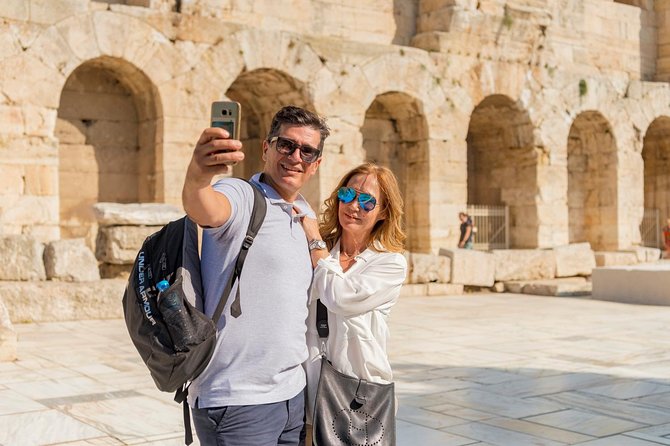
On the final day, you head south toward two “big-name” moments.
You start with Veroia in the morning before continuing toward Thermopylae. The stop includes the monument and entry to the newly built Visitor’s Center, which recreates the battle with King Leonidas and the 300 Spartans from 480 BC. Even if you’ve read about Thermopylae before, the visitor presentation style can help you understand the terrain and stakes behind the legend.
For lunch or a break, you stop at Kamena Vourla, with a sea-side option. Then you finally return to Athens, bringing the trip full circle: from the dramatic edge of the peninsula at Sounion to the famous pass at Thermopylae.
How the luxury private setup changes your experience
The headline benefit here isn’t just comfort. It’s time saved.
This is a private tour/activity, meaning it’s your group only, and you have a professional English-speaking tour driver throughout the day. The vehicle upgrade depends on group size: options range from a Superior Class sedan or Mercedes minivan/Sprinter up to a Platinum package that includes an EClass Mercedes and adds a 3-course lunch.
Hotels are included at a minimum 4-star or boutique style level with breakfast. That’s important for value because multi-day Greece trips can get expensive fast once you add lodging, transfers, and car rentals. When you compare total cost, the driver + door-to-door transport + included stays are a big chunk of what you’re paying for.
Still, two things to keep your expectations aligned:
- Entrance fees are not included.
- The driver can inform you en-route, but can’t enter archaeological sites, so if you want full storytelling inside, you need to add a licensed guide for one or more locations.
Tickets, guides, and avoiding the common time traps
This tour gives you flexibility, but you’ll want to use it wisely.
For each main site, you’ll be exploring independently unless you upgrade with an expert licensed guide. That’s actually a good model for many people. You can go at your own pace when the place is straightforward, and then add a guide where the details matter most—places like Delphi, Olympia, and Epidaurus often benefit from someone explaining what you’re seeing.
Also, entrance fees are on you. To avoid stress, I’d plan to buy tickets in advance where possible. Even if the tour provides mobile ticket support, major sites can still require payment and timed entry practices.
Packing tip that matters for Meteora: plan for lots of walking and changing light between rock paths and monastery interiors. Bring layers even in warm months, because cliffside temperatures can shift and you’ll be moving constantly.
Who this tour suits best
This works especially well if you want:
- A structured route through Athens, Peloponnese, Delphi, and Meteora without the hassle of planning daily drives
- A comfortable base each night, with breakfast handled
- The option to add guides at key sites, rather than paying for a guide everywhere
- Private driving that keeps your day from turning into a logistics puzzle
It may feel like a lot if you prefer very slow travel with minimal driving and fewer stops. This is built for people who like to see a lot, but still want comfort and organization.
Should you book this 7-day classical Greece tour?
If you want the classical highlights in one connected trip, I think this is a strong value play—especially because the price bundles luxury transportation and hotel stays with breakfast. The itinerary is heavy on the big UNESCO hits (Epidaurus, Mystras, Delphi, Meteora), and it doesn’t ignore the smaller, human-scale breaks like Nafplio, Nafpaktos, and Galaxidi.
That said, if you’re the type who wants guided narration inside nearly every major site, budget for extra guide additions. And if entrance fees are a deal-breaker, do the math before committing.
If your ideal trip is: see the monuments, understand what you’re looking at, sleep well, and avoid bus-and-ferry juggling, then yes, this is worth serious consideration.
FAQ
What does the tour price include?
The tour includes a professional English-speaking tour driver, vehicle service (sedan/minivan/Sprinter depending on your package and group size), and 4-star or boutique hotels with breakfast. Entrance fees and expert licensed archaeological guides (unless added) are not included.
Are entrance fees included?
No. Entrance fees are not included in the tour price.
Can I choose between exploring on my own and using a guide?
Yes. You can explore independently, and you can also upgrade to include an expert licensed archaeological guide for one or more sites.
Is the tour private?
Yes. It’s a private tour/activity, so only your group participates.
Does the tour include lunch?
Lunch depends on the package. Platinum includes a 3-course lunch, and other options may add lunch later by request.
What is the cancellation window for a full refund?
You can cancel up to 24 hours in advance of the experience’s start time for a full refund.

More 7-Day Experiences in Athens
More Tour Reviews in Athens
- All Day Cruise -3 Islands to Agistri,Moni, Aegina with lunch and drinks included
★ 5.0 · 4,958 reviews