REVIEW · ATHENS
Athens Social and Political Walk
Book on Viator →Operated by Planetwonk · Bookable on Viator
Power meets pavement in Athens.
This walk is not about a sweep of random landmarks. It’s a focused route through the places where Greece’s government shows itself in real life. You start by the Prime Minister’s seat, then you move to the President’s residence, the Parliament complex, and finally the Athens Polytechnic area tied to the 1973 uprising.
Two things I really like are the way the guide turns street-level sights into actual political context, and the chance to ask questions without feeling rushed. With Isaac, a political science guide, the conversation stays practical and current. One thing to consider is that you will be walking for about 2.5 hours with a moderate fitness level, so it’s best if you’re comfortable staying on your feet.
In This Review
- Key points at a glance
- Why Greece’s politics look clearer when you walk it
- The 2.5-hour route: what each stop is really teaching you
- Start point: Leof. Vasilissis Sofias 2-4
- The official seat of the Prime Minister
- The official residence of the President
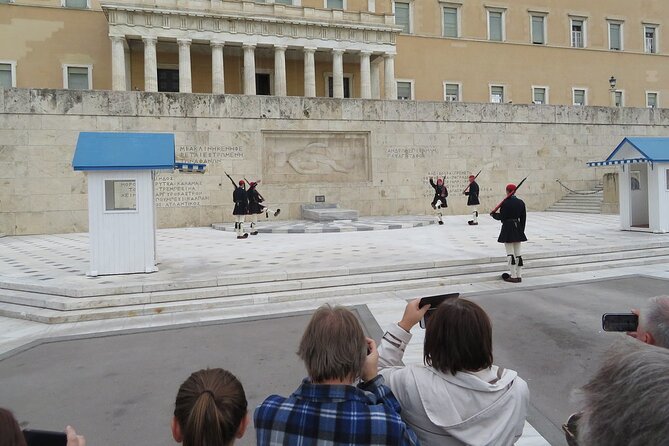
- Parliament of Greece
- Old Parliament House
- Athens Polytechnic and the Nov 17, 1973 uprising
- Isaac’s guide style: political science that doesn’t stay in theory
- Small group size: why max 15 actually changes the experience
- Who this Athens political walk is best for
- Price and value: $47.92 for a guided political “map”
- Getting the most out of it: what to bring and how to time it
- Comfort and fitness
- Weather matters
- When to book
- Booking basics, without the boring bits
- Should you book the Athens Social and Political Walk?
- FAQ
- How long is the Athens Social and Political Walk?
- What does the tour cost?
- What language is the tour offered in?
- How big is the group?
- Where do I meet, and where does it end?
- What fitness level do I need?
- Are service animals allowed?
- What happens if the weather is bad?
- When can I cancel for a full refund?
Key points at a glance

- Prime Minister, President, Parliament in one route so you quickly see how power is organized in Athens
- Small group (max 15) which makes questions feel natural, not awkward
- Isaac’s political science angle links past events to modern Greek debates
- Old Parliament House stop adds a sense of time and change, not just one era
- Athens Polytechnic uprising (Nov 17, 1973) grounds the story in a defining moment tied to NTUA
Why Greece’s politics look clearer when you walk it

Athens can look like a postcard until you start asking what runs the country. This tour gets you past the usual sightseeing shuffle. Instead of only pointing at famous buildings, it connects each stop to how Greece’s political system operates today, and how it got there.
I like that the pace is designed for understanding. You’ll have enough time to listen, ask, and connect dots, which is rare for a short, 2.5-hour experience. And because it’s a small-group walk in English, you’re not just looking at sights; you’re also getting a guided lens.
You’ll also get a reality check. Isaac’s approach, as reflected in how people describe the tour, tends to move beyond the “tourism Disneyland” version of Greece and into the more complicated stuff people talk about at home—history, polarization, reform, and current events.
You can also read our reviews of more walking tours in Athens

The 2.5-hour route: what each stop is really teaching you

This walk runs about 2 hours 30 minutes. It’s paced as a sequence of political meanings, not a checklist. You’re moving between key institutions, so the route itself becomes the lesson: today’s governance sits right next to older layers of the story.
The tour ends near the National Technical University of Athens, sometimes associated with Athens Polytechnic. That matters, because it’s the final stop where the route stops being only institutional and becomes personal and historical—tied to a specific event on November 17, 1973.
Start point: Leof. Vasilissis Sofias 2-4
You’ll meet at Leof. Vasilissis Sofias 2-4, Athina 106 74. This is a practical start because it’s in the central Athens area and marked as near public transportation. If you’re coming in from elsewhere in the city, you’re not starting from some remote corner that forces a taxi.
From here, the walk sets up an immediate theme: the physical city map mirrors the political one. You’re not guessing where things happen—you’re shown.
The official seat of the Prime Minister
The first big institutional stop is the official seat of the Prime Minister of Greece. Even if you’ve never studied Greek politics, you can feel what this stop is meant to do: it turns the idea of leadership into a place you can stand in.
What I like here is that the guide doesn’t treat it like a photo op. The framing helps you understand why institutions exist where they do, and what that signals about authority and decision-making. If you’ve ever felt that politics is too abstract, this is the antidote.
Possible drawback: if you already know the basics of Greece’s government structure, you may want the questions part to do more heavy lifting. The tour is built to teach you the system as you go.
The official residence of the President
Next comes the official residence of the President of the Hellenic Republic. This stop shifts the focus from day-to-day leadership to another layer of national authority. It’s still about power, but in a different role.
For many people, this is where the tour starts to feel more like a live conversation. Isaac’s style, as described in the experience feedback, is to keep comparisons in mind and explain how concepts work in practice—not just what the institutions are called.
- All Day Cruise -3 Islands to Agistri,Moni, Aegina with lunch and drinks included
★ 5.0 · 4,958 reviews




Parliament of Greece
Then you reach the Parliament of Greece. This is the stop that usually turns the tour into something more than background information. Parliament is where the political conflict becomes visible through debate, institutions, and decision processes.
I like how this stop is part of a sequence. You’re not seeing Parliament alone as a “big building.” You’ve already been primed by the Prime Minister and the President stops, so you can place Parliament into the larger picture.
Old Parliament House
After that, you’ll see the Old Parliament House. The value here is continuity. Politics isn’t only what’s happening now; it’s also how societies restructure after crises, shifts in leadership, and changes in public expectations.
One review feedback thread noted how Isaac ties together developments across different periods, including later modernization and reform phases. That fits perfectly with this stop. You get a sense that political life in Athens has layers, and those layers matter when you’re trying to interpret current events.
Athens Polytechnic and the Nov 17, 1973 uprising
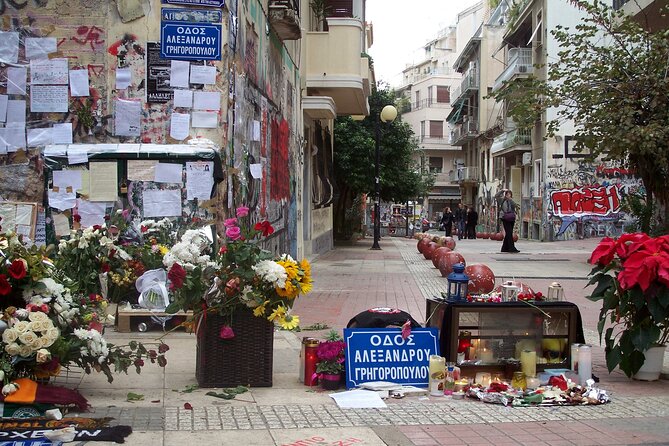
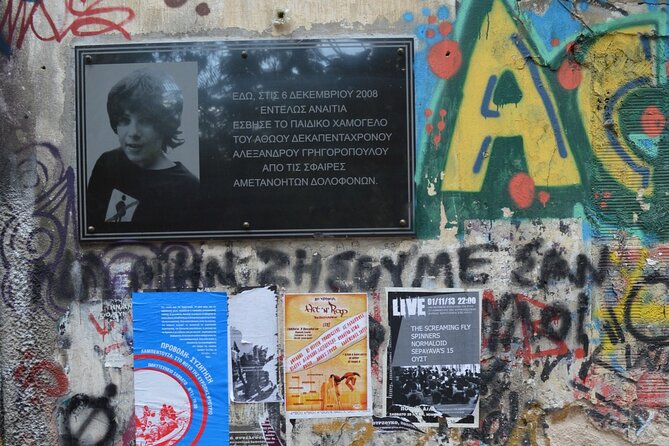
Finally, the route ends at the entrance area of National Technical University of Athens, tied to the Athens Polytechnic uprising on November 17, 1973. The tour highlights it as the most important event of NTUA’s history.
This is the stop that gives the whole walk its edge. Up to this point, you’ve been reading governance through institutions. Here, you see how political tension can spill into major civic events that reshape how people understand authority and legitimacy.
If you like your travel with a point—something you can carry back into dinner conversations—this ending is it.
Isaac’s guide style: political science that doesn’t stay in theory
Isaac is the name that comes up again and again. People describe his depth and his ability to make Greek political ideas make sense, even if you know very little before you start.
What stands out in the way the tour is described is balance. One of the most helpful comments is that his perspective feels nuanced and not overly one-sided. Another is that he links the history to the present, including how Greece moved through major phases and why polarization can look the way it does.
You’ll also get anecdotes based on recent news themes. That matters for value because it helps you connect what you’re seeing on the street to what you might be reading in headlines once you’re back home.
Practical tip for you: bring at least one question you actually care about. If you’re curious about why things feel so tense, ask. If you’re trying to understand how institutions interact, ask. The format is built to let you do that.
Small group size: why max 15 actually changes the experience

The tour caps at 15 travelers. That’s not just a nice-to-have detail. It affects the whole feel of the walk.
With a group this size, Isaac can adjust pacing. He can answer follow-ups without cutting you off every time you ask something. And you can hear the explanations without playing the constant game of where to stand and how loud you need to be.
If you prefer tours where you’re not swallowed by a crowd, this matches your style. If you hate small-group intensity and would rather observe from a distance, you might find it more interactive than you expected.
Who this Athens political walk is best for
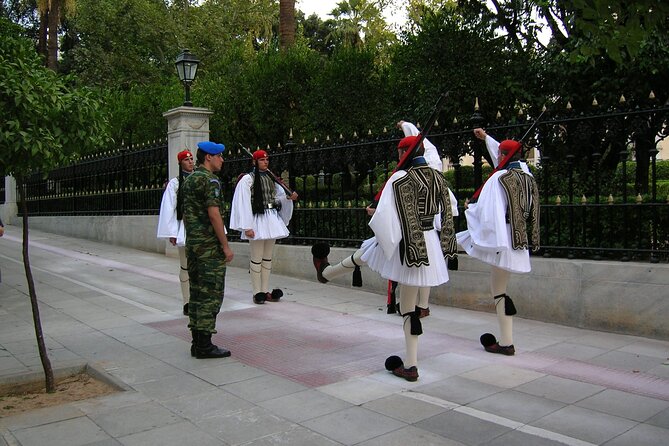
This is a niche kind of tour in the good way. You’ll enjoy it most if you want to understand Greek society and politics through the lens of real institutions and real historical turning points.
I’d especially recommend it if:
- you like asking questions, not just taking pictures
- you want context fast, without reading a stack of books first
- you’re in Athens for a short visit and want something more meaningful than standard monument time
It’s also a good pick if you’re already well-read on politics. Multiple comments suggest the guide can work at both levels: explain foundations for newcomers, while still synthesizing bigger trends if you have background.
Price and value: $47.92 for a guided political “map”

The price is $47.92 per person for about 2.5 hours, offered in English with a mobile ticket.
Here’s how I think about value in Athens: you’re paying for guided interpretation, not entry tickets. The route is built around institutional sights and a historical ending at NTUA. That means the main cost driver is the guide time and the structure that makes it understandable.
For context, a small-group political walk like this can feel unusually good value if you want answers on the spot. You’re also not stuck doing this alone. With a maximum of 15, you get the sense that the guide is working with the group, not just broadcasting.
If you’re only interested in pretty facades and quick photos, you may feel the price is higher than it needs to be. If you want to understand what you’re seeing and why it matters, it starts to make sense quickly.
Getting the most out of it: what to bring and how to time it
Comfort and fitness
The tour notes a moderate physical fitness level. This is a good match for most visitors who can handle city walking without needing mobility help.
I’d plan for shoes that work well on sidewalks and in changing weather. Bring water if it’s warm. And if you’re sensitive to crowds or you prefer frequent stops, keep in mind the itinerary is built as a steady walk between major sites.
Weather matters
Good weather is required. If the tour gets canceled due to poor weather, you’ll be offered a different date or a full refund. That’s a key thing to factor into your Athens schedule because political walks lose their magic if you’re rushing through drizzle.
When to book
On average, it’s booked about 14 days in advance. That’s a sign it’s popular enough that you shouldn’t wait until the last minute—especially if you have a tight itinerary.
Booking basics, without the boring bits
You’ll get confirmation at booking time. The tour allows service animals, and it’s listed as near public transportation, so you can plan around transit instead of building everything around taxis.
You’ll meet at Leof. Vasilissis Sofias 2-4 and end at the main entrance of National Technical University of Athens on Patision Avenue. If you like to plan your day, this ending can be useful because you’ll finish near an area tied to that final historical stop.
Should you book the Athens Social and Political Walk?
Book it if you want Athens with context. This is not a casual amble; it’s a guided route through government sites and a defining event connected to NTUA and the Athens Polytechnic uprising on Nov 17, 1973. If politics and history make you curious in a practical way, you’ll likely love how Isaac turns institutions into explanations you can use.
Skip it only if you mainly want classic sightseeing with minimal talking. This walk is built for questions, for synthesis, and for making sense of Greek current events through the past.
If you’re the kind of traveler who thinks reading about politics is fine, but you’d rather understand it by standing in the places where it happens, then this tour is a strong choice.
FAQ
How long is the Athens Social and Political Walk?
It runs for approximately 2 hours 30 minutes.
What does the tour cost?
The price is $47.92 per person.
What language is the tour offered in?
The tour is offered in English.
How big is the group?
This tour has a maximum of 15 travelers.
Where do I meet, and where does it end?
You start at Leof. Vasilissis Sofias 2-4, Athina 106 74, Greece. The tour ends at the main entrance of the National Technical University of Athens on Patision Avenue (Athina 106 82, Greece).
What fitness level do I need?
You should have a moderate physical fitness level.
Are service animals allowed?
Yes, service animals are allowed.
What happens if the weather is bad?
The tour requires good weather. If it’s canceled due to poor weather, you’ll be offered a different date or a full refund.
When can I cancel for a full refund?
You can cancel for a full refund up to 24 hours before the experience’s start time (local time).

More Walking Tours in Athens


More Tour Reviews in Athens
- All Day Cruise -3 Islands to Agistri,Moni, Aegina with lunch and drinks included
★ 5.0 · 4,958 reviews