REVIEW · ATHENS
Athens Social and Political Walk
Book on GetYourGuide →Operated by Planetwonk Experiences · Bookable on GetYourGuide
Politics on Athens streets feels immediate.
This Athens Social and Political Walk asks a blunt question: how did Greece go from the cradle of democracy to the basket case of Europe. What makes it interesting is the way the guide uses the city as a timeline, connecting big national shifts to everyday social choices, from the independence era to the present. I like that it is framed as an argument you can test, not a lecture you just copy.
Two things I especially liked: first, the guide is a political scientist (Isaac) who explains social and political change through clear themes like religion, language, Europe, and the economy. Second, the walk feels like documentary-style storytelling with enough street time to keep it lively, not static. The main drawback to consider is that this is explicitly politics-focused, so if you want mostly ancient monuments or pure museum time, you may find it more heady than scenic.
In This Review
- Key points to know before you go
- A political walking tour that treats Athens like a timeline
- The guide matters: Isaac’s method, humor, and real-world comparisons
- From Maximos Mansion to presidential power: how the state shows itself
- National Garden to Parliament: everyday Athens inside big debates
- The slideshow and the theme threads you can reuse later
- Two side stops that add texture to the story
- Korai 4 and the memory of 1941–1944
- Panepistimiou and Metsovio Polythechnic: politics meets education and youth
- What you’ll walk away with: clearer opinions, not just facts
- Practical notes that help your day go smoother
- Price and value: why $47 can be a bargain
- Who should book this tour
- Should you book the Athens Social and Political Walk?
- FAQ
- How long is the Athens Social and Political Walk?
- How much does it cost?
- Where does the tour start and where does it end?
- What languages are available for the live guide?
- Is the tour wheelchair accessible?
- What’s included in the tour besides the walking?
- Can I cancel for a full refund?
- Is there an option to book without paying right away?
- What kind of content does the guide cover?
- Is the group small?
Key points to know before you go

- A political scientist guides the story with real context, not just slogans
- Documentary-style street narration turns Athens into a living timeline
- Stops connect themes like religion, language, Europe, the economy, and migration
- Clear, humorous delivery helps heavy topics stay understandable
- Small-group feel is possible, with one booking reporting just seven people
A political walking tour that treats Athens like a timeline
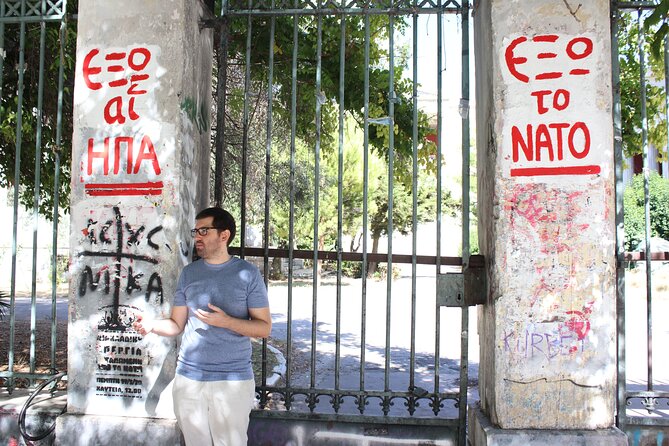
Athens has a way of making history feel close. One minute you are on a normal sidewalk; the next minute you are talking about state power, political tension, and why ordinary people end up living through the decisions of institutions. That is the core appeal of this walk: it ties Greece’s social and political evolution to specific places you can point at, so the topic stops being abstract.
The tour’s big through-line is the contrast between myth and reality. Greece is often sold globally as the origin story of democracy. The guide then forces a harder follow-up: what happens when a democracy has to survive wars, economic shocks, shifting party politics, and changing social pressures. You do not just hear the headlines; you build a framework for understanding how the pressures stack up over time.
And you get to do it at a human pace. Two and a half hours is long enough to connect ideas, but not so long that you feel like you are being dragged from stop to stop. The walk also keeps your attention by mixing formal discussion with street exploration, plus a slideshow that adds photos and extra context for the issues discussed.
You can also read our reviews of more walking tours in Athens

The guide matters: Isaac’s method, humor, and real-world comparisons
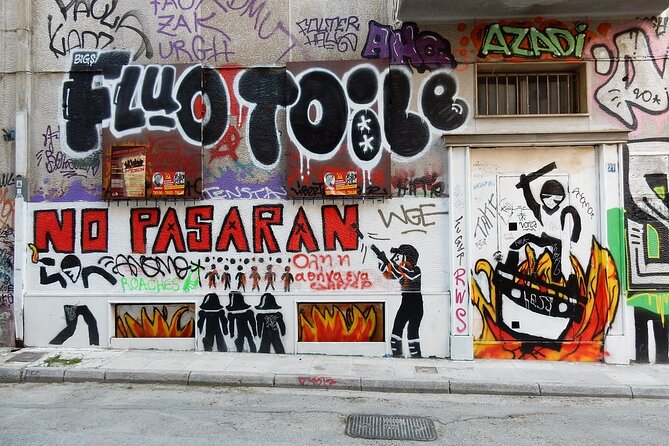
A political tour can go one of two ways. It can become either a dry lecture or a debate-with-strangers that goes nowhere. Here, the guide’s background and delivery do the heavy lifting.
Isaac (the political scientist featured in many bookings) keeps things accessible and funny without turning serious topics into jokes. He also has a habit of making comparisons beyond Greece, so you are not trapped in a single-country story. That matters because Greece’s politics did not evolve in a vacuum. If you have been following Europe since the financial crisis, you will recognize the themes quickly.
You also benefit from a Q&A-friendly approach. Several bookings mention that he answered questions well and was open to discussion. That means you can bring your own curiosity—about religion’s role, about party politics, about Europe’s influence—and get a straight response tied to what you are seeing on the sidewalk.
From Maximos Mansion to presidential power: how the state shows itself
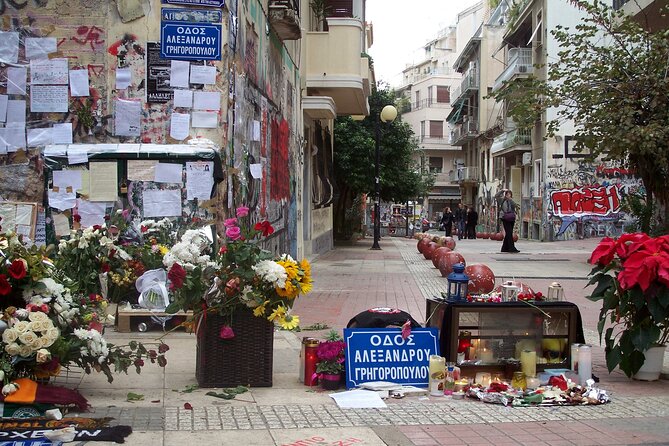
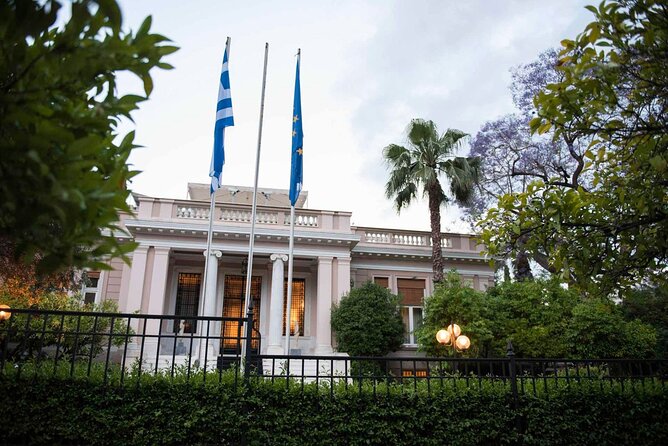
The walk starts at Planetwonk and quickly moves into the zone where you feel how power is organized. Maximos Mansion is the first major stop, and it sets the tone: this is a tour about institutions, not just ideas.
You do not need to be an expert to follow. The guide uses the location to frame how Greece’s modern state took shape and how different political eras changed the relationship between government, society, and the public. Since the tour explicitly traces developments from the independence war era onward, the early stops act like a jump start for the rest of the story.
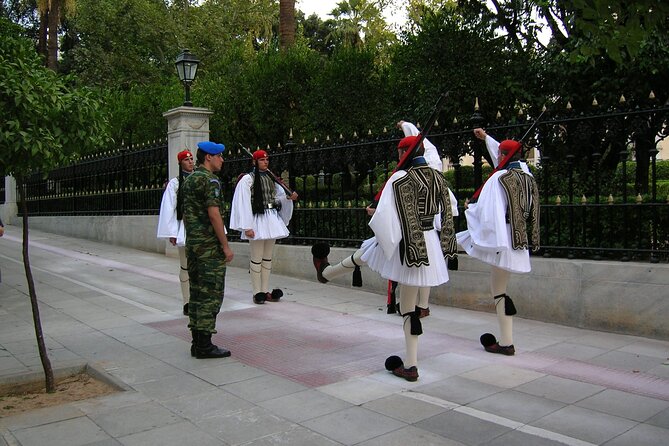
Next comes the Presidential Palace. That stop helps you connect what you hear later—about parties, crises, and reforms—to the reality of how a state signals authority in physical space. Even if you are not obsessed with architecture, you still leave understanding that politics is not only speeches and ballots. It is also structures, symbols, and who holds the levers when conditions get hard.
National Garden to Parliament: everyday Athens inside big debates
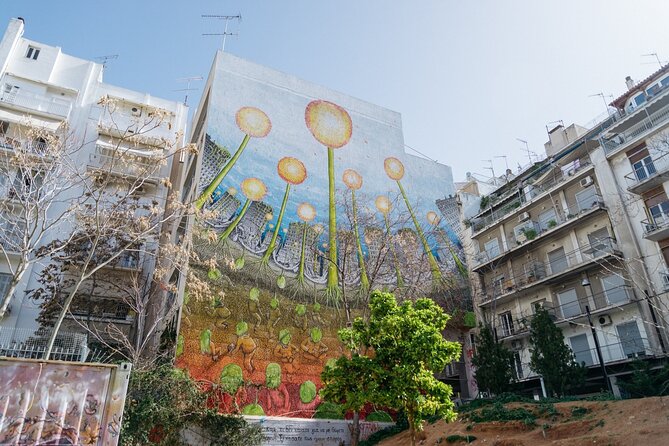
At the National Garden, the tour shifts the focus slightly. The conversation stays political, but the setting reminds you that social life is not limited to legislatures and ministries. You start to understand how daily routines, public space, and the social role of institutions all feed into politics.
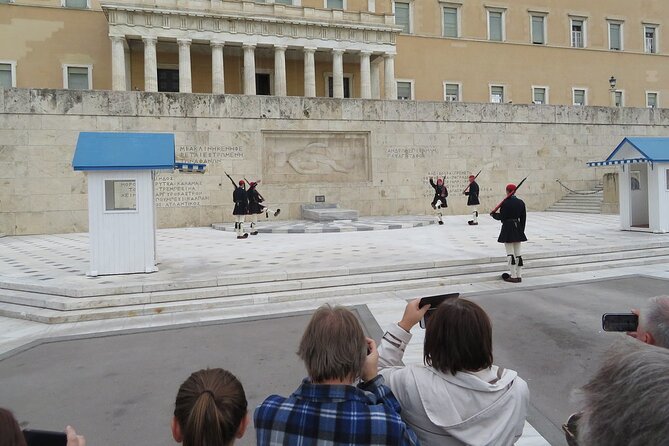
Then the walk moves to the Hellenic Parliament. This is one of the most important thematic switches on the route. Parliament is where the tour’s documentary-style narrative starts to feel like a live case file: how party politics works, how tensions build, and how events like major social shocks show up in the political system.
The itinerary also includes the National Historical Museum, which gives the conversation a historical backbone. The tour’s framing covers a long stretch—Byzantine and Ottoman legacies are mentioned in one booking, then independence, WWII, post-war politics, and the more recent era of neoliberalism, the student massacre, financial crises, immigration, and gentrification. Even when you are not leaning into each era equally, the through-line helps you see why the present feels the way it does.
One practical upside: with stops like Parliament and the museum, you can mentally sort the story into chapters. That makes it easier to remember later—when you hear Greek politics discussed in the news, or when you meet locals and realize the conversation includes old wounds and old promises.
The slideshow and the theme threads you can reuse later
You get a slideshow with photos and extra info on the issues discussed during the experience. I like this because it helps you connect what you saw to what you did not have time to cover in real time. It also gives you something to look back on when you are walking around Athens afterward and you suddenly realize, oh, that conversation ties to something I learned two hours ago.
The tour emphasizes core theme threads: religion, language, Europe, and the economy. Those themes pop up again and again in political debates across the continent, and that is why the comparisons matter. It is not just Greek history for its own sake. It is an approach you can carry into your understanding of other countries too.
- All Day Cruise -3 Islands to Agistri,Moni, Aegina with lunch and drinks included
★ 5.0 · 4,958 reviews




Two side stops that add texture to the story
Not every stop on the route is a major headline building. You also make time for a couple of side stops—short, street-level moments that add texture to the bigger narrative. They matter because Greek politics is not only happening in official spaces. It shows up in social attitudes, in migration pressures, in how cities change, and in how people experience the aftermath of economic strain.
This is where the street exploration helps. The guide can explain a concept like gentrification or immigration pressure in a way that feels grounded, not abstract. If you are the type who learns better by connecting stories to real places, these in-between stops help a lot.
Korai 4 and the memory of 1941–1944
The walk includes Korai 4, a memorial site covering 1941–1944. This is another thematic checkpoint. Memorial spaces tend to do something specific: they make political history tangible by linking it to people and memory, not only policy outcomes.
Here, it supports the tour’s broader coverage of WWII and the decades that followed. Even if you only catch a few key facts from the guide’s explanation, the point lands. Greece’s later political divisions and social pressures are easier to understand when you grasp how strongly the past sits in the public record.
Panepistimiou and Metsovio Polythechnic: politics meets education and youth
The tour continues along Panepistimiou, then reaches the National Metsovio Polythechnic. Those choices are not random. Education and universities are repeatedly tied to political energy across modern European history, and this walk specifically references the student massacre as part of its storyline.
So when you stand where students and institutions matter, the political concepts feel less like theory. The guide’s framing helps you connect youth movements to later political outcomes—especially in a country that has had to negotiate stability through crises.
You also get a sense of how political tensions can be social tensions. When a society experiences economic disruption, the debate does not stay inside government offices. It moves into schools, neighborhoods, and the public square.
What you’ll walk away with: clearer opinions, not just facts
The tour does something important: it encourages you to form your own opinions. That sounds like a marketing line, but it works because of the structure. The guide tells a story, points to place-based context, and then gives you frameworks—religion, language, Europe, economy—so you can explain what you are seeing and hearing.
If you care about politics, it gives you a way to connect Greece to the bigger European story after the 2008 financial crisis. If you are visiting Athens for the first time and want to go beyond ancient sites, it gives you a fast, practical entry point into how modern Greece thinks about itself.
And if you have lived in Greece—even briefly—you can still get value. One booking notes that even with months in Greece, the experience was eye-opening. That tells you the tour is not only aimed at tourists. It also fills gaps for people who already feel familiar with day-to-day life but want deeper political context.
Practical notes that help your day go smoother
This is a 2.5-hour walking tour. Wear comfortable shoes. Athens sidewalks can be uneven, and the route mixes institutional stops with street-level exploration, so you want flexibility in your footing.
The guide speaks Spanish and English. If you are choosing between languages, pick what makes the questions easiest to understand. The Q&A tone seems to work well, so clarity helps.
Group size can vary. One booking describes a small group of seven people. A smaller group often helps the guide tailor responses, so if you see a slot that looks like it will run smaller, that can be a plus.
Finally, check your timing. The start is at Athens Social and Political Walk – Planetwonk, and the walk finishes at 28is Oktovriou 42, Athina 106 82, Greece. Planning dinner or another activity after the tour is easier if you know where you will end up.
Price and value: why $47 can be a bargain
At $47 per person for about 2.5 hours, this is not a splurge tour. It is also not just sightseeing with a generic guide.
You are paying for three things that usually cost more if you try to piece them together yourself:
- A political scientist who can connect eras (independence, WWII, post-war, crises) to modern social realities
- Guided street time at multiple institutions (presidential power, Parliament, major public memory sites)
- A slideshow with photos and extra issue context
Also, the experience seems to prioritize clarity. Several bookings highlight that the guide explains complex issues in simple terms and uses humor to keep it moving. That is good value because politics tours can easily lose people. Here, the structure is built to help you follow along and ask questions.
Who should book this tour
You should book it if you:
- Want an informed way to understand modern Greek politics, not just ancient Greece
- Like walking tours that use place-based storytelling
- Prefer a guide who connects social and political change with current realities
- Enjoy thinking through big questions, like how economic shock changes a democracy
You might skip it if you want a light, purely scenic walk. This is intentionally political, with a heavy focus on social tensions, institutions, and major historical turning points.
Should you book the Athens Social and Political Walk?
I think it is a strong choice for the right traveler. If you are curious about why Greece looks the way it does today—politically, socially, and culturally—this walk gives you a compact route through the key chapters. Isaac’s style (with humor and clear explanations) makes the difficult topics easier to process, and the mixture of institutions and street exploration keeps the experience from feeling like a classroom.
If you go in expecting monuments, you may feel disappointed. If you go in curious about modern Greece’s political logic and how it connects to everyday life, you will get good value fast.
FAQ
How long is the Athens Social and Political Walk?
It lasts 2.5 hours.
How much does it cost?
The price is $47 per person.
Where does the tour start and where does it end?
It starts at Athens Social and Political Walk – Planetwonk and finishes at 28is Oktovriou 42, Athina 106 82, Greece.
What languages are available for the live guide?
The tour is offered with a live guide in Spanish and English.
Is the tour wheelchair accessible?
Yes, it is listed as wheelchair accessible.
What’s included in the tour besides the walking?
You get a slideshow with photos and extra information on the issues discussed during the experience.
Can I cancel for a full refund?
Yes. Free cancellation is available up to 24 hours in advance for a full refund.
Is there an option to book without paying right away?
Yes. It offers a Reserve now & pay later option, so you can book your spot and pay nothing today.
What kind of content does the guide cover?
The tour combines documentary-style analysis with street exploration, covering how modern Greece’s social and political situation evolved from the independence era to the present, including topics like religion, language, Europe, and the economy.
Is the group small?
The information provided includes at least one booking with a small group of seven people, but group size can vary by departure.



More Walking Tours in Athens


More Tour Reviews in Athens
- All Day Cruise -3 Islands to Agistri,Moni, Aegina with lunch and drinks included
★ 5.0 · 4,958 reviews