REVIEW · ATHENS
Athens Highlights: Myths & Philosophers Private Walking Tour
Book on GetYourGuide →Operated by Be a Greek · Bookable on GetYourGuide
Athens can feel like a lot of ruins and captions. This private Athens philosophy and mythology walking tour turns those landmarks into a story: who thought what, where they stood, and why it still matters. I especially like how the route threads together major Athenian sites with big ideas like Socrates, Plato, Epicurus, and Aristotle, and how the guide keeps the conversation moving so you’re not just staring at stone.
My second favorite part is the pacing: you get built-in chances to ask questions and a included Greek coffee break near Thissio, which makes the tour feel less like a lecture and more like walking with a thoughtful local. The main drawback to plan for is that it’s a full-on walking experience and isn’t suitable for people with mobility impairments, so comfortable shoes are non-negotiable.
In This Review
- Key highlights to look for
- Why this Athens philosophy walk feels different
- From Panepistimio to the Trilogy of Athens: Plato’s Athens in 19th-century stone
- Parliament and the National Gardens: Epicurus and the meaning of the Garden
- Ermou Street, Kapnikarea, and Aristotle’s Lyceum: ideas near commerce and stone churches
- Thissio coffee and the Pre-Socratics: when philosophy meets a normal morning
- Ancient Agora and Poikile Stoa: where Stoicism gets its birthplace story
- Plaka and Anafiotika to the Tower of Winds: Cynics, Aiolos, and myth you can see
- Areopagus Hill: finishing with the Acropolis view and Olympian myths
- Price and value: is $100 per person fair for 4 hours private?
- Who this tour is for (and who should skip it)
- Should you book this tour?
- FAQ
- How long is the Athens Highlights: Myths & Philosophers private walking tour?
- Where do I meet the guide?
- Is the tour private and in English?
- What’s included in the price?
- Are entrance fees included?
- Is the tour suitable for people with mobility impairments?
- Can I cancel and get a full refund?
Key highlights to look for
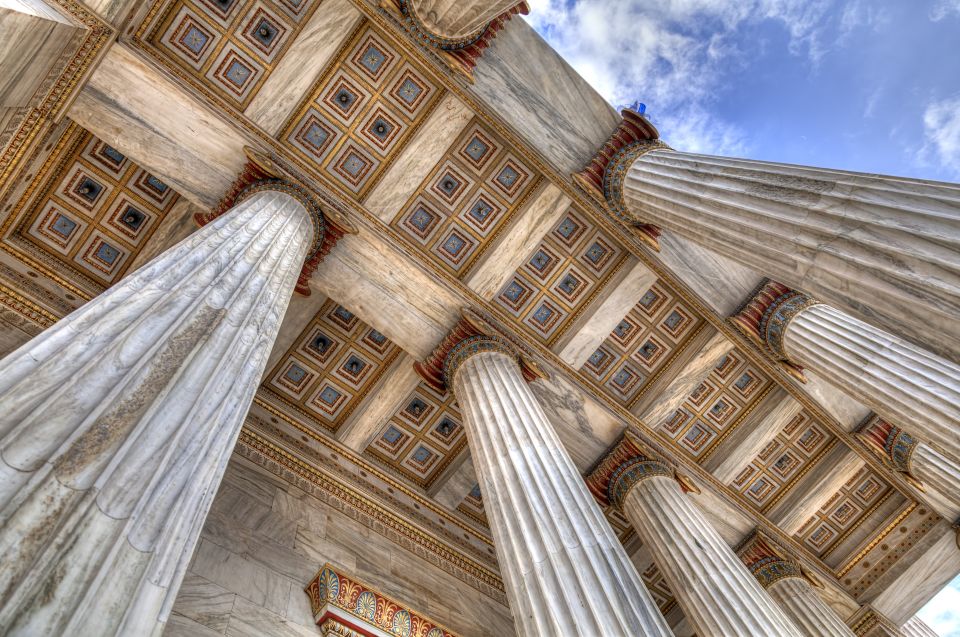
- Socrates, Plato, Apollo, and Athena tied to Athens landmarks, not just names on a list
- Epicurus in the Garden area, with the story behind his school
- Ermou Street and Hermes, plus the older Kapnikarea church/temple context
- Poikile Stoa and Stoicism’s origin point in the Ancient Agora area
- Plaka/Anafiotika, the Tower of Winds, and Aiolos—myths you can actually picture
- Areopagus Hill finish with a big Acropolis view
Why this Athens philosophy walk feels different
This is the kind of tour that makes you look at Athens twice. You’re moving through central neighborhoods—University/Panepistimio area, Parliament, National Gardens, Ermou, Monastiraki, Plaka, Anafiotika, and up to Areopagus—so you don’t just cover tourist stops. You also see how Athens works as a living city while the guide connects each place to an idea.
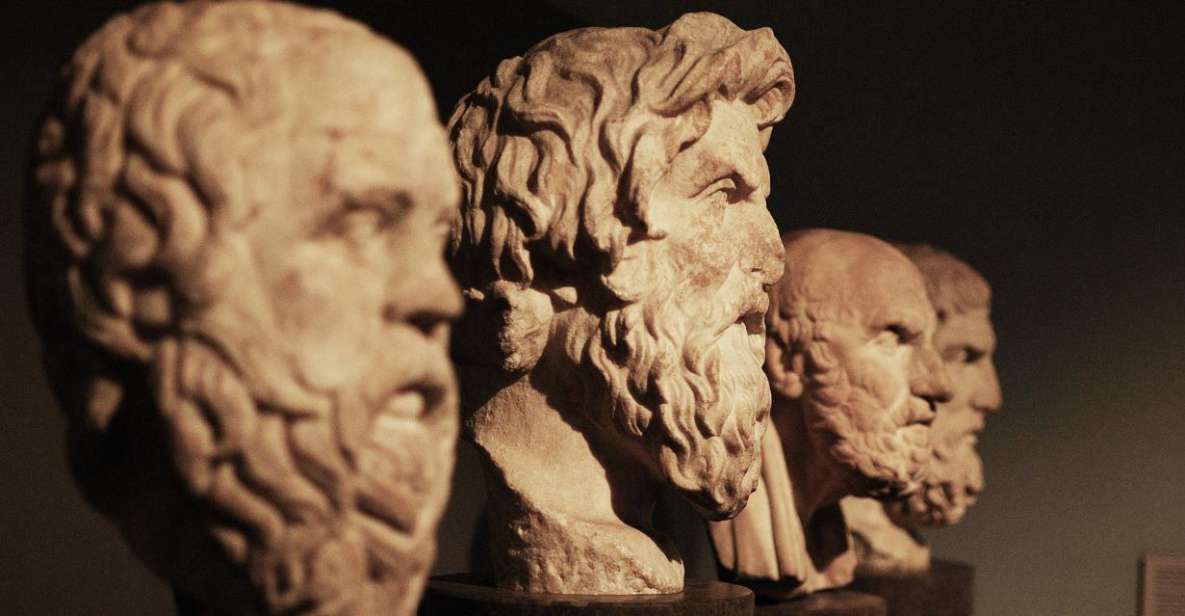
What makes it more fun (and more useful) is the subject pairing: Greek mythology + Greek philosophy. Gods and philosophers can sound like two separate school assignments. Here, they’re treated like the same cultural conversation—people argued about virtue, knowledge, and fate the same way they talked about gods like Apollo and Athena.
And because it’s private, you’re not stuck with one rigid script. Guides (for example Bianca and John are specifically mentioned in past bookings) tend to tailor the flow to your interests and answer questions as they come up, which is exactly what you want if you’re planning to visit museums, read about the classics, or teach yourself a little Greek history before your next trip.
You can also read our reviews of more walking tours in Athens

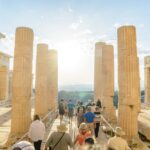
From Panepistimio to the Trilogy of Athens: Plato’s Athens in 19th-century stone
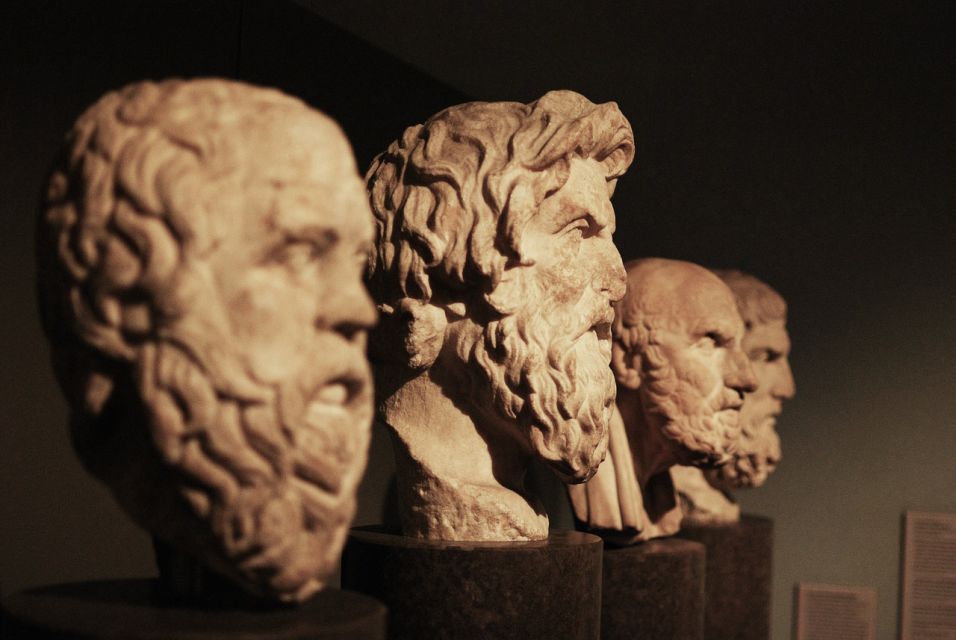
You start outside Panepistimio Metro Station (with an option that starts at the University area). From there, the first part of the walk builds momentum fast. The tour begins with the Trilogy of Athens, associated with the architect Theofilus Hansen. Even if you’re not an architecture person, it’s a great opener because it’s both dramatic and readable: you get the feeling of Athens projecting its identity through impressive buildings.
Then you’ll move into statues and artistic details from famous 19th-century sculptors—and this is where the guide’s method clicks. You’re not being asked to memorize. You’re being shown how art, politics, and belief systems sit next to each other in one city.
A key theme here is the way the guide links the conversation to Socrates and Plato while walking near these monumental scenes. Socrates is often remembered as an abstract thinker, but in Athens he was part of a real street-level culture of argument. Plato, too, gets more sense when you hear the context in front of you instead of reading it alone later.
This section also brings in the gods—Apollo and Athena—as more than trivia. Apollo and Athena can sound like opposites at first glance, and the tour’s framing helps you notice overlap. You start to think about wisdom, order, inspiration, strategy, and the human need to explain the world with stories.
Practical note: you’ll be outside for stretches early on, so if it’s sunny, sunscreen and sunglasses aren’t optional.
Parliament and the National Gardens: Epicurus and the meaning of the Garden

Next you head toward the Greek Parliament area and the National Gardens. This is where the tour shifts tone. Instead of big civic monuments, it turns toward a philosophical school that felt close to daily life.
You’ll learn about Epicurus and his school, known as the Garden. Epicurus is often misunderstood as a philosopher of pleasure. The more helpful way to see him is through what a “school” meant—how people gathered, what they practiced, and what they believed was worth aiming for. By placing this story in the Gardens area, the tour makes the idea feel grounded rather than academic.
This stop is also a good reminder that philosophy wasn’t only for people with time to write books. It was an organized way of living and thinking—how to respond to fear, how to talk with others, and how to measure a good life.
If you like philosophy because it connects to real choices, this is one of the best stretches of the tour. It’s also a nice mental reset in the middle of the walk.
Ermou Street, Kapnikarea, and Aristotle’s Lyceum: ideas near commerce and stone churches
From the Gardens you move toward Ermou Street, one of Athens’s most commercial streets, named after Hermes (god and merchant). This part works because it stops the tour from turning into an echo chamber of old Athens only. Hermes brings the human side of mythology back in: trade, messages, movement, and the practical rhythm of a city.
Then the tour continues with a chance to admire the Kapnikarea area—an 11th-century temple you’ll hear about in the context of Aristotle and his school, the Lyceum. Aristotle isn’t presented as only a system of thought. The tour treats him as someone tied to a specific kind of teaching—walking, questioning, observing, and building ideas step by step.
One of the smartest things the guide does here is connect philosophy to the physical act of being in a place. It’s easy to forget that Athens was a teaching city. By moving through streets that feel active even today, you can better understand why the Greeks framed learning as part of everyday life.
Thissio coffee and the Pre-Socratics: when philosophy meets a normal morning
A highlight near the middle is a pit stop for Greek coffee in the Thissio area. The tour includes one Greek coffee or other traditional refreshment per person, which is a small detail that turns out to matter a lot. Coffee breaks are where questions become personal, and that’s when philosophy clicks.
This pause also gives space to talk about Pre-Socratic philosophers. These are thinkers who often get reduced to a list of names and theories. Here, they’re positioned as the beginning of philosophical thinking—ideas about nature, explanation, and how to reason without relying only on myth.
If you’re the kind of traveler who likes to carry one or two “new lenses” into the rest of the day, this coffee stop can do that. The guide can help you translate old arguments into questions you can recognize: What counts as knowledge? What’s a good explanation? How do you handle uncertainty?
Tip: if you want to make the most of this stop, come ready with one question you actually care about—how the Greeks thought about virtue, truth, or how to live with doubt.
You can also read our reviews of more private tours in Athens




Ancient Agora and Poikile Stoa: where Stoicism gets its birthplace story
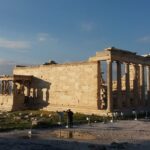
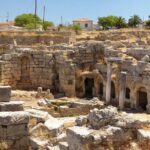
After coffee, the walk heads toward the Ancient Agora area. You’ll visit Poikile Stoa, where the tour frames the birth of Stoic philosophy.
This is a big moment because Stoicism is everywhere now—self-control, resilience, mental discipline. The useful part of hearing its origin connected to Poikile Stoa is that it stops Stoicism from becoming a motivational poster. You get a sense of where it started: a public space tied to discussion and daily civic movement.
The tour’s style shines here. You don’t just get definitions. You get the sense of how a philosophy like Stoicism grows out of a community that constantly confronts uncertainty—politics, war, the unpredictable mood of a crowd, and life that doesn’t follow your schedule.
Even if you only remember a couple of ideas after the tour, tying them to a place in Athens makes them more likely to stick.
Plaka and Anafiotika to the Tower of Winds: Cynics, Aiolos, and myth you can see
Next comes the Plaka area and Anafiotika, up near the foot of the Acropolis, with Cynic philosophers close by in the story the guide tells. Plaka and Anafiotika are perfect for this because they feel layered: old Athens isn’t only about grand temples; it’s also about neighborhoods, quirks, and people living close to power.
Then you’ll learn about the Tower of Winds. This is one of those Athens sights where you can either rush past or slow down and listen. In this tour, the Tower becomes a myth-meets-science lesson via Aiolos, keeper of the winds.
It’s a smart pairing: philosophers and myths both try to explain the world. The winds become a way to talk about rules, patterns, and why humans keep asking for meaning in forces they can’t control. When a guide ties a myth to an actual landmark, you end up remembering it later.
One more reason I like this part: the tour keeps mixing emotion and logic. Cynics bring attitude and challenge. Aiolos brings motion and atmosphere. Together, it feels less like an academic checklist and more like a lived Athens.
Areopagus Hill: finishing with the Acropolis view and Olympian myths
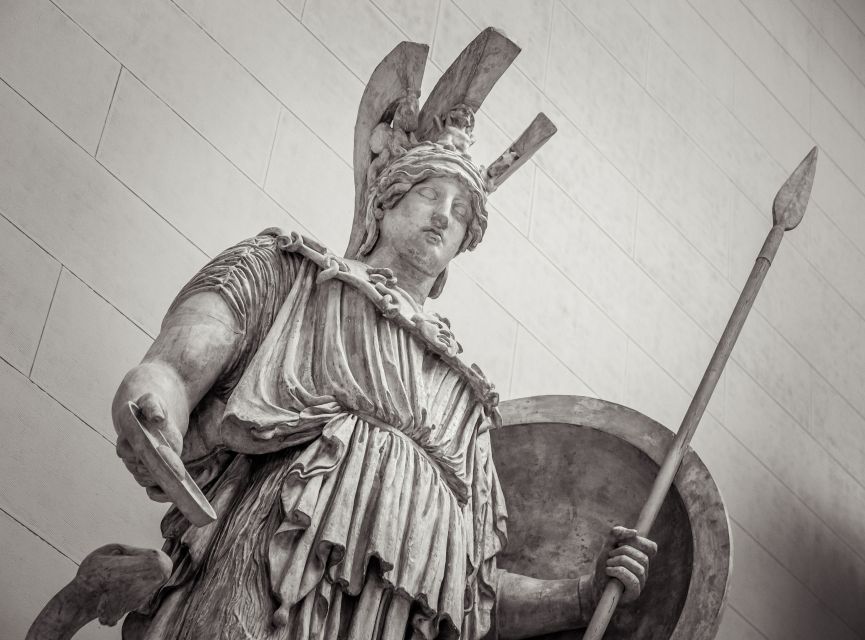
The tour ends at Areopagus Hill. This final stretch matters because it gives you a payoff: a breathtaking view of the Acropolis, plus more myths about the Olympian gods.
It’s not just a photo stop. The guide uses the view to make you feel the scale of ancient Athens—what people saw, where power sat, and how mythology framed the experience of standing beneath those monuments.
If you’re going to visit the Acropolis later, this finish is especially helpful. You’ll have a mental map of the stories you heard along the way, so your next day won’t feel like starting from scratch.
And if you’re short on time, this closing moment can still be a satisfying cap: you get a big Athens view plus myth explanations that make the city feel like more than a set of ruins.
Price and value: is $100 per person fair for 4 hours private?
At $100 per person for 4 hours, the price lands in the “serious but not crazy” zone—especially because it’s a private group and includes an expert English-speaking guide plus one Greek coffee or traditional refreshment.
Here’s how I judge the value:
- Private format: You get more Q&A and more flexibility than group tours. If you like asking questions or tailoring what you hear, this boosts the value.
- What’s included: The guide and the coffee are concrete inclusions. Taxes and fees are also covered, so there are fewer surprises.
- What’s not included: Entrance fees aren’t part of the price. If any stops require tickets, you’ll pay those on-site. The good news is that the tour centers on walking and storytelling through the city, so you may not have a ticket-heavy day.
If you want a guided Athens day that’s more than sightseeing, this price can make sense. If you mostly want to check boxes fast, you might feel it’s more than you need.
Who this tour is for (and who should skip it)
This works best if you:
- like philosophy, mythology, or both, and want them connected to real places
- enjoy conversations more than rigid lectures
- want a walkable, central route that shows you how Athens fits together
It’s not a great fit if you:
- need mobility-friendly routes. The tour is not suitable for people with mobility impairments.
- hate walking for hours, because the day is built around continuous movement with only short breaks.
Should you book this tour?
I’d book it if you want Athens with a brain and a story, not just a camera roll. The mix of Socrates/Plato, Epicurus and the Garden, Aristotle and the Lyceum, Stoicism at Poikile Stoa, plus the myth flavors of Apollo, Athena, Hermes, and Aiolos gives you a tour that’s easy to remember.
If you’re unsure, use this simple test: if you’ve ever wondered what Greek thinkers would say about modern life, or you like seeing ideas placed inside real streets and buildings, this is your kind of day. If you’d rather keep things strictly archaeological or strictly myth-only, you may find the philosophy layer adds more than you want.
FAQ
How long is the Athens Highlights: Myths & Philosophers private walking tour?
It lasts 4 hours.
Where do I meet the guide?
You meet your local guide outside Panepistimio Metro Station, and there’s also an option that starts at the University area.
Is the tour private and in English?
Yes. It’s a private group tour with a live English-speaking guide.
What’s included in the price?
The tour includes an expert tour guide, 1 Greek coffee or other traditional refreshment per person, and all taxes and fees.
Are entrance fees included?
No. Entrance fees to points of interest are not included.
Is the tour suitable for people with mobility impairments?
No. It is not suitable for people with mobility impairments.
Can I cancel and get a full refund?
Yes. You can cancel up to 24 hours in advance for a full refund.



More Walking Tours in Athens


More Tours in Athens



More Tour Reviews in Athens
- All Day Cruise -3 Islands to Agistri,Moni, Aegina with lunch and drinks included
★ 5.0 · 4,958 reviews