REVIEW · ATHENS
Athens City of Rebellion Small-Group Walk
Book on Viator →Operated by Culture Hunters · Bookable on Viator
Athens rebels on every corner. This 2.5-hour small-group walk keeps the story grounded in real places, from Monastiraki to Exarchia, while explaining how resistance shaped modern daily life. I love the way the tour jumps across eras without drowning you in dates, and I like that the pace is controlled for a group of up to 6.
Maelle, the guide mentioned in recent feedback, brings a fresh approach to “guided tour” as in: lots of context, good momentum, and time for questions. You get a clear thread from the Ottoman period to Greece’s later struggles for freedom and social justice, then you finish in a neighborhood where activism is part of the street scene.
One consideration: this isn’t a sit-and-stroll. It’s designed for people who can handle regular walking, and it’s not recommended for travelers with walking difficulties.
In This Review
- Key highlights worth your time
- A 2.5-hour walk that makes modern Athens make sense
- Monastiraki Square: where your walk begins
- Tzisdarakis Mosque and the Ottoman layer you can actually picture
- Ayìa Dynami (Sacred Power): where resistance could hide in plain sight
- Syntagma Square: resistance where politics plays out in public
- The Monument to the Unknown Soldier: ceremony with a political backbone
- The old royal palace after victory: power changes hands, buildings stay
- University of Athens and student liberty: why campuses matter
- Navarinou park: a citizen initiative in Exarchia’s orbit
- Exarchia: today’s resistance, street art, and real tensions
- Price and value: what $46.29 buys you in Athens
- Logistics that actually matter on this route
- Who should book this Athens rebellion walk
- Should you book? Yes, if you want the Athens you live in
- FAQ
- How long is the Athens City of Rebellion Small-Group Walk?
- What is the group size?
- How much does the tour cost?
- Where does the tour start and end?
- What stops are included?
- Are there admission fees for the stops?
- Is the tour ticket mobile?
- Is the tour near public transportation?
- Is it suitable for people with walking difficulties?
- What happens if the weather is bad?
Key highlights worth your time
- Small group size (max 6): easier questions and a more human pace.
- Political history, not just monuments: Ottoman, resistance networks, Nazi-era Athens, and modern social justice all connect.
- Syntagma Square’s layered meanings: palace history, the Tomb of the Unknown Soldier, and occupation-era references.
- Ottoman past made visible: Tzisdarakis Mosque helps you picture Athens under Ottoman rule.
- Exarchia as a living story: street art, citizen initiatives, and today’s tensions like police violence and gentrification.
- Free stop access: the listed admission is ticket-free at each point.
A 2.5-hour walk that makes modern Athens make sense

This is the kind of tour that helps you stop seeing Athens as only ancient stone and start seeing it as a city shaped by struggle and protest. It runs about 2 hours 30 minutes, so you’ll get a real narrative arc without feeling like you’re trapped on your feet all day.
The group is small (up to 6 people), which matters here. Modern Greek history is emotional and political, and it’s hard to ask questions when you’re packed in with dozens of people. With fewer guests, the guide can slow down when a topic needs context, then move on when you’re ready to keep walking.
Expect an urban route with frequent stops, short on-paper “admission free” visits, and a lot of interpretation. If you’re the type who likes connecting the dots between politics and place, you’ll get a lot out of this.
You can also read our reviews of more walking tours in Athens

Monastiraki Square: where your walk begins

Your tour starts in the Monastiraki area, at Pl. Monastirakiou 2. Monastiraki is one of those Athens hubs where you feel the city shifting from tourist eyes to local rhythms. That makes it a smart opening point: it’s lively, central, and historically layered.
From the start, the guide sets the tone: Athens’ rebellious spirit isn’t a side story. It’s built into how neighborhoods, squares, and institutions function. Even at this early stage, you’re not just looking around—you’re learning how to “read” the city.
Tzisdarakis Mosque and the Ottoman layer you can actually picture
Next you head to the Tzisdarakis Mosque, a key stop for understanding Greece’s Ottoman past. This isn’t presented as abstract history. You’re encouraged to imagine Athens under Ottoman rule and even how earlier architecture might have looked with an Ottoman-style presence at the Acropolis viewpoint (the tour explicitly asks you to picture the Acropolis with a minaret in the mind’s eye).
This matters because a lot of visitors treat the Ottoman period like a blank space between the ancient world and modern Greece. Here, that era becomes a practical foundation for understanding why later uprisings happened—and why certain symbols and spaces carried political weight.
Ayìa Dynami (Sacred Power): where resistance could hide in plain sight
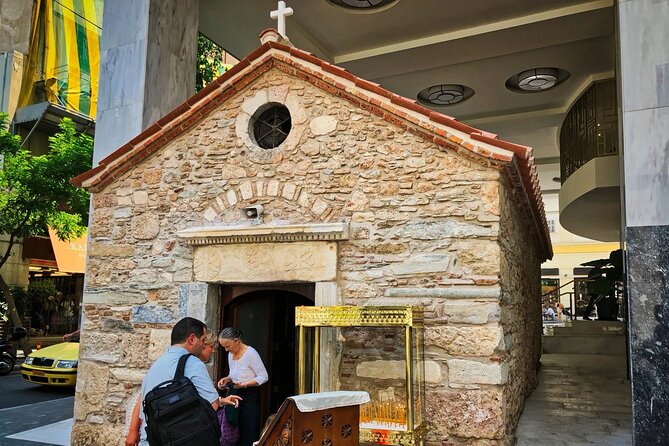
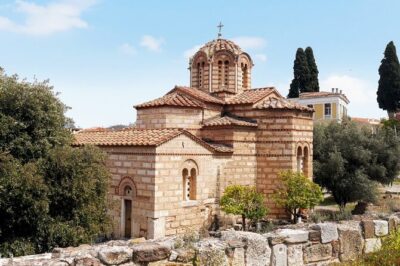
The tour then moves to the Holy Church of the Sacred Power (Ayìa Dynami). This stop zooms in on the idea that resistance networks didn’t only live in the shadows of streets—they also operated within everyday institutions.
You learn that the church was used by members of Greek resistance during the Ottoman occupation. Even if you know the broad outline of Greek independence, this kind of detail helps you understand how people organized and communicated when power was concentrated elsewhere.
It’s a reminder that for many ordinary Athenians, faith and civic action weren’t separate worlds. They could overlap when survival demanded it.
Syntagma Square: resistance where politics plays out in public
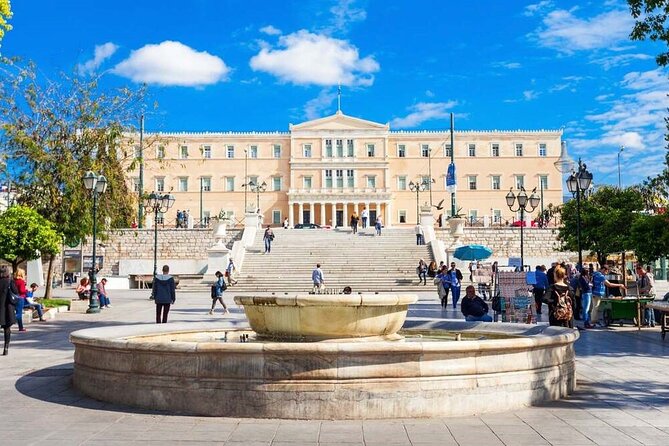
Syntagma Square is the next big stage, and it’s treated like the symbolic heart of modern Athens resistance. The tour points out how many different chapters have played out here: the old Palace of the King, the Tomb of the Unknown Soldier, and references tied to Nazi headquarters during the occupation.
The takeaway is simple: this square isn’t just a postcard spot for government buildings. It’s a place that has repeatedly served as a stage for power—and for pushback against it.
There’s also a stop at a building that is now a luxurious hotel, but the guide walks you through the fact that it saw darker moments when Nazis were in power in Athens. It’s the kind of contrast that makes you look twice at what you might otherwise ignore as “just another facade.”
You can also read our reviews of more city tours in Athens





The Monument to the Unknown Soldier: ceremony with a political backbone

After Syntagma, the tour focuses on the Monument to the Unknown Soldier. Here you learn about the ceremonial soldiers guarding the tomb and why their outfits are so distinct.
This stop feels less like a random photo moment and more like a lesson in how Greece uses ritual to communicate identity, memory, and state authority. For visitors who only connect this monument to modern tourism, it gives you a more grounded interpretation.
Even if you don’t get emotional about monuments (it happens), you’ll at least understand why people keep returning to this place whenever the topic of national memory comes up.
The old royal palace after victory: power changes hands, buildings stay
The walk then moves to the Old Palace of the First King in Athens. The point here isn’t palace trivia. It’s what happens after a revolution: the symbols of earlier rule often get replaced, repurposed, or reframed, but the city keeps those shapes.
The tour frames this period as a shift from resistance to a new kind of authority. You leave the stop with a clearer sense of how Greek political identity evolved after winning against the Ottomans—and how the city’s built environment participated in that change.
University of Athens and student liberty: why campuses matter
Next you reach the National and Kapodistrian University of Athens area. This stop is a reminder that resistance isn’t only street-level. Institutions also become tools—or targets—when political pressure rises.
The guide explains how students and universities became key factors in the fight for citizens’ liberties. That’s a powerful detail because it helps you connect why Athens has a history of civic activism tied to education and public debate. If you’ve ever wondered why protests often cluster near major academic buildings, this is the kind of context that makes the pattern logical.
Navarinou park: a citizen initiative in Exarchia’s orbit
From there, you head to Navarinou, a park described as a citizen initiative located in the alternative neighborhood of Exarchia. Even though it’s a small stop time-wise, it carries an important idea: people don’t only resist through dramatic confrontations.
Sometimes resistance looks like creating shared space—something practical where community life can happen. If you enjoy seeing activism as day-to-day infrastructure, you’ll appreciate this kind of stop.
Exarchia: today’s resistance, street art, and real tensions
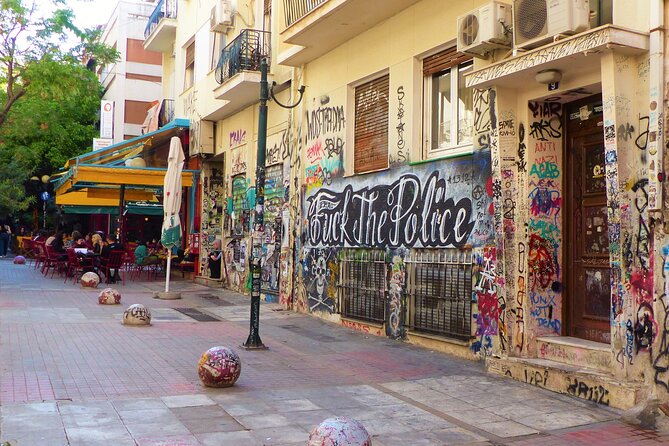
The final and biggest segment is Exarchia, often described as the epicenter of today’s resistance. You get multiple stops in the neighborhood, not just a single look-and-leave viewpoint.
The tour explains Exarchia as a place that welcomes anarchists, refugees, queers, and artists, and it connects that social mix to the neighborhood’s identity as an ongoing space for activism. You also get an honest accounting of tensions in the area—crisis, police violence, and gentrification are named as part of the current landscape.
What you can expect visually is expressive street art and the presence of citizens’ initiatives. The guide connects these to the longer legacy of years of rebellion, so it doesn’t feel like you’re just sightseeing murals. Instead, you’re learning how creativity and protest can share the same walls.
One practical thing to note: Exarchia is an active neighborhood. Even if the tour stays safe and respectful, you should go with an open mind and a realistic expectation of a place with ongoing social friction.
Price and value: what $46.29 buys you in Athens
At $46.29 per person, this isn’t a bargain in the absolute sense—but the value is clear when you look at what’s included.
You’re paying for:
- A small group capped at 6, which helps the guide keep the narrative tight.
- An organized route through modern Athens sites that connect Ottoman occupation, resistance, Nazi-era references, and contemporary social justice.
- Ticket-free admission at the listed stops, which keeps you from juggling costs mid-walk.
- A mobile ticket setup and a format designed for a smooth walking experience.
There’s also a hint of why timing matters: this type of tour tends to be booked ahead, with an average booking window around 15 days. If you want a spot during a busy travel week, earlier booking is a safer bet.
Is it worth it if you already plan to see ancient sites? Yes, because it gives you the missing layer: the Athens you’re walking through now. If your interests stop at classical ruins only, you might feel this tour is too focused on modern politics.
Logistics that actually matter on this route
This is a walking tour, about 2 hours 30 minutes, and it’s not recommended for walking difficulties. Sidewalks and street crossings can be uneven, and the schedule expects you to stay with the group.
Good news for navigation: the tour is near public transportation. You’ll also receive confirmation at booking, and you’ll use a mobile ticket.
Weather matters. The experience requires good weather. If it’s canceled due to poor conditions, you’ll either be offered a different date or a full refund.
Finally, the tour ends at Themistokleous 68 (Exarchia Square). That’s convenient because you finish right where the neighborhood story lands, rather than being dropped far away from your next plan.
Who should book this Athens rebellion walk
This tour is a great fit if you:
- Want context for modern Athens beyond ancient ruins
- Like understanding how protest movements shape cities
- Enjoy walking with a guide who explains the meaning behind major squares and institutions
- Want to experience Exarchia with guidance rather than just passing through
It might not be your best match if you:
- Need a fully accessible, minimal-walking format
- Prefer history focused only on classical antiquity
- Want a purely neutral, non-political tour experience
If you’re open to political themes and you want to understand why certain places feel charged, you’ll likely consider this a highlight.
Should you book? Yes, if you want the Athens you live in
Book this walk if you’re curious about how resistance changes a city’s identity. It’s focused, human-scale (max 6), and it connects eras in a way that helps the present feel less random.
Skip it if walking is hard for you, or if you’re not interested in modern struggles and activism. For the rest of us, this is one of the best ways to leave Athens feeling like you understand not only where people have been, but how they kept fighting to decide where things go next.
FAQ
How long is the Athens City of Rebellion Small-Group Walk?
The tour lasts about 2 hours 30 minutes.
What is the group size?
It’s a small group with a maximum of 6 travelers.
How much does the tour cost?
The price is $46.29 per person.
Where does the tour start and end?
It starts at Pl. Monastirakiou 2, Athina 105 55, Greece and ends at Themistokleous 68, Athina 106 81, Greece (Exarchia Square).
What stops are included?
The tour includes Monastiraki, Tzisdarakis Mosque, Holy Church of the Sacred Power (Ayìa Dynami), Syntagma Square, the Monument to the Unknown Soldier, the Old Palace of the First King area, National and Kapodistrian University of Athens, Navarinou, and Exarchia.
Are there admission fees for the stops?
All listed admissions are ticket-free.
Is the tour ticket mobile?
Yes, it uses a mobile ticket.
Is the tour near public transportation?
Yes, it is near public transportation.
Is it suitable for people with walking difficulties?
No. It is not recommended for travelers with walking difficulties.
What happens if the weather is bad?
The tour requires good weather. If it’s canceled due to poor weather, you’ll be offered a different date or a full refund.
More City Tours in Athens

More Walking Tours in Athens


More Tour Reviews in Athens
- All Day Cruise -3 Islands to Agistri,Moni, Aegina with lunch and drinks included
★ 5.0 · 4,958 reviews