REVIEW · ATHENS
Athens: Ancient Agora E-Ticket and Audio Tour
Book on GetYourGuide →Operated by Clio Muse Tours · Bookable on GetYourGuide
Fast-moving ruins can still feel personal. This Ancient Agora e-ticket plus offline audio turns the site into a clear story you can walk at your pace. I like the smooth, fast entry using a pre-booked e-ticket, and I really enjoy how the commentary keeps a relaxed rhythm while you move between key spots. One drawback to plan for: navigation can feel a bit vague at times, and the audio can act oddly when you zoom in to take photos.
The best part is that the Agora explains democracy as something built, argued, and defended—not just a museum label. It’s also a smart choice if you want more “how it worked” than pure monument-gazing. Still, you’ll want to have the right phone and enough battery, since the tour is designed to run offline and there’s no internet on site.
In This Review
- Key Highlights at a Glance
- Ancient Agora With a Phone: Why This Works Better Than a Guidebook
- Enter With an E-ticket: Getting Through the Validation Like a Pro
- Offline Audio on Your Smartphone: Download First, Then Let It Guide You
- The Agora Route: Solon’s Reforms to the Theatre of Dionysus
- Start Near the Temple of Hephaestus
- Move Up Toward the Tholos and the Bouleuterion Ruins
- Museum of the Ancient Agora: Where Democracy Meets Daily Life
- Pnyx and the Viewpoints: Where Citizens Gathered
- Mars Hill and the Rock of Ares: Add Iron to the Story
- Up to Philopappos: The Prison of Socrates
- Finish Near the Theatre of Dionysus
- Museum + Walking Mix: What to Prioritize When Time Is Tight
- The Audio Quality and Stop Accuracy: Great Content, Some Map Friction
- Value for $30: When This Feels Like a Smart Buy
- Who Should Book This E-ticket + Audio Tour
- Should You Book the Ancient Agora E-ticket and Audio Tour?
- FAQ
- How long does the Ancient Agora e-ticket and audio tour take?
- Is the audio tour available offline?
- Which languages are included in the audio tour?
- Do I need headphones and a charged smartphone?
- Does the site have internet access for the audio?
- Are GetYourGuide vouchers accepted at the Ancient Agora entrance?
- Is this tour suitable for wheelchair users?
Key Highlights at a Glance

- Fast entry with a pre-booked e-ticket and on-site validation machines
- Offline audio with an interactive map to help you avoid roaming charges
- A democracy storyline that connects Solon, the Bouleuterion, and Socrates
- Stops that mix big ideas with human details, including Samuel the Cobbler
- Great views from Mars Hill, the Pnyx, the Rock of Ares, and Philopappos
- A strong finish near the Theatre of Dionysus (the oldest theatre of the world)
Ancient Agora With a Phone: Why This Works Better Than a Guidebook

If Athens is your first stop in Greece, the Ancient Agora can feel like a lot of stones. The trick is turning the stones into a timeline you can follow while you walk. This experience does that with a pre-booked e-ticket plus a self-guided audio tour on your phone. You don’t wait for a group, and you don’t have to keep flipping pages in harsh sunlight.
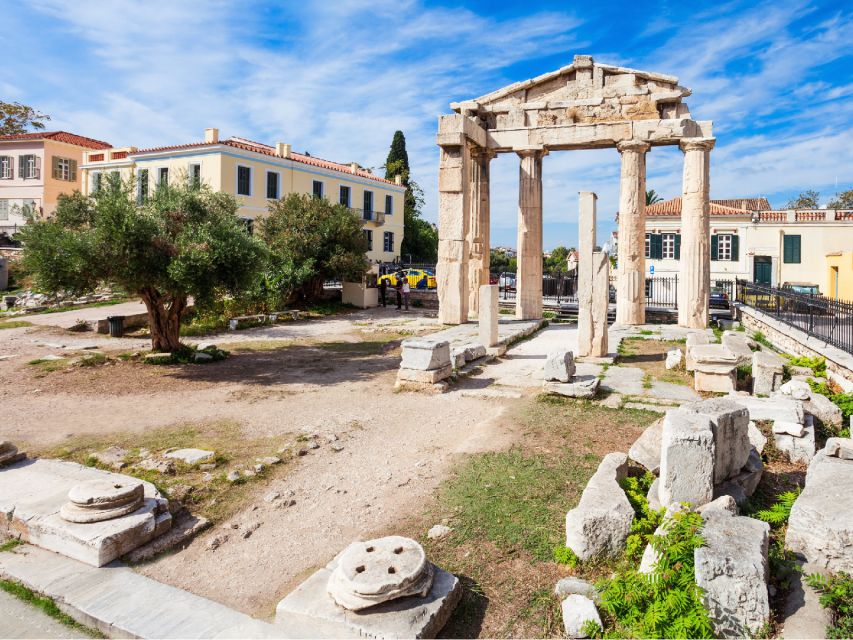
I also like that the tour is built around key political moments and real locations you can actually stand in. You start near the Temple of Hephaestus and move through the areas tied to Solon’s reforms, the law-making space of the Bouleuterion, the Pnyx hill (where citizens gathered), and up toward the prison of Socrates. That’s a lot more than a “here’s what you’re looking at” approach.
The tradeoff is typical for self-guided tours: you’re responsible for your direction and pace. Some parts can feel less obvious on the ground, so go in expecting to slow down and check the map when paths branch.
You can also read our reviews of more tours and experiences in Athens


Enter With an E-ticket: Getting Through the Validation Like a Pro
The e-ticket setup is the whole point of this combo. After you book, you get a separate email from the local partner with your e-ticket and audio instructions—so check spam, just in case. At the entrance, you’ll go to the validating machines. Your voucher alone won’t get you in: GetYourGuide vouchers are not accepted at the entrance. You need that e-ticket (printed or on your phone).
Also plan for the fact that the meeting point can vary by option booked. The instructions in that email are what matter for where to go next. If you like to be confident, take 2 minutes right after you arrive to open your email, find your e-ticket, and confirm where to validate before you start walking.
One small practical note: there’s no luggage or large bags allowed, so travel light. If you’re coming straight from the airport with a daypack, keep it manageable—this site is best when you can move freely.
Offline Audio on Your Smartphone: Download First, Then Let It Guide You
This is a self-guided tour, so your phone becomes your tour guide. The good news: the content is offline, and there’s an offline interactive map included to help you avoid roaming charges. Download both the e-ticket and the audio tour before you visit. On-site internet access isn’t part of the plan, so don’t rely on signal.
Your phone needs to be compatible too. The audio tour isn’t compatible with Windows phones, and older Apple devices won’t work (examples given include iPhone 5/5C and older, iPod Touch 5th gen and older, iPad 4th gen and older, and iPad Mini 1st gen). If your device is older, check compatibility before you leave your hotel.
I’d also bring headphones and keep your battery topped up. The tour includes audio in English, Italian, Greek, German, Spanish, and French, but none of that helps if your phone dies halfway up a hill. Pack the simple stuff:
- Charged smartphone
- Headphones
- Comfortable shoes
A real-world pacing tip: give yourself time for museums and viewpoints. The audio is designed for a leisurely walk, not a sprint.
The Agora Route: Solon’s Reforms to the Theatre of Dionysus

This route is built like a political story with physical landmarks. You’re not just visiting random ruins—you’re walking the geography of democracy.
Start Near the Temple of Hephaestus
Your tour begins with a big-picture setup at the foot of the hill where the Temple of Hephaestus still stands. You’ll learn about Solon and the legal reforms that helped shape early civic life. The point isn’t to memorize dates—it’s to understand the idea of democracy as a legal and social shift, not a sudden invention.
If you’ve ever wondered how a city becomes a place where citizens can influence decisions, this opening makes that feel concrete. It also gives you something to look for as you move: laws, councils, assemblies, and the systems that kept them running.
You can also read our reviews of more tours and experiences in Athens




Move Up Toward the Tholos and the Bouleuterion Ruins
Just uphill from the Tholos, you’ll encounter the ruined Bouleuterion, where 500 Athenians met daily to draw up laws and proposals for the popular assembly. This is one of the most important “mechanics” stops on the tour.
Even if you don’t know much Greek political history, the audio helps you connect the dots between:
- discussion and drafting (the council)
- debate and voting (the assembly)
- how the city’s rules shaped civic power
This is also where you’ll start hearing anecdotal stories about famous Athenians like Aristides the Just and Pericles, helping the politics feel lived-in.
Museum of the Ancient Agora: Where Democracy Meets Daily Life
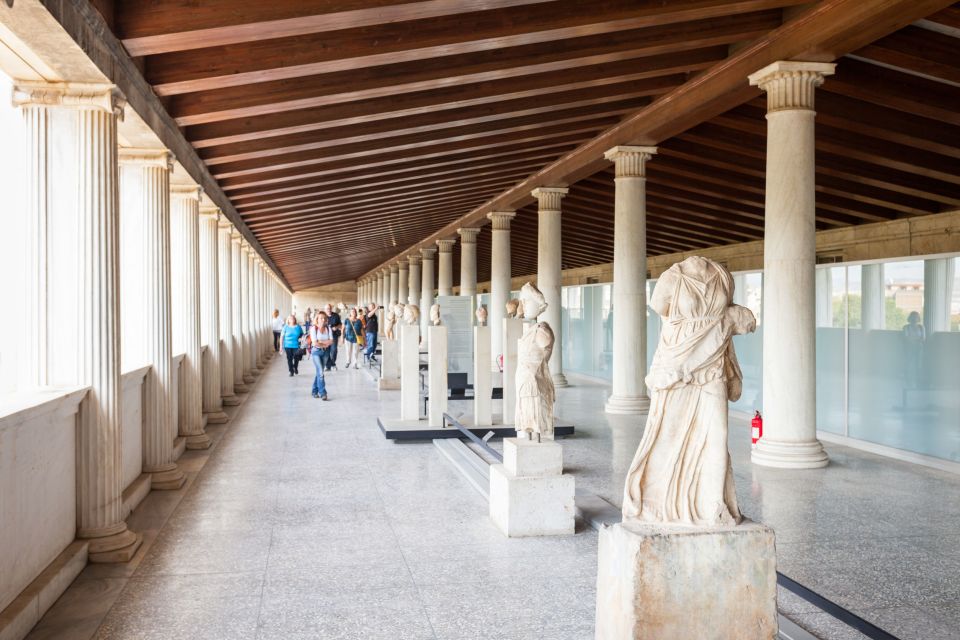
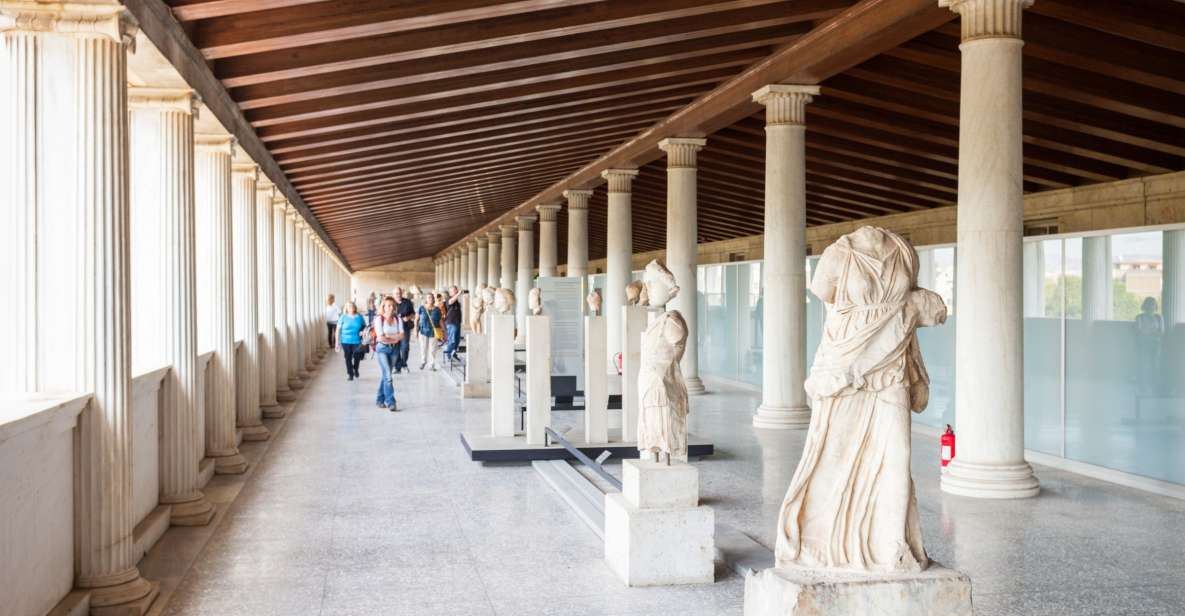
At some point, you’ll spend time in the Museum of the Ancient Agora. This is a big deal because it anchors the outdoor ruins with context.
In the museum, you’ll learn about the clever—and at times harsh—ways Athenians defended their democratic system from harmful influence. The exhibits are meant to make you understand that democracy required enforcement, not just ideals.
And here’s a tip I’m glad you have: don’t skip the 2nd floor. It offers an elevated view of the Panathenaic Way, and it’s the kind of perspective many people miss because they hurry through.
Pnyx and the Viewpoints: Where Citizens Gathered
From the area around Pnyx, you get picture-postcard views toward the Acropolis. The Pnyx hill matters because it was tied to citizens assembling and debating major decisions.
This is where the audio’s story starts clicking with the landscape. From where you stand, you can imagine why the city built key political functions on certain hills and ridges. You’re not only hearing about democracy—you’re seeing why the setting mattered.
Mars Hill and the Rock of Ares: Add Iron to the Story
As you work through the viewpoints around Mars Hill and the Rock of Ares, the tour keeps pointing you back to civic identity and authority. These spots aren’t just for photos; they connect to the way Athenians thought about order, trials, and public judgment.
If you like your history with atmosphere, this part helps. You’re standing where people once argued, watched, judged, and defended their way of life.
Up to Philopappos: The Prison of Socrates
Later on, as you ascend toward Philopappos, you’ll reach insights into the prison of Socrates and learn about the philosopher’s life and death. This stop works because it turns democracy’s ideals into consequences.
It’s not about making Socrates a symbol only—it’s about showing what happened to a thinker inside a political system. When the audio connects philosophy to real locations, the story stops being abstract.
Finish Near the Theatre of Dionysus
Your tour ends near the Acropolis archaeological site, in front of the theatre of Dionysus. This is one of the most satisfying endings because the audio takes you from political decision-making to public cultural life.
You’ll see (and hear about) the oldest theatre of the world and the actual place where tragedies connected to playwrights like Aeschylus, Sophocles, and Euripides were staged. That final link matters: Athens wasn’t only debating in assemblies; it was also questioning and dramatizing values through performance.
Museum + Walking Mix: What to Prioritize When Time Is Tight
You’ve got about 90 minutes to 2 hours, depending on the time you start. With that window, you need to pick how you’ll spend the minutes.
If you love context and want the story to land, prioritize:
- the museum time
- the viewpoint stops (especially Pnyx and the Rock of Ares)
- the Socrates area
If you’re more in “see the biggest sites fast,” you can still do it—but be ready to move efficiently. The audio is paced for a relaxed visit, so skipping the museum floor that has the best views (the 2nd floor) can feel like losing the “aha” moment.
Also consider timing. Athens heat can be real. Doing this early in the morning or later in the afternoon keeps the walk more enjoyable and helps you avoid forcing everything into survival mode.
The Audio Quality and Stop Accuracy: Great Content, Some Map Friction

The audio itself is the star. It’s clear at a relaxed pace, and it does a good job balancing big political ideas with stories about real people. It’s also written in a way that doesn’t dumb everything down, and you’ll get more out of it if you enjoy digging into concepts.
There are a couple snags to keep in mind:
- Navigation directions can be a little vague, especially where paths run parallel or signage isn’t obvious.
- Some stops may not feel like they line up perfectly with what you expect on the ground.
- If you pause the audio to zoom while taking photos, playback can cut out or behave oddly. Keep your photo habit simple: take the picture, then resume.
My advice: treat the audio map as your safety net. Check it whenever you feel uncertain, and don’t be afraid to slow down for 30 seconds just to confirm you’re on the right line.
One more note: the experience is self-guided, so you won’t get a live guide to clarify confusion on the spot. If you prefer instant answers, this might feel less satisfying than a guided group tour.
Value for $30: When This Feels Like a Smart Buy
At around $30 per person, you’re paying for two things:
1) the Ancient Agora e-ticket entry (with fast handling via pre-booking and validation)
2) the offline smartphone audio tour plus an offline interactive map
That’s good value when you want flexibility and don’t want to pay for a live guide on top. It’s also a strong deal if you’ll actually use the audio—because that audio is doing most of the teaching.
It’s not as good value if you plan to rely only on sightseeing without listening. The tour works best when you treat the phone like a guide and let the story connect the ruins.
Also remember what’s not included:
- No live guide
- No smartphone or headphones
- Food and drinks
- Hotel pickup/drop-off
- App compatibility limits for certain devices
If you’re already traveling with a phone and headphones, this combo can be one of the more efficient ways to make the Ancient Agora feel understandable.
Who Should Book This E-ticket + Audio Tour

This experience fits best if you:
- want to explore at your own pace rather than follow a group
- enjoy history stories that explain systems (how democracy operated)
- like viewpoints and site-to-site transitions, not only museum rooms
- can handle a smartphone-based plan and want offline access
It may be less ideal if you:
- need wheelchair access (this is not suitable for wheelchair users)
- get frustrated by navigation challenges on foot
- don’t want to manage downloading audio and keeping your battery alive
Also, it’s a nice alternative if you’re comparing the Agora to the Acropolis. The Agora route focuses on how the city governed itself, not just grand monuments—so it can feel more personal and more practical.
Should You Book the Ancient Agora E-ticket and Audio Tour?

Yes, if you want a smart, low-stress way to understand Athens beyond postcards. The offline audio, clear pacing, and democracy-focused route make the Ancient Agora easier to connect to than wandering without a plan. I’d especially recommend it if you’re the type who likes your history with names like Solon, Pericles, and Socrates tied to specific places you can stand in.
Skip it or think twice if your phone is old or incompatible, you don’t want to manage offline downloads, or you’re counting on step-by-step navigation at every corner. And if you’re traveling with accessibility needs, this one won’t fit.
If you’re ready to walk, listen, and look closely, this is a solid buy.
FAQ
How long does the Ancient Agora e-ticket and audio tour take?
The experience runs about 90 minutes to 2 hours. Exact starting times depend on availability.
Is the audio tour available offline?
Yes. You’re expected to download the audio tour before your visit so you can use it offline, including an offline interactive map.
Which languages are included in the audio tour?
The audio tour is available in English, Italian, Greek, German, Spanish, and French.
Do I need headphones and a charged smartphone?
Yes. Headphones are not included, and you’ll want a charged smartphone to run the audio and access the e-ticket.
Does the site have internet access for the audio?
No. There is no internet access in the archaeological site, which is why downloading beforehand matters.
Are GetYourGuide vouchers accepted at the Ancient Agora entrance?
No. GetYourGuide vouchers are not accepted at the entrance. You’ll need the e-ticket you receive in a separate email.
Is this tour suitable for wheelchair users?
No. It is not suitable for wheelchair users.




More Tickets in Athens


More Tours in Athens






More Tour Reviews in Athens
- All Day Cruise -3 Islands to Agistri,Moni, Aegina with lunch and drinks included
★ 5.0 · 4,958 reviews