REVIEW · ATHENS
Athens: Acropolis Entry Ticket & VR Audio Guided Tour
Book on GetYourGuide →Operated by SIGHTS OF ATHENS-GRAY LINE · Bookable on GetYourGuide
The Acropolis, timed and paced for real life. This experience pairs a pre-reserved ticket with a VR audio app, so you can hit the big monuments with less waiting and more context than a simple walk-up visit. I like that the audio tour runs in multiple languages and that the VR feature helps you picture what the hill and surroundings looked like in ancient Athens.
Two other things I’d call out: you start at the Theater of Dionysus area (a smart launch point), and the route naturally works its way toward the Parthenon and other key buildings on the summit. The main drawback is that it’s self-guided, so you’re going to rely on your phone and headphones more than you would with a live guide—plan for screen glare and battery life, and don’t treat the app like it’s magic.
If you want the experience to feel smooth, go in ready: bring headphones, a charged smartphone, and use the PDF ticket at the Main or South entrance at your selected time slot.
In This Review
- Key highlights worth your attention
- What you get: ticket + VR app + multilingual self-guided audio
- Planning your 2-hour visit: timed entry and the entrance that matters
- Your route up: Theater of Dionysus to the Parthenon core
- The monuments you’ll actually see, and how to notice them
- Theater of Dionysus: set the scene for the hill
- Parthenon: Athena’s statement on the skyline
- Propylaea: the grand entry feeling
- Temple of Athena Nike: small but meaningful
- Erechtheion: the sacred complexity
- Odeon of Herodes Atticus: performance heritage above the city
- How the VR and audio guide work on-site (and how to use it well)
- Timing on the hill: views, sun, and keeping your pace
- Price and value: is $53 a good deal for Acropolis entry?
- Who should book this Acropolis VR experience (and who might skip it)
- Should you book this tour? A practical checklist
- FAQ
- How long does the Acropolis VR audio guided tour take?
- What is included in the price?
- What languages is the audio guide available in?
- Where do I enter the Acropolis?
- What do I need to bring?
- Can I change the entry time after booking?
- Are tickets refundable?
Key highlights worth your attention
- Timed entry that actually helps: you get a specific date and time slot and enter during a tight window.
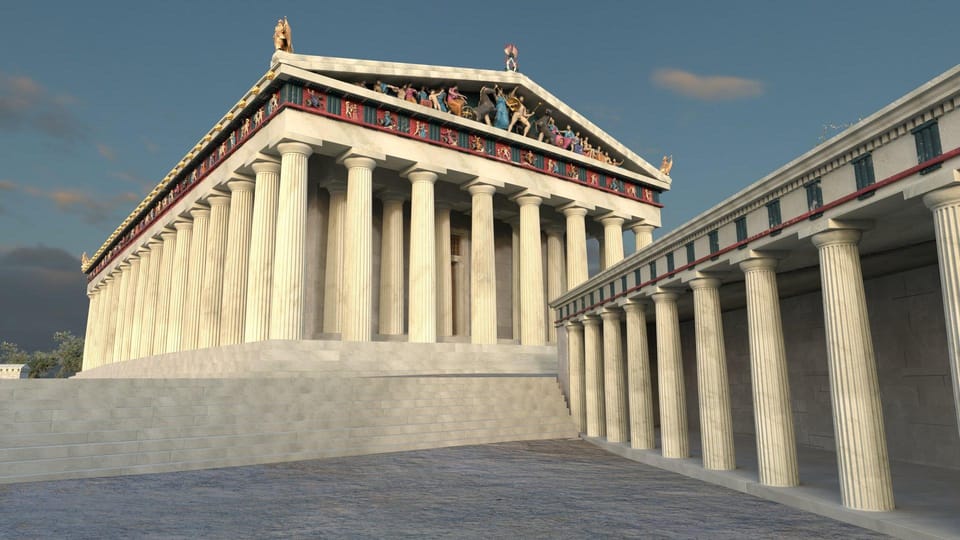
- VR audio guide: a VR feature shows how the Acropolis hill area looked in ancient times.
- Multilingual audio tour: available in English, Spanish, German, Italian, Polish, Russian, Chinese, French, Portuguese, Arabic, and Japanese.
- Route starts at Theater of Dionysus: a logical beginning before the Parthenon zone.
- A self-guided visit means phone management: the app and audio depend on your device working well in bright outdoor conditions.
- Value for independent visitors: you skip the line, get a ticket plus audio/VR, and move at your own pace.
What you get: ticket + VR app + multilingual self-guided audio

You’re paying for a full set of museum-style tools, not a guided lecture. Your package includes the Acropolis and Parthenon entry ticket, plus a virtual reality application and a multilingual audio tour you use on your own.
That mix matters. The Acropolis is famous, but it can also feel like a pile of stone if you’re only looking. The audio tour helps you connect names and functions to what you’re seeing, while the VR feature gives you that crucial “oh, that’s what it might have looked like” effect. You’re still walking outdoors and reading the site with your own eyes, but you’re not totally guessing.
Also, since this is self-guided, you don’t get a live guide. If you love asking questions or want someone to explain political context and myth in real time, you might prefer a live-guided tour. If you want control over your pace, this format can feel very freeing.
You can also read our reviews of more tours and experiences in Athens



Planning your 2-hour visit: timed entry and the entrance that matters
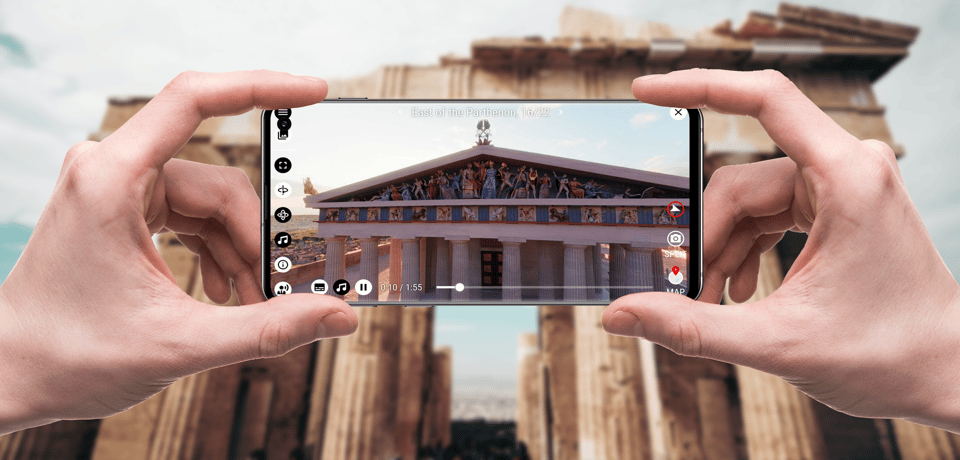
This runs about 2 hours, and your entry is tied to a specific time slot you pick during booking. Once you select your date and time, you can’t change it, so choose when you’ll realistically be there.
Entry is allowed only at your chosen time or within a 15-minute window before or after. That sounds strict because it is. The best way to handle it is simple: build in extra minutes to get from wherever you’re starting that day to the entrance area.
Your ticket is delivered by email or WhatsApp messenger, and you’ll receive instructions for downloading the VR/audio app the day prior (including messages that might land in spam). The message you get right before you go is the one to follow for how to enter and what to download.
Important on-site detail: you should proceed to the Main or South entrance of the Acropolis and present your PDF ticket on your phone or printed. You can enter from the south or north entrances, but the instruction you receive around booking time is what you should use as your rule.
Your route up: Theater of Dionysus to the Parthenon core

The visit is organized as a walking circuit that starts with the Theater of Dionysus and then heads toward the Parthenon area. Starting here is helpful because the Theater lets you get your bearings in terms of the whole hill’s layout. You’re not jumping straight to the most photographed building; you’re easing into the site.
From there, you move toward the Parthenon, a UNESCO World Heritage Site dedicated to Athena. The audio guide is designed to tie what you see to the purpose of each structure as you progress—so instead of just spotting columns and walls, you get a sense of what each building was for.
A practical way to use your time: slow down before the Parthenon zone and let the audio guide do its job. Once you’re in full sun and your brain is in photo-taking mode, it’s easy to miss the little connections the guide is making for you.
You’ll then continue through the entrance and temple spaces that sit between the visitor path and the high point:
- Propylaea (the monumental entrance area)
- Temple of Athena Nike (a smaller temple that still carries big symbolism)
- Erechtheion (a building known for its distinct layout and sacred associations)
- Odeon of Herodes Atticus (another major performance-related structure)
The sequence matters because these aren’t random stops. They’re part of how the Acropolis functioned as a religious and public center.
The monuments you’ll actually see, and how to notice them
Here’s how to make your walk feel like more than a sightseeing checklist. The goal is to look with purpose: each stop has a job, and the audio tour is there to point that out.
Theater of Dionysus: set the scene for the hill
You begin at the Theater of Dionysus, which gives you an immediate sense of how people gathered at this site. Even if you’re not sitting in the seats, the shape of the theater explains why this location mattered beyond worship—it was tied to public life and performance.
Tip: when you’re at the theater area, take a moment to get the orientation of the hill in your mind. Later, when you’re moving between temples and gateways, your sense of direction improves fast.
You can also read our reviews of more guided tours in Athens





Parthenon: Athena’s statement on the skyline
The Parthenon is the big one, and the audio guide frames it around Athena—the goddess of wisdom and warfare. That focus helps you interpret the building’s importance rather than treating it like just the most famous postcard.
Don’t race through the Parthenon stop. Spend time looking at how the structure sits relative to the rest of the hill and the visitor paths. If you only glance once, you lose the chance to build a mental map.
Propylaea: the grand entry feeling
The Propylaea is your move from open approach into the heart of the sacred complex. This is a good place to pause, because the architecture helps you understand that the Acropolis isn’t only one temple—it’s a designed experience of approach and arrival.
Temple of Athena Nike: small but meaningful
The Temple of Athena Nike is easy to overlook if you’re only chasing the biggest structures. But that’s exactly why it’s worth paying attention. The audio tour’s job here is to help you zoom out: yes, it’s a smaller temple, but it’s still part of Athena’s story on the hill.
When you stop here, don’t just take a photo and go. Let the audio guide tell you what to look for, then re-look with that in mind.
Erechtheion: the sacred complexity
The Erechtheion is another place where details matter. It’s not just a block of stone; it’s tied into the sacred identity of the Acropolis. If you pay attention to the audio narration here, your understanding of the site gets more layered.
A good technique: listen to the start of a section, look around for the key features the guide references, then move on once you can “see” the explanation in stone.
Odeon of Herodes Atticus: performance heritage above the city
The Odeon of Herodes Atticus adds a different flavor to the day. It reinforces that the Acropolis wasn’t only for rituals—it also hosted performances and public gatherings.
If you’re the kind of traveler who likes that human connection, this stop is a good reminder. You’re standing in a place meant for audiences, not just monuments.
How the VR and audio guide work on-site (and how to use it well)
The VR component and the audio narration are the heart of this experience. In theory, it’s straightforward: you download the VR/audio guide instructions ahead of time, then use the app as you walk.
In practice, the system depends on your device and your willingness to manage it outdoors. The good news: the app is described as easy to use, with instructions available in multiple languages. The tough news: bright sun can make screens harder to read, and you’ll want the phone available when you need it.
Here’s how to avoid the most common annoyances based on real-world use:
- Bring headphones: earphones are not included. Use your own wired buds or small earbuds.
- Charge your phone fully before you start. Battery drain is a real risk with VR/audio.
- Plan a backup power option if you have one (even a small external battery can save your day).
- Expect some manual attention: the audio isn’t always triggered perfectly at each info point. Use a quick check of where you are in the audio track when you move from one monument to the next.
- If tracks jump back or restart, don’t panic. Just re-select the right point and continue. The route is designed so you can recover without derailing your whole timing.
One more thing: don’t make your visit a phone scavenger hunt. Use the audio like a guide, not like a dependence. Glance at the screen, listen, then look with your eyes. You’ll enjoy the site more and you’ll keep your bearings.
Timing on the hill: views, sun, and keeping your pace
This is a hilltop walk with big open areas. You’ll get views over Athens, the surrounding mountains, and even the Aegean Sea in the distance, depending on weather and light.
Because it’s timed entry and self-guided, you’ll set your own pace. That’s a plus if you hate being herded. It’s also a risk if you’re prone to wandering slowly with no plan.
My practical pacing advice:
- Spend extra time at the Parthenon zone, not only for photos but to let the narration connect ideas.
- Don’t get stuck redoing audio while you miss the best light for the views.
- Build in a small buffer at the end, so you’re not panicking if the app takes a minute to load.
If you’re visiting in hot months, treat your phone like it’s working hard in the sun, and take short breaks in the shade when you find it.
Price and value: is $53 a good deal for Acropolis entry?
At $53 per person, you’re paying for a regular adult ticket plus a VR app and a self-guided multilingual audio tour. What makes that feel like value is that you’re also getting skip-the-line entry through a separate entrance.
So you’re not just buying a ticket. You’re buying time back—less waiting—and narration that helps you understand what you’re looking at while you walk.
The catch: there’s no live guide, no earphones included, and you still have to manage your own phone. If you were hoping for a human to explain context and answer questions, this won’t replace that.
Also note the admission rule: the package includes a regular adult ticket, and it must be purchased at full price regardless of age. If you’re traveling with kids or students and want cheaper admission, you’ll need to contact the Acropolis Ticket Office directly for any reduced-price options.
Who this pricing makes sense for:
- You like self-paced travel.
- You want less queue time.
- You’ll actually use the audio and VR tools while you’re there.
- You’re comfortable navigating a timed entry site without a live group leader.
Who should book this Acropolis VR experience (and who might skip it)
You’ll probably love this if you want autonomy. Start at Theater of Dionysus, follow the audio, and take your time at the Parthenon and the surrounding temples without someone constantly calling out, We’re moving.
You might want to choose something else if:
- You don’t want to rely on a smartphone during your visit.
- Your plan depends on a live guide or instructor.
- You’re traveling with a baby stroller or pets, since those aren’t allowed.
It also suits travelers who care about languages. The audio guide supports many languages, including Arabic and Japanese, so it’s not just an English-only experience.
And if you use a wheelchair, good news: it’s described as wheelchair accessible.
Should you book this tour? A practical checklist

Book it if you want a smart middle ground: real Acropolis access without the stress of crowds. The ticketed time slot plus skip-the-line entry is the backbone of the value here, and the VR/audio tools make the monuments easier to understand.
Before you click confirm, check your readiness:
- Can you arrive within your time slot window?
- Do you have headphones and a fully charged smartphone?
- Are you okay with a self-guided experience where you manage the app while walking?
- Do you have a plan if your screen is hard to read in sun or if audio doesn’t behave exactly as expected?
If those boxes are yes, this is a strong choice for seeing the Acropolis efficiently and making your visit feel connected, not just crowded photos.
FAQ
How long does the Acropolis VR audio guided tour take?
The duration is listed as 2 hours.
What is included in the price?
The package includes an entry ticket for the Acropolis and Parthenon, a virtual reality application, and a multilingual self-guided audio tour.
What languages is the audio guide available in?
The audio guide is available in English, Spanish, German, Italian, Polish, Russian, Chinese, French, Portuguese, Arabic, and Japanese.
Where do I enter the Acropolis?
You can enter from the north or south entrance. Your instructions also say to proceed to the Main or South entrance and present your PDF ticket.
What do I need to bring?
You should bring headphones and a charged smartphone.
Can I change the entry time after booking?
No. Once selected, the date and entry time slot cannot be changed.
Are tickets refundable?
Yes, free cancellation is available up to 24 hours in advance for a full refund.




More Tickets in Athens



More Tours in Athens



More Tour Reviews in Athens
- All Day Cruise -3 Islands to Agistri,Moni, Aegina with lunch and drinks included
★ 5.0 · 4,958 reviews