REVIEW · ATHENS
Athens: Acropolis and Parthenon Guided Walking Tour
Book on GetYourGuide →Operated by Athenian Tours · Bookable on GetYourGuide
You feel the whole ancient world tilt toward you at the Acropolis. This guided walking tour keeps the focus tight: you move between the key monuments, get skip-the-line access, and hear clear stories that connect the stones to daily life in Athens.
I especially like two things: the tour’s smart pacing through crowded areas, and the way your guide explains what you’re looking at (architecture, myth, and civic life) without turning it into a lecture.
The main thing to consider is logistics. This is a hill walk with stairs, and it’s not suitable for people with mobility impairments, wheelchairs, or strollers—also, there’s no elevator use on group tours.
Key moments worth your time
- Skip-the-line tickets that help you get into the Acropolis sights quickly
- Theater of Dionysus stop, with context for ancient comedy and tragedy
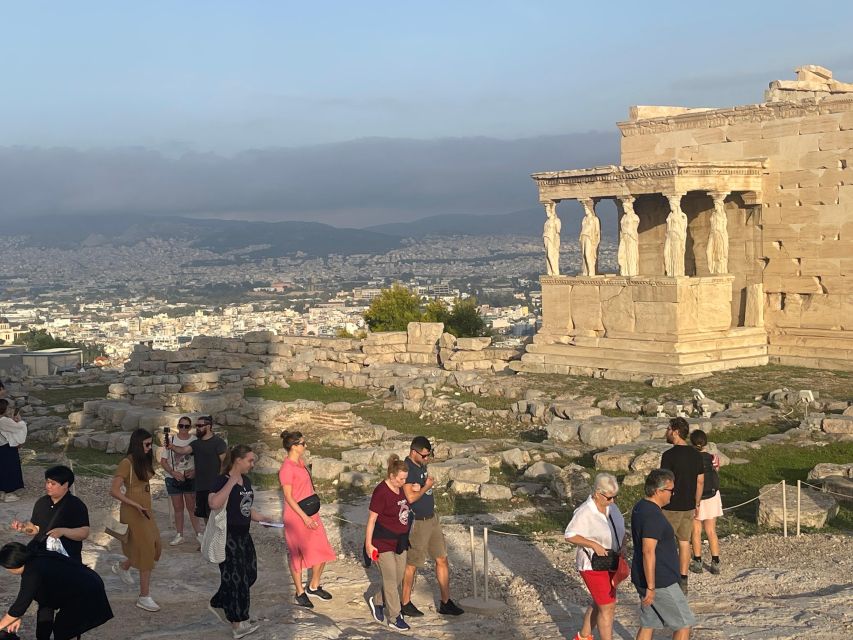
- Parthenon + Erechtheion explained in plain language, including the six female figures
- A route that threads through big-name stops without wasting your energy standing in queues
- Disposable earphones (for groups over 5) to keep the guide’s voice clear when it’s crowded
- A lineup of guide styles seen in past groups, including standouts like Simon, Iris, and Alexia
In This Review
- Two Hours on the Acropolis: why this tour format works
- Meeting at Mitsaion 2 and getting in without wasting your morning
- Theater of Dionysus: where ancient plays turned politics into entertainment
- Asklepieion and Odeon of Herodes Atticus: religion, healing, and Roman memory
- Temple of Athena Nike and the climb to the Propylaea gateway
- Parthenon: the civic symbol your guide makes legible
- Erechtheion: the six female figures and the asymmetry that makes it human
- How the guide quality shows up (and why guide names matter)
- Tickets, earphones, and the small rules that affect your experience
- Price and value: what $35.57 gets you in Athens
- What this tour suits best—and who should consider other options
- Should you book the Acropolis and Parthenon Guided Walking Tour?
- FAQ
- How long is the Acropolis and Parthenon guided walking tour?
- Where do I meet my guide?
- Is there skip-the-line access included?
- What does the tour include for hearing the guide?
- Are food and drinks included?
- Is the elevator available on this tour?
- What should I bring with me?
- Is this tour suitable for young children or people with mobility issues?
Two Hours on the Acropolis: why this tour format works
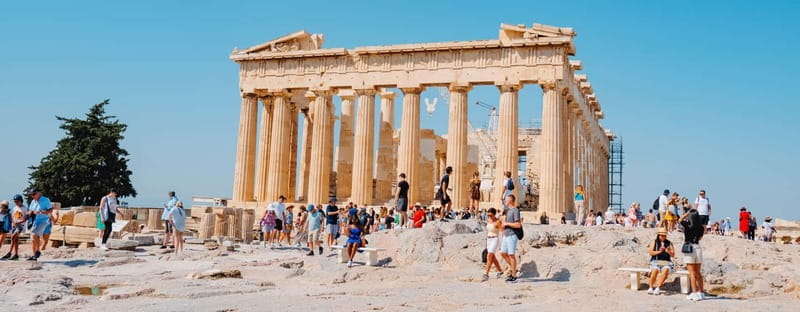
The Acropolis is huge in meaning and big in walking distance. The trick is not trying to “do everything.” This tour aims for the sweet spot: the monuments most tied to the story of Athens—then it gets you out before your legs and patience fully revolt.
At 2 hours, you’ll cover a tight route with enough time at each stop to get the key ideas. You’re not just taking pictures. You’re learning how each site fits together—religion, politics, theater, and mythology—so the Acropolis stops becoming a list and starts becoming a place.
And the skip-the-line value is real here. Lines at major sites can kill the mood. By reducing queue time, you keep the experience focused on the view, the details, and the guide’s explanations—rather than waiting while everyone sweats in the sun.
Meeting at Mitsaion 2 and getting in without wasting your morning
You meet your guide at the Athenian Tours office at Mitsaion 2 (11742). The tour ends back at the meeting point, which is handy because you don’t have to figure out a second pickup or transfer after you’re done.
A practical note: you’ll want comfortable shoes, plus water, sunscreen, and a sun hat. Even if the route feels short on paper, you’re on stone in bright light. The tour is also not set up for bulky travel days—no luggage or large bags, and no pets or baby strollers.
One small tip from past groups: one group reported entering from the South Slopes being easier than the North Slope. You can’t guarantee the entrance you’ll use, but it’s worth knowing that there are different approach routes and some feel less painful than others.
You can also read our reviews of more walking tours in Athens

Theater of Dionysus: where ancient plays turned politics into entertainment
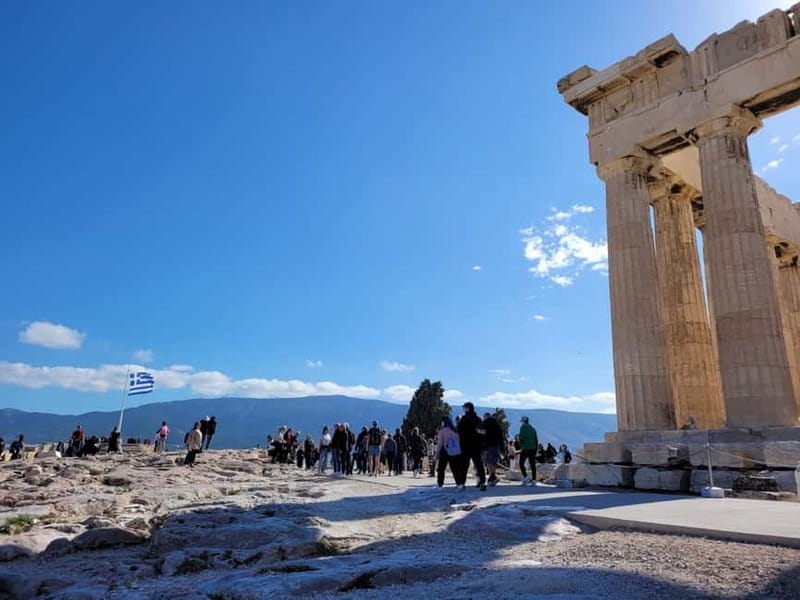
Your walk starts on the Acropolis area and quickly moves into the theater story. The Theater of Dionysus is the first big “you’ve got to see it” moment because it’s not just ruins—it’s where performance became public culture.
Your guide explains that famous ancient plays—both comedies and tragedies—were performed here. That matters, because when you look at the remaining architecture, you’re not only thinking about what it looked like. You’re thinking about what it did: gathered citizens, showcased ideas, and kept myths and civic questions in the public conversation.
This is also a good spot for your brain to shift gears. The Acropolis can feel like religion on repeat—temples, statues, sacred places. The theater reminds you that Athens was also a place where people debated life through performance.
Asklepieion and Odeon of Herodes Atticus: religion, healing, and Roman memory
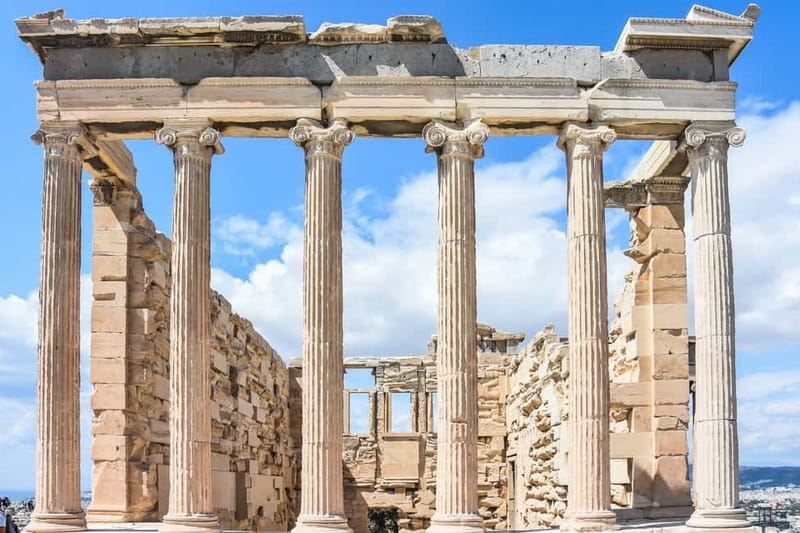
From the theater you’ll continue to the Asklepieion of Athens, a healing temple built in honor of Asclepius and Hygeia. The key is the meaning: this wasn’t a “museum temple.” It was part of a belief system where healing had a sacred dimension.
Then you move to the Odeon of Herodes Atticus (the Roman-era theater). One detail you’ll get that helps it click: it was built in memory of Herodes Atticus’s wife. That human angle is often what makes Roman additions feel less random. It stops being just another ruin and starts reading like a layered history—Greek sacred space, then later Roman commemoration.
If you’re wondering why this matters on a short tour: this sequence builds context. You see entertainment, then healing, then another performance space. Each one tells you how the city shaped experience—through art, through ritual, and through public buildings that carried meaning.
Temple of Athena Nike and the climb to the Propylaea gateway
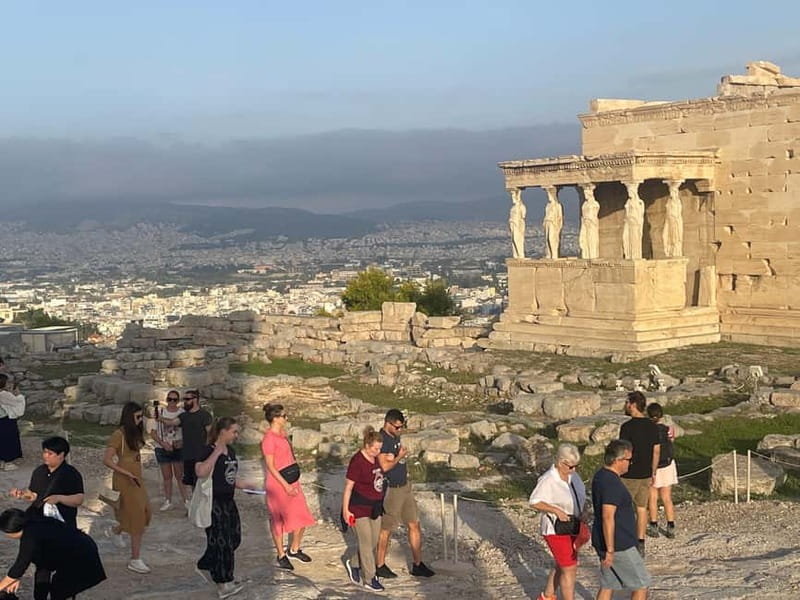
Next comes Temple of Athena Nike, with views that help you understand why the Acropolis was such a powerful place. Even when you can’t see every angle, you learn what the builders were trying to communicate. Your guide ties the sightlines and positioning to the goddess Athena and the city’s identity.
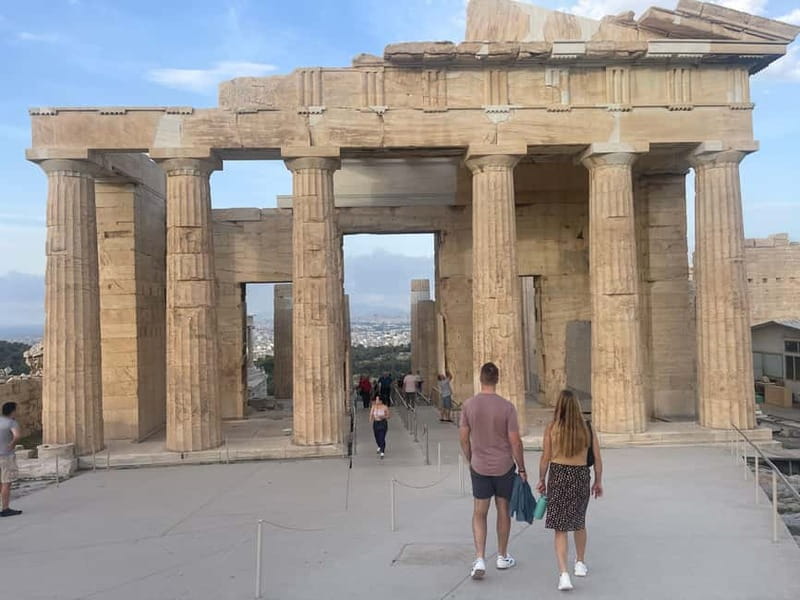
Then you climb to the Propylaea gateway. This is where you start feeling the “arrival” energy of the Acropolis—like you’re stepping into a sacred precinct rather than just walking uphill in a neighborhood of stone.
This segment is also where pacing matters. A well-run guide keeps the group moving without rushing. In hot weather, you’ll be grateful for any shade stops and breathing breaks. One past group specifically noted their guide looked for shady places to talk. You might not get a miracle breeze, but good guidance can make the climb feel manageable.
Parthenon: the civic symbol your guide makes legible

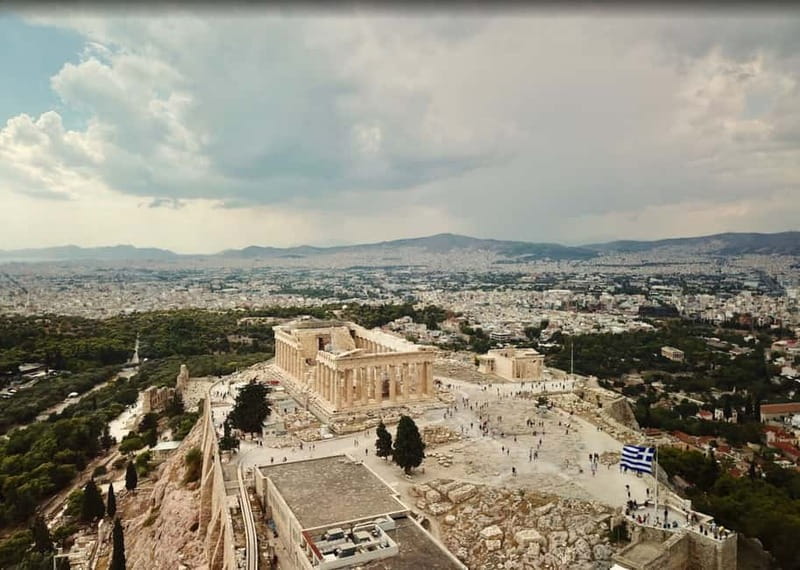
The Parthenon is dedicated to Athena, and your guide connects it to Athens as a patron city. The tour description calls it a prominent symbol of democracy and Western civilization, and that framing helps. It’s not about modern politics being projected back in time—it’s about Athens using monumental architecture to express power, belief, and identity.
What I like about having a guide here is that you’re not just staring at a famous building. You’re learning how the Doric order architecture expresses structure and order. The Parthenon becomes a lesson in how aesthetics carried meaning in the ancient world.
You’ll also get time to take in the big payoff: the views. The Acropolis sits above the city, so once you’re at the Parthenon level, you’re seeing Athens as the ancients would have understood it—an urban grid around a sacred center. Even if you’ve seen photos, the scale of the place lands differently in person.
You can also read our reviews of more guided tours in Athens



Erechtheion: the six female figures and the asymmetry that makes it human
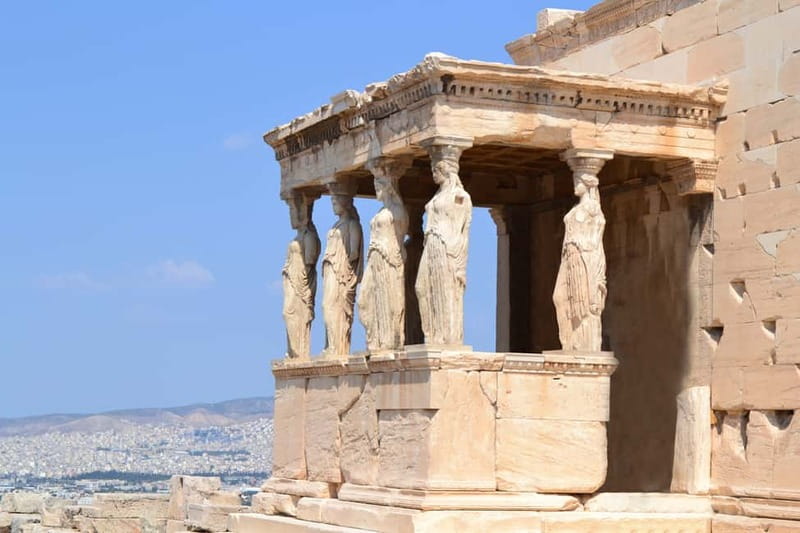
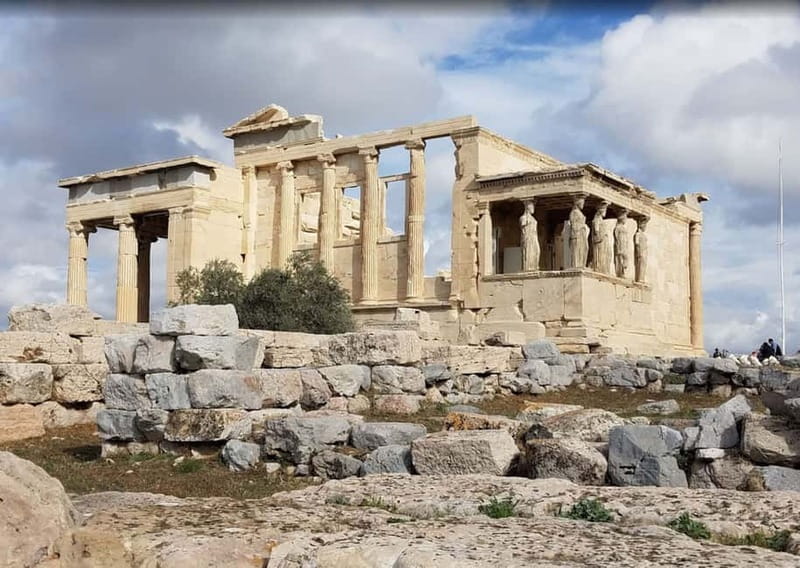
A standout stop is the Erechtheion, famous mainly for its asymmetrical composition. On a short tour, you don’t always expect architecture to feel emotional. But the Erechtheion gets there because it includes six sculpted female figures supporting parts of the structure.
Your guide explains what you’re looking at and why this design is unusual. That’s the difference between seeing a landmark and understanding it. Once you know the “why,” the details start grabbing you—especially the repeated forms and the way the structure seems tailored to its sacred setting.
This is also a moment where it helps if you like stopping mid-walk. The Erechtheion rewards slowing down by a few breaths. If you’re the type who rushes through everything, you’ll want to resist that instinct here.
How the guide quality shows up (and why guide names matter)
Acropolis tours live or die on the guide’s ability to turn stones into stories. Past groups gave high praise to guides including Simon, Iris, Alexia, Kostas, Angel, and Christos—often mentioning clear explanations and good crowd management.
You’ll also notice a theme: guides are expected to keep things moving while still making time for questions and photos. One group described their guide as finding shade on a very hot day and keeping the group comfortable and engaged. Another mentioned their guide kept the pace comfortable and didn’t overwhelm people.
So what should you do with this information? Pick the time slot you can handle best. Guides can manage heat, but they can’t change the sun. Morning tours tend to feel easier in summer. If you can choose, I’d lean earlier.
Tickets, earphones, and the small rules that affect your experience
This tour includes entrance tickets to the Acropolis and skip-the-line tickets, plus an English-speaking live guide. If your group is over 5 people, you’ll get disposable earphones, which can be a lifesaver in crowded areas.
Two “small rules” that matter:
- Photography is permitted, but video recording of the tour guide is not permitted.
- Audio can be affected by other groups during the busiest times, even with earphones.
Also note the ticket reality. The tour can run only if you have tickets in advance and on time before the starting hour. If you chose a version that doesn’t include tickets, you’ll need to buy entry tickets to the Acropolis & Museum before you come, at least a day ahead, and confirm the right time slots. On-site, the guide can supply only adult full-price entry tickets at the meeting point, paid in cash.
Price and value: what $35.57 gets you in Athens
At $35.57 per person for about 2 hours, you’re paying for three things: guided interpretation, entry tickets, and saved time via skip-the-line access.
Does that price feel high? One past comment said it was a bit pricey, but still worth it. That tracks with my thinking. The Acropolis is not just “a place to visit.” It’s a place to understand, and you only get a small window before the site turns into a crowded traffic jam.
If you’re going to spend a big chunk of your Athens time here anyway, this is the most efficient way to do it: you get the main stops, you get explanations that connect them, and you reduce time lost to queues.
What this tour suits best—and who should consider other options
This tour is a strong fit for:
- First-time visitors who want the Acropolis story without getting lost
- People who like architecture and want to know what you’re seeing
- Anyone who values time efficiency and better crowd navigation
- Travelers who want a guide they can ask questions of, not just a self-guided stroll
It’s not a good match if:
- You have mobility impairments, use a wheelchair, or need elevator access (group tours can’t use the elevator)
- You’re traveling with a baby stroller
- You have heart problems or health limitations that make hill walking stressful
- You’re bringing pets or large luggage
Should you book the Acropolis and Parthenon Guided Walking Tour?
If you want your Acropolis visit to feel focused—and you’d rather spend your energy on the monuments than the lines—then yes, I’d book this. The skip-the-line setup plus the guided stops at the Theater of Dionysus, Asklepieion, Propylaea, Erechtheion, and Parthenon is a tight “greatest hits” route with real context.
The decision comes down to one thing: your comfort level with stairs and uneven ground. If you’re physically able and you pick a reasonable time (mornings are a smart move in summer), this tour gives you excellent value for a short slot of time.
If you want a self-paced experience where you can linger as long as you want at one view, you might consider going without a tour. But if you want to leave with your brain actually sorting out what you saw, this guided walking format is a solid choice.
FAQ
How long is the Acropolis and Parthenon guided walking tour?
The duration is 2 hours.
Where do I meet my guide?
You meet at Athenian Tours’ tour office at Mitsaion 2, 11742.
Is there skip-the-line access included?
Yes. The tour includes entrance tickets to the Acropolis and skip-the-line tickets.
What does the tour include for hearing the guide?
English-speaking tour guidance is included. For groups over 5 people, disposable earphones are provided.
Are food and drinks included?
No. Food and drinks are not included.
Is the elevator available on this tour?
No. The elevator to Acropolis Hill cannot be used on group tours.
What should I bring with me?
Bring a passport or ID card, comfortable shoes, sun hat, sunscreen, and water.
Is this tour suitable for young children or people with mobility issues?
It is not suitable for children under 6 years. It is also not suitable for people with mobility impairments, wheelchair users, or people with heart problems.


More Walking Tours in Athens


More Tours in Athens


More Tour Reviews in Athens
- All Day Cruise -3 Islands to Agistri,Moni, Aegina with lunch and drinks included
★ 5.0 · 4,958 reviews