REVIEW · ATHENS
Acropolis of Athens and Acropolis Museum Tour
Book on Viator →Operated by Athens Walking Tours · Bookable on Viator
Marble steps and big stories in one morning. What makes this outing fun is how guides like Dimitris, Rina, and Yolanda point out the details you’d otherwise miss, plus the option to prepay timed tickets to cut down waiting. The one drawback is strict entry timing, so late arrivals can lose their spot and refunds.
After the climb, you shift to the Acropolis Museum, where the statues and fragments stop being random and start making sense. I also like the small group size (max 24) and the earsets, which help you hear your guide even when the crowd is loud.
Plan for stairs and slick marble. In hot months, an early time slot is a smart move, and sunscreen, water, and grip-soled shoes are non-negotiable.
In This Review
- Key highlights worth knowing
- How the Tour Flows Up the Hill and Into the Museum
- Getting In: Security Checks, Timed Entry, and the Real Meeting Point
- Tickets and the Skip-the-Line Upgrade (and What It Won’t Fix)
- Acropolis Core Stops: Theatre of Dionysus to Erechtheion Caryatids
- Parthenon Photo Time and the City-View Pause
- Acropolis Museum: Where the Sculptures Finally Click
- Small Group Comfort: Earsets, Pace, and Heat Reality
- What to Pack for Marble Steps and No Backpacks
- Price and Value for $56.84 Plus Entrance Fees
- Should You Book This Acropolis and Museum Tour?
- FAQ
- How long is the Acropolis and Acropolis Museum tour?
- Are the Acropolis and Acropolis Museum entrance tickets included in the $56.84 price?
- Does this tour include skip-the-line access?
- Are earsets provided so I can hear the guide?
- Are baby strollers allowed on the Acropolis?
- What happens if I arrive late for timed entry?
Key highlights worth knowing

- Small-group format (up to 24): easier questions and better pacing on steep, uneven ground.
- Earsets included: you’ll hear directions and stories clearly, even during the noisiest moments.
- Prepaid ticket upgrade options: can reduce wait time after security, without changing the fact that timed entry is timed entry.
- Two big sites, one guided flow: Acropolis first, then the museum so you connect sculptures to where they originally belonged.
- Guides bring the myth + the architecture: you’ll hear how Athenians used these buildings, from theater to temples.
How the Tour Flows Up the Hill and Into the Museum
This tour is built around one simple idea: don’t just look at the Acropolis—learn what you’re looking at, then confirm it at the Acropolis Museum. You start on the ground level, clear security, and head into the archaeological site with your group, so the day doesn’t feel like a scavenger hunt.
You’re not stuck staring at placards either. The guide stops at key structures—then ties the stones to the stories Athenians told and the purpose each building served. Expect short, meaningful pauses rather than a rushed march, followed by a guided museum visit that turns what you saw outside into something you can name and place.
The museum portion is longer than you might think on a highlights tour, and that matters. The museum collection is huge, and guided time helps you focus on the artifacts that explain the Acropolis most clearly.
You can also read our reviews of more museum experiences in Athens


Getting In: Security Checks, Timed Entry, and the Real Meeting Point
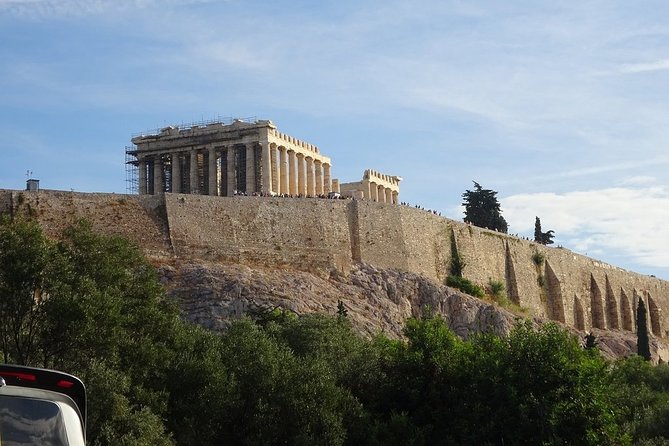
Meet at Dionysiou Areopagitou 3 (Athina 117 42). The tour ends at the Acropolis Museum entrance on Dionysiou Areopagitou 15, so you’ll finish right where you want to be if you plan to continue exploring on your own.
Here’s the practical part: you’ll go through airport-style security at the site. In peak season, waits can run 30+ minutes, even with a line-skipping approach. Also, entry is controlled by strict time slots, and the tour can’t wait for latecomers—no refunds if you miss your entry window.
So your best strategy is boring on purpose: arrive early, keep an eye on your phone for local time updates, and don’t plan a coffee run right at the last second. Athens rewards punctuality at the Acropolis.
Tickets and the Skip-the-Line Upgrade (and What It Won’t Fix)
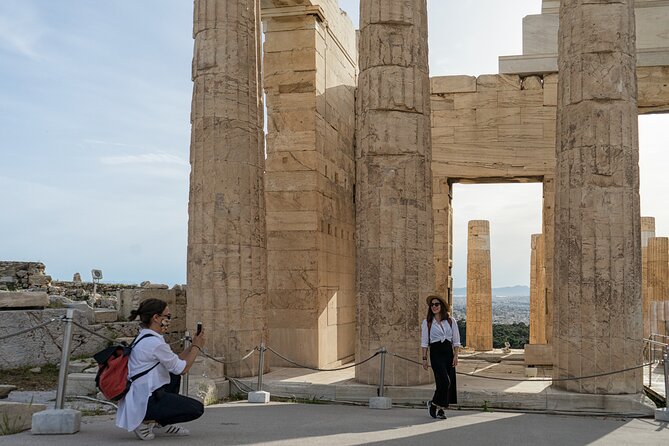
The base price is $56.84 per person, but it doesn’t automatically include admission. Entrance fees are €30 for the Acropolis and €20 for the Acropolis Museum unless you choose the option that includes tickets.
If you do choose the ticket option, you get a skip-the-ticket line service—and the upgrade is meant to reduce waiting time. That said, it won’t erase security processing or the reality of timed entry. Think of it as: less waiting for tickets, more time actually inside the places you paid to see.
One more smart detail: there’s also an option to prebook museum tickets. That can be helpful because the museum visit is part of the same timed flow, and the museum is where many people realize what they missed on the hill. If you’re the kind of traveler who hates wasted time, prebooking helps your day feel smoother.
Acropolis Core Stops: Theatre of Dionysus to Erechtheion Caryatids
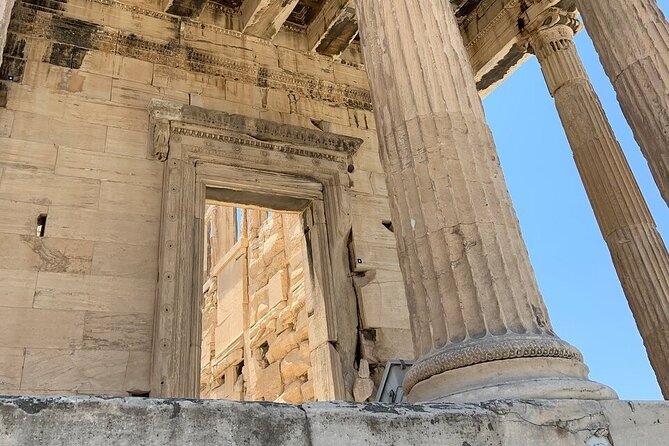
The Acropolis segment is where the tour earns its name. You’ll walk the sacred hill with an expert guide, and your time gets spent on recognizable giants like the Parthenon—but also on the “why this mattered” buildings around it.
You start by heading up to the main UNESCO-listed archaeological area. From there, you’ll likely pass the Theatre of Dionysus, the place tied to the origin of theater in Athens. Even if you’ve never read Greek drama, this stop clicks because you see the hillside seating cut into rock—then the guide connects it to how Athenian audiences experienced tragedy and comedy.
Next comes the Herodes Atticus Odeon, a Roman-era theater still used for concerts and performances. That mix—Greek beginnings and Roman reuse—is one reason I like doing this with a guide rather than freelancing. You can easily spot “old stuff,” but it takes an explanation to understand the continuity.
Then you get the Temple of Athena Nike, known for its Ionic style and for views that make the climb feel worth it. The day’s architectural drama ramps up at the Erechtheion, famous for the Caryatid maidens. This is one of those spots where the stones stop being background and start being characters in a bigger story.
One important practical note: the Acropolis is full of steep, uneven surfaces. In heat and rain, marble can be slippery, so your shoes matter as much as your schedule.
Parthenon Photo Time and the City-View Pause
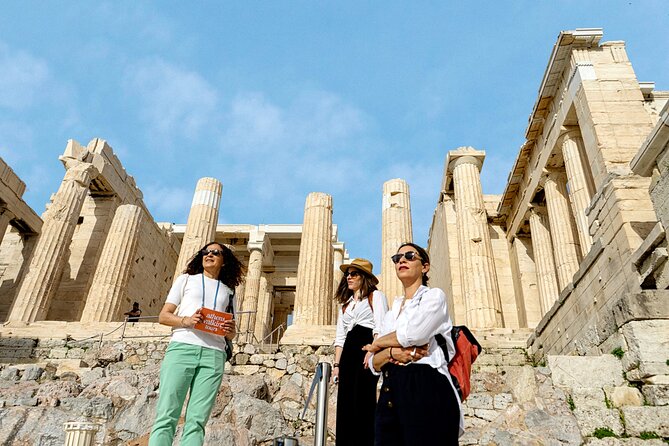
Yes, the Parthenon is the headline. You’ll get a guided look at its Doric columns and the intricate sculptural details on the building, plus the perspective that comes from standing at the right angles. The guide uses the time here to connect architecture to myth and Athenian identity, not just to recite dates.
And then there’s the view. The summit overlooks Athens, and you’ll take a breather long enough to look down over the city instead of staring only at stones at arm’s length. This is also when you’ll want to grab photos—but don’t lose the group here. One late pause can snowball into a rushed finish at later stops.
If you’re visiting in summer, schedule choice helps. Many people find an early start makes the difference between a relaxed climb and a sweaty scramble. Even with shade breaks, you’re still moving in an exposed area.
- All Day Cruise -3 Islands to Agistri,Moni, Aegina with lunch and drinks included
★ 5.0 · 4,958 reviews






Acropolis Museum: Where the Sculptures Finally Click
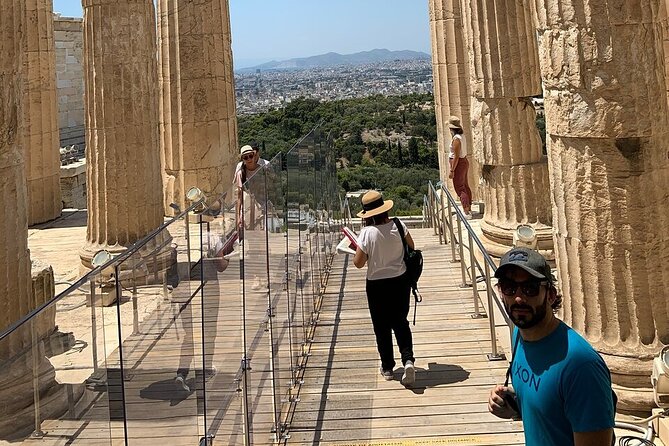
After the hill, the Acropolis Museum is the payoff. The museum is where you can understand what was too worn, damaged, or removed for preservation purposes at the site. The guided portion takes you through key highlights and connects artifacts to what you just saw outside.
Instead of treating the museum like a warehouse of statues, the guide gives you a chronology of Athenian history and points out how the objects developed over time. You’ll spend about 1.5 hours here with the guide, which is long enough to get oriented, but short enough that you can still keep exploring after the tour ends.
I like this “site first, museum second” order because it prevents the common mistake of walking through the museum with zero context. Outside, you see scale and placement. Inside, you learn what the pieces actually are and why they mattered.
One extra advantage: your guide can help you understand why some elements on the hill are replicas while originals are protected in the museum. That clears up a lot of head-scratching on your own.
Small Group Comfort: Earsets, Pace, and Heat Reality

This is a small group tour with a maximum of 24 people, and it shows. With that group size, you get better pacing and fewer bottlenecks than large bus tours. You also get earsets, which make a huge difference on the Acropolis, where wind, footsteps, and crowds can swallow voices.
The tour is designed for travelers with moderate physical fitness. That usually means you should be comfortable with stairs and uneven ground, and you should expect stops and short walks rather than long seated breaks.
Heat can be brutal on exposed marble. In rain, traction can be worse, and you may appreciate rain gear if provided by the tour team. The key is that the tour keeps moving with commentary rather than turning into “stand around and hope.”
From the reviews, guides are often praised for handling crowds and slippery steps with care. You’ll still feel the terrain, but you’re not stuck figuring it out alone.
What to Pack for Marble Steps and No Backpacks

Do the simple prep and the whole day feels easier. Wear comfortable clothes and shoes with grip, because the Acropolis can be uneven and slippery, especially in rain or after wet weather.
Pack a hat and sunscreen lotion. Bring a bottle of water too. There’s a real reason people push water here: the walk up and the outdoor stops have limited places to sit, and shade is never guaranteed.
Two “don’t bring” rules matter:
- Backpacks aren’t allowed, and you’ll need to plan what you carry.
- Baby strollers aren’t allowed on the Acropolis archaeological site, and there’s no cloakroom at the side entrance used for entry. A baby pouch is recommended instead.
If you’re carrying any bag that feels too big, I’d adjust before the start so you don’t lose time at security or entrances.
Price and Value for $56.84 Plus Entrance Fees
At $56.84 per person, this tour price is only part of the final equation. If you don’t select the ticket-inclusive option, you’ll add €30 for the Acropolis and €20 for the museum.
So is it worth it? In my view, it depends on what you want from the day:
- If you want a structured, guided experience that explains what you’re seeing, the value is solid. You’re paying for a guide, earsets, and a time-managed flow across two major sites.
- If you’d rather read on your own and move at your own pace, you may feel the cost more strongly.
Where the money tends to pay off for most people is the combination of guided time and reduced waiting. The Acropolis is one of those places where “going fast” loses you the story. A good guide helps you connect the Parthenon, Erechtheion, and theater structures into one bigger picture.
Also factor in group size and hearing aids. Being able to hear clearly while you’re moving on uneven ground is practical, not fancy.
Should You Book This Acropolis and Museum Tour?
Book it if you want maximum meaning per hour—a guide-led walkthrough up the hill, then a museum session that turns sculptures into context. It’s especially appealing if this is your first time at the Acropolis or if you want your visit to feel organized without spending time figuring out how to link the site to the museum.
Skip it (or keep expectations tighter) if you hate any scheduled timing. Entry is strict, security takes time, and the route involves real walking on stairs and slippery surfaces. If you’re sensitive to heat or mobility limits, you’ll need to be honest with yourself about what your body can handle.
If you do book, pick an earlier departure when you can, arrive early, bring grip shoes, and choose the ticket option if you want that extra help with line time. That’s how you get the day you paid for.
FAQ
How long is the Acropolis and Acropolis Museum tour?
The duration is about 3 hours 30 minutes.
Are the Acropolis and Acropolis Museum entrance tickets included in the $56.84 price?
Entrance tickets are not included unless you choose an option that adds them. The Acropolis entry fee is €30 per person and the Acropolis Museum entry fee is €20 per person.
Does this tour include skip-the-line access?
If you book the option that includes tickets, you get skip-the-ticket line service. If you choose the option without tickets, you follow the instructions on your voucher to book tickets yourself.
Are earsets provided so I can hear the guide?
Yes. The tour includes earsets to help you hear your guide better.
Are baby strollers allowed on the Acropolis?
No. Baby strollers are not allowed on the Acropolis archaeological site, and there is no cloakroom at the side entrance used to enter. A baby pouch is recommended.
What happens if I arrive late for timed entry?
The Acropolis uses strict entry times. The tour team can’t wait for latecomers, and no refunds are given for missed entry times.



More Museum Experiences in Athens



More Tours in Athens

More Tour Reviews in Athens
- All Day Cruise -3 Islands to Agistri,Moni, Aegina with lunch and drinks included
★ 5.0 · 4,958 reviews