REVIEW · ATHENS
4-Day Private Tour of Classical Greece from Athens
Book on Viator →Operated by Ancient Greece Tours & Transfers · Bookable on Viator
Ancient Greece, delivered door-to-door. This private 4-day run from Athens links big-ticket sites like Thermopylae hot springs and Delphi with hotel pickup and onboard Wi‑Fi, so you spend less time wrestling buses and more time looking at the places where stories happened. I especially like the Thermopylae museum and its Leonidas monument, and I love how Olympia is paired with museum stops that turn the ruins into something you can actually picture. One thing to plan for: entrance fees for major sites (Delphi, Olympia, Mycenae, Epidaurus, and Corinth) are extra, and an optional licensed guide inside sites costs more.
What makes this work well is that it’s genuinely private: only your group rides in the vehicle, and the tour runs in English. I also like that you get a driver with real historical context, not just someone who knows how to get from point A to point B. Bookings tend to happen far ahead (around 75 days on average), which is a hint that this format is popular for a reason.
One practical consideration: the tour includes pickup and transportation, but not your 3 nights accommodation. You’ll check into hotels in Delphi, Olympia, and the Nafplio / Ancient Corinth or Loutraki area, so you’ll want to line that up in advance (or ask the provider to reserve a hotel for you).
In This Review
- Key highlights worth getting excited about
- Private pickup from Athens: less hassle, better days
- Thermopylae: Leonidas, Gates of Fire, and the hot springs
- Delphi’s sanctuary and museum: the oracle becomes concrete
- Olympia: Zeus scales, Heraion focus, and museums that explain
- Nafplio mornings, Epidaurus acoustics, and Mycenae’s gold
- Nafplio: fortresses, squares, and a lot of steps
- Epidaurus: theatre you can test with a coin or pin
- Mycenae: Cyclopean walls and the Treasury of Atreus
- Ancient Corinth and Acrocorinth: Paul’s footsteps and the Isthmus Canal
- Price and value: what you’re really paying for
- Who should book, and who should skip
- Should you book this 4-day private Classical Greece tour?
- FAQ
- Is this tour fully private?
- Where does pickup happen?
- What’s included in the transportation and comfort?
- Are entrance fees included for the archaeological sites and museums?
- Is accommodation included for the 4 days?
- Is a licensed tour guide included inside sites and museums?
- What language is the tour offered in?
- Is there food included?
- Can I bring pets?
- What is the cancellation window?
Key highlights worth getting excited about
- Thermopylae’s museum and the sulfur hot springs with hydrotherapy facilities
- Delphi’s sanctuary and a museum packed with named artifacts (like the Naxian Sphinx and Omphalos)
- Olympia ruins plus the museum experience, including the statue of Zeus display
- Epidaurus amphitheatre acoustics and the Asclepius healing sanctuary
- Mycenae’s big Bronze Age hits, from the Lions Gate to the Treasury of Atreus
- Acrocorinth and Corinth tied to Apostle Paul, then a stop at the Isthmus Canal
Private pickup from Athens: less hassle, better days
The best part of this tour is how it removes the annoying logistics that usually eat up a vacation. Your personal driver/guide meets you in Athens at your hotel lobby (or at your Airbnb entrance after they contact you), then you’re returned there at the end of the tour. The vehicle is private and comfortable, with onboard Wi‑Fi, bottled water, refreshing wipes, and fresh handmade Greek biscuits to keep energy from crashing between stops.
This matters because Classical Greece is a “drive-first” region. Distances add up fast, and public transit can mean long transfers and waiting around. Here, the schedule is built around getting you from major site to major site without that stress. You’re paying for time and comfort as much as for sights.
There’s also a subtle benefit to doing it privately: you can match the pace to your group’s stamina. If someone wants more time at a museum or less time in a heat wave, that’s easier to manage when it’s not a big bus load.
One note: the tour includes professional drivers with in-depth knowledge, but it does not include a licensed tour guide escorting you inside every site and museum. If you want that extra layer of commentary while you’re standing in each ticketed area, you can request it for an additional cost.
You can also read our reviews of more private tours in Athens

Thermopylae: Leonidas, Gates of Fire, and the hot springs
Day 1 starts with Thermopylae, and this stop has a rare combo: epic history plus a literal physical experience. You’ll see the key landmarks connected to the Battle of Thermopylae, including the Gates of Fire concept tied to the area’s hot sulfur springs and Greek mythology about entrances to Hades.
The highlight for many people is the monument of King Leonidas. It’s a brass sculpture erected in 1955 by sculptor Vasos Falireas, and the metal work is the kind of detail that makes a historical figure feel present instead of distant. After that, the Thermopylae museum sets the scene with an approach that’s meant to help you understand how the 480 BC battle changed the course of Greek history and western civilization.
Then comes the part that feels different from typical archaeology tours: the hot springs. These aren’t just a pool for photos. The facilities focus on hydrotherapy and balneotherapy, aimed at treating specific ailments as well as supporting general wellbeing. The information on-site also notes that dozens of springs are recognized so far, including 34 that are officially acknowledged. Even if you don’t do an extended treatment, you’ll leave with a better sense of why people have returned to these waters for centuries.
After Thermopylae, you drive toward Delphi, check in at your chosen hotel, and settle in for the next big day.
Delphi’s sanctuary and museum: the oracle becomes concrete
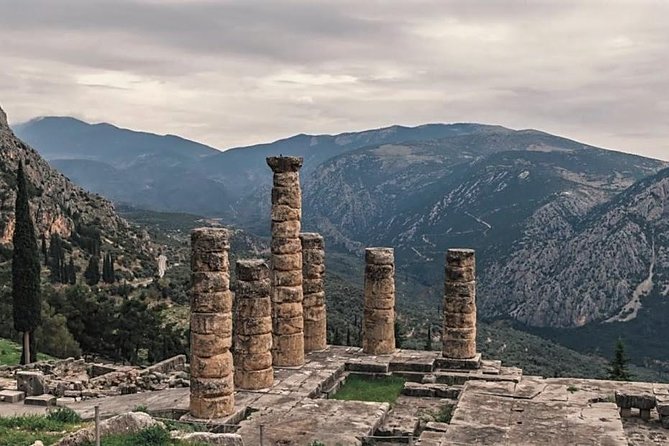
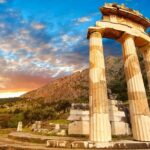
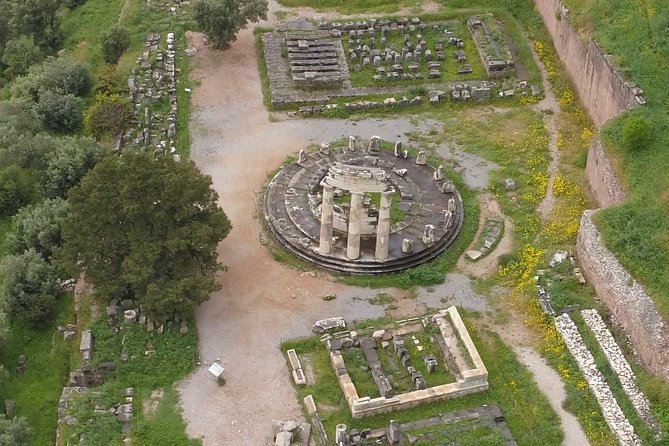
Delphi is one of those places where “where is the story” stops being a metaphor. It’s built around the ancient sanctuary that became famous as the home of the oracle consulted by important figures across the classical world. The tour frames Delphi as the navel or center of the world, highlighted by the Omphalos (the stone monument connected to the temple setting).
On the archaeological side, expect a strong hit list of the must-see structures:
- the Temple of Apollo
- the Ancient Theater
- the Stadium
- the Athenian Treasury
- the Gymnasium
- the Sanctuary of Athena Pronaia
The payoff is not just seeing ruins, but understanding what the oracle site evolved into over time. It wasn’t only religious. It also became tied to athletic games and cultural events, including the Pythian games.
Next comes the museum portion, which is where your memories tend to sharpen. The Delphi Archaeological Museum houses major artifacts from excavations, and you’ll be shown standouts such as:
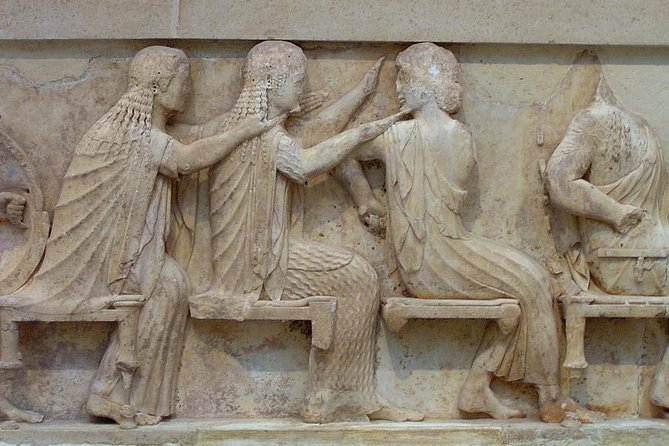
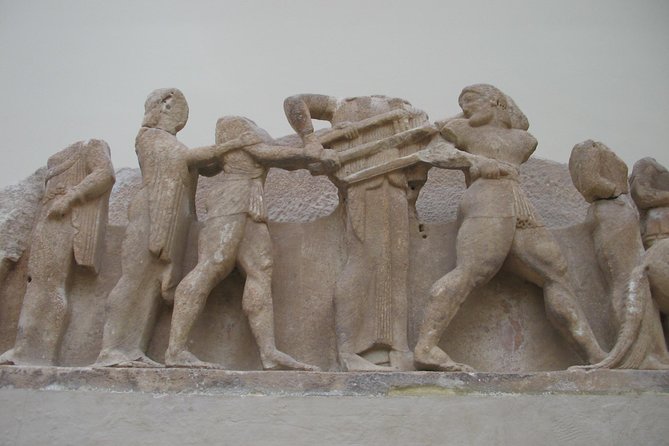
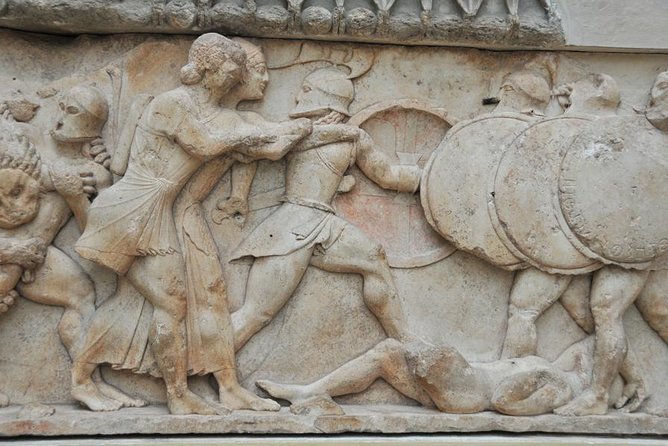
- the Frieze of the Treasury of Sifnias
- the Naxian Sphinx (dated to 560 BC)
- metopes from the Athenian Treasury (including scenes tied to Theseus and various mythic battles)
- the Omphalos (kept in the temple context)
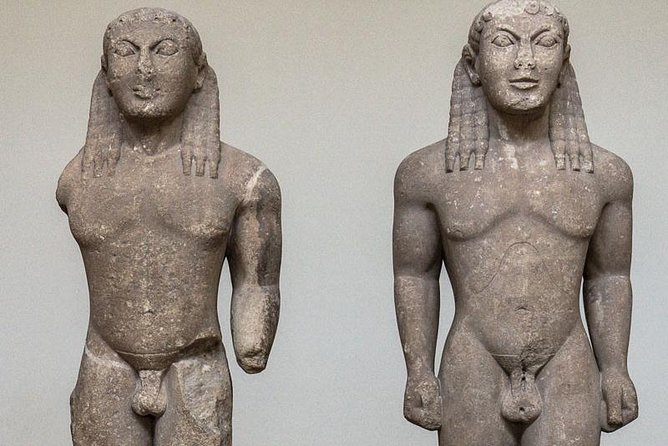
- Kleobis and Biton
- the Statue of Antinoos
- the famous Charioteer complex
Even if you’re not a hardcore mythology person, I like how these specific objects give you handles for what you’re seeing in the ruins. You can go from “I saw a temple” to “I know why that treasury frieze mattered,” and the whole place feels less like a checklist.
You’ll also have time in Delphi village, plus a lunch stop with views overlooking Itea and Amfissa. It’s a nice break from stone and rows of columns, and it helps you pace the day so you don’t feel like you’re sprinting through culture.
Olympia: Zeus scales, Heraion focus, and museums that explain
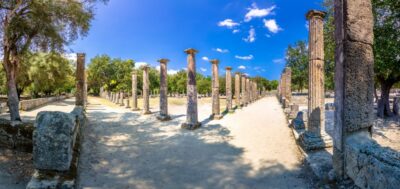
Day 2 revolves around Olympia, the ancient sanctuary tied to the first Olympic Games founded in the 8th century BC. What I like here is that you get both the sacred athletic setting and the structures that reflect how the Greeks organized worship, competition, and training.
At Olympia, you’ll start with the main ruins overview, including areas for athletics and temples dedicated to Hera and Zeus. Then the tour moves through the big named sites:
- the Temple of Zeus (a Doric temple from the 5th century BC)
- the Temple of Hera, also known as the Heraion
- the Philippeion (a circular building dedicated to Zeus by Philip II of Macedonia)
- the Hippodrome and later Stadium
- the Palaestra (for training and physical practice)
- and the Workshop of Pheidias, associated with the sculptor who crafted the chryselephantine Zeus statue
This is where the tone of the tour becomes clear: it’s not just “look at ruins.” It’s “learn what each ruin was for.” The Temple of Zeus gives you a sense of the scale of classical architecture, while the training and sports spaces explain why the Olympic idea was never separate from religion.
After walking the site, the museums finish the job. The Archaeological Museum of Olympia displays incredible artifacts from the sanctuary, including the famous Statue of Zeus display described as about 13 meters tall in its representation. It’s one of those stops that turns the imagination back on. Even in a museum setting, it’s hard not to feel the same size-and-power message people felt in antiquity.
Then you may also visit Filoxenia, the Museum of the History of the Olympic Games in Antiquity. It’s a modern museum built around the idea that Olympic education and the Olympic idea can be shared through museums. You’ll also have a chance to see the museum of Archimedes in Olympia—replicas of inventions and interactive elements tied to Archimedes’ work. That combo is a smart shift from purely athletic and religious spaces into “how did they think?”
By the end of the day, you drive to Nafplio and check in. There’s also an optional dinner at La Belle Helene, with home cooked Greek meals—named in the program with Konstantina, who’s part of what makes the evening feel personal rather than canned.
Nafplio mornings, Epidaurus acoustics, and Mycenae’s gold
Day 3 is three different worlds in one run: Nafplio for modern history and charm, Epidaurus for theatre and medicine, and Mycenae for late Bronze Age power.
You can also read our reviews of more tours and experiences in Athens
Nafplio: fortresses, squares, and a lot of steps
Nafplio is introduced as a seaport town with cobblestone streets and historic buildings, crowned by Palamidi fortress and Bourtzi fortress. One of the most memorable practical moments here is Palamidi Castle on a 216 m hill with 999 steps to the top. I’m not saying you must climb them, but if your knees survive, the views are the kind you remember later.
The walk is also about context. Freedom Square includes an obelisk connected to France’s contribution in Greece’s War of Independence, and you’ll pass Constitution Square tied to the 1843 uprising. The tour also mentions a church with wall paintings and the story of Ioannis Kapodistrias’ assassination in 1831 outside St.Spyridon church—history that’s not ancient, but still helps you understand how Greece layered meaning onto place.
Food breaks are built in. The program specifically points you toward Antica Gelateria di Roma for gelato and Pergamonto for loukoumades. Those two stops are the kind of “local choice” that makes the day feel lived-in, not just museum-heavy.
Epidaurus: theatre you can test with a coin or pin
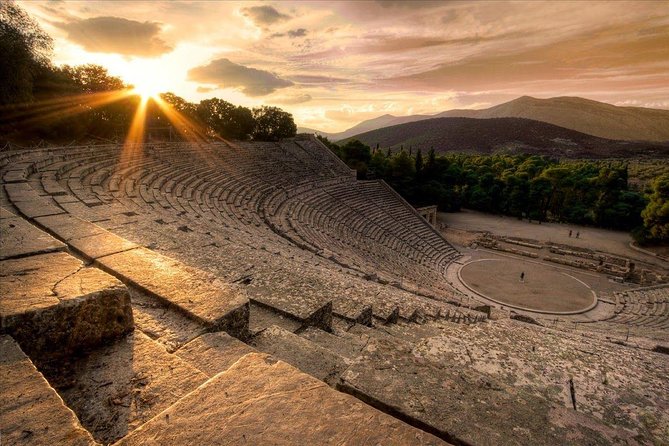
Next is Epidaurus, one of Greece’s top archaeological sites, and it’s famous for the amphitheatre and its acoustics. The amphitheatre is described as classic Greek construction with astounding sound. You’ll see the theatre built for performances tied to writers like Euripides, Sophocles, Aristophanes, and Aeschylus. There’s even a suggestion to test the acoustics by dropping a pin or coin on the stage, with the idea that sound carries even at the back seats.
The Epidaurus Archaeological Museum includes reconstructions of temples and columns with inscriptions. Then you’ll visit the Asclepius sanctuary, presented as an ancient medical retreat dedicated to Asclepius, the demi-god of medicine. It’s a different kind of “classical”—less about warriors and more about healing practices and ritual.
Mycenae: Cyclopean walls and the Treasury of Atreus
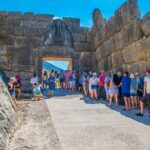
Mycenae follows, and it’s the payoff for anyone who likes big-scale stonework and stories connected to Homer. The tour highlights Mycenae as the richest and most important late Bronze Age center, including the mythic kingdom associated with Agamemnon.
Expect the iconic structures:
- Lions Gate (the main entrance of the citadel)
- Grave Circles A and B (royal cemeteries)
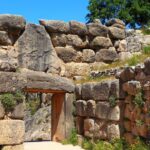
- Cyclopean Walls (huge limestone boulders)
- the Royal Palace complex and Throne Room suite
- the Treasury of Atreus (tholos tomb from around 1250 BC)
- the Tomb of Clytemnestra (also tholos-type from around 1250 BC)
- and the Mycenaenean Archaeological Museum with gold grave goods, masks, jewelry, weapons, worship idols, and frescoes
This is where the “ruins” start feeling like a society. The gold grave goods and masks give you a sense of status, belief, and the kind of funerary symbolism people invested in.
Ancient Corinth and Acrocorinth: Paul’s footsteps and the Isthmus Canal
Day 4 is built around Corinth’s ancient sites and the surrounding routes connected to broader Greek and Roman life. You start with Acrocorinth, the acropolis overlooking ancient Corinth from a monolithic rock.
At Acrocorinth, you’ll see:
- the gates and the system of circuit walls reinforced by towers
- Peirene Spring inside the walls
- traces of the Temple of Aphrodite
- the Frankish Tower and preserved remains of churches, mosques, houses, fountains, and cisterns
- and views across the Corinthian gulf and the southwest coast
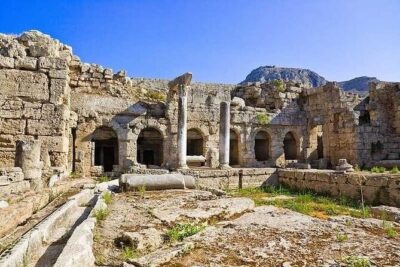
Then you return to Ancient Corinth for the main archaeological zone. The tour includes the Hadgimoustafa spring (noted as an Ottoman-era fountain), plus the Ancient Corinth Archaeological Museum and Temple of Apollo with monolithic columns built around 560 BCE.
Key interpretive stops here tie the ancient city to later religious history. The Agora is described as a rectangular complex with shops, small temples, and an altar area, plus the podium or Bema. The Bema is specifically linked to Apostle Paul addressing the Corinthians in 52 AD. You’ll also see Roman buildings, the theatre and odeon/Asklepieion, and the Lechaion road leading toward the port.
St. Paul’s church is also included, with a mosaic mural depicting Saul’s vision from Christ as he travelled to Damascus to persecute Christians. If you like connecting layers of history—ancient civic life and later religious meaning—Corinth is a strong closing chapter.
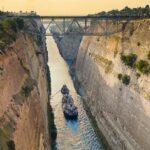
The tour then heads out beyond the city proper: you’ll visit the ancient Diolkos passageway from Periander’s era (tyranny) and then stop at the Corinth Canal, framed as a major 19th-century engineering project that helped Mediterranean trade. After that, you follow the route connected to St Paul toward Kechries Port and enjoy lunch by the Saronic sea at the Baths of Helen of Troy, before returning to Athens.
Price and value: what you’re really paying for
At $1,529.22 per person, this tour isn’t a budget choice. But it does include several things that are expensive in time and effort: fully private multi-day transportation, hotel pickup and drop-off, and a private luxury vehicle with onboard Wi‑Fi. You also get bottled water, refreshing wipes, and fresh handmade Greek biscuits. Those small comforts help on long driving days.
The bigger value is the structure. You’re getting a tight circuit through Thermopylae, Delphi, Olympia, Nafplio, Epidaurus, Mycenae, and Corinth without needing to coordinate trains, buses, or separate transfers. For couples and families who want to maximize sight time while staying comfortable, that’s where the price makes sense.
Still, you need to budget correctly:
- Entrance fees for Delphi, ancient Olympia, Mycenae, Epidaurus, and ancient Corinth are listed as €135.00 per person.
- Accommodation for 3 nights is not included (though hotel reservation can be requested).
- Food and drinks aren’t included.
- A licensed tour guide to go inside sites and museums is additional on request.
So the smartest way to think about this price is: you’re paying for private transport and expert driving context, plus a program that strings together major sites efficiently. If you want a guide with you inside every ticketed museum from start to finish, you may need to add that cost.
Who should book, and who should skip
This tour fits best if you:
- want a private schedule that cuts down on transport stress
- care about seeing the big classical anchors in a short trip
- like having a driver who can explain what you’re looking at as you move between places
- want onboard Wi‑Fi and comfort while days run long
I’d hesitate if you:
- want fully included museum-and-site guiding with no extras (the licensed guide is optional)
- don’t want to handle entrance fee planning
- are hoping for a trip with minimal walking, since you’ll be climbing, touring ruins, and covering lots of outdoor space
Should you book this 4-day private Classical Greece tour?
If your goal is to see Classical Greece’s top hits with a private driver, smooth handoffs between hotels, and the chance to test acoustics at Epidaurus and enjoy hot springs at Thermopylae, this is an easy yes. The combination of Delphi’s sanctuary details, Olympia’s key temples, and the Mycenae and Corinth stops makes the trip feel like a connected story instead of a pile of stops.
Just go in with realistic budgeting: plan for admission fees, plan your hotel nights for Delphi and Olympia plus the Peloponnese base, and decide early whether you want the added licensed guide option inside sites. Do that, and you’ll get a trip that feels efficient without feeling rushed.
FAQ
Is this tour fully private?
Yes. It’s listed as a fully private multi-day tour, and only your group participates.
Where does pickup happen?
Your driver/guide picks you up and drops you back at your hotel in Athens. If you’re staying in an Airbnb, they contact you on arrival so you can meet them at the entrance of the building. For airport or port pickup, they meet you at the gate holding an Ancient Greece Tours sign.
What’s included in the transportation and comfort?
You travel in a private luxury vehicle with onboard Wi‑Fi. The tour also includes bottled water and refreshing wipes, plus fresh handmade Greek biscuits.
Are entrance fees included for the archaeological sites and museums?
No. Entrance fees for Delphi, ancient Olympia, Mycenae, Epidaurus, and ancient Corinth are listed as €135.00 per person.
Is accommodation included for the 4 days?
No. The tour includes 3 nights of accommodation only as an option. You can request hotel reservation, but accommodation is not included by default.
Is a licensed tour guide included inside sites and museums?
A licensed tour guide is not included in the base package. You can request that as an additional cost.
What language is the tour offered in?
The tour is offered in English.
Is there food included?
Food and drinks aren’t included. The schedule includes places for meals and lunch stops, but you’ll cover costs.
Can I bring pets?
Animals or pets are allowed, and service animals are allowed.
What is the cancellation window?
You can cancel up to 6 days in advance for a full refund. A partial refund applies if you cancel 2–6 days in advance, and no refund applies if you cancel less than 2 days before the start time.
More Private Tours in Athens


More Tours in Athens



More Tour Reviews in Athens
- All Day Cruise -3 Islands to Agistri,Moni, Aegina with lunch and drinks included
★ 5.0 · 4,958 reviews