REVIEW · ATHENS
3 Days private tour- Meteora Rocks & Monasteries, Delphi/ Apollo Oracle, Thebes
Book on Viator →Operated by GREECE TAXI · Bookable on Viator
That first look at Meteora feels unreal. In three days, this private ride lines up Meteora monasteries, Delphi and the Apollo oracle, and Thebes, with a driver who’ll actually work around your pace. It’s built for scenic road time, photo breaks on demand, and real meal stops, not just checkbox sightseeing.
What I like most is the freedom. You can ask the driver to pause whenever you want for photos or a breather, and the schedule is described as flexible so you’re not trapped into a strict bus rhythm.
One thing to consider: admissions and museum tickets are not included, and some sites charge per person (often per stop). So your final total will depend on which museums/caves/monasteries you choose and the season.
In This Review
- Key highlights that matter in real life
- A private road trip where the driver acts like a traveler
- Day 1: Thermopylae’s story, then meteors of rock and monastery life
- Day 2: Early light at Meteora, then The mines or the myth at Mount Parnassus
- Theopetra Cave stop: old human traces, minimal drama
- Trikala Fort: a quick climb for real views
- Mount Parnassus: Vagonetto mine gallery tour or Corycian Cave
- Delphi and the Apollo Temple zone
- Day 3: Delphi Museum, Athena Pronaia’s Tholos, Arachova, then Thebes
- Arachova: mountain town breaks and an easy reset
- Kryas Livadeia Springs: a drink stop with oracle lore
- Thebes Museum: the last major anchor
- Price and logistics: what you’re paying for, and what to budget extra
- Accommodation options with a driver room included
- Timing, closures, and how to plan around Greek site hours
- Who this tour is best for (and who might prefer something else)
- Should you book this 3-day Athens private route?
- FAQ
- What time does the tour start?
- Is pickup included?
- Is accommodation included in the tour price?
- Are admission tickets included?
- How many monasteries will I visit at Meteora?
- Does the driver act as a licensed guide inside museums and archaeological sites?
- What happens if I cancel?
Key highlights that matter in real life
- Flexible photo stops with seasoned drivers who travel the route often, so you spend less time guessing and more time looking.
- Meteora done well: you get a drive-and-view day plus an early-morning photography loop, and you’ll visit at least two Orthodox monasteries.
- Delphi plus the supporting stops: Delphi sanctuary sights, Athena Pronaia’s Tholos, and a practical stop at Delphi’s museum.
- A choice on Mount Parnassus: Vagonetto mine gallery tour or Corycian Cave for mythology vibes.
- Local food time built in: dinner at Kastraki under Meteora rocks, and another light lunch/drink stop later with Greek iced coffee and souvlaki mentioned.
- Private means you set the pace: it’s only your group, with pickup from your hotel or apartment in Athens or Piraeus.
A private road trip where the driver acts like a traveler
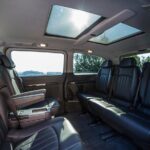
A lot of Greece “private tours” feel like upgraded buses. This one is different in how it’s described and how it runs: you’re driven in an air-conditioned vehicle, but the driver’s job is to help you live the day, not just move you between gates.
The biggest practical win is the pacing. The tour is set up so you can ask for stops wherever the view pulls you in, and you’re not punished for taking photos slowly. That sounds small, but on these routes it’s the difference between “I rushed through it” and “I remember it.”
I also like that the approach includes local food and wines as part of the plan, not an afterthought. You’ll have dedicated moments for breaks and meals, which matters when you’re covering multiple regions in three days.
And there’s a human touch in the guide experience too. In past feedback tied to this tour style, the driver Nikolaos (often called Niko) is praised as a wealth of information, with extras like pointing you toward snack and drink moments (including Greek iced coffee) and even helping people learn a bit of Greek along the way. That’s exactly the kind of thing that makes you feel more grounded, even when you’re bouncing between ancient sites.
You can also read our reviews of more private tours in Athens

Day 1: Thermopylae’s story, then meteors of rock and monastery life
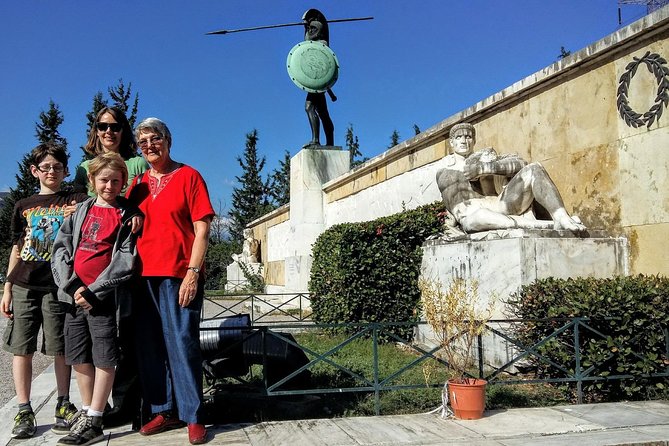
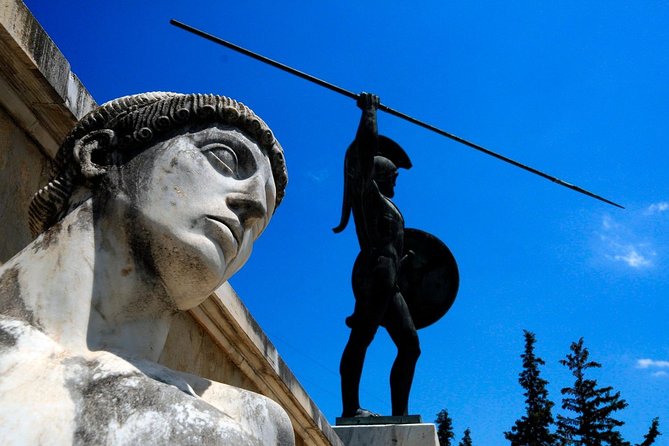
Day one starts with Thermopylae, the famous pass where Greek forces fought the Persians. You’ll stop at the battlefield area and the Leonidas-era monument zone, plus there’s an interactive museum right there focused on the battle and how it changed the course of Greek history.
Two tips for Thermopylae:
- If you’re into ancient narrative, prioritize the museum. It’s quick (about 30 minutes) and the ticket is listed as small, so it’s an easy add-on.
- Don’t over-plan. This stop works best when you pair it with walking time and a real look at the pass. Even without a guide inside every building, the setting explains a lot.
Then you’ll head toward Meteora, with a route that includes a stop in the Old City of Trikala. The details here are genuinely useful: the region has prehistoric traces tied to the cave of Theopetra (far older than Greece’s classical period), and Trikala’s story connects to the ancient city of Trikka and its defensive placement between hills and the river. It’s the kind of stop that breaks the drive and helps your brain “land” in central Greece.
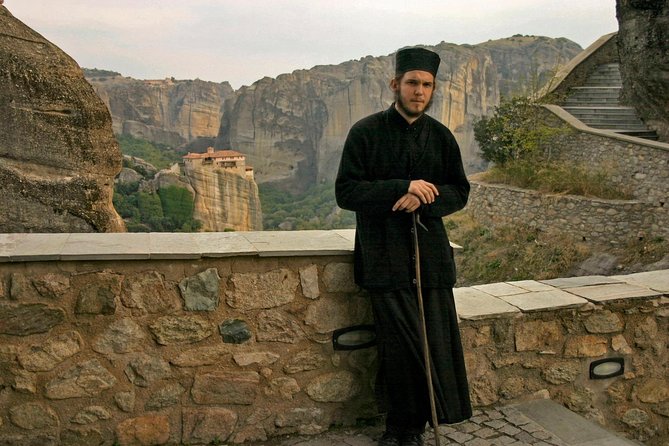
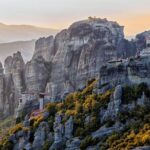
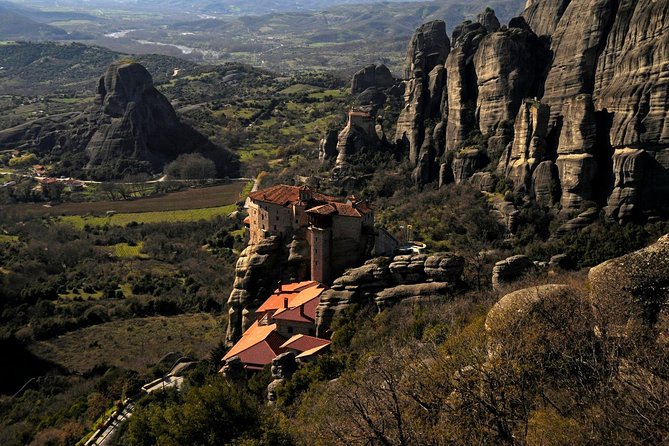
The Meteora portion is where the tour earns its name. You’ll drive around the rock formations and visit at least two Orthodox monasteries. Meteora is on UNESCO’s World Heritage list, and the monasteries perch on massive natural pillars and boulders that dominate the area.
What to expect at Meteora on day one:
- You’ll see the rocks from the road before you hit the monastery stairs. That’s important because the scale is hard to grasp once you’re inside.
- You’ll have about a two-hour block for the monastery visits, but it’s built around how these sites work: you’ll want time to look, photograph, and pause.
After that, you reach Kastraki, the village at the base of the rocks. This is one of my favorite ways to do Meteora because you’re not just viewing from above—you’re living in the foothills.
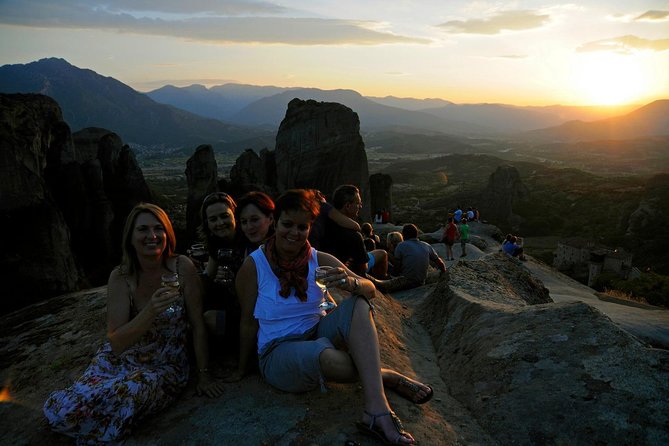
The plan includes a photography and sunset-style experience via Meteora rocks and a village drive. You’ll also have dinner at a traditional tavern. The tour notes that Kastraki is popular and rooms need time in advance, which is a heads-up if you’re thinking about upgrading your stay or adding nights.
Day 2: Early light at Meteora, then The mines or the myth at Mount Parnassus
Day two begins with an early departure, about 8:00 am, aimed at better light for photos around Meteora. This part is a big deal because Meteora looks different depending on the hour. Early light flattens glare, sharpens rock textures, and helps monasteries read better from a distance.
You’ll take a photography loop with stops in selected view areas. Even if you’re not obsessing with camera settings, you’ll appreciate the “second look” at the same rocks and monasteries under different conditions. It’s the simplest way to make the sights feel fresh instead of repetitive.
From there, you shift to archaeology and caves.
Theopetra Cave stop: old human traces, minimal drama
The Theopetra Cave stop is tied to one of the earliest human occupation timelines in the region, with evidence dating back around 130,000 years ago. The tour notes that the cave has been described as roughly quadrilateral and that the entrance allows light into the interior.
A practical expectation: you’re not going to get a staged show here. You’ll get the site context and enough time to understand why the cave matters historically.
Trikala Fort: a quick climb for real views
Then you’ll walk up to Trikala Fort, described as a well-preserved Justinian fortress. It includes a recreational area and features the city’s clock on the east side (with a history of destruction and restoration).
This is a good “reset” stop. It’s physical enough to stretch your legs without turning the day into a hike marathon.
You can also read our reviews of more tours and experiences in Athens

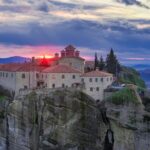
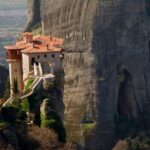
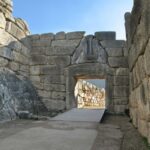
Mount Parnassus: Vagonetto mine gallery tour or Corycian Cave
Here’s one of the smarter choices on this tour: on Mount Parnassus, you can do either the Vagonetto mining park tour or Corycian Cave.
Option A: Vagonetto (Mine Gallery 850)
Vagonetto is described as Greece’s first and only mining park. It uses a small train to take visitors down to the Mine Gallery 850, about 200 meters underground. The experience is set up around going through an old gallery wearing a miner-style setup, with the pitch that you’ll see depictions of mining processes among chalky rock from a far older geological past.
Ticket info is listed (about 8€ general), and the time is roughly 1.5 hours including the train and walkthrough.
Option B: Corycian Cave (mythology at the source)
If you’d rather spend your time with Greek mythology, the Corycian Cave is the alternate. The tour frames it as the birthplace setting of Greek mythology tied to local nymphs and the Muses, plus Pan. It also notes the cave was used as refuge during invasions, including Persian-related references.
Ticket is listed as free for this stop in the plan, with about 1.5 hours.
Which should you pick? If you like crafts, science, and “how this place was used,” choose Vagonetto. If you want mythology and sacred stories, choose Corycian Cave.
Delphi and the Apollo Temple zone
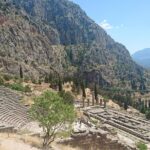
You’ll visit Delphi, including the Temple of Apollo area. The plan describes Delphi as the ancient sanctuary tied to the Pythia oracle and the omphalos stone marker concept (the center-of-the-world idea for ancient Greeks). It’s also recognized as UNESCO World Heritage, with the site spread across the Mount Parnassus slope overlooking the coastal plain and valley of Phocis.
Admission for key Delphi monuments is not included, but the site time is built into the day so you can actually see the sweep of the sanctuary rather than just pose at a sign.
Day 3: Delphi Museum, Athena Pronaia’s Tholos, Arachova, then Thebes
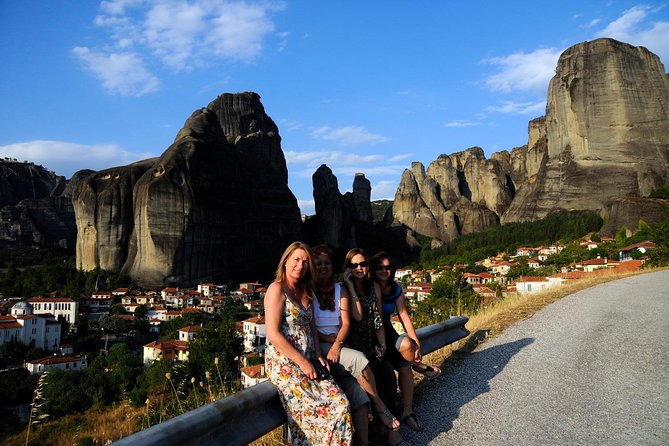
Day three starts in Delphi with the Archaeological Museum of Delphi. This is one of the best ways to “clean up” after walking the sanctuary the day before. When you see artifacts after you’ve seen the geography, the place makes more sense.
The museum is described as covering about a thousand years, from Mycenaean-era material through Greek-Roman times. A standout mentioned in the plan is the famous Charioteer statue from a chariot-run dedication.
Ticket info is listed as included for the museum, which is a nice value add because it’s one of the more expensive items when you’re paying per site.
Then you’ll head to the Tholos of Athena Pronaia. The Tholos is a circular building constructed between about 380 and 360 BC with 20 Doric columns on the outside. It’s tall, and the plan notes that the Tholos photo people share online is sometimes mistaken for the Apollo Temple view—so you’ll be better prepared when you recognize what you’re actually seeing.
After those Delphi pieces, the tour shifts to scenic and cultural stops designed for atmosphere.
Arachova: mountain town breaks and an easy reset
Arachova is a mountainous village at the foot of Parnassos. The plan frames it as a popular winter destination with ski culture and celebrities, but also a calm base for first-timers who want mountain relaxation with modern tourism services.
You’ll have about an hour stop—enough time to wander a bit and get your bearings.
Kryas Livadeia Springs: a drink stop with oracle lore
Next is Levadia’s area and the Kryas Livadeia Springs, with a drink or light lunch stop suggested (Greek iced coffee and souvlaki are specifically mentioned). The stop is set by the river Karya at the spot where springs emerge.
The tour connects this to ancient oracle lore, naming Zeus and referencing springs of Mnemosyne (remembrance) and Lethe (oblivion), plus the idea that this oracle was used as a step before visiting Delphi.
You’re not going to get the full immersion ritual experience here—this is more about connecting stories to a real place and giving you a break before the final stop.
Thebes Museum: the last major anchor
The last major stop is the Archaeological Museum of Thebes, described as one of Greece’s more important museums, with collections from excavations around Boeotia, spanning from Palaeolithic to Post Byzantine periods.
A key practical note: the museum is closed every Tuesday and on several holiday dates, so it’s worth thinking about the day-of-week your booking lands on. The tour plan also lists seasonal hours and ticket costs (winter and summer pricing differ).
The time block is about 1.5 hours. That’s enough to get oriented, see standout objects, and leave with a clearer sense of what Boeotia contributed beyond the famous classical names.
Price and logistics: what you’re paying for, and what to budget extra

The listed price is $1,163.56 per person for a private 3-day tour. That’s not cheap, but it’s private, includes fuel/tolls/parking, and includes hotel pickup and drop-off from Athens or Piraeus.
Where your money goes:
- You’re paying for air-conditioned private transportation, with fuels, tolls, parking fees, and a professional English-speaking driver/leader for three days.
- You’re also paying for the “traveler-style” pacing: flexible stops for photos and breaks.
What you should budget extra for:
- Admissions and museum tickets are not included. The plan lists per-site costs for things like monasteries in Meteora (around 3€ per monastery), Delphi’s sanctuary sites, the Delphi Temple area, and the museum tickets for Thebes (with winter/summer pricing).
- The vagonetto mine tour (listed around 8€ general) is also not included.
- You’ll likely want to plan gratuities; the plan suggests from 1€ per person.
Value check:
- If you enjoy multiple UNESCO-level stops and you want the itinerary adjusted around your pace, private is often the best way to avoid stress.
- If you’re very budget-driven and you only want “a few hits,” you might feel the extra admissions add up.
Vehicle choice matters too. The tour offers sedan/SUV for up to three adults (or families of four with two adults plus two kids up to 11), minivan for up to seven passengers, and a minibus for larger groups. Price varies by vehicle and group size, so it’s worth matching the vehicle to who’s traveling.
Accommodation options with a driver room included

Accommodation isn’t included in the base price, but the operator can arrange it in selected hotels with breakfast. The plan gives a few different example rates depending on hotel class and dates.
You’ll see notes about:
- Boutique or 3/4 hotels with breakfast at additional cost, with example starting rates around 90€ per double room and weekend-holidays higher (120€), plus a separate guideline showing rates starting around 160€ per double room per night with weekend-holidays around 190€.
- If you book more than two rooms, you get a discount (the plan mentions 15% less in one note and 10% less in another).
- The driver’s room is complimentary, but you’ll need an extra room if you choose your own hotel reservation and want the driver placed separately.
My practical advice: if you’re serious about comfort after long driving days, don’t treat lodging as an afterthought. Meteora and Delphi areas are popular, and the tour explicitly warns that Meteora/Kastraki rooms need time in advance.
Timing, closures, and how to plan around Greek site hours
Greek museum closures can wreck your schedule if you ignore them. This tour flags that museums are closed:
- Every Tuesday (for museums),
- and on dates like Dec 25–26, Jan 1, Mar 25, Easter Day, and May 1.
Hours also change by season:
- Winter: 8:30 am to 15:30 pm
- Summer: 8:00 am to 20:00 pm
Also keep in mind the “who guides you” detail: the driver is not a licensed tour guide for walking inside museums or archaeological sites. The driver provides informative historical context during travel, but if you want an archaeologist guide to walk you through sites, you’d need to hire one separately.
For you, that means you should plan:
- Either lean on the drive-time and your own pace in museum spaces,
- Or decide in advance which 1–2 sites are worth hiring an additional expert for.
Who this tour is best for (and who might prefer something else)
This is a great fit if you:
- want maximum scenery with minimal stress,
- like mixing ancient sites with small cultural breaks (Trikala fort, springs, Arachova),
- travel as a couple or family and want privacy plus flexibility.
It’s especially good if your ideal trip isn’t just “see the big monuments.” This route gives you caves, mines-or-myth choice, multiple viewpoints, and a museum finish at the end that ties your geography together.
If you’re the type who hates long driving legs, you might want a shorter focused tour. But if you’re okay with road time—and you’ll use the breaks for photos and meals—this is one of the most practical ways to pack central Greece into three days.
Should you book this 3-day Athens private route?
I’d book it if you want a private, driver-led route that treats you like travelers with a say in timing. The best part isn’t just the famous names—it’s the mix of flexible stops, the early light photo loop at Meteora, and the fact that meals and comfort breaks are built into the rhythm.
I wouldn’t book it if you’re trying to keep admissions costs down, or if you need someone with a license to conduct inside-site tours in every museum and monument. You can still have a great time—just know what’s included versus what you’ll pay once you’re there.
If you can accept that tickets are extra and you’re willing to move at a steady but not frantic pace, this is an efficient, satisfying way to see more than Athens-only Greece.
FAQ
What time does the tour start?
The start time is listed as 8:00 am.
Is pickup included?
Yes. Pickup and drop-off are offered from your hotel or apartment in Athens or Piraeus, and you can request another location.
Is accommodation included in the tour price?
No. Accommodation is not included, but the operator can arrange selected boutique or 3/4 hotels with breakfast for an additional cost, with the driver’s room complimentary.
Are admission tickets included?
No. Admission fees for sites and museums are not included, and costs vary by site and season.
How many monasteries will I visit at Meteora?
The plan indicates you’ll visit at least two Orthodox monasteries. Meteora monastery ticket pricing is listed per monastery.
Does the driver act as a licensed guide inside museums and archaeological sites?
No. The driver provides informative historical details during travel, but they are not described as a licensed tour guide for walking through museums or archaeological sites. You’d need to hire a separate archaeologist guide if you want that.
What happens if I cancel?
The experience is non-refundable and cannot be changed for any reason. If you cancel or request an amendment, the amount paid will not be refunded.


More Private Tours in Athens

More Tours in Athens



More Tour Reviews in Athens
- All Day Cruise -3 Islands to Agistri,Moni, Aegina with lunch and drinks included
★ 5.0 · 4,958 reviews