REVIEW · ATHENS
3 Days Private Tour: Delphi & Meteora
Book on Viator →Operated by Olive Sea Travel · Bookable on Viator
Delphi and Meteora in three days feels like cheating. You get a private Athens-based plan that links ancient Greek sites, Byzantine art, and working Orthodox monasteries with a no-stress pace. Two things I especially like here: the early focus on Hosios Loukas (mosaic-and-architecture heaven) and the built-in photo tour around Meteora at sunset. One consideration: entrance fees and any licensed on-site guide are extra, so your total spend will depend on how you handle tickets.
Because this is private, you’re not stuck with a rigid bus schedule or a crowd stampede. I also like the “real Greece” road approach—time for a countryside drive and a break in Trikala before you reach Kalambaka. The driver does the historical storytelling, but they aren’t licensed to walk inside museums and sites with you, so plan for that if you want official guiding inside each place.
In This Review
- Key things that make this tour worth your time
- Why this private Delphi and Meteora plan works so well
- Day 1: Hosios Loukas, Arachova, and Delphi without the rush
- Delphi’s Apollo complex: what you’ll see and how to enjoy it
- Meteora day: the scenic road to Kalambaka and a sunset photo tour
- Great Meteoron and the monasteries you’ll actually walk
- Thermopylae day: Leonidas, the battlefield area, and a 3D memorial center
- Kamena Vourla lunch by the sea before heading back to Athens
- Price and value: what you’re really paying for
- The driver role: what “private” really means here
- Who this tour suits best (and who should reconsider)
- Should you book this Delphi & Meteora private tour?
- FAQ
- Is this tour private or shared?
- What’s included in the price?
- Are entrance fees included?
- Can the driver take you inside sites and museums?
- What language is the tour offered in?
- How far in advance can I cancel for a full refund?
Key things that make this tour worth your time
- Private vehicle + pickup: hotel/Airbnb/port pickup and drop-off, plus bottled water, means fewer hassle minutes.
- Hosios Loukas first: a major Byzantine monastery stop (11th–12th century) with famous golden mosaic decoration.
- Delphi beyond the headline: Apollo Temple, theater/stadium, plus time for the Archaeological Museum.
- Meteora in a calm order: Great Meteoron plus Agios Stefanos and Roussanou, with easy-access choices.
- Sunset photo tour around Meteora rocks: you get the dramatic views when the light is best.
- Thermopylae + a 3D memorial experience: you’ll see the battlefield area and then the modern multimedia center.
Why this private Delphi and Meteora plan works so well
If you’ve ever done Greece with a bus schedule, you know the pain: you arrive, you queue, you get rushed, and you leave still thinking about what you missed. This 3-day setup fixes that with a private vehicle and a driver who’s built for the long day. You’re moving between Delphi and Meteora with the kind of pacing that lets you stop for what matters—views, walking time, and the small details you’d otherwise gloss over.
The other big win is the mixture of eras. Day one leans Byzantine and ancient Greek: Hosios Loukas, then Delphi’s Apollo sanctuary. Day two and three add Orthodox monastery life at Meteora and then the Spartans at Thermopylae. It’s not just “see ruins.” It’s a route through different kinds of meaning—religious art, prophecy legends, and national memory.
Just remember one practical point: the driver is not licensed to guide you inside sites and museums. That’s not a dealbreaker, but it does change what you should expect. You’ll get history and context from the driver, yet for official inside guiding you’d need a licensed guide added on request. Entrance fees are also not included, so budget for tickets and monastery rules.
You can also read our reviews of more private tours in Athens

Day 1: Hosios Loukas, Arachova, and Delphi without the rush
Day one is built like a highlight reel, but it still gives you time to breathe. You start at the Monastery of Hosios Loukas, a major example of the second golden age of Byzantine art (11th–12th century). This stop is all about the mosaics and the architecture—especially the golden mosaic decoration that makes the interior feel like it’s lit from inside. Even if you’re not a hardcore art person, it’s the kind of place where your brain slows down. Quiet stone, religious space, and details you’ll want to look at for a full moment longer than you planned.
From there, you get a short break in Arachova, a mountainous village at the foot of Mount Parnassos. It’s known as a winter destination for ski lovers and it also has a more modern tourism vibe than some small villages. In practical terms, it’s a useful pause: a chance to stretch, take photos, and reset before Delphi. The time here is brief, but the mood changes fast when you go from monastery calm to mountain town energy.
Then the day turns into ancient Greece mode at Delphi. The sanctuary of Apollo is a Pan-Hellenic site, meaning it mattered across the Greek world. You’ll learn how Delphi was linked to oracles and how it was imagined as a symbolic center—followed by what you can actually see on the ground: the Temple of Apollo area, the ancient theater, and the stadium. Delphi’s setting matters too. You’re surrounded by mountains and that adds drama to everything you walk to, from viewpoints to the way the ruins sit in the hills.
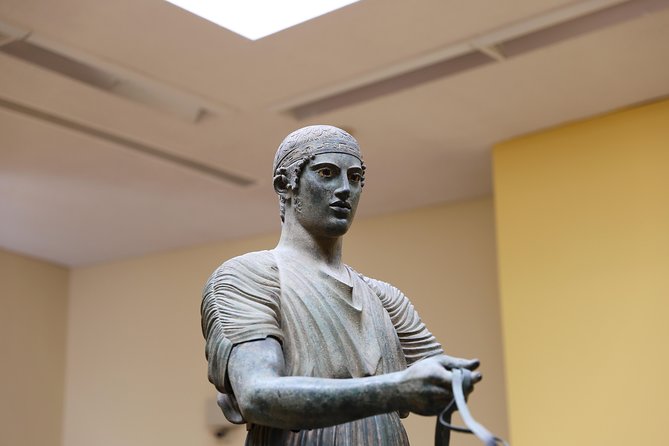
If you have even a small interest in how archaeology is presented, the Delphi Archaeological Museum stop is worth your time. It’s where you’ll find major pieces such as the famous Charioteer and the Gold Ivory statue. Since this is often where the story becomes clearer than the stones outside, it helps the whole day click into place.
Delphi’s Apollo complex: what you’ll see and how to enjoy it
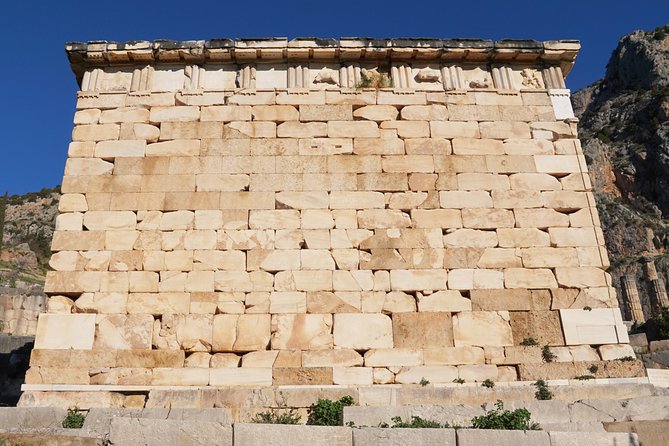
A lot of Delphi visits get reduced to one photo and a quick walk. This plan gives you more time on the Apollo side: the temple area where Pytheia’s role in oracle traditions is connected, plus the theater and stadium. The key here is pacing. You have time to see the layout and understand how Delphi functioned—less like a random pile of ruins, more like a functioning religious and public space.
Two practical tips help here:
- Wear shoes with good grip. Delphi’s walking can be uneven, and you’ll be moving between zones.
- Take a few minutes before you enter any main area to look outward. Delphi’s mountain setting isn’t just backdrop; it changes how you understand the sightlines.
Entrance fees for the site and museum are not included, so if you want fewer surprises, check ticket costs ahead of time. If you prefer a deeper, inside-the-building explanation, consider hiring a licensed guide on request for the museum areas. The driver can explain history, but official museum-style guiding needs a licensed professional.
Meteora day: the scenic road to Kalambaka and a sunset photo tour
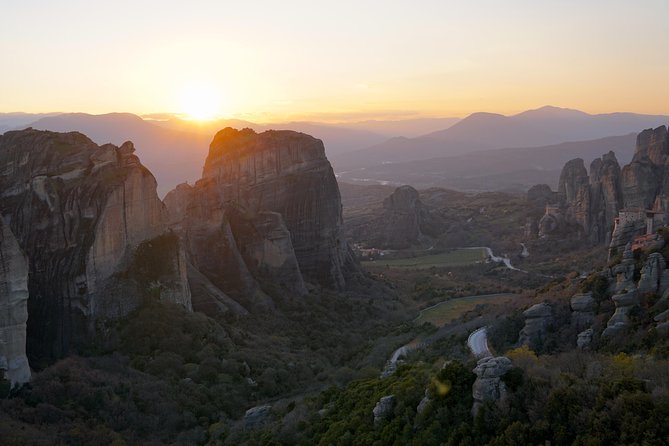
Getting from Delphi to Meteora is half the fun on this itinerary, because the drive is set up to show you more than the highway view. You travel through the Greek mountains instead of taking the express route. That matters because you’re not just transporting yourself—you’re seeing the real countryside as you move toward Kalambaka.
Along the way, you’ll drive past Lamia, then make a stop in Trikala for Greek lunch or coffee. It’s a practical rhythm: fuel your day, then continue. After that, you push onward to Kalambaka, the town used as the base for Meteora visits.
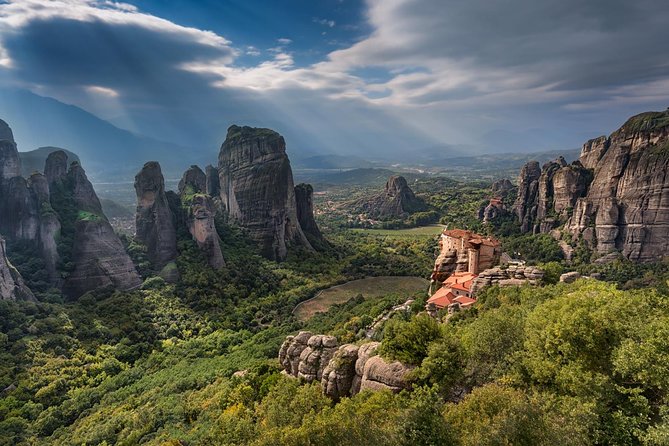
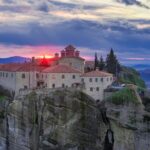
Once you settle, the plan includes an evening photo tour around the hills and towering rocks of Meteora under sunset light. This is one of those things you’ll be glad you have scheduled. Meteora at golden hour changes how the monasteries look—color, contrast, and depth all shift fast. Without this timing, you’d either arrive too late for good light or waste daylight trying to coordinate it yourself.
Great Meteoron and the monasteries you’ll actually walk
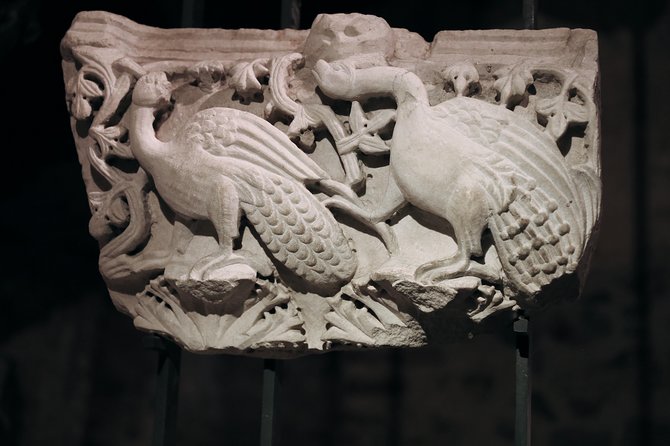
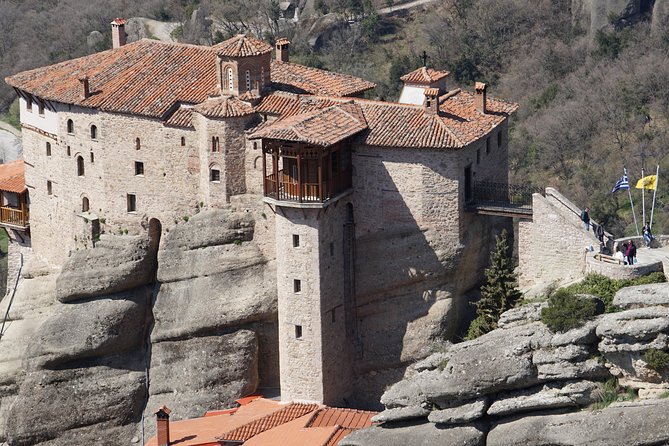
The second full day is the Meteora morning and early afternoon focus. Meteora means suspended rocks, and the monasteries live on those high stone pillars. The star is the Great Meteoron Monastery, described as one of the largest and most important complexes of Eastern Orthodox monasteries still in use. This is the big hitter, and you’ll want your time here.
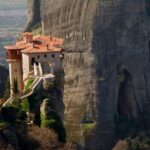
Then you move to Agios Stefanos, noted as one of the few female monasteries at Meteora. Construction dates aren’t exact in the info, but evidence points to the 15th century. The Catholicon wall paintings were executed in 1560, so even the art details have real anchors, not vague storytelling.
Finally, you visit Roussanou Monastery for a different angle on the cliffs and the surrounding monasteries. There’s also an off-the-road panoramic viewpoint you can reach via pathways, where you can walk on boulder-like rock. That’s the kind of “stretch your legs and get a better angle” moment that makes Meteora more than a series of viewpoints.
One enjoyment note: the order of monastery stops can shape your mood. Starting with the biggest and most impressive complex (Great Meteoron) builds awe early. Ending with smaller-access monasteries and viewpoint moments helps you avoid the sensation of being rushed from one location to the next. This plan gives you that balance.
You can also read our reviews of more tours and experiences in Athens

Thermopylae day: Leonidas, the battlefield area, and a 3D memorial center
Day three is history with a modern touch. You begin at the Battlefield of Thermopylae, where Leonidas and the 300 Spartans faced the Persian army. The stop is short, but it’s meaningful. In just a few minutes, you can still get a sense of place—what it means to stand at a location tied to freedom stories that lasted far beyond the battle itself.
Next is the Kainotomiko Kentro Istorikis Enimerosis Thermopylon, a historical center where you can watch a 3D movie. This is the bridge between rumor and reality. The site works like a time machine: you travel through time via multimedia to feel the presence of those who sacrificed their freedom and were killed by a foreign conqueror. Even if you skip the deeper details, the 3D format tends to make the story easier to hold onto than a wall of text.
Then you finish the main story arc with the Leonidas Monument across from Kolonos Hill, paired with the idea of Spartans leaving their last breath in that area. After that, you shift from battlefield gravity to a coastal lunch in Kamena Vourla.
Kamena Vourla lunch by the sea before heading back to Athens
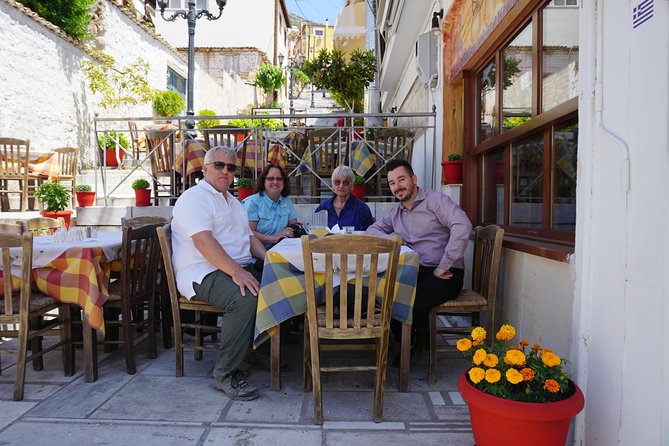
Most long historical days end with a “somewhere to eat” plan. This one gives you a real breather: lunch by the sea in Kamena Vourla, with traditional fishermen boats under Greek sun. It’s an easy day mood reset. You’ll have about an hour, which is enough time to eat without feeling like you’re rushing off to the next stop.
Then you drive back to Athens. You’re not spending the last hours squeezed into sightseeing. You’re closing the loop, which is exactly what you want after three packed days of ancient sites, monasteries, and battlefield memory.
Price and value: what you’re really paying for
At $1,059.62 per person for a private 3-day tour, the cost isn’t low. But it can be fair value depending on how you travel and what you care about.
Here’s what you’re getting for the money:
- A private vehicle for door-to-door pickup and drop-off (hotel/Airbnb/port).
- Accommodation and breakfast included (based on your booking).
- Bottled water and a plan that reduces your decision fatigue.
- A driver with deep historical knowledge who handles the day’s flow and timing.
- A mobile ticket and English-language service.
What’s not included—and this is where you can affect total value:
- Entrance fees to sites and museums.
- Licensed on-site guiding (available on request for an extra cost).
- Accommodation upgrades are optional in the info. You can upgrade to 3- or 4-star with breakfast if you choose, but you’ll pay more.
For value, the biggest factor is stress. This kind of route—Delphi plus Meteora plus Thermopylae—can become a logistics headache if you build it yourself, especially with the timing around monastery visits and the travel time between areas. Paying for private transport often buys back energy. And with this itinerary, that energy matters: you’ll be walking and looking all day.
The driver role: what “private” really means here
The driver is the backbone of the experience. In feedback connected to this tour, a couple of names come up as standouts—Manos and Alex—both described as attentive, humorous, and deeply informed about Greece and its culture. People also mention practical care, like selecting good restaurant tables and keeping the day smooth and relaxing.
Still, know the limits up front. The driver is not licensed to accompany you inside sites or museums. Translation: you’ll get context and guidance during travel and at meeting points, but if you want official commentary inside every building (especially museums), you’ll need to add a licensed tour guide on request. This is one reason some travelers prefer the driver-led approach for broad understanding, then add licensed guiding only where it matters most to them.
If you’re the type who likes to read a plaque and move on, you’ll probably be happy with the driver explanations plus your own pace. If you want a full narration inside each space, budget for licensed guiding.
Who this tour suits best (and who should reconsider)
This tour is a great fit if you:
- Want a private route with minimal coordination headaches from Athens.
- Like a mix of eras: Byzantine monasteries, ancient Greek sanctuaries, and living Orthodox sites.
- Care about the details that make Delphi and Meteora feel understandable, not just photographed.
You might reconsider if you:
- Have a strict budget and don’t want to add entrance fees and possible licensed guiding.
- Prefer to control every minute yourself, including ticket timing and route planning.
- Are hoping for a licensed museum-style guide inside every venue as part of the base price.
Should you book this Delphi & Meteora private tour?
I’d book it if you want the most efficient way to connect Delphi and Meteora without turning your trip into a spreadsheet. The combination of Hosios Loukas, Delphi’s Apollo complex and museum, Meteora’s working monasteries (including an evening photo tour), and a Thermopylae day with a 3D memorial center is a smart arc.
Before you say yes, do two quick checks:
1) Decide how you want to handle site fees and whether you need licensed guiding inside museums.
2) Think about your comfort with walking and early stops. This itinerary moves, and the value comes from using that time well.
If those match your style, this is the kind of private tour that makes Greece feel personal—without sacrificing the big historic hits.
FAQ
Is this tour private or shared?
This is a private tour/activity, so only your group will participate.
What’s included in the price?
The tour includes accommodation and breakfast (according to your booking), hotel/Airbnb/port pickup and drop-off, bottled water, and transport by private vehicle.
Are entrance fees included?
No. Entrance fees are not included.
Can the driver take you inside sites and museums?
No. The drivers are professional and knowledgeable, but they are not licensed to accompany you inside any site or museum. If you require a licensed guide, you can hire one additionally.
What language is the tour offered in?
The tour is offered in English.
How far in advance can I cancel for a full refund?
You can cancel up to 3 days in advance for a full refund. If you cancel less than 3 full days before the experience’s start time, the amount you paid will not be refunded.

More Private Tours in Athens


More Tours in Athens



More Tour Reviews in Athens
- All Day Cruise -3 Islands to Agistri,Moni, Aegina with lunch and drinks included
★ 5.0 · 4,958 reviews