REVIEW · ATHENS
Sparta Tour
Book on Viator →Operated by 4 Seasons Greece Tours · Bookable on Viator
Sparta and Mystras in one unforgettable day. I love the door-to-door private tour with hotel and port pickup in Athens and Piraeus, and I love the onboard Wi‑Fi so you can stay online without worrying about roaming while you travel through the Peloponnese.
The trade-off is straightforward: several stops have entrance fees you pay yourself, and the driver can’t escort you inside each site—so you’ll do a bit of independent walking and ticket handling.
In This Review
- Key highlights worth planning around
- Sparta and Mystras from Athens: a long drive that pays off
- Getting there in a luxury car with real comfort
- Corinth Canal: a short stop with surprisingly good context
- Sparta: what you can realistically see in a few hours
- The Archaeological Museum of Sparta: small, dense, and worth it
- Olive Museum: the practical, hands-on side of Peloponnese culture
- Mystras UNESCO ruins: the Byzantine city that fills your camera roll
- Lunch in Pikoulianika: a scenic break that resets your legs
- Price and value: $802.86 per group up to 3
- Logistics that actually matter on long day trips
- Who should book this Sparta tour
- Final verdict: should you book?
- FAQ
- What’s included in the Sparta tour from Athens?
- Are entrance fees included?
- Is there pickup from Athens and Piraeus?
- How long is the day trip?
- Is lunch included?
- Who else will be on the tour?
Key highlights worth planning around
- Private, 100% exclusive group format (up to 3): you’re not sharing the day with strangers.
- Onboard Wi‑Fi and bottled water in a brand new luxury vehicle with A/C.
- Corinth Canal stop is short but comes with easy photo potential and useful context.
- Sparta + Leonidas Tomb area focuses on what remains and what those places mean.
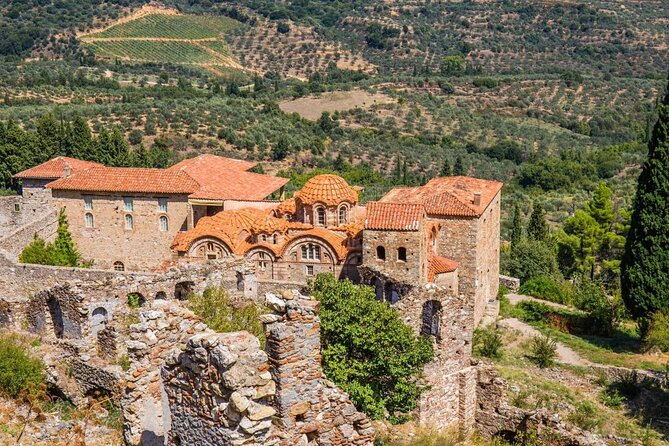
- Mystras UNESCO ruins give you a full medieval-byzantine snapshot in under two hours.
- Olive Museum adds a food-and-technology angle that most ancient-history days miss.
Sparta and Mystras from Athens: a long drive that pays off
A Sparta day trip is tempting because the name alone carries weight. But what makes this outing work is the combo: you’re not just seeing ruins—you’re linking the ancient story of Sparta to the medieval world of Mystras, with a couple of practical stops between.
From Athens, it’s about a 2.5-hour drive each way. That sounds like a lot, and it is, but the private format helps. You’re in a comfortable vehicle, with a professional English-speaking driver handling the route and timing, so you’re not wasting energy on buses and transfers.
The day is also built around “right-sized” visits. You get quick viewpoints at the start, then deeper attention where it matters—especially once you reach Mystras, the UNESCO site that most people come for.
You can also read our reviews of more tours and experiences in Athens.


Getting there in a luxury car with real comfort
This is a private door-to-door day, which means pickup and drop-off from your Athens hotel (or other residences) and from Piraeus are included. If you’re starting near public transport, that can help—but the big value is that you’re not negotiating meeting points or wrangling luggage at the last minute.
You ride in a brand new luxury vehicle with A/C and bottled mineral water, plus onboard Wi‑Fi. Wi‑Fi isn’t just a nice-to-have here. Long drives can feel like dead time, and being able to message, check maps, or read up on what you’ll see next makes the whole day feel smoother.
One more practical note: the tour is private to your group, not a shared coach. That usually means better pacing and fewer “hurry up” moments, especially at places where you’ll want to take photos or look around at your own rhythm.
Corinth Canal: a short stop with surprisingly good context
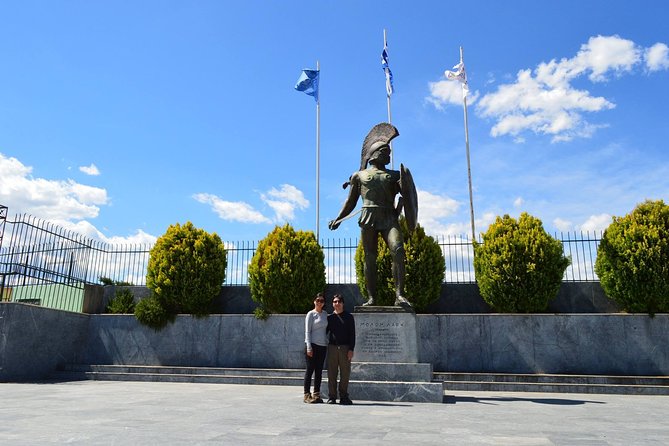
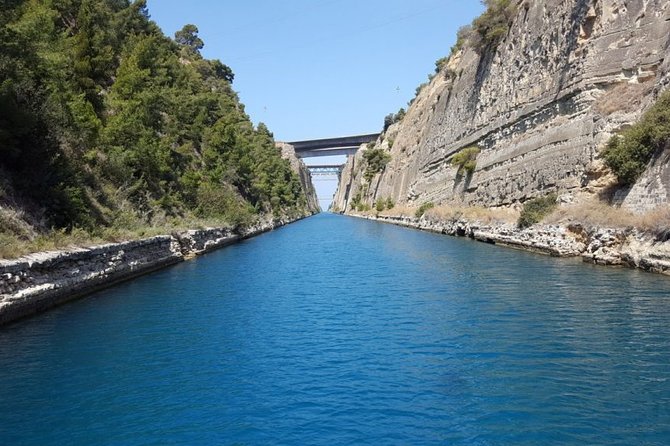
Your day starts with the Corinth Canal, a quick photo stop designed to give you a sense of why the Peloponnese feels like an island. The canal connects the Gulf of Corinth with the Saronic Gulf by cutting through the Isthmus of Corinth. It’s only about 6.4 km long, and it’s narrow—around 21.4 m wide at the base—so most modern ships can’t pass through.
This matters because it explains the region’s geography in plain terms. Even if you’re not a ship-nerd (respect), the canal helps you “see” the map in your head as you head toward Sparta.
Time here is about 20 minutes, and that’s enough for quick photos and orientation. Entrance is listed as free for this stop, so you’re not juggling tickets at the very beginning.
Sparta: what you can realistically see in a few hours
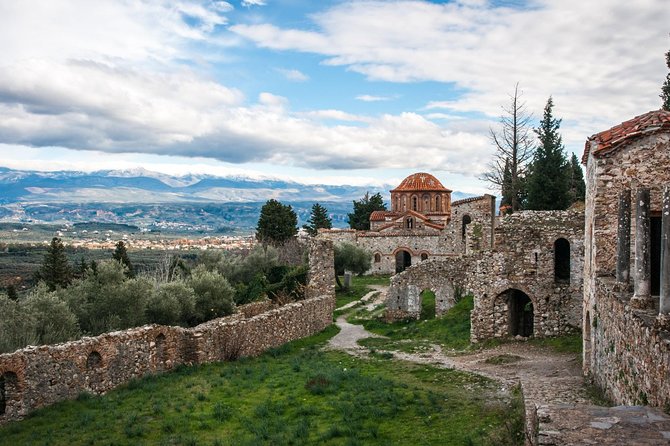
Sparta is one of those places where your expectations can run ahead of your time. In antiquity it was known as Lacedaemon, and it rose to dominance around 650 BC as Greece’s leading military land power. It fought Athens through the Greco-Persian Wars, then became Athens’ principal enemy in the Peloponnesian War—winning that long rivalry.
In other words, Sparta isn’t just a set of stones. It’s a political and military story you’ll recognize as you move around.
The time budget for the Sparta visit is about 30 minutes, and that’s where planning matters. You’re not doing a “stand-and-stare” museum marathon. Instead, you’re getting a focused look at what remains, including the Leonidas Tomb area and the broader Sparta setting near the river basin.
Since admission is listed as free for this stop, your cost stays controlled. Still, go in with a mindset of browsing and orientation: absorb what you can, take photos, then use the next stops for deeper learning.
The Archaeological Museum of Sparta: small, dense, and worth it
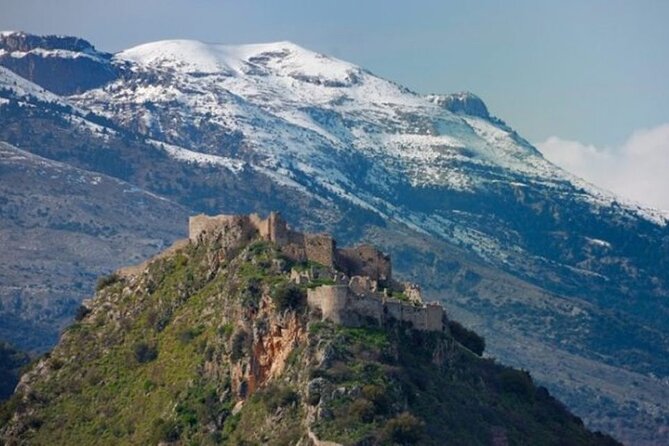
After the outdoor Sparta time, you move to the Archaeological Museum of Sparta. This is one of those museums that feels compact but packed with meaning. It houses thousands of finds from the ancient Acropolis of Sparta (also called Lakedaemonia), and from across Laconia. The collection spans from the Neolithic Age to the late Roman period.
The museum is organized into seven rooms totaling roughly 500 square meters—about 5,400 sq ft. That makes the visit feel manageable, and it’s why the time slot is around 30 minutes.
Admission is not included for this stop, so keep that in mind when you estimate your total day cost. Also remember the driver can’t escort you inside, so you’ll handle ticketing and entry yourself while they keep you on schedule outside.
If you want a simple payoff: this museum helps you connect the Sparta you imagined (warrior legends, the name Leonidas) to actual artifacts and time periods beyond the headlines.
- All Day Cruise -3 Islands to Agistri,Moni, Aegina with lunch and drinks included
★ 5.0 · 4,958 reviews




Olive Museum: the practical, hands-on side of Peloponnese culture
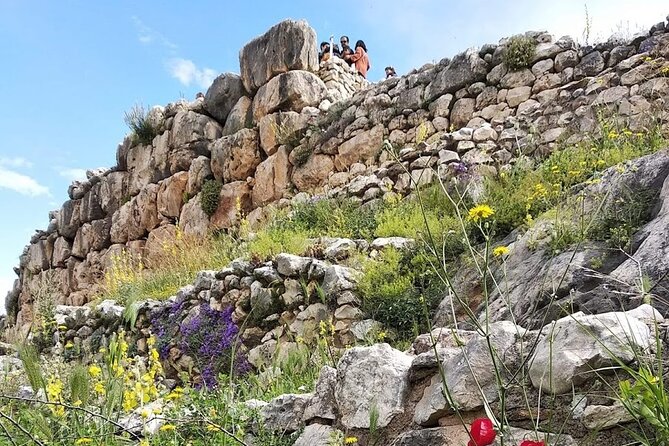
Not every ancient history day includes an olive museum, and that’s exactly why this one works. The Museum of the Olive and Greek Olive Oil tells the story of the olive from its early place in the Mediterranean to today’s uses. You’ll see how olives show up in daily life and special rituals: cooking, fuel, perfume-making, and other uses.
The museum is also strong on physical history. There are reconstructions of olive presses in the courtyard, ranging from prehistoric periods through Byzantine times. Then you get working models that show how pressing technology changed over time—so you’re not only looking at objects; you’re seeing process.
This stop lasts about 30 minutes, which fits well between bigger sites. Admission is not included, so check pricing locally and budget a bit in your day.
Why I like this kind of stop: it gives your brain a break from battle timelines. Plus, it roots the region in something people still use—olive oil—so the day feels anchored in real Greek life, not only the ancient past.
Mystras UNESCO ruins: the Byzantine city that fills your camera roll
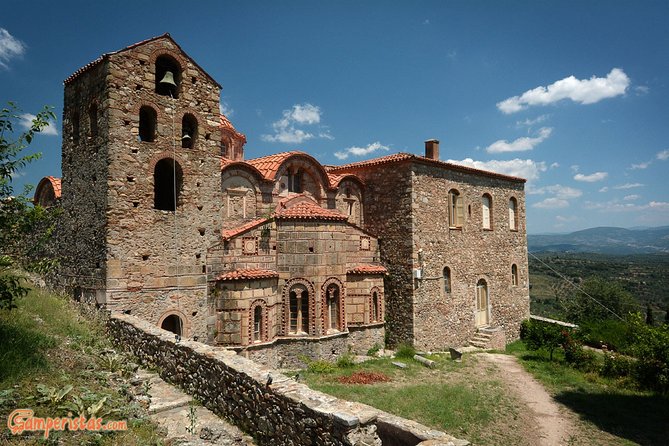
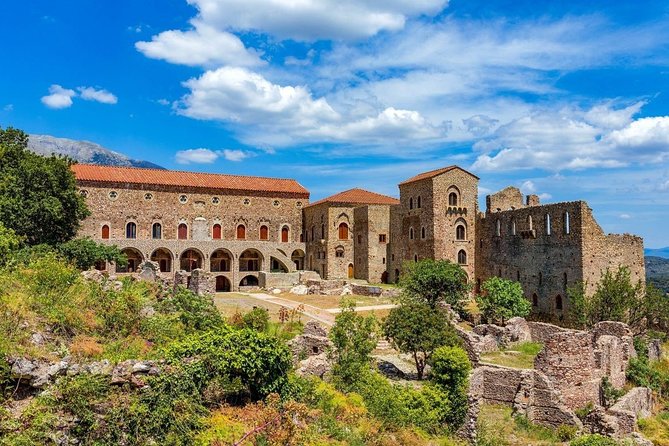
By the time you reach Mystras, the day shifts gears. Mystras is often described as a “wonder of the Morea,” and you feel why quickly. The town grew around a fortress built in 1249 by William of Villehardouin. Later it was reconquered by Byzantines, then occupied by Turks and Venetians, and the city was abandoned in 1832—leaving medieval ruins across a dramatic setting.
The UNESCO site is your big, longer stop at about 1 hour 30 minutes. That time is enough to get your bearings and see major church and monastery areas at a level that feels satisfying, but it’s still not enough to treat it like a multi-day hiking project. Come ready to choose what matters most to you.
As Mystras became a Byzantine power center, key institutions moved there. The bishopric transferred from Sparta, and the cathedral is the Metropolis (with the church of Hagios Demetrios built after 1264). Monasteries like Brontochion and Christos Zoodotes are part of the story as well.
Admission is not included here, so budget accordingly. And again, your driver can’t escort you into sites, meaning you’ll navigate Mystras entry and internal movement on your own while staying on schedule.
Lunch in Pikoulianika: a scenic break that resets your legs
After Mystras, you get a lunch stop in the mountainous village of Pikoulianika. This is where the day becomes more human-scale. Instead of sprinting from one viewpoint to the next, you’re given about 1 hour to eat and breathe.
The plan is for a traditional tavern with panoramic views toward Sparta. That kind of setting does two things: it makes the meal feel like a reward, and it helps you re-orient to the broader story of the day—ancient Sparta in the distance while you sit in a village environment that feels very much alive.
Meals aren’t included unless you choose the lunch option, and drinks are not included. So treat lunch as either a paid add-on or a planned moment to budget rather than a guaranteed included meal.
Price and value: $802.86 per group up to 3
The price is $802.86 per group, up to 3 people. On a per-person basis, that can look high—until you price out what you’re actually getting: private transportation, door-to-door pickup and drop-off, onboard Wi‑Fi, and a professional English-speaking driver for the full day.
If you’re traveling as a small group (friends, a couple, or a family of three), it can be a strong deal because you’re not paying single-person rates for the same routing. If you’re just one person, you’ll likely feel the cost more, but the private format can still be worth it if you value comfort and not sharing your timing with others.
Entrance fees and meals add extra cost. The tour lists entrance fees as at your own expense, including the Archaeological Museum of Sparta, the Olive Museum, and Mystras. Still, major travel costs (transport and driver time) are already handled, which makes it easier to control your budget once you decide what you want to pay for on-site.
Logistics that actually matter on long day trips
There are a few practical points that will affect how smoothly the day feels.
First, tickets: some stops are free (like the canal and the Sparta stop), while others aren’t included. Plan to keep your ticket money/credit ready and avoid assuming everything is covered.
Second, time: the day runs about 10 to 11 hours. That’s enough to see a lot, but not enough to wander. If you like slow museum time or long photo sessions in every location, you might feel slightly rushed—especially at the shorter stops like Corinth Canal.
Third, the driver can’t escort you into sites. That’s not a deal-breaker, but it means you should expect to go inside yourself, manage entry timing, and follow the schedule.
Lastly, the tour uses a mobile ticket. Having it accessible on your phone saves stress on the day.
Who should book this Sparta tour
This tour fits best if you want a structured, private day that hits the major Sparta and Mystras beats without turning the trip into a logistics project. It’s especially good for people who don’t want to drive themselves in Greece’s intercity stretches and who prefer a driver who speaks English and stays with you.
It’s also a strong match for travelers who like variety. You get ancient Greece (Sparta), medieval Byzantine power (Mystras), plus a non-typical culture stop (the Olive Museum) before a scenic lunch.
If you’re the type who wants a lot of free time to wander slowly on your own, you may find the schedule a bit tight. In that case, you might want a longer, more flexible plan.
Final verdict: should you book?
Yes—if you value comfort, private pickup, and a guided day that mixes big historic names with a couple of useful, non-cookie-cutter stops. The door-to-door service, onboard Wi‑Fi, and tight selection of Sparta and Mystras make it a practical way to cover a lot of ground without losing the day to planning.
I’d book it when your group size is up to 3, because that’s where the pricing tends to feel most sensible. And I’d go in with one mindset: treat entrance fees and meals as extras, not surprises. If you’re okay with that, you’ll likely have a satisfying, well-paced day.
FAQ
What’s included in the Sparta tour from Athens?
The tour includes free residence/hotel/port pickup and return, a professional English-speaking experienced tour driver throughout the day, and private use of brand new luxury vehicles with WiFi, A/C, and bottled mineral water. It also includes a mobile ticket.
Are entrance fees included?
No. Entrance fees are listed as your own expense for stops where tickets apply, including the Archaeological Museum of Sparta, the Olive Museum, and Mystras.
Is there pickup from Athens and Piraeus?
Yes. The tour offers free pickup and drop-off to hotels and private rentals in Athens and Piraeus. Airport pickup and return is mentioned as available for an extra cost.
How long is the day trip?
It’s listed as approximately 10 to 11 hours.
Is lunch included?
Meals are not included unless you choose a lunch option. The plan includes a lunch stop in Pikoulianika with about one hour there.
Who else will be on the tour?
It’s private and 100% exclusive to your group, with the pricing listed per group (up to 3). Only your group participates.


More Tours in Athens


More Tour Reviews in Athens
- All Day Cruise -3 Islands to Agistri,Moni, Aegina with lunch and drinks included
★ 5.0 · 4,958 reviews