REVIEW · ATHENS
Private Tour of Apostle Paul’s Footsteps in Ancient Corinth
Book on Viator →Operated by Colours of Greece · Bookable on Viator
Paul’s trail in Corinth feels close. This private day trip stitches together the ancient places where Paul likely walked and spoke, with a driver-guide who can explain the real-life city behind the Bible. I like that you get personal pacing at every stop, not a rushed stampede, and I also like how the route mixes shipping history, daily Roman-era Corinth, and Christian landmarks. One consideration: key archaeological site entries and the museum are extra, so budget for the €15 per person admission.
You’ll start with hotel or port pickup in an air-conditioned vehicle, then spend the day moving between sites tied to Paul’s journeys. I’ve heard plenty of praise for guides like Giannis and Ruslan for being practical, patient, and ready with context when you ask about names, places, and what the ruins were like.
In This Review
- Key Points Worth Knowing Before You Go
- A Private Day Trip That Makes Corinth Feel Human
- Price and Logistics: What You’re Really Paying For
- Stop 1: Corinth Canal at the Isthmus of Corinth (Quick, Visual, Worth It)
- Stop 2: The Diolkos Trackway (Old Tech, Smart Idea)
- Stop 3: Ancient Port of Kenchreai (Cenchreae) and Paul’s Arrival Links
- Stop 4: Ancient Corinth (Archaia Korinthos), Bema, and the Agora Feel
- Stop 5: Museum of Ancient Corinth (Built in 1932)
- Stop 6: Acrocorinth Fortress Views and the Temple of Aphrodite
- Stop 7: Apostolos Pavlos Church (Modern Mosaic, Past Made Personal)
- How This Tour Works Day-to-Day (Comfort, Pace, and Questions)
- Who This Tour Suits Best (And Who Might Want a Different Fit)
- Quick FAQ for Your Planning
- FAQ
- How long is the Private Tour of Apostle Paul’s Footsteps in Ancient Corinth?
- What does the tour cost, and is it private?
- Are entrance fees included in the price?
- Do you offer pickup and drop-off?
- Is the tour guided in English?
- Is there free cancellation, and what if weather is bad?
- Should You Book This Private Paul’s Footsteps Tour?
Key Points Worth Knowing Before You Go
- Corinth Canal + Diolkos: a strong start that connects engineering to how people and goods moved.
- Kenchreai (Cenchreae): the port connection where Paul’s travel story links to Phoebe and the church at Rome.
- Agora and the Bema area: you’ll walk through the heart of civic life where Paul’s public moments are linked.
- Museum + Acrocorinth: you get artifacts context and then big views from the fortress above the city.
- A modern Paul church with a mosaic: a meaningful end point that ties past and present together.
- Private group of 1–4: smaller vehicle plans (sedan for up to four) usually mean fewer crowds and more control over your timing.
A Private Day Trip That Makes Corinth Feel Human
Ancient Corinth can look like a pile of stones on a map. This tour helps it feel like a place where real people lived, worked, traveled, argued, and worshiped. The route is structured like a story: first movement and arrival (canal, port), then public life (Agora/Bema), then the city’s layered beliefs (Apollo and Aphrodite), and finally a modern remembrance site.
Because it’s private, you’re not trapped in someone else’s pace. If you want a slower walk for photos or a longer stop to ask questions, you can usually do that without feeling guilty. That matters here, because Corinth rewards curiosity: street corners matter, viewpoints matter, and even a short pause can make the ruins click.
If you’re expecting a nonstop Bible reading session, go in with your expectations set. This experience connects Paul to the sites through historical context and on-the-ground interpretation, but it’s still a “Corinth day” first—not a church service.
You can also read our reviews of more private tours in Athens

Price and Logistics: What You’re Really Paying For
The tour price is $169.03 per person for about 5 to 6 hours. You’re not just buying a driver; you’re paying for a full route plan, a vehicle with A/C, WiFi onboard, and bottled water, plus pickup and drop-off from your hotel or the port.
Two add-ons can affect your total cost:
- Site and museum entrance fees are not included: expect €15 per person for the archaeological site and museum.
- Airport pickup is optional and costs €50 per booking.
So the value equation looks like this: you’re paying for a private, English-speaking guide-driver experience with transportation and interpretation, while the archaeology fees cover the sites themselves. If you already plan to visit Ancient Corinth and the museum, the extra admission fee is part of the deal, not a surprise.
Also note the tour uses a private vehicle setup. For groups of 1–4, it’s a sedan; that often means a comfortable day and easier parking than bigger vans.
Stop 1: Corinth Canal at the Isthmus of Corinth (Quick, Visual, Worth It)
Your day starts at the Isthmus of Corinth, the narrow strip connecting mainland Greece to the Peloponnese. In antiquity, it wasn’t just geography—it was a boundary and a strategic choke point. Today, the star attraction is the Corinth Canal, carved in 1893 through a 6.3-kilometer-wide stretch.
What I like about this opening is that it gives you a “movement map.” Before you see Corinth’s stones, you understand why people cared about this exact spot: ships, trade, and routes all depended on getting around safely and efficiently.
Time here is short (around 20 minutes), and the main goal is to get oriented. You’ll get views of steep limestone walls and clear water, which helps you imagine the “why” behind the rest of Paul’s travel links.
Stop 2: The Diolkos Trackway (Old Tech, Smart Idea)
A short distance away is the Diolkos, a stone-paved trackway from long before the canal era. The purpose was practical: haul ships overland across the isthmus rather than making the dangerous loop around the Peloponnese.
This stop is brief (about 10 minutes), but it’s one of those quiet “wow” moments. It shows how ancient engineers solved a real problem—logistics. When you later think about Paul traveling by sea and land, this place gives you a concrete sense of how movement worked.
If you like technology history or you simply enjoy seeing how places functioned, don’t skip your time here—even for photos.
Stop 3: Ancient Port of Kenchreai (Cenchreae) and Paul’s Arrival Links
Next comes Kenchreai (often spelled Cenchreae in older references), the eastern port tied to Paul’s visits. Here, Paul is associated with disembarking during his first visit to Corinth around 51 A.D. Later, he’s connected to setting sail from this area for Ephesus.
This is also the place where the story of Phoebe enters the picture: she’s described as a deaconess and associated with carrying Paul’s letter to the Romans.
Even if only modest traces remain, the spiritual and historical weight of the location is the point. The stop is about 20 minutes and functions as your “arrival chapter,” turning Paul from a name into a travel route.
Practical tip: the port area can feel open and bright. Have sunscreen and a hat ready, since the Greek sun doesn’t negotiate.
- All Day Cruise -3 Islands to Agistri,Moni, Aegina with lunch and drinks included
★ 5.0 · 4,958 reviews



Stop 4: Ancient Corinth (Archaia Korinthos), Bema, and the Agora Feel
Ancient Corinth is where the day starts to click into place. Expect about 40 minutes on site, plus you’ll handle the entrance ticket here (and then again at the museum).
For Christian visitors, the Agora and the Bema area are the stars:
- The Bema is believed to be where Paul addressed the Corinthians and where he faced a trial before the Roman proconsul.
- The Agora is the marketplace and civic center, the sort of everyday setting that matches the letters Paul wrote to real people with real concerns.
You’ll also notice the Temple of Apollo, a reminder that Corinth’s religious life wasn’t one-note. Understanding that contrast—pagan beliefs and local worship styles beside the emerging Christian message—makes the story feel less like theory and more like cultural friction.
What to watch for: you’ll be walking over uneven ancient ground. Wear shoes you trust. If you want slower pacing, this is a good place to do it, because the layout rewards time spent looking around rather than rushing to the next viewpoint.
Stop 5: Museum of Ancient Corinth (Built in 1932)
After the ruins, the Archaeological Museum of Corinth (built in 1932) gives you the “objects behind the story.” Your time here is about 45 minutes and it’s another stop with an extra admission fee.
The museum helps you see the city across time, including prehistoric finds and items connected to the Sanctuary of Asklepios. That matters because Corinth isn’t frozen in the Roman era. The artifacts broaden your understanding of what daily life and belief systems looked like before and alongside Paul’s time.
This is a great place to cool down a bit mentally and physically. If your feet are tired after Ancient Corinth, this museum stop often feels like a reset rather than another sprint.
Stop 6: Acrocorinth Fortress Views and the Temple of Aphrodite
Then you go up. Acrocorinth is the fortified acropolis above Corinth, built up over multiple periods: Greek, Byzantine, Frankish, Venetian, and Ottoman layers are part of what shaped the fortress.
This is about 40 minutes and it’s one of the most rewarding stops for sheer payoff. The views help you understand why this site mattered strategically, but it also holds religious significance.
One highlight you won’t forget: the Temple of Aphrodite, famous for an association with priestesses said to number up to 1,000. It’s another example of the religious contrast you’re tracking all day—Paul’s message against a city with strong established cults.
If you’re the type who likes to connect geography to power, Acrocorinth is your moment. Even if you’re not a history superfan, the elevation and walls make it feel real.
Stop 7: Apostolos Pavlos Church (Modern Mosaic, Past Made Personal)
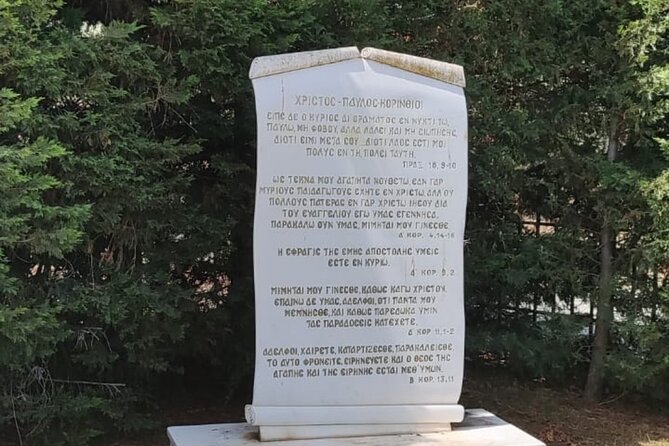
To close the day, you end at the Church of Saint Paul (Apostolos Pavlos Church) in modern Corinth. This is about 20 minutes.
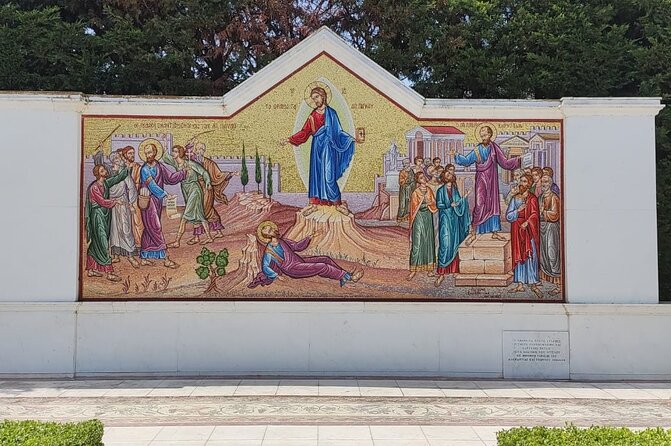
Inside, you’ll find a striking mosaic created by artists Pastorutti and Tsotsonis, depicting Paul’s journey and mission in the city. It’s a contemporary tribute, but it serves an important purpose: it turns the day from “ancient sightseeing” into reflection.
This final stop is also where you can choose your mood. You can treat it as a quiet pause, or you can use it as a chance to ask the guide about how Paul’s legacy connects to modern Christian identity and local memory.
How This Tour Works Day-to-Day (Comfort, Pace, and Questions)
Because this is a private format, the mechanics are built for comfort:
- Hotel/port pickup and drop-off make the day easier to manage than DIY.
- You ride in an air-conditioned vehicle with WiFi and bottled water.
- The guide-driver is there to explain history in English, and you can ask questions as you go.
From what I’ve seen emphasized by guides in this route style, good drivers also pay attention to real-world needs: safe driving on tight roads, help getting in and out at each stop, and enough breathing room for photos and basic breaks.
The biggest practical advice I can give you is simple: save energy for Acrocorinth. That’s the stop where good shoes matter most, and where you’ll want your brain fresh for the viewpoint.
Who This Tour Suits Best (And Who Might Want a Different Fit)
This tour is a strong fit if:
- You want a day trip from Athens that feels focused on one theme instead of general sightseeing.
- You care about Paul’s journey but also want the surrounding city context—ports, marketplace, and religious contrast.
- You like traveling in a smaller group where you can ask questions and adjust pacing.
It may be less ideal if:
- You’re expecting a strictly biblical, verse-by-verse tour with long religious readings. This experience links Paul to places through history and interpretation, but it’s not built as a full-on religious script.
- You don’t want to manage extra admission fees for the archaeological site and museum.
A smart middle approach: treat the tour as history with Bible connections. If that’s your style, Corinth will hit hard.
Quick FAQ for Your Planning
FAQ
How long is the Private Tour of Apostle Paul’s Footsteps in Ancient Corinth?
It runs about 5 to 6 hours, and travel time is included in the tour duration.
What does the tour cost, and is it private?
The price is $169.03 per person. It’s a private tour, so only your group participates.
Are entrance fees included in the price?
No. Entrance fees to the archaeological sites and the museum cost €15.00 per person and are not included in the tour price.
Do you offer pickup and drop-off?
Yes. Hotel and port pickup/drop-off are included. In Athens, the driver waits at your hotel entrance or at the port gate with a sign showing your name.
Is the tour guided in English?
Yes. The tour is offered in English, and the experience includes a professional English-speaking tour driver with in-depth history knowledge.
Is there free cancellation, and what if weather is bad?
There is free cancellation up to 24 hours in advance for a full refund. The tour requires good weather, and if it’s canceled due to poor weather, you’ll be offered a different date or a full refund.
Should You Book This Private Paul’s Footsteps Tour?
I think you should book it if you want a focused Corinth day with private pacing, comfortable transportation, and a route that explains not just where Paul was, but what the city around him was like. The combination of Corinth Canal/Diolkos, Kenchreai, Ancient Corinth (Bema/Agora/Apollo), the Museum, and Acrocorinth gives you a complete sense of the place.
If your budget is tight, just remember the €15 entrance fees and plan for them up front. And if you want a strictly biblical tour style, set your expectation for a historical, place-based approach.
Booked smart, this tour is one of those rare days where geography, faith, and daily life all connect—without turning your schedule into a rushed checklist.

More Private Tours in Athens


More Tours in Athens


More Tour Reviews in Athens
- All Day Cruise -3 Islands to Agistri,Moni, Aegina with lunch and drinks included
★ 5.0 · 4,958 reviews