REVIEW · ATHENS
Private Luxury Biblical Tour: Apostle Paul’s Footsteps – Corinth
Book on Viator →Operated by Pericles Century · Bookable on Viator
Corinth feels personal when you go by private van. I like the door-to-door pickup in Athens and the fact that you’re with just your group, so you can move at a calmer pace. The English-speaking driver-guide keeps the biblical story anchored to what you’re actually seeing.
One thing to budget for: several key archaeological stops are not included in the price and you won’t have a separate licensed guide walking you inside each site. That’s still fine if you want a smooth, story-first day, but it matters for your expectations.
In This Review
- Key highlights at a glance
- A private Corinth day from Athens that’s easy to fit in
- Isthmus of Corinth and the canal shortcut to the Peloponnese
- The Diolkos: ancient ship transport without the sea detour
- Kenchreai and Glauke Fountain: ports and legends tied to Paul’s world
- Paul at the Bema: from public teaching to the Gallio trial
- A practical note on what’s included here
- Temple of Apollo and the museum stop that makes the ruins click
- Akrokorinthos (Acrocorinth) and the Apostle Paul Church finale
- Price and what you’re really paying for
- How to make the most of your day (without overpacking it)
- Should you book this Apostle Paul’s Footsteps – Corinth private tour?
- FAQ
- What time commitment should I plan for?
- Where does pickup happen?
- Do I get Wi‑Fi and bottled water?
- Is this tour private?
- Will I be able to get inside archaeological sites with a licensed guide?
- Are entrance fees included?
- How does the vehicle size work for groups?
- What language is the tour?
- What should I bring for the day?
Key highlights at a glance
- Pickup that saves time: Hotel, apartment, or port pickup means you start the day without logistics stress.
- Private group comfort: 1–4 people ride in a sedan; 5–7 people go in a mini van, with AC, room, and luggage space.
- Wi‑Fi and bottled water on board: Handy if you’re navigating, syncing photos, or just staying comfortable.
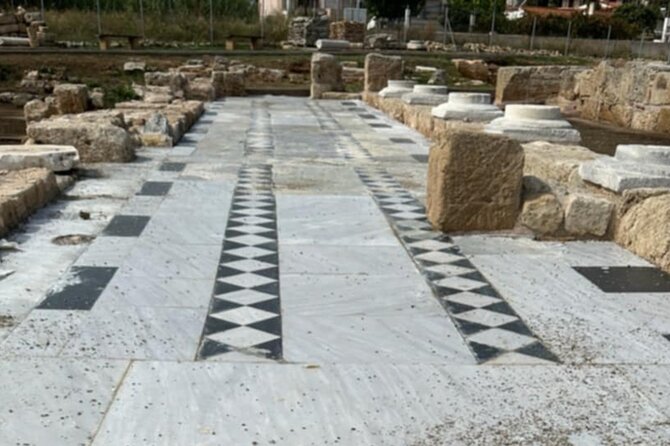
- Paul’s story placed in real locations: You’ll connect Acts-era details to what remains at Corinth.
- Views and walking at Acrocorinth: The day adds a real change of pace as you head up to the fortified heights.
- A relaxed tone from the guide: In practice, the experience is paced so you can stop, look, and ask questions.
A private Corinth day from Athens that’s easy to fit in
This is a 5 to 6 hour outing focused on Apostle Paul’s footprint in and around Corinth. It’s long enough to see the big religious and archaeological stops, but structured so you’re not constantly sprinting between places. The clock includes drive time, so you get a true sense of what a half-day trip feels like from Athens.
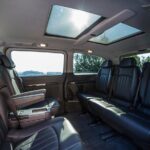
You also get practical comfort that matters on a Greek day. The vehicle is air-conditioned, you’ll have bottled water, and there’s Wi‑Fi on board. If you’re coming from a cruise port or you’re moving between neighborhoods in Athens, pickup and drop-off are part of the plan, not an afterthought.
Because it’s private, you avoid the crowd crush. That changes the mood. Instead of squeezing in around strangers, you can linger at viewpoints, request a few extra minutes at a stop, and keep the day from feeling like a checklist.
You can also read our reviews of more private tours in Athens

Isthmus of Corinth and the canal shortcut to the Peloponnese
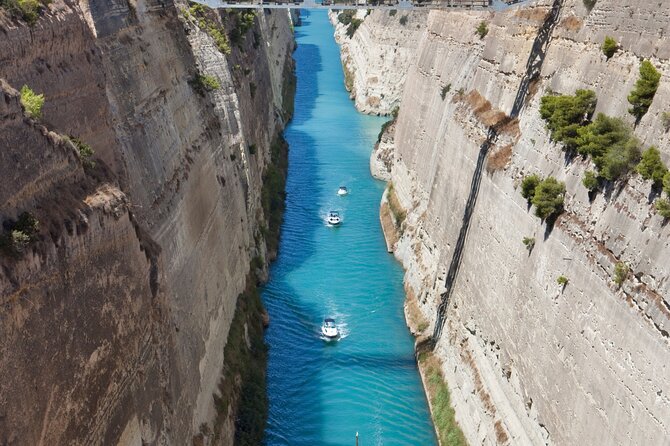
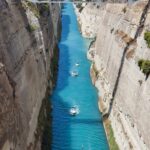
You start at the Isthmus of Corinth, the narrow land bridge that has linked the Peloponnese with mainland Greece for ages. Even if you’re not a history geek, the place makes sense fast: it’s one of those natural chokepoints where trade and travel get routed through a thin strip of land.
The main star here is the Corinth Canal, a 19th-century engineering feat that slices through the rock and reshapes maritime routes. Expect panoramic views and a strong sense of why Corinth mattered beyond religion. This stop is also a nice warm-up for the day, because it’s mostly about seeing and understanding rather than extensive walking.
Time on site is short, about 20 minutes, so treat it like a kickoff. I’d use it to get oriented: look out, take photos, and mentally connect this geography to the idea of Corinth as a crossroads.
The Diolkos: ancient ship transport without the sea detour
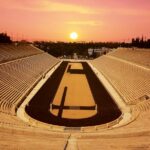
Right after the canal area, you’ll visit the Diolkos, an ancient stone-paved route meant to move ships overland across the Isthmus. This is one of those ideas that sounds almost impossible until you see the logic on the ground. Why sail around when you can haul ships across the land?
The stop is quick—around 10 minutes—but it pays off if you like the behind-the-scenes mechanics of how ancient cities worked. Corinth’s influence wasn’t just about temples and streets. It was also about logistics: moving goods, feeding the economy, and turning a narrow strip of land into a commercial advantage.
Because the time is tight, I’d focus on your guide’s explanation. The value of the Diolkos here is the story—what it tells you about Corinth’s maritime dominance—more than the physical remains.
Kenchreai and Glauke Fountain: ports and legends tied to Paul’s world
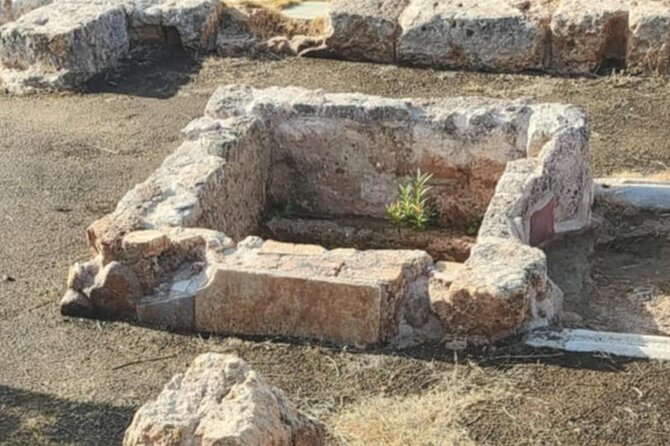
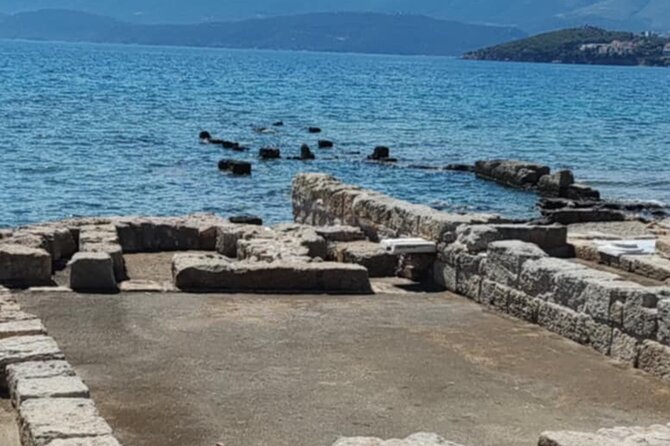
From the western side of the Isthmus, the tour moves toward the ancient port of Kenchreai, on the eastern side. This is a Roman-era commercial hub, and it’s especially meaningful for biblical context because it’s associated with Apostle Paul arriving around 53 AD.
You’ll have about 20 minutes at this stop, which is enough time to grasp the setting without turning it into a long museum-style experience. For me, the key is how Kenchreai reinforces the idea of early Christianity spreading through places connected to travel and trade, not just quiet religious enclaves.
Then the tour adds myth with the Glauke Fountain, carved into the hillside. The legend you’ll hear connects Glauke and King Creon, and it ties the site to Medea’s story. Even if you’re not into Greek mythology for its own sake, this stop helps you understand the layered cultural environment Paul walked into.
This is also where the day becomes more than strictly biblical. You start noticing how belief systems and stories coexisted in the same city.
Paul at the Bema: from public teaching to the Gallio trial
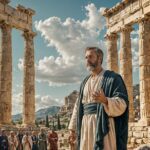
The heart of the biblical experience comes with the Roman Forum’s Bema platform. This elevated place was built for public life—speeches, legal matters, and formal decision-making in a city where pagan traditions shaped daily reality.
You’ll spend about 25 minutes here, and the point isn’t just to see ruins. It’s to understand what a public platform meant in Corinth. When you imagine Paul speaking in such a space, the setting turns abstract scripture into something concrete.
The tour also connects this location with the famous episode recorded in Acts 18:12–17, where Paul is brought before Gallio, the Roman proconsul, around 51 AD. Hearing that story in context helps you picture why Corinth matters to early Christian history: it’s not just Paul traveling through town, it’s Paul hitting the civic center of the city’s authority and public order.
Later, there’s another Bema of Apostle Paul in the Agora stop with additional tradition and interpretive mosaics. It can feel like a repeat at first glance, but it works as a reinforcement. You get the biblical story told from slightly different angles—platform, civic role, and the flow between teaching and tribunal life.
You can also read our reviews of more tours and experiences in Athens



A practical note on what’s included here
The commentary is led by the English-speaking driver-guide, but you should expect that you won’t have a separate licensed guide escorting you inside each archaeological stop. That often means you’ll get the story during your time on site, but you’ll still be doing your own reading and looking once you’re there.
If you like to ask questions and get the big connections explained clearly, that’s a plus. If you need a guide to cover every interpretive detail inside buildings, you’ll want to plan accordingly.
Temple of Apollo and the museum stop that makes the ruins click
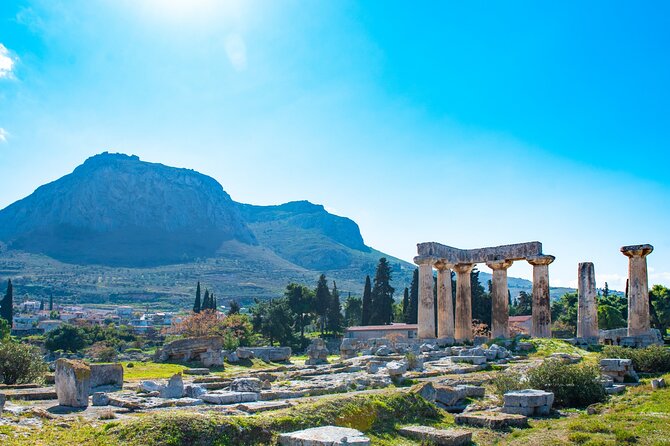
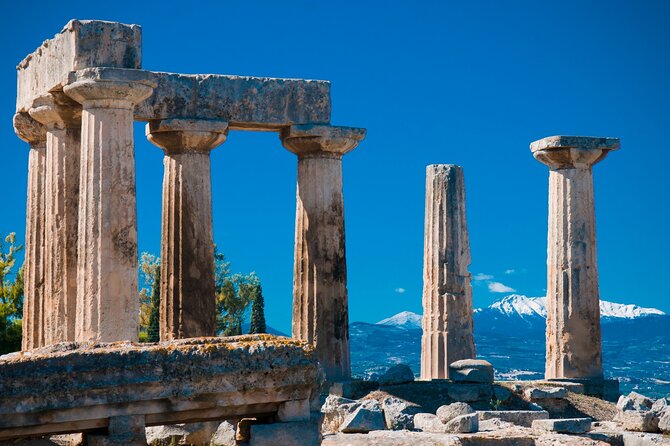
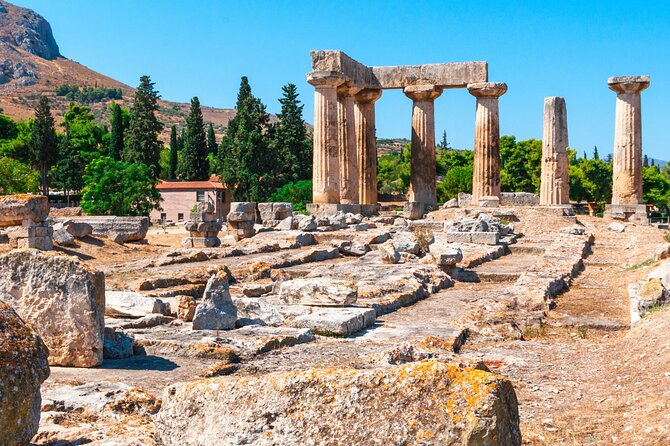
Next comes the Temple of Apollo, one of the older Doric temples in the Peloponnese. You’ll see towering columns and a sense of Corinth’s religious wealth. This stop is about atmosphere: what public worship looked like, and what kind of city Paul was teaching in.
Time here is around 20 minutes. It’s enough to walk the perimeter, take in scale, and connect the visuals to the idea that Christianity was spreading in an established religious landscape.
Then you shift indoors to the Archaeological Museum of Corinth for about 45 minutes. This is the stop that helps the day “stick.” When you see objects tied to Corinth’s different eras—statues, pottery, and items associated with the Sanctuary of Asklepios—it’s easier to place the ruins you saw outside into a fuller timeline.
The museum also helps you slow down. Outdoors, your mind tends to run from site to site. Indoors, you can read and connect details. If you only half-pay attention, the ruins feel like scenery. If you use the museum time, the day turns into understanding.
Akrokorinthos (Acrocorinth) and the Apostle Paul Church finale
The tour ends with height, history, and a clear religious conclusion. You’ll visit Akrokorinthos, the fortified acropolis known as Acrocorinth. This is where the day changes physically and visually. It’s a 40-minute stop and a place with layers: classical, Byzantine, Frankish, and Ottoman fortifications.
The value here is not just the view. It’s how the fortifications show continuity and control over centuries. Corinth didn’t stay one era. It kept being used, rebuilt, fought over, and reinterpreted—exactly the kind of long timeline that makes a biblical setting feel less frozen in time.
Finally, you’ll visit the Apostolos Pavlos Church. This is a three-aisled basilica built in 1936 on the site of an earlier church linked to Apostle Paul. Even though it’s modern compared to the ruins around it, that matters for believers and visitors alike: it’s a living commemoration of the story.
Time is about 20 minutes, enough for reflection, photos, and a quiet reset after the hilltop.
Price and what you’re really paying for
At $179.06 per person, this tour sits in the “private but still realistic” range for Athens-area day trips. The big value drivers are the private transportation, the small-group vehicle choice (sedan for 1–4, mini van for 5–7), and the fact that pickup and drop-off are built in.
You also get onboard comforts—AC, Wi‑Fi, and bottled water—that make a long sightseeing day feel less like hard travel. And because the guide is English-speaking and story-focused, you’re not just collecting photos. You’re connecting locations to the biblical narrative.
Now the part you should plan for: entrance fees are not included. The cost listed for archaeological sites and the museum is €20.00 per person. Some stops are marked as free, but key paid stops like the Roman Forum Bema areas, Temple of Apollo, and the Archaeological Museum are where you’ll feel that add-on. If you want fewer surprises, budget that €20 and you’ll be set.
Also note what’s not included: a licensed guide to accompany you into archaeological sites. Instead, the driver-guide provides the historical context while you explore.
For tips, the policy is straightforward: gratuities are not included, so you decide what feels right after the tour.
How to make the most of your day (without overpacking it)
A tour like this moves at a thoughtful pace, but you’ll still be outdoors in the Greek sun. Bring comfortable footwear, and plan for walking and uneven ground around ancient sites. A hat and sunscreen are worth it here; the day is daytime and the weather can be warm and bright.
If you’re the type who likes to read everything, the museum will feel like a gift. If you’re more of a “tell me the story and show me the highlights” traveler, you’ll still get plenty of time to listen during stops and take pictures without feeling rushed.
One smart strategy: pick one or two themes you care about most before the day starts. If it’s Paul, focus on the Bema stops and the link to Acts 18. If it’s Corinth as a city, pay attention to the canal and Diolkos. If it’s culture, the Temple of Apollo and Glauke Fountain help you understand what Paul’s audience might have already believed.
Should you book this Apostle Paul’s Footsteps – Corinth private tour?
Book it if you want a private, relaxed half-day that connects geography to scripture without the chaos of tour buses. The pickup, onboard comfort, and English-speaking driver-guide make it easy to do as a first Corinth outing or as a repeat visit done with better context.
I’d also recommend it if you like flexible time and conversation. The guides tied to this experience are described as patient and easygoing in their pacing, and that kind of tone matters at archaeological sites where you may want an extra minute or two to absorb what you’re looking at.
Skip it only if you need a licensed archaeology guide inside every paid site, or if you’re trying to keep total costs extremely tight. With the museum and temple fees added, this is still a good value, but it’s not a no-add-ons day.
FAQ
What time commitment should I plan for?
The tour lasts about 5 to 6 hours, and that includes travel time between locations.
Where does pickup happen?
Pickup is available from designated locations. For hotels and apartments, the driver waits outside your location. For port pickups, the driver greets you at the arrival area with a sign showing your name.
Do I get Wi‑Fi and bottled water?
Yes. The vehicle includes Wi‑Fi on board and bottled water.
Is this tour private?
Yes. It’s a private tour/activity, and only your group participates.
Will I be able to get inside archaeological sites with a licensed guide?
A licensed guide escort is not included. The tour includes an English-speaking driver-guide who provides historical information, but it does not list a licensed site guide for interior access.
Are entrance fees included?
No. Entrance fees and museum admission are not included, listed as €20.00 per person. Some stops are marked free, but some paid stops are part of the route.
How does the vehicle size work for groups?
For 1–4 people, you ride in a luxurious sedan. For 5–7 people, the tour uses a comfortable mini van.
What language is the tour?
The driver-guide provides the tour in English.
What should I bring for the day?
Wear comfortable footwear and plan for warm weather by bringing a hat and sunscreen.

More Private Tours in Athens

More Tours in Athens



More Tour Reviews in Athens
- All Day Cruise -3 Islands to Agistri,Moni, Aegina with lunch and drinks included
★ 5.0 · 4,958 reviews