REVIEW · ATHENS
Private Athens Street Art & Culture Tour
Book on GetYourGuide →Operated by Greeking.me · Bookable on GetYourGuide
Street art in Athens moves fast, and that’s the point. On this private walk you’ll get a local street-artist guide and see how murals and graffiti carry social and political messages in real neighborhoods, not just photo spots. My favorite part is the chance to learn the language of the walls (tags, stencils, paste-ups) while you’re looking at works by artists like INO and Sonke. One thing to consider: you’re walking small streets for about 3 hours, and it isn’t suitable for people with mobility impairments or for pregnant travelers.
Athens street art is basically an outdoor gallery, but you need the keys. The route takes you through areas such as Monastiraki, Psyrri, Metaxourgheio, and Gazi, where the art scene feels lived-in and a little rebellious. The private format matters too: it’s easier to ask questions when you’re not sharing the guide with a big group.
In This Review
- Street-art Athens: what makes this private walk worth your time
- Key moments you’ll probably remember
- Starting at Monastiraki Metro: your warm-up for reading walls
- Monastiraki to Psyrri: art as a neighborhood conversation
- Metaxourgheio: where you learn the politics behind the paint
- Gazi: post-graffiti energy and the art scene’s other side
- What your street-artist guide actually brings to the walk
- How the 3-hour timing works (and how to get the most out of it)
- Where it fits in your Athens trip
- Price and value: $259 for a private group of up to 4
- Who should book, and who should skip it
- Should you book the Private Athens Street Art & Culture Tour?
- FAQ
- How long is the Athens street art tour?
- Where does the tour start and where does it end?
- Is the tour private?
- What language is the guide?
- Is the tour suitable for all ages?
- Is the tour accessible for everyone?
Street-art Athens: what makes this private walk worth your time
You’re not just sightseeing. You’re learning how to read Athens off the walls.
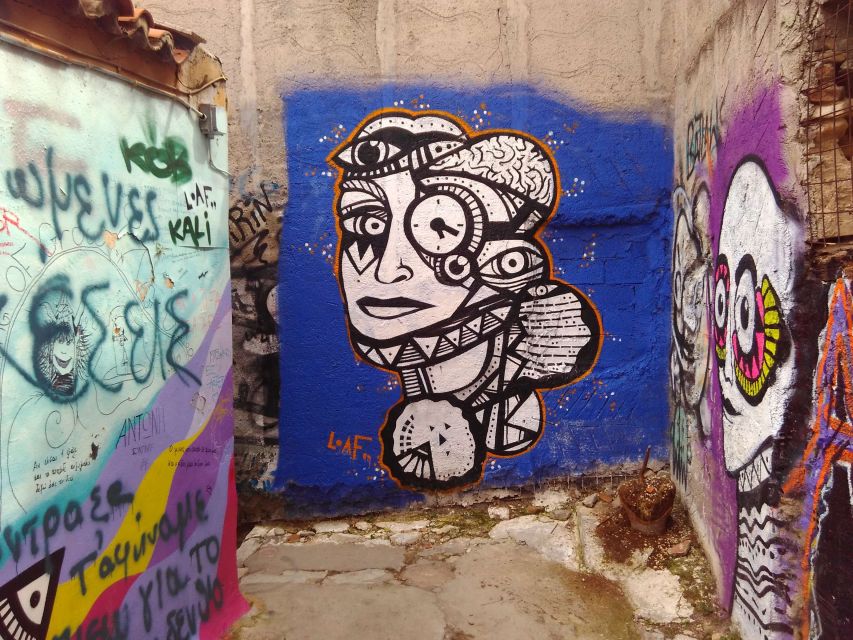
This tour focuses on the city’s alternative, non-touristic neighborhoods and the ideas behind the artwork. You’ll hear the differences in styles and techniques as you go—stencils, paste-ups, throw-ups, bombings, tags, pieces, murals, installations, and wild-style graffiti—so the city stops looking like random scribbles.
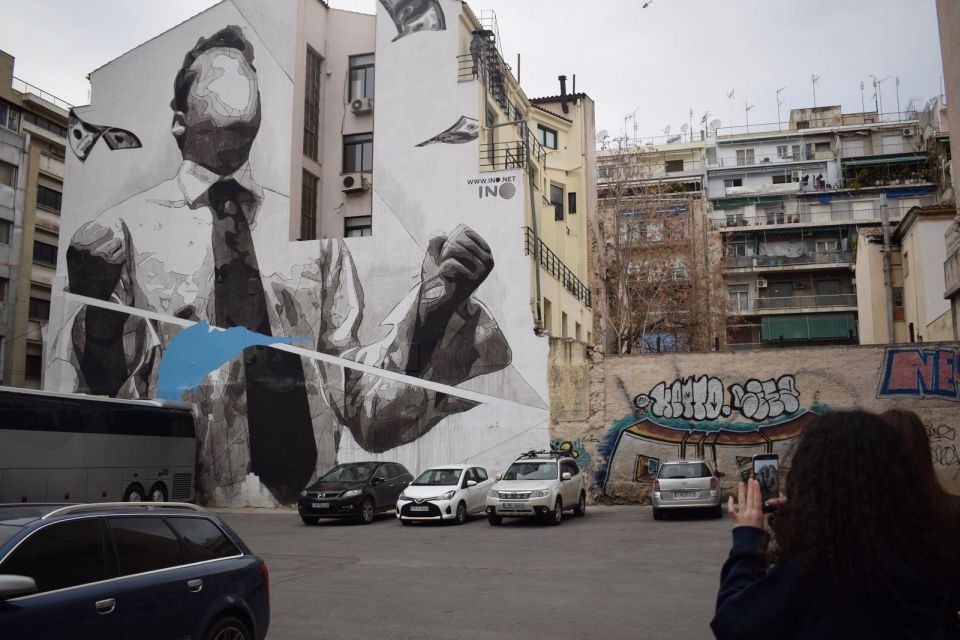
And yes, you’ll see famous names and recognizable aesthetics along the way. Expect mentions like INO and Sonke, plus artists associated with color-forward Greek graffiti like Vasmoulakis, depending on what’s up on the streets that month.
The tour ends at Omonoia Square, after starting outside Monastiraki Metro Station, so you get a clean connection between major transport hubs and the neighborhoods in between.
Key moments you’ll probably remember
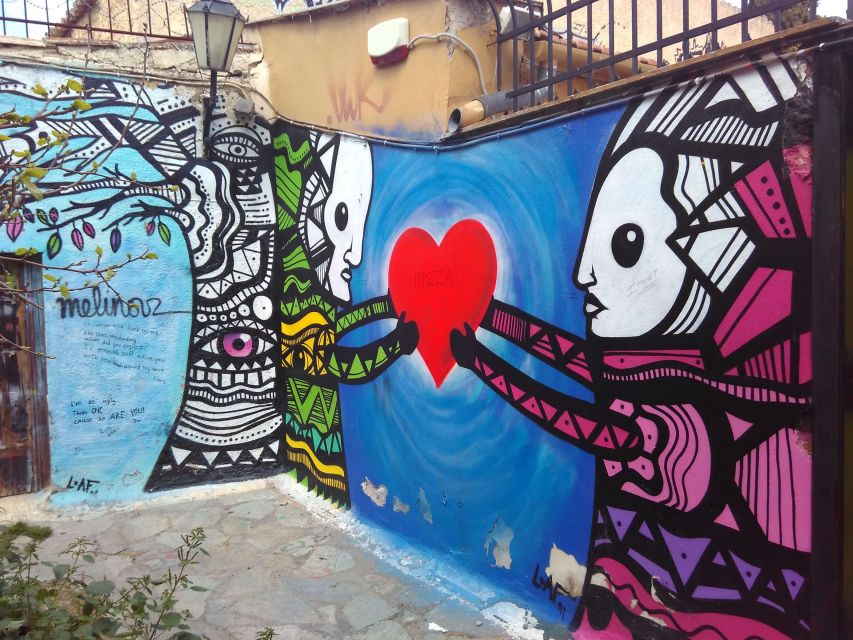
- A street-artist guide teaching you how to read the walls, not just look at them
- Political and social commentary built into the art, from protests to everyday tension
- Neighborhood variety across Monastiraki, Psyrri, Metaxourgheio, and Gazi
- Concrete techniques and terminology like stencils, paste-ups, throw-ups, and bombings
- Works by known names such as INO and Sonke, plus other styles you’ll learn to spot
You can also read our reviews of more private tours in Athens


Starting at Monastiraki Metro: your warm-up for reading walls
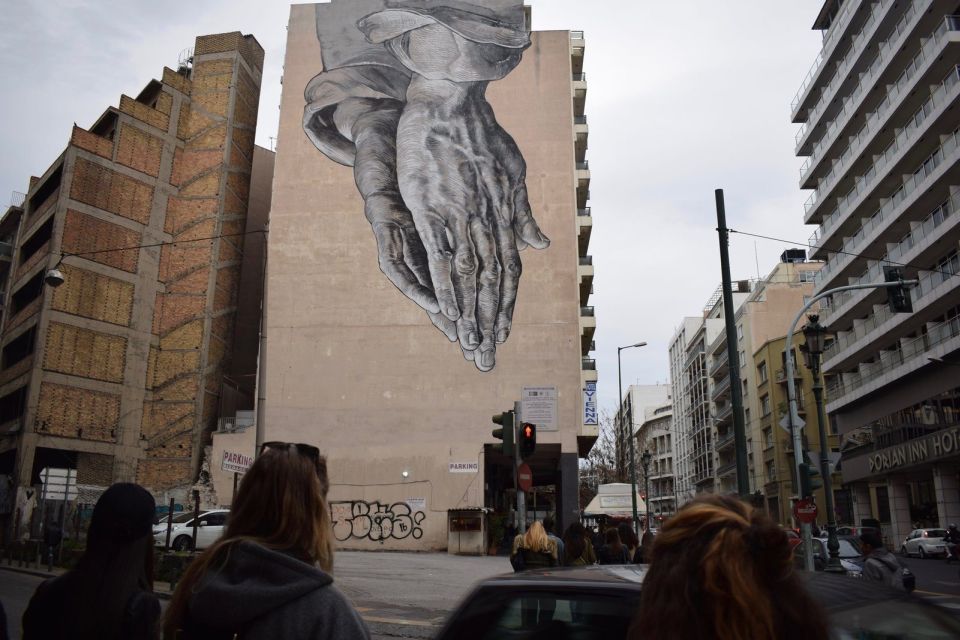
You meet outside the Monastiraki Metro Station, on the square. This is a smart choice: you can orient fast, grab yourself oriented shoes and water if you need it, and then the guide gets you into street-art mode immediately.
From the start, you’ll get the big idea—Athens street art changes quickly. That means the city feels alive in a way museums can’t. A mural today might be layered over or replaced later, which is why you’ll be learning how to notice more than trying to “collect” one perfect photo.
If you’re the type who usually walks past walls without looking, this tour rewires that habit. The guide’s street-artist background helps: you’re not just hearing opinions, you’re getting definitions, names, and technique descriptions that make the artwork easier to track as you move.
Monastiraki to Psyrri: art as a neighborhood conversation

Monastiraki is where visitors start, but this walk keeps you from staying in tourist bubble land. You’ll use it as a starting platform and then shift toward smaller streets where the art feels more like local conversation than performance.
As you move, look for how different pieces sit on different surfaces and in different rhythms. Tags and throw-ups tend to be fast signals—quick visual claims—while larger works like pieces and murals usually demand time from both the artist and the viewer. Your guide will point out that difference in tempo as you go, and it makes your eyes start working better.
Psyrri is a good zone for noticing layers. Even without a name on the wall, you can often tell what kind of street style you’re looking at by the outline, the spray patterns, the way letters move, and whether the art feels like it was planned or reacted. When you understand terms like wild-style graffiti or paste-ups, you stop asking What is this? and start asking Why this, here, now?
Metaxourgheio: where you learn the politics behind the paint
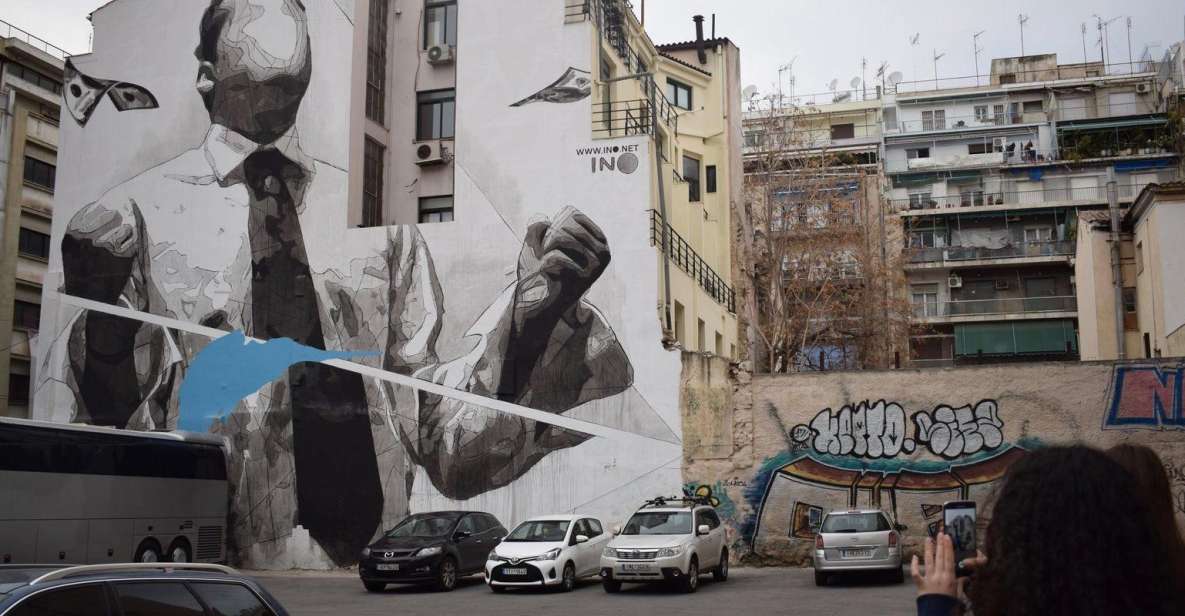
Metaxourgheio is where the tour’s context really clicks. Street art here isn’t just decoration; it’s part of a public argument. The guide focuses on how street art is used for political and social statements, and you’ll see how that shows up in both imagery and style.
A practical tip for you: don’t wait until you see a “big mural” to pay attention. Often the most meaningful message appears in the smallest details—lettering, symbols, recurring characters, or even the placement of work in the street pattern. When you know the basics—tags, stencils, bombings, and how artists layer styles—you’re able to read those details without needing a translator.
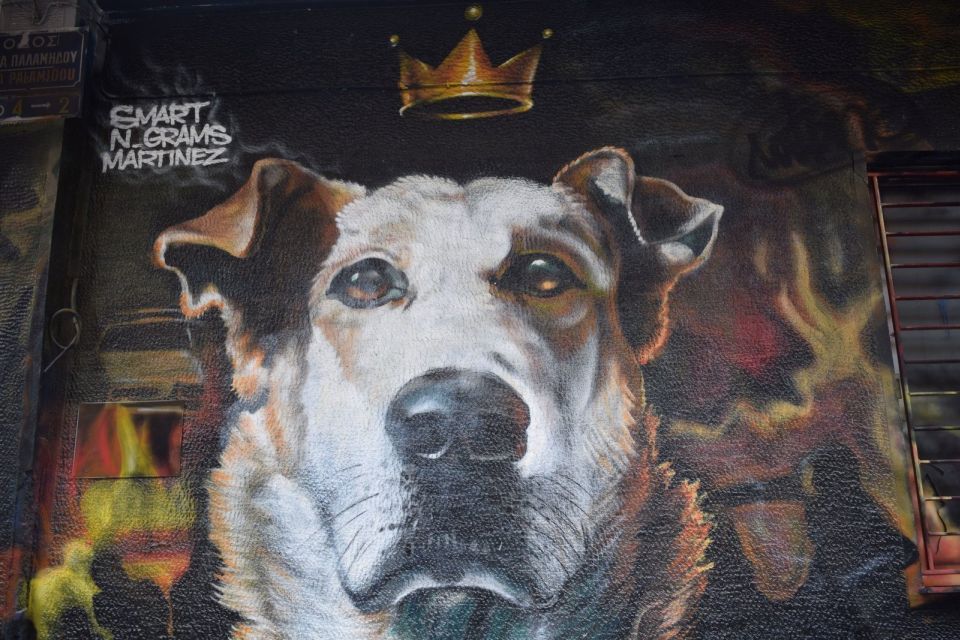
One review in particular highlights how a specific anti-austerity reference (including a dog character often linked to protest imagery) can pull you into the political context of the artwork. You might not see the same exact piece, since the city changes, but the bigger takeaway holds: the art is talking to the moment around it.
And if you like learning the language of a scene, this is a standout part of the walk. Your guide explains terminology like pieces vs. murals vs. installations, so you can separate technique from theme. That turns the walk into something more useful than a normal stroll.
Gazi: post-graffiti energy and the art scene’s other side
Gazi shows you another side of the Athens street-art ecosystem. Here, you’re more likely to feel the scene as ongoing creation rather than only past history. The tour includes stops around areas like Gazi specifically for exploring the playgrounds where street art thrives.
This is where you’ll notice more variety in how artists build visual impact—big color, heavier shapes, tighter letter forms, or more experimental formats. The guide’s focus on different approaches (for example, stencil work vs. more “writer” letter styles) helps you understand why two walls that look equally loud can actually be two totally different street-art languages.
If you’ve only ever seen graffiti in documentaries, you might be surprised by how much of the art connects to everyday life: corners people pass daily, walls people recognize, and messages that don’t wait for permission. That realism is part of why Athens street art feels like a living gallery.
You can also read our reviews of more tours and experiences in Athens





What your street-artist guide actually brings to the walk
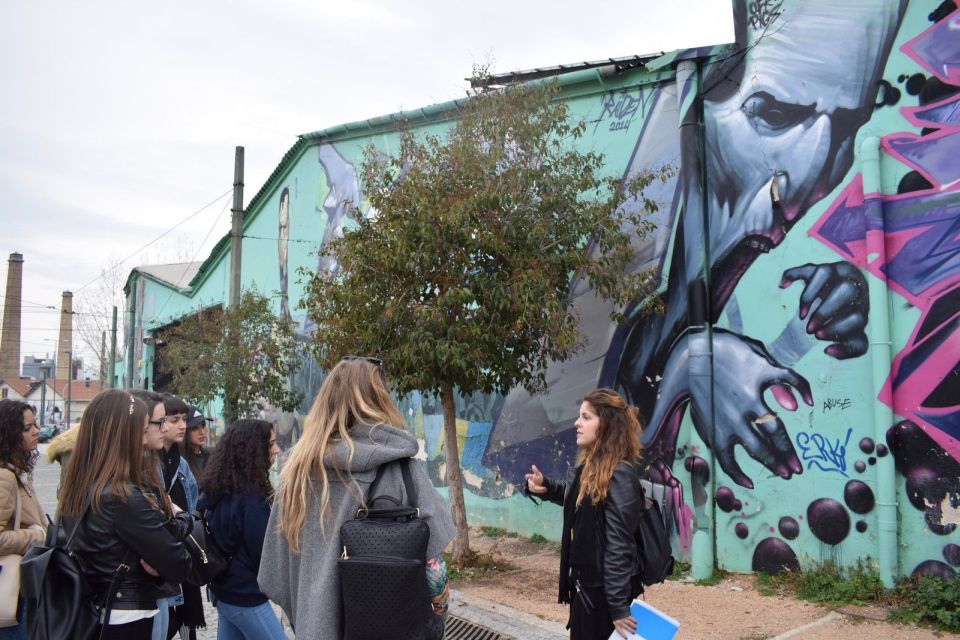
The guide is the secret ingredient here. Not just because she’s friendly and easy to talk to, but because she speaks the street-art “dialect.” In one set of feedback, a guide named Eugenia stands out for being very knowledgeable and enthusiastic, with English that’s easy to follow.
So what does “street-artist guide” mean in practice?
- You learn terminology while you see it
- You get style clues that help you identify the difference between tags, throw-ups, pieces, and murals
- You understand why certain art appears in certain neighborhoods
- You connect the visuals to social and political meaning
That last one is key. A lot of tours will point at art and say it’s cool. This one aims to help you understand why the artist chose the message and the method. That means you leave with a new way to look at Athens even after the tour ends.
How the 3-hour timing works (and how to get the most out of it)
This is a 3-hour private walking tour. That length is long enough to see multiple neighborhoods and multiple styles, but short enough to stay energized and focused.
Plan for a walking pace that assumes city streets and turns. There’s also a built-in flow that includes photo stops and guided viewing, plus scenic views as you move along. Translation: you’ll get moments to pause, but you’ll also keep moving enough to feel the street art as you encounter it rather than as a “stop-and-start museum visit.”
A small practical note: the tour doesn’t include food or drinks. I suggest bringing water, especially if you’re going in warmer months. Also, wear shoes that can handle uneven pavement and small turns without turning your day into a footnote.
Where it fits in your Athens trip
This tour works best when you want to see Athens as a living city, not just a set of famous monuments. If you’ve already done the classic highlights and you’re hungry for something more modern and local, this is a perfect follow-up.
It also pairs well with time near major transport because it starts at Monastiraki Metro Station and ends at Omonoia Square. That makes it easier to connect to other plans without feeling stuck across town.
And if you’re traveling with teens or older kids who enjoy street culture, the tour’s style-based explanations tend to land well. One review specifically mentions enjoying it with children around age 4, which suggests it can work across ages—though the walking element still matters.
Price and value: $259 for a private group of up to 4
At $259 per group (up to 4) for 3 hours, the price is really about private access and depth.
If you compare this to the cost of individual tickets for a more standard group tour, the math starts to make sense when you split it among a couple or a small family. What you’re paying for is:
- a private route through non-touristic neighborhoods
- a street artist guide who can explain techniques and meaning on the spot
- enough time (3 hours) to see several areas and style differences
Is it “cheap”? No. But street-art expertise plus a private walking format usually costs extra in any city, and Athens rewards the time with constant changes on the walls. You’re also buying context; the walk teaches you how to interpret what you see after you leave.
So I see it as good value if you like cities that tell stories through contemporary art and you want more than photos.
Who should book, and who should skip it
You’ll likely love this tour if:
- you enjoy street art culture and want to learn the basics of techniques and styles
- you want the political and social side, not only the aesthetics
- you prefer a small, private experience over a big group shuffle
- you like walking through real neighborhoods and noticing what’s on walls daily
You should think twice if:
- you need mobility support (it’s listed as not suitable for people with mobility impairments)
- you’re pregnant (also listed as not suitable)
- you hate walking for about 3 hours on smaller streets
Should you book the Private Athens Street Art & Culture Tour?
If you want Athens to feel modern and alive, I’d book this. The private size, the street-artist guidance, and the emphasis on meaning (politics, social messaging, technique) make it more than a novelty. You’re learning a way to see.
One last decision helper: if you think street art is just random graffiti, this tour is designed to change that view fast. But if you’re expecting a relaxed, mostly seated experience, or you need high accessibility support, look for a different option.
FAQ
How long is the Athens street art tour?
It lasts 3 hours.
Where does the tour start and where does it end?
You start outside the Monastiraki Metro Station and finish at Omonoia Square.
Is the tour private?
Yes. It’s a private group experience, priced per group up to 4 people.
What language is the guide?
The live tour guide speaks English.
Is the tour suitable for all ages?
It’s listed as suitable for all ages.
Is the tour accessible for everyone?
It’s not suitable for pregnant women or people with mobility impairments.



More Private Tours in Athens


More Tours in Athens




More Tour Reviews in Athens
- All Day Cruise -3 Islands to Agistri,Moni, Aegina with lunch and drinks included
★ 5.0 · 4,958 reviews