REVIEW · ATHENS
From Athens: Ancient Corinth Tour Official Guide & Tickets
Book on GetYourGuide →Operated by CHAT TOURS · Bookable on GetYourGuide
Ancient Corinth is a rare mix of big-city ruins and personal stories. I like how this tour pairs Corinth Canal views with a guided walk through the ancient agora and Apollo’s Temple, plus the St. Paul connection at Kechreai. The main thing to consider is timing: the day is short, so you get only a quick canal stop and you may want more time in the museum than the schedule allows.
From Athens, you’ll ride a modern air-conditioned bus west along the coast, then hop off at the canal for photos and scenery. After that, the guided archaeological portion is the heart of the day, with clear context for what you’re seeing, including where St. Paul lived and preached in Corinth. If you prefer lots of free time at each site, plan for a more structured pace.
One more practical note: the tour is not set up for wheelchair users or mobility impairments, and it’s mostly on foot with time spent in outdoor ruins. Bring comfy walking shoes and expect the ground to be uneven in parts of Ancient Corinth.
In This Review
- Key points before you go
- Why Ancient Corinth and Corinth Canal work as a half-day escape
- Getting from Athens: bus comfort, Wi‑Fi, and the Peloponnese drive
- Stop at the Corinth Canal: a short view that makes the rest make sense
- Ancient Corinth on foot: the agora, Apollo’s Temple, and the museum pairing
- The guided walk: where you feel the city’s importance
- The museum: facts you can use while you walk
- St. Paul’s route: Kechreai and why this tour feels personal
- How the pacing works: enjoying the day without feeling rushed
- Price and value: what you’re paying for in this $86 half-day
- Small details that can make or break your visit
- What to bring
- What not to do
- Wi‑Fi and your expectations
- Comfort and accessibility reality check
- Who this Ancient Corinth tour suits best
- Should you book Ancient Corinth from Athens for $86?
- FAQ
- Where does the tour start and end?
- How long is the Ancient Corinth tour?
- What are the main stops on the tour?
- Is the museum and archaeological site ticket included?
- Do I need to buy tickets in advance?
- Is there an English-speaking guide?
- Is Wi‑Fi included on the bus?
- Are meals included?
- Is this tour suitable for wheelchair users or limited mobility?
- What ID do children or students need for discounted tickets?
Key points before you go
- Corinth Canal: a short, scenic stop with dramatic views
- Agora + Apollo’s Temple: the center of ancient Corinth in one guided visit
- St. Paul context: you’ll visit the port site of Kechreai where he disembarked
- Skip the ticket line: museum and archaeological site entry included
- Small-group feel: one run reported about a dozen people, which helps the guide manage flow
- Bus comfort + Wi‑Fi: listed as onboard, but coverage can be inconsistent depending on the day
Why Ancient Corinth and Corinth Canal work as a half-day escape
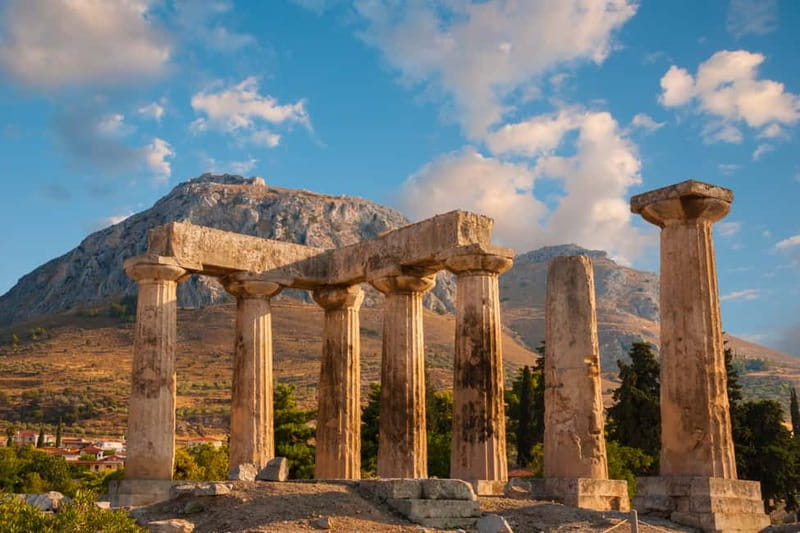
Ancient Corinth doesn’t feel like a single ruin. It feels like a city that used to matter—marketplace energy, religious landmarks, and streets that held daily life. And then the Corinth Canal hits you with a modern, cutting-edge contrast: a narrow passage through the terrain that makes you stop and look, even if you’ve seen photos before.
What makes this combo smart is the rhythm. You start with a viewpoint that gives you scale, then you go straight into the archaeological site where scale turns into details—temple remains, the agora, and the layout you can connect to stories about St. Paul. For $86, you’re paying for the bus, the English-speaking guide, and entry tickets to both the museum and the archaeological site.
The result is a day that’s easy to fit into an Athens stay. You still get back to Athens for lunch timing, though it can run later than expected depending on traffic and the pacing at each stop.
You can also read our reviews of more tours and experiences in Athens



Getting from Athens: bus comfort, Wi‑Fi, and the Peloponnese drive
The tour starts at Hotel Amalia Athens (meeting point at Leoforos Vasilisis Amalias 10). You’ll leave Athens on a westward drive along the coast by air-conditioned bus, with the guide talking through what you’ll see next. That matters more than it sounds. You’re not just traveling; you’re turning the drive into a warm-up for the ancient sites.
Wi‑Fi is listed onboard, and that’s a nice perk when you want to message home or check the map between stops. In practice, don’t treat it like a guarantee across the whole ride. I’d plan to use offline maps for anything you want later, just to avoid a scramble if the signal is weak.
This is also where the guide’s style shows. In different runs, guides like Vikki and Mina are praised for explaining what to look for and for keeping the information paced—enough to build understanding without turning the day into a lecture.
Stop at the Corinth Canal: a short view that makes the rest make sense
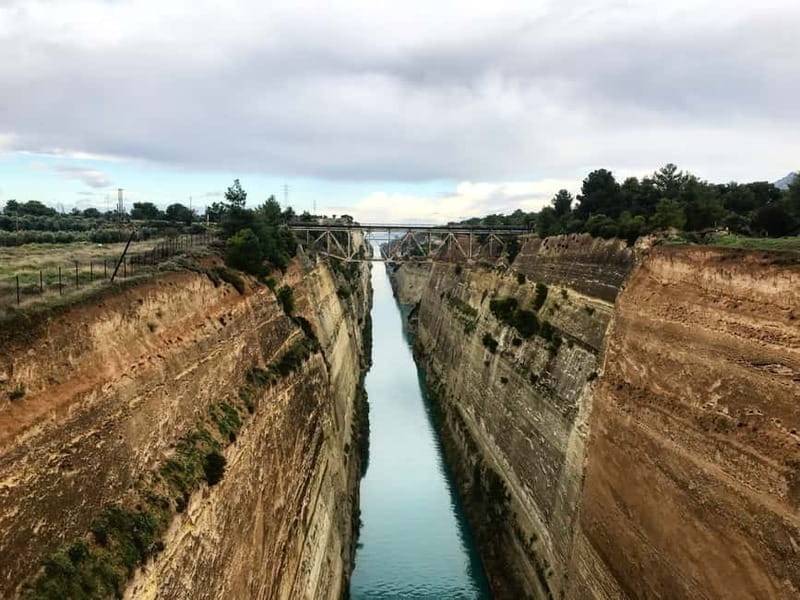
The Corinth Canal stop is brief—think quick photos and a look over the water from a viewpoint. But it’s not a throwaway moment. The canal’s narrowness helps you understand why Corinth was strategically important for movement of people and goods.
If you’re hoping for a long wander along the canal, this part may feel too short. The upside is that you’re spending your time where your feet can do more work: the ancient site and museum. For many people, the best strategy is to show up ready to take a few solid photos fast, then let the canal be the visual setup for what comes next.
Ancient Corinth on foot: the agora, Apollo’s Temple, and the museum pairing
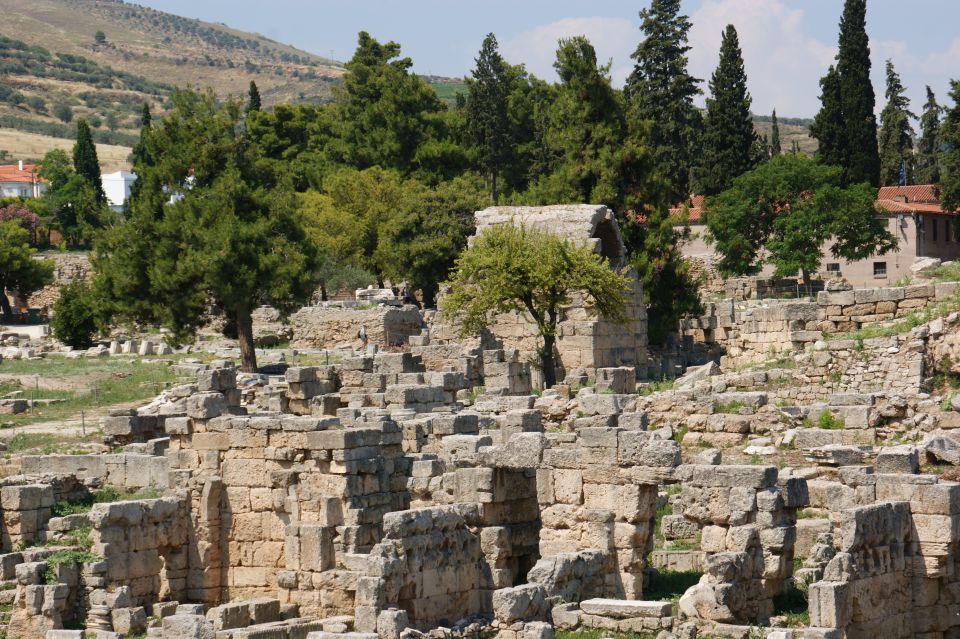
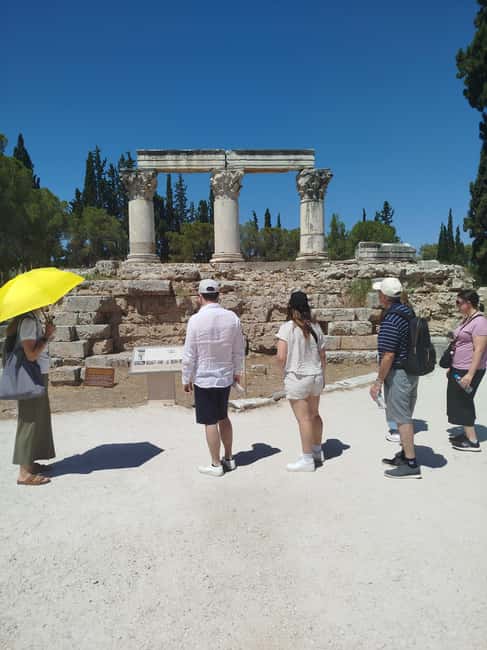
Ancient Corinth is the main event, and it’s structured around two things: walking the site and visiting the museum. You get a guided archaeological tour, and the entry ticket to the museum and the archaeological site is included.
The guided walk: where you feel the city’s importance
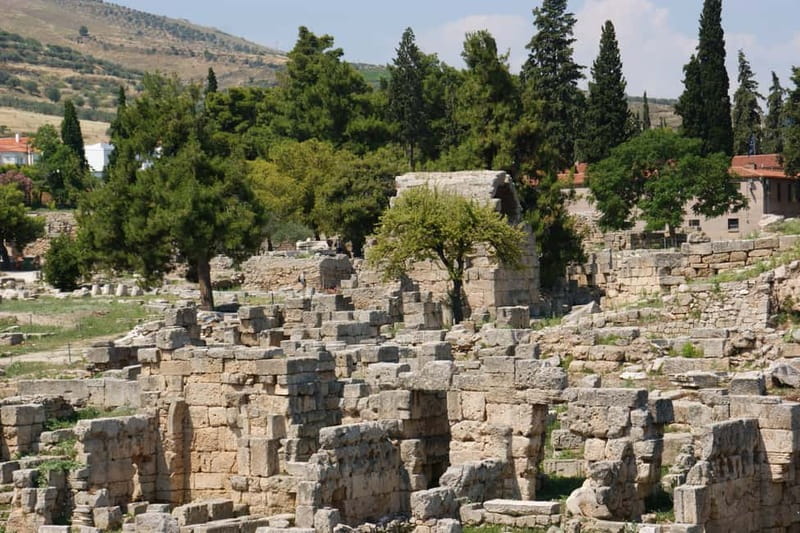
Corinth in antiquity was among the richest cities, and the remains show it. The big takeaway I like here is that you can see civic life as well as religious life. The Agora (marketplace) gives you a sense of daily movement and commerce, while Apollo’s Temple adds the spiritual and monumental side of the city.
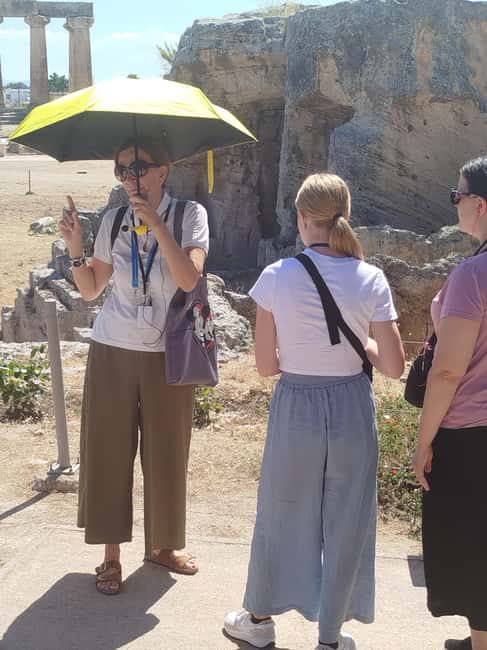
Even if you’re not a classic-ruins person, the guide’s job is to point your attention. A good day here is when you understand what you’re looking at and why it mattered, instead of just staring at stones and hoping it clicks.
You can also read our reviews of more guided tours in Athens




The museum: facts you can use while you walk
The museum visit complements the outdoor ruins. It’s where you get labels, context, and artifacts that turn vague impressions into something you can remember. One practical tip: if you care about the museum in particular, arrive ready to focus. With limited time, you’ll want to prioritize the sections your guide flags and avoid getting stuck reading everything slowly.
A common complaint is that the schedule can feel tight and museum time may not be enough for a second pass. That doesn’t ruin the experience—it just means you should decide ahead of time what you want most: details about the city’s life, or a broader overview.
St. Paul’s route: Kechreai and why this tour feels personal
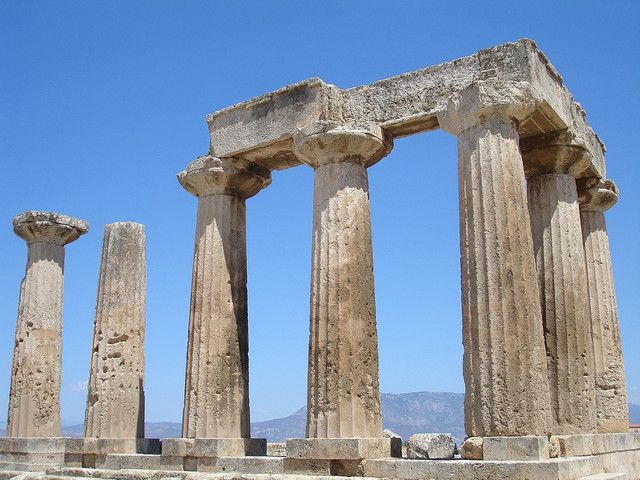
This tour doesn’t just talk about Corinth as archaeology; it connects the site to the New Testament story. You’ll hear about St. Paul living and preaching in Corinth, and you’ll make a brief stop at the ancient port site of Kechreai, where St. Paul disembarked.
That port stop is not a long museum-style experience. It’s a short, stop-and-look moment. But for many visitors, that’s exactly what makes it powerful: you’re seeing the physical place tied to a journey. It changes how you read the city in your mind.
If faith history or Bible geography matters to you, this is one of the biggest reasons to choose a guided option. Driving yourself would be possible, but you’d lose the layered explanation that ties together marketplace, temple, and Paul’s movements.
How the pacing works: enjoying the day without feeling rushed
A half-day tour has a built-in tradeoff. You can either cram in more sites or you can slow down for depth. This one picks the crammed-and-guided approach, and the best experience usually depends on the guide’s pacing.
On good days, the guide gives you the right amount of background before you arrive at each stop. Guides have been praised for striking a balance—enough mythology, Greek context, and Paul references to make sense of the ruins, but not so much detail that you stop listening and start wandering.
The most frequent nitpick is time. The canal stop can feel shorter than you’d like, and some people would prefer more time revisiting the museum. Also watch for practical comfort issues. There’s a mention that toilets can get busy at the museum and even at the canal stop, so it helps to use breaks early rather than waiting until you feel the pressure.
For photos, plan around the fact that your schedule controls your light and timing. Bring your phone power fully charged and don’t rely on onboard Wi‑Fi for backup storage. You’ll get better value by using the time you have for the shots you care about most.
Price and value: what you’re paying for in this $86 half-day
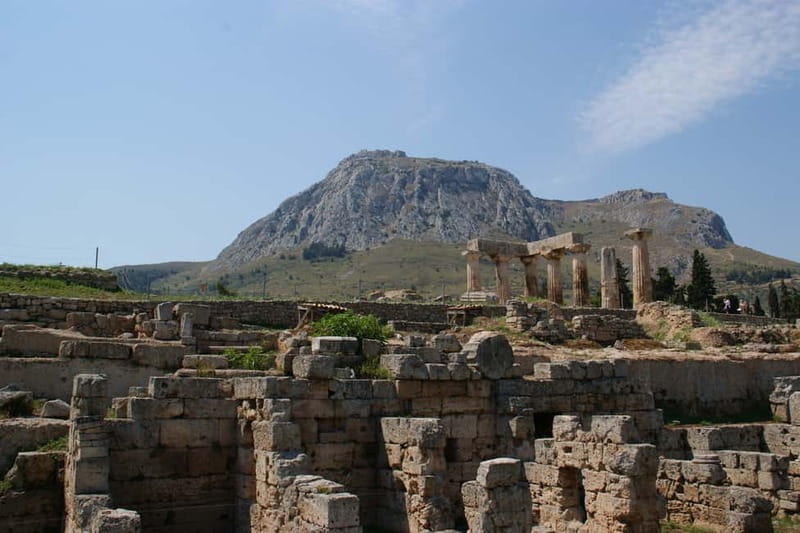
At $86 per person, you’re not only paying for sightseeing. You’re paying for four concrete things included in the price:
- Air-conditioned transportation from Athens
- English live guide
- Entry ticket to Ancient Corinth’s archaeological site and museum
- Skip the ticket line
That last point is easy to underestimate. When you’re on a schedule, saving time at ticket checks can protect the rest of the day. And the entry ticket inclusion helps you budget, since you won’t have to add museum and site costs on top.
What’s not included is also clear: meals and drinks. That means you should plan lunch on your own after the tour. Since the day is designed to return to Athens in time for lunch, you can keep meals simple—grab something nearby and spend the afternoon at your own pace.
If you’re traveling solo, a guided half-day like this often feels like the best middle ground: not too expensive compared with multiple paid attractions, but guided enough that the day isn’t just a bus ride.
Small details that can make or break your visit
This is a practical tour, so your choices matter.
What to bring
- Comfortable shoes: you’ll be walking through the ancient site area
- Sun hat: you’ll have outdoor time at the canal and ruins
- For children and students aged 5 to 18: bring a valid passport or ID to get the discounted entrance price. If not, you’ll need to repurchase at full price.
What not to do
Pets aren’t allowed, smoking is prohibited, and you can’t bring alcohol and drugs. Food and drinks aren’t allowed in the vehicle either, so plan snacks outside the bus if you need them later.
Wi‑Fi and your expectations
Wi‑Fi is listed onboard, but don’t plan your whole day around it. Keep your must-do internet tasks ready for when you’re back in Athens.
Comfort and accessibility reality check
The tour is not suitable for wheelchair users and not suitable for people with mobility impairments. That’s not just a label. Ancient Corinth involves uneven outdoor surfaces and the day is structured around getting on and off the bus quickly.
Who this Ancient Corinth tour suits best
I think this works best if you want a straightforward, guided introduction to Corinth without the stress of driving and parking.
It’s a great fit for:
- First-time visitors who want a clear sense of what Ancient Corinth was
- People interested in St. Paul’s connection to Corinth and the port at Kechreai
- Travelers who value a guide explaining what you’re seeing while you walk
It’s less ideal if:
- You hate group pacing and want long unscheduled time at each stop
- You need wheelchair-friendly routes or lots of step-free mobility
- You’re the type who can’t enjoy a museum unless you have hours to wander freely
If you’re the kind of traveler who likes a “high signal” day—views, ruins, museum context—this is right in your lane.
Should you book Ancient Corinth from Athens for $86?
If your goal is to see Corinth Canal and Ancient Corinth with an English guide and included museum entry, I’d book this. You’re getting transportation, interpretation, and skip-the-line ticketing in a single half-day, which is strong value for $86.
The decision hinge is time expectations. If you’re okay with a short canal stop and you treat museum time as focused rather than exhaustive, you’ll likely be very happy. If you want a slow, linger-and-revisit style day, look for an option with longer site and museum time.
My call: book it when you want a guided, well-organized snapshot of Ancient Corinth plus the St. Paul connection—then use the rest of your Athens day for your own wandering.
FAQ
Where does the tour start and end?
The tour starts at Hotel Amalia Athens, with the meeting point listed at Leoforos Vasilisis Amalias 10, and it ends back at the same meeting point.
How long is the Ancient Corinth tour?
The duration is 6 hours.
What are the main stops on the tour?
You’ll visit Ancient Corinth (including a guided tour and the museum), have a short stop at the Corinth Canal for views, and make a brief stop at the ancient port of Kechreai.
Is the museum and archaeological site ticket included?
Yes. Entry ticket to the museum and the archaeological site of Ancient Corinth is included.
Do I need to buy tickets in advance?
No. The tour includes skip-the-ticket line for the museum and archaeological site.
Is there an English-speaking guide?
Yes. The tour includes a live English-speaking guide.
Is Wi‑Fi included on the bus?
Yes, Wi‑Fi on board is included.
Are meals included?
No. Meals and drinks are not included.
Is this tour suitable for wheelchair users or limited mobility?
No. The tour is not suitable for people with mobility impairments and not suitable for wheelchair users.
What ID do children or students need for discounted tickets?
Children and students aged 5 to 18 must present a valid passport or ID on the day of the tour to get the discounted price.




More Tickets in Athens


More Tours in Athens



More Tour Reviews in Athens
- All Day Cruise -3 Islands to Agistri,Moni, Aegina with lunch and drinks included
★ 5.0 · 4,958 reviews