REVIEW · ATHENS
Philosophy Experience at Plato’s Academy Park – basic version
Book on Viator →Operated by Hellas Revival · Bookable on Viator
Plato in the ruins, not in a textbook. This is a small-group, interactive philosophy workshop at Plato’s Academy Park where you use Socratic-style dialogue to think through Plato’s ideas, especially the Allegory of the Cave, in modern terms.
I love the fact that you don’t just read or listen. You actually take part in question-and-answer debates guided by a facilitator who keeps everyone involved. In one standout experience led by Olga, the museum screens didn’t cooperate, but the session still stayed playful and thoughtful.
A key drawback to plan for: the Plato’s Academy Digital Museum portion can be closed due to technical reasons, so you should be flexible about what you see inside.
In This Review
- Key highlights to look for
- Why Plato’s Academy Park Makes the Allegory of the Cave Hit Different
- Your 2-Hour Route: Digital Museum, Ancient Gymnasium Ruins, and Dialogue Time
- How the Workshop Uses the Socratic Midwife Method (Without Turning It Into a Lecture)
- What the Modern Case Discussions Feel Like in Real Time
- Practical Stuff That Can Affect Your Experience (and How to Plan Around It)
- It’s outdoors, so weather matters
- Digital Museum hours can change
- Heritage rules are real rules
- Photos and consent
- Small Group Size and the Role of Junior Facilitators
- Price and Value for a Philosophy Workshop in Athens
- Who Should Book This Plato’s Academy Workshop
- Should You Book the Basic Version?
- FAQ
- What is the duration of this Plato’s Academy Park experience?
- Where does the experience start, and how does it end?
- Is the Digital Museum entrance included?
- Is this workshop suitable for teenagers?
- What happens if the weather is bad?
- Is this a guided tour?
Key highlights to look for
- Allegory of the Cave, practiced out loud: you talk through meaning, not just hear a summary
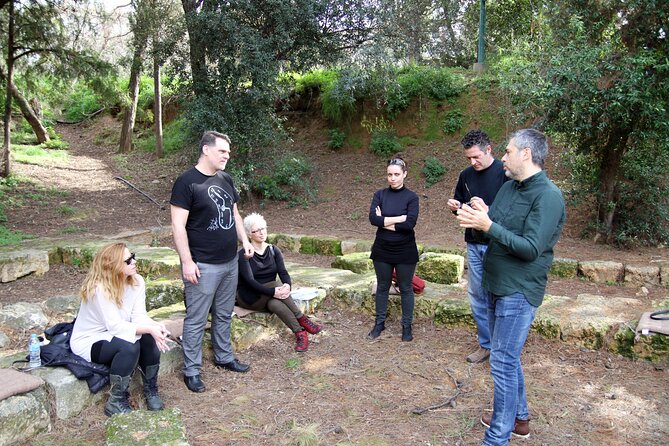
- Outdoor seating on ancient gymnasium foundations: you literally sit where students trained
- Socratic maieutic method: you get guided prompts, not a lecture
- Free entrance to the Digital Museum: a quick tech stop before the park dialogue
- Small groups (max 10): enough room to speak and still stay on track
Why Plato’s Academy Park Makes the Allegory of the Cave Hit Different
Plato’s ideas can sound distant. So this workshop is smart about setting: it happens right in the Academy Park, the historic grounds associated with the world’s first Academy.
When you’re standing (or sitting) among the remains, the themes feel less like a philosophy class and more like a human problem: how we know what we know, how comfort shapes belief, and how hard it can be to question yourself. The format nudges you toward that realization using dialogue, not a one-way presentation.
That’s also why this isn’t a “museum tour.” It’s an educational interactive workshop. You’ll practice the same kind of back-and-forth thinking ancient Greeks did—except you’ll connect it to today’s life, where the “cave” might be social media, group pressure, or easy answers that feel good.
And yes, it’s family friendly in a real way. It’s suitable for adults and teenagers over 15, with a structure that works for mixed groups as long as everyone can participate respectfully.
You can also read our reviews of more tours and experiences in Athens.



Your 2-Hour Route: Digital Museum, Ancient Gymnasium Ruins, and Dialogue Time
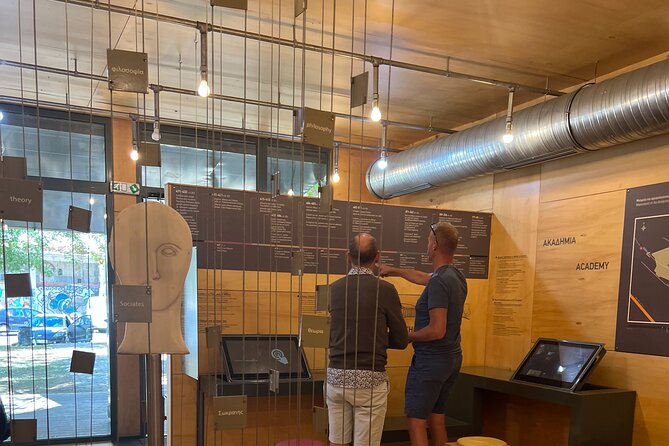
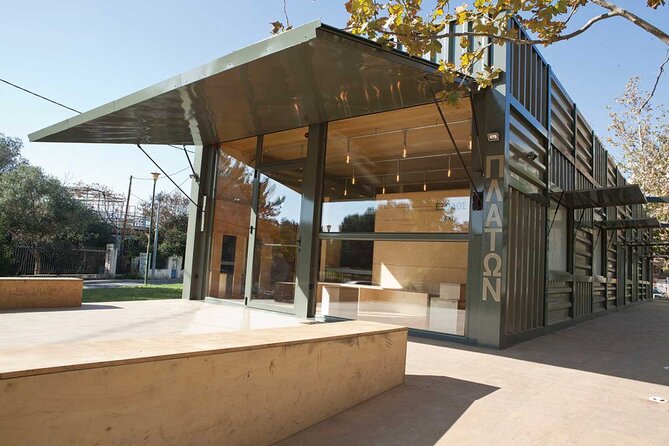
The whole thing runs about two hours, and it starts at the Plato’s Academy Digital Museum (Alkmeonos 1, Athina 104 42, Greece). You’ll get a short visit that helps you get oriented before you meet Plato through his work and methods.
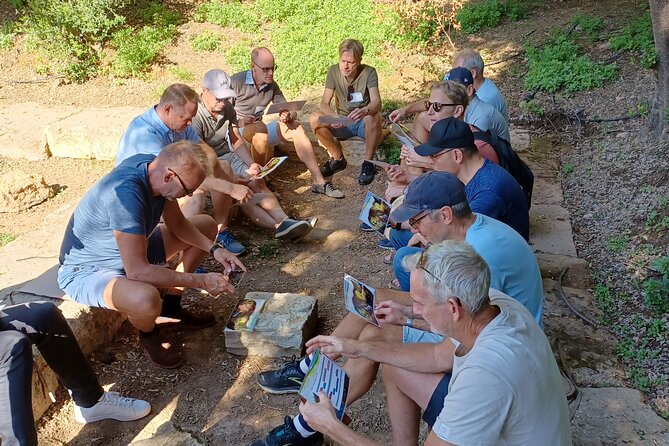
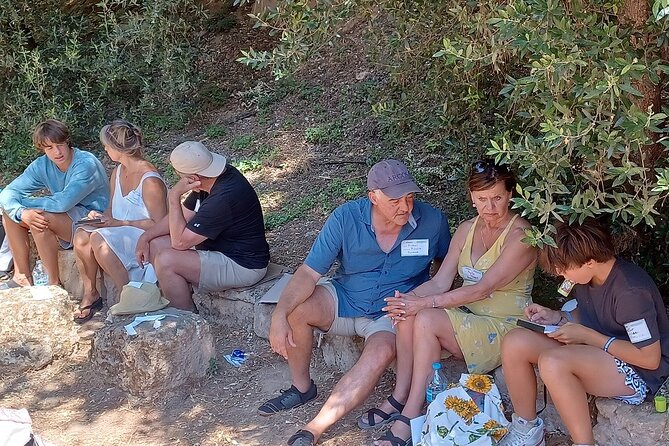
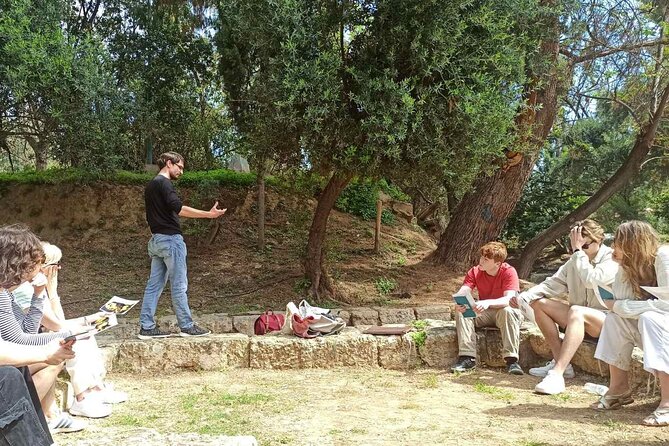
From there, you walk roughly 300 meters through the archaeological park toward the ruins of the ancient gymnasium. The location matters: this is where young people trained and where philosophers preferred to gather for discussion. You’ll settle on the foundation stones of ancient buildings under shaded trees, which makes a big difference for a dialogue session. People can focus when their environment is comfortable enough to stay engaged.
Then comes the main event: facilitator-led discussion that uses the Allegory of the Cave as a shared reference point. You’ll answer questions, swap opinions, and practice Socratic-style questioning in a guided format. The facilitator keeps the group moving so you don’t drift into random debate.
One practical detail: sometimes the Plato’s Digital Museum is closed due to technical reasons. If that happens, the session still goes forward as an outdoor workshop. So think of the museum as helpful context, not the make-or-break core.
How the Workshop Uses the Socratic Midwife Method (Without Turning It Into a Lecture)
The workshop’s central skill is Socrates’ maieutic method—the midwife idea that your thinking is brought out through questions. Instead of telling you what to think, the facilitator asks questions designed to expose what you assume and why you believe it.
You’ll also practice platonic dialogue techniques: exchange opinions, beliefs, experiences, and views on cases that connect to modern life. The goal isn’t to “win” an argument. It’s to get clearer—about your thinking, your values, and what you might be taking for granted.
In the experiences described, the tone is consistently supportive. The facilitator reassures that everyone is equally involved, which is crucial for this kind of exercise. Philosophy discussions can easily turn into a few voices dominating. Here, the structure is there to keep the conversation balanced.
Also, the workshop is designed for people without previous knowledge. The language is meant to stay in plain English with no difficult terminology. That’s a big plus in Athens, where many activities either feel too academic or too casual. This one aims for the middle: serious questions, accessible delivery.
What the Modern Case Discussions Feel Like in Real Time
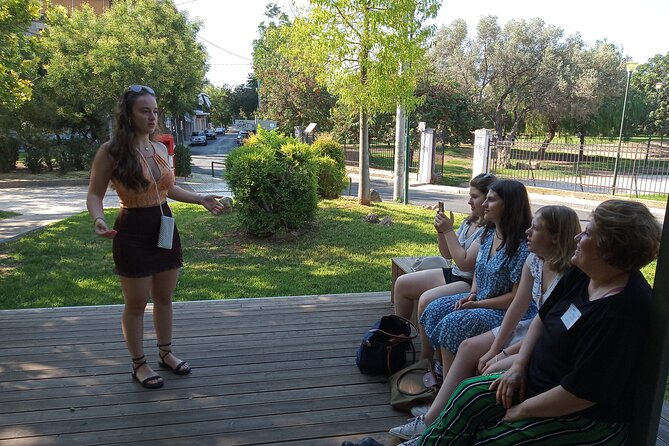
The Allegory of the Cave isn’t treated as a museum piece. You’re pushed to apply it to today’s “real-modern life example cases,” where the cave could be something you encounter daily.
This is where you’ll feel the workshop’s value. Instead of treating philosophy as old ideas, you practice using it. That changes the experience from entertainment into something you can carry home.
In one example, the group had a debate on Plato’s ideas tied to a modern case scenario, and it helped unlock meaning fast. Another helpful sign: when museum screens weren’t working for part of the program, Olga still kept momentum going. That tells you the workshop depends on the human dialogue more than on technology.
If you’re the type who likes to talk and think at the same time, you’ll probably enjoy the pace. If you’re quieter, don’t assume you’ll be left out—this format is designed so the facilitator brings you in with questions rather than putting you on the spot without support.
Practical Stuff That Can Affect Your Experience (and How to Plan Around It)
- All Day Cruise -3 Islands to Agistri,Moni, Aegina with lunch and drinks included
★ 5.0 · 4,958 reviews




It’s outdoors, so weather matters
This is an outdoor experience at a historical site, so good weather helps a lot. If it’s canceled due to poor weather, you’ll be notified at least 3 hours ahead. You’ll get the option of a different date, a similar workshop, or a full refund.
Bring what you’d bring for a comfortable city walk plus sitting: sun protection if it’s hot, and layers if it’s breezy. You’ll be sitting outdoors on stone foundations, so your comfort impacts your willingness to stay engaged.
Digital Museum hours can change
The Digital Museum operating dates and hours can change often, and it sometimes closes without any announcement. That’s why you should see the museum as a bonus primer rather than a guaranteed fixed part of the experience.
Heritage rules are real rules
Because this happens at a historical site, you’re expected to respect etiquette: sobriety, cleanliness, photo/video behavior, dress code, and not getting loud. The facilitator can terminate participation without refund for disrespectful behavior toward the place or people.
That might sound strict, but it’s actually part of why the experience works. When everyone treats the space calmly, dialogue feels more serious—in a good way.
Photos and consent
Attending in public space means you consent to photo/video shooting that may be used later. You can withdraw consent in writing at any time, but also note you aren’t responsible for photos taken by other people.
If you’d rather not have your image used, it’s worth thinking about that before you go.
Small Group Size and the Role of Junior Facilitators
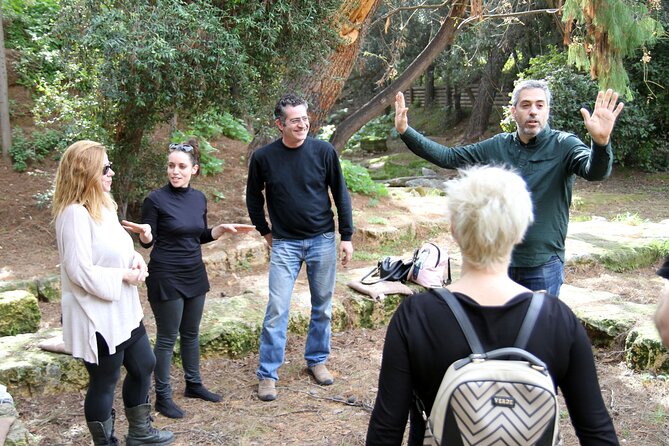
The basic version is hosted by one of their junior facilitators, and the group is capped at 10 travelers. That size is a sweet spot for a dialogue format.
Why it matters: in a bigger class, it’s easy to hide. In a tiny group, it can feel intense. Here, you get enough people to generate opinions and contrasts, while still having a facilitator close enough to manage the flow.
Also, the facilitator’s job isn’t to dominate. They guide, reassure, and keep the discussion productive. That structure makes the workshop feel more like a shared thinking session than a performance.
The experiences led by Olga specifically highlight how a facilitator’s skill affects the outcome—especially when tech inside the museum doesn’t cooperate.
Price and Value for a Philosophy Workshop in Athens
At $495 for about two hours, this isn’t a budget activity. It’s closer to a “you’re paying for format and attention” kind of experience: interactive facilitation, small group size, insurance, and the fact that the workshop happens in a historically meaningful setting.
Here’s how to judge value beyond the sticker price:
- You’re not just visiting a site. You’re doing an educational, interactive workshop, including Socratic-style practice.
- You get guided participation, not a self-guided read-through.
- The group is intentionally small, which usually costs more to run.
- The Digital Museum entrance is free, so you’re not paying extra just to access that component.
If you want an easy stroll and a quick story, you may feel the price is high. If you enjoy thinking in conversation—especially if you like the idea of applying Plato to your own life—it can feel very worth it.
One more value note: the experience includes local VAT and liability insurance, which is part of the cost structure for properly run activities.
Who Should Book This Plato’s Academy Workshop
This fits best if you’re any of the following:
- You like interactive activities more than passive ones.
- You enjoy discussions with structure, where questions guide you.
- You want to understand Allegory of the Cave in a practical way, not just as a famous plot.
- You’re visiting Athens and want something that feels different from the usual ruins-and-audioguide day.
It’s also a nice option for teenagers 15+ who can follow dialogue-based activities and aren’t expecting a standard school lecture. Underage participants can’t book alone; an adult needs to book and supervise.
If you’re extremely short on time and want only famous sights quickly, this may feel too slow-paced for your style. But if you want depth and conversation, it has a strong fit.
Should You Book the Basic Version?
I’d book it if you want philosophy that’s active, spoken, and connected to real life. The combination of Allegory of the Cave discussions, Socratic maieutic questioning, and sitting in the ancient gymnasium ruins area makes it more memorable than another “see and move on” experience.
I’d pause and think twice if you’re expecting a traditional guided tour with a long explanation of the site. This is not positioned as a standard guided tour—it’s a workshop where the talking and thinking are the point.
Also keep in mind the one practical wildcard: the Digital Museum may be closed due to technical reasons. If that would bother you a lot, you might prefer a different Athens activity that doesn’t depend on museum screens working.
If you’re okay with that, you’re likely to enjoy the day as a calm, thoughtful Athens break—where Plato isn’t just referenced. He’s practiced.
FAQ
What is the duration of this Plato’s Academy Park experience?
It lasts about 2 hours.
Where does the experience start, and how does it end?
It starts at Plato’s Academy Digital Museum (Alkmeonos 1, Athina 104 42, Greece) and ends back at the meeting point.
Is the Digital Museum entrance included?
Yes. The experience includes a visit to Plato’s Academy Digital Museum, with free entrance, though it can sometimes be closed due to technical reasons.
Is this workshop suitable for teenagers?
Yes, it’s family friendly and suitable for adults and teenagers over 15 years old. Underaged participants cannot book alone; at least one adult must book too and supervise them.
What happens if the weather is bad?
Because it’s outdoors, if it’s canceled due to poor weather you’ll be offered a different date, a similar workshop, or a full refund.
Is this a guided tour?
No. It’s an educational, interactive workshop (with facilitation), not a traditional guided tour.

More Tour Reviews in Athens
- All Day Cruise -3 Islands to Agistri,Moni, Aegina with lunch and drinks included
★ 5.0 · 4,958 reviews