REVIEW · ATHENS
Parthenon & Acropolis Guided Tour in Spanish -Option Tickets
Book on GetYourGuide →Operated by TOP TOURS GREECE · Bookable on GetYourGuide
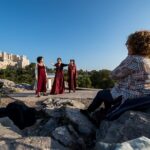
The Acropolis feels different before the crowds. I like that you get an official Spanish guide (exclusive Spanish, with headphones) plus an early start that helps you see the Parthenon and major Acropolis monuments in a calm rhythm; guides like Efi and Simon are repeatedly praised for turning stone into stories. One consideration: this tour is not suitable for wheelchair users, and you can’t bring bags, baby strollers, or food/drink.
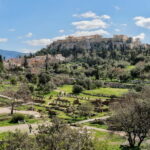
In just 2 hours, you cover the big “who’s who” of ancient Athens—from drama and medicine to the architecture of power. You’ll end at the top of the hill with time to photograph, including 360-degree views that make the effort feel very real.
If you’re visiting Athens and want meaning, not just location names, this is a strong choice. You’ll get history, myth, and layout in Spanish, stitched together at a moderate pace so you don’t feel rushed through the hard parts.
In This Review
- Key highlights you’ll notice fast
- Why this early Spanish Acropolis tour starts on the southern slope
- Meeting point and the walk plan that keeps 2 hours feeling doable
- Theatre of Dionysus: where Greek drama fit 17,000 people
- Asclepieion and the Portico of Eumenes: medicine where myths had a job
- Odeon of Herodes Atticus: the ancient stage that still hosts concerts
- Propylaea and Temple of Athena Nike: Doric and Ionic on the road to power
- Parthenon: Athena’s temple, UNESCO recognition, and why it’s built so carefully
- Erechtheion and Caryatids: the Athena–Poseidon legend made physical
- Finishing up on top: photos, views, and a bit of breathing room
- Value check: does $33 deliver more than a quick rundown?
- Who should book this Parthenon and Acropolis Spanish tour
- Should you book it?
- FAQ
- What duration is the Parthenon & Acropolis guided tour?
- What language is the guide?
- Where do I meet the guide?
- Does the tour include tickets?
- Which sites are covered during the 2 hours?
- Are headphones provided?
- Can I bring bags or food and drink?
- Is the tour suitable for wheelchair users?
Key highlights you’ll notice fast
- Early access from the southern slope to cut down on heat and crowd pressure
- Spanish-only, certified guide with headphones so you can actually hear the story
- Theatre of Dionysus (17,000 seats) and the Odeon of Herodes Atticus, still tied to concerts
- Caryatids at the Erechtheion explained as more than sculpture
- Athena vs Poseidon legend connected to the sacred water and olive tree story
- Finish at the top for longer photo time and sweeping views
Why this early Spanish Acropolis tour starts on the southern slope
This tour is designed for the first wave of the day. Starting early from the southern entrance area (near the Acropolis Museum side) means you get better light for photos and less heat pressure on your way between monuments.
You’ll also save time in a practical way: skip-the-ticket-line is part of the experience, and the guide helps keep the group moving at a moderate pace. That combination matters because the Acropolis is one of those places where slow wandering can turn into a scramble.
And yes, it’s Spanish—no switching, no multilingual listening fatigue. If Spanish is your comfort zone, you’ll get the myths and architecture explained cleanly from start to finish.
You can also read our reviews of more tours and experiences in Athens
Meeting point and the walk plan that keeps 2 hours feeling doable
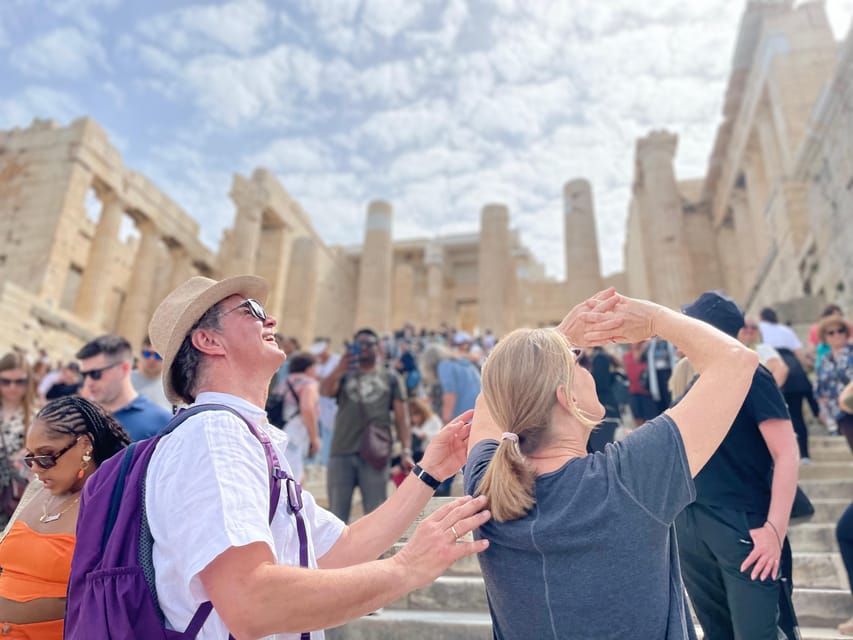
Meet right by the southern entrance of the Acropolis, across from the Acropolis Museum, just a few meters from the metro stop labeled Acropolis. The guide holds an office sign that reads TOP TOURS GREECE.
The tour is on foot, and headphones are included. That sounds small, but at the Acropolis it’s the difference between following along and guessing what you missed when the group shifts positions.
Plan to travel light. Bags are not allowed, baby strollers aren’t allowed, and food and drinks aren’t allowed—so think packing-minimal and come ready for a guided walk rather than a picnic day.
Theatre of Dionysus: where Greek drama fit 17,000 people
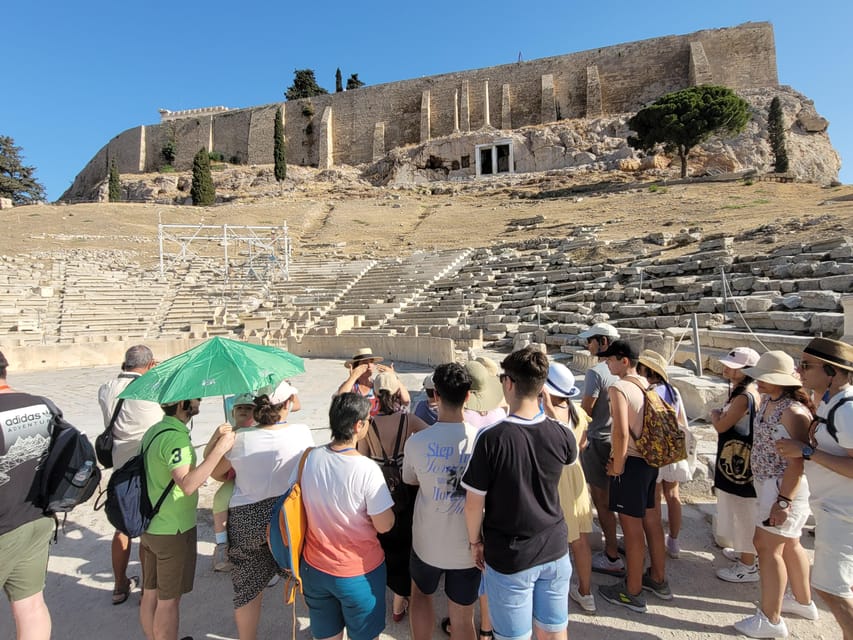
Your first stop is the Theatre of Dionysus, with about 10 minutes here. The guide frames it as the stage for Greek drama tied to Dionysus, the god of wine and theatre, built in the 5th century BC with capacity for 17,000 spectators.
What I like about starting here is that it gives you a cultural anchor fast. Before you hit the big temples, you understand that Athens wasn’t only about rulers and gods—it was also about public performance, civic life, and mass gatherings.
In a short time, you won’t feel like you’re reading a textbook. You’ll get a guided sense of how space worked for the people who came to watch, argue, and sing.
Asclepieion and the Portico of Eumenes: medicine where myths had a job
Next comes the Asklepieion of Athens (again about 10 minutes). This is the sanctuary dedicated to Asclepius, the god of medicine, and the guide connects the site to significant findings related to health.
The practical value here is how it rounds out Athens. People often zoom in on temples and statues, but the Acropolis also carried religious meaning for healing and wellbeing.
Also, the experience doesn’t treat it like a random detour. You’ll walk through the area with the guide explaining how sanctuaries like this fit into the city’s everyday belief system, not just its grand ceremonies.
Odeon of Herodes Atticus: the ancient stage that still hosts concerts
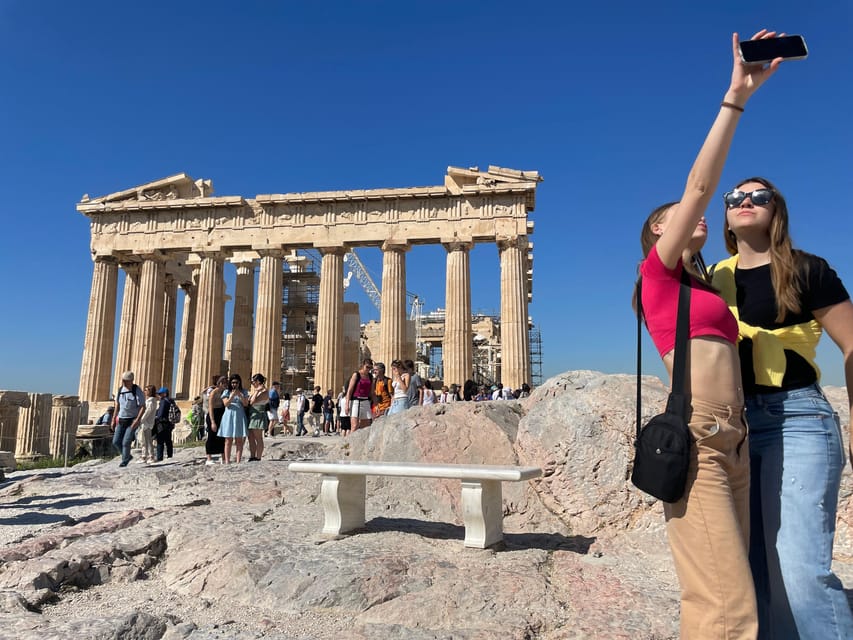
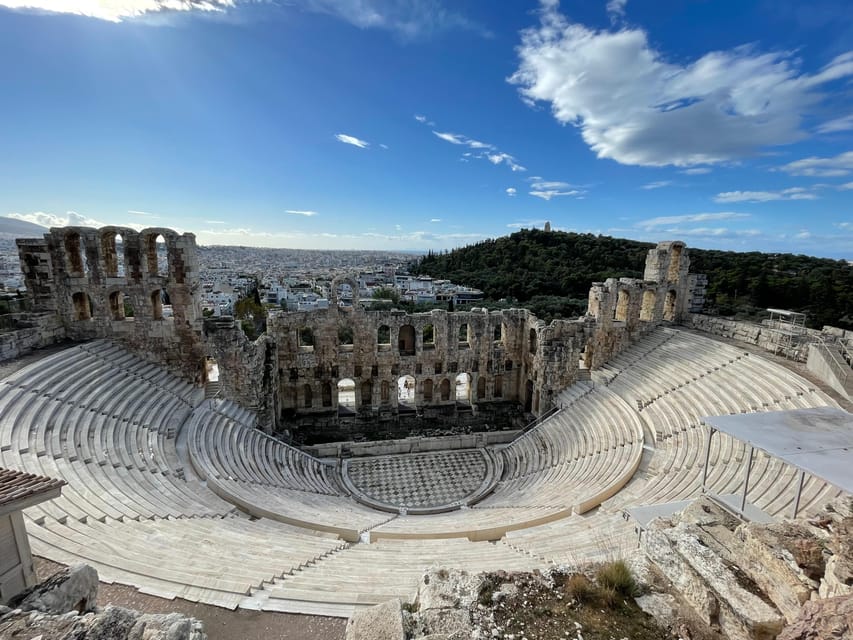
Then you’ll head to the Odeon of Herodes Atticus, about 10 minutes. This monument is described as still in use today—once it had a roof, and now it’s tied to some of Greece’s most important concerts.
I find it useful when a tour connects the past to what’s happening now. Even if you’re not there for a performance, the idea of a living cultural venue makes the stone feel less museum-like.
In a compact schedule, the guide uses this stop to show that Athens wasn’t frozen in time. It kept repurposing spaces, even after centuries changed everything around them.
You can also read our reviews of more guided tours in Athens


Propylaea and Temple of Athena Nike: Doric and Ionic on the road to power
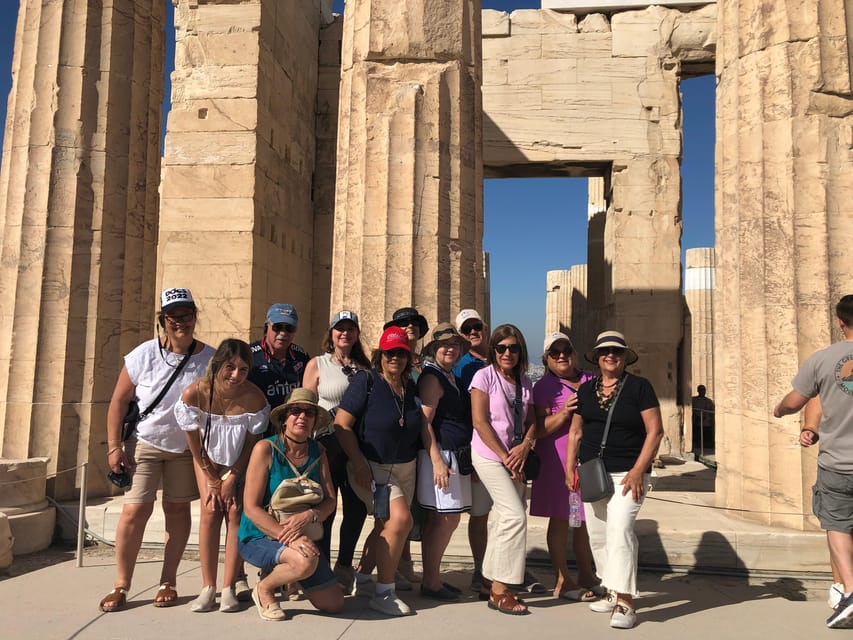
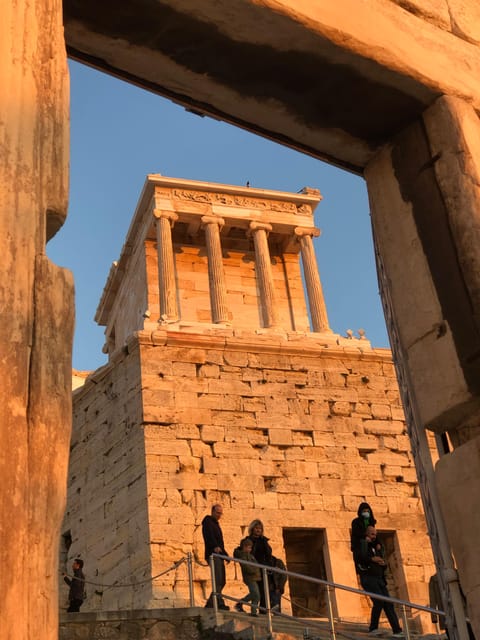
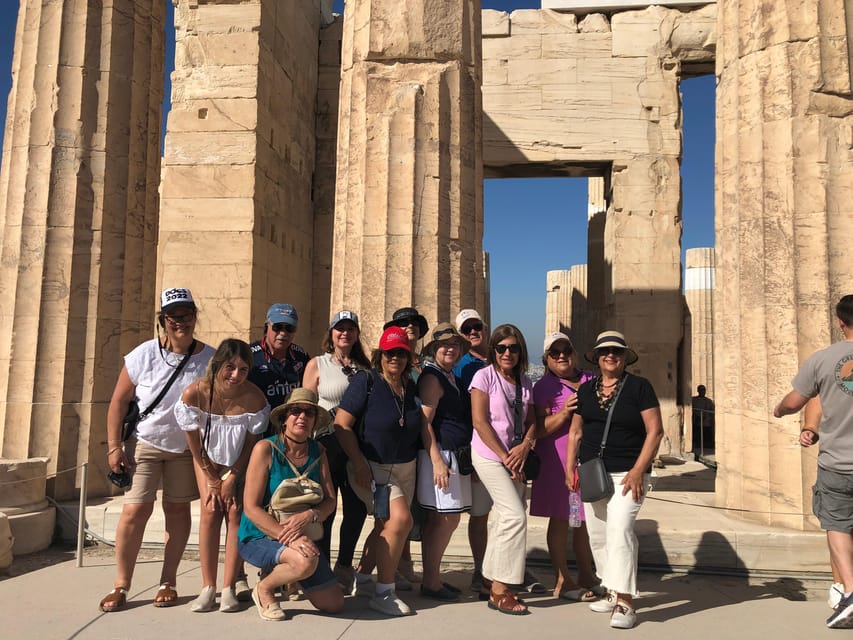
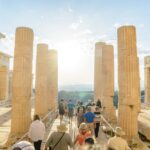
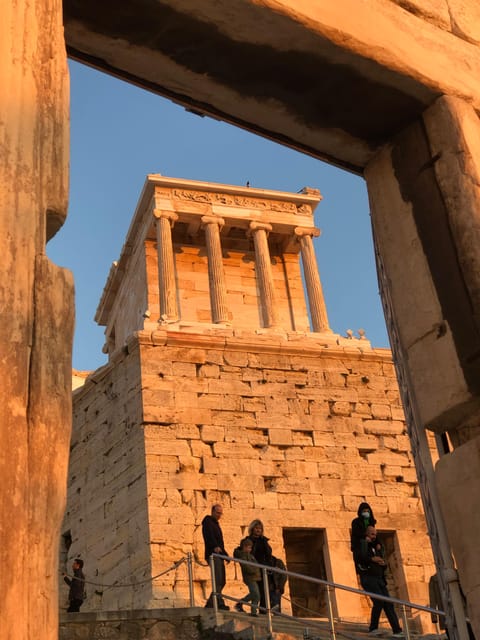
You’ll then pass through the Propylaea, the grand ancient gateway (about 10 minutes). This is where the Acropolis starts to feel like an intentional “arrival process,” with architectural styles such as Doric and Ionic explained as you approach the heart of the complex.
A short stop follows at the Temple of Athena Nike (about 5 minutes). It’s the kind of place where time can vanish if you don’t have context, so having the guide point out what to notice helps.
Think of these two stops as the preface. They set up why the next phase—the Parthenon and Erechtheion—was built the way it was.
Parthenon: Athena’s temple, UNESCO recognition, and why it’s built so carefully
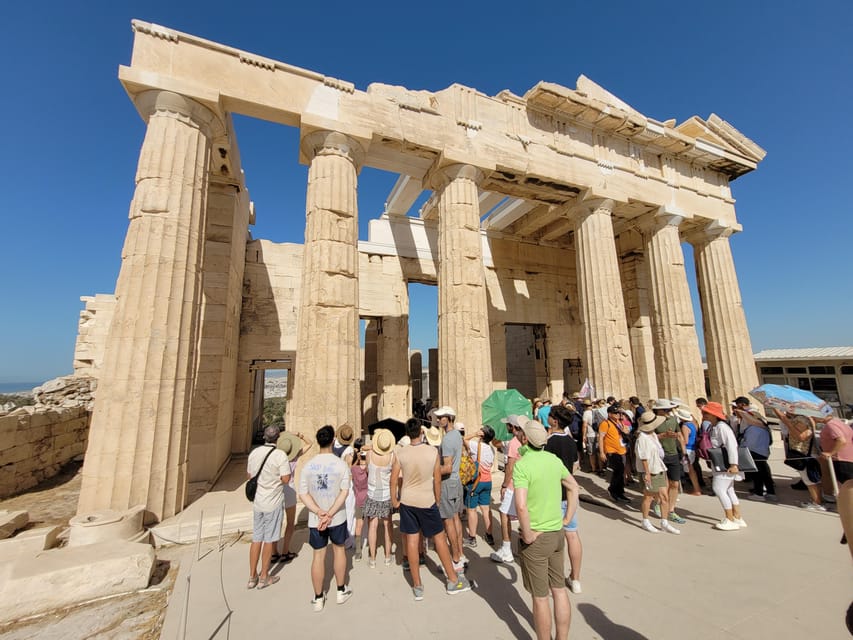
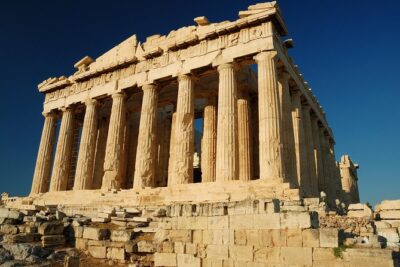
Now for the big one: Parthenon time (about 20 minutes). The tour positions it as the most important monument of Greece recognized by UNESCO, and the guide explains why the temple is often described as one of the most harmonious works of the ancient world.
You’ll also get the myth layer tied to Athena as the city’s protective goddess. When you hear that explanation while you’re looking at the structure, it stops being just an exterior photo moment.
Practical tip: during this portion, take a step back before you shoot. The guide’s pacing is moderate, but the Parthenon is visually dense—so a quick reset helps you frame the temple properly instead of only capturing details.
Erechtheion and Caryatids: the Athena–Poseidon legend made physical
After the Parthenon, you’ll visit the Erechtheion (about 10 minutes). The guide connects it to the gods and the city’s sacred claims—especially the story about the contest between Athena and Poseidon.
This is where you’ll hear the legend as a reason for what you see. The building still shows marks tied to that mythic struggle, and the tour explains the outcome as the gift of a water source and the famous olive tree to Athenians.
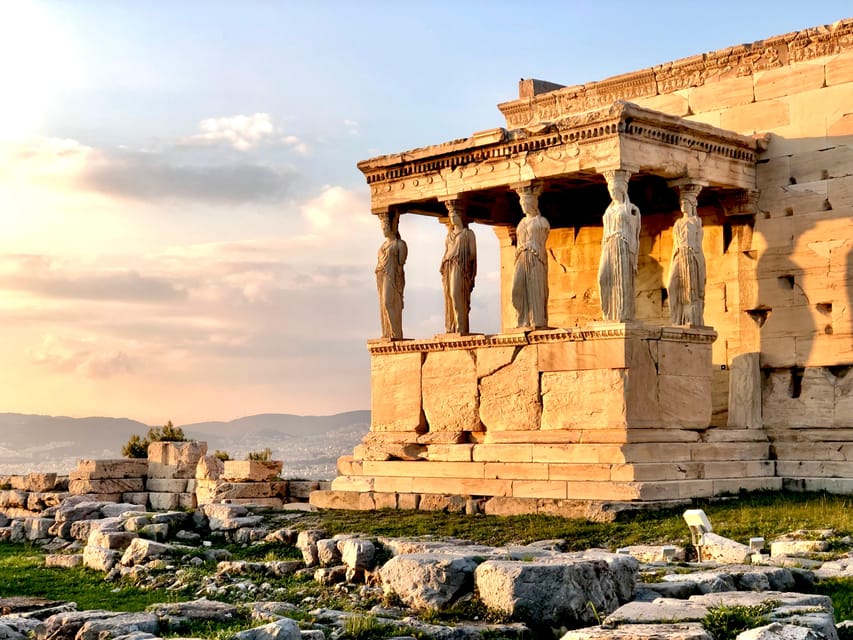
Then you’ll reach the porch area known for the Caryatids (about 10 minutes). These feminine-shaped columns are not treated as decoration only. You’ll learn why the Caryatids matter and how they fit into the sanctuary’s overall meaning.
This is one of the most praised parts of the tour because it turns sculpture into story. If you care about symbolism, you’ll feel it here more than at many other photo stops.
Finishing up on top: photos, views, and a bit of breathing room
The tour concludes at the top of the hill. You can stay as long as you like to photograph and enjoy 360-degree views.
That last stretch is smart. It gives you a chance to recompose your photos after you’ve seen the main monuments with context. You’ll also be better at spotting relationships between structures—how the gateway, temples, and elevations all connect.
I’d use that time actively. Spend a few minutes finding your best angles first, then relax. The Acropolis rewards patience more than speed.
Value check: does $33 deliver more than a quick rundown?
At $33 per person, this tour looks like good value if you care about explanations and not just access. You’re paying for an official Spanish guide, headphones, early entrance timing, and the fact that you’ll cover the key monuments across the whole complex.
It also helps that the tour uses short, focused segments at each stop. Ten minutes here, five minutes there, twenty minutes when it counts—this keeps attention from fading and helps you finish with time for views.
One detail to watch: there’s an option that includes an entrance ticket. If you choose the ticket option, the price becomes more like a full packaged entry plus guided interpretation. If you don’t, you’ll need to handle ticket access separately.
Food and drink aren’t included, so plan around that. And because bags are not allowed, you’ll want to bring only what you truly need.
Who should book this Parthenon and Acropolis Spanish tour
Book it if you:
- Want an official Spanish guide and you’d rather learn in your language than rely on fragments
- Like myths connected to real architecture (Caryatids, Athena vs Poseidon, and the Erechtheion story)
- Have limited time in Athens and want a tour that hits major sites without swallowing your whole day
- Appreciate a pace that avoids the worst heat and crowd pressure by starting early
Skip it if:
- You need wheelchair-friendly access (this tour is not suitable for wheelchair users)
- You’ll travel with bags, strollers, or food/drink you were hoping to carry inside the site
Should you book it?
I’d book this tour if you want the Acropolis to mean something. The combination of Spanish-only guidance, headphones, early timing, and guided stops that connect drama, medicine, architecture, and myth makes it more than a checklist.
If your schedule is tight and you hate waiting, the skip-the-ticket-line part is also a real win. Just remember the rules: travel light, be ready for walking, and save any longer lingering for the final view time at the top.
FAQ
What duration is the Parthenon & Acropolis guided tour?
The tour lasts 2 hours.
What language is the guide?
The live guide provides the tour in Spanish.
Where do I meet the guide?
Meet at the Tourist Information Center Athens. The guide also meets right by the southern entrance of the Acropolis, across from the Acropolis Museum, a few meters from the Acropolis metro stop, holding a sign that reads TOP TOURS GREECE.
Does the tour include tickets?
The tour includes an entrance ticket only if you choose the ticket option. The experience also includes skip the ticket line.
Which sites are covered during the 2 hours?
You’ll visit stops that include the Theatre of Dionysus, Asklepieion of Athens, Odeon of Herodes Atticus, Propylaea, Temple of Athena Nike, Parthenon, Erechtheion, and the Porch of the Caryatids.
Are headphones provided?
Yes, headphones are included so you can hear the guide clearly.
Can I bring bags or food and drink?
No. Bags are not allowed, and food and drinks are not allowed during the tour.
Is the tour suitable for wheelchair users?
No. It is not suitable for wheelchair users.

More Tickets in Athens

More Tours in Athens

More Tour Reviews in Athens
- All Day Cruise -3 Islands to Agistri,Moni, Aegina with lunch and drinks included
★ 5.0 · 4,958 reviews