REVIEW · ATHENS
From Athens: Mycenae and Epidaurus Private Tour
Book on GetYourGuide →Operated by SIGHTS OF ATHENS-GRAY LINE · Bookable on GetYourGuide
Mycenae and Epidaurus feel like time travel, fast. This private day trip strings together two major Peloponnese anchors, with a quick Corinth Canal stop en route. I especially like how it gives you big-picture context on the drive out, then hands you the ruins right after.
Two parts I really love: the Mycenae highlights—the Cyclopean walls, the Lions Gate, and the tombs of Agamemnon and Clytemnestra—make the myths feel real instead of textbook. And the Epidaurus Theatre is all about that famous acoustics story, built of limestone and designed so sound travels across a massive 14,000-seat space.
The main thing to consider is practical: entrances aren’t included, and it’s a full 8-hour day. If you’re visiting during peak heat, your comfort will depend a lot on good shoes, water planning, and pacing yourself.
In This Review
- Key things to look forward to
- Peloponnese day trip value: why Mycenae and Epidaurus belong together
- Getting out of Athens: pickup options and a real comfort win
- Corinth Canal: the 15-minute photo stop that’s worth it
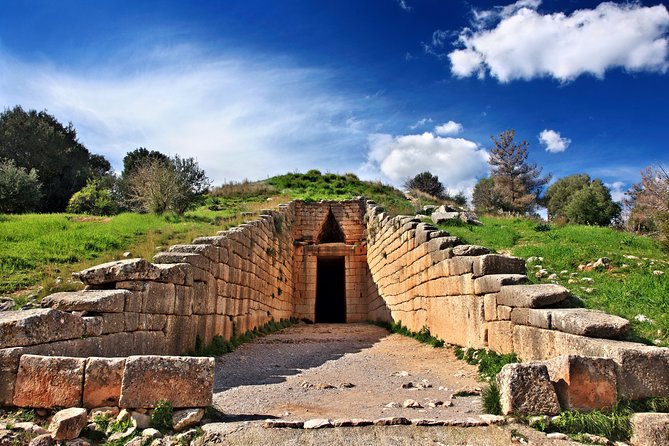
- Ancient Mycenae: tombs, Cyclopean walls, and Lions Gate magic
- The acropolis and the fortified story behind it
- Tombs you can actually stand near: Agamemnon and Clytemnestra
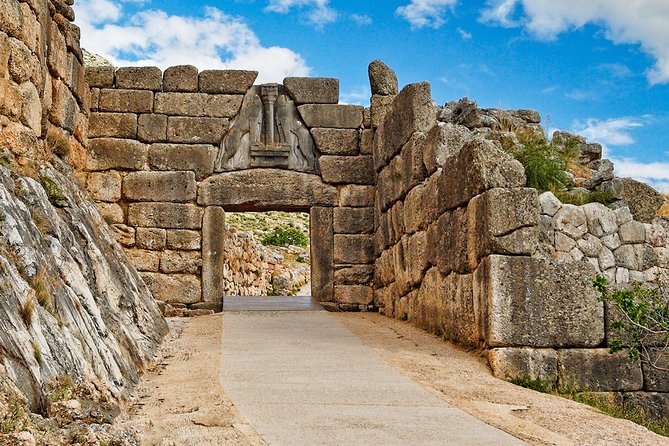
- Lions Gate and the archaeology you can read with your eyes
- Mycenae Archaeological Museum: what makes the ruins click
- Epidaurus Theatre: limestone, 14,000 seats, and acoustics you can believe
- Timing and pacing: how to survive an 8-hour day
- Tour languages and the guide experience: live English plus audio support
- Price and what you’re really paying for (up to 4 people)
- Who this tour fits best (and who might want a different plan)
- Should you book this Mycenae and Epidaurus private tour?
- FAQ
- How long is the Mycenae and Epidaurus private tour?
- What sites are included?
- What are the pickup locations?
- Is entrance fees included for the monuments?
- What kind of vehicle is used?
- What languages are available for guidance?
- Is the tour private?
- Do I need to bring anything?
- Is there a cancellation option?
- Is food and drinks included?
Key things to look forward to
A private ride from Athens (or Glyfada/Piraeus) with an English-speaking driver and air-conditioning.
Mycenae in focused time: acropolis views, tombs, Cyclopean walls, Lions Gate, plus the archaeological museum.
Epidaurus Theatre’s legendary acoustics in one of Greece’s best-preserved Classical venues.
A quick Corinth Canal photo stop on the way—short, but it’s a memorable engineering moment.
Audio guide support in many languages even with a live English guide.
Peloponnese day trip value: why Mycenae and Epidaurus belong together
If you only have a day, this combo makes sense. Mycenae shows you the power behind the Greek myths, while Epidaurus shows you what later Greeks built for performance and public life. Put them together and you get a clearer timeline: strength, rule, then culture on a stage.
I also like the rhythm of the day. You start with a structured approach to ruins—then you end with a place where architecture does something specific: carries sound. That contrast helps your brain stay engaged instead of just “walking old stones.”
And because the tour is private, you’re not packed into the same tempo as a large group. You can ask questions, pause for photos, and keep your eyes on what matters most to you.
You can also read our reviews of more private tours in Athens

Getting out of Athens: pickup options and a real comfort win
You’ll get picked up from a central point in Athens or from either Glyfada or Piraeus. The tour uses a private VIP van or car with air-conditioning, and the driver is English-speaking, with taxes, tolls, and fuel handled.
The practical benefit here is simple: the Peloponnese sites can feel far and logistically annoying on your own. This tour makes the trip feel easy, with the travel wrapped into the same 8-hour schedule. You spend your energy on the sites, not on transfers, signage, or parking.
On the way, there’s a short van ride before your first stop. It’s not rushed—more like enough time to get oriented before you start jumping between eras.
Corinth Canal: the 15-minute photo stop that’s worth it
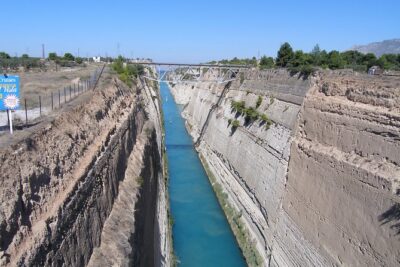
You’ll stop at the Corinth Canal for about 15 minutes. This is a quick break rather than a long sightseeing session, so it’s best for photos and a look at the canal’s engineering straight line.
What I like about including it is that it changes the mood of the day. After Athens and the drive through the Greek countryside, you suddenly see a dramatic human-built cut connecting the Aegean and Ionian seas. Even if you don’t linger, it gives you a “we’re really leaving Athens now” moment.
Quick tip: treat it like a photo window. Use the time for a few angles—then get back in the van so you don’t steal time from Mycenae.
Ancient Mycenae: tombs, Cyclopean walls, and Lions Gate magic
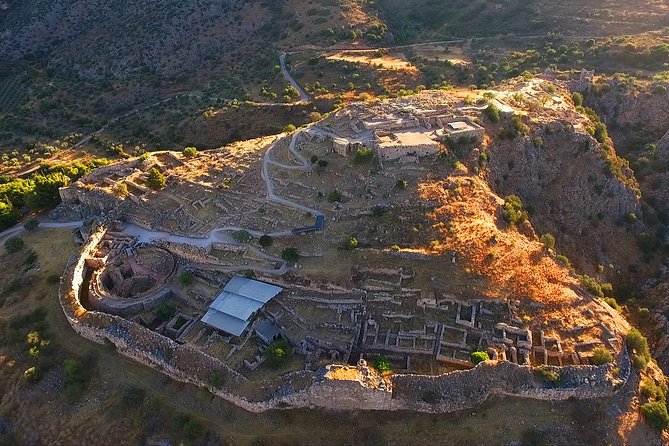
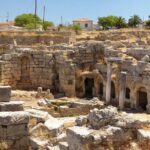
At Mycenae, you get a concentrated look at one of ancient Greece’s power centers. The site is tied to the legendary world around Agamemnon, but what you’re walking on is a real fortified kingdom that ruled for centuries.
Plan on about 2.5 hours at the archaeological site. That’s enough time to see the main features without feeling like you’re being herded.
Here’s what makes Mycenae hit hard:
The acropolis and the fortified story behind it
You’ll see the Mycenaean Acropolis and the defensive remains that protected the city. This matters because it turns the ruins into a system: walls, gates, and the way people controlled access.
When you look at the Cyclopean walls, the scale does the work. These are the kinds of structures where you can’t help thinking about how much labor it took, and how serious the kingdom must have been.
- All Day Cruise -3 Islands to Agistri,Moni, Aegina with lunch and drinks included
★ 5.0 · 4,958 reviews




Tombs you can actually stand near: Agamemnon and Clytemnestra
The tour includes stops for the tomb of Agamemnon and the tomb of Clytemnestra. It’s not just “myth trivia”—it’s a chance to connect names you might know with physical locations in the landscape.
You’ll get more meaning from these stops if you take a minute to look slowly. The architecture and placement help you understand why burial sites were part of how power was remembered.
Lions Gate and the archaeology you can read with your eyes
You’ll also see the Lions Gate, one of Mycenae’s most recognizable features. Gates are where fortifications show off their logic—who would pass, where movement would be controlled, and how the city defended itself.
And yes, you can appreciate it visually even if you don’t speak ancient history fluently. The stonework does a lot of teaching if you give yourself time to look.
Mycenae Archaeological Museum: what makes the ruins click
After (or alongside) your walk through Mycenae’s key areas, you can visit the Archaeological Museum of Mycenae. Having a museum stop included is a practical advantage, because it helps you interpret what you just saw outside.
This is where you start making more connections: objects, artifacts, and the kind of material evidence that turns “a cool site” into “I get what this place was.”
It also helps pacing. When you’re on a full day, a museum can be a good mental reset from constant walking and sun exposure.
If you’re the type who likes to leave sites with a few clear takeaways, this museum stop is one of the best uses of your time on the tour.
Epidaurus Theatre: limestone, 14,000 seats, and acoustics you can believe
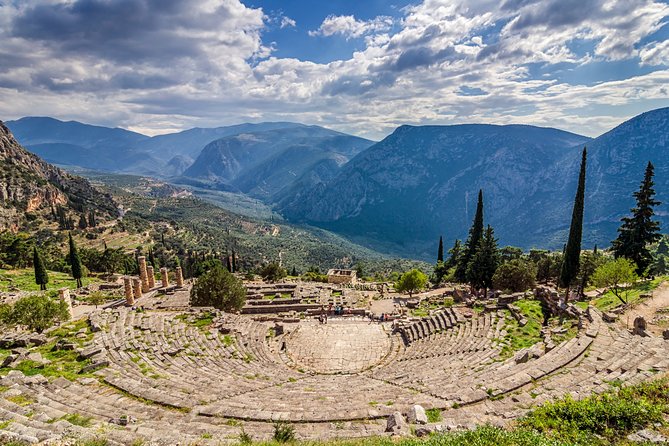
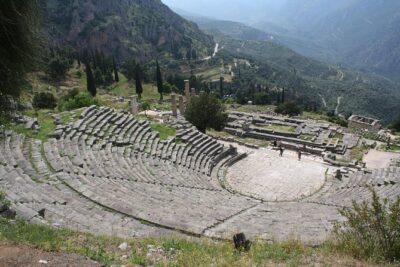
Your final major stop is Epidaurus, with about 2.5 hours there. The headline is the Ancient Theatre of Epidaurus, described as one of the best-preserved Classical Greek structures.
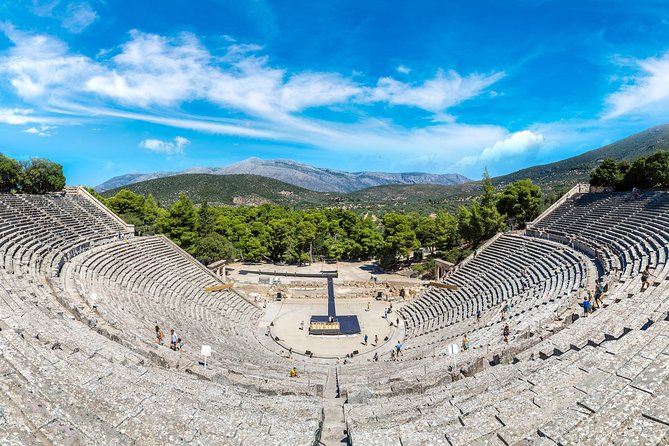
The design details matter here. It’s built of limestone, and it’s famous for acoustics so good that a coin dropped in the theatre’s center can be heard from the highest seat. Whether you test it yourself or just listen to the explanation, the idea is that the space is engineered for speech and performance.
You’ll also learn how the theatre is put together—like how the entrance is flanked by restored Corinthian pilasters. The foundations of the ancient stage are also visible beyond the circle, so you can picture where actors and chorus once stood.
Another standout fact: the theatre seats up to 14,000 people. Even if you’re only sitting near the front or middle, knowing the scale helps you understand why this kind of performance mattered socially.
And Epidaurus is still used. The tour notes that it’s used for performances of Ancient Greek drama during the annual Hellenic Festival, which gives the site a living feel instead of a frozen one.
Timing and pacing: how to survive an 8-hour day
This is a full day with real travel time. You’ll spend time getting out of Athens, visiting Mycenae for 2.5 hours, switching locations, then handling Epidaurus for another 2.5 hours, plus the ride time back.
So my advice is to plan like you’re going hiking, not museum-hopping. Wear comfortable shoes, bring sunglasses and a sun hat, and keep a camera ready because both Mycenae and Epidaurus offer viewpoints worth stopping for.
Also note that food and drinks aren’t included. This doesn’t mean you can’t eat—just means you should mentally budget time and money for water and snacks, especially if you’re prone to getting cranky in heat.
If you want the day to feel relaxed, focus on quality over speed. Pick a few “must-see” spots at Mycenae and then let Epidaurus be the place where you slow down and just listen (even before any performance details).
Tour languages and the guide experience: live English plus audio support
The tour provides a live English guide and includes an audio guide. Audio is available in German, English, French, Spanish, Russian, Polish, Chinese, Japanese, Italian, and Portuguese.
That setup is actually smart for a private tour. If you’re someone who likes to go at your own pace, audio lets you review points later. If you’re following along in English, you’ll still have backup options if you miss a detail due to distance or noise.
One small but helpful note from real-world experience: the driver named Akis was described as friendly and attentive, and he shared lots of information. While you can’t count on the same person for every departure, it’s a good sign that the tour staff style here tends to be conversational and passenger-focused.
Price and what you’re really paying for (up to 4 people)
The price is $414 per group up to 4 people, for an 8-hour private experience from Athens. That might sound steep if you’re comparing it to a public bus, but you’re not really buying “transport only.”
You’re buying a full private day with:
- a private VIP van or car with air-conditioning
- an English-speaking driver
- taxes, tolls, and fuel
- guided visits at Mycenae and Epidaurus
- audio guide language support
Entrance fees are extra, and you handle food and drinks yourself. But even with those added costs, this can be good value if your group is small and you want the sites without the friction.
In practice, the per-person value improves fast once you fill at least a couple seats. If you’re traveling as two or four, this tour can feel like a “no-stress classics day,” which is often what you’re really paying for.
Who this tour fits best (and who might want a different plan)
This tour is ideal for:
- couples or small families who want a structured day without car logistics
- first-time visitors who want Mycenae + Epidaurus in one go
- anyone who likes architecture tied to real function—walls for defense, theatres for sound
It may be less ideal if you:
- want a free, self-paced day with lots of extra stops and no set timing
- are trying to maximize time at only one site (this tour spreads the day across two anchors)
- don’t plan for entrance fees and refreshments
If you’re the type who prefers a clear route, good guiding, and a finished itinerary at the end of the day, you’ll probably enjoy this format.
Should you book this Mycenae and Epidaurus private tour?
I think it’s a smart booking if you want a classic Peloponnese highlight day with minimal hassle. Mycenae gives you the fortified myth-meets-stone feeling, and Epidaurus gives you a theatre that still does something impressive: it’s built for the human voice to travel.
Book it if your priority is an efficient, high-quality day from Athens with a private vehicle and both live and audio interpretation. Skip it if you want maximum wandering freedom or you’re hoping entrance fees and food are included.
If you’re ready for a full 8-hour history-and-architecture day—plus a quick canal photo moment on the way—this tour is a very workable choice.
FAQ
How long is the Mycenae and Epidaurus private tour?
The tour duration is 8 hours.
What sites are included?
The tour includes Ancient Mycenae and Epidaurus, plus a brief stop at the Corinth Canal for photos.
What are the pickup locations?
Pickup is available from Athens, Glyfada, and Pireas, including any hotel, accommodation, or central point in those areas.
Is entrance fees included for the monuments?
No. Entrance fee in the monuments is not included.
What kind of vehicle is used?
You’ll travel by a private VIP van or car with air-conditioning.
What languages are available for guidance?
The live guide is in English, and the audio guide is available in German, English, French, Spanish, Russian, Polish, Chinese, Japanese, Italian, and Portuguese.
Is the tour private?
Yes. It’s a private group.
Do I need to bring anything?
Bring a passport or ID card, comfortable shoes, sunglasses, a sun hat, and a camera.
Is there a cancellation option?
Yes. You can cancel up to 24 hours in advance for a full refund.
Is food and drinks included?
No. Drinks and food are not included.


More Private Tours in Athens


More Tours in Athens


More Tour Reviews in Athens
- All Day Cruise -3 Islands to Agistri,Moni, Aegina with lunch and drinks included
★ 5.0 · 4,958 reviews