REVIEW · ATHENS
Biblical Tour Letters ToThe Corinthians St Paul’s Footsteps 6Hour
Book on Viator →Operated by Yomadic.Tours & Transfers · Bookable on Viator
Mars Hill is just the start. This Athens-to-Corinth route is built around the footsteps of Apostle Paul. I especially like the private, air-conditioned minivan that keeps the day relaxed, and the stop-by-stop storytelling that ties archaeology to the Bible. One thing to consider: the day includes some sites where entrance fees are listed separately, so you’ll want cash or a card ready for Ancient Corinth and Isthmia.
I also like that pickup and drop-off work for both hotel/Airbnb stays and cruise terminals. It’s paced for first-timers and people who don’t want to wrestle with buses, crowds, or parking. If you want a licensed guide inside every archaeological area, there’s an extra option, because the driver can’t replace that role inside sites.
In This Review
- Key highlights worth planning for
- Why Corinth makes a perfect biblical day trip from Athens
- Price and value: what €170.50 covers, and what to budget next
- Pickup, drop-off, and the luxury minivan that keeps the day sane
- Areopagus Hill and the Unknown God moment you can actually picture
- Daphni Monastery: fortified walls, Byzantine mosaics, and older layers underneath
- Corinth Canal: the shortcut dream that took generations
- Isthmia and the games that shaped Paul’s audience
- Ancient Corinth and the Agora: where public messages mattered
- Kenchreai (Kechries): the harbor town behind the letter details
- Temple of Apollo and the Church of St Paul in Corinth: ancient to modern, in one arc
- Driver-led storytelling vs. licensed guides inside sites
- A smart pacing plan for your day in Athens and Corinth
- Should you book the Footsteps of St Paul tour?
- FAQ
- How long is the tour?
- Do you pick up from a cruise ship?
- Is this a private tour?
- What’s included in the price?
- Which entrance fees are not included?
- Can the driver go inside archaeological sites with me?
- Is there Wi‑Fi and bottled water?
- What if the weather is bad?
Key highlights worth planning for
- Stop-by-stop Paul connection: each main site is tied to the Bible’s Athens and Corinth story.
- Comfort that matters on a full day: A/C, bottled water, and onboard Wi‑Fi during the ride.
- Daphni Monastery for Byzantine eye-candy: fortified walls and mosaics are the star here.
- Corinth Canal as a real-life chapter: a modern engineering cut with roots in a 2,000-year dream.
- Isthmia and games history: sports venues that help explain why Paul’s message could land.
- Ancient Corinth’s Agora and Bema: a strong anchor for Paul’s public-facing moments.
Why Corinth makes a perfect biblical day trip from Athens
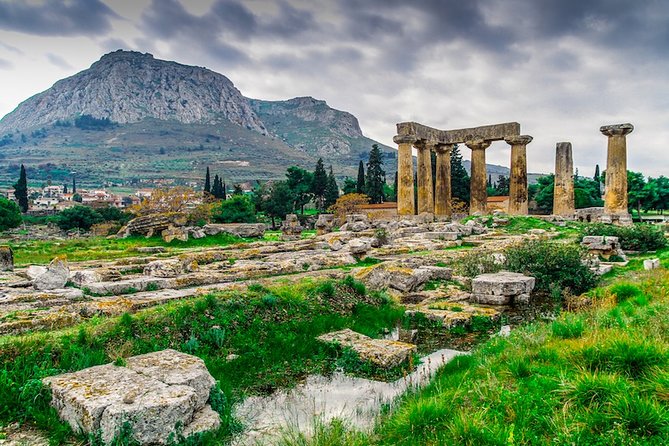
Corinth isn’t just another “ancient ruins” outing. It’s the setting for some of the New Testament’s most direct letters, plus the wider Roman-world backdrop that made Paul’s message spread. In one long, organized day, you get the Athens-to-Corinth story arc without turning your vacation into a transportation problem.
This itinerary also has a smart mix: big biblical anchors like Areopagus Hill and the Agora, plus visual, quieter stops like Daphni Monastery. That balance helps the day feel more human and less like a checklist.
You can also read our reviews of more tours and experiences in Athens.


Price and value: what €170.50 covers, and what to budget next
At $170.50 per person for about 6 hours 15 minutes, you’re paying for transportation, a guided narrative from an English-speaking driver, and a schedule that keeps you moving efficiently. Many important pieces are included in the tour price, including vehicle comfort and admission for certain stops like Areopagus Hill and the Monastery of Daphni.
You should budget for additional site entrances that are specifically listed as not included:
- Ancient Corinth: €15.00 per person
- Archaeological Site of Isthmia: €5.00 per person
Also note that the Archaeological Museum of Isthmia and Temple of Apollo are marked as not included, so plan for extra costs there too.
If you’re a cruise passenger or you hate wasting half a day figuring things out, this is the kind of value that comes from time saved rather than from squeezing every euro of admission out of the price.
Pickup, drop-off, and the luxury minivan that keeps the day sane
The logistics are built for real travel days. You’ll be picked up from your hotel, Airbnb entrance, or the cruise ship gate, and after the tour you’re returned to the same general place.
The vehicle setup is a big part of why this tour works:
- Air-conditioned private minivan
- Complimentary Wi‑Fi
- Bottled water
- Space for luggage storage in the car, depending on how many people are traveling
Group size is kept small. The tour is described as intimate—often 2 to 4 people—and the minivan format is also noted up to 2 to 6 passengers for the small-group experience (with the vehicle capacity up to 8). Either way, you’ll feel less lost than you do on large coach tours.
Areopagus Hill and the Unknown God moment you can actually picture
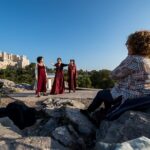
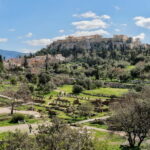
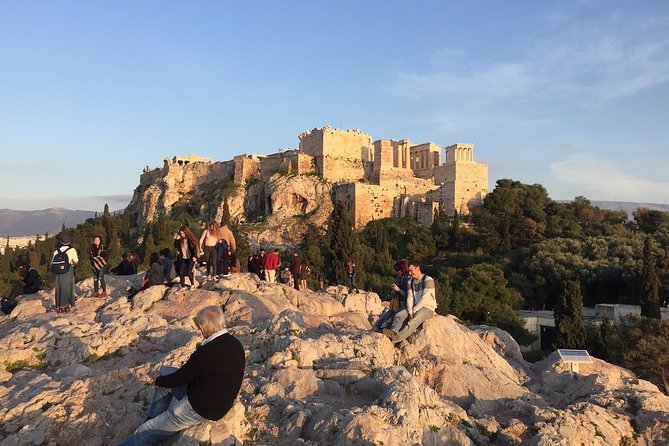
You start at Areopagus Hill, including admission. This is the Holy Rock of the Acropolis area, and it’s the location tied to Paul’s dramatic speech to Athenians about the Unknown God.
What I like about this stop is how quickly it gives you context. Once you’ve heard the story connected to this hill, Athens stops feeling like a postcard city and starts feeling like a real place with arguments, crowds, and competing ideas. You get about 15 minutes here—enough to absorb the setting, not so long that it drags.
Practical note: the climb and viewpoints depend on the exact access paths. Wear shoes that don’t punish you on uneven ground.
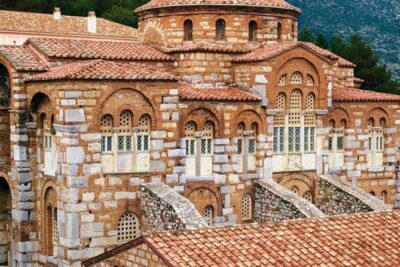
Daphni Monastery: fortified walls, Byzantine mosaics, and older layers underneath
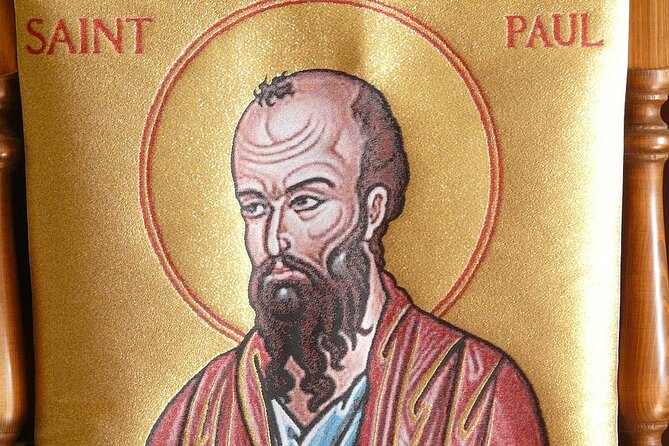
Next is the Monastery of Daphni, also with admission included. This spot is packed with timeline layers: it’s a major Byzantine monument built on a site connected to an ancient Temple of Apollo, and it later saw use by Cistercian monks during the Frankish period before returning to Orthodox control after the Ottoman conquest.
You’ll also get the “why this matters” angle. The monastery is surrounded by strong fortified walls and towers, and while earthquakes caused severe damage over centuries, major restoration work—especially to its stunning mosaics—keeps its artistic and spiritual legacy alive.
You only have about 20 minutes, so don’t expect a slow museum crawl. Do expect a strong impact: thick stone, serious fortifications, and that unmistakable Byzantine feel.
- All Day Cruise -3 Islands to Agistri,Moni, Aegina with lunch and drinks included
★ 5.0 · 4,958 reviews




Corinth Canal: the shortcut dream that took generations
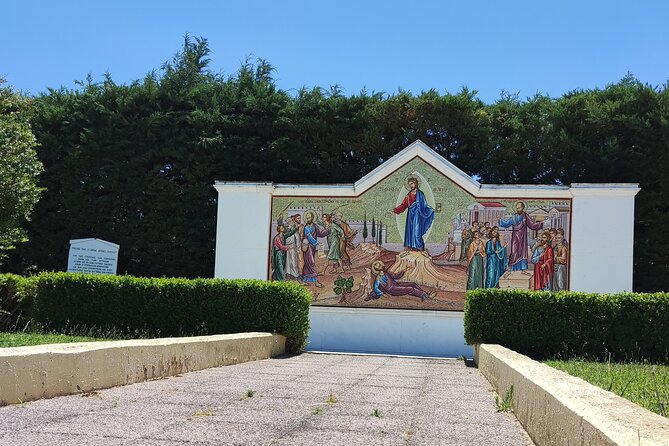
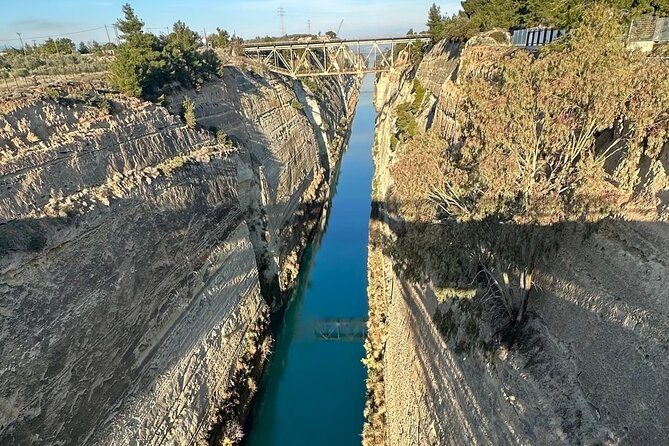
At Corinth Canal, admission is free and the stop lasts about 20 minutes. This canal splits the Greek mainland from the Peloponnese, turning the route into a practical shortcut.
The best part of the story here is the long timeline. The canal was executed in the late 19th century, but the dream goes back for roughly 2,000 years. You’ll hear about how ships once had to circle the Peloponnese—an extra 185 nautical miles—and how Periander’s earlier idea included the diolkos, a stone road that helped move ships over land on wheeled platforms.
This stop is great if you like history that has consequences for people making real journeys. It also gives your brain a break from ruins while still staying in the Greece-and-Past narrative.
Isthmia and the games that shaped Paul’s audience
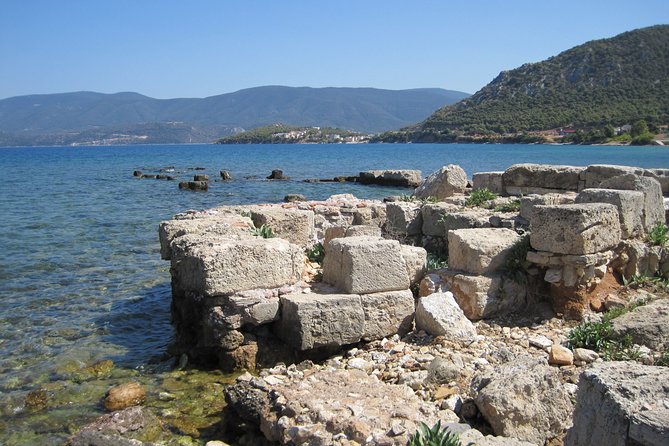
The day then lands in Isthmia, and this is where the Bible connection becomes vivid. You’ll spend about 1 hour at the Isthmia area, and the itinerary lists the main Isthmia stop as admission free.
Why it matters: the Isthmian games were huge. They were the second most important sports competitions in ancient Greece after Olympia, and they drew athletes and visitors from far away. The tour frames Paul’s presence here as especially significant, linking his work as a tent maker connected with the games’ hospitality.
That helps your understanding of the letters. Paul wasn’t speaking into a vacuum. He was moving through environments where crowds gathered, reputations formed, and messages spread faster than anyone’s opinion could be managed.
There’s also a second phase at the Isthmia archaeological zone that includes details like:
- Temple of Poseidon and Amphitrite
- A preserved stadium feature called the “ysplex”
- The Sanctuary of Palaimon
- A theater linked to musical competitions
- Mosaic finds (including sea-life themed imagery)
One caution: some of these parts are marked as not included for admission. The tour data explicitly lists €5.00 per person for the archaeological site entry, even though other segments at Isthmia are noted as free. So plan for a little extra at the door or during the approach to specific areas.
Ancient Corinth and the Agora: where public messages mattered
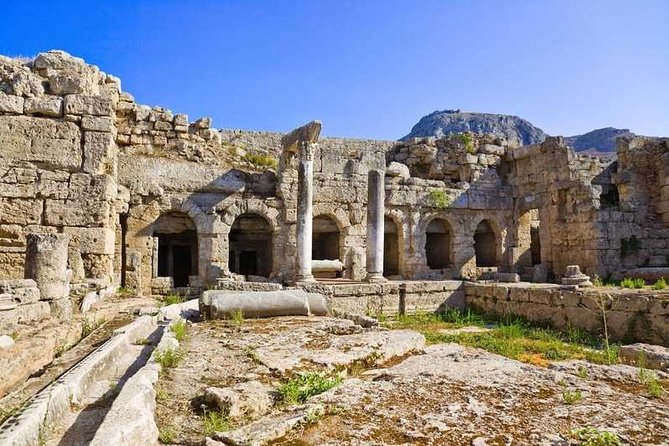
Then it’s off to Ancient Corinth (Archaia Korinthos) for about 1 hour. Admission here is not included, and €15.00 per person is listed. This is the bigger step into the ruins, and it’s one of the most rewarding parts of the whole day.
Corinth was a city-state in the narrow strip joining the Peloponnese to the mainland, and for Christians it’s known through Paul’s letters—plus mentions in Acts. The Roman era changes the city’s story too: Corinth was demolished in 146 BC, rebuilt in 44 BC, and later became a provincial capital.
Inside the Ancient Corinth area, the itinerary highlights the Agora—including a key feature: the podium or Bema. Tradition links this Bema with Paul’s public moment with the proconsul Gallio (referred to in the account as a religious dispute), and the tour also notes that the site was later transformed into a Christian church during the Byzantine period.
This is where you’ll feel the day’s core theme: theology wasn’t floating in the air. It was argued, practiced, and heard in real civic spaces.
Kenchreai (Kechries): the harbor town behind the letter details
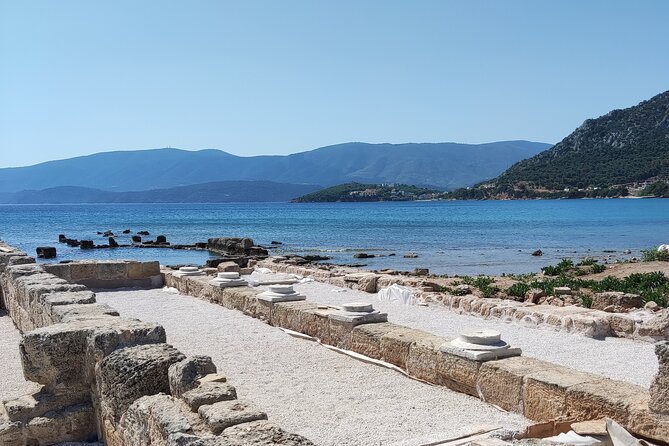
After Ancient Corinth, you stop at Kechries (Kenchreai) for around 30 minutes, with admission listed as free. Kenchreai was the ancient port town connected to Paul’s travels, and the Bible references make it extra interesting.
The tour frames this stop through Acts 18:18, including the detail about Paul having his hair cut to fulfill a vow. It also connects the place to Paul’s mention of Phoebe in his letter to the Romans.
If you like travel that matches scripture wording closely, this stop is satisfying. It feels more like a lived geography than a “touristic ruin,” even if time is short.
Temple of Apollo and the Church of St Paul in Corinth: ancient to modern, in one arc
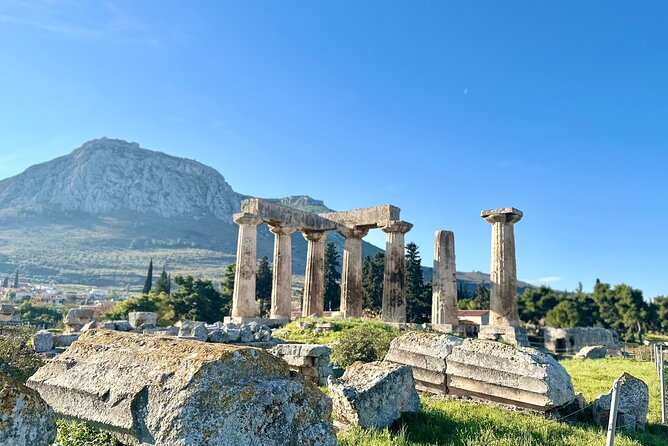
You’ll get one more ancient landmark: the Temple of Apollo at Corinth. This one is marked as not included for admission, and the stop is brief (about 10 minutes). The tour data notes construction around 550 BC and calls out the rarity of monolithic columns in the region.
Then you end at the modern church of St Paul in Corinth (Apostolou Pavlou) for about 20 minutes, admission listed as free. The tour describes this church as tied to Paul’s stay in Corinth, when he spent about 1.5 years and helped found the metropolitan church. It’s strongly connected to Acts and the two letters to the Corinthians.
Ending here is a smart choice. You don’t just leave with stones in your eyes. You leave with a place you can return to in your mind when you read the words again.
Driver-led storytelling vs. licensed guides inside sites
This tour leans on an English-speaking driver with extensive knowledge of ancient Greek history and, above all, Paul’s life and work. The structure is built around a driver who explains each location and the story ties as you move between stops.
There’s also a rule you should understand before you go: in Greece, only officially licensed tour guides can accompany guests inside archaeological sites. So the driver can provide explanations and context, but they can’t act as your inside-site guide.
If you want the full inside-guide treatment, you can request it. The tour data lists an optional licensed-guide service at €160.00 per booking, subject to availability.
My practical advice: if you’re the type who wants to read every panel and ask lots of questions inside the ruins, ask for this add-on when booking. If you just want clear explanations and an efficient route, the driver format works very well on its own.
A smart pacing plan for your day in Athens and Corinth
The whole schedule is designed to fit the long-distance reality of getting out of Athens and into the Corinth region. You’ll have multiple stops, most around 10 to 20 minutes, plus longer holds at key zones like Isthmia and Ancient Corinth.
To make it feel relaxed, I’d do two things:
- Pack light if you’re bringing a lot of luggage, since storage depends on passenger count.
- Keep your questions ready and use the drive time. The driver is your biggest info source while you’re moving.
If you’re booking for a cruise day with a tight schedule, the pickup/drop-off focus is a major win. It’s built to help you see Ancient Corinth without turning the trip into a stress test.
Should you book the Footsteps of St Paul tour?
Book it if you want a Bible-grounded Athens to Corinth day that uses a private vehicle, short travel windows, and strong storytelling to connect Paul’s world to real places. It’s a great fit for cruise passengers, first-timers, and anyone who likes their religion-history combo with clear context.
Consider not booking (or at least budget extra time and money) if you hate add-on entrances. Ancient Corinth (€15) and Isthmia archaeological site (€5) are listed separately, and some other spots may also cost extra. Also, if you need a guide physically inside every archaeological area, plan for the optional licensed-guide add-on.
If those points don’t bother you, this is the kind of day trip that makes the Bible feel located in a real geography, not trapped in a page.
FAQ
How long is the tour?
It runs for about 6 hours 15 minutes (approx.).
Do you pick up from a cruise ship?
Yes. Pickup is offered from the cruise ship area, with return to the ship after the tour.
Is this a private tour?
It’s described as private with only your group participating, and the small-group format is noted as 2 to 4 people (with the minivan option described up to 2 to 6 passengers).
What’s included in the price?
Included items include round-trip pickup and drop-off, transportation in an air-conditioned private vehicle, Wi‑Fi on the vehicle, and bottled water. Some admissions are also included (such as Areopagus Hill and the Monastery of Daphni).
Which entrance fees are not included?
The tour lists these as not included: Ancient Corinth (€15.00 per person) and the Archaeological Site of Isthmia (€5.00 per person). The Archaeological Museum of Isthmia and Temple of Apollo are also marked as not included.
Can the driver go inside archaeological sites with me?
Not inside archaeological sites. The tour data notes that only officially licensed tour guides can accompany guests inside sites. The driver can explain from outside, and an optional licensed guide can be arranged for an additional fee.
Is there Wi‑Fi and bottled water?
Yes. The vehicle includes complimentary Wi‑Fi and bottled water.
What if the weather is bad?
The experience requires good weather. If it’s canceled due to poor weather, you’ll be offered a different date or a full refund.


More Tours in Athens

More Tour Reviews in Athens
- All Day Cruise -3 Islands to Agistri,Moni, Aegina with lunch and drinks included
★ 5.0 · 4,958 reviews