REVIEW · ATHENS
Best of Athens & Acropolis Full Day Private Guided City Tour
Book on Viator →Operated by The Greek Taxi · Bookable on Viator
The Acropolis works best with a real plan. This private guided Athens day strings together the big stone moments and the city’s living streets, with English commentary and timed stops so you’re not just wandering. I love the clear stop-by-stop flow that keeps the myth-and-politics story moving, and I especially like that several key sites come with admission included.
One thing to consider: it’s a long day (about 5 to 7 hours) with real walking and lots of marble. On the Acropolis, the surfaces are smooth, so grippy footwear matters more than you might expect.
A second big plus for me is how much easier the day feels when pickup and timing are handled. You coordinate the exact meeting spot using WhatsApp or Apple iMessage, and you stay within a private group, not a busload of strangers.
In This Review
- Key highlights you can feel right away
- Why a private Athens day makes the Acropolis feel less like a checklist
- Starting smooth: WhatsApp pickup coordination and a calm first hour
- Acropolis climb: marble footing, quarry clues, and the Parthenon on the skyline
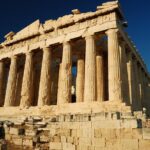
- Parthenon: optical tricks that make symmetry feel absolute
- Propylaea, Athena Nike, and the gateway choreography
- Erechtheion and the Caryatids: myths you can point to
- Ancient Agora: the civic heart where philosophy and everyday life meet
- Temple of Hephaistos and the view back across the Agora
- Syntagma to the Evzones: modern Athens you can watch in motion
- Academy, University, and National Library: neoclassical Athens in quick bites
- Panathenaic Stadium and Olympeion ruins: Olympic restart plus Roman scale
- Plaka and Monastiraki: the lanes where you should slow down on purpose
- Price and timing: what you’re really paying for at $600.12 per person
- Should you book this Acropolis and Athens private tour?
- FAQ
- How long is the Best of Athens & Acropolis private guided tour?
- Is pickup included, and how do I coordinate the meeting point?
- Is the tour in English?
- Are admission tickets included for the main sights?
- Do I need to pay extra for the Panathenaic Stadium?
- What should I know about weather?
Key highlights you can feel right away
- Private pacing on the Acropolis so you’re not stuck waiting behind a crowd line
- Admission tickets included on the core Acropolis sights and Ancient Agora
- Photo-minded stops with practical angles for Parthenon, Nike, and the Agora views
- Short modern-city interludes at Syntagma and the Unknown Soldier changing of the guard
- Neoclassical Athens trio (Academy, University, National Library) in quick, efficient hits
- Plaka + Monastiraki at the end when you want time to wander, snack, and shop
Why a private Athens day makes the Acropolis feel less like a checklist

If you do the Acropolis on your own, you can end up with a pile of famous names and not much of a story. This tour keeps the narrative tight, walking you along the sacred rock with a guide who explains what you’re actually seeing—Periclean ambition, Persian Wars context, and why this limestone outcrop became a centerpiece for Western art and ideas.
The private setup also helps you match the day to your pace. Instead of sprinting for the next landmark, you get time windows at each stop (often around 15 minutes), plus a longer stretch where it counts—like Ancient Agora.
The value angle with a $600+ per-person price is this: you’re paying for (1) a guide’s time and focus, (2) smooth coordination, and (3) admission included at several top sites. If you were to DIY the day, those admissions plus the planning overhead can add up quickly—especially if you want the “right order” feeling.
You can also read our reviews of more guided tours in Athens
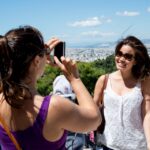
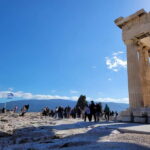
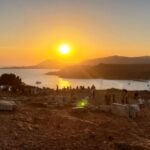
Starting smooth: WhatsApp pickup coordination and a calm first hour
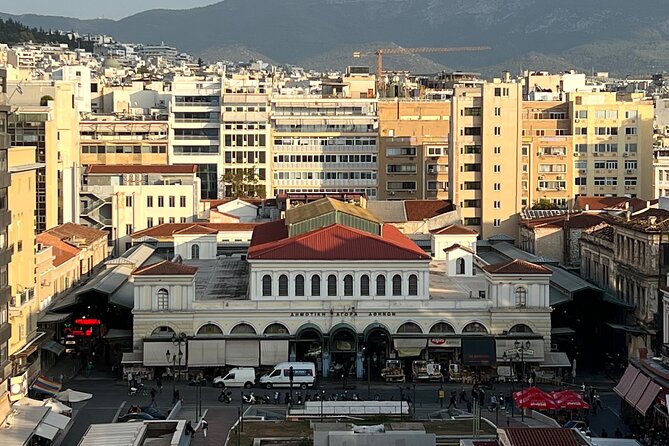
Pickup is part of the deal, and you coordinate the exact meeting point using WhatsApp or Apple iMessage. That matters because Athens has multiple curb-side zones and drop-off points, and the tour runs within a set time window.
The hours listed run daily from 9:00 AM to 6:00 PM, and the experience is offered in English. If you’ve ever had the stress of missing a meeting spot in a new city, you’ll appreciate the structured approach here.
Also, the provider behind the pickup services has a track record of prompt, professional communication. In other Athens requests handled by the same company, you can find details like drivers arriving early, clear WhatsApp messaging, and meet-and-greet support with help for luggage if your flight is delayed. That kind of reliability matters because it protects the rest of your day.
Acropolis climb: marble footing, quarry clues, and the Parthenon on the skyline

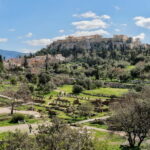
The Acropolis starts with the climb up a pedestrian promenade that opens into the heart of Classical Greece. As you go, the city drops away and marble temples rise on your skyline—an effect that’s dramatic even before the big buildings.
You’ll spend about 1 hour at the first stop, with admission included. What I like about this part is that the guide points out details that most people miss when they’re only scanning for the Parthenon: ancient quarry marks in the bedrock, carved drainage channels, and reused marble blocks from centuries of restoration.
Practical tip: the marble can be smooth, so wear shoes with real grip. If your plan is sandals or slick soles, rethink it.
Photo tip that’s worth using: pause midway up the slope for a frame of the Parthenon against the Saronic Gulf. That’s one of those “yes, this looks like the postcard” moments, but you’ll get it from a viewpoint you’ll miss if you rush straight to the top.
Parthenon: optical tricks that make symmetry feel absolute

The Parthenon is where the day goes from impressive to mind-bending. You get about 15 minutes here, and admission is included.
Here’s what makes the experience click: the guide explains the optical refinements—subtle curvature and slight column tilts—that correct for how humans actually see lines from below. It’s not just perfect symmetry; it’s engineered illusion.
You also learn how the sculpted friezes once carried vivid color, turning civic storytelling into something that felt alive, not faded. Even if you can’t see the original pigments today, the explanation changes what you notice on the stone.
Look for the corner columns: they’re slightly thicker to counter optical thinning. That detail is small, but it’s exactly the kind of thing you’ll only catch when someone slows your attention down.
One must-follow note: respect barriers. Every stone here is protected archaeology, and the experience is better when you keep the focus on observation rather than stepping past limits.
Photo tip: shoot along the colonnade to catch rhythmic lines and scale.
Propylaea, Athena Nike, and the gateway choreography

After the Parthenon, the tour shifts into gateway and threshold moments—important because Athens isn’t only about temples. It’s about how you’re guided into sacred space.
Propylaea is the monumental entrance, designed by Mnesicles. You’ll have about 15 minutes and admission included. This stop is worth it because it explains the structure of arrival: fortress-like and elegant at the same time, with Pentelic marble and Doric columns.
Your guide points out asymmetry—practical adaptations for terrain and nearby shrines. That’s a great reminder that ancient designers weren’t building from a blank spreadsheet. They were working with real ground, real constraints, and real rituals.
Photo tip: stand just inside, turn back, and frame Athens through the columns like a window.
Next is the Temple of Athena Nike, perched above the gate. You get 15 minutes, admission included. This temple is small, but it’s loaded with meaning—victory in both military and civic life. The guide connects that to what the friezes once showed: dynamic battle scenes and winged Nikes (Victories).
One practical detail: the famous motif of Nike adjusting her sandal appears here as a replica. Originals are preserved in the Acropolis Museum, which is helpful context so you don’t waste time hunting for the “real” one on-site.
Photo tip: capture the bastion and temple together to show the cliff-edge drama.
You can also read our reviews of more city tours in Athens

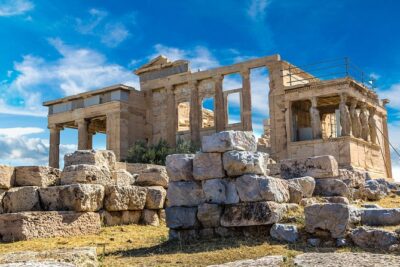
Erechtheion and the Caryatids: myths you can point to

The Erechtheion is where the tour becomes mysteriously personal. You’ll have about 15 minutes, admission included, and you’ll encounter layered myths tied to the city’s founding stories.
You’ll hear about Athena’s olive tree, Poseidon’s salt spring, and the memory of Athens’ legendary kings—wrapped inside an asymmetrical plan that bends around sacred spots.
The headliner is the south porch with the Caryatids (maiden statues) acting like living columns, holding up the roof. The guide helps you see why these figures feel different from typical temple decoration: they’re positioned to guide your attention physically, not just visually.
Two helpful “look for this” points:
- The olive tree to the west links directly to Athena’s gift in the founding myth.
- The figures you see on-site are faithful casts; the originals are preserved in museums.
Photo tip: frame two Caryatids with the Parthenon blurred behind for depth.
Ancient Agora: the civic heart where philosophy and everyday life meet

Then comes a smart pivot: from religious sacred rock to the civic street-level Athens where democracy and philosophy lived side by side.
You’ll have about 1 hour at the Ancient Agora, with admission included. This is a great stop because the stories stop floating in the clouds and start sounding human. You’ll walk the civic heart where law courts, stoas, commerce, and gossip overlapped—the kind of mix where Socrates’ Athens makes more sense.
The Stoa of Attalos (museum) is a key part of this. It displays artifacts of everyday life—coins, weights, inscriptions—so you can connect big ideas to real people and real routines.
Look for boundary stones marking sacred vs. civic zones. Also keep an eye out for ruts from ancient cart wheels. Those marks are proof that the Agora wasn’t a museum back then. It was traffic, work, and daily business.
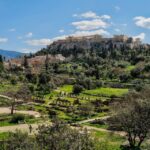
Photo tip: wide shots from the north looking south to the Acropolis crown the scene.
One comfort bonus: there are shady porticoes, which can save you during mid-day heat.
Temple of Hephaistos and the view back across the Agora
After the Agora, you’ll head to the Temple of Hephaistos (described here as dedicated to Hephaistos and Athena Ergane). You’ll get about 15 minutes, admission included.
This is one of the best-preserved Doric temples in Greece and it feels like it was just built yesterday. The guide connects it to Athens’ industrious soul—craft, metalwork, and handiwork—because the temple overlooks ancient workshops of metalworkers.
Look for the intact metopes with myths of Heracles and Theseus. You can also spot original roofing elements, which helps explain how complete the structure once was.
Photo tip: catch the temple three-quarters from the southeast corner for strong column rhythm.
Good to know: the elevated position gives you a great panoramic view back across the Agora. If you’ve been staring up at the Acropolis all morning, this view feels like a nice reset.
Syntagma to the Evzones: modern Athens you can watch in motion
Now the tour taps the “today Athens” switch.
At Syntagma, you get about 15 minutes and admission is free. This is modern Athens’ civic living room where buses and boulevards radiate out, and people gather near fountains and flowerbeds.
What I like here is the layers beneath your feet. The Metro construction revealed classical remains, and the station displays show archaeological finds you can see from the concourse area.
This is also a smart regroup spot before the ceremonial stop next door.
Then it’s the Monument to the Unknown Soldier, about 15 minutes, admission free. The Evzones (elite ceremonial guards) keep the tempo with precise drills and distinctive uniforms—fustanella pleats and the pom-pom tsarouhia.
The changing of the guard gives you a moment of calm dignity in the middle of a busy city schedule.
Look for the relief carving of a fallen hoplite. It’s a simple detail, but it’s moving in a quiet way.
Photo tip: stand side-on to capture synchronized steps without blocking people.
Practical note: stay behind the line and don’t touch guards or obstruct their path.
Academy, University, and National Library: neoclassical Athens in quick bites
These stops work because they’re short, architectural, and easy to place in your mental map of the city.
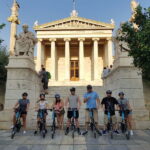
At the Academy of Athens, you’ll have about 15 minutes and admission free. Expect a temple-like façade with statues of Athena and Apollo, plus Socrates and Plato seated out front. The guide frames it as a deliberate dialogue with the ancient past—education as a continuation, not a break.
Look for polychrome restoration hints (soft reds and blues) that suggest ancient color. Photo tip: use a low angle from the steps to dramatize the statuary and pediment.
Next is the National and Kapodistrian University of Athens, about 5 minutes, admission free. This is part of the Athenian Trilogy, and it’s known for a frescoed portico and symmetrical plan in classic 19th-century style. Look for allegorical figures in the pediment and elegant ironwork around the forecourt.
Photo tip: align the University between the Academy and Library for an axial shot.
Finally, the National Library of Greece gets about 5 minutes, admission free. It has a historic neoclassical façade on Panepistimiou with twin curving staircases and Doric columns.
The guide also notes that the library’s modern facilities now operate at the Stavros Niarchos Foundation Cultural Center, which is described as a striking contemporary complex. For this stop, look at the marble craftsmanship on balustrades and the wisdom motifs like owls and laurel.
Photo tip: symmetry matters—center yourself for a balanced frame.
Panathenaic Stadium and Olympeion ruins: Olympic restart plus Roman scale
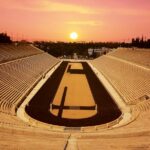
Next up is the Panathenaic Stadium, about 15 minutes with admission not included. This is the Kallimarmaro, carved entirely from white marble, and it hosted the first modern Olympic Games in 1896 on the footprint of an ancient stadium used for the Panathenaic festival.
If you’re into “history with a heartbeat,” this one lands. It’s not only ancient—it’s the moment modern athletics restarted.
Look for the finish line area and plaques to 1896 champions. Photo tip: from upper tiers, shoot down the lanes for a sweeping amphitheater effect.
Optional paid entry lets you climb higher and see a small exhibit. If you want that extra vertical view, plan time for it.
Then comes the Olympeion (Temple of Olympian Zeus) in ruins—about the time when you’ll notice how Athens builds and rebuilds for centuries. The tour keeps it efficient: it describes Olympeion as taking centuries to complete, with Corinthian columns conveying imperial scale tied to Roman ambition under Hadrian.
You’ll likely get the best view you can in the time window (including quick captures through the coach window). Look for the solitary fallen column and its fluted drum segments.
Plaka and Monastiraki: the lanes where you should slow down on purpose
After temples and monuments, the day ends with a wander you can control: Plaka then Monastiraki.
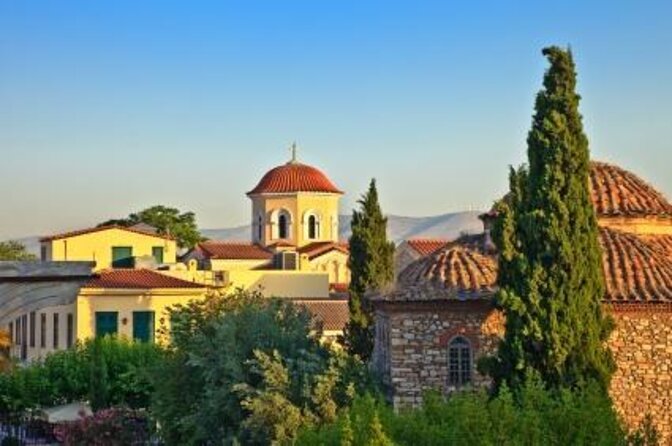
At Plaka, you get about 1 hour with admission free. This is Athens’ “village under the rock,” a maze of neoclassical houses, flower-draped balconies, and tiny chapels. Cafés pour out into lanes where cats sun themselves, and you can catch live music drifting from doorways.
Look for Anafiotika, the whitewashed Cycladic-style houses clinging to the Acropolis slope, built by island craftsmen.
Photo tip: early afternoon light bounces off pale walls and makes colors pop.
Practical note: cobblestones and stairs mean you should take it slow. This is where your feet get to breathe.
Then it’s Monastiraki, about 1 hour, admission free. It’s where eras overlap: a mosque, a church, Roman Agora remains, and market stalls selling everything from leather sandals to antiques. Street food and bargaining energy fill the square.
Look for views to the Acropolis from the area, and know that Hadrian’s Library ruins are steps away.
Photo tip: golden hour in the square can give you a beautiful skyline look with the Parthenon lit.
Security tip: keep small valuables zipped. This area has crowds and movement, which is part of the fun—just manage risk.
Price and timing: what you’re really paying for at $600.12 per person
At $600.12 per person for a private day around 5 to 7 hours, you’re not paying for a long shopping break. You’re paying for a guide-led route that hits the big Acropolis sights plus Ancient Agora, then brings you into modern Athens and ends with free-wander neighborhoods.
The value math is strongest when admissions matter to you. Admission is included for the core Acropolis circuit (Acropolis site, Parthenon, Propylaea, Temple of Athena Nike, and the Erechtheion) and for Ancient Agora and Temple of Hephaistos. Syntagma, the Unknown Soldier, the Academy/University/Library, Plaka, and Monastiraki are free stops in the schedule.
The Panathenaic Stadium is the main “not included” item listed, with optional paid entry if you want higher access and the small exhibit. That’s a good add-on if your legs and schedule can handle it.
The big drawback risk is physical and time-based: the day is dense, and the Acropolis climb plus lots of marble surfaces means footwear and pacing matter. Also, the Olympeion segment notes quick captures and possible timing limits when traffic affects coach views.
Weather matters too. The experience is described as requiring good weather, and that’s sensible in Athens because rain changes both footing and sightseeing flow.
Should you book this Acropolis and Athens private tour?
Book it if you want an organized Athens day where the Acropolis doesn’t become a blur of names. This is a strong choice for first-time visitors, history lovers who like explanations attached to what they’re seeing, and anyone who values private pacing over a one-size-fits-all group shuffle.
Skip it (or adjust expectations) if you don’t handle stairs or uneven stone well. Even with good footwear, the Acropolis and neighborhood cobblestones can feel like more walking than you planned. If that’s your situation, ask for a slower plan and be ready to spend more time with pauses than photos.
If you book, do two things: wear grippy shoes, and keep your energy for the long end-of-day wander. Plaka and Monastiraki are best when you’re not rushing.
FAQ
How long is the Best of Athens & Acropolis private guided tour?
It runs about 5 to 7 hours.
Is pickup included, and how do I coordinate the meeting point?
Pickup is offered. To coordinate the exact pick up spot, you need WhatsApp or Apple iMessage.
Is the tour in English?
Yes, the tour is offered in English.
Are admission tickets included for the main sights?
Admission tickets are included at the Acropolis, Parthenon, Propylaea, Temple of Athena Nike, Erechtheion, Ancient Agora, and the Temple of Hephaistos. Syntagma, the Monument to the Unknown Soldier, the Academy/University/Library stops, Plaka, and Monastiraki are listed as admission free. Panathenaic Stadium admission is not included.
Do I need to pay extra for the Panathenaic Stadium?
The schedule lists Panathenaic Stadium admission as not included, with optional paid entry to climb higher and visit the small exhibit.
What should I know about weather?
The experience requires good weather, and if it’s canceled due to poor weather, you’ll be offered a different date or a full refund.


More Guided Tours in Athens

More Tours in Athens

More Tour Reviews in Athens
- All Day Cruise -3 Islands to Agistri,Moni, Aegina with lunch and drinks included
★ 5.0 · 4,958 reviews