REVIEW · ATHENS
Athens: Roman Agora E-Ticket and Audio Guide
Book on GetYourGuide →Operated by Clio Muse Tours · Bookable on GetYourGuide
You can’t miss the Roman Agora vibes in Athens. This is a 45-minute to 1-hour self-guided visit with an e-ticket and an offline audio tour on your phone, so you can move at your pace through major sights like the Gate of Athena Archegetis and the Tower of the Winds. What I like most is the convenience of skip-the-ticket-line entry and the way the audio tour tells stories that make everyday Roman life feel close to you. One caution: if you prefer super-clear signage without phone help, you’ll want to take your time getting oriented.
The site itself feels small, but it packs in big names and big ideas: a view toward the Acropolis, plus places tied to water, commerce, and daily routines. The format also works well if you’re juggling schedules, because you’re not stuck with a group pace. Still, you’re relying on your smartphone (and headphones) to get the full experience, so charge up before you go.
In This Review
- Key things to know before you go
- Roman Agora in 45 Minutes: what this ticket really buys you
- Getting your e-ticket and audio ready (so you don’t waste time)
- Entering the Roman Agora: the part that feels like time travel
- Gate of Athena Archegetis: the story behind the entrance
- Tower of the Winds: meet the weather and the civic brain
- Mosque on site: shifting uses across centuries
- Fountain house and the systems behind daily life
- Vespasianae: the stop that turns ruins into daily habits
- Shops and the Agora atmosphere
- Navigation and self-guided pacing: where some visitors hit friction
- Languages, repeatability, and why this format can be good value
- Who should book this Roman Agora audio ticket
- FAQ
- How long is the Roman Agora visit with this e-ticket and audio guide?
- What’s included in the price?
- Do I need a live guide?
- Can I download the audio tour before I arrive?
- Is the audio tour available offline?
- What languages are supported?
- What phone types are compatible?
- How much space does the tour take on my phone?
- Do I need headphones?
- Where do I meet to start the experience?
- Is the experience refundable?
- Should you book the Athens Roman Agora e-ticket and audio guide?
Key things to know before you go
- E-ticket entry with skip-the-line so you can start faster at a popular stop
- Offline audio (text, narration, and maps) designed to avoid roaming charges
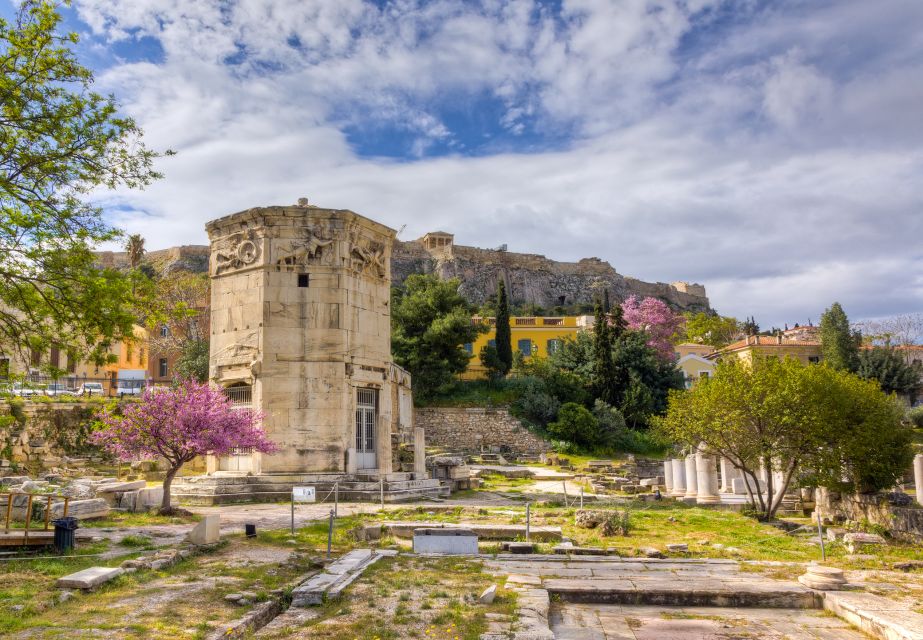
- Main highlights covered: Gate of Athena Archegetis, Tower of the Winds, mosque, fountain house, Vespasianae, and shop areas
- Self-paced timing: plan about 45 minutes to 1 hour
- Phone compatibility matters: the tour is not compatible with Windows phones and older Apple devices
- Limited accessibility: partially accessible for people with disabilities
Roman Agora in 45 Minutes: what this ticket really buys you
This isn’t a traditional guided tour where someone talks at you while you follow. Instead, you get entry to the Roman Agora plus a smartphone audio program you can use before, during, and after your visit. That sounds simple, but it changes the whole feel of the experience.
For one thing, the skip-the-line element is practical. The Roman Agora is a must-see, and even when it’s not crowded, the “stand in line” part is still time you could spend looking at stones. With this ticket, you’re set up to walk in and start your audio journey right away.
Second, I really like the offline setup. The tour includes offline content—audio narration, text, and maps—so you’re not hostage to spotty mobile signal. In Athens, that matters. You want your phone working because the story is on it.
The trade-off is that the experience is only as smooth as your tech day. Bring a charged smartphone and plan to use headphones. If your phone battery is low, or if you hate using a phone for wayfinding, this will feel less relaxing than it should.
You can also read our reviews of more tours and experiences in Athens


Getting your e-ticket and audio ready (so you don’t waste time)
The ticket is delivered by email. After you book, you receive an access/activation link and instructions to download the audio tour in an app. Do yourself a favor and check your email in case the message lands in spam.
Before you go, download the audio to your phone and save any required offline files. The download doesn’t just save data; it saves stress. The tour also warns that the audio is incompatible with Windows phones and with older Apple devices (including iPhone 5/5C or older, older iPod Touch, and older iPad models). So if you’re traveling with an older device, verify compatibility first.
You’ll also want enough storage—plan for roughly 100–150 MB. That’s not huge, but it can be a deal-breaker if your phone already runs out of space from photos and maps.
If you’re prone to forgetting headphones (it happens), add this to your mental checklist now. The audio tour is included, but your headphones are not.
Entering the Roman Agora: the part that feels like time travel

The Roman Agora is often described as compact, and it really is. You can see a lot without a long slog between stops. That’s great for most visitors, especially if your day includes other heavyweights like the Acropolis.
What makes the experience click, though, is how the audio guide frames what you’re seeing. You’re not just reading plaques. You’re getting short stories that connect the architecture to real daily habits during the Roman period—how people moved through the space, what they used it for, and what it meant in everyday life after the Romans took control.
And there’s another payoff: the audio tour also nudges you toward a splendid view of the Acropolis. Even if you know Athens well, that combo—Roman ruins in front, the Acropolis looming above—helps the whole city make sense.
Gate of Athena Archegetis: the story behind the entrance
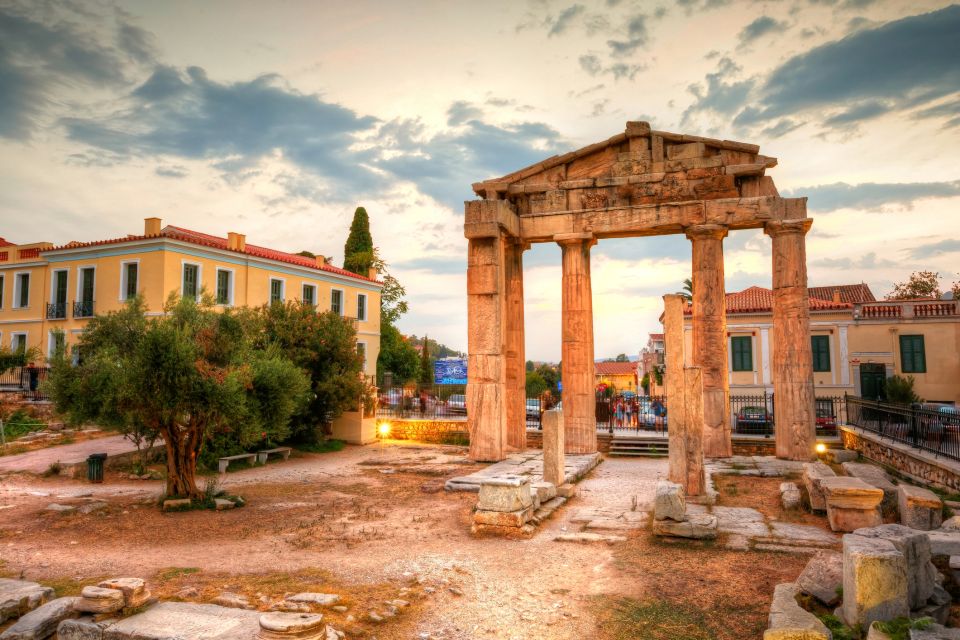
One of the first big moments is the Gate of Athena Archegetis. This isn’t just a dramatic arch to photograph. In the audio tour, it becomes a starting point for understanding how Greek religious identity and Roman-era public life overlapped in the same urban space.
Why this matters for you: gates are where movement becomes meaning. When you listen while you stand here, you’ll likely notice how the setting communicates power and protection. You’re also getting a clean mental anchor for the rest of the walk, so you know what kinds of activities and structures you’re about to encounter.
Practical tip: go slow for a minute. If you rush, you’ll miss the way the guide connects the gate to the bigger story of the Agora as a living public area, not just an outdoor museum.
Tower of the Winds: meet the weather and the civic brain
Next up is the Tower of the Winds. This is the stop where the Roman Agora starts to feel fun, not just important. The overview specifically calls out the chance to meet the Winds, and that theme is part of why this tower stands out in Athens.
A tower with wind symbolism isn’t just a pretty structure. It links to the idea that ancient cities were practical machines. People needed ways to read time, manage daily life, and understand their environment. When the audio guide frames what the tower represents, it gives you a reason to look beyond the obvious shape.
What to watch for: take a moment to scan around the tower and slow down your head movement. Even in a small site, your perspective changes quickly. The best photos (and the best understanding) usually come after a short pause, not during the first frantic minute.
You can also read our reviews of more guided tours in Athens





Mosque on site: shifting uses across centuries
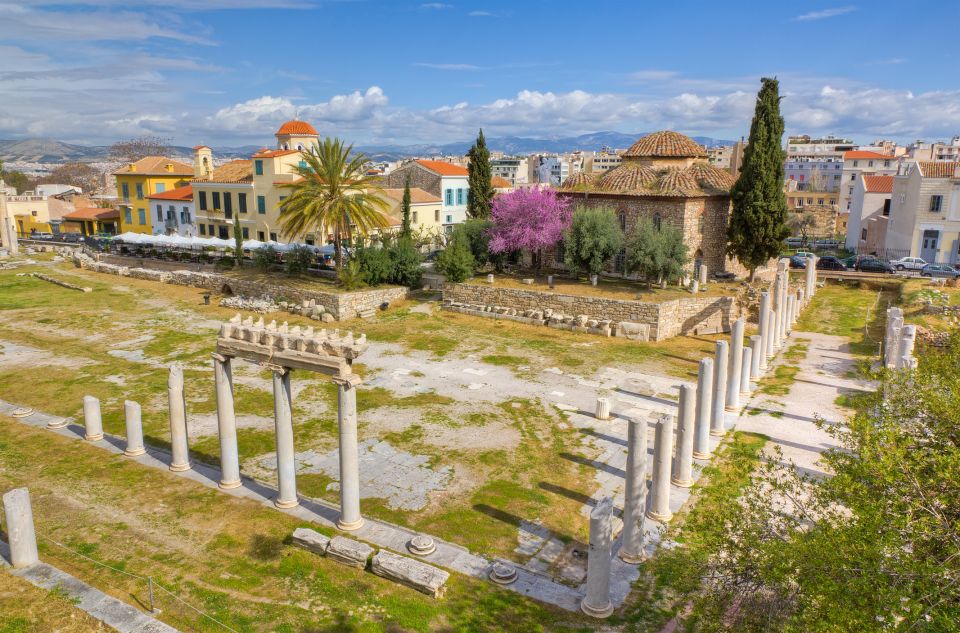
The Roman Agora also includes a mosque, sometimes described as the Mosque of the Conqueror in the audio storytelling context. Even if you’re not focused on later eras, don’t skip this stop. It’s a reminder that Athens didn’t stop after the Roman period.
In a self-guided tour, this kind of transition can be easy to miss if you’re only chasing the famous “Roman” structures. The audio tour helps connect the dots so you don’t feel like you’re wandering between unrelated landmarks.
For you, the value is perspective. The site becomes a timeline you can walk through: Greek beginnings, Roman control and public life, then later layers. That context makes the whole Agora feel more coherent.
Fountain house and the systems behind daily life
The audio tour highlights a fountain house, along with other features connected to utilities and city routines. This is where the Roman Agora shifts from monument to machinery.
If you like history that explains how people actually lived, this is the section to linger in. Water features and fountain-related spaces weren’t decorative. They were tied to daily function and social habits—places where life happened because the infrastructure worked.
Even if you only spend a few minutes here, listen to the story first. If you read the area after listening, you’ll see more than you would by looking silently.
Vespasianae: the stop that turns ruins into daily habits
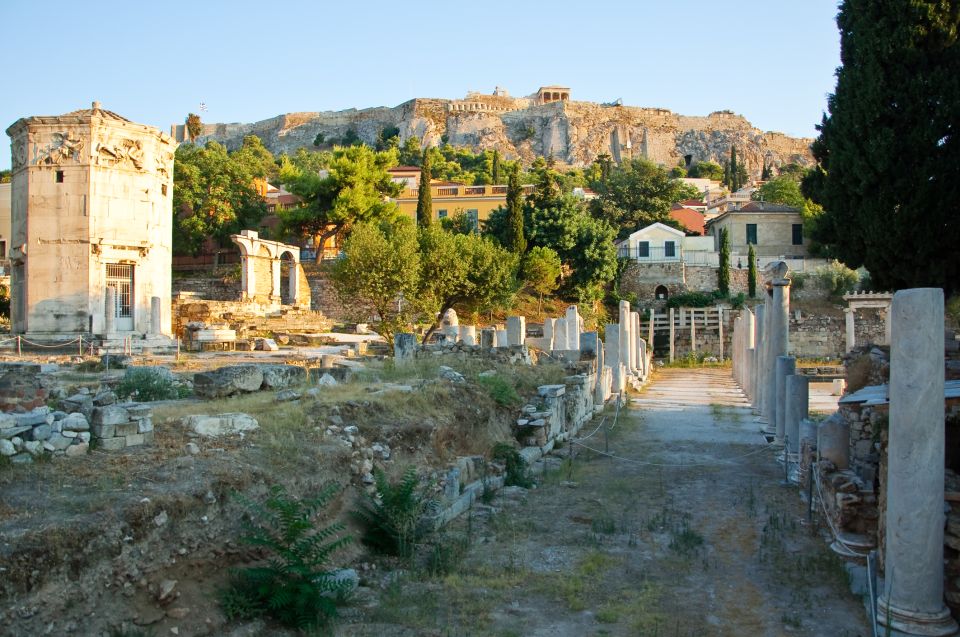
Another named highlight is the Vespasianae. The audio tour frames it as part of the everyday life picture of the Roman conquest period. This is exactly the kind of stop you don’t want to speed through.
Why? Because it’s easy to forget that Roman public spaces weren’t only for big events and statues. They were built for ordinary needs, too.
A small word of caution: this section can feel like a quick scan for visitors who are mostly there for architecture photos. If you want the deeper payoff, slow down and let the audio guide interpret what you’re seeing before you move on.
Shops and the Agora atmosphere
The Roman Agora also includes shop areas, which help you imagine the Agora as a commercial and social hub. The audio tour ties this into the bigger theme of the Agora as a place where people gathered, bought, talked, and kept life running.
In your head, it helps to picture the Agora as a stage for everyday business, not only a backdrop for emperors. The short storytelling format works here because it keeps the focus on what mattered to people using the space, not just what the archaeologists label on panels.
Navigation and self-guided pacing: where some visitors hit friction
Self-guided is the main attraction of this experience, but it does come with a real-world issue: orientation can be harder when you’re relying on a phone.
The good news is that the tour includes offline maps and the content is built to be used repeatedly at any time before or after. You’re not locked into one shot at it.
Still, if you get stressed when you’re figuring out where you are, be aware that one kind of disappointment is simple wayfinding frustration. My advice: treat the first part of your visit as setup time. Don’t burn your battery sprinting. Get your bearings fast, then let the audio guide carry you.
Also keep your expectations realistic. This is not a long museum route with signage at every step. It’s a compact site where you do better with a calm pace and good phone usage.
Languages, repeatability, and why this format can be good value
The audio guide is available in English, Spanish, German, French, Italian, and Greek. That’s a big practical win if you’re traveling as a couple or small group with different language preferences. Everyone can use their own phone and follow the same storyline.
You can also reuse the audio tour. The content can be used repeatedly and at any time, before or after your visit. That’s underrated value. If you’re the type who likes to do a quick pass today and a slower “I get it now” walk tomorrow, this format makes that possible.
Now, about price. It’s listed at $18 per person, and it’s for the entry ticket plus the skip-the-line service plus the audio tour. Since the visit itself is about 45 minutes to 1 hour, you’re not buying a full-day program. You’re buying convenience, time efficiency, and interpretation. If you would otherwise arrive unprepared and then lose time trying to figure out what each stop means, the audio guide can easily justify the cost.
If you don’t care about audio, or you’re the type who prefers reading on-site signage only, you might feel it’s pricey for the time. The real question for you is whether you’ll actually wear headphones and listen while standing in front of each structure.
Who should book this Roman Agora audio ticket
This works best if you want:
- A low-hassle start (e-ticket + skip-the-line)
- A story-led walk focused on everyday Roman-era life
- Offline reliability so you’re not chasing signal
- Flexible pacing in a compact site
It might not be your best fit if:
- You strongly dislike using a smartphone as part of your visit
- Your device is incompatible (Windows phones and older Apple models won’t work)
- You plan to visit with dead headphones or a dying battery
FAQ
How long is the Roman Agora visit with this e-ticket and audio guide?
Plan on about 45 minutes to 1 hour, depending on starting times and how long you want to stay at each stop.
What’s included in the price?
You get an adult entry ticket, skip-the-line service, and a self-guided audio tour on your smartphone (Android & iOS), including an activation link to access the tour.
Do I need a live guide?
No. This is self-guided. There is no live guide included.
Can I download the audio tour before I arrive?
Yes. You should download the app and the audio tour on your phone prior to your visit using the email instructions and activation link.
Is the audio tour available offline?
Yes. The tour includes offline content like text, audio narration, and maps to help you avoid roaming charges.
What languages are supported?
The audio tour is available in English, Spanish, German, French, Italian, and Greek.
What phone types are compatible?
You need an Android (version 5.0 and later) or iOS smartphone. It’s not compatible with Windows phones, and it’s also incompatible with certain older Apple devices listed for iPhone and iPad models.
How much space does the tour take on my phone?
You’ll need about 100–150 MB of storage on your device.
Do I need headphones?
Yes. Headphones are not included, but the audio guide assumes you’ll use headphones to listen.
Where do I meet to start the experience?
There is no single fixed meeting point in the info you receive. It says the meeting point may vary depending on the option booked, and you’ll get further instructions by email after booking.
Is the experience refundable?
No. The activity is non-refundable.
Should you book the Athens Roman Agora e-ticket and audio guide?
Book it if you want an easy entry plus a story-driven way to see the Gate of Athena Archegetis, the Tower of the Winds, the mosque, and the other Roman Agora highlights without rushing a group. For $18, you’re really paying for interpretation and convenience—especially helpful in a compact site where it’s easy to miss the meaning of what you’re standing next to.
Skip it if you hate phone-based tours, travel with a device that might be incompatible, or you prefer reading on-site only. In that case, you may feel the time window is too short for the cost.
If you do book, do two things and your visit will feel smoother: bring charged phone + headphones, and give yourself a few calm minutes at the start to get oriented using the tour maps. Then the Agora becomes a quick, enjoyable walk through how people actually lived.



More Guided Tours in Athens
More Tickets in Athens



More Tour Reviews in Athens
- All Day Cruise -3 Islands to Agistri,Moni, Aegina with lunch and drinks included
★ 5.0 · 4,958 reviews