REVIEW · ATHENS
Athens: Kotsanas Ancient Greek Technology Museum Guided Tour
Book on GetYourGuide →Operated by Kotsanas Museum · Bookable on GetYourGuide
Ancient tech feels surprisingly modern. This Athens visit brings you into the Kotsanas Museum of Ancient Greek Technology, inside a historic Art Nouveau building, with a private guide chosen for their technical or historical brain. You’ll walk through an interactive collection of roughly 300 artifacts focused on how Greeks built real-world mechanisms.
What I really like is the way the tour turns exhibits into working ideas. The guide is either an engineer or a historian, and that matters because you get clear explanations plus the chance to see how the inventions function, not just how they look. A big bonus: the guides you may meet, including Vasilis, Irina, and Maria, know how to keep the story moving and make the science click.
One thing to plan around: it’s a 1-hour experience, so the tour is focused and you’ll need to pick a few favorites for your free time afterward. Also, it is not suitable for people with mobility impairments.
In This Review
- Key moments that make this tour special
- Why the Kotsanas Museum feels different from a standard museum stop
- Meeting at Pindarou 6 and getting your bearings fast
- Inside the 1-hour private tour: how the guide makes the museum click
- The hi-tech highlights you’ll want to hunt for
- The oldest analog computer story: the Antikythera mechanism
- Hydraulic precision: the clock of Ktesibios
- Robots, automata, and mechanical theater
- Art Nouveau architecture meets interactive engineering
- Audio-visual material and diagrams: the part you can use after the tour
- What you’ll do with the rest of your visit time
- Price and value: $54 for a private group that can actually be worth it
- Who should book this Athens technology tour (and who might not)
- Should you book this Kotsanas guided tour?
- FAQ
- FAQ
- Is the tour private?
- How long is the guided tour?
- What language is the tour guide?
- What’s included in the price?
- Where does the tour start?
- Is it suitable for visitors with mobility impairments?
- Are food and drinks allowed?
Key moments that make this tour special
- Private, English-guided tour led by an engineer or historian (not a generic group lecture)
- Interactive museum format with mechanisms you can try, plus lots of diagrams and labels
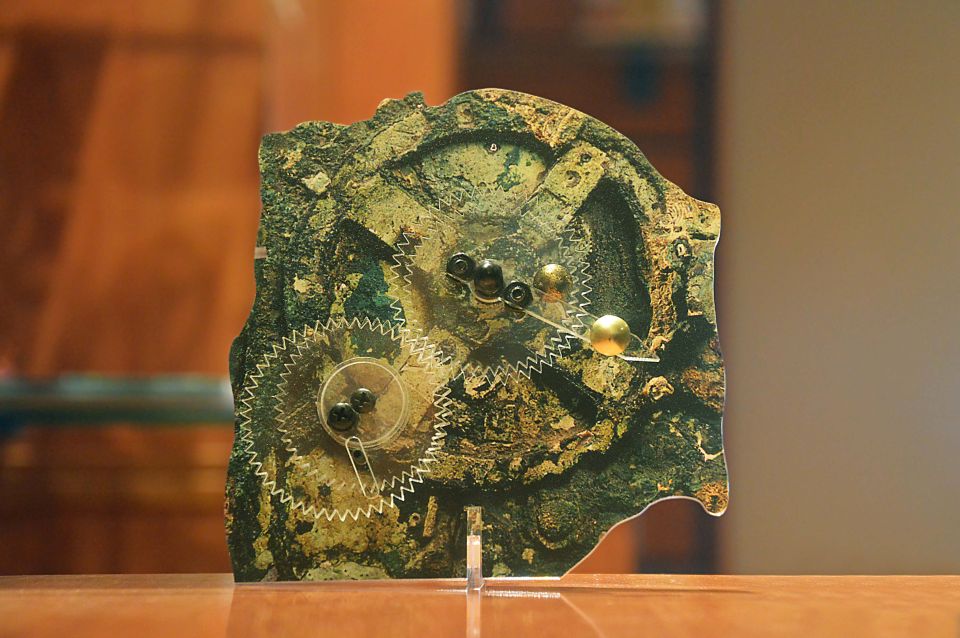
- Top-tech ancient hits like the Antikythera calculating mechanism and the hydraulic clock of Ktesibios
- Greek Hi-Tech themes from robot-servant stories to Philon’s cinema and Heron-style mechanical shows
- Audio-visual stations with video/animation and documentaries in Greek and English
- Bonus free time after the guided hour to explore what pulls your attention
Why the Kotsanas Museum feels different from a standard museum stop
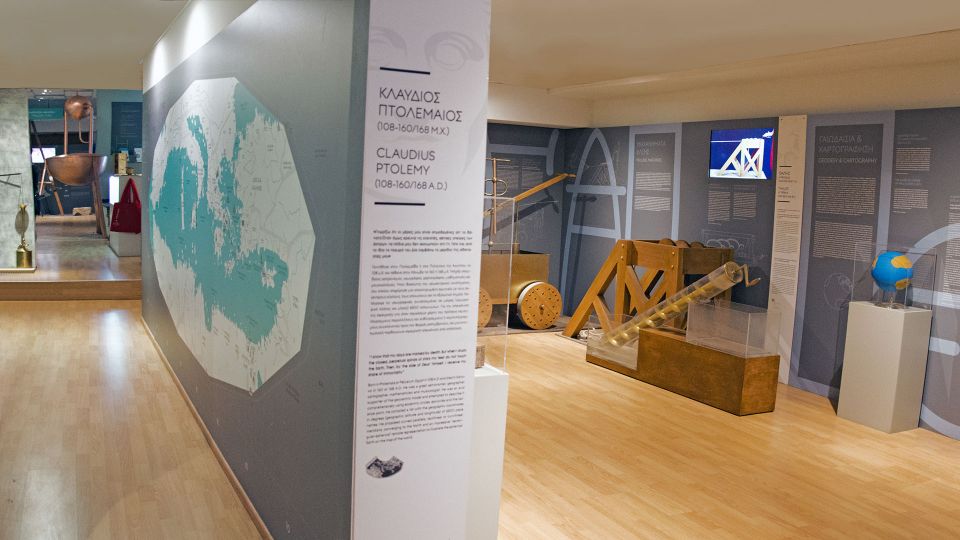
Athens has plenty of famous stops, but this one changes your angle. Instead of art or ruins, you get technology—mechanisms, clocks, automata, and calculating devices—explained in a way that helps you picture how people used them. And the setting isn’t neutral, either. The museum lives in a historic Art Nouveau building, which gives the whole visit a more hands-on, workshop feeling than the usual white-wall vibe.
You’ll also get a strong reality check here. The tour’s main message is that Greek technology often looks shockingly similar to early modern tools. Think gears, controls, models, and systems. The museum doesn’t treat ancient inventions like curiosities behind glass. It treats them as engineering solutions.
Finally, you’re not stuck with only one kind of explanation. There’s text, diagrams, photos, and audio-visual content, in Greek and English. So if you’re more of a reader, a visual learner, or a mechanism person, you’ll find your lane.
You can also read our reviews of more guided tours in Athens



Meeting at Pindarou 6 and getting your bearings fast
Your tour meets at Pindarou 6, Athina 106 71, and the museum is about 5 minutes on foot from Syntagma Metro Station. That’s a helpful detail because it keeps the plan simple. You can pair this with other Central Athens sightseeing without worrying about a long cross-city trip.
Since the tour ends back at the meeting point, you’re not dealing with a complicated pickup or a separate drop-off. It’s a clean add-on if you’re already in the Syntagma area.
Practical tip: give yourself a little time to arrive, because the museum experience is all about slowing down and looking closely. If you show up rushed, you’ll lose the best part: the way you can connect the diagrams to the working models.
Inside the 1-hour private tour: how the guide makes the museum click
This is a private group tour, guided live in English, with a duration of about 1 hour. You get entry to the museum, then the guided walkthrough. After that, you’ll have free time to explore further on your own.
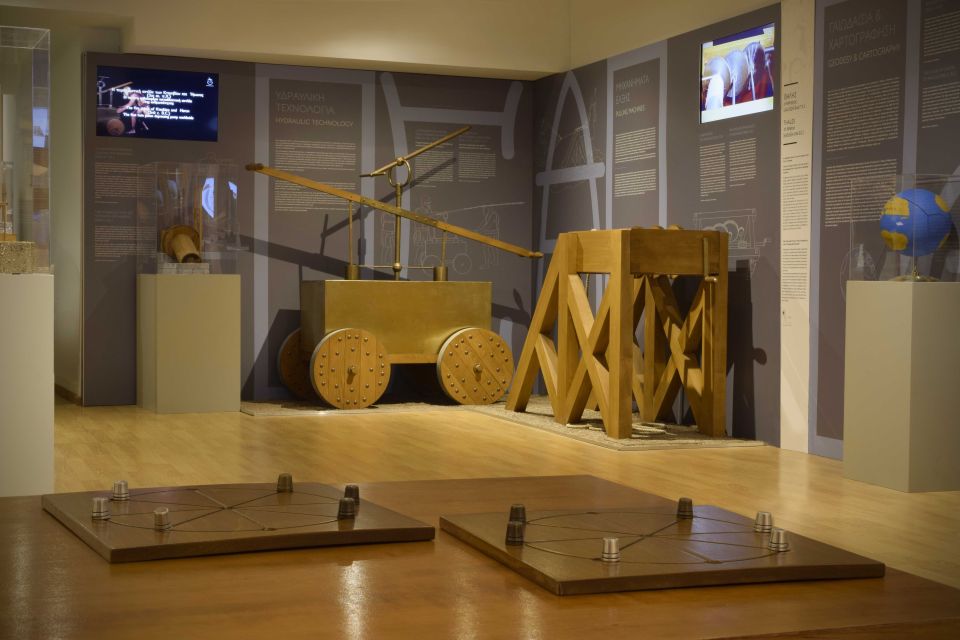
Here’s what makes the guided format worth it. In a lot of museums, you read a label and move on. Here, the guide helps you understand what you’re looking at—especially the mechanisms. The museum has interactive exhibits and projecting stations, but you get more out of them when someone points out what to watch for: how a device is supposed to work, what a mechanism is doing internally, and why the Greeks built it that way.
The private angle matters, too. Because your group is smaller, the guide can adjust how technical they are. That’s a big deal if you’re not an engineer. You’ll still get the science, but you’ll also get the context—how ideas become machines, and how those machines can mimic functions you already recognize from modern tech.
And if you’re traveling with kids, this format is a good fit. The tour style supports curiosity. The museum is built for interaction, and the guide helps kids connect the try-it-and-see-it approach to the bigger story of invention.
The hi-tech highlights you’ll want to hunt for
The museum’s theme is The Hi-Tech Inventions of Ancient Greeks, with about 100 selected exhibits spanning multiple invention categories. Even though the collection includes around 300 artifacts, the guided hour usually gives you the most meaningful route through the key stories.
Expect the guide to focus on major standout inventions such as:
The oldest analog computer story: the Antikythera mechanism
You’ll likely spend time on the Antikythera calculating mechanism, often described as an early analog computer. In practical terms, it helps you understand how the Greeks used gear trains and mechanical logic to compute and represent information. It’s a great exhibit if you like puzzles, because you can see how motion becomes calculation.
You can also read our reviews of more museum experiences in Athens




Hydraulic precision: the clock of Ktesibios
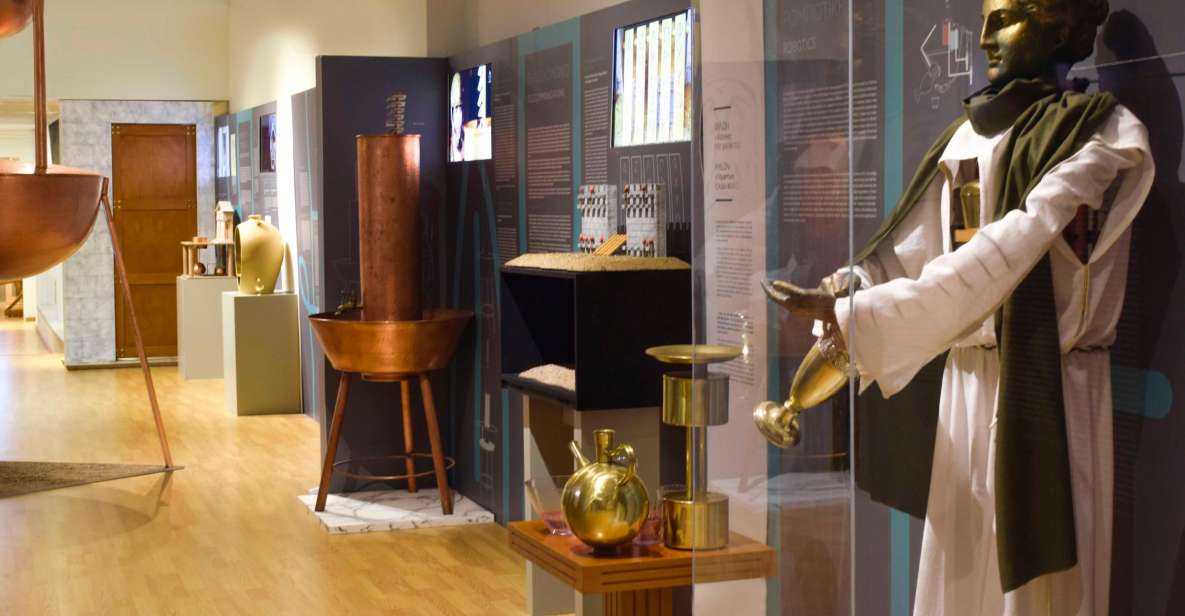
Another centerpiece is the hydraulic clock of Ktesibios. This kind of invention is perfect for the museum’s mission: it shows you how control systems and measurements can be built mechanically. If you’ve ever wondered how timekeeping could be engineered before electronics, this is the kind of device that makes the answer feel real.
Robots, automata, and mechanical theater
The museum also connects technology to entertainment and storytelling. You’ll see inventions tied to:
- the robot-servant concept
- Philon’s cinema (mechanical storytelling and display ideas)
- Heron’s automotive-puppet show (a mechanical-performance angle)
Even if these sound like “fantasy,” the museum frames them as real engineering concepts—mechanisms that produce controlled motion and repeatable effects.
What I like about these highlights is that they show technology as culture. The Greeks weren’t only building practical tools. They were also building experiences—things people could watch, interact with, and learn from.
Art Nouveau architecture meets interactive engineering
The museum’s building is part of the experience. Because it’s in a historic Art Nouveau structure and spans about 700 square meters, you get the sense you’re inside a dedicated space built for display, explanation, and hands-on interaction. That scale also helps the guided hour feel purposeful. You’re not wandering endlessly—you’re being directed through the most important areas.
The museum’s design supports different learning styles. Many exhibits are interactive, and you’ll also see video and animation projection stations that explain what’s happening. There are documentaries where the exhibitor explains the function and use of the mechanisms. That matters because a mechanical device can be hard to picture without motion cues. Animation and projection give you the missing step between diagram and understanding.
If you’re someone who likes to interpret details yourself, don’t worry—you won’t be forced into a rigid script. The best guides help you watch, then ask you to notice what changes when you interact.
Audio-visual material and diagrams: the part you can use after the tour
One reason people come back to exhibits later is because the museum provides more than a quick label. You’ll see a lot of rich audio-visual material, including:
- explanatory labels
- giant posters packed with information
- detailed diagrams
- photos
- complete bibliographical references
And because the materials are available in Greek and English, you can match your comfort level. If you want to slow down and read every diagram during your free time, you can. If you prefer to focus on what you can try, the interactive parts are there too.
A practical advantage for you: the posters and diagrams are useful even after you leave the guided portion. When you return to an exhibit you loved—say the mechanism that made the most sense to you—you can connect the visuals to the explanation you heard during the hour.
What you’ll do with the rest of your visit time
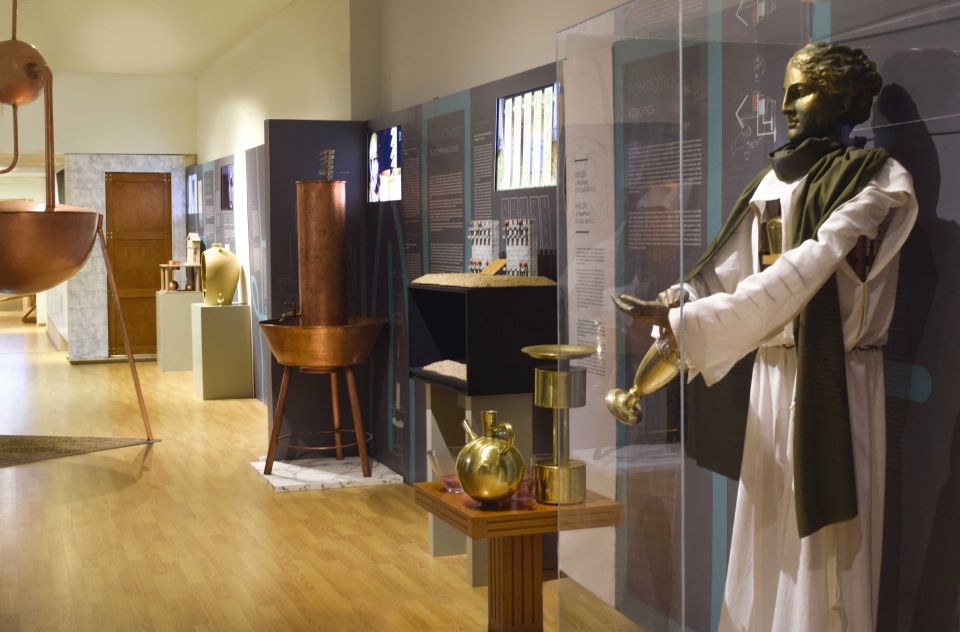
After the guided tour ends, you’ll get free time to explore further. This is where you should aim for a smart strategy: pick 2–3 favorite inventions and go deeper, instead of trying to see everything.
If you’re a family, you can do this as a mini challenge. Let the kids choose one interactive station each, then you choose one mechanism that you want to understand better. That keeps the visit fun and prevents the classic museum problem: doing too much and remembering nothing.
If you’re a history-minded traveler without a technical background, focus on the exhibits with the clearest diagrams and the most helpful animation stations. You’ll still get the full story. And if you’re a technically curious person, linger on the ones that show how gears, hydraulics, and controlled motion translate into function.
Either way, the museum’s strong point is that it gives you enough supporting material to keep the ideas alive after the tour.
Price and value: $54 for a private group that can actually be worth it
The cost is listed as $54 per group up to 4 for a 1-hour private guided tour. That pricing structure can be a surprisingly good value, because private access often gets expensive fast in big cities.
Here’s the key way to judge it for your situation:
- If you’re traveling as a couple or with two people, you’ll pay less per person than many private tours that scale by traveler.
- If you’re a small family of up to four, it can work out very reasonably for a full, guided, English-language experience.
- If you’re going solo, it can still be worth it because the guide’s technical framing helps you get more from a specialized museum.
The big value isn’t the price tag—it’s the fit. This isn’t a museum where a guide just points at things. The guide helps you understand mechanisms, watch how they work, and connect the tech to the broader ancient Greek invention story.
And based on the guides people have encountered—like Vasilis, plus Irina and Maria—the guided portion appears to be the difference between a quick visit and a stay-with-you experience.
Who should book this Athens technology tour (and who might not)
This tour makes the most sense if you like any of these:
- Engineering-style thinking, even if you’re not an engineer
- History with real-world machines, not just dates and names
- Travelers who love museums with interactive elements
- Families, because the museum’s format supports kids asking questions and trying things
You might want to skip it if you strongly dislike science topics or if you’re looking for a slow, open-ended tour with lots of wandering time. The guided hour is focused, and the museum visit works best when you’re ready to pay attention.
Also note: it is not suitable for people with mobility impairments, so plan accordingly.
Should you book this Kotsanas guided tour?
If you’re deciding between a quick self-guided museum pass and a guided private experience, I’d lean toward booking the guided tour. The whole setup—engineer or historian guidance, interactive exhibits, animation stations, and heavy support from diagrams and audio-visual explainers—seems designed to reward a structured tour hour.
Book it if you want your Athens day to include something unusual and genuinely thought-provoking: how ancient Greeks engineered devices that feel familiar. Skip it if you only want a casual stroll or if your time window is too tight for a one-hour guided visit plus a bit of self-exploring afterward.
FAQ
FAQ
Is the tour private?
Yes. It’s a private group tour with a live guide.
How long is the guided tour?
The tour duration is 1 hour.
What language is the tour guide?
The live tour guide speaks English.
What’s included in the price?
Included are entry to the museum and the 1-hour private guided tour, plus free time to explore further.
Where does the tour start?
Meet at Pindarou 6, Athina 106 71, Greece, about 5 minutes walking from Syntagma Metro Station.
Is it suitable for visitors with mobility impairments?
No. It is not suitable for people with mobility impairments.
Are food and drinks allowed?
No. Food and drinks are not allowed.


More Guided Tours in Athens

More Tours in Athens



More Tour Reviews in Athens
- All Day Cruise -3 Islands to Agistri,Moni, Aegina with lunch and drinks included
★ 5.0 · 4,958 reviews