REVIEW · ATHENS
Athens Historical Center: Explore by Bike
Book on GetYourGuide →Operated by Flat Tyres Psycling Club · Bookable on GetYourGuide
Athens makes more sense when you move slowly and on wheels. On this Athens Historical Center bike tour, you pedal through key ancient areas, then finish with a panoramic break that puts the whole city in perspective, from Kerameikos to the Acropolis zone.
I love the way the route is built around real neighborhoods, not just stand-still monuments. You’ll ride on the metropolitan Athens bikelane, and the stops are timed so you can actually see what you’ve cycled past, including photo stops in places like Psirri, Monastiraki, and Plaka.
One drawback to consider: this is still bike travel. You need to be comfortable riding on the streets and paths, and the tour won’t run in heavy rain.
In This Review
- Key highlights that make this tour worth your time
- Why this Athens Historical Center bike ride works so well
- Meeting at Flat Tyres Psycling Club on Thessalonikis 140
- Kerameikos: the first ancient stop sets the tone
- Psirri, the Town Hall area, and Varvakios Market moments
- Monastiraki and Plaka: moving through the Neighborhood of the Gods
- Ancient Agora, Roman Agora, and the Tower of Winds
- Syntagma Square, Greek Parliament, and Evzones
- National Gardens, Zappeion Hall, and Panathenaic Stadium
- Temple of Zeus and Hadrian’s Arch: the grand finale stretch
- Acropolis views: Museum area, Filopappou Hill, and Pnyka panorama
- Price and what you actually get for $39.52
- Who this bike tour suits best (and who should rethink it)
- Should you book Athens Historical Center: Explore by Bike?
- FAQ
- How long is the Athens Historical Center: Explore by Bike tour?
- How much does it cost?
- Where is the meeting point?
- Is hotel pickup included?
- Is the tour guide available in English?
- What kind of bike do I ride?
- Do I need to know how to ride a bike?
- Are helmets and water included?
- Are food and drinks included?
- What happens if it’s raining?
- FAQ
- How do cancellations work?
- How many people are in the group?
- Does the tour start at a fixed time?
- When does the tour end?
- Is the tour offered in a small group format?
Key highlights that make this tour worth your time
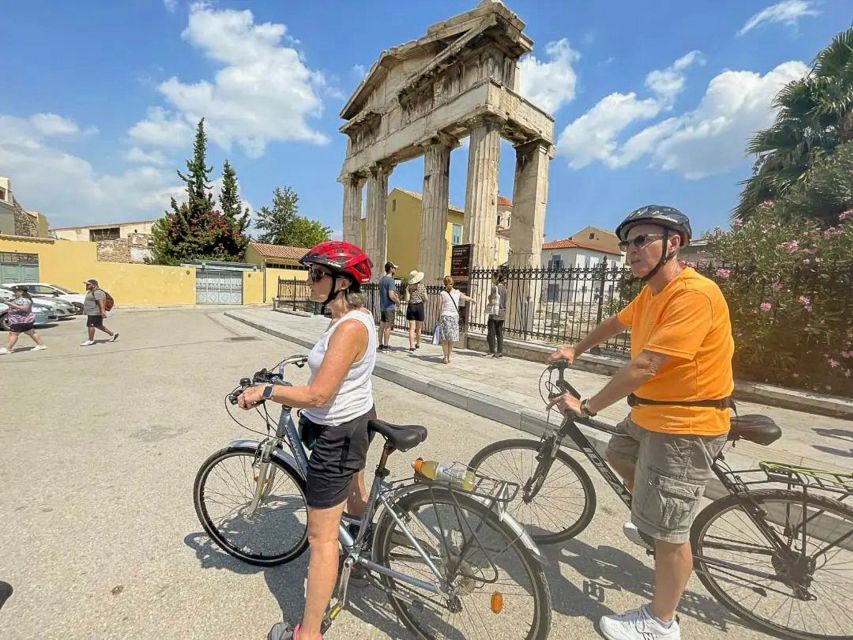
- Small group (up to 10) keeps the ride relaxed and question-friendly.
- Bikelane routing helps you connect sights without constant stress.
- Ancient Agora + Roman Agora + Tower of Winds in one flowing morning/afternoon stop pattern.
- Syntagma Square and the Evzones guard gives you a proper Athens “people-watching” moment.
- Panathenaic Stadium and the 1896 Olympics context adds story to the scenery.
- Filopappou Hill to Pnyka is the payoff view break after the main cycling loop.
Why this Athens Historical Center bike ride works so well
Athens is big, and the sights are spread out in ways that can make walking feel like a workout before you even start sightseeing. This tour solves that by keeping you in motion for the whole experience, then using short stops to deepen what you’re seeing.
The big win for me is the pacing. You’re not stuck in a van between attractions. Instead, you roll from one classic site to the next—Kerameikos first, then the Agora world, then Plaka, then the Parliament area, and onward toward the stadium and the Zeus/Acropolis zone. Even if you’ve visited Athens before, the bike format gives you a new angle on how the city connects.
Another plus: the guide. This tour runs with a live English-speaking guide, and one standout detail from past riders is how guides like Stavros handle questions patiently and explain things in a way that sticks. That matters here because Athens has layers—ancient Greece, Roman Athens, and the modern city all in the same corridors.
You can also read our reviews of more cycling tours in Athens


Meeting at Flat Tyres Psycling Club on Thessalonikis 140
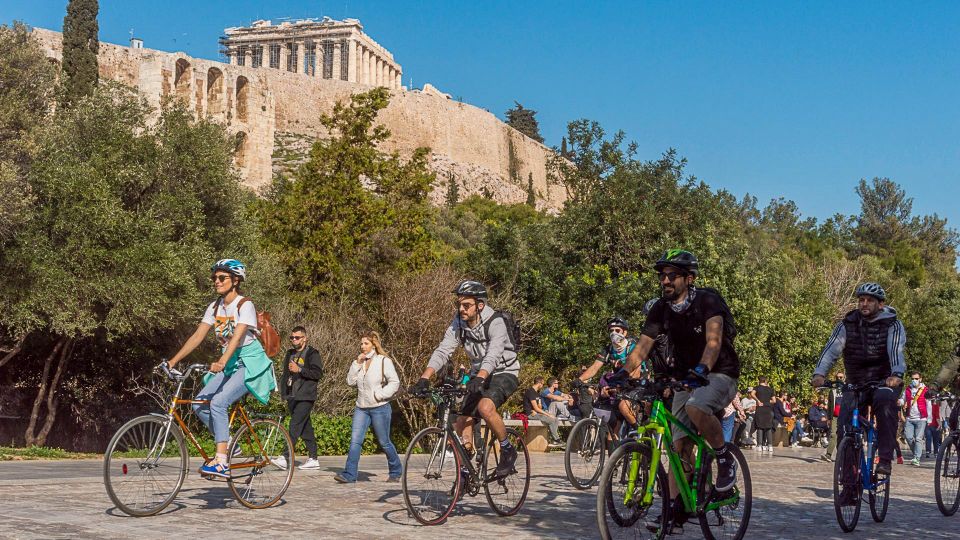
You meet at Thessalonikis 140, and you’ll want to look for the Flat Tyres Psycling Club shop. It’s a practical setup: the meeting point is close to the Historical Center of Athens, and you’re also about a short walk—around 150 meters—from a Metro station.
Logistically, this is the kind of meeting point that makes a half-day plan feel easy. You’re not fighting a remote pickup. You can line this up with other central activities, grab lunch after, and not lose half your day to transport.
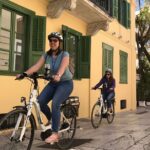
Once you’re kitted out, the tour moves quickly into a “get your bearings fast” mode. You start by cycling on the metropolitan Athens bikelane, which is a big deal when you’re trying to cover ground without constantly dodging traffic.
Kerameikos: the first ancient stop sets the tone
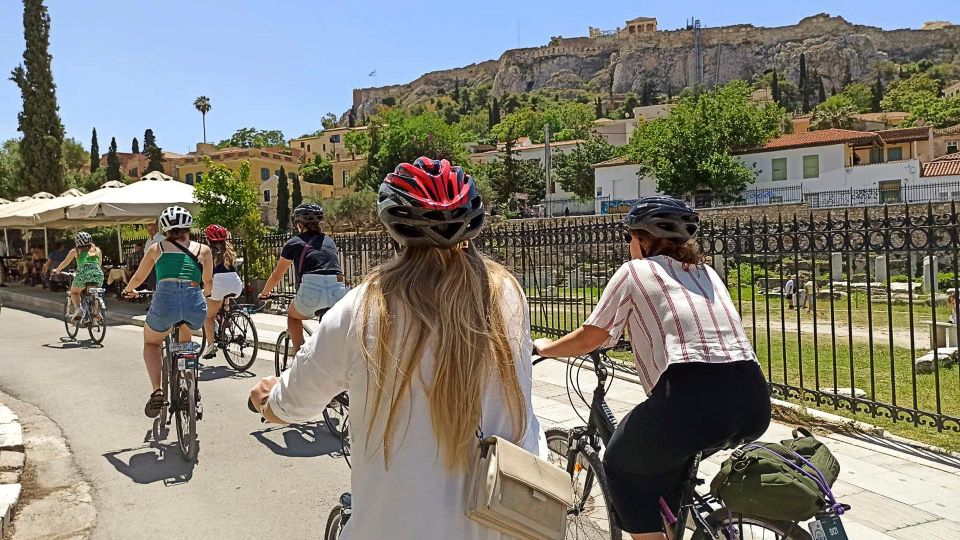
The ride begins by pushing you right toward the past. Kerameikos Cemetery is the first ancient site on the route, and it works well as the opening stop because it’s immediately readable: you’re in an ancient landscape before you’ve even learned the rhythm of the tour.
What I like about starting here is that it frames the rest of the journey. As the tour continues, you’ll keep seeing how Athens reuses space—ancient remains, Roman-era structures, and modern neighborhoods all sharing the same geography. Starting with Kerameikos means that later stops in the Agora zone land with more meaning.
There’s a photo stop and then you roll on. That’s important for first-time visitors, because it prevents the tour from becoming a “stand and stare” experience. You get a moment to look, then you move—so your interest stays sharp.
Psirri, the Town Hall area, and Varvakios Market moments
After Kerameikos, the route shifts into the living side of Athens. You’ll cycle and get a little lost—in the good way—through Psirri, which helps you experience the city as locals do: moving through streets, not just viewing them.
You’ll also pass sights that feel distinctly Athens, including the Town Hall and Varvakios, the traditional and biggest food market of Athens. Even if you don’t stop long, seeing Varvakios from the route gives you context. It’s the kind of place where Athens doesn’t pause for history—it continues alongside it.
This section also matters because it breaks up the ancient concentration. After cycling through major archaeological zones, a market-area pass gives you sensory variety: streets, crowds, signs, and the daily rhythm of the city. That variety is part of why the ride feels fun instead of exhausting.
Monastiraki and Plaka: moving through the Neighborhood of the Gods
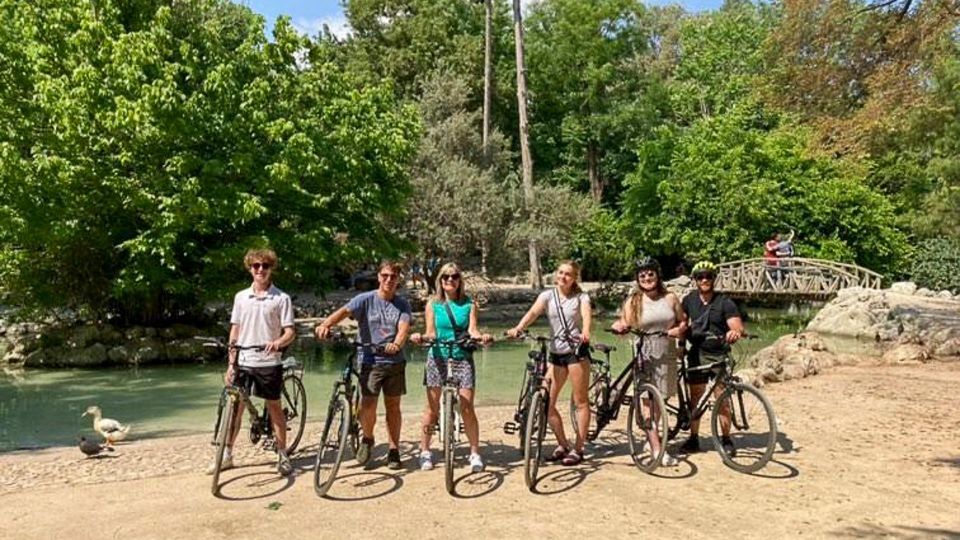
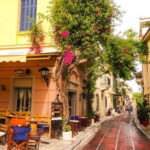
Next you reach Monastiraki Square, the central hub where lots of Athens itineraries cross. From there, the tour pushes into Plaka, often described as a neighborhood tied to the gods and legends of the city. You’ll cycle through picturesque paths, and the vibe shifts toward classic Athens postcard territory.
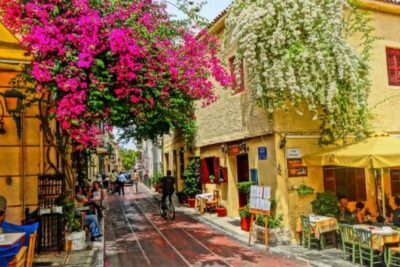
Plaka is the right kind of district for a bike tour because it’s about flow. You’re not stuck behind ropes. You get to weave through streets and sightlines that you might miss if you’re only walking from one fixed landmark to another.
Still, there’s a practical balance to keep in mind: this isn’t a “linger in every alley” tour. Photo stops are quick, and cycling keeps moving. If you love slow wandering, plan extra time on your own after the tour in Plaka, especially around Monastiraki.
You can also read our reviews of more historical tours in Athens


Ancient Agora, Roman Agora, and the Tower of Winds
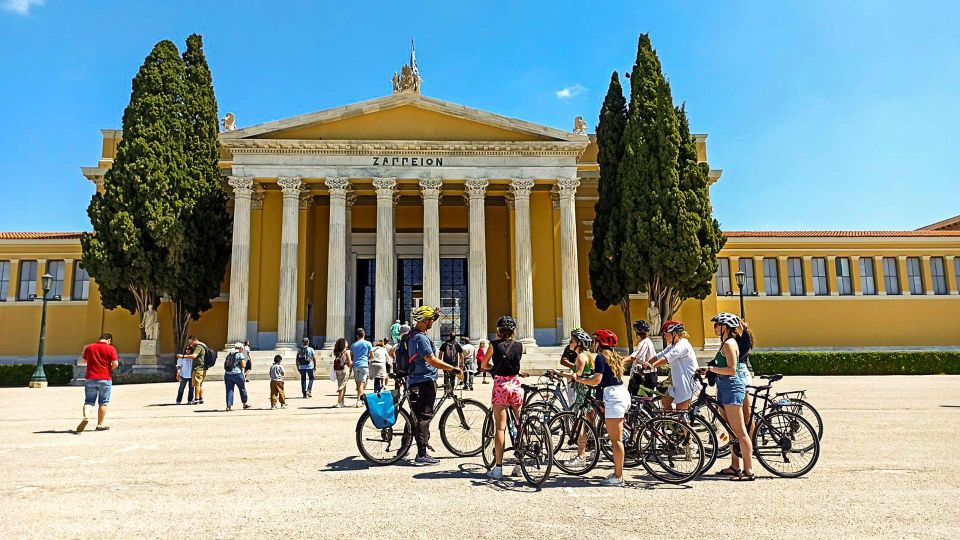
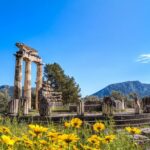
This is one of the tour’s smartest segments. You cycle alongside the Ancient Greek Agora and the Roman Agora, with the Tower of Winds in the mix. The pairing of Agora areas is great because it shows continuity. Different eras, similar public spaces and civic purpose.
A bike tour helps here because you’re not forced to jump between distant points. You’ll move alongside the structures, then pause long enough to connect what you see with what it meant: a place built for civic life, conversation, and movement.
The Tower of Winds is the kind of landmark that rewards attention. Even during a brief stop, you’ll likely spend a few extra minutes just looking at the building and realizing you’re viewing a piece of ancient “science-city” thinking. That adds a different layer than temples alone.
Syntagma Square, Greek Parliament, and Evzones
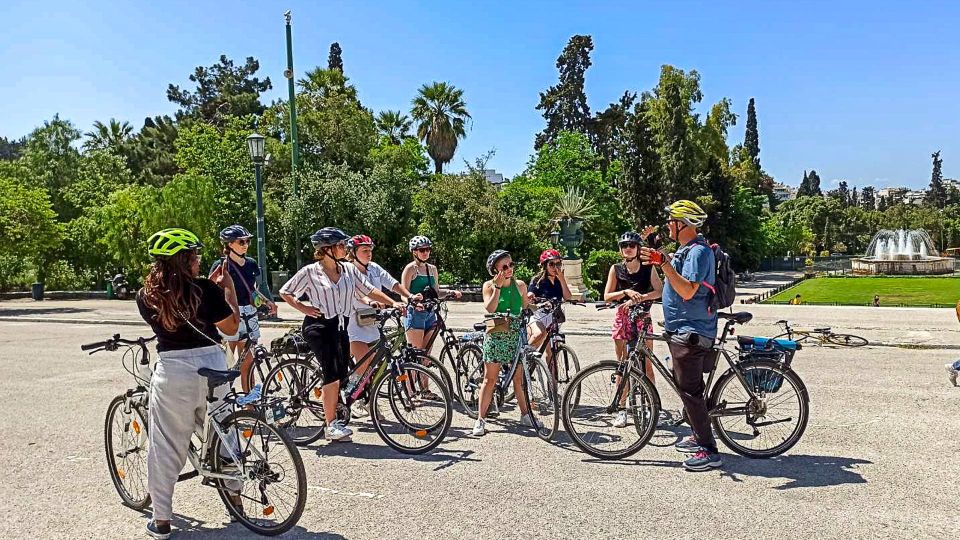
When you hit Syntagma Square, the tour changes gear—less ancient stone, more modern Athens theater. You’ll see the Greek Parliament and the famous Evzones guards.
This stop is a classic Athens moment for a reason: it’s structured and ceremonial, and it’s easy to understand even if you’re not deep into political history. It also gives you a mental reset halfway through the day, because you can step back from cycling and just watch.
You’ll also pass toward the National Gardens, which is a smooth transition from the square’s formality into a calmer stretch. That matters because it keeps the ride comfortable. After a couple of historical-heavy zones, a green, open-feeling cycling segment helps you keep your energy.
National Gardens, Zappeion Hall, and Panathenaic Stadium
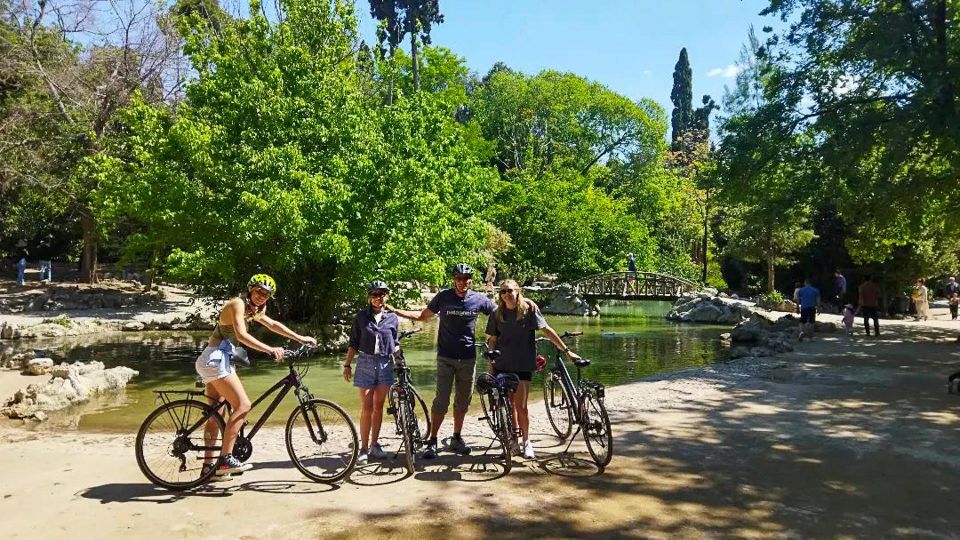
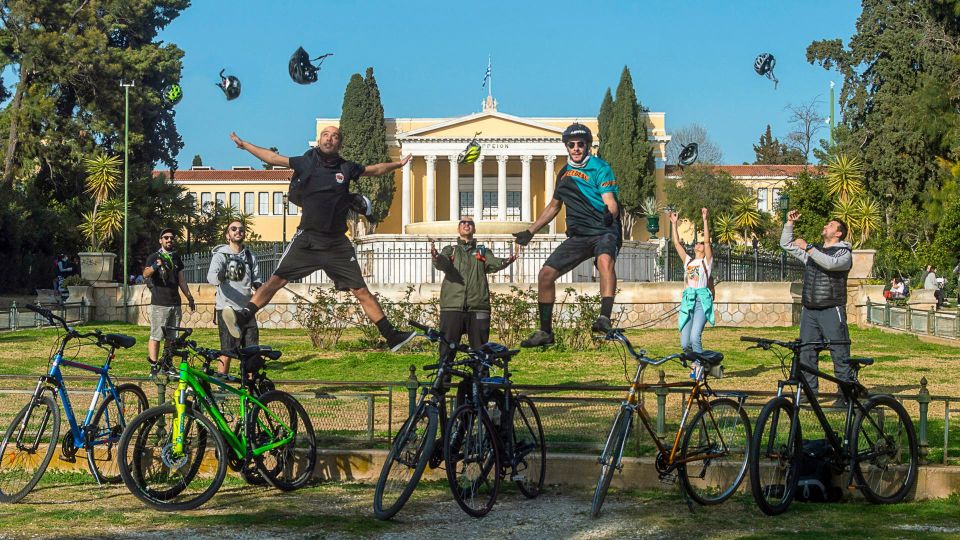
From the Parliament area, you’ll enjoy a smooth ride through the National Gardens and then reach Zappeion Hall and the Panathenaic Stadium.
The Panathenaic Stadium stop is especially meaningful. It’s where the first modern Olympic Games took place in 1896. That detail makes the stadium more than a big arena shape—you’re seeing how Athens links ancient athletic ideals to modern identity.
You’ll have a photo stop and visit time here. If you’re a sports fan, you’ll probably want a bit more time than you think, just because the stadium connects physical design with cultural symbolism.
Even if you’re not, this segment helps balance the itinerary. Temples and agoras can blur together. A stadium gives your brain a different kind of landmark: one tied to performance, celebration, and international attention.
Temple of Zeus and Hadrian’s Arch: the grand finale stretch
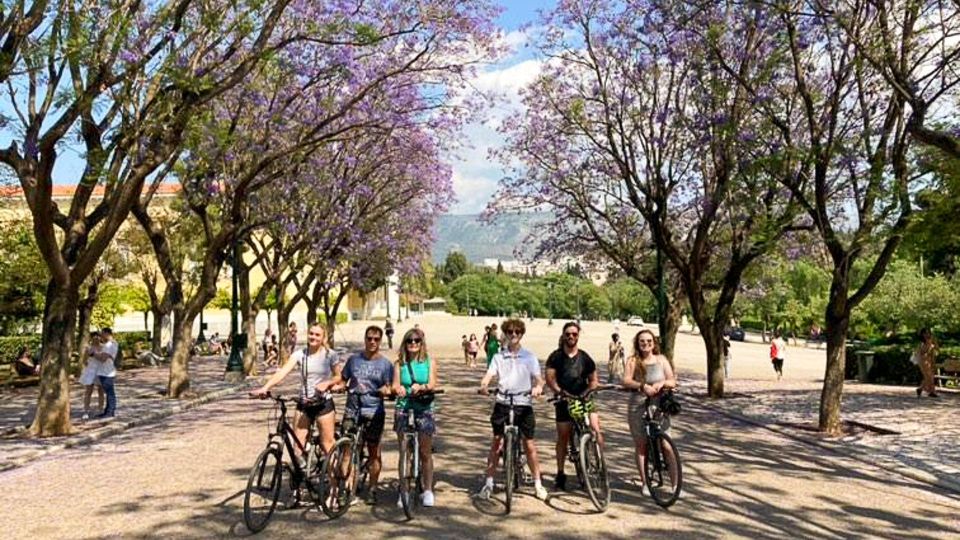
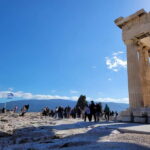
After the stadium, the tour heads toward the scale of empire. You’ll have stops for the Temple of Olympian Zeus and Hadrian’s Arch.
This is a place where “bike speed + photo stop” works well. You’re getting the sweep and magnitude quickly, then you can decide if you want to revisit later on foot. Standing near the temple ruins (even briefly) helps you understand why this part of Athens feels like a statement. It’s monumental.
Hadrian’s Arch adds another layer: it’s an example of how Roman Athens marked itself with grand entrances and connections between eras. Together, these stops connect the dots between what you’ve already seen in the Agora areas and what you’re about to see near the Acropolis zone.
Acropolis views: Museum area, Filopappou Hill, and Pnyka panorama
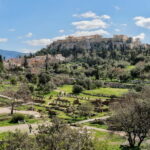
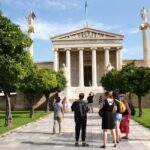
The tour closes with the zone that most people associate with Athens: the area under and around the Acropolis. You’ll ride along the museum of the Acropolis, which sits right under the sacred rock area of the Parthenon.
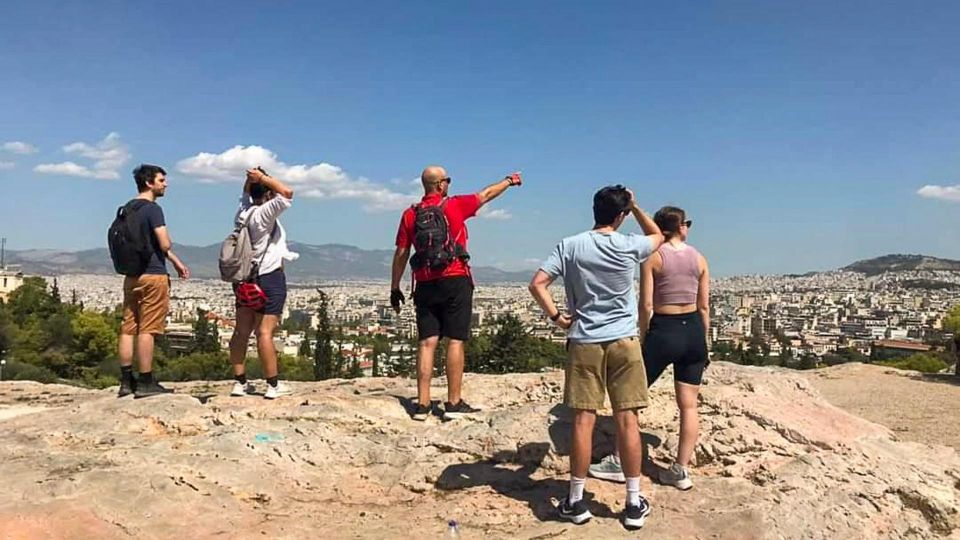
Then comes a key moment: you’ll walk for a couple of minutes through Filopappou Hill, reaching Pnyka for a panoramic view of Athens. This is where the bike tour pays off. After hours of cycling and short stops, you get a moment to slow down and look.
It’s also a smart placement in the itinerary. You’ve seen the bigger landmarks already (Agoras, Parliament, stadium, Zeus). By the time you reach Pnyka, your brain can pull it together and see how Athens is layered—ancient hills, modern streets, and the city spreading outward.
When you’re done with the view, you cycle down the rest of the famous pedestrian road and return to the meeting point near Thessalonikis 140.
Price and what you actually get for $39.52
At about $39.52 per person for a 2.5-hour small-group tour, the value is mostly in what’s included. You get:
- a 28″ Trekking Bike
- a helmet
- a 0.5 L bottle of water
- a bike leader / tour guide in English
- taxes included
That means you’re not paying separately for transport or equipment. And with a group capped at 10 participants, you’re more likely to get real interaction instead of just being guided through at speed.
What’s not included is also important: hotel pickup/drop-off and food and drinks. So plan to eat before or after, not during the ride. Since you only get a single water bottle from the tour, you might want to top up on your own if you run thirsty.
One more practical point: the tour length is short enough that you can treat it like an efficient orientation plus highlights. If you’re hoping to spend hours in museums, this is better as the “get the lay of the land” component, not the whole day.
Who this bike tour suits best (and who should rethink it)
This tour is best for you if:
- you already know how to ride a bike
- you want to cover multiple famous sites without wasting time in transit
- you like short guided explanations tied to specific places
It’s also a good fit if you appreciate guides who explain clearly and patiently. The best version of this experience is when you feel comfortable asking questions and getting answers in real time—which is a strong point for guides associated with this route.
Where it might not be ideal:
- If you’re a new cyclist, the requirement to know bike riding can make the ride stressful.
- If you’re expecting a long, slow walk-and-stay approach at every stop, the pace may feel brief.
Should you book Athens Historical Center: Explore by Bike?
If your goal is to see the core Athens highlights efficiently and connect them with stories as you ride, I’d book it. The route is built around smart movement—bikelanes for getting around, then targeted stops for Kerameikos, the Agoras, Monastiraki/Plaka, Parliament/Evzones, the National Gardens, the Panathenaic Stadium, and the Zeus/Acropolis area.
The decision usually comes down to one thing: how comfortable you are on a bike. If you’re good with that, this is a practical, enjoyable way to get your bearings and earn a real view payoff at Pnyka.
FAQ
How long is the Athens Historical Center: Explore by Bike tour?
The tour lasts about 2.5 hours.
How much does it cost?
The price is $39.52 per person.
Where is the meeting point?
You meet at Thessalonikis 140, and you should look for the Flat Tyres Psycling Club shop.
Is hotel pickup included?
No. Hotel pickup and drop-off are not included.
Is the tour guide available in English?
Yes, the live tour guide speaks English.
What kind of bike do I ride?
The tour provides a 28″ Trekking Bike.
Do I need to know how to ride a bike?
Yes. All guests must know how to ride a bike.
Are helmets and water included?
Yes. Helmets are included, and you get a 0.5 L bottle of water.
Are food and drinks included?
No. Food and drinks are not included.
What happens if it’s raining?
The tour will not take place in case of heavy rain.
FAQ
How do cancellations work?
Free cancellation is available up to 24 hours in advance for a full refund.
How many people are in the group?
The group is limited to 10 participants.
Does the tour start at a fixed time?
There are starting times, but you’ll need to check availability to see them.
When does the tour end?
It ends back at the meeting point near Thessalonikis 140.
Is the tour offered in a small group format?
Yes, it’s a small group tour.

More Historical Tours in Athens
More Cycling Tours in Athens
More Tour Reviews in Athens
- All Day Cruise -3 Islands to Agistri,Moni, Aegina with lunch and drinks included
★ 5.0 · 4,958 reviews