REVIEW · ATHENS
Athens and Ancient Corinth Private from Athens
Book on Viator →Operated by allways greece · Bookable on Viator
On a tight day, this route still feels like a full Athens story. You get the classic skyline sights plus Ancient Corinth, all in one private run with no shared-bus delays. It’s an efficient way to see the big hitters while still having a bit of wiggle room.
What I like most is the private transportation. You skip the stop-and-start drama of crowded buses, and you move between places without waiting on other passengers. I also appreciate the calm, well-timed guidance—my guide, Theodore, spoke excellent English, was friendly, and clearly knew how to connect the dots between Athens and Corinth.
One thing to consider: most major sites charge entrance fees on top of the tour price. The Acropolis and Ancient Corinth are paid stops, and the day includes several quick viewpoint or photo breaks that can feel short if you’re the kind of person who likes to linger.
In This Review
- Key things to know before you go
- Why this private Athens + Ancient Corinth plan feels easier
- Acropolis time: the Sacred Rock and the big-ticket views
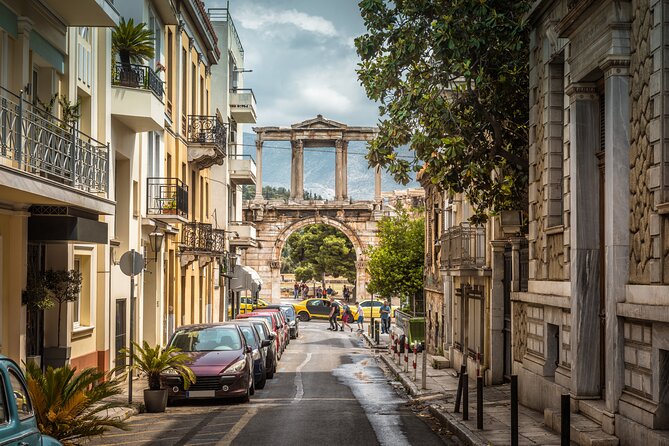
- Hellenic Parliament, Zeus at Olympieion, and the quick hits that add up
- Lycabettus viewpoint: a fast way to get the shape of Athens
- Old neighborhood time: where Athens feels like Athens
- Corinth Canal: 2,500-year ideas meeting 1893 reality
- Ancient Corinth: reading a city-state in the ruins
- Price and value: what $598.60 means for a group up to 7
- Who should book this private day trip?
- Should you book Athens and Ancient Corinth Private from Athens?
- FAQ
- Do I need to buy entrance tickets for this tour?
- How long is the tour?
- What does the tour include?
- Where do you pick me up?
- What time does the tour start?
- Is free cancellation available?
Key things to know before you go
- Private pickup from all Athens hotels means you start the day already sorted
- Acropolis first, with about 1 hour 30 minutes there to actually take it in
- Greek guard ceremony at Hellenic Parliament is short and free
- Marble Panathenaic Stadium is a quick, free stop tied to the 1896 modern Olympics
- Lycabettus viewpoint gives you Athens from above without a long hike requirement
- Entrance fees not included so plan for paid tickets at the Acropolis and Ancient Corinth
Why this private Athens + Ancient Corinth plan feels easier
Athens can chew up time fast—traffic, crowds, and tour buses stacking up like clockwork. This format is built to reduce that friction with a private, air-conditioned van and a driver/guide who works around your group’s pace. You’ll also get WiFi onboard, which sounds small until you’re trying to coordinate photos, maps, and tickets without burning data.
The best practical benefit is the pickup approach. Since you’re picked up from hotels across Athens, you’re not herding yourself across town to meet a group. And because it’s only your party in the vehicle, you don’t lose time waiting for other people who are always “right around the corner.”
I also like the small comfort details. Bottled water is provided per person, and the van stays at a comfortable temperature. That matters when you’re spending the day in the sun, jumping between elevation changes, and walking short distances more than you’d expect.
You can also read our reviews of more private tours in Athens


Acropolis time: the Sacred Rock and the big-ticket views
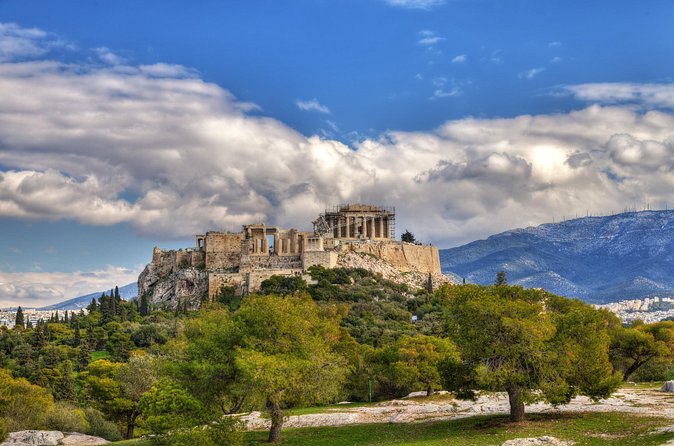
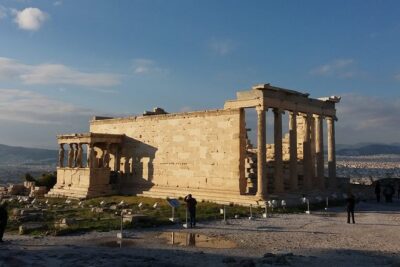
You start with the Acropolis, the rocky crag that dominates central Athens and earned the nickname Sacred Rock. This is where you’ll see some of the most famous architecture of the ancient Greek world—especially the Parthenon, plus the Propylaea and the Erechtheion. Perikles oversaw the major building push in the 5th century BC, and it’s the kind of place that makes the ancient world feel real instead of textbook-flat.
You get about 1 hour 30 minutes at the site. That’s a solid window. It’s long enough to enjoy the layout, read key features, and still have energy left for the rest of the day. If you want to take your time, it helps that a good guide can adjust slightly; on one recent trip, Theodore was flexible and allowed more time at certain locations when needed.
A possible drawback is that the Acropolis admission ticket is not included. You’ll want to plan for that expense in advance, and it’s worth being prepared for a bit of waiting at the entrance area even on organized tours. Another consideration: this is a walking-and-stairs day, so comfortable shoes matter.
Hellenic Parliament, Zeus at Olympieion, and the quick hits that add up
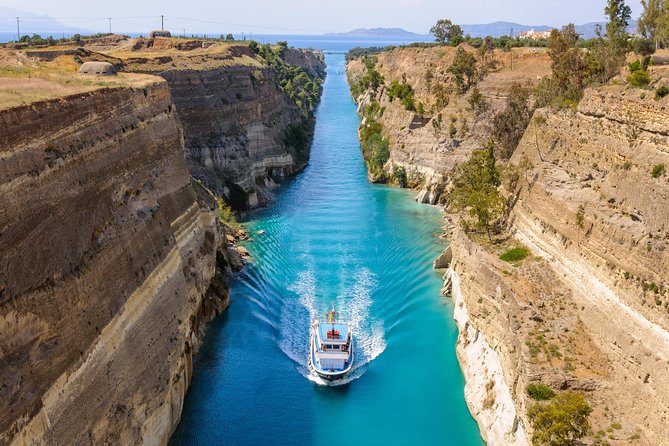
After the Acropolis, you’ll get a sequence of smaller stops that feel like smart add-ons rather than filler. The changing of the guards at the Hellenic Parliament is one of those. It’s only about 15 minutes, and it’s free, which makes it an easy win if you want a taste of modern ceremony next to ancient stones.
Next comes a stop that often surprises people: the Temple of Olympian Zeus (Olympieion). Construction took centuries, starting in 510 BC and finishing in 131 AD. There were originally 104 gigantic Corinthian columns; today, 16 remain standing, and one lies on the ground. That “half-finished giant” feeling is part of what makes it memorable—the scale still hits even when the building is incomplete.
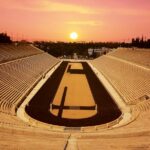
Then you move to the Panathenaic Stadium, known as the only marble stadium in the world. It hosted the first modern Olympic games in 1896. Even if you’re not a sports fanatic, it’s a fun moment because it shows how modern Athens borrowed from its ancient past instead of just leaving it behind.
All three stops are short, mostly free, and mostly designed to keep momentum. If you love collecting scenes—ceremony, grand ruins, and a sports arena—you’ll enjoy this stretch. If you’re hoping for long deep-time exploration at every stop, you may wish you had more time at at least one of these.
Lycabettus viewpoint: a fast way to get the shape of Athens
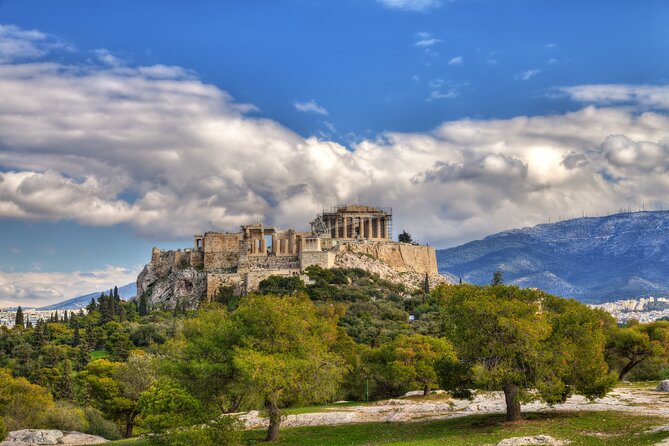
Next up is Mount Lycabettus, where you’ll get the best panoramic view of Athens. This is one of those “payoff-per-minute” moments. The total stop time is about 10 minutes, which means you won’t get stuck there all day, but you will leave with a mental map of the city’s layout.
This viewpoint is useful because it helps everything you saw earlier make more sense. When you look down and see how neighborhoods stretch, how the city hugs the terrain, and where major sites sit relative to each other, you start to connect places you otherwise treat as separate dots on a list.
What to watch for: since the time is brief, keep your camera ready and don’t lose momentum with last-second decisions. You’ll be happier if you treat this as a quick survey—capture the main angles, then move on.
Old neighborhood time: where Athens feels like Athens
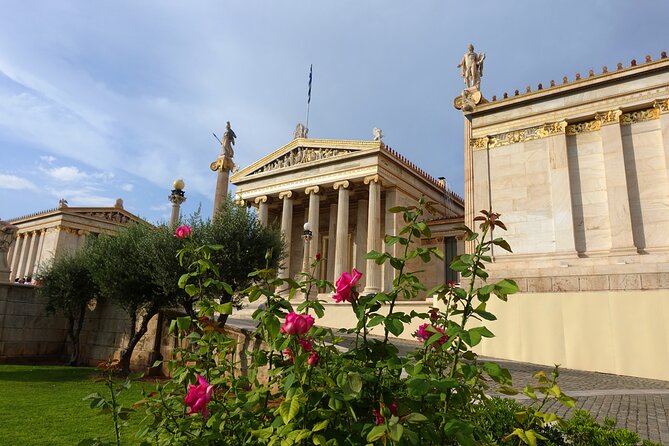
There’s also time for an older neighborhood of Athens. This isn’t about checking off monuments; it’s more about atmosphere and street-level texture. Athens has a way of changing its vibe every few blocks, and these quieter pockets help break up the big landmark intensity.
Because the schedule doesn’t lock in a full “museum-length” segment for this part, you’ll want to use the time to notice the small things: street scale, local life, and the way the city carries history beyond the headline sites. In a private format, your guide can often point out what’s worth a quick look without turning it into a shopping stop.
This portion is a good fit if you enjoy walking at your own pace and soaking up the everyday side of the city between major ancient sites. If you prefer only official sights with set entry points, this might feel a bit more flexible than you’d like—but it can be refreshing.
- All Day Cruise -3 Islands to Agistri,Moni, Aegina with lunch and drinks included
★ 5.0 · 4,958 reviews






Corinth Canal: 2,500-year ideas meeting 1893 reality
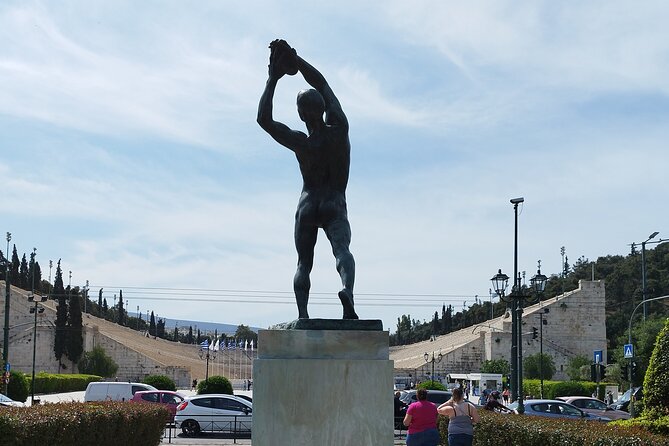
Then you’ll head toward the Corinth Canal, a man-made cut that has been an idea for centuries. The concept reportedly dates back about 2,500 years. Periandros, the tyrant from Corinth, was among the earliest thinkers who wanted a different way to travel—so people who didn’t want to sail around the Peloponnese could save time.
The route also links to the earlier concept of the diolkos, an idea for moving ships over land. Eventually, after repeated attempts across generations, the canal was constructed in 1893. That mix of ancient ambition and modern engineering makes this stop feel more layered than most roadside attractions.
You’ll spend about 15 minutes here. That’s enough for photos, a quick read of the story, and a chance to stretch your legs after travel. Entrance fees aren’t listed for this stop, so it’s mostly about taking in the view and the significance.
Ancient Corinth: reading a city-state in the ruins

The day’s big “ancient city” moment is Ancient Corinth (Archaia Korinthos). This is where you get a sense of how an important Greek city-state functioned and why it mattered. Corinth sat in a decisive position for commerce, and it also had fertile soil—factors that made it one of the wealthier centers in the ancient world.
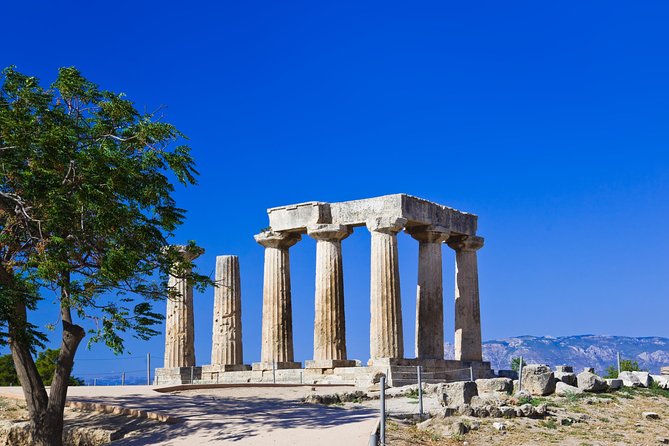
The site includes several notable areas and remnants. You’ll see things like the Doric temple of Apollo (dating to around 560 BC), plus features connected to the Isthmian Games, the agora, and the fountain of Peirene. There are also remnants such as a Roman concert hall and the baths. Even if you’re not reading every inscription, the overall layout helps you understand that this wasn’t just temples and columns—it was a working city.
Time here is about 1 hour, and the entrance ticket is not included. One hour can be just right if you want to walk, get context, and still feel you had enough time at the Acropolis earlier. But if you want a slower, more detailed archaeological approach, you may wish you had more than that hour.
This stop is also where having a guide can add real value. Theodore’s style was about connecting the meaning of places, not reciting facts. The ruins become easier to interpret when you know what you’re looking at and why it was important.
Price and value: what $598.60 means for a group up to 7
The tour price is $598.60 per group, for up to 7 people. That’s where the value math gets interesting. If you fill the van with the full group size, you’re looking at roughly the $80s per person. If it’s a smaller group, your per-person cost rises, which is typical for private tours.
What you’re paying for is private transport (air-conditioned), WiFi onboard, bottled water per person, and a guided route built to hit the major highlights efficiently. It’s not just getting from A to B. The schedule is designed to reduce dead time—particularly by combining a big anchor stop like the Acropolis with several shorter “smart stops” and then spending real time at Ancient Corinth.
Entrance fees and food are extra, so you should budget for those. The upside is that many of the quick stops are free, including the Parliament changing of the guards, Panathenaic Stadium, Lycabettus, and the Corinth Canal.
If your priority is comfort and time efficiency—rather than spending your day moving through crowds on public buses—this price can feel fair. If you’re traveling solo and don’t have a group to share costs, it may feel more expensive than a standard group bus tour.
Who should book this private day trip?
This works especially well if you want:
- A smooth, air-conditioned day rather than piecing together buses and trains
- An easier way to see Athens and Ancient Corinth highlights without feeling rushed by transit logistics
- A guide who explains what you’re looking at, not just where to stand for photos
- The comfort of no delays picking up other travelers, since your group is handled directly
I think it’s also a strong choice for first-timers. Athens is layered, and pairing it with Ancient Corinth helps you understand how the region fits together. You’ll see ancient monuments, ceremonial modern Athens, and the practical side of Corinth’s location in the ancient world.
If you’re the type who loves long stays at one site, the shorter segments might feel like a lot of switching. But the overall pacing is built for people who want the highlights without turning the day into an endurance event.
Should you book Athens and Ancient Corinth Private from Athens?
I’d book it if your goal is to see the big Athens icons and Ancient Corinth with less hassle, more comfort, and smarter timing. The private setup helps you keep your day moving, and the guide you’ll likely get—like Theodore—can turn stops into something you understand, not just something you pass through.
I’d hesitate only if you hate paying extra for entry tickets or if you want long, slow exploration at every stop. With a schedule that mixes paid and free moments—and with one-hour and 10-minute blocks—it’s optimized for “high value per hour,” not for maximum wandering.
If you’re okay with planning for entrance fees and you want a clean, comfortable day route, this is a very solid way to experience Athens and Corinth without the usual crowd chaos.
FAQ
Do I need to buy entrance tickets for this tour?
Entrance fees are not included. The Acropolis and Ancient Corinth are listed as admission ticket not included stops, so you should plan to pay for those.
How long is the tour?
The duration is listed as 7 to 9 hours, approximately.
What does the tour include?
It includes air-conditioned private transportation, WiFi on board, bottled water per person, and mobile tickets. It’s also a private tour/activity only for your group.
Where do you pick me up?
Pickup is offered from all hotels in Athens.
What time does the tour start?
The start time is 7:30 am.
Is free cancellation available?
Yes. You can cancel up to 24 hours in advance for a full refund.
If you tell me your travel dates and how many people are in your group, I can help you sanity-check whether the private price looks good versus a shared-group option.


More Private Tours in Athens


More Tour Reviews in Athens
- All Day Cruise -3 Islands to Agistri,Moni, Aegina with lunch and drinks included
★ 5.0 · 4,958 reviews