REVIEW · ATHENS
Athens: Acropolis Guided Tour in Spanish-Option Tickets
Book on GetYourGuide →Operated by TOP TOURS GREECE · Bookable on GetYourGuide
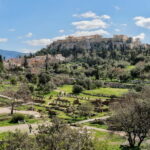
The Acropolis comes with a language assist. This 2-hour, Spanish-led walk is built to help you see the Acropolis with focus, not just lines of stone. I especially like the Spanish licensed guide and the way the route connects landmark to meaning as you move. You’ll get a real sense of how the complex shaped Athenian identity, not just a checklist of stops.
My other big win is the full sequence: Theatre of Dionysus, the Temple of Asclepius, the Odeon of Herodes Atticus, and the big finale with the Parthenon view over Athens. The main drawback to plan around is physical: it’s not set up for people with mobility impairments, and you’ll be on your feet on uneven archaeological ground for the whole experience.
In This Review
- Key Highlights Worth Your Time
- How a Spanish-Language Acropolis Tour Changes Everything
- Price and What $36.14 Buys You
- Meeting Point at Tourist Information (Dionysiou Areopagitou 18)
- Theatre of Dionysus: Where Drama Became a Civic Thing
- Asklepieion of Athens: Ancient Medicine with a Temple Beat
- Odeon of Herodes Atticus: Old Stones That Still Make Music
- Propylaea: The Gate That Sets the Tone
- Temple of Athena Nike: A Fast Stop With a Big Payoff
- Parthenon Time: Seeing the Icon and the Why Behind It
- Erechtheion: Small Details, Strong Character
- The Porch of the Caryatids: The Moment the Faces Look Back
- What the Route Really Does for Your Brain (Not Just Your Feet)
- Practical Tips for a Smoother Visit
- Who Should Book This Tour?
- Should You Book This Spanish Acropolis Tour?
- FAQ
- How long is the Acropolis guided tour?
- What language is the guide speaking?
- Are headphones included?
- Is the entrance ticket included in the price?
- Where does the tour start?
- Does the tour end at the same place?
- Is food and drink allowed during the tour?
- Is it suitable for people with mobility impairments?
- Can I cancel for a refund?
Key Highlights Worth Your Time
- Spanish-speaking licensed guide makes the sites easier to understand and more fun to follow
- Headphones included so you can hear clearly even when the group moves near crowds
- Medicine at the Temple of Asclepius gives you a surprising angle on ancient life
- Parthenon + Athena Nike viewpoint delivers the classic skyline moment, with context
- A timed tour route keeps you moving through the big hits without wasting your day
How a Spanish-Language Acropolis Tour Changes Everything

If you’re Spanish-speaking (or you want your Spanish to do real work on a trip), this tour is a smart way to enjoy the Acropolis without constantly checking your phone. The guide’s Spanish narration is designed for clarity while you’re walking, so you’re not stuck reading placards you can’t fully translate fast enough.
I also like that the tour is structured like a story. You don’t just hop between monuments; you hear why each place mattered, then you see what’s still standing and what you’re meant to imagine. That matters at the Acropolis, where the scale can overwhelm you if you don’t know what you’re looking at.
You can also read our reviews of more tours and experiences in Athens

Price and What $36.14 Buys You
At $36.14 per person for about 2 hours, this sits in the “worth it if you care about meaning” category. Entrance depends on the option you choose: the tour includes the licensed guide and headphones, and the entrance ticket is included only if that option is selected.
Here’s how I judge value for a tour like this:
- You’re paying for time with a guide who can translate what you’re seeing into something you remember.
- You get headphones, which are practical at the Acropolis where the soundscape can get messy.
- The schedule is tight enough to cover the major sites, but not so long that you’re exhausted before you reach the Parthenon.
If you’re the type who likes to wander, you can still do the Acropolis on your own. But if you want the places connected—and you don’t want to spend your limited Athens time decoding details—this pricing usually feels fair.
Meeting Point at Tourist Information (Dionysiou Areopagitou 18)
The meeting point can vary by option, but one start location is the Tourist Information Center Athens, Dionysiou Areopagitou 18. Either way, plan to arrive a little early. The Acropolis area is busy and the “start here” point can take a minute to find, especially if you’re navigating busier streets than you expected.
Because the tour returns to the meeting point, you can plan the rest of your day around it. You’re not juggling multiple transfers or trying to coordinate with a separate departure location.
Theatre of Dionysus: Where Drama Became a Civic Thing
The tour starts with the Theatre of Dionysus, which is one of the key reasons the Acropolis isn’t only about temples and statues. Ancient Athens treated theater as more than entertainment. It was part of public life—where citizens watched stories tied to culture, politics, and identity.
During your short stop, you’ll likely focus on what the space was for and how it shaped the experience of the audience. The practical value here is that the guide can explain the role of the theater before you move on to other sites that feel totally separate at first glance. It gives you a thread to follow.
Time check: this stop is about 10 minutes, so expect a “best-of” tour moment, not a slow sit-and-stare.
Asklepieion of Athens: Ancient Medicine with a Temple Beat
Next up is the Asklepieion (Temple of Asclepius)—a shift that surprised me the first time I learned about it. Medicine in the ancient world wasn’t just clinics and herbs. It was also spiritual and civic. People came for healing within a religious setting tied to Asclepius, the god associated with medicine.
This stop is brief (around 10 minutes), but it’s a strong one because it changes the way you interpret the Acropolis. Instead of thinking only about power and religion, you start thinking about everyday needs—health, care, and hope—played out through sacred architecture.
If you like history that connects to real human needs, this is a highlight.
You can also read our reviews of more guided tours in Athens



Odeon of Herodes Atticus: Old Stones That Still Make Music
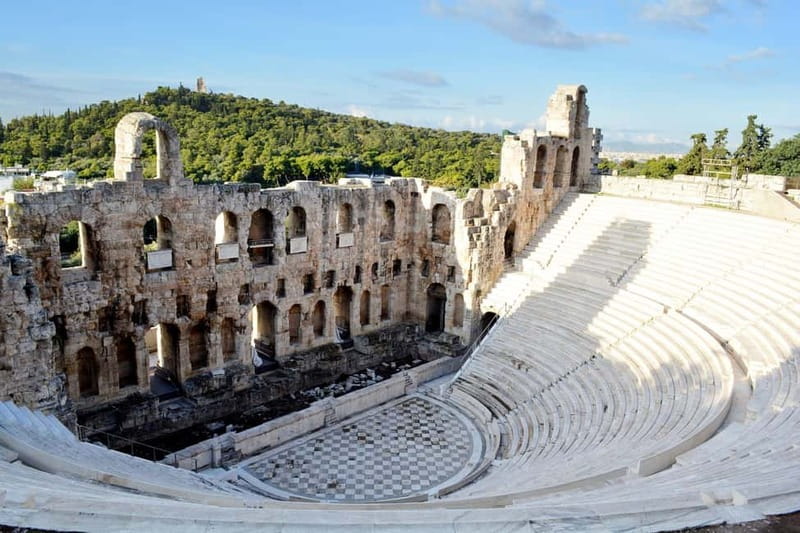
Then you move to the Odeon of Herodes Atticus, described as a conservatory and a venue still used for important concerts and performances. This is one of those moments where the Acropolis feels less like a museum and more like a stage that time didn’t shut down.
In a short 10-minute visit, you’ll want to watch for how the structure supports the idea of performance and audience. The guide’s job here is to make the space make sense—how it functions, what it’s for, and why it remains relevant.
Practical angle: if you can time an evening performance later in your Athens stay, it’s worth considering. This tour gives you context for why the site can still host events.
Propylaea: The Gate That Sets the Tone
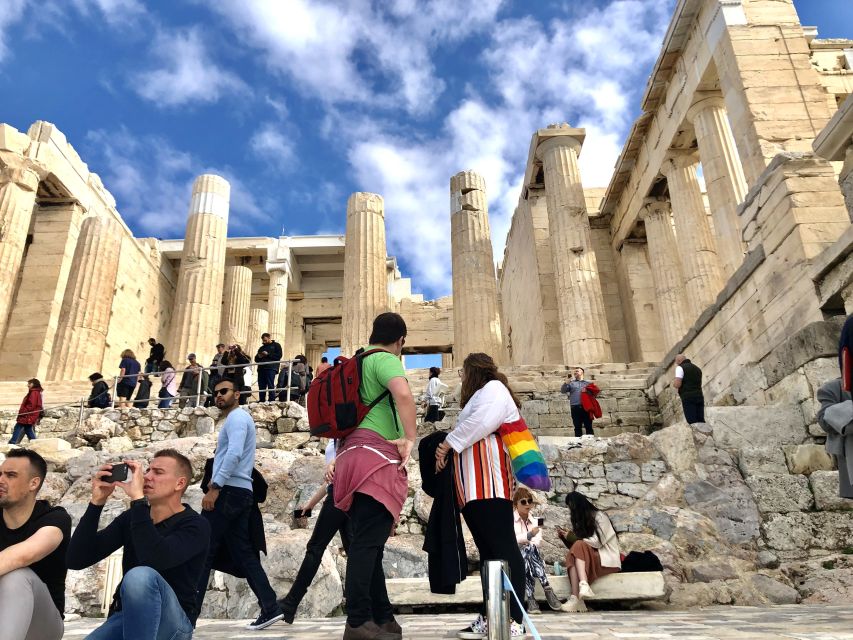
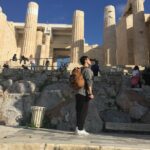
The Propylaea (the gateway area) is the next step. Even if you’ve seen the Acropolis from photos, the gateway matters because it’s where movement changes. You transition from the surrounding area into a more ceremonial, sacred feeling.
At about 10 minutes, you’re not expected to memorize every part. Instead, you get the logic of what you’re entering and why it was designed that way. It helps you understand why the rest of the complex feels intentionally ordered.
Temple of Athena Nike: A Fast Stop With a Big Payoff
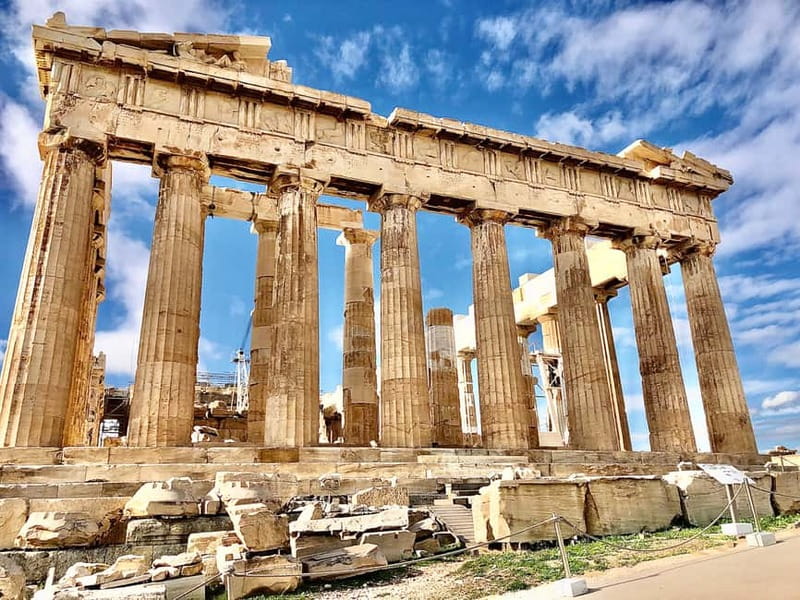
The Temple of Athena Nike gets a shorter visit—around 5 minutes—but it’s strategically placed for a reason. This is where you feel the viewpoints. You get the quick access to the sense of height and the way Athens stretches out below you.
If you’re the kind of visitor who needs a moment to absorb before the main event, use this stop like a breather. Take a couple photos, look around, and let the guide’s explanations snap into place while the view is in front of you.
Parthenon Time: Seeing the Icon and the Why Behind It
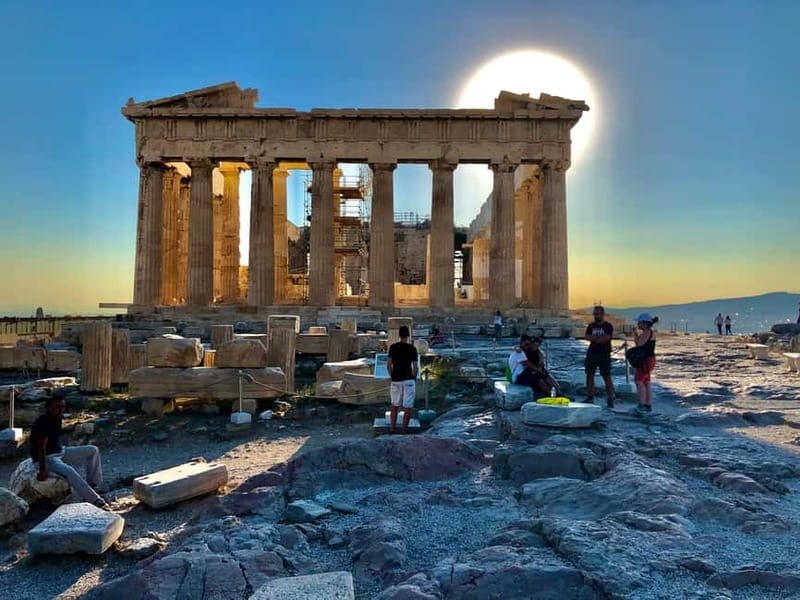
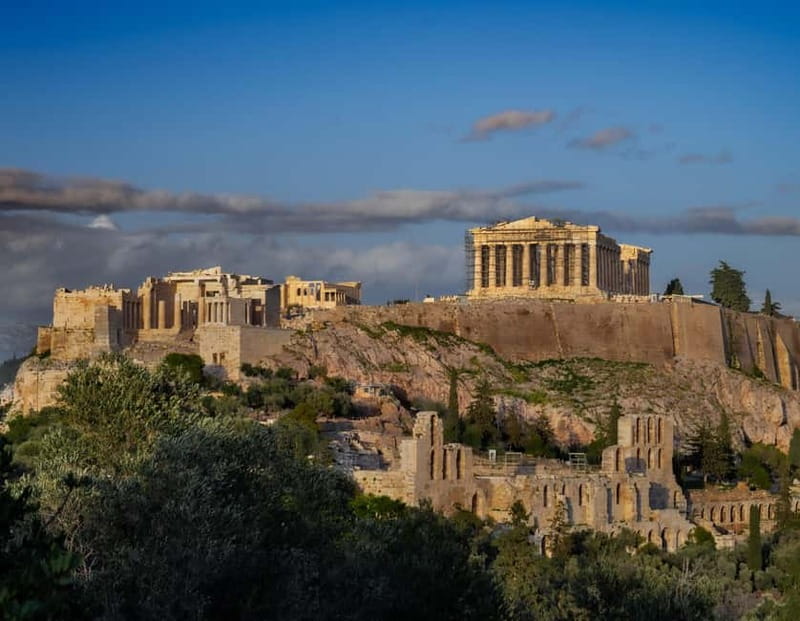
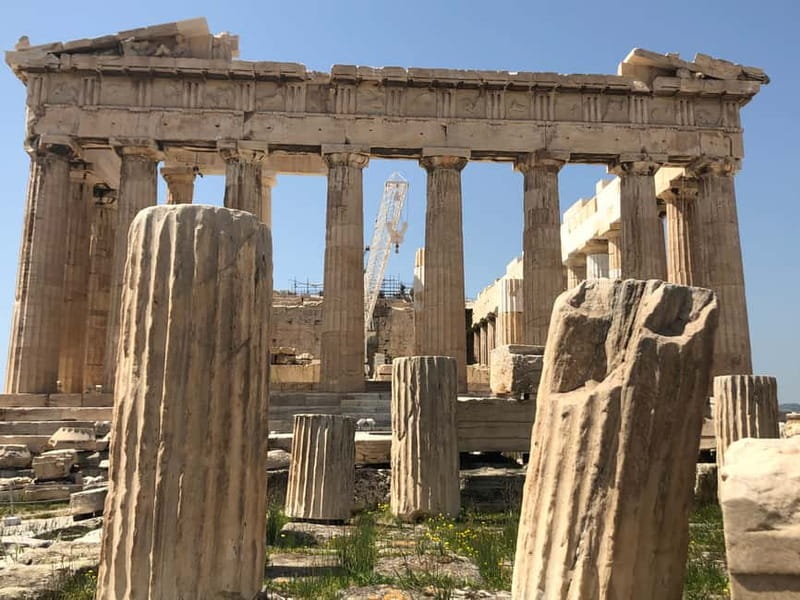
Then comes the star: the Parthenon, with about 20 minutes. That’s a good amount of time for an organized tour, especially because the Parthenon is both visually overwhelming and historically dense.
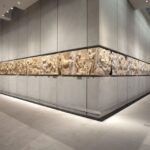
A guided visit matters here because the Parthenon isn’t just a building to admire. It’s a statement. The guide helps you connect what you see—form, placement, and symbolism—to how Athenians understood themselves. You don’t just walk past sculptures and columns; you get the meaning, then you can look with purpose.
Also, this is where the skyline effect hits. You’ll be able to see Athens from the height, and the view is part of why people remember the Parthenon day. Pair that with the guide’s commentary and it becomes more than a photo moment.
Erechtheion: Small Details, Strong Character
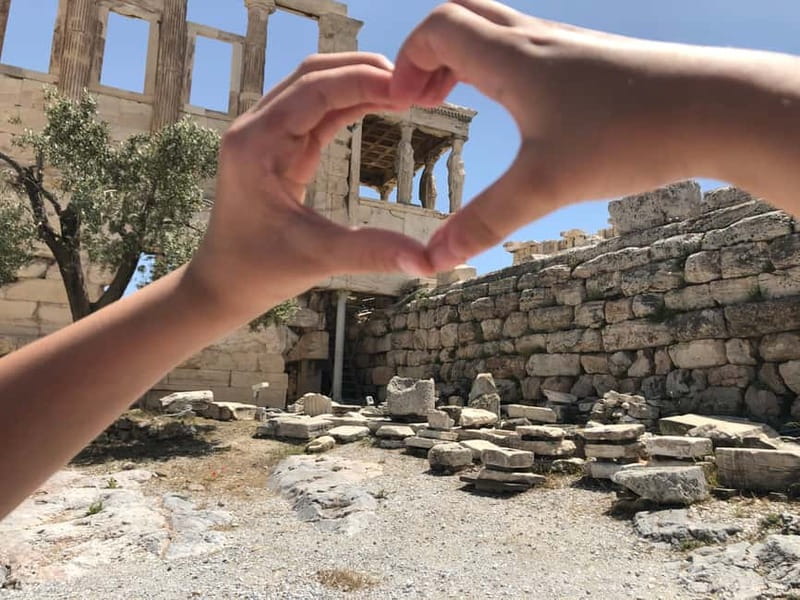
After the Parthenon, the tour heads to the Erechtheion (about 10 minutes). This site feels different in character. It’s less about one big, instantly recognizable shape and more about a set of details that reward a slower look.
Even within a short stop, a good guide points you toward what to notice. It could be how the structure is laid out or why certain areas have their own visual personality. The payoff is that you stop seeing the Acropolis as one “thing” and start seeing it as a collection of purposeful spaces.
The Porch of the Caryatids: The Moment the Faces Look Back
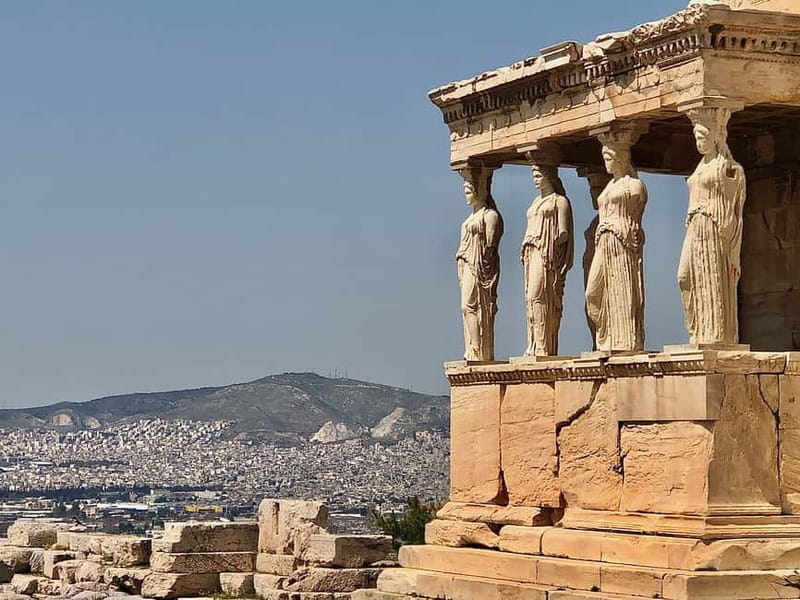
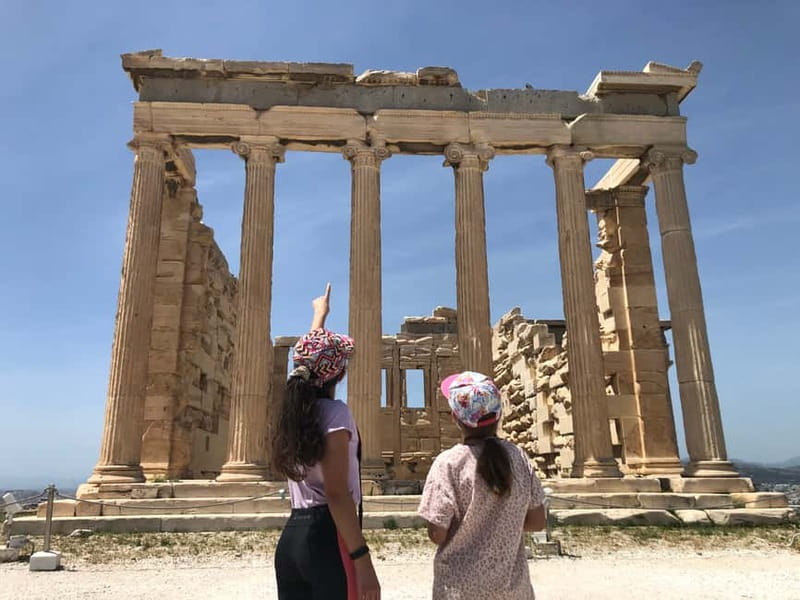
The final major stop is the Porch of the Caryatids (about 10 minutes). Caryatids—those carved female figures—are famous for a reason. They make the architecture feel human. They also give you a detail challenge: you can’t fully appreciate it if you’re rushing.
Use this last stretch to slow your eyes. This is where you pick up on textures and proportions that are easy to miss when you’re moving quickly between landmarks. The guide’s explanation can help you understand what role these figures played, which makes the final stop feel like more than a photo stop.
What the Route Really Does for Your Brain (Not Just Your Feet)
A big reason to book a guided Acropolis tour is mental order. The Acropolis can look like random ruins until you understand the sequence and purpose behind each area. This route does that for you by moving from:
- theatre and civic culture,
- to medicine and religious practice,
- to performance spaces and ceremonial gateways,
- to the most iconic temples and their associated views.
By the time you reach the Parthenon, you’re not just seeing an icon. You’re seeing a city telling its own story in stone.
Practical Tips for a Smoother Visit
You’ll be on the move, so treat this like a walking day.
- Bring comfortable shoes. The ground is archaeological and uneven. If your shoes aren’t up to it, you’ll feel it fast.
- Bring a sun hat. Athens sun can turn a short stop into a long uncomfortable one.
- Expect to cover major sections quickly. The entire tour is about 2 hours, with several short guided segments.
- No baby strollers, and food and drinks aren’t allowed during the experience.
One more practical note: if you need help with tickets, the tour info says to let them know. If you’re unsure what option includes entrance, ask before you go so you don’t get stuck at the last moment.
Who Should Book This Tour?
This is a strong fit if:
- You speak Spanish and want the Acropolis explained in a way you can actually follow while walking.
- You want the “big hits” without building your own route from scratch.
- You care about meaning—medicine, theatre, performance venues—so the Acropolis feels like life, not only monuments.
It may not be a good fit if you have mobility limitations. The tour notes it’s not suitable for people with mobility impairments, and it also forbids baby strollers.
Should You Book This Spanish Acropolis Tour?
I’d book it if Spanish is your language for learning on the go, and if you want to leave with more than a set of photos. The combination of a Spanish licensed guide, headphones, and a route that hits the Acropolis’s most important anchors—Theatre of Dionysus, Asclepius’s temple, Herodes Atticus, and the Parthenon—makes it efficient and memorable.
Skip it if you’re traveling with limited mobility or you’d rather wander freely with no guided structure. Also skip it if you plan to spend most of your time resting—this experience is built for walking and short focused stops.
If you want your Athens Acropolis day to feel guided, structured, and meaningful in Spanish, this one makes a lot of sense.
FAQ
How long is the Acropolis guided tour?
The tour lasts about 2 hours.
What language is the guide speaking?
The live tour guide speaks Spanish.
Are headphones included?
Yes. Headphones are included with the tour.
Is the entrance ticket included in the price?
It depends on the option you choose. The entrance ticket is included only if that option is selected.
Where does the tour start?
The meeting point may vary by option. One listed start point is the Tourist Information Center Athens at Dionysiou Areopagitou 18.
Does the tour end at the same place?
Yes, it ends back at the meeting point.
Is food and drink allowed during the tour?
No. Food and drinks are not allowed.
Is it suitable for people with mobility impairments?
No, it’s not suitable for people with mobility impairments.
Can I cancel for a refund?
Yes, the tour offers free cancellation up to 24 hours in advance for a full refund.



More Tickets in Athens


More Tours in Athens



More Tour Reviews in Athens
- All Day Cruise -3 Islands to Agistri,Moni, Aegina with lunch and drinks included
★ 5.0 · 4,958 reviews