REVIEW · ATHENS
Ancient Corinth, Isthmus/ Kechries Private biblical tour from Athens or Nafplion
Book on Viator →Operated by GREECE TAXI · Bookable on Viator
Corinth in one day beats doing it piecemeal. This private route from Athens pairs easy transport with real biblical-and-ancient context at the ports and ruins.
I like the straightforward setup: hotel pickup, an air-conditioned ride, and an audio documentary in the car that keeps the story moving while you relax. I also like that you can shape the day at your pace, instead of being herded through stops.
One caution: this is closer to private transportation with driving commentary than a full-time on-foot archaeological tour. If you want an expert walking you through every ruin, you’ll likely need to book an archaeologist guide separately.
In This Review
- Key things you’ll notice on this day
- The Athens drive to Corinth: less hassle, more time for thinking
- Corinth Canal: a short stop with big viewpoint pay-off
- Kenchreai (Kenchreai/Kechries): where Paul’s shipping routes make sense
- Ancient Corinth (Archaia Korinthos): ruins plus the museum
- Acrocorinth: the castle view you feel in your legs
- The Cathedral of Saint Paul of Corinth and the “modern on top of ancient” feeling
- Diolkos: the practical engineering stop most people skip
- Loutraki: swim time, optional seafood lunch, and the olive oil + soap add-on
- Tickets and what’s included vs not: budget like a grown-up
- Driver-guide vs archaeologist guide: know what kind of narration you’re buying
- Value check: is $191.17 per person a good deal?
- Who this tour fits best (and who might want a different style)
- So, should you book this Corinth and Kenchreai private day?
- FAQ
- Is this a private tour?
- How long is the tour?
- Do I get hotel pickup and drop-off?
- What kind of vehicle do you use?
- Is the vehicle air-conditioned and does it have WiFi?
- Are the Ancient Corinth site and museum tickets included?
- Do I need to pay for Acrocorinth?
- Are any stops free to enter?
- Can the itinerary be customized?
- What happens if the weather is bad?
Key things you’ll notice on this day
- Private, door-to-door pickup in Athens (or nearby by arrangement)
- Audio documentary in the vehicle so you get context without extra logistics
- Great photo windows at the Corinth Canal bridge stop
- Ancient Corinth + museum ticket is seasonal and not included in the base price
- Acrocorinth and some entrances are extra, so plan your budget ahead
The Athens drive to Corinth: less hassle, more time for thinking
This day starts with a simple promise: you’re picked up and dropped off from your accommodation. That matters in this part of Greece, where parking and route juggling can steal time from the sites. You ride in a clean, air-conditioned vehicle (sedan, minivan, or minibus depending on your group size), and you’ll have WiFi on board plus informative audio while you travel.
The drive itself has an extra layer. You head west along the coast of the Saronic Gulf, passing places that connect Athens to the wider Corinth region—Elefsis, Megara, Kineta, and more. Even if you know the headlines about Corinth, this route helps you understand why it mattered: it sits at the meeting point between seaborne routes and land travel across the Isthmus.
For a practical tip: bring a little patience for the schedule rhythm. You’ll have a mix of quick stops (like canal viewpoints) and longer site time (like Ancient Corinth). If you’re the type who likes to linger over details, you’ll still have that chance at the main archaeological area—just keep an eye on the total day length.
You can also read our reviews of more private tours in Athens

Corinth Canal: a short stop with big viewpoint pay-off
The Corinth Canal stop is brief on purpose, but it gives you something valuable: that iconic view of a man-made cut splitting the land. You’ll reach it soon after leaving Athens, and there’s time for photos from the highest point on the canal bridge. Admission is listed as free.
This is one of those moments where you can see instantly why ancient and modern travel stories overlap here. The canal is not the ancient solution, but it’s a reminder that Greeks have long worked hard to make passage easier. In a day that includes Kenchreai, Diolkos, and Paul’s world, this stop feels like a hinge.
If you’re planning for photos, dress for wind. Canal bridges can be breezy even when the rest of the day feels calm.
Kenchreai (Kenchreai/Kechries): where Paul’s shipping routes make sense
Kenchreai is often overlooked when people rush only for the famous ruins of Corinth proper. Here, you stop at the port-side story that connects Corinth to early Christianity. You’ll hear the logic of the geography: Corinth had two port areas on two different seas—Kenchreai on the eastern side (Saronic Gulf side) and Lechaion on the western side (Corinthian Gulf side).
That east-facing port mattered for routes coming from the east and for overland movement north and south between central Greece and the Peloponnese. In other words, Kenchreai sat at a crossroads.
You also get the biblical connection: Acts 18:18 describes Paul stopping at Kenchreai during his second missionary journey, including the note that he had his hair cut as part of a vow fulfillment. The stop is listed at about 30 minutes with free admission.
A useful way to treat this stop: don’t expect it to replace Ancient Corinth. Kenchreai is the story frame. If you use that context on the later ruins, the whole day clicks together more clearly.
Ancient Corinth (Archaia Korinthos): ruins plus the museum
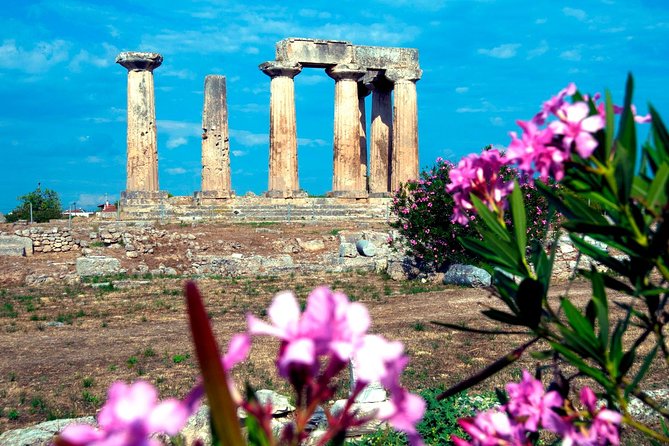
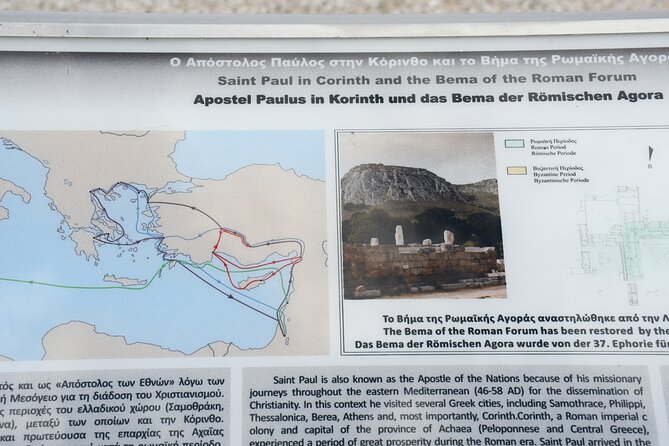
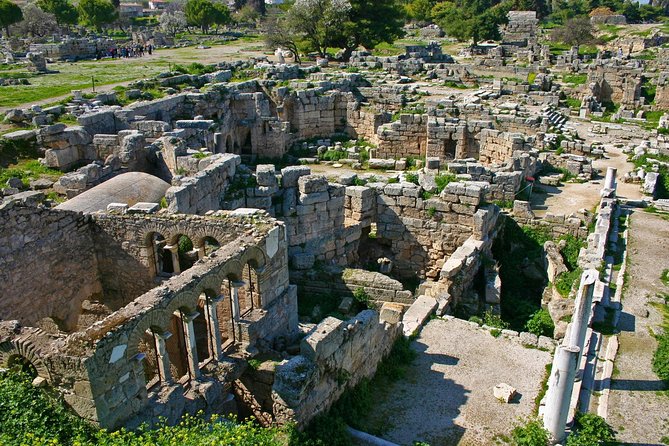
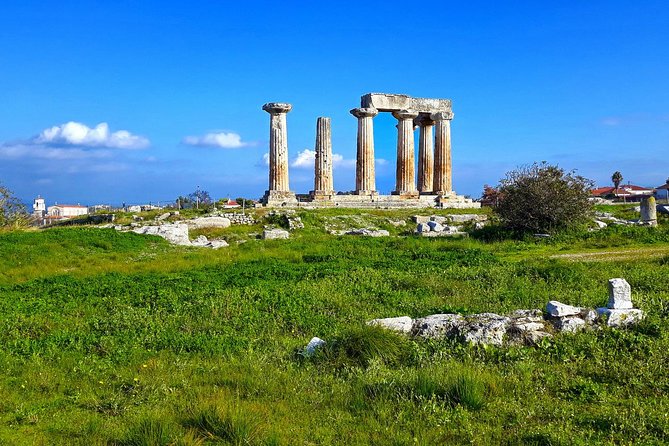
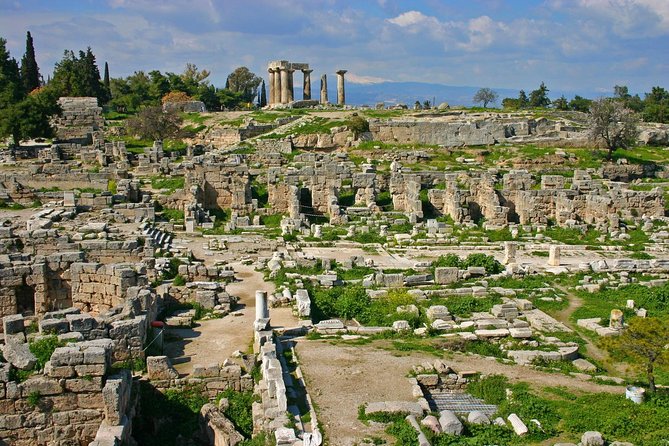
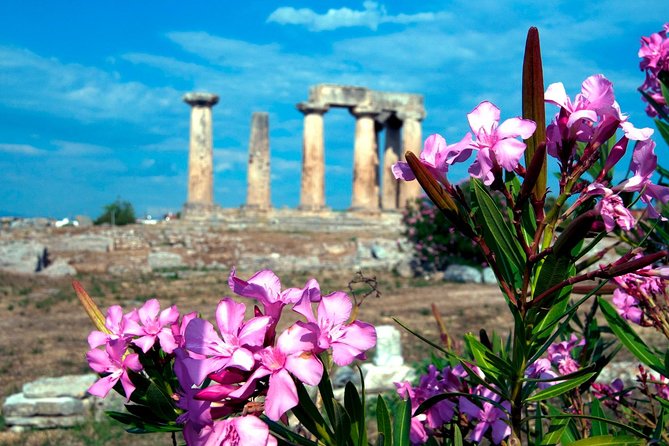
This is the heart of the trip. You’ll visit Ancient Corinth, with time to explore on your own pace. The stop includes the major areas you’d want in a single day: the Roman Agora (including the famous Vema), the Temple of Apollo, and access to the museum.
The time allotted is about 1 hour 30 minutes, and the ticket for the archaeological site and museum is seasonal and not included in the base price. The combined ticket is listed as:
- Winter: 10€ (Nov 1 to Mar 31)
- Summer: 20€ (Apr 1 to Oct 30)
That seasonal difference matters for value. In summer, you’re paying a lot more for site entry. In winter, the same day is noticeably cheaper once you add admissions.
Also note a detail that can affect your experience: the driver is not an archaeologist guide who walks the site with you. You’ll have an audio story in the car, but inside Ancient Corinth and the museum, you’re mostly on your own unless you add a licensed archaeologist guide.
If you want to make this stop land well, come prepared to slow down for the major anchors:
- Roman Agora and Vema: it’s where public life and civic power lived.
- Apollo temple area: it ties the city’s religious identity together.
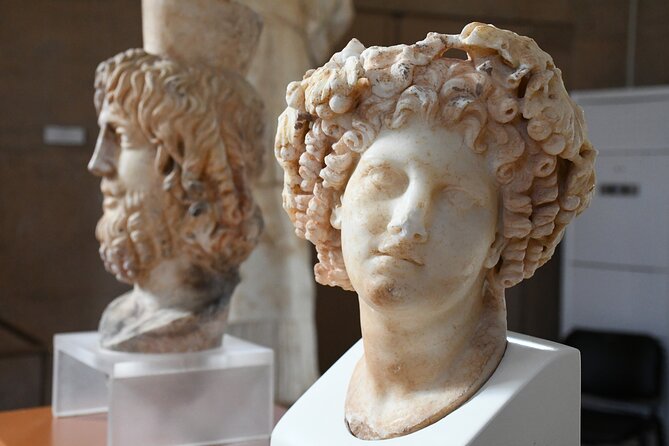
- Museum: it’s where the site’s fragments and artifacts turn from “ruins” into “evidence.”
Acrocorinth: the castle view you feel in your legs
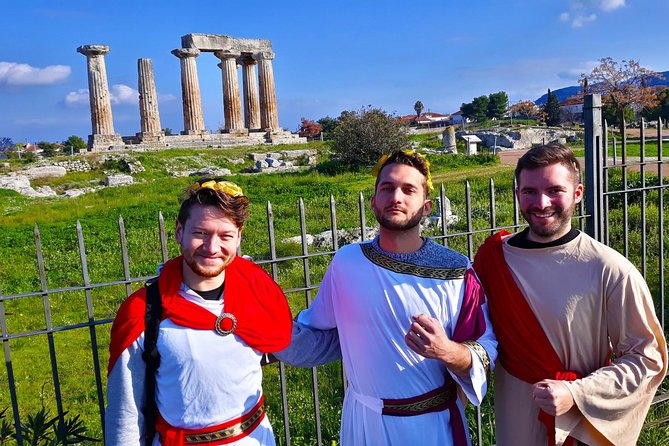
After Ancient Corinth, you’ll drive up to Acrocorinth, the hilltop fortress. The stop is about 1 hour, and entrance is listed as not included.
Acrocorinth is one of those places where the climb is the point. Even if the route isn’t physically intense, you’ll likely feel the change in elevation. It’s an excellent place to understand how Corinth defended itself and how it controlled movement.
A practical trade-off: because time is limited, you won’t have hours to wander every viewpoint. Plan to choose what you care about most—views for geography, fortress walls for military logic, or the walkways for photo angles.
- All Day Cruise -3 Islands to Agistri,Moni, Aegina with lunch and drinks included
★ 5.0 · 4,958 reviews





The Cathedral of Saint Paul of Corinth and the “modern on top of ancient” feeling
You’ll also stop briefly at the Greek Orthodox cathedral dedicated to Saint Paul in modern Corinth. The visit is about 15 minutes, and admission is free.
This stop can be oddly powerful if you’re tuned into the Christian narrative thread running through the day. Paul spent years in ancient Corinth, and this church is positioned as a modern anchor for that legacy.
In just 15 minutes, you won’t get a deep dive, but you can still reset your perspective. The day goes from ancient stones to biblical geography to a living religious site. That contrast is part of what makes this route more than a museum day.
Diolkos: the practical engineering stop most people skip
The Diolkos is a standout because it’s not just ruins. It’s infrastructure—how people solved a transport problem the hard way.
The Diolkos refers to the overland track system that moved ships between seas instead of forcing a dangerous round-the-Peloponnese journey. The text notes the winds and rougher conditions around headlands like Cape Matapan and Cape Malea, while the Gulf of Corinth and Saronic Gulf are comparatively sheltered. The Isthmus is described as about 6.4 km wide at its narrowest, which is why the land route mattered.
The stop is about 15 minutes and free admission. It’s short, but it’s smart because it fills in the “how” between all the “where.” When you later think about Corinth as a connector, Diolkos turns that idea from vague to concrete.
Loutraki: swim time, optional seafood lunch, and the olive oil + soap add-on
After the archaeology and history stops, the day pivots to the water and food side. Loutraki gives you time for a swim in the Corinthian sea waters. The plan calls it time for swimming, plus an optional lunch in front of the water with seafood.
Then comes a local-product block that’s easy to miss on other tours: an olive oil tasting and a visit to a local olive oil shop. You’ll learn how olives turn into olive oil, and you’ll also see how soap is made with olive oil—plus how it differs from common soaps. The stop is about 1 hour, and admission is free.
This is the kind of add-on that makes the day feel more Greek than just ancient. It’s also good value because it turns a long ride into a sensory experience—taste and smell—without turning it into a shopping trap (though like any food visit, you’ll likely be around sales tables).
If you want to keep your day comfortable, pack a small bag: swimwear, a towel, and sun protection. Even if you skip the swim, Loutraki can still be sunny and a little salty.
Tickets and what’s included vs not: budget like a grown-up
This tour is priced at $191.17 per person. What you’re paying for is mostly the private logistics: transportation, driver service, and the in-car historical audio. Admissions are split between what’s free at several stops and what’s paid at the archaeology sites.
Included in the day:
- Air-conditioned, clean private vehicle
- Private transportation with fuel, toll roads, parking fees
- Professional English-speaking driver throughout the day
- Pick up / drop off from your hotel/apartment in Athens (and the option for other locations by arrangement)
- Audio documentary while you travel
- WiFi-equipped vehicle and mobile ticket
Not included:
- Ancient Corinth site & museum ticket (winter 10€, summer 20€)
- Acrocorinth ticket
- Any archaeologist-licensed guide (only if you choose to add one)
- Gratuities are suggested from 1€ per person (your choice, of course)
A useful reality check: in summer, the paid tickets take a bigger bite of your total cost. If you’re traveling in peak season, factor in both Ancient Corinth admission (site + museum) and Acrocorinth entrance so you don’t get surprised at the gates.
Driver-guide vs archaeologist guide: know what kind of narration you’re buying
Here’s the biggest experiential distinction in this tour. Your driver is your key guide on the road—informative and helpful—with an audio documentary during travel and historical context along the way. But the data is clear: the driver is not an archaeological guide who will accompany you through the ruins or museum.
If you want someone to explain the carvings, interpret the stratigraphy, and guide you inside the museum with expert depth, you’ll need to hire an additional archaeologist-licensed tour guide.
That’s also where reviews show a split in expectations. One comment flagged that the listing felt more like private transportation than a full guiding service, even though the driver was nice. Other feedback praised drivers as excellent. The safe move: decide what you want before you go.
- If you like to explore independently and prefer an audio-led drive, you’ll likely be happy.
- If you expect a true guided walk through Ancient Corinth and the museum, plan to add an archaeologist guide.
Also, audio doesn’t replace site labels. For best results, bring your curiosity and be ready to read a few plaques and museum explanations.
Value check: is $191.17 per person a good deal?
For a private day, $191.17 per person can be very reasonable—if you’re using it the right way. You’re not just buying “a car.” You’re buying:
- hotel-to-site-to-hotel routing,
- parking and road hassle removed,
- and a plan that strings together Corinth Canal, Kenchreai context, Ancient Corinth, Acrocorinth, Diolkos, and Loutraki.
The value gets better if you’re traveling as a small group and can choose the vehicle type that fits your party without overspending. The booking info also notes free spots for children up to age 10 in certain vehicles (depending on the vehicle type and count rules).
The value can drop a little if you arrive expecting all site entries and all expert walking guidance to be included. Since admissions for Ancient Corinth and Acrocorinth are not included, and the archaeologist walk-on guide is optional extra, you’ll want to budget for those pieces up front.
Still, for many people, the combination works. You get a full day without the stress of figuring out the route, then you get a satisfying mix: biblical geography, classical ruins, and a real local food and product stop.
Who this tour fits best (and who might want a different style)
This experience is a strong fit for you if:
- you want a private day from Athens with minimal planning,
- you like self-paced exploration at the big sites (especially Ancient Corinth),
- you want biblical connections (Kenchreai and Paul’s story) without juggling transit,
- and you enjoy a food/olive oil add-on at the end.
It may be less ideal if:
- you’re specifically seeking a fully guided, expert walk through Ancient Corinth with deep on-site interpretation included,
- or you dislike short stops like the canal bridge and Diolkos (they’re intentionally brief).
One more practical note: the tour is flexible up to about 8 hours. If you want more time for photos or slower pacing, you can discuss extending it with the driver, with extra hourly charges listed by vehicle type. That flexibility can be the difference between a rushed day and a memorable one.
So, should you book this Corinth and Kenchreai private day?
If you want a smooth, well-paced day that connects Corinth’s geography, early Christianity, and practical engineering to real places you can stand in, I think this is a solid book.
I’d book it if you value:
- the door-to-door private transport,
- the audio-led historical context,
- and the fact you still get meaningful time on-site at Ancient Corinth.
I’d think twice if you need a certified archaeologist walking you step-by-step through the ruins and museum as part of the base package. In that case, budget for the added guide—or choose a different style of tour.
FAQ
Is this a private tour?
Yes. It’s private, and only your group participates.
How long is the tour?
It’s about 8 hours (approx.).
Do I get hotel pickup and drop-off?
Yes. Pickup and drop-off are offered from your hotel or apartment in Athens, and you can request another location.
What kind of vehicle do you use?
You can choose among sedan/SUV, minivan, or minibus options depending on group size (and children up to 10 can be free in certain cases).
Is the vehicle air-conditioned and does it have WiFi?
Yes. The vehicles are air-conditioned and WiFi-equipped.
Are the Ancient Corinth site and museum tickets included?
No. The Ancient Corinth site & museum ticket is not included. It’s 10€ in winter (Nov 1 to Mar 31) and 20€ in summer (Apr 1 to Oct 30).
Do I need to pay for Acrocorinth?
Yes. Acrocorinth admission is listed as not included.
Are any stops free to enter?
Yes. The Corinth Canal stop is listed as free, Kenchreai is free, the Diolkos stop is free, and the cathedral stop is free.
Can the itinerary be customized?
Yes. It’s described as private and flexible, with time allowing for adjustment to your interests within the up-to-8-hours framework.
What happens if the weather is bad?
The experience requires good weather. If it’s canceled due to poor weather, you’ll be offered a different date or a full refund.
If you want, tell me your travel month and group size, and I’ll help you estimate the real total cost once tickets are added.


More Private Tours in Athens


More Tours in Athens


More Tour Reviews in Athens
- All Day Cruise -3 Islands to Agistri,Moni, Aegina with lunch and drinks included
★ 5.0 · 4,958 reviews