REVIEW · ATHENS
8 Days Peloponnese: Sightseeing, Historical & Tasting Private Tour from Athens
Book on Viator →Operated by GREECE TAXI · Bookable on Viator
Stone, light, and long views. This private Peloponnese tour mixes Greek history with a real focus on getting the best photo moments, from cliff monasteries to fortress walls at golden hour.
I especially love that the driving is private and paced around stops you can actually enjoy, not just rush through. And I like the chance to learn how places fit together across eras, from Bronze Age kingdoms to Ottoman and Venetian layers, with photography-led guidance from Nikolaos.
One thing to consider: it is a busy schedule with lots of driving days, and site entry costs can add up depending on season.
In This Review
- Key highlights worth your attention
- Why this tour feels different than a normal Peloponnese day-trip
- From Athens to the Corinth Canal: engineering, cliffs, and an early wow
- Kalavryta to Olympia: cave rivers, oak forests, and the real Olympic setting
- Pylos and Messinia: Mycenaean power, a famous omega-shaped beach, and a naval turning point
- Methoni to Mani: Venetian fortresses, Diros caves, and the tower-house world
- The Mani’s last light: Vathia’s abandoned towers, Tainaron’s myth, and Porto Kagio ports
- Monemvasia, Sparta, and Mystras: the fortress trio that makes Peloponnese feel medieval
- Nafplio and Nemea: Venetian walls, Venetian symmetry, and wine-country endings
- Price and logistics: what you’re paying for, and what to budget
- Photography notes that actually help on this route
- Who this tour suits best
- Should you book this 8-day Peloponnese private tour?
- FAQ
- Is pickup and drop-off included?
- Does the tour include museum and archaeological site entrance fees?
- What time does the tour start?
- Are meals included?
- Will I have a licensed guide inside archaeological sites and museums?
- Can you arrange hotel stays for me during the trip?
Key highlights worth your attention
- Sunrise and sunset planning for scenery shots, not just sightseeing
- Nikolaos as your photo-minded driver, with an artist background in photography and portrait work
- A private vehicle with hotel pickup/drop-off in Athens or Piraeus
- Iconic Peloponnese contrasts, from Corinth engineering to Mystras ruins
- Long-day variety: caves, beaches, castles, museums, and monasteries
- Budget for admissions, since many museums and archaeological sites are paid separately
Why this tour feels different than a normal Peloponnese day-trip
Most Peloponnese tours do a best-of list. This one treats the region like a long visual story you can photograph. You start early (8:00 am) and you keep moving, but the stops are chosen for both meaning and views: bridges over water, cave monasteries on cliffs, stadium ruins under trees, and fortress towns built for defense.
The other big difference is the person guiding your day. Nikolaos is described as a professional artist who has worked as a photographer and portrait painter, and he clearly thinks in terms of framing and light. That matters when you want more than a quick snapshot. You also get stops that are timed around dramatic conditions, especially sunrise and sunset viewpoints.
Value-wise, the price is not “small.” At $2,659.81 per person, you’re paying for private transportation, a multi-day routing, and an experience designed around quality stops. Your budget will depend on season-based site fees and any optional extras you choose to add.
You can also read our reviews of more food & drink experiences in Athens



From Athens to the Corinth Canal: engineering, cliffs, and an early wow
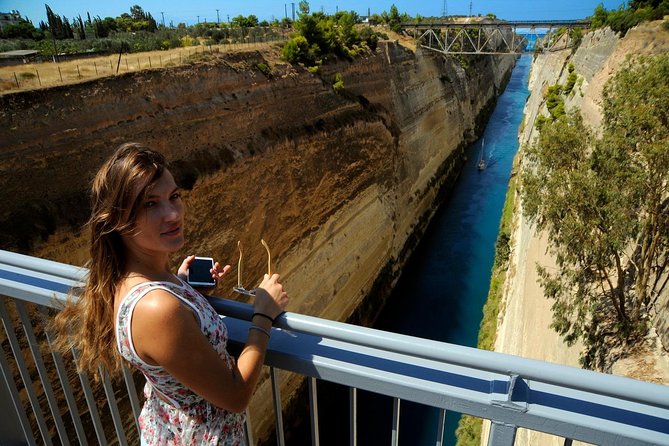
Day one starts with the Corinth Canal, a man-made cut linking the Aegean and Ionian seas. You’ll stop for photos and have time to walk across on a pedestrian bridge, with the canal dropping below from about 80 meters up. It is one of those places where your brain says, someone really did that here.
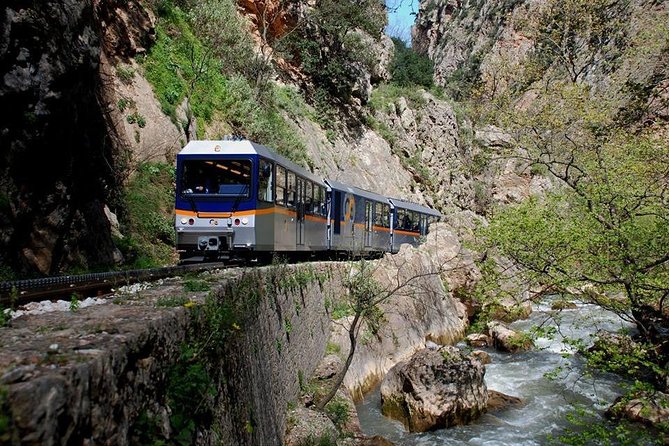
Next you’ll reach Diakopto, a Gulf of Corinth town near the mouth of the Vouraikos river and at the lower end of the Vouraikos Gorge. This is a practical step in the route, and it also sets you up for the monasteries that follow. You may also see mention of the Diakopto–Kalavryta rack railway in the tour details, with a ticket cost listed as 10€ per person. If that route is used during your day, it’s an easy add-on to plan for.
Then comes the kind of stop that makes Peloponnese feel theatrical. Mega Spileo Monastery is set in a large cave in a sheer cliff, with a history tied to ancient refuge stories and early Christian hermits. Agia Lavra Monastery follows, built at 961 meters on Chelmos Mountain, and it is tied directly to Greek independence. The monastery is linked to the raising of the revolt flag on 21 March 1821 by Bishop Germanos III of Old Patras. That is history you can point to, not just read.
You finish day one in Kalavryta for overnight, which is smart because it lets you approach the next morning without burning another full day just reaching the area.
Kalavryta to Olympia: cave rivers, oak forests, and the real Olympic setting
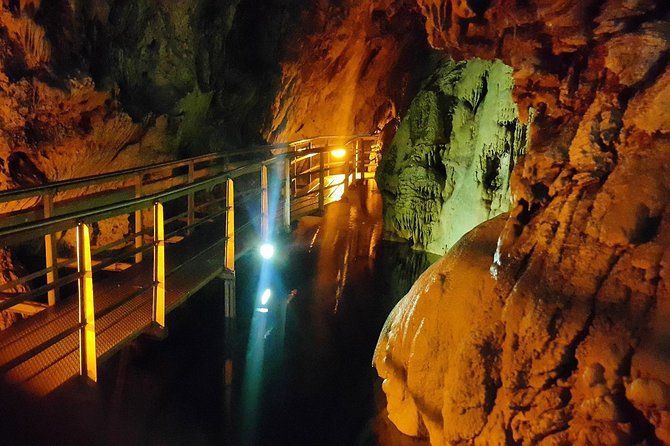
The second day starts with Kastria Cave of the Lakes. The description is unusually concrete: it is an old subterranean river with three levels. In winter, melted snow turns it into a flowing river with waterfalls. In summer, it dries up and leaves behind 13 lakes. You get about an hour at the site, so you can focus on the light inside the cave and the changing moods of the water.
From there, the route drives through Aroania and the broader Arcadian mountain area toward Ancient Olympia. Along the way, you stop at Lampeia, a mountain village in the Erymanthos valley, and then at Dasos tis Folois, a protected oak forest dating back to ancient times. It’s flat forest on boundaries between regions, and it is named after the centaur Pholus, connected to Hercules in the myth of the Erymanthian Boar.
Then you arrive at the Archaeological Site of Olympia. This is where the “games” idea becomes physical. The ruins span from Bronze Age to Byzantine eras, scattered among low trees. You also get the ancient stadium area, which is hard to beat when you want to photograph atmosphere as much as stones.
Your museum time is also included: the Museum of the Olympic Games. It gives you the chronology tied to 776 BC and the idea that winners’ names were recorded after that point. Even if you’re not a sports history person, this is a good context-builder before or after walking among the ruins.
You stay overnight in Olympia, and the tour can arrange boutique or 4-star hotels with breakfast (driver’s room is complimentary). That hotel base is useful because it keeps your days efficient for the next leg toward Pylos and Messinia.
Pylos and Messinia: Mycenaean power, a famous omega-shaped beach, and a naval turning point
Day three brings in the Mycenaean world with the Palace of Nestor near Pylos. It is one of the best-preserved Mycenaean palaces, and it’s close enough to Pylos to make it a practical stop. It is also described as the Nestor kingdom referenced by Homer in the Odyssey and Iliad. What you’ll notice is the layout idea: with walls standing up to around 1 meter and raised walkways, you can picture how a palace complex functioned.
Then you get the kind of beach scene photographers love: Voidokilia Beach. The sand forms a semicircle shaped like the Greek letter omega (Ω), backed by dunes. On the land-facing side sits Gialova Lagoon, a bird habitat, and the area is protected under Natura 2000. You also have Nestor’s Cave above the beach, plus ruins of a 13th-century Frankish castle often linked with Old Navarino (Palaiokastro). Add the tomb of Thrasymedes of the Mycenaean period and hints of earlier occupation, and suddenly one shoreline contains multiple time layers.
Next comes Divari Beach, in the same Navarino Bay region, where the emphasis shifts to birds and habitat protection. You’ll have time for photography and lunch facing the water, which is a good break after structured site time.
The day continues with Ormos Navarinou, tied to the Battle of Navarino on 20 October 1827 during the Greek War of Independence. This stop helps you connect the modern independence story to geography: a decisive naval conflict in the Ionian Sea area made Greek independence more likely. If you want a clear mental map, this is one of those anchors.
You also visit the New Castle of Pylos, with two hilltop castles overlooking the bay: the older Navarino/Palaionavarinon and the newer Niokastron. Niokastron’s story moves through Turks, Venetians, and later wartime uses, including World War II headquarters. If you like forts that look like they were built to watch the horizon, this delivers.
You end with an overnight in Methoni, where you can plan for sunset photography.
Methoni to Mani: Venetian fortresses, Diros caves, and the tower-house world
Day four starts early at Methoni Castle. This is one of the tour’s most straightforward “wow” stops: a fortified city built by the Venetians after 1209, positioned on a rock that juts into the sea, and separated from land by an artificial moat. Even in ruins, the fortress covers a large area and its acropolis-facing side is heavily fortified. If you like symmetry, defense architecture, and big sea views in your photos, start with this before the light changes.
After Kalamata (including an older site area connected to Firai/Pharai and proto-Greek and archaic remains at Akovitika), you head into Kardamili in the Mani region. Kardamili is known for its seaside setting, cypress trees, wild olive groves, and dramatic coastal views. It also helps break up the history-heavy stops with a place that feels more like a slow-down moment.
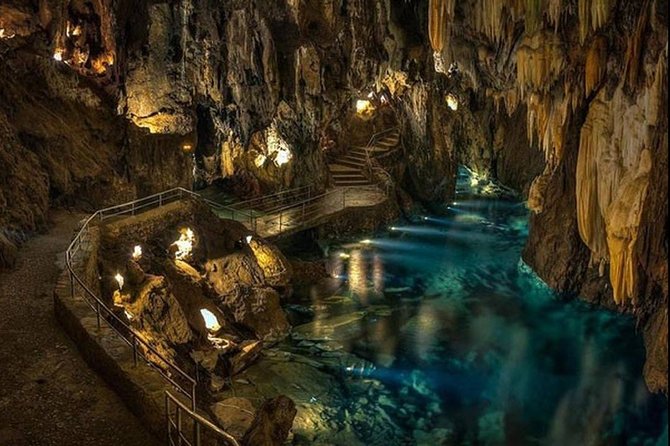
Then you go underground at the Caves of Diros, including Alepotripa and Vlichada. The tour describes people living here since Paleolithic times, though an earthquake around 4 BCE changed things. Today, boat trips go on an underground lake, passing through narrow channels and illuminated caverns with stalagmites and stalactites. It’s about half an hour on the water, but plan for some steps to reach the entrance. Also, guides are generally Greek-only, so if you rely on English explanations, ask ahead whether your guide speaks it.
You finish day four at Areopoli, a traditional town with stone paths and tower houses built for social and defensive reasons. It also has a named link to the Greek god of war Ares and a remembered role in fights against the Ottoman Empire. The statue of Petrompeis Mavromichalis in the Platia Athanaton square is the kind of local detail that makes a town feel specific.
You can also read our reviews of more private tours in Athens



The Mani’s last light: Vathia’s abandoned towers, Tainaron’s myth, and Porto Kagio ports
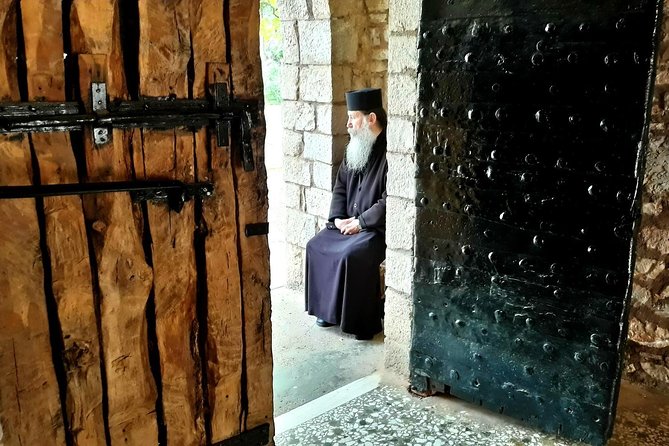
Day five is a strong photography day because it combines coastal remoteness with unusual architecture. You start at Gerolimenas, a small coastal village at the southern end of the Mani Peninsula. The name is tied to Old Harbour, and the tour notes that it was one of the remotest settlements until the 1970s, when access became easier. It used to be a fishing center, and now it’s mainly tourism.
Then you reach Vathia, famous for tower houses built on a hill and for perichora areas—clusters of abandoned houses, towers, and chapels around the main village. The tour points out wild flowers in spring and summer, plus sweeping views. Even if flowers are not the season you go, the shape and geometry of the abandoned village can still create excellent photos, especially with low-angle light.
Next is Cape Tainaron, the end of the Mani Peninsula and the southernmost point of mainland Greece. The tour references legends that place Hades in a nearby cave, plus ancient Spartans building temples there, including Poseidon-related ruins (Necromandion). Under Byzantine rule, the temple was converted to a Christian church still used for rites today. If you like myth meeting architecture, this is one of your best stops.
Finally, you visit Porto Kagio Beach, described as the site of the ancient port of Psamathous mentioned by Pausanias. The modern name ties to Venetian and French naming traditions. The tour also includes the Ottoman and Venetian castle story: Ottoman fortifications around 1568, Venetian attack and surrender around 1570, Ottoman return around 1670, and eventual outcomes. This is history you can read in the position of the port and the sea approach.
Monemvasia, Sparta, and Mystras: the fortress trio that makes Peloponnese feel medieval
Day six begins with Monemvasia Castle. The town sits on a small island linked by a short causeway about 200 meters long. A large plateau and fortress walls rise up as the main feature, with town walls and Byzantine churches remaining from the medieval period. The name meaning single entrance is part of the story, and Monemvasia is nicknamed the Gibraltar of the East.
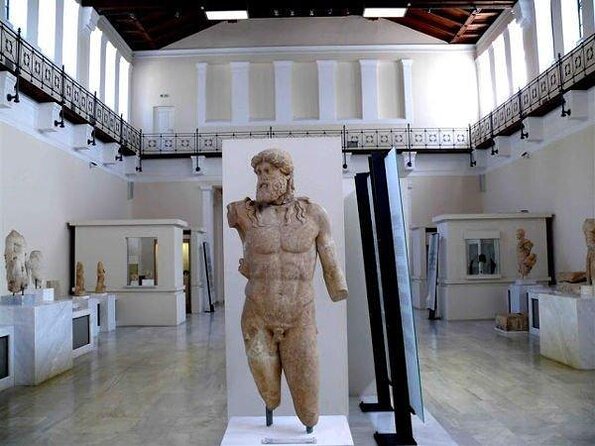
Then you move to Sparta. The Archaeological Museum of Sparta is listed as the oldest provincial archaeological museum in Greece, housed in a neoclassical building built between 1874 and 1876. It’s a short visit (about 30 minutes) and you should expect ticket costs not included on the day.
You also have time at the Acropolis and Ancient Theater. Sparta’s military reputation is part of the story here, tied to hoplites and famous early conflicts. The point for your photos is the setting: Sparta is not a single ruin, it’s a city layer with viewlines and a sense of scale.
You’ll also see the Archaeological Site of Mystras, described as the wonder of the Morea. It was built around a fortress erected in 1249 by William of Villehardouin and later reconquered by Byzantines, then occupied and expanded by Turks and Venetians. The city was abandoned in 1832, leaving medieval ruins on the slopes around a stunning landscape of stone and sky. Summer ticket amounts are mentioned for the site, but your entry plan depends on season and what’s included or not.
One more Sparta stop is the Museum of the Olive and Greek Olive Oil. The focus is the olive’s role in identity and Mediterranean culture, shown from prehistoric to early 20th century through economy, nutrition, worship, art, and technology.
You end day six with an overnight in Sparta, with hotel options arranged (driver’s room complimentary).
Nafplio and Nemea: Venetian walls, Venetian symmetry, and wine-country endings
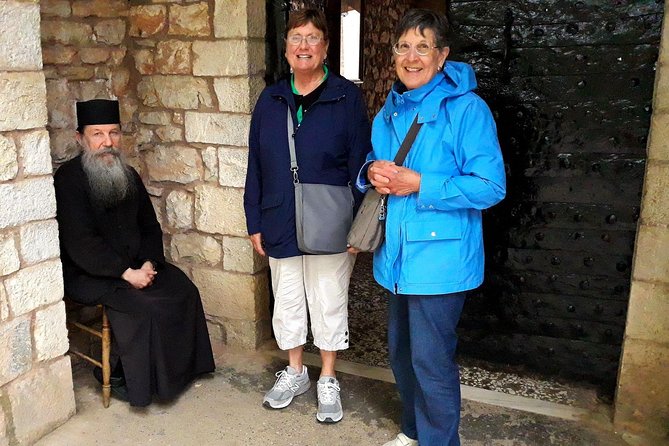
Day seven pulls you back toward eastern Peloponnese. You start in Agios Petros, a traditional village on the slopes of Mount Parnonas at around 950 meters. It’s pitched as a calm mountain getaway with good food and lodging options.
Then you visit Paralio Astros, described as an Arcadian coastal village with tiled roofs and an amphitheatric feel. It’s the port of the historic Astros of Kynouria, where the 2nd National Assembly was convened in April 1823. You’ll also see a medieval fortress above the port with views over olive groves.
Next is Palamidi Castle in Nafplio, a well-preserved Venetian fortification. The tour notes construction mainly during Venetian occupation around 1711–1714 under Venetian officials, with engineers credited for the system. Even if you do not climb every section, the fortress atmosphere is excellent for photos because it looks down over the town.
Nafplio itself is presented as one of the most romantic towns in Greece and the first capital of the newly born Greek state between 1827 and 1834. It’s also a place where you can see multiple layers from prehistoric participation in old myths to Frankish, Venetian, and Turkish marks in the town fabric.
Day eight finishes with culture and then a coastal relax option. You visit the Archaeological Museum of Nauplion, housed in a Venetian building first built in 1713 as a navy depository. You then see Acronafplia Fortress, the oldest castle rising above old town, with parts that date back to Bronze Age and later extensions by Romans, Franks, Venetians, and Turks.
After that, you go to Ancient Nemea, where the sanctuary of Zeus grew along with the Panhellenic Nemean Games. You’ll see the story of temples, treasuries, bath and hostel structures, and the stadium area as the games developed.
Then you get a food and wine tie-in at the Cooperative Winery of Nemea, tied to Agiorgitiko grape tradition. Finally, you visit the Monastery of the Dormition Rock Nemea, newly renovated, with views over the valley and vineyards.
You wrap at Loutraki, a seaside resort on the Gulf of Corinth famous for thermal springs and therapeutic spas. The tour notes the city called Thermai in antiquity and mentions a casino opening in 1928 and the reopening of a major casino in 1995. It’s a good end because it gives you the option to slow down after days of stone and staircases.
Price and logistics: what you’re paying for, and what to budget
This tour is priced high for a reason: it is private transportation for multiple days, with hotel pickup and drop-off from Athens or Piraeus, plus an English-speaking driver who has photography know-how. The included vehicle is air-conditioned and described as very clean. Fuel, tolls, and parking are covered, which matters in Greece where parking and route choices can make or break a day.
But you should also plan for site admissions. Archaeological sites and museums are not included, and the price depends on the season: 10€ per person per site from 1 November to 31 March, and 20€ per person per site from 1 April to 30 October. Some specific stops list admissions as included, like the Olympic Games museum and certain monasteries, but don’t assume everything is covered.
Also note that the driver is not a licensed archaeological guide for walk-through explanations inside museums and archaeological sites. You’ll rely on the driver’s context and on-site signage. If you want deeper inside-level interpretation, you may need to hire an archaeologist guide separately.
If you’re sensitive to closures, keep in mind the schedule notes that on Tuesdays some archaeological sites and museums may remain closed. Site hours also shift by season, so your exact timing can change between summer and winter.
Photography notes that actually help on this route
This tour is built around images, but you’ll still get better results if you plan like a photographer. Bring a small tripod if you use one often, and expect early light on the days that target sunrise-style views. Wear layers: cave interiors and mountain monastery areas can feel cooler even when coastal areas are warm.
For sunset and golden-hour stops, build in a slow pace. The places chosen here are not generic overlooks; they’re monasteries, castle walls, and port towns where the angle and approach really matter. In other words: give yourself time to find a stable shooting position before you commit to the photo.
Also, pack for walking steps. Some stops, like the Diros caves, involve steps even when the boat portion is short.
Who this tour suits best
You’ll probably enjoy this most if you like three things:
- You want a Peloponnese route that connects eras, not just isolated photo points.
- You care about viewpoints and timing, especially for sunrise and sunset.
- You prefer private, direct logistics over public buses and guesswork.
If you want a super relaxed pace with long meals and zero rush, this may feel full. It’s a lot of ground covered, and you’ll trade downtime for variety and photo moments.
Should you book this 8-day Peloponnese private tour?
Book it if you want your Peloponnese trip to feel like a curated route of light and history—driven by a person who thinks in pictures, not just driving you between landmarks. The mix of cliff monasteries, Olympia’s stadium setting, the Mani’s tower-house villages, and the medieval fortress mood of Monemvasia and Mystras is hard to replicate on your own without planning a dozen separate days.
Don’t book yet if you have a tight budget for admissions and want everything included. The base price is only part of the total; site fees are season-based, and some add-ons like the rack railway ticket and any special guides are not included.
If you want, tell me your travel month and your group size. I can help you estimate the likely extra site-fee total and which days to prioritize for early light photos.
FAQ
Is pickup and drop-off included?
Yes. Pickup and drop-off are offered from your hotel or apartment in Athens or Piraeus, or you can request another location.
Does the tour include museum and archaeological site entrance fees?
Not in general. The tour lists admission fees for archaeological sites and museums that depend on season: 10€ per person per site from 1 November to 31 March, and 20€ per person per site from 1 April to 30 October. Some specific stops show admission ticket included.
What time does the tour start?
It starts at 8:00 am.
Are meals included?
The tour data provided does not list meals as included.
Will I have a licensed guide inside archaeological sites and museums?
No. The driver is not a licensed archaeological guide for inside walks. If you need an archaeological guide for site interpretation, you would need to hire one separately.
Can you arrange hotel stays for me during the trip?
Accommodation is not included, but the tour can arrange it with selected boutique or 3/4-star hotels with breakfast for an additional cost. Driver accommodation is complimentary.


More Food & Drink Experiences in Athens



More Tours in Athens


More Tour Reviews in Athens
- All Day Cruise -3 Islands to Agistri,Moni, Aegina with lunch and drinks included
★ 5.0 · 4,958 reviews