REVIEW · ATHENS
4-Days Argolis,Ancient Olympia,Delphi,Meteora private tour from Athens
Book on Viator →Operated by Luxury Greek Tours · Bookable on Viator
A land route through Greece’s biggest names. This private 4-day trip links Argolis, Olympia, Delphi, and Meteora into one smooth plan, and I like how it keeps things practical with private transport, bottled water, and onboard WiFi. I also like the emphasis on stories and context, so the sites feel like more than photos on your phone. One thing to plan around: entrance tickets, meals, and passenger lodging aren’t included, so your budget needs a little extra breathing room.
The payoff is a steady rhythm of ancient power centers and unforgettable viewpoints, from the Corinth Canal cut to Meteora’s monastery rocks. In the kind of feedback that matters, drivers named Nikolaos and even Han (mentioned by a guest) were praised for being helpful and attentive, which is what you want when you’re moving fast between big sites.
In This Review
- Key Highlights Worth Your Attention
- A 4-Day Athens-to-Meteora Plan That Feels Efficient (Not Rushed)
- A practical caution
- Price and Value: $3,880 Per Group Up to 8
- Day 1: Corinth Canal, Mycenae, Nafplio, and Epidaurus’s Theatre
- Corinth Canal: the short stop that explains the geography
- Ancient Corinth (Archaia Korinthos): the city-state in the middle of everything
- Mycenae and the Citadel: Bronze Age power with serious gravity
- Acronauplia and Nafplio: fortress views plus a living town
- Epidaurus Ancient Theatre: acoustics that still impress
- Day 2: Ancient Olympia, Archimedes, and Nafpaktos (Lepanto)
- Archaeological Site of Olympia: Olympic Greece, step by step
- Archimedes Museum: science you can actually picture
- Nafpaktos (Lepanto): naval history and a place name that keeps echoing
- Day 3: Delphi’s Museum and Arachova’s Mountain Break
- Delphi Archaeological Museum: the oracle world made physical
- Arachova: a short pause in a traditional mountain town
- Day 4: Meteora Monasteries and Thermopylae’s Hot Gates Story
- Meteora: monasteries built on huge rock pillars
- Thermopylae Museum: the battle story tied to a real pass
- The Driver-and-Guide Setup: What You Actually Get on Site
- What’s Included vs. Not Included (and How to Budget Smart)
- Should You Book This 4-Day Private Tour from Athens?
- FAQ
- How long is the tour?
- What is the price?
- Where does the tour start?
- Is pickup included?
- What language is the tour in?
- What’s included in the tour price?
- What is not included?
- Is the tour private?
- Do I need tickets in advance?
- What is the cancellation policy?
Key Highlights Worth Your Attention
- Private door-to-DOOR pace: Private transportation and pickup from Athens keeps your day from turning into a bus puzzle.
- Argolis in full texture: Mycenae’s Treasury of Atreus, Nafplio, and the Epidaurus theatre all connect to the same dramatic region.
- Olympia with the right beats: Stadium, training spaces, the Zeus complex, and the museum—built for a clear storyline.
- Delphi’s oracle setting: You see the Delphi museum focus on the Pythia and the omphalos idea.
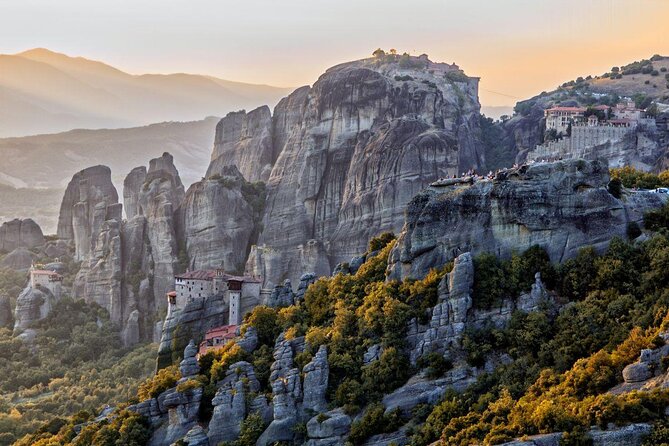
- Meteora’s UNESCO-style scale: Monasteries on huge rock pillars near Kalambaka—an instant wow even for non-history people.
- Thermopylae’s big myth moment: The Hot Gates museum area ties the battle story to the geography.
A 4-Day Athens-to-Meteora Plan That Feels Efficient (Not Rushed)
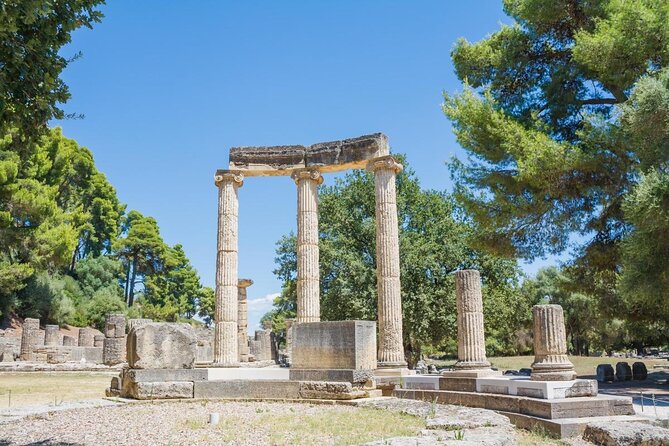
This tour is built for one thing: getting you from Athens across Greece’s mainland highlights with minimal logistics stress. You’re not coordinating trains, chasing separate group meetups, or wondering how you’ll get from one site to the next. Instead, you’re in a private vehicle with WiFi and bottled water, and you spend your energy on the places themselves.
The structure also helps. Each day is arranged around a theme—Argolis strongholds and legends on Day 1, Olympic Greece on Day 2, Delphi’s oracle world on Day 3, and then meteors (in the literal sense) and Thermopylae’s famous pass on Day 4. When the stops are connected, you actually remember them later.
You can also read our reviews of more private tours in Athens

A practical caution
Because it’s a high-hit itinerary, you’ll want comfortable shoes and patience. Even when each stop is time-limited, the sheer number of major sites can feel like a lot. This isn’t the tour for days of long café lounging between monuments.
Price and Value: $3,880 Per Group Up to 8
The price is $3,880 per group (up to 8). That may sound steep at first—until you compare what it replaces. You’re paying for private transportation, air-conditioning, driver service, WiFi, and the chance to cover multiple big-ticket ancient sites across several regions in just four days.
Here’s the value math I’d use: if you’re traveling as a small group (friends, family, or even a couple plus relatives), splitting the cost can turn “expensive private tour” into “good sense.” If you’re solo or as a duo, the same price can feel less fair, since you’re not using the group advantage.
Day 1: Corinth Canal, Mycenae, Nafplio, and Epidaurus’s Theatre
Day 1 is where Greece turns from pretty to powerful.
Corinth Canal: the short stop that explains the geography
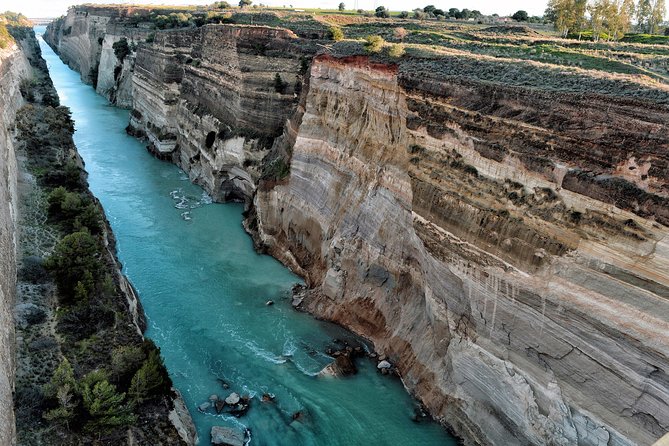
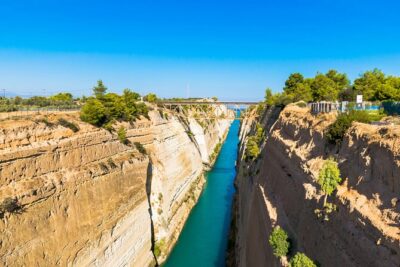
You start at the Corinth Canal, the cut that separates the Peloponnese from mainland Greece—so the peninsula is like an island in practice. This stop is listed as about 20 minutes, and admission is free. It’s brief, but it does something important: it gives you a mental map for everything you’ll see afterward.
- All Day Cruise -3 Islands to Agistri,Moni, Aegina with lunch and drinks included
★ 5.0 · 4,958 reviews




Ancient Corinth (Archaia Korinthos): the city-state in the middle of everything
Then comes Ancient Corinth, about 35 minutes. It was a city-state on the Isthmus of Corinth, basically the narrow land bridge linking the Peloponnese to the Greek mainland. Admission isn’t included here, so I’d expect some extra cost on top of the tour price.
This is one of those sites where timing matters. If you focus on layout—what areas were central, what a city-state meant in this era—you’ll get more than if you just wander and hope it clicks.
Mycenae and the Citadel: Bronze Age power with serious gravity
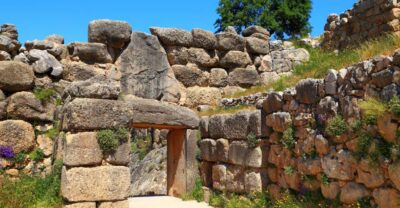
Next is Mycenae, also about 35 minutes, plus a quick stop at the Citadel and Treasury of Atreus. Mycenae is described as a major Bronze Age center and a military stronghold that dominated southern Greece and beyond.
The Treasury of Atreus is the showpiece. It’s a large tholos (beehive tomb) from around 1250 BC, and the scale details are the kind you can’t ignore—like the massive stone lintel mentioned above the doorway. Admission isn’t included, so factor that in.
Acronauplia and Nafplio: fortress views plus a living town
After the archaeology, you get a more human, scenic break.
- Acronauplia (about 10 minutes, free) is the rocky fortress area overlooking Nafplio and the sea.
- Nafplio itself (about 35 minutes, free) is a seaport town with deep medieval roots. It served as the capital of the First Hellenic Republic and the Kingdom of Greece from 1821 to 1834.
This is a good moment to slow down. You’re not just walking ruins—you’re looking at the modern town spread along the hills, with water close by. If you like photos that look lived-in, this is where you get them.
Epidaurus Ancient Theatre: acoustics that still impress
The day ends with the Ancient Theatre of Epidaurus, about 30 minutes. Admission isn’t included. What makes Epidaurus special is the connection between the theatre and the larger sanctuary dedicated to Asclepius (the ancient Greek god of medicine). It’s widely considered the most important ancient Greek theatre for acoustics and aesthetics.
Even if you don’t care about theatre design, the seating shape and scale give you a feel for how people experienced culture and belief. Bring water and take breaks if the sun is strong—this stop is outdoors and the day has layers.
Day 2: Ancient Olympia, Archimedes, and Nafpaktos (Lepanto)
Day 2 has two strong contrasts: sports and science in the morning, then a geopolitical story in the afternoon.
Archaeological Site of Olympia: Olympic Greece, step by step
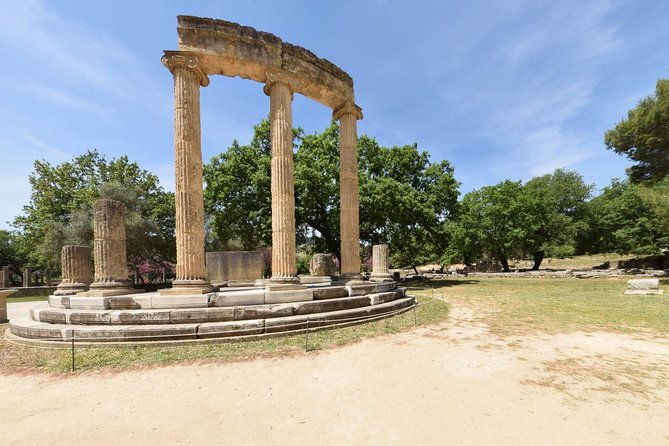
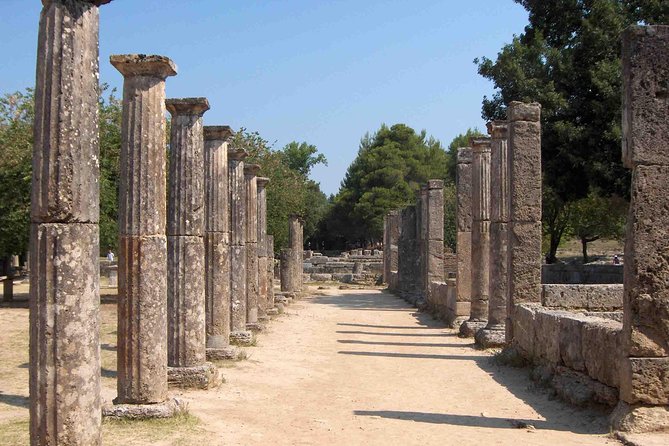
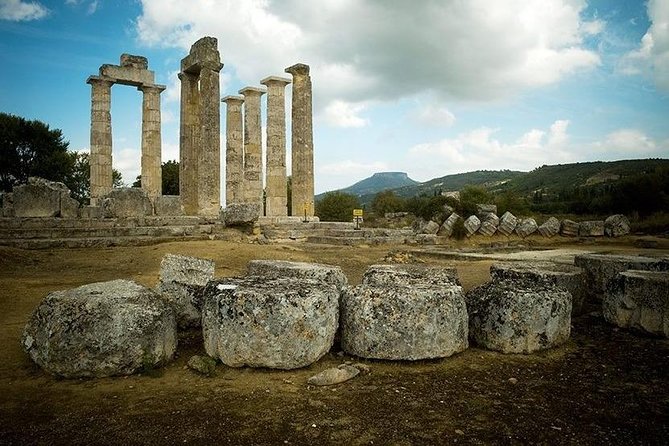
You start with Ancient Olympia and its museum, about 2 hours. It’s the birthplace of the Olympic Games, with the ancient stadium where the Games took place every four years from 776 BC to 393 AD.
You’ll also see the Palaistra, where athletes trained for events like wrestling. The plan then points you toward the ruins of the temple of Zeus—and the workshop of Phedias, tied to major sculptural works.
Admission isn’t included for these stops, so I recommend budgeting for at least a couple of ticket lines. Olympia is a big site; if you’re rushed by crowds, a private format can help you keep your bearings.
Archimedes Museum: science you can actually picture
Then there’s the Archimedes Museum, about 35 minutes. This is a different kind of stop and that’s a good thing. It’s dedicated to the ancient Greek mathematician and engineer—someone who contributed to technology. Admission isn’t included.
If you’re used to ancient Greece as monuments only, this museum adds a reminder: the same world that built temples and cities also built ideas.
Nafpaktos (Lepanto): naval history and a place name that keeps echoing
Finally, you visit Nafpaktos, about 1.5 hours, with admission free. The site is tied to the Peloponnesian War as an important naval station controlling access to the Gulf of Corinth.
It’s also a name with long shadow. Under Venetian control it became known as Lepanto, and it connects to major Ottoman–Venetian conflict history, including the decisive 1571 victory by the Holy League.
This stop is ideal if you like history that explains why borders changed. It’s not just dates—it’s geography acting like a character.
Day 3: Delphi’s Museum and Arachova’s Mountain Break
Day 3 is the spiritual and mountain side of the itinerary.
Delphi Archaeological Museum: the oracle world made physical
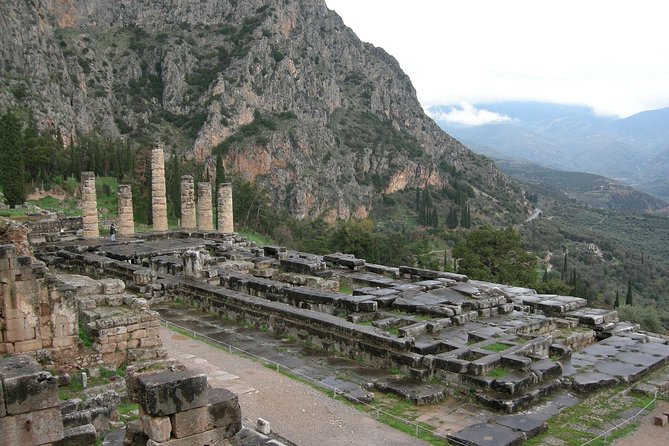
You spend about 2 hours 20 minutes at the Delphi Archaeological Museum. Delphi is described as the seat of the Pythia, the oracle consulted about major decisions across the classical world. The stone monument omphalos (the navel of the world) is a core idea here.
Admission isn’t included. If you’re the type who gets more from symbols than from stone layouts, this museum-heavy approach is a plus. It tends to make the larger Delphi concept easier to understand quickly.
Arachova: a short pause in a traditional mountain town
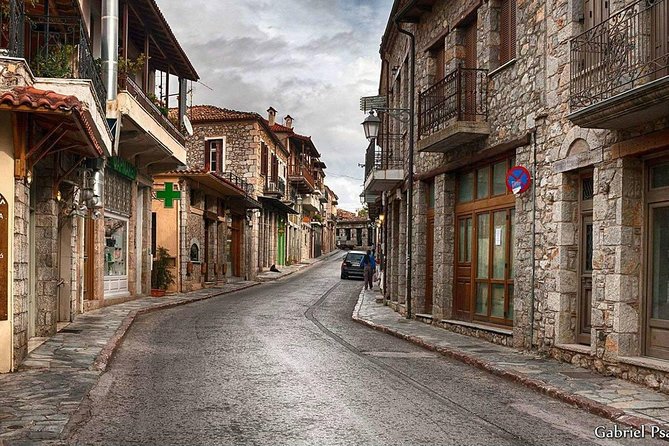
Then it’s on to Arachova, about 25 minutes, admission free. This is a mountain town near Delphi known for traditions and its location. It’s also a practical reset: you break the day into a human-scale moment after the museum focus.
You can use this time to grab a snack, slow down your mind, and set up for Meteora tomorrow.
Day 4: Meteora Monasteries and Thermopylae’s Hot Gates Story
This is the day with the biggest visuals.
Meteora: monasteries built on huge rock pillars
Meteora is about 3 hours. It’s UNESCO-listed and known for Eastern Orthodox monasteries built on massive natural pillars and boulders near Kalambaka. The itinerary notes that six monasteries are part of the complex of an original twenty four.
Admission isn’t included. The main practical tip here is simple: wear shoes you trust. You may be walking on uneven paths and climbing in and around viewpoints. Bring layers too—weather in central Greece can shift.
Even if you only want the view, Meteora delivers. If you want meaning, Meteora also has that story feel baked in: religion, isolation, and the dramatic scale of the rock formations.
Thermopylae Museum: the battle story tied to a real pass
After Meteora, you stop at Thermopylae Museum for about 35 minutes. Thermopylae derives its name from hot sulphur springs and is famous for the battle between Greek forces (notably Spartans) and Persian invaders, commemorated by Simonides’ famous epitaph about obeying their laws.
A modern highway now splits the pass, and the plan notes a monument to King Leonidas I and the engraved epitaph. Admission isn’t included.
This is a good closing chapter because it ties a legend to the geography. It also gives your brain a cleaner storyline: from oracle ideas, to Olympic ideals, to survival politics at a chokepoint.
The Driver-and-Guide Setup: What You Actually Get on Site
This is a private tour, but it has an important detail: the provided English-speaking driver is not described as a licensed site guide to accompany you inside every attraction.
The tour notes that a licensed tour guide can be requested depending on availability. So here’s how I’d think about it if you care about deep commentary at each site: plan to ask early whether you’ll have a licensed guide for the museum and archaeological interiors that matter most to you.
That said, even without a licensed guide at every stop, having someone who can manage timing, transportation, and explanations on the move is a big win. In feedback shared for this experience, guests singled out drivers for attentive service—exactly what you want when you’re bouncing between multiple locations.
What’s Included vs. Not Included (and How to Budget Smart)
Here’s the straightforward breakdown:
Included
- Air-conditioned vehicle
- WiFi on board
- Private transportation
- Bottled water
- Driver accommodation
- Mobile ticket
- Pickup offered in Athens
Not included
- Lunch and dinner
- Accommodation for passengers
- Entrance fees for archaeological sites, monasteries, and museums
- Entrance fees for museums/monasteries (listed under the same umbrella)
- Licensed tour guide upon request (depends on availability)
Your budget strategy is simple: add a separate line for site tickets and meals. Since you’re hitting major places like Olympia, Delphi, and Meteora, tickets can add up faster than you expect—especially if some stops you want most are the ones that cost.
Should You Book This 4-Day Private Tour from Athens?
I’d book it if you’re traveling with a group (up to 8) and you want a low-stress, high-coverage mainland route with real context, not just drive-by photos. It fits well if you like structure: each day has a theme, and you see the core hits without spending your vacation on logistics.
I wouldn’t book it if you want lots of free time at each site or you’re hoping everything is fully handled for you. Meals, lodging, and entrance fees aren’t included, and the driver may not function as a licensed guide inside every attraction unless you request that option and it’s available.
If you’re the kind of traveler who likes your history with timing and your views with a plan, this one is a strong choice.
FAQ
How long is the tour?
The duration is approximately 4 days.
What is the price?
The price is $3,880.00 per group (up to 8).
Where does the tour start?
It starts in Athens, with pickup offered from your Athens pickup location.
Is pickup included?
Yes. Pickup is offered, and you are instructed to be at the pickup location 10 minutes earlier than the scheduled time.
What language is the tour in?
It’s offered in English.
What’s included in the tour price?
Included features are air-conditioned vehicle, WiFi on board, private transportation, bottled water, mobile ticket, driver’s accommodation, and an English-speaking driver.
What is not included?
Not included are lunch, dinner, accommodation for passengers, and entrance fees for archaeological sites, monasteries, and museums. A licensed tour guide is available upon request depending on availability.
Is the tour private?
Yes. It is a private tour/activity, and only your group participates.
Do I need tickets in advance?
You’ll have a mobile ticket as part of the tour.
What is the cancellation policy?
Free cancellation is offered. You can cancel up to 24 hours in advance for a full refund.
More Private Tours in Athens


More Tours in Athens


More Tour Reviews in Athens
- All Day Cruise -3 Islands to Agistri,Moni, Aegina with lunch and drinks included
★ 5.0 · 4,958 reviews