REVIEW · ATHENS
Visit of the Acropolis with an official guide in Spanish
Book on Viator →Operated by Toptoursgreece · Bookable on Viator
Your day in Athens starts on the Acropolis stairs. This official Spanish tour is built for understanding what you’re actually seeing—myth, architecture, and real historical change—over about 2 hours.
I especially like that you get an official guide plus a wireless audio system, so you can focus on the view instead of straining to hear. I also like the pacing: you’ll move through the key monuments (including the Parthenon area) without it feeling like a race.
One thing to plan around: your entry ticket to the Acropolis is not included, so you must have a timed admission for the allowed window (listed as 8:00–9:00).
In This Review
- Key things I’d note before you go
- First things first: what you’re really paying for
- The meeting point and how to set yourself up at 8:30
- Why an official Spanish guide changes the whole experience
- Stop-by-stop: what you’ll see and what it means
- Stop 1: Acropolis overview and the myth-meets-stones intro
- Stop 2: Parthenon highlights you can actually spot
- Stop 3: Propylaea, the marble gate and war funnel logic
- Stop 4: Athena Victorious and the golden-age afterglow
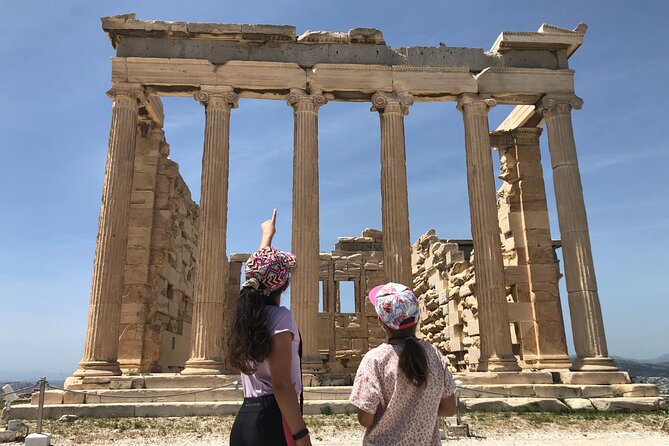
- Stop 5: Erechtheion and the Caryatids (yes, they really look like that)
- Stop 6: Herod Atticus Odeon, Roman engineering in action
- Stop 7: Temple of Asclepios, where healing is part of the landscape
- Stop 8: Theatre of Dionysus Eleuthereus and the roots of drama
- What to expect from the group and pace
- Tickets and the one big logistical catch
- The best way to use your free time after the tour
- Who this tour is best for (and who might skip it)
- Should you book this Spanish Acropolis tour?
- FAQ
- Is the Acropolis entrance ticket included
- What language is the official guide
- How long is the tour
- Does the tour include audio
- Is transportation included
- Where do I meet the group
- When does the tour start
- Where does the tour end
- What is the maximum group size
- Can I travel with a service animal
- Is there free cancellation
Key things I’d note before you go
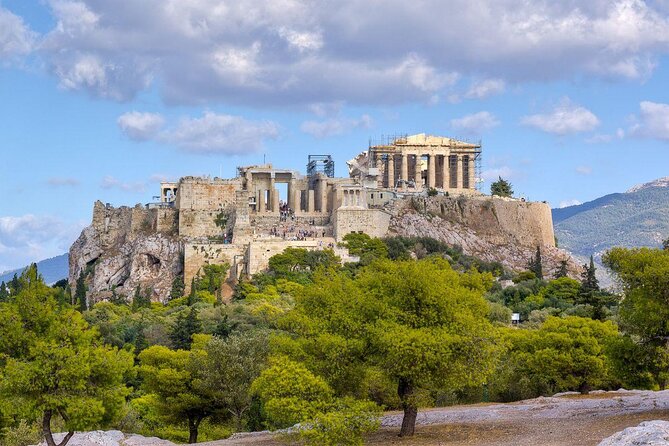
- Official Spanish guide only, with guides who are praised for passion and clear, didactic explanations (Efi is a common standout name)
- Wireless audio helps a lot on windy, crowded sections
- Entry ticket not included, so you’ll need to handle timed access ahead of time
- A tight, well-built route that hits Parthenon, Propylaea, Caryatids at the Erechtheion, and the theaters
- Small group cap (max 27) makes questions and side explanations more realistic
- You finish at the top, so you can linger for photos after the guided portion ends
First things first: what you’re really paying for
At about $44 per person, this tour can be a solid value if you care about context, not just selfies. The price covers the official guide, the wireless audio setup, and seeing all the listed monuments on foot. What it does not cover is your Acropolis admission ticket, which you still need for entry.
This matters because the Acropolis is one of those places where the stones feel silent unless someone connects them to the stories. That’s where the official Spanish guide earns their keep—explaining myths alongside construction details, and tracing how the same spaces changed roles over centuries.
Also, the tour is timed to start at 8:30 am, which usually means you’ll be closer to the first wave of visitors. You’ll still want sun protection, but starting early helps your photo attempts and your overall mood.
You can also read our reviews of more guided tours in Athens

The meeting point and how to set yourself up at 8:30
You’ll meet at the Greek National Tourism Organisation Information Point on Dionysiou Areopagitou 18. The tour ends at Theorias 21, and the key practical detail is that it concludes directly at the top of the Acropolis so you can continue on your own.
Because there are no transfers and the whole thing is on foot, it’s smart to wear comfortable shoes and plan for lots of walking and stairs. The route is designed for viewing, so you’ll want to move smoothly rather than take long breaks.
If you’re using public transport, the start area is described as near it. Still, I’d aim to arrive a bit early so you can check in, confirm your timing, and get into the flow before the group moves.
Why an official Spanish guide changes the whole experience
An official guide doesn’t just give facts. The best ones do two things: they help you see patterns and they help you place the monument in time. The Acropolis has layers—Greek, Roman, Byzantine, Ottoman—and the tour is clearly built to highlight that change.
In the reviews, names like Efi, Simon, Maria, and Ari show up again and again. People praise guides for asking questions, slowing down when needed, and explaining in a way that sticks. That’s a big deal here, because you’ll be looking at multiple structures that are close together, yet each one has a different purpose and story.
You’ll also get a wireless audio system, which sounds like a small add-on until you’re standing near others and trying to hear clear Spanish while looking up at marble.
Stop-by-stop: what you’ll see and what it means
Stop 1: Acropolis overview and the myth-meets-stones intro
The tour begins with the Acropolis itself, framing historical, mythological, social, architectural, and cultural context. This is your base layer. If you know what gods were associated with which structures, and why certain buildings were built in specific ways, everything you see afterward clicks faster.
The tour allocates about 2 hours total across all stops, and this first part sets the tone: think of it as how to understand the place before you zoom in on any single monument.
Practical tip: this is also when your guide’s rhythm matters most. Listen early, because later you’ll be able to recognize “oh, that’s why that feature is here.”
- All Day Cruise -3 Islands to Agistri,Moni, Aegina with lunch and drinks included
★ 5.0 · 4,958 reviews





Stop 2: Parthenon highlights you can actually spot
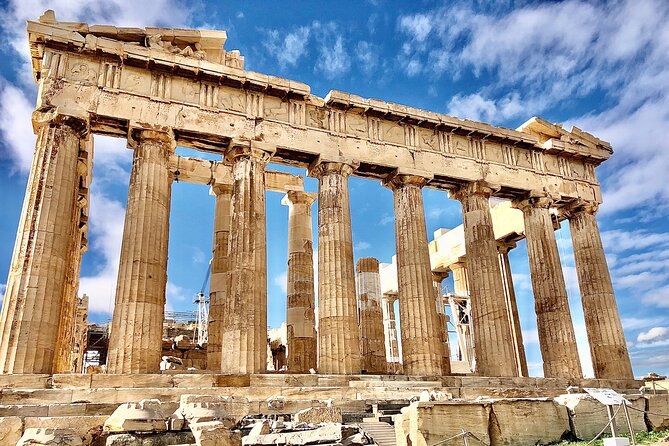
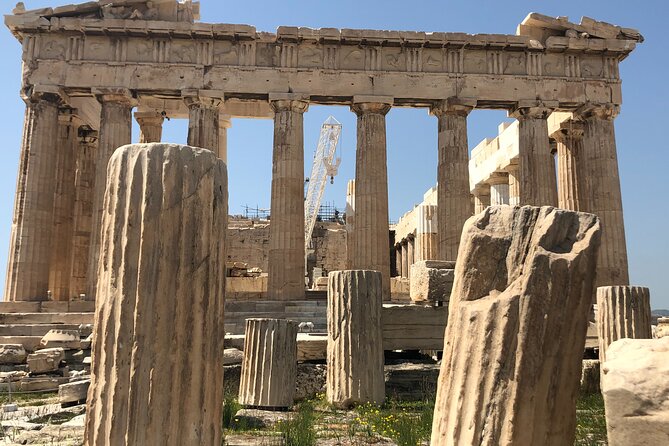
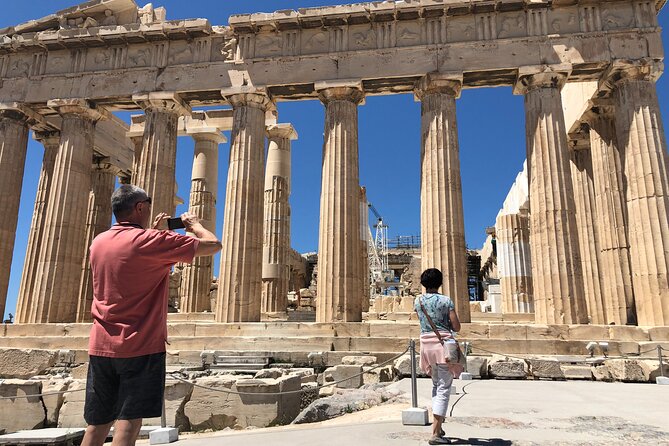
Next up is the Parthenon, one of the most important buildings of antiquity for its perfection and harmony. The guide explains why it looks refined—covering optical refinements—and connects those details to the legends around the monument.
You get about 20 minutes here, and the tour’s strength is the timeline. You’ll hear how the Parthenon shifted from its original use to later roles: it became a church during the Byzantine period and a mosque during the Ottoman occupation. The guide also touches decoration, looting, and restoration work in progress.
Why this stop is worth the time: if you only look at the façade and columns, you miss the story of how the building survived, got altered, and kept meaning across regimes. This is where the Acropolis becomes more than a Greek postcard.
Stop 3: Propylaea, the marble gate and war funnel logic
Then you’ll move to the Propylaea, described as a monumental entrance built entirely of marble. The guide explains why it mattered strategically: its topography functioned like a funnel in times of war.
This section is shorter at about 10 minutes, but the payoff is that you start seeing design as something purposeful, not decorative. You’ll also hear about the choice of different types of columns, which is easy to notice once your guide points it out.
When you’re there: step back if you can. The Propylaea is about structure and approach, so a quick look for symmetry and entry lines helps your brain store it.
Stop 4: Athena Victorious and the golden-age afterglow
A “true architectural jewel” comes next: the temple dedicated to Athena Victorious. This is the spot that helps you connect the Acropolis to victory and political meaning.
The guide explains it was carried out just after victories against the Persians, with the goal to remember that moment across generations. Even if you’re not into ancient politics, this is where you understand the Acropolis as a public statement—stone used for memory.
This stop is brief (the route marks it without a specific time), so keep your phone ready but don’t let it take over the moment. Catch one wide shot, then turn your attention back to the guide’s cues.
Stop 5: Erechtheion and the Caryatids (yes, they really look like that)
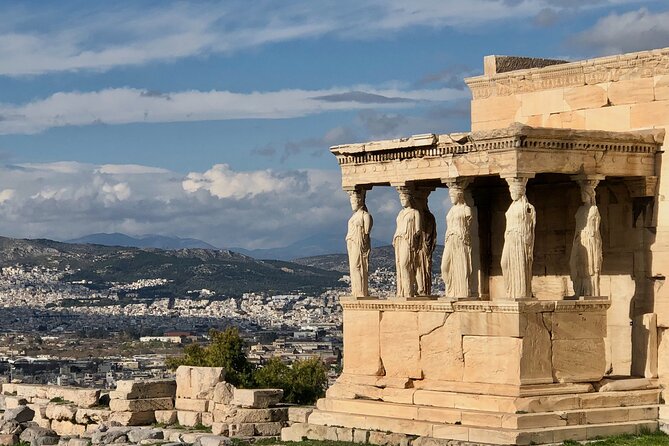
Now for the stop many people want to photograph: the Erechtheion, famous for the Caryatids, female-shaped columns. The tour calls it the most photogenic monument on the Acropolis, and the reputation is earned.
You’ll learn about why it was consecrated to multiple divinities, including Athena and Poseidon, and also Erectios, described as the first mythological king of Athens. The guide also covers key legends tied to the site, including why the olive tree there is sacred.
This stop is listed at about 10 minutes. That’s enough time to understand the “why” and still grab your photos without turning the entire experience into a camera marathon.
Stop 6: Herod Atticus Odeon, Roman engineering in action
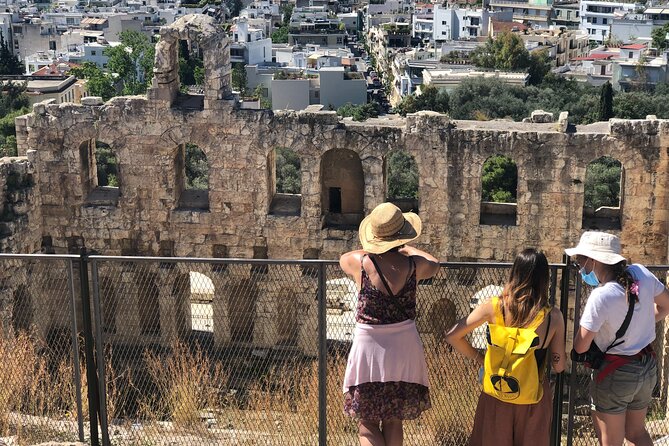
Next you’ll see the Herod Atticus Odeon, a Roman auditorium with capacity for about 5,000 spectators. It was built by a renowned Roman governor in Athens and dedicated to his wife, Regina. The tour notes it’s the only fully restored ancient building in use.
You’ll also hear that major performances happen here during the annual Athens festival. This is one of the most satisfying stops for modern travelers because you’re not only looking at ancient architecture—you’re seeing how it still supports events.
This is also a quick one at about 10 minutes, so listen for the “in use” angle. It’s the kind of detail that makes the whole Acropolis feel less distant.
Stop 7: Temple of Asclepios, where healing is part of the landscape
The Temple of Asclepios shifts the vibe from monuments to medicine. It’s dedicated to the god of medicine, Asclepius.
The guide explains how ancient Athenians approached healing in this space, including types of votive offerings people gave as thanks. This is a short stop (about 5 minutes), but it can be surprisingly memorable because it turns the Acropolis into a place of daily human concerns: health, hope, and ritual gratitude.
If you like “small story” stops, this one is for you.
Stop 8: Theatre of Dionysus Eleuthereus and the roots of drama
Finally, you’ll visit the Theatre of Dionysus Eleuthereus, described as one of the oldest theaters in the world built entirely of marble. The capacity is about 17,000, and the guide explains how the theater’s slope location helped acoustics.
This stop includes a great cultural connection: it’s tied to early presentations by Euripides, Aeschylus, Sophocles, and Aristophanes. That detail can change how you look at the rows and stone stage, because you start imagining performances rather than ruins.
Time here is about 10 minutes. Don’t rush your final moments—this is where the Acropolis becomes a living idea of art and public life.
What to expect from the group and pace
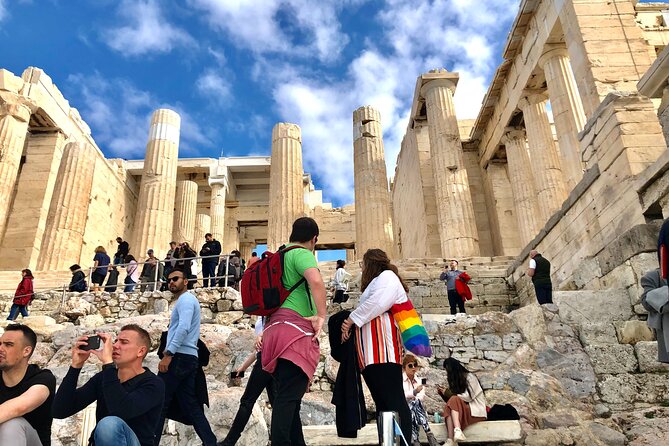
The tour caps at 27 travelers, and many guides do well in groups because there’s enough size for energy but not so big you get swallowed. From the reviews, the most praised guides are those who keep everyone involved by asking questions and adjusting their explanations based on the group.
Expect it to feel like a walking tour with frequent “look up here” stops. You’ll be on foot the whole time, and the sites are spread across the Acropolis topography, so a moderate fitness level is mentioned.
If you’re sensitive to heat, going early helps, but you’ll still want water and sun protection.
Tickets and the one big logistical catch
This tour is listed as having a mobile ticket, but the key twist is that entry to the Acropolis is not included. You need your own admission ticket, and the allowed entry window is described as from 8:00 to 9:00.
So what should you do? Before you set your schedule around the tour, make sure your timed ticket lines up with the 8:30 start. If you arrive without the correct access, you’ll be stuck outside while others get moving.
In the reviews, at least a few people mention that the guide helped with the ticket process. Still, it’s safer to handle it before you show up.
The best way to use your free time after the tour
Because the guided portion ends at the top, you can continue at your own pace right away. That’s ideal for two styles of travelers:
- If you like photos, you’re positioned for another round without waiting for the tour to end.
- If you like lingering with fewer distractions, you can take your time where your guide pointed out details.
I like to do a quick “scan tour” after the guide finishes: one look for structure, one look for myth references, and then a third look just for texture. You’ll be surprised how much you catch on the second round.
Who this tour is best for (and who might skip it)
You’ll love this if you want:
- an official Spanish guide
- clear explanations of how the monuments changed over time
- enough structure to understand what you’re looking at in a short window
You might choose something else if:
- you only care about surface photos and don’t want historical context
- you struggle with stairs or long walking on uneven stone
- you don’t want to deal with your own timed-entry Acropolis ticket
Should you book this Spanish Acropolis tour?
Book it if you’re trying to get real value out of a short visit. The official guide format, wireless audio, and stop-by-stop coverage of the Parthenon, Caryatids, and the theaters make this a strong choice for people who want the Acropolis to make sense fast.
I’d especially recommend it if your Spanish is comfortable enough to learn in that language. And if you can line up your timed entry ticket for the early window, you’ll avoid the only major friction point.
FAQ
Is the Acropolis entrance ticket included
No. Entrance to the venue is not included, and you need an admission ticket from 8:00 to 9:00.
What language is the official guide
The tour is exclusively in Spanish.
How long is the tour
It’s about 2 hours.
Does the tour include audio
Yes. You’ll use a wireless audio system.
Is transportation included
No. The entire visit is done on foot.
Where do I meet the group
You start at the Greek National Tourism Organisation Information Point on Dionysiou Areopagitou 18, Athina 117 42, Greece.
When does the tour start
The start time is 8:30 am.
Where does the tour end
It ends at Theorias 21, and the excursion ends directly at the top of the Acropolis.
What is the maximum group size
The tour has a maximum of 27 travelers.
Can I travel with a service animal
Yes, service animals are allowed.
Is there free cancellation
Yes. You can cancel up to 24 hours in advance for a full refund.



More Guided Tours in Athens

More Tour Reviews in Athens
- All Day Cruise -3 Islands to Agistri,Moni, Aegina with lunch and drinks included
★ 5.0 · 4,958 reviews