REVIEW · ATHENS
Steps to tradition: Greek traditional dances in Athens
Book on GetYourGuide →Operated by Hidden Greece · Bookable on GetYourGuide
Greek dance is best learned in motion. Meeting Tania on Philopappos Hill makes this feel like real culture, not a staged show, and I love how the setting by the Acropolis turns every step into a memory.
You spend 2.5 hours learning traditional dances taught in English, with videos and photos so you can actually take the moves home.
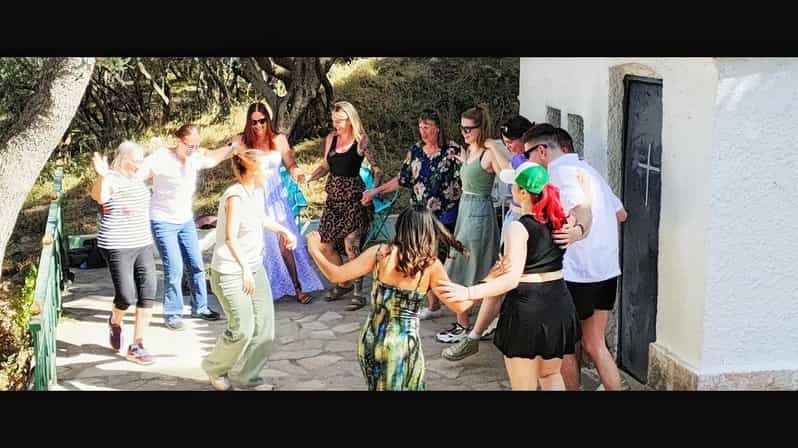
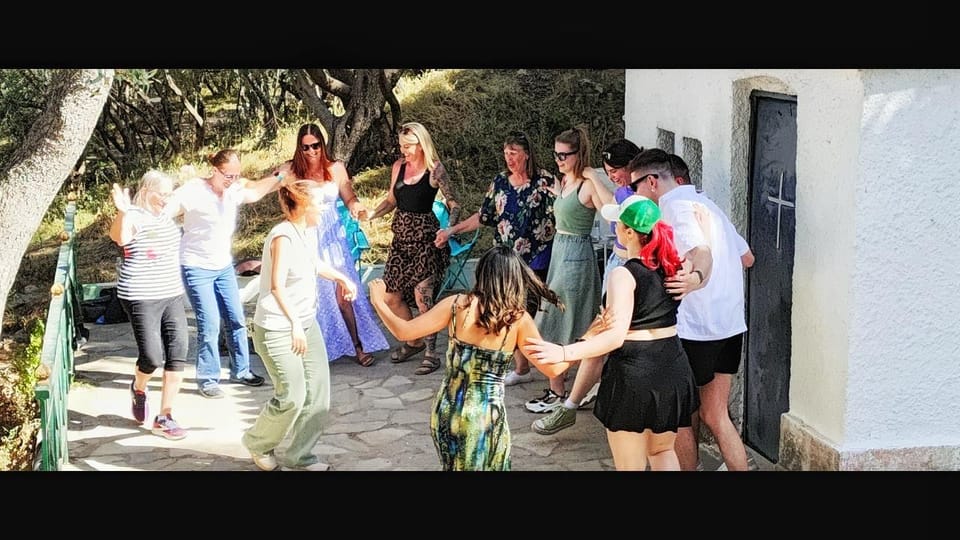
You’ll start with a short walk for views, then practice dances step by step in a group, often with hands held. What makes it special is the focus on tradition as something living and passed along, not locked in a museum.
One thing to think about: the activity is not suitable for people with heart problems, wheelchair users, or anyone with motion sickness. It also involves walking on uneven hill paths and dancing for the duration.
In This Review
- Key highlights worth your time
- Philopappos Hill: the practical reason this feels authentic
- Meeting Tania at the entrance next to tour buses
- The 10-minute walk: your warm-up plus your Athens backdrop
- Learning Greek traditional dances step by step
- Why the “ancient to today” framing matters (and what you’ll feel)
- The group rhythm: hand-holding, laughs, and a low-pressure atmosphere
- What you actually take home: photos, videos, and a printed program
- Instructor-led value: what $41.33 buys you in real terms
- Who this Athens dance course suits best
- Footnotes to consider before you book
- Should you book Steps to Tradition in Athens?
- FAQ
- Where do I meet for the Greek dance course?
- How long is the experience?
- Is the instructor’s language English?
- What happens during the tour before the dancing starts?
- What’s included besides the dance instruction?
- Do I get photos or videos?
- Does it start and end at the same meeting point?
- Is it suitable for wheelchair users or people with motion sickness?
- How much does it cost?
Key highlights worth your time
- Tania teaches in English and keeps the vibe friendly and supportive.
- Philopappos Hill location puts you near the Acropolis while still in a calmer natural spot.
- A short view walk (about 10 minutes) sets the tone before you start dancing.
- Traditional dances from major Greek regions are taught step by step.
- You leave with photos, videos, and a printed program to replay what you learned.
- A fun group format encourages you to laugh, move, and bond while learning.
Philopappos Hill: the practical reason this feels authentic
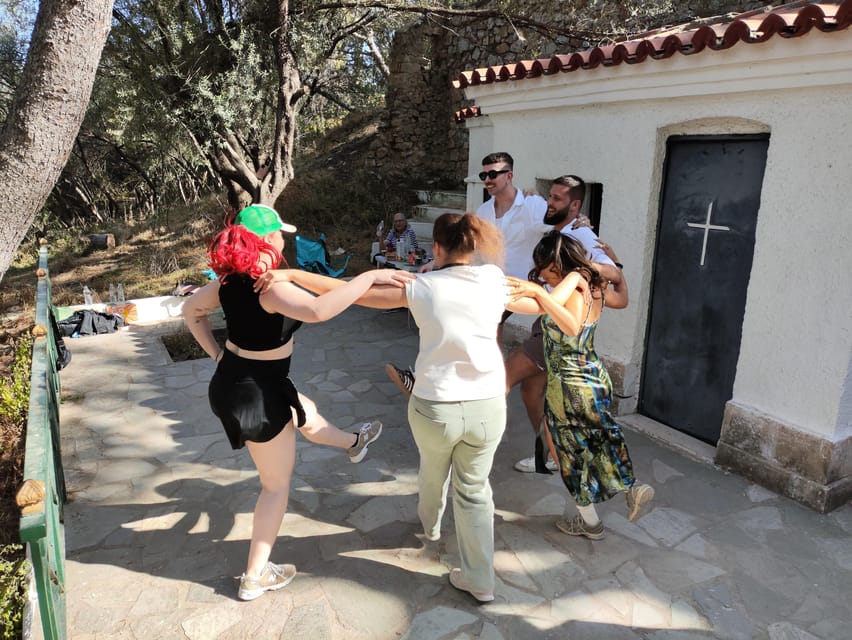
This is one of those Athens experiences where the location does real work for you. You meet at the entrance to Philopappos Hill, right next to the tour buses and close enough to the Acropolis area that you get instant context for why people wrote dances into everyday life here.
Then you move as a group for a short walk with an Acropolis view. That matters because it shifts you from street sightseeing mode into participant mode. You’re not just looking at ruins; you’re stepping into a place where tradition still happens in daily rhythms.
The best part is you begin your dance course in a natural spot on the hill. Even if you only spend part of the time outdoors, it changes the feeling: you can breathe, hear the music clearly, and focus on learning instead of dodging crowds.
You can also read our reviews of more tours and experiences in Athens.



Meeting Tania at the entrance next to tour buses
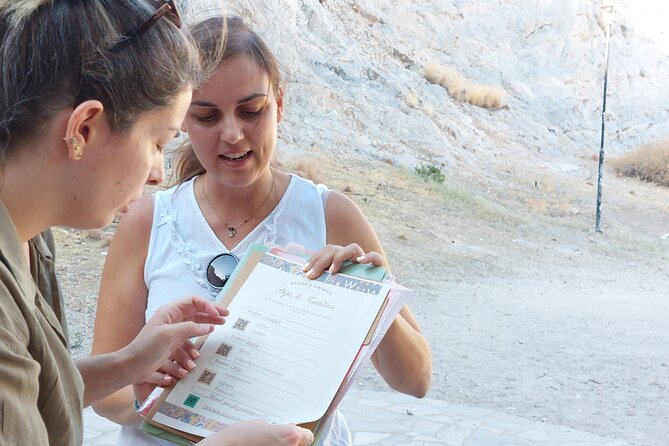
Your meet-up is exactly at the entrance to Philopappos Hill, next to the tourist buses. It’s easy to find, and it also helps if you’re already planning to see the Acropolis area on the same day.
The course begins once the group gathers, and your instructor, Tania, leads the session from there. What I like about meeting at a clear spot is that you don’t waste brainpower trying to “hunt” a group on a busy hill road.
This is taught as an interactive experience, not a lecture. So expect to join in from the start—watch, learn, then repeat until your body understands the rhythm.
The 10-minute walk: your warm-up plus your Athens backdrop
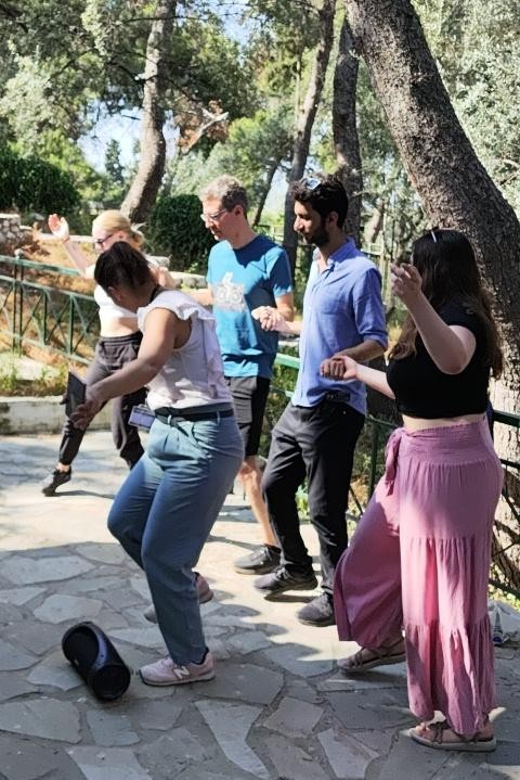
Right after everyone is together, you take a 10-minute walking route with views of the Acropolis. It’s not a long hike, but it’s long enough to do two things: get your bearings and help your brain switch from sightseeing to doing.
Walking first also helps you arrive calm and ready. You’ll be in the same space and light as the ancient city vibe, but you won’t have to compete with the loudest tourist zones once the dance portion begins.
Practical tip: wear comfortable shoes. Even if the walk is short, hill paths can be uneven, and you’ll be dancing after.
Learning Greek traditional dances step by step
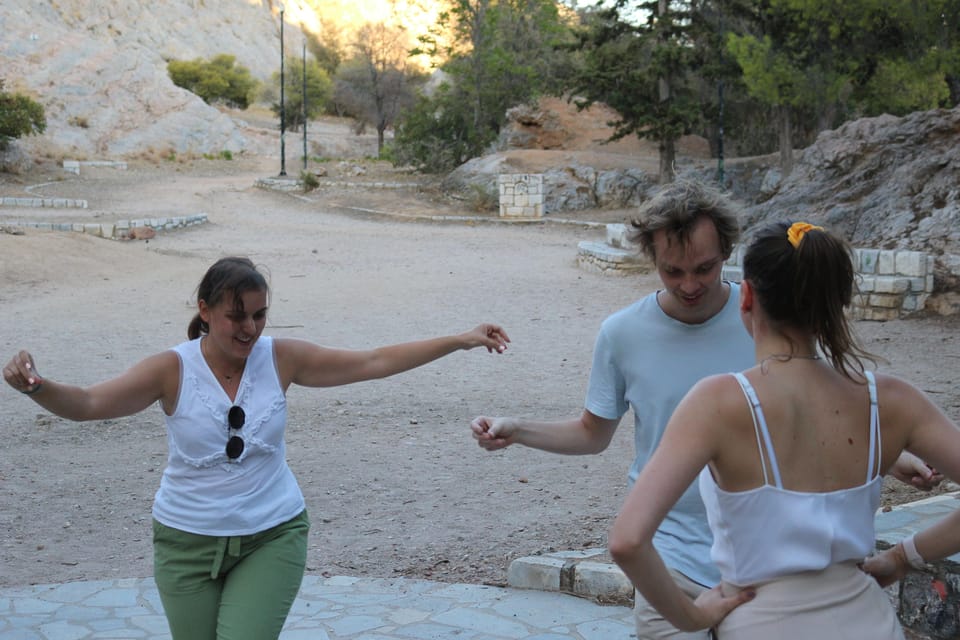
The heart of this experience is learning authentic Greek traditional dances with a teacher who focuses on technique you can follow. You’re taught dances characteristic of the main regions of Greece, which is a nice way to get variety without turning it into a long, exhausting class.
The instructions emphasize learning through repetition: step by step, with the group in motion. You’ll likely feel the difference between watching a dance and doing it—especially when you’re coordinating with music and timing while holding hands.
What makes it work for most people is that the group format encourages you to keep going even if you’re not a trained dancer. The vibe is meant for fun and confidence, not perfection.
Why the “ancient to today” framing matters (and what you’ll feel)
The dances here are described as originating from ancient times and evolving through many eras. That’s more than trivia. It changes how you move: you’re not doing random steps, you’re reenacting patterns that families passed along and adapted over generations.
You’ll also learn the true meaning behind these traditional dances. Even without getting lost in lecture style, you get context for why certain gestures and rhythms show up again and again, and why communities keep them alive.
I like that the lesson is framed as a living tradition, from family to family, parents to kids. When a culture treats dance like something you practice together, it stops being a performance and becomes a way of belonging.
- All Day Cruise -3 Islands to Agistri,Moni, Aegina with lunch and drinks included
★ 5.0 · 4,958 reviews




The group rhythm: hand-holding, laughs, and a low-pressure atmosphere
A lot of dance classes focus on form. This one focuses on shared momentum. You’ll dance accompanied by other people held hand in hand, which makes learning easier because you’re not doing every step alone.
It also creates a social vibe. One of the most praised parts of the experience is the supportive teaching style, and you’ll feel that in the way the session encourages you to go for it. People mention teachers being very nice and supportive, and that lines up with what you want from a first-time dance class.
If you’re traveling solo, that hand-holding group format can be a gentle way to connect without awkward small talk. If you’re traveling with friends, it’s a great shared activity because you can compare notes on what you mastered and what you still need to practice back home.
What you actually take home: photos, videos, and a printed program
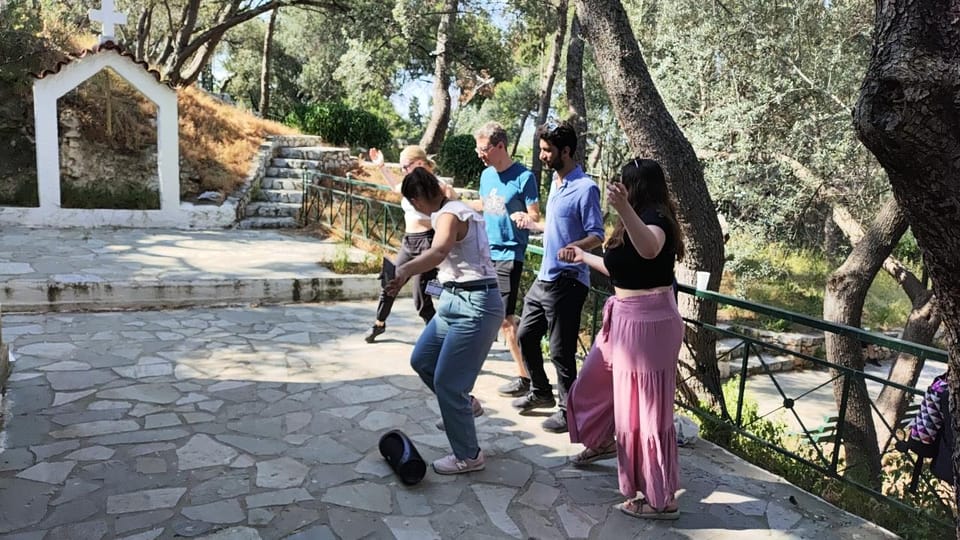
You don’t have to rely on memory alone. The course includes photos and videos from the session, plus a printed program with the dances.
That’s a big value-add because traditional dance steps can be hard to replay from recall. Having visuals and a program helps you relive the moves and share them later, especially if you like sending something more meaningful than a generic postcard.
You also get a commemorative of participation. It’s not a fancy trophy—think of it as a simple souvenir that marks you took part, not just watched.
And yes, there are water and drinks during the course. It sounds minor, but after hours of walking around Athens, staying hydrated makes it much easier to enjoy the rhythm instead of thinking about thirst.
Instructor-led value: what $41.33 buys you in real terms
The listed price is $41.33 per person for about 2.5 hours. For Athens, that’s in the “reasonable and worth it” range, especially because what’s included goes beyond instruction.
You’re getting:
- a Greek traditional dance course from an experienced teacher
- an experiential activity (you’re participating the whole time)
- a printed program
- photos and videos
- water and drinks
- a commemorative item
When you add up typical costs for class time plus media capture plus basic refreshments, the value feels fair. The main reason it’s worth considering is that the lesson is happening on location, right near one of Athens’s most powerful landmarks, but in a more relaxed natural spot for learning.
If you’re the type of traveler who likes hands-on cultural experiences more than another photo stop, this price makes sense.
Who this Athens dance course suits best
This works best if you want participation over observation. You’ll enjoy it most if you like:
- learning by doing
- laughing with a group
- moving even if you’re not a dancer
- cultural experiences tied to place
It’s also a good fit if you’re planning a day around the Acropolis area and want to add something active and memorable in the same general zone.
Not ideal if you’re looking for quiet, seated sightseeing. This is a course with walking and movement, so you’ll be on your feet.
Footnotes to consider before you book
There are a few practical boundaries built into the experience. It’s not suitable for wheelchair users, and it’s not suitable for people with heart problems or anyone with motion sickness.
Also, the session begins after a short uphill walk. Even if it’s only about 10 minutes, hill paths and the dancing portion can feel more physical than you expect from a “class.”
If you’re unsure, check with your doctor if you have health concerns related to activity. And pack accordingly: comfortable shoes and breathable clothes will help you enjoy the full 2.5 hours.
Should you book Steps to Tradition in Athens?
If you want a Greek cultural activity that feels like you’re participating in something real, this is a strong choice. I’d book it if you’re excited to learn traditional dances step by step, and you value leaving with videos and photos rather than just a story.
Skip it if you need a fully accessible experience, have health limitations that affect movement, or you’re prone to motion sickness.
One smart decision tip: pair it with a day when you already plan to be near the Acropolis. That way, you’re not spending extra time commuting across Athens just to do one great cultural hour-and-a-half-plus.
FAQ
Where do I meet for the Greek dance course?
You meet exactly at the entrance of Philopappos Hill, next to the touristic Busses.
How long is the experience?
It lasts about 2.5 hours.
Is the instructor’s language English?
Yes, the instructor teaches in English.
What happens during the tour before the dancing starts?
After the group gathers, you take a short 10-minute walking route with views of the Acropolis to a beautiful spot on the hill where the course begins.
What’s included besides the dance instruction?
The course includes a printed program with the dances, water and drinks, photos and videos from the course, and a commemorative of participation.
Do I get photos or videos?
Yes. Photos and videos from the course are included.
Does it start and end at the same meeting point?
Yes, the activity ends back at the meeting point.
Is it suitable for wheelchair users or people with motion sickness?
No. It is not suitable for wheelchair users, and it is not suitable for people with motion sickness.
How much does it cost?
The price is $41.33 per person.



More Tour Reviews in Athens
- All Day Cruise -3 Islands to Agistri,Moni, Aegina with lunch and drinks included
★ 5.0 · 4,958 reviews